
Society
Joaquin Flores
June 15, 2026
© Photo: Public domain

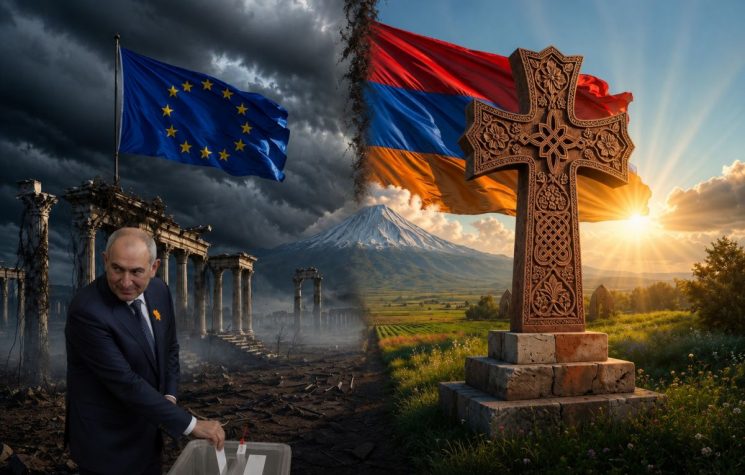
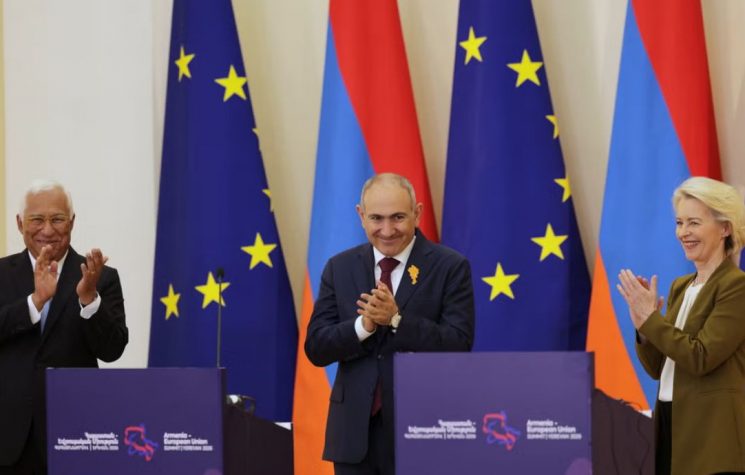
Armenia’s Pashinyan won the election but inherited a cage. Can he juggle EU trade, U.S. TRIPP, and Russian energy – or will his Western gamble collapse under constitutional crisis, closed borders, and a broken opposition?

Join us on TelegramTwitter, and VK.

Contact us: info@strategic-culture.su

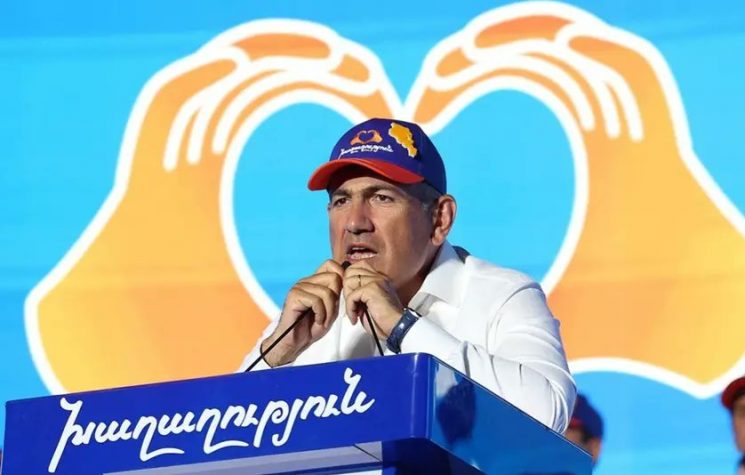
The real gravity of Armenia’s geopolitical crisis has become the center of focus now with the various electoral post-mortems out of the way, global players are now looking at Armenia’s cross roads to understand what Prime Minister Pashinyan will attempt to launch first with his new presumed mandate.  Pashinyan kept the crown, but he inherited a cage.

Will he be able to push three “Real Armenia” connected mandates in this arena: full normalization with Turkey and Azerbaijan, EU trade agreements which further course towards an EU accession agreement, a “Strategic sovereign” exit from the CSTO, and the TRIPP project with the U.S.  These are related but not one and the same, they involve some overlapping players but each rests upon its own dynamic internal logic.  We are curious whether Pashinyan can navigate these in ways which do not further jeopardize Armenia’s critical energy relationship with Russia, or if that rather is the goal irrespective of the blow Pashinyan will have dealt Armenia with such a gambit.

What was already well established was the fact of the Western and multilateral funding ecosystem in Armenia leading up to the June 2026 elections, a highly coordinated institutional structure designed to transition the country away from the more natural CSTO and EAEU and anchor it into European economic and security networks.  These funding streams from the EU, U.S. (via USAID and the NED), and the UN are precisely aligned with Prime Minister Pashinyan’s structural survival strategy and ideological paradigm.

With this electoral juncture now passed and whatever potential for change it held now collapsed, we can examine the regional reality seeing an Armenia barreling towards a complete economic crisis should it proceed towards any free trade agreement with the EU, which if allowed would undermine the community of shared interests within the Eurasian Economic Union.  While Pashinyan says he doesn’t plan to move Armenia outside of the EAEU, this does not in itself establish Armenia’s right to remain a member should member states decide otherwise.  This is in a way reminiscent of crisis in Ukraine in 2014 with Viktor Yanukovych who, though backed by different forces in society and representing a different set of interest groups than Pashinyan, found himself in a delicate balancing act where the ultimatum was the same.

A key part of the conversation that Pashinyan had with Russian President Putin in Moscow, on or about April 1st a few months ago focused on this, with Putin saying, “Simultaneous membership in the Customs Union with the European Union and the EAEU is impossible; it is simply untenable by definition.  The issue is not even a political one; it is purely economic.”

All TRIPPED Up – Make Armenia Great Again?

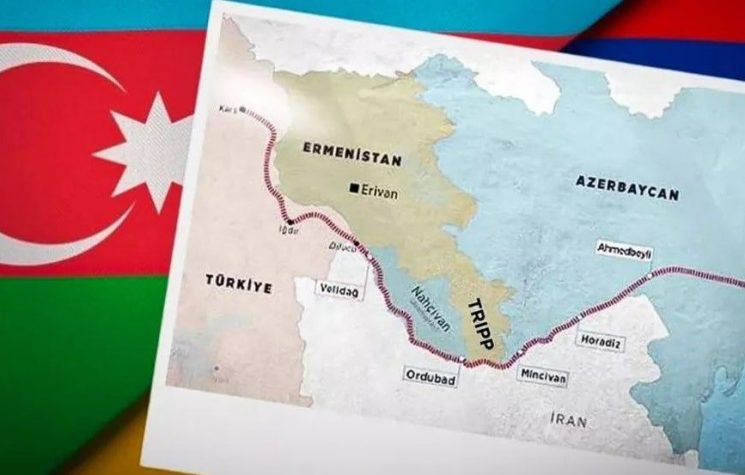
With the U.S. involved now under the bilateral TRIPP Framework Agreement signed on May 26, it will be consequential to determine whether or to what extent Europe will be brought in, or conversely, left excluded.  Following June’s 2026 parliamentary elections, Nikol Pashinyan’s Civil Contract party maintained its majority, but failed to secure the larger constitutional majority needed to unilaterally amend the Armenian constitution.  Baku has explicitly stated that it will not sign a peace treaty or fully open the borders until Armenia removes constitutional references that Azerbaijan claims imply territorial ambitions over Nagorno-Karabakh.  Without that legal breakthrough, the border gates stay locked.

Yerevan, Armenian Foreign Ministers Mirzoyan and Rubio announce TRIPP and signed a Strategic Partnership Charter and MOU on Critical Minerals

Pashinyan is no longer dealing with a clearly united West, but one with inter-elite frictions which have driven policy and access divides on nearly all global conflicts and questions.   Back under the original 2020 ceasefire agreement that ended the Second Nagorno-Karabakh War, border guards of Russia’s Federal Security Service (FSB) were designated to oversee transport connectivity across the Syunik/Zangezur strip.  However, TRIPP, signed between Washington and Yerevan would transfer development and management rights to the newly approved TRIPP Development Company (TDC), which is controlled 74% by a U.S. International Development Finance Corporation (DFC) subsidiary and 26% by Armenia.

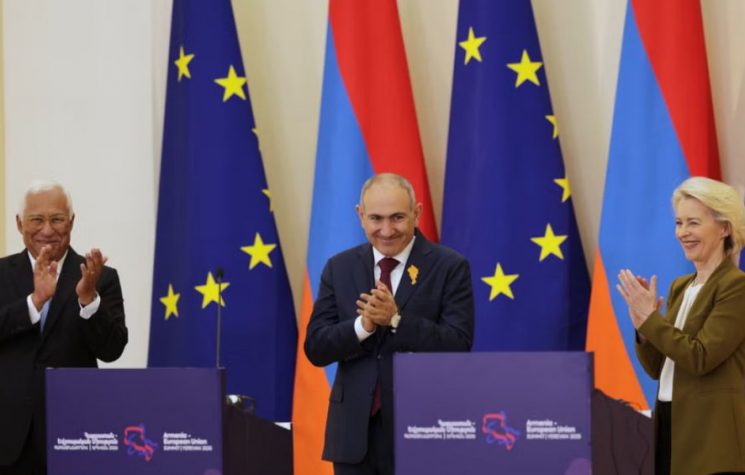
The EU’s official response to TRIPP has been passive-aggressive diplomacy.  Publicly, Brussels signed onto the statements because the project ultimately aligns with their broader goal of containing Russia.  Subtly, however, the EU has communicated clear frustration about being sidelined by Trump’s bilateral approach a resentment that shows up clearly in the structural text of recent agreements.  The Joint Statement on the Armenia-EU Connectivity Partnership signed in Yerevan features a deliberate listing order, stating first that the partnership is fully aligned with the EU’s Global Gateway Strategy, the Cross-Regional Connectivity Agenda, the Crossroads of Peace Initiative, and lastly, the TRIPP Project.  By placing TRIPP fourth in line behind three of its own programmatic titles, Brussels is saying that it does not view Trump’s 99-year corporate venture as an overarching paradigm under which their own plans must now be revised.  Rather, the EU frames TRIPP as merely a sub-component that must conform to pre-existing, European rules-based regulations, even while Trump’s positioning so far places the EU as just another client that has to pay to play.

This European institutional critique manifests in three specific arguments.  First, there is a grumbling grievance regarding the “bypass” approach.  Brussels spent years establishing the “Brussels Format” under European Council President Charles Michel to meticulously mediate between Yerevan and Baku.  Geopolitical Monitor complains that the project represents a total departure from the rules-based, multilateral liberal order that Brussels champions.  When Trump bypassed that entire framework to execute a swift, corporate sign-off in Washington, EU officials subtly griped that “transactional theater” was overriding deep, structural institutional work.

Second, the EU has deployed a calculated vetting and sovereignty warning.  As reported by the Institut Montaigne, European Commission diplomats have repeatedly emphasized that any regional corridor must respect robust technical criteria and integrate with the wider European digital and transport ecosystem.  Their concern is that the U.S. built a private corporate box via the TRIPP Development Company, backed by a recent $2.5 billion DFC strategic investment package, but European banks are not going to fund the surrounding infrastructure unless it adheres to EU regulations, safety metrics, and anti-monopoly laws, which would require too much from Armenia.

Finally, there are blatant environmental and mining gripes. The EU has expressed annoyance that Washington used TRIPP as a geopolitical crowbar to secure exclusive procurement rights for Armenia’s critical minerals like copper and molybdenum.  While the EU is left to pay for what they say is for basic regional stabilization, democratic building blocks, and €50 million immediate aid packages, American private sector interests walked away with the premium raw materials required for Europe’s own green transition.  While the existence of such a corridor is one they approve of, the problem isn’t what the corridor does but rather it’s how it is run and who profits from it.

All of these problems would merely be driven to the forefront if Pashinyan was able to maneuver in parliament to change the constitution.  But Pashinyan’s victory announcement did not include any governing coalition, and here is where events will play out in the coming days and weeks.  This of course presents a constitutional crisis for Armenia, but one which without resolution renders TRIPP just one more American initiative that captures headlines and points to a possibility, but with little tangibly to show for it.

Merging Armenia into the Turkish geoeconomic complex

Pashinyan’s own autochauvinist project appeals to Western leaning layers in Yerevan who have come to believe that Armenia has to drop its constitution’s own preambulatory and other language which contained irredentist commitments, or the use of official state logos and seals containing Mount Ararat which is historical Armenia but within modern Turkey.  Pashinyan and many of his voters believe that Armenia’s culture and politics requires a total transvaluation, letting go of territorial claims and a victim narrative which they believe sustains poor relations with Turkey and Azerbaijan.  Pashinyan has lulled his voters into believing that they could keep its energy agreement with Russia while proceeding down a path of Europeanization which is a non-starter ultimately for Moscow.

But the Pashinyan machine is a well-funded Western globalist oligarchical structure, and what they seek to impose upon Armenia does not place Armenia first.  This appears as a push to transform them to a type of generic South Caucasus people who can provide heavy metals and industrial minerals within a broader geo-econometric post-cultural zone.  “Being Armenian” just has too much baggage, and one can almost for a moment see the rationale in the idea before realizing that neither Turkey nor Azerbaijan is moving in the post-cultural direction.  Armenia is compelled to abandon its historicity while powerful neighbors double-down on their own.

While Pashinyan’s machine accuses the opposition “Strong Armenia” for representing the old guard but also of being controlled by Moscow, his power group only does this to deflect from the more problematic and unpopular politics Pashinyan has played and disastrous concessions he is accused of giving in pursuit of normalization with Turkey and Azerbaijan, where presently the land borders remain closed.

Moscow is not inherently opposed to unblocking borders, or the normalization of ties between Yerevan, Baku, and Ankara.  In fact, Russia historically favored these linkages provided they operated in such a way that did not operate as surrogate for, or an end-run around the interests of the EAEU.  The crisis is entirely about who controls the infrastructure and the geopolitical orientation that comes with it.

Because Turkey’s regional policy is fully synchronized with Azerbaijan, Ankara refuses to fully open the Armenia-Turkey border or normalize trade until Armenia signs that peace treaty with Baku, which then places any strategy of Armenian integration into Turkey’s broader economy in the same bucket as TRIPP itself.

Pashinyan remains in power now because he succeeded in dismantling much of the old electoral regime associated with the pre-2018 system.  So while we read over the past few days of the systemic oppression and persecution of opposition political figures and parties for whom attacks on the Church and the abdication of duty in the face of the ethnic cleansing of the Armenians in Nagorno-Karabakh were among the many other motivating factors, the election we saw was largely a foregone conclusion made possible by procedural and electoral reforms which only consolidated Pashinyan’s ability to remain in power.  With the odds stacked, the opposition still made a strong officially recognized showing which may even be sufficient to deprive Pashinyan what he needs once he realizes he needs a coalition to pursue his aims, if for the former they can build a greater oppositional axis.

Pashinyan’s reforms to stay in power

The most consequential electoral reform undertaken under Pashinyan was the abolition of Armenia’s so-called “ratingayin” system, under which voters used to select not only political parties but also individual candidates within territorial districts.  Sorosian and neoliberal critics of the old model argued that it favored wealthy businessmen, local power brokers, and entrenched patronage networks capable of mobilizing votes through personal influence rather than, we are to imagine, “political programs”.  Defenders of the old system argued that it provided a crucial link between voters and individual representatives in a political culture where parties themselves were often weak or unstable.  They contended that removing territorial accountability risked further centralizing power in party leaderships based in Yerevan, weakening regional representation rather than strengthening democracy.

A growing body of reporting from international press freedom monitors and rights organisations has raised concerns about an increase in pressure on critics in Armenia under Pashinyan’s government, particularly through defamation cases, pre-trial detention, and the use of vaguely defined “public order” charges.  The Council of Europe’s Safety of Journalists Platform, for example, recorded the detention of media actors in Armenia in connection with criminal proceedings, while noting that such cases have become a first-time inclusion in recent monitoring cycles, a marker of deteriorating conditions.  At the same time, civil society groups have accused authorities of “selective and disproportionate” application of criminal law against critics.

Armenia at a crossroads

The EU would have to solve large-scale problems to further free-trade agreements with Turkey whether or not towards EU accession, a process stalled since 2018.  Rather, it seems the EU’s most viable approach would have been through a Black Sea based supply-chain, leading to the Balkans by sea or even to Crimea or Odessa.  Based on these overlapping structural, economic, and domestic dynamics, the core dilemma facing Pashinyan can be summarized:

How will Pashinyan reconcile its geopolitical pursuit of Western integration, encapsulated by the TRIPP corridor and EU alignment, with the acute risk of economic and energy alienation from Moscow, particularly as the Civil Contract party attempts to govern without a formal coalition despite lacking the constitutional majority needed to resolve the border-locking disputes with Baku, or normalization with Turkey; and what structural mechanisms remain for an alternative political machine to emerge given the government’s comprehensive consolidation of the electoral system, media landscape, and civic space?  Without this, Armenia sits at only crossroads of sorts, a junction of roads that no one can build, and that in reality, do not exist at all.

An Armenian Crossroads that no one will build

Armenia’s Pashinyan won the election but inherited a cage. Can he juggle EU trade, U.S. TRIPP, and Russian energy – or will his Western gamble collapse under constitutional crisis, closed borders, and a broken opposition?

Join us on TelegramTwitter, and VK.

Contact us: info@strategic-culture.su

The real gravity of Armenia’s geopolitical crisis has become the center of focus now with the various electoral post-mortems out of the way, global players are now looking at Armenia’s cross roads to understand what Prime Minister Pashinyan will attempt to launch first with his new presumed mandate.  Pashinyan kept the crown, but he inherited a cage.

Will he be able to push three “Real Armenia” connected mandates in this arena: full normalization with Turkey and Azerbaijan, EU trade agreements which further course towards an EU accession agreement, a “Strategic sovereign” exit from the CSTO, and the TRIPP project with the U.S.  These are related but not one and the same, they involve some overlapping players but each rests upon its own dynamic internal logic.  We are curious whether Pashinyan can navigate these in ways which do not further jeopardize Armenia’s critical energy relationship with Russia, or if that rather is the goal irrespective of the blow Pashinyan will have dealt Armenia with such a gambit.
What was already well established was the fact of the Western and multilateral funding ecosystem in Armenia leading up to the June 2026 elections, a highly coordinated institutional structure designed to transition the country away from the more natural CSTO and EAEU and anchor it into European economic and security networks.  These funding streams from the EU, U.S. (via USAID and the NED), and the UN are precisely aligned with Prime Minister Pashinyan’s structural survival strategy and ideological paradigm.

With this electoral juncture now passed and whatever potential for change it held now collapsed, we can examine the regional reality seeing an Armenia barreling towards a complete economic crisis should it proceed towards any free trade agreement with the EU, which if allowed would undermine the community of shared interests within the Eurasian Economic Union.  While Pashinyan says he doesn’t plan to move Armenia outside of the EAEU, this does not in itself establish Armenia’s right to remain a member should member states decide otherwise.  This is in a way reminiscent of crisis in Ukraine in 2014 with Viktor Yanukovych who, though backed by different forces in society and representing a different set of interest groups than Pashinyan, found himself in a delicate balancing act where the ultimatum was the same.

A key part of the conversation that Pashinyan had with Russian President Putin in Moscow, on or about April 1st a few months ago focused on this, with Putin saying, “Simultaneous membership in the Customs Union with the European Union and the EAEU is impossible; it is simply untenable by definition.  The issue is not even a political one; it is purely economic.”

All TRIPPED Up – Make Armenia Great Again?

With the U.S. involved now under the bilateral TRIPP Framework Agreement signed on May 26, it will be consequential to determine whether or to what extent Europe will be brought in, or conversely, left excluded.  Following June’s 2026 parliamentary elections, Nikol Pashinyan’s Civil Contract party maintained its majority, but failed to secure the larger constitutional majority needed to unilaterally amend the Armenian constitution.  Baku has explicitly stated that it will not sign a peace treaty or fully open the borders until Armenia removes constitutional references that Azerbaijan claims imply territorial ambitions over Nagorno-Karabakh.  Without that legal breakthrough, the border gates stay locked.
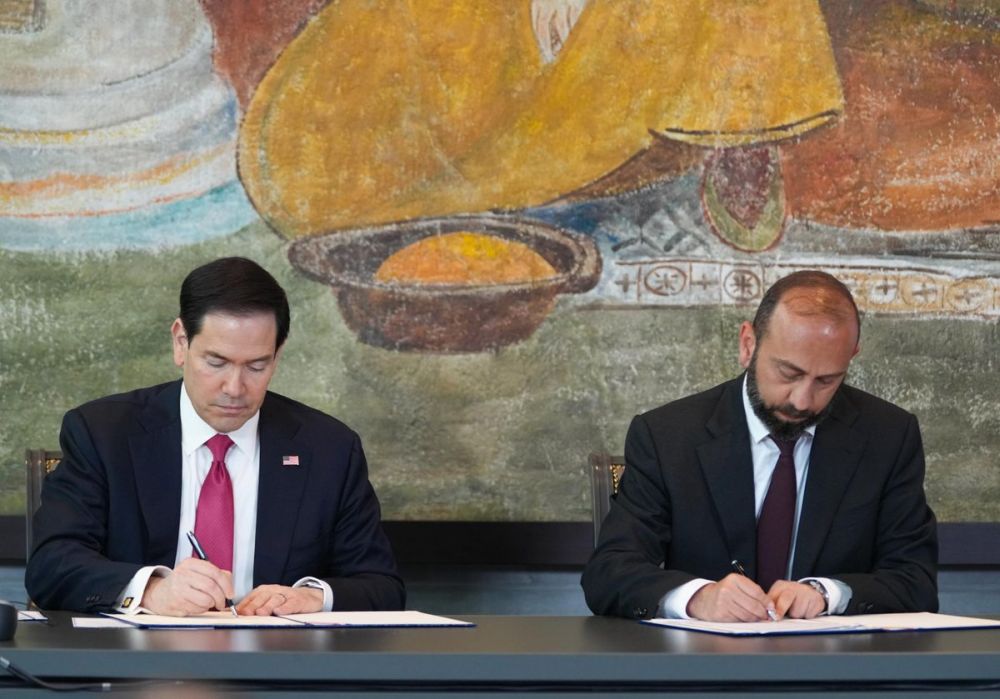
Yerevan, Armenian Foreign Ministers Mirzoyan and Rubio announce TRIPP and signed a Strategic Partnership Charter and MOU on Critical Minerals

Pashinyan is no longer dealing with a clearly united West, but one with inter-elite frictions which have driven policy and access divides on nearly all global conflicts and questions.   Back under the original 2020 ceasefire agreement that ended the Second Nagorno-Karabakh War, border guards of Russia’s Federal Security Service (FSB) were designated to oversee transport connectivity across the Syunik/Zangezur strip.  However, TRIPP, signed between Washington and Yerevan would transfer development and management rights to the newly approved TRIPP Development Company (TDC), which is controlled 74% by a U.S. International Development Finance Corporation (DFC) subsidiary and 26% by Armenia.

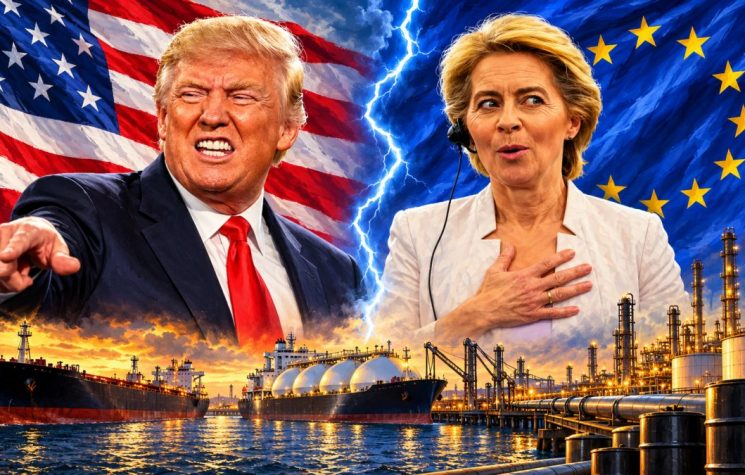
The EU’s official response to TRIPP has been passive-aggressive diplomacy.  Publicly, Brussels signed onto the statements because the project ultimately aligns with their broader goal of containing Russia.  Subtly, however, the EU has communicated clear frustration about being sidelined by Trump’s bilateral approach a resentment that shows up clearly in the structural text of recent agreements.  The Joint Statement on the Armenia-EU Connectivity Partnership signed in Yerevan features a deliberate listing order, stating first that the partnership is fully aligned with the EU’s Global Gateway Strategy, the Cross-Regional Connectivity Agenda, the Crossroads of Peace Initiative, and lastly, the TRIPP Project.  By placing TRIPP fourth in line behind three of its own programmatic titles, Brussels is saying that it does not view Trump’s 99-year corporate venture as an overarching paradigm under which their own plans must now be revised.  Rather, the EU frames TRIPP as merely a sub-component that must conform to pre-existing, European rules-based regulations, even while Trump’s positioning so far places the EU as just another client that has to pay to play.

This European institutional critique manifests in three specific arguments.  First, there is a grumbling grievance regarding the “bypass” approach.  Brussels spent years establishing the “Brussels Format” under European Council President Charles Michel to meticulously mediate between Yerevan and Baku.  Geopolitical Monitor complains that the project represents a total departure from the rules-based, multilateral liberal order that Brussels champions.  When Trump bypassed that entire framework to execute a swift, corporate sign-off in Washington, EU officials subtly griped that “transactional theater” was overriding deep, structural institutional work.

Second, the EU has deployed a calculated vetting and sovereignty warning.  As reported by the Institut Montaigne, European Commission diplomats have repeatedly emphasized that any regional corridor must respect robust technical criteria and integrate with the wider European digital and transport ecosystem.  Their concern is that the U.S. built a private corporate box via the TRIPP Development Company, backed by a recent $2.5 billion DFC strategic investment package, but European banks are not going to fund the surrounding infrastructure unless it adheres to EU regulations, safety metrics, and anti-monopoly laws, which would require too much from Armenia.

Finally, there are blatant environmental and mining gripes. The EU has expressed annoyance that Washington used TRIPP as a geopolitical crowbar to secure exclusive procurement rights for Armenia’s critical minerals like copper and molybdenum.  While the EU is left to pay for what they say is for basic regional stabilization, democratic building blocks, and €50 million immediate aid packages, American private sector interests walked away with the premium raw materials required for Europe’s own green transition.  While the existence of such a corridor is one they approve of, the problem isn’t what the corridor does but rather it’s how it is run and who profits from it.

All of these problems would merely be driven to the forefront if Pashinyan was able to maneuver in parliament to change the constitution.  But Pashinyan’s victory announcement did not include any governing coalition, and here is where events will play out in the coming days and weeks.  This of course presents a constitutional crisis for Armenia, but one which without resolution renders TRIPP just one more American initiative that captures headlines and points to a possibility, but with little tangibly to show for it.

Merging Armenia into the Turkish geoeconomic complex

Pashinyan’s own autochauvinist project appeals to Western leaning layers in Yerevan who have come to believe that Armenia has to drop its constitution’s own preambulatory and other language which contained irredentist commitments, or the use of official state logos and seals containing Mount Ararat which is historical Armenia but within modern Turkey.  Pashinyan and many of his voters believe that Armenia’s culture and politics requires a total transvaluation, letting go of territorial claims and a victim narrative which they believe sustains poor relations with Turkey and Azerbaijan.  Pashinyan has lulled his voters into believing that they could keep its energy agreement with Russia while proceeding down a path of Europeanization which is a non-starter ultimately for Moscow.

But the Pashinyan machine is a well-funded Western globalist oligarchical structure, and what they seek to impose upon Armenia does not place Armenia first.  This appears as a push to transform them to a type of generic South Caucasus people who can provide heavy metals and industrial minerals within a broader geo-econometric post-cultural zone.  “Being Armenian” just has too much baggage, and one can almost for a moment see the rationale in the idea before realizing that neither Turkey nor Azerbaijan is moving in the post-cultural direction.  Armenia is compelled to abandon its historicity while powerful neighbors double-down on their own.

While Pashinyan’s machine accuses the opposition “Strong Armenia” for representing the old guard but also of being controlled by Moscow, his power group only does this to deflect from the more problematic and unpopular politics Pashinyan has played and disastrous concessions he is accused of giving in pursuit of normalization with Turkey and Azerbaijan, where presently the land borders remain closed.

Moscow is not inherently opposed to unblocking borders, or the normalization of ties between Yerevan, Baku, and Ankara.  In fact, Russia historically favored these linkages provided they operated in such a way that did not operate as surrogate for, or an end-run around the interests of the EAEU.  The crisis is entirely about who controls the infrastructure and the geopolitical orientation that comes with it.

Because Turkey’s regional policy is fully synchronized with Azerbaijan, Ankara refuses to fully open the Armenia-Turkey border or normalize trade until Armenia signs that peace treaty with Baku, which then places any strategy of Armenian integration into Turkey’s broader economy in the same bucket as TRIPP itself.

Pashinyan remains in power now because he succeeded in dismantling much of the old electoral regime associated with the pre-2018 system.  So while we read over the past few days of the systemic oppression and persecution of opposition political figures and parties for whom attacks on the Church and the abdication of duty in the face of the ethnic cleansing of the Armenians in Nagorno-Karabakh were among the many other motivating factors, the election we saw was largely a foregone conclusion made possible by procedural and electoral reforms which only consolidated Pashinyan’s ability to remain in power.  With the odds stacked, the opposition still made a strong officially recognized showing which may even be sufficient to deprive Pashinyan what he needs once he realizes he needs a coalition to pursue his aims, if for the former they can build a greater oppositional axis.

Pashinyan’s reforms to stay in power

The most consequential electoral reform undertaken under Pashinyan was the abolition of Armenia’s so-called “ratingayin” system, under which voters used to select not only political parties but also individual candidates within territorial districts.  Sorosian and neoliberal critics of the old model argued that it favored wealthy businessmen, local power brokers, and entrenched patronage networks capable of mobilizing votes through personal influence rather than, we are to imagine, “political programs”.  Defenders of the old system argued that it provided a crucial link between voters and individual representatives in a political culture where parties themselves were often weak or unstable.  They contended that removing territorial accountability risked further centralizing power in party leaderships based in Yerevan, weakening regional representation rather than strengthening democracy.

A growing body of reporting from international press freedom monitors and rights organisations has raised concerns about an increase in pressure on critics in Armenia under Pashinyan’s government, particularly through defamation cases, pre-trial detention, and the use of vaguely defined “public order” charges.  The Council of Europe’s Safety of Journalists Platform, for example, recorded the detention of media actors in Armenia in connection with criminal proceedings, while noting that such cases have become a first-time inclusion in recent monitoring cycles, a marker of deteriorating conditions.  At the same time, civil society groups have accused authorities of “selective and disproportionate” application of criminal law against critics.

Armenia at a crossroads

The EU would have to solve large-scale problems to further free-trade agreements with Turkey whether or not towards EU accession, a process stalled since 2018.  Rather, it seems the EU’s most viable approach would have been through a Black Sea based supply-chain, leading to the Balkans by sea or even to Crimea or Odessa.  Based on these overlapping structural, economic, and domestic dynamics, the core dilemma facing Pashinyan can be summarized:

How will Pashinyan reconcile its geopolitical pursuit of Western integration, encapsulated by the TRIPP corridor and EU alignment, with the acute risk of economic and energy alienation from Moscow, particularly as the Civil Contract party attempts to govern without a formal coalition despite lacking the constitutional majority needed to resolve the border-locking disputes with Baku, or normalization with Turkey; and what structural mechanisms remain for an alternative political machine to emerge given the government’s comprehensive consolidation of the electoral system, media landscape, and civic space?  Without this, Armenia sits at only crossroads of sorts, a junction of roads that no one can build, and that in reality, do not exist at all.

Armenia’s Pashinyan won the election but inherited a cage. Can he juggle EU trade, U.S. TRIPP, and Russian energy – or will his Western gamble collapse under constitutional crisis, closed borders, and a broken opposition?

Join us on TelegramTwitter, and VK.

Contact us: info@strategic-culture.su

The real gravity of Armenia’s geopolitical crisis has become the center of focus now with the various electoral post-mortems out of the way, global players are now looking at Armenia’s cross roads to understand what Prime Minister Pashinyan will attempt to launch first with his new presumed mandate.  Pashinyan kept the crown, but he inherited a cage.

Will he be able to push three “Real Armenia” connected mandates in this arena: full normalization with Turkey and Azerbaijan, EU trade agreements which further course towards an EU accession agreement, a “Strategic sovereign” exit from the CSTO, and the TRIPP project with the U.S.  These are related but not one and the same, they involve some overlapping players but each rests upon its own dynamic internal logic.  We are curious whether Pashinyan can navigate these in ways which do not further jeopardize Armenia’s critical energy relationship with Russia, or if that rather is the goal irrespective of the blow Pashinyan will have dealt Armenia with such a gambit.

What was already well established was the fact of the Western and multilateral funding ecosystem in Armenia leading up to the June 2026 elections, a highly coordinated institutional structure designed to transition the country away from the more natural CSTO and EAEU and anchor it into European economic and security networks.  These funding streams from the EU, U.S. (via USAID and the NED), and the UN are precisely aligned with Prime Minister Pashinyan’s structural survival strategy and ideological paradigm.

With this electoral juncture now passed and whatever potential for change it held now collapsed, we can examine the regional reality seeing an Armenia barreling towards a complete economic crisis should it proceed towards any free trade agreement with the EU, which if allowed would undermine the community of shared interests within the Eurasian Economic Union.  While Pashinyan says he doesn’t plan to move Armenia outside of the EAEU, this does not in itself establish Armenia’s right to remain a member should member states decide otherwise.  This is in a way reminiscent of crisis in Ukraine in 2014 with Viktor Yanukovych who, though backed by different forces in society and representing a different set of interest groups than Pashinyan, found himself in a delicate balancing act where the ultimatum was the same.

A key part of the conversation that Pashinyan had with Russian President Putin in Moscow, on or about April 1st a few months ago focused on this, with Putin saying, “Simultaneous membership in the Customs Union with the European Union and the EAEU is impossible; it is simply untenable by definition.  The issue is not even a political one; it is purely economic.”

All TRIPPED Up – Make Armenia Great Again?

With the U.S. involved now under the bilateral TRIPP Framework Agreement signed on May 26, it will be consequential to determine whether or to what extent Europe will be brought in, or conversely, left excluded.  Following June’s 2026 parliamentary elections, Nikol Pashinyan’s Civil Contract party maintained its majority, but failed to secure the larger constitutional majority needed to unilaterally amend the Armenian constitution.  Baku has explicitly stated that it will not sign a peace treaty or fully open the borders until Armenia removes constitutional references that Azerbaijan claims imply territorial ambitions over Nagorno-Karabakh.  Without that legal breakthrough, the border gates stay locked.

Yerevan, Armenian Foreign Ministers Mirzoyan and Rubio announce TRIPP and signed a Strategic Partnership Charter and MOU on Critical Minerals

Pashinyan is no longer dealing with a clearly united West, but one with inter-elite frictions which have driven policy and access divides on nearly all global conflicts and questions.   Back under the original 2020 ceasefire agreement that ended the Second Nagorno-Karabakh War, border guards of Russia’s Federal Security Service (FSB) were designated to oversee transport connectivity across the Syunik/Zangezur strip.  However, TRIPP, signed between Washington and Yerevan would transfer development and management rights to the newly approved TRIPP Development Company (TDC), which is controlled 74% by a U.S. International Development Finance Corporation (DFC) subsidiary and 26% by Armenia.

The EU’s official response to TRIPP has been passive-aggressive diplomacy.  Publicly, Brussels signed onto the statements because the project ultimately aligns with their broader goal of containing Russia.  Subtly, however, the EU has communicated clear frustration about being sidelined by Trump’s bilateral approach a resentment that shows up clearly in the structural text of recent agreements.  The Joint Statement on the Armenia-EU Connectivity Partnership signed in Yerevan features a deliberate listing order, stating first that the partnership is fully aligned with the EU’s Global Gateway Strategy, the Cross-Regional Connectivity Agenda, the Crossroads of Peace Initiative, and lastly, the TRIPP Project.  By placing TRIPP fourth in line behind three of its own programmatic titles, Brussels is saying that it does not view Trump’s 99-year corporate venture as an overarching paradigm under which their own plans must now be revised.  Rather, the EU frames TRIPP as merely a sub-component that must conform to pre-existing, European rules-based regulations, even while Trump’s positioning so far places the EU as just another client that has to pay to play.

This European institutional critique manifests in three specific arguments.  First, there is a grumbling grievance regarding the “bypass” approach.  Brussels spent years establishing the “Brussels Format” under European Council President Charles Michel to meticulously mediate between Yerevan and Baku.  Geopolitical Monitor complains that the project represents a total departure from the rules-based, multilateral liberal order that Brussels champions.  When Trump bypassed that entire framework to execute a swift, corporate sign-off in Washington, EU officials subtly griped that “transactional theater” was overriding deep, structural institutional work.

Second, the EU has deployed a calculated vetting and sovereignty warning.  As reported by the Institut Montaigne, European Commission diplomats have repeatedly emphasized that any regional corridor must respect robust technical criteria and integrate with the wider European digital and transport ecosystem.  Their concern is that the U.S. built a private corporate box via the TRIPP Development Company, backed by a recent $2.5 billion DFC strategic investment package, but European banks are not going to fund the surrounding infrastructure unless it adheres to EU regulations, safety metrics, and anti-monopoly laws, which would require too much from Armenia.

Finally, there are blatant environmental and mining gripes. The EU has expressed annoyance that Washington used TRIPP as a geopolitical crowbar to secure exclusive procurement rights for Armenia’s critical minerals like copper and molybdenum.  While the EU is left to pay for what they say is for basic regional stabilization, democratic building blocks, and €50 million immediate aid packages, American private sector interests walked away with the premium raw materials required for Europe’s own green transition.  While the existence of such a corridor is one they approve of, the problem isn’t what the corridor does but rather it’s how it is run and who profits from it.

All of these problems would merely be driven to the forefront if Pashinyan was able to maneuver in parliament to change the constitution.  But Pashinyan’s victory announcement did not include any governing coalition, and here is where events will play out in the coming days and weeks.  This of course presents a constitutional crisis for Armenia, but one which without resolution renders TRIPP just one more American initiative that captures headlines and points to a possibility, but with little tangibly to show for it.

Merging Armenia into the Turkish geoeconomic complex

Pashinyan’s own autochauvinist project appeals to Western leaning layers in Yerevan who have come to believe that Armenia has to drop its constitution’s own preambulatory and other language which contained irredentist commitments, or the use of official state logos and seals containing Mount Ararat which is historical Armenia but within modern Turkey.  Pashinyan and many of his voters believe that Armenia’s culture and politics requires a total transvaluation, letting go of territorial claims and a victim narrative which they believe sustains poor relations with Turkey and Azerbaijan.  Pashinyan has lulled his voters into believing that they could keep its energy agreement with Russia while proceeding down a path of Europeanization which is a non-starter ultimately for Moscow.

But the Pashinyan machine is a well-funded Western globalist oligarchical structure, and what they seek to impose upon Armenia does not place Armenia first.  This appears as a push to transform them to a type of generic South Caucasus people who can provide heavy metals and industrial minerals within a broader geo-econometric post-cultural zone.  “Being Armenian” just has too much baggage, and one can almost for a moment see the rationale in the idea before realizing that neither Turkey nor Azerbaijan is moving in the post-cultural direction.  Armenia is compelled to abandon its historicity while powerful neighbors double-down on their own.

While Pashinyan’s machine accuses the opposition “Strong Armenia” for representing the old guard but also of being controlled by Moscow, his power group only does this to deflect from the more problematic and unpopular politics Pashinyan has played and disastrous concessions he is accused of giving in pursuit of normalization with Turkey and Azerbaijan, where presently the land borders remain closed.

Moscow is not inherently opposed to unblocking borders, or the normalization of ties between Yerevan, Baku, and Ankara.  In fact, Russia historically favored these linkages provided they operated in such a way that did not operate as surrogate for, or an end-run around the interests of the EAEU.  The crisis is entirely about who controls the infrastructure and the geopolitical orientation that comes with it.

Because Turkey’s regional policy is fully synchronized with Azerbaijan, Ankara refuses to fully open the Armenia-Turkey border or normalize trade until Armenia signs that peace treaty with Baku, which then places any strategy of Armenian integration into Turkey’s broader economy in the same bucket as TRIPP itself.

Pashinyan remains in power now because he succeeded in dismantling much of the old electoral regime associated with the pre-2018 system.  So while we read over the past few days of the systemic oppression and persecution of opposition political figures and parties for whom attacks on the Church and the abdication of duty in the face of the ethnic cleansing of the Armenians in Nagorno-Karabakh were among the many other motivating factors, the election we saw was largely a foregone conclusion made possible by procedural and electoral reforms which only consolidated Pashinyan’s ability to remain in power.  With the odds stacked, the opposition still made a strong officially recognized showing which may even be sufficient to deprive Pashinyan what he needs once he realizes he needs a coalition to pursue his aims, if for the former they can build a greater oppositional axis.

Pashinyan’s reforms to stay in power

The most consequential electoral reform undertaken under Pashinyan was the abolition of Armenia’s so-called “ratingayin” system, under which voters used to select not only political parties but also individual candidates within territorial districts.  Sorosian and neoliberal critics of the old model argued that it favored wealthy businessmen, local power brokers, and entrenched patronage networks capable of mobilizing votes through personal influence rather than, we are to imagine, “political programs”.  Defenders of the old system argued that it provided a crucial link between voters and individual representatives in a political culture where parties themselves were often weak or unstable.  They contended that removing territorial accountability risked further centralizing power in party leaderships based in Yerevan, weakening regional representation rather than strengthening democracy.

A growing body of reporting from international press freedom monitors and rights organisations has raised concerns about an increase in pressure on critics in Armenia under Pashinyan’s government, particularly through defamation cases, pre-trial detention, and the use of vaguely defined “public order” charges.  The Council of Europe’s Safety of Journalists Platform, for example, recorded the detention of media actors in Armenia in connection with criminal proceedings, while noting that such cases have become a first-time inclusion in recent monitoring cycles, a marker of deteriorating conditions.  At the same time, civil society groups have accused authorities of “selective and disproportionate” application of criminal law against critics.

Armenia at a crossroads

The EU would have to solve large-scale problems to further free-trade agreements with Turkey whether or not towards EU accession, a process stalled since 2018.  Rather, it seems the EU’s most viable approach would have been through a Black Sea based supply-chain, leading to the Balkans by sea or even to Crimea or Odessa.  Based on these overlapping structural, economic, and domestic dynamics, the core dilemma facing Pashinyan can be summarized:

How will Pashinyan reconcile its geopolitical pursuit of Western integration, encapsulated by the TRIPP corridor and EU alignment, with the acute risk of economic and energy alienation from Moscow, particularly as the Civil Contract party attempts to govern without a formal coalition despite lacking the constitutional majority needed to resolve the border-locking disputes with Baku, or normalization with Turkey; and what structural mechanisms remain for an alternative political machine to emerge given the government’s comprehensive consolidation of the electoral system, media landscape, and civic space?  Without this, Armenia sits at only crossroads of sorts, a junction of roads that no one can build, and that in reality, do not exist at all.

The views of individual contributors do not necessarily represent those of the Strategic Culture Foundation.
See also

June 13, 2026

See also

June 13, 2026
The views of individual contributors do not necessarily represent those of the Strategic Culture Foundation.