
Society
George Austerfield
August 14, 2026
© Photo: Public domain

Media integrity is dead – and omission is the weapon.

Join us on Telegram, X, and VK.

Contact us: info@strategic-culture.su

“Knowing my own heart, and feeling myself, as I now do, superior to all the skirmish of party, the inveteracy of interested or mistaken opponents, I answer not to falsehood or abuse.”

– Thomas Paine (1)

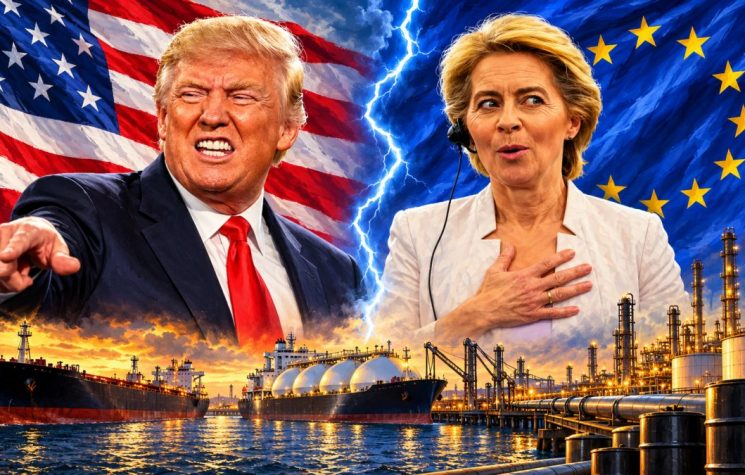
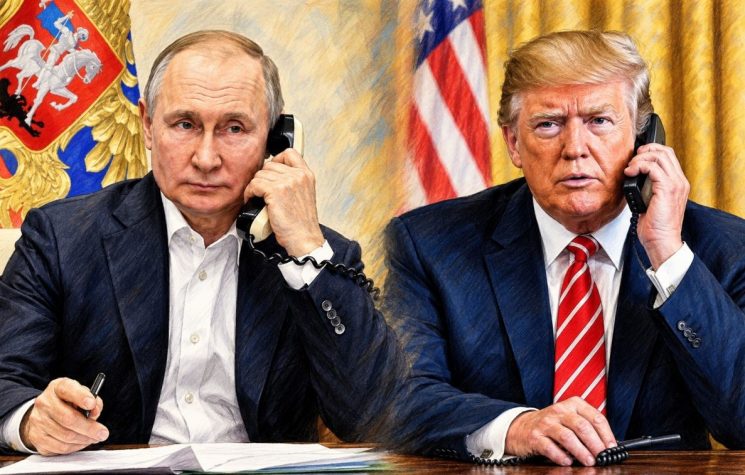
Looking at the flip-flopping in the media by the President of the USA, the style of his offerings and the silence of the mainstream media, the words of Tomas Paine quoted above should perhaps be read to him and not just the once.

Integrity is one of the many keys, but special and vital because it can unlock – and lock – many doors. Integrity as a personal quality however is not at issue here and must not be conflated with integrity as a precondition and measure of legitimate informing (2). The latter we shall take a closer look at: In question is the very integrity of an anchorperson against the background of legitimate informing (choice of subject and presentation) in which we will find four distinct but inter-related delimitations of free speech: the anchorperson (1) characterises/biases the public discourse (2) through his selection (3) and omission (4) of information.

But before we start, let us for a moment catch up on illegitimate informing. We have pointed out that “the media” can be used to educate and consequently uneducated our perception of what is being said, with all the bias included. Bias however is not a natural consequence of informing, but of embeddedness, which Daniel Little defines as a relational concept between an actor (or an anchorperson) and others whose actions are to be understood not independent but directly related to – and therefore dependant on – the actions of the anchorperson. (3)

The anchorperson on the other hand is embedded one way or the other, either into an abstract entity in the form of any news agency, (4) or (as an independent journalist) into the bias of their critical un-embeddedness. Either way, the question of embeddedness is key to understanding the anchorpersons means of reporting. Critical un-embeddedness is rather difficult to discriminate, opposite to a news agency, which can be described as left-wing, right-wing, or conservative rather easily.

Assume a fairly rich person buying a media outlet. It is tax-deductible and perhaps even a good investment. This person, say its a man, will not buy such a thing if it does not fit his outward appearance and so be a picture of his opinion and standpoint. A right-wing billionaire will not necessarily buy and run a left-wing trade union friendly rag. The publications of this investment will therefore be inclined to follow his lead, those not agreeing would not climb the proverbial ladder and so leave for healthier climes. (5) The anchorperson ( a presenter or someone “in the know” ) thus bequeaths the viewer with the bias he or she was bequeathed with by, let’s say that fairly rich person buying the media outlet (the boss). Fortunately, it is often rather easy to discriminate the bias through tone and information of the anchorperson’s reporting.

Yet, there is another side to bias which cannot be discriminated as easily but bears heavier consequences in comparison: If, for example, the questions posed at question time by media, having been pre-arranged and submitted to the politicians before hand, are not asked but other unprepared ones. The person asking that question would never be invited to these press conferences again (6), his question would nevertheless go unanswered. Travels with politicians are a sought after thing, but only to a chosen few.

The wrong remark or unfortunate article and this ticket is gone. Moreover, what if a public servant for example Mr. Snowden (as he is so far from present day discussions so we avoid stepping on somebody`s toes) does his duty to the public he serves and follows the law but treads on one or two toes with his reporting and things happen to him as have happened to him? (In this sense, Mr Snowden was an embedded anchorperson as he was working for the NSA)

Embeddedness hence constraints the anchorperson’s integrity; which brings us to the second big constraint (and a much used tool), namely omission, which can be looked upon as being either positive or negative, with the effect being the same. When things are there but remain hidden it implies someone or something is deciding what will be hidden and what will not.

It would appear that there is indeed someone or something involved, as omission is a very conscious activity. Inactive omission is a form of negligence and can be looked upon as accidental. Positively, omitting information can be used as a means to satisfy embeddedness on the one hand and guarantee a maximal critical and balanced perspective on the produced content on the other. Negatively, omission comes across as the active form of the pantomime of hush, as it is used to actively intentionally bias the content and thus the readers’ and consumers’ perception. (7)

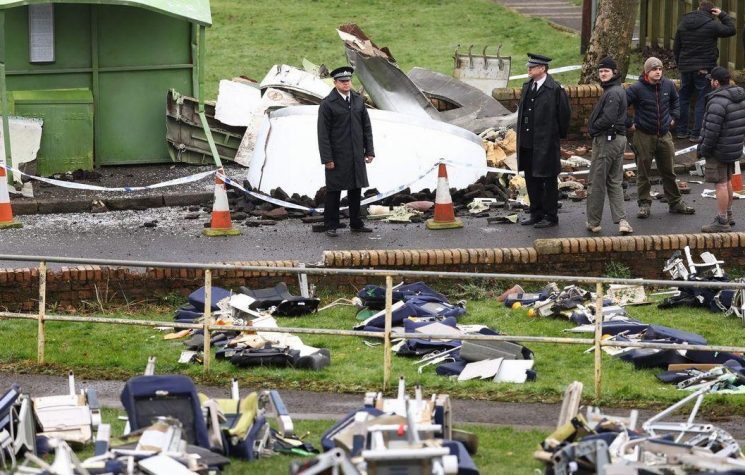
As an example take the reports that circulated after the downing of the aircraft over the Ukraine, the MH17. (8) Television correspondent were at the scene and filmed and interviewed so-called eyewitnesses. Two reports spring to mind, both being a wonderful example for omission. The first and less controversial was the footage showing a rebel walking over the wreckage and showing the reporter items belonging to the dead passengers.

The text covering this film depicted a gloating terrorist defiling the belongings of the dead. The rest of the film was cut out and not broadcasted. This showed him breaking down in tears overcome by the tragedy. Far from the gloating terrorist the media needed because it fitted into the blame picture. (9)

The second and more controversial was the footage filmed by the Ukrainian BBC reporter. She interviewed a number of the local residents and also showed the wreckage all live. As a Ukrainian she was able to understand the locals and translate their statements directly. The local residents stated that they had seen a jet fighter of the Ukrainian air force following the airliner and shooting a rocket at it. After that the airliner exploded and fell from the sky. This film was only broadcasted once since it was live. After that it was not aired again and is not accessible in the archives of the BBC.

Things said and things omitted are two pronged: as a means used in the process of informing (or biasing) the public and as a liability with regard to a yet to be reached target. This lies in the act of speaking itself, since communicating in any form or manner needs a receptor and a reason. The anchorperson becomes the messenger and his or her integrity is the currency the message is traded in. Omission, in this context, is a strong tool and aids the embedded anchorpersons and journalists, because their integrity remains, save when, instead of lying, unpleasant facts (and truths) can simply remain untold.

When the media, be it print, oral or visual loses it´s integrity and becomes subservient to the powers, there is no more control and everything is just a free-for-all, the loudest and most unscrupulous will always win.

(1) Thomas Paine: Right of Man, in: The Complete Writings of Thomas Paine. Collected and Edited by Philip S. Foner. Vol. I, The Citadel Press: NY 1945, page 406.

(2) Cf. Chapter 1.2 On Legitimate Information.

(3) “It is a relational concept; the embedded actor exists in a set of relationships with other actors whose choices affect his or her own choices as well.  And this in turn implies that the choices actors make are not wholly determined by facts internal to their spheres of individual deliberation and beliefs; instead, actions are importantly influenced by the observed and expected behavior of others.“ Daniel Little: “Social Embeddedness“. Blog: Understanding Society. Posted on July 31, 2012. http://understandingsociety.blogspot.de/2012/07/social-embeddedness.html (03.02.2015, 03:19 p.m.).

(4) Satirical but accurate perspective on embeddedness of news agencies (publishers) in Germany. https://www.youtube.com/watch?v=VvTWo5ZGcNA (03.02.2015, 04:08 p.m.) The sources of this clip can be found in the section “’Unabhängiger’ Journalismus“ at: http://www.zdf.de/die-anstalt/fakten-im-check-der-anstalt-33119372.html (03.02.2015, 04:16 p.m.).

(5) Silvio Berlusconi is only one of the many examples that come to mind. John Lloyd and Ferdinando Giugliano have beautifully called it an “intimate fusion“ of “media and political power“: https://www.opendemocracy.net/john-lloyd-ferdinando-giugliano/intimate-fusion-media-and-political-power-in-silvio-berlusconis-ital (03.02.2015, 03:56 p.m.).

(6) German journalist Ken Jebsen is just one example that comes to mind. http://kenfm.de/team/ken-jebsen/ (03.02.2015, 06.03 p.m.).

(7) As can be observed in the discussion about Charlie Hebdo and freedom of speech.

(8) http://www.usatoday.com/story/news/world/2014/11/16/ukraine-mh17/19133793/ (03.02.2015, 06:37 p.m.).

(9)This was fittingly brought to attention by the German satire show Die Anstalt at minute 02:41: https://www.youtube.com/watch?v=jSOfQ7tgTLg (03.02.2015, 04:45 p.m.).

A short video can be seen here: https://www.youtube.com/watch?v=VyGsx2x0CIY (03.02.2015, 04:43 p.m.).

On integrity and omission

Media integrity is dead – and omission is the weapon.

Join us on Telegram, X, and VK.

Contact us: info@strategic-culture.su

“Knowing my own heart, and feeling myself, as I now do, superior to all the skirmish of party, the inveteracy of interested or mistaken opponents, I answer not to falsehood or abuse.”

– Thomas Paine (1)

Looking at the flip-flopping in the media by the President of the USA, the style of his offerings and the silence of the mainstream media, the words of Tomas Paine quoted above should perhaps be read to him and not just the once.

Integrity is one of the many keys, but special and vital because it can unlock – and lock – many doors. Integrity as a personal quality however is not at issue here and must not be conflated with integrity as a precondition and measure of legitimate informing (2). The latter we shall take a closer look at: In question is the very integrity of an anchorperson against the background of legitimate informing (choice of subject and presentation) in which we will find four distinct but inter-related delimitations of free speech: the anchorperson (1) characterises/biases the public discourse (2) through his selection (3) and omission (4) of information.

But before we start, let us for a moment catch up on illegitimate informing. We have pointed out that “the media” can be used to educate and consequently uneducated our perception of what is being said, with all the bias included. Bias however is not a natural consequence of informing, but of embeddedness, which Daniel Little defines as a relational concept between an actor (or an anchorperson) and others whose actions are to be understood not independent but directly related to – and therefore dependant on – the actions of the anchorperson. (3)

The anchorperson on the other hand is embedded one way or the other, either into an abstract entity in the form of any news agency, (4) or (as an independent journalist) into the bias of their critical un-embeddedness. Either way, the question of embeddedness is key to understanding the anchorpersons means of reporting. Critical un-embeddedness is rather difficult to discriminate, opposite to a news agency, which can be described as left-wing, right-wing, or conservative rather easily.

Assume a fairly rich person buying a media outlet. It is tax-deductible and perhaps even a good investment. This person, say its a man, will not buy such a thing if it does not fit his outward appearance and so be a picture of his opinion and standpoint. A right-wing billionaire will not necessarily buy and run a left-wing trade union friendly rag. The publications of this investment will therefore be inclined to follow his lead, those not agreeing would not climb the proverbial ladder and so leave for healthier climes. (5) The anchorperson ( a presenter or someone “in the know” ) thus bequeaths the viewer with the bias he or she was bequeathed with by, let’s say that fairly rich person buying the media outlet (the boss). Fortunately, it is often rather easy to discriminate the bias through tone and information of the anchorperson’s reporting.

Yet, there is another side to bias which cannot be discriminated as easily but bears heavier consequences in comparison: If, for example, the questions posed at question time by media, having been pre-arranged and submitted to the politicians before hand, are not asked but other unprepared ones. The person asking that question would never be invited to these press conferences again (6), his question would nevertheless go unanswered. Travels with politicians are a sought after thing, but only to a chosen few.

The wrong remark or unfortunate article and this ticket is gone. Moreover, what if a public servant for example Mr. Snowden (as he is so far from present day discussions so we avoid stepping on somebody`s toes) does his duty to the public he serves and follows the law but treads on one or two toes with his reporting and things happen to him as have happened to him? (In this sense, Mr Snowden was an embedded anchorperson as he was working for the NSA)

Embeddedness hence constraints the anchorperson’s integrity; which brings us to the second big constraint (and a much used tool), namely omission, which can be looked upon as being either positive or negative, with the effect being the same. When things are there but remain hidden it implies someone or something is deciding what will be hidden and what will not.

It would appear that there is indeed someone or something involved, as omission is a very conscious activity. Inactive omission is a form of negligence and can be looked upon as accidental. Positively, omitting information can be used as a means to satisfy embeddedness on the one hand and guarantee a maximal critical and balanced perspective on the produced content on the other. Negatively, omission comes across as the active form of the pantomime of hush, as it is used to actively intentionally bias the content and thus the readers’ and consumers’ perception. (7)

As an example take the reports that circulated after the downing of the aircraft over the Ukraine, the MH17. (8) Television correspondent were at the scene and filmed and interviewed so-called eyewitnesses. Two reports spring to mind, both being a wonderful example for omission. The first and less controversial was the footage showing a rebel walking over the wreckage and showing the reporter items belonging to the dead passengers.

The text covering this film depicted a gloating terrorist defiling the belongings of the dead. The rest of the film was cut out and not broadcasted. This showed him breaking down in tears overcome by the tragedy. Far from the gloating terrorist the media needed because it fitted into the blame picture. (9)

The second and more controversial was the footage filmed by the Ukrainian BBC reporter. She interviewed a number of the local residents and also showed the wreckage all live. As a Ukrainian she was able to understand the locals and translate their statements directly. The local residents stated that they had seen a jet fighter of the Ukrainian air force following the airliner and shooting a rocket at it. After that the airliner exploded and fell from the sky. This film was only broadcasted once since it was live. After that it was not aired again and is not accessible in the archives of the BBC.

Things said and things omitted are two pronged: as a means used in the process of informing (or biasing) the public and as a liability with regard to a yet to be reached target. This lies in the act of speaking itself, since communicating in any form or manner needs a receptor and a reason. The anchorperson becomes the messenger and his or her integrity is the currency the message is traded in. Omission, in this context, is a strong tool and aids the embedded anchorpersons and journalists, because their integrity remains, save when, instead of lying, unpleasant facts (and truths) can simply remain untold.

When the media, be it print, oral or visual loses it´s integrity and becomes subservient to the powers, there is no more control and everything is just a free-for-all, the loudest and most unscrupulous will always win.

(1) Thomas Paine: Right of Man, in: The Complete Writings of Thomas Paine. Collected and Edited by Philip S. Foner. Vol. I, The Citadel Press: NY 1945, page 406.

(2) Cf. Chapter 1.2 On Legitimate Information.

(3) “It is a relational concept; the embedded actor exists in a set of relationships with other actors whose choices affect his or her own choices as well.  And this in turn implies that the choices actors make are not wholly determined by facts internal to their spheres of individual deliberation and beliefs; instead, actions are importantly influenced by the observed and expected behavior of others.“ Daniel Little: “Social Embeddedness“. Blog: Understanding Society. Posted on July 31, 2012. http://understandingsociety.blogspot.de/2012/07/social-embeddedness.html (03.02.2015, 03:19 p.m.).

(4) Satirical but accurate perspective on embeddedness of news agencies (publishers) in Germany. https://www.youtube.com/watch?v=VvTWo5ZGcNA (03.02.2015, 04:08 p.m.) The sources of this clip can be found in the section “’Unabhängiger’ Journalismus“ at: http://www.zdf.de/die-anstalt/fakten-im-check-der-anstalt-33119372.html (03.02.2015, 04:16 p.m.).

(5) Silvio Berlusconi is only one of the many examples that come to mind. John Lloyd and Ferdinando Giugliano have beautifully called it an “intimate fusion“ of “media and political power“: https://www.opendemocracy.net/john-lloyd-ferdinando-giugliano/intimate-fusion-media-and-political-power-in-silvio-berlusconis-ital (03.02.2015, 03:56 p.m.).

(6) German journalist Ken Jebsen is just one example that comes to mind. http://kenfm.de/team/ken-jebsen/ (03.02.2015, 06.03 p.m.).

(7) As can be observed in the discussion about Charlie Hebdo and freedom of speech.

(8) http://www.usatoday.com/story/news/world/2014/11/16/ukraine-mh17/19133793/ (03.02.2015, 06:37 p.m.).

(9)This was fittingly brought to attention by the German satire show Die Anstalt at minute 02:41: https://www.youtube.com/watch?v=jSOfQ7tgTLg (03.02.2015, 04:45 p.m.).

A short video can be seen here: https://www.youtube.com/watch?v=VyGsx2x0CIY (03.02.2015, 04:43 p.m.).

Media integrity is dead – and omission is the weapon.

Join us on Telegram, X, and VK.

Contact us: info@strategic-culture.su

“Knowing my own heart, and feeling myself, as I now do, superior to all the skirmish of party, the inveteracy of interested or mistaken opponents, I answer not to falsehood or abuse.”

– Thomas Paine (1)

Looking at the flip-flopping in the media by the President of the USA, the style of his offerings and the silence of the mainstream media, the words of Tomas Paine quoted above should perhaps be read to him and not just the once.

Integrity is one of the many keys, but special and vital because it can unlock – and lock – many doors. Integrity as a personal quality however is not at issue here and must not be conflated with integrity as a precondition and measure of legitimate informing (2). The latter we shall take a closer look at: In question is the very integrity of an anchorperson against the background of legitimate informing (choice of subject and presentation) in which we will find four distinct but inter-related delimitations of free speech: the anchorperson (1) characterises/biases the public discourse (2) through his selection (3) and omission (4) of information.

But before we start, let us for a moment catch up on illegitimate informing. We have pointed out that “the media” can be used to educate and consequently uneducated our perception of what is being said, with all the bias included. Bias however is not a natural consequence of informing, but of embeddedness, which Daniel Little defines as a relational concept between an actor (or an anchorperson) and others whose actions are to be understood not independent but directly related to – and therefore dependant on – the actions of the anchorperson. (3)

The anchorperson on the other hand is embedded one way or the other, either into an abstract entity in the form of any news agency, (4) or (as an independent journalist) into the bias of their critical un-embeddedness. Either way, the question of embeddedness is key to understanding the anchorpersons means of reporting. Critical un-embeddedness is rather difficult to discriminate, opposite to a news agency, which can be described as left-wing, right-wing, or conservative rather easily.

Assume a fairly rich person buying a media outlet. It is tax-deductible and perhaps even a good investment. This person, say its a man, will not buy such a thing if it does not fit his outward appearance and so be a picture of his opinion and standpoint. A right-wing billionaire will not necessarily buy and run a left-wing trade union friendly rag. The publications of this investment will therefore be inclined to follow his lead, those not agreeing would not climb the proverbial ladder and so leave for healthier climes. (5) The anchorperson ( a presenter or someone “in the know” ) thus bequeaths the viewer with the bias he or she was bequeathed with by, let’s say that fairly rich person buying the media outlet (the boss). Fortunately, it is often rather easy to discriminate the bias through tone and information of the anchorperson’s reporting.

Yet, there is another side to bias which cannot be discriminated as easily but bears heavier consequences in comparison: If, for example, the questions posed at question time by media, having been pre-arranged and submitted to the politicians before hand, are not asked but other unprepared ones. The person asking that question would never be invited to these press conferences again (6), his question would nevertheless go unanswered. Travels with politicians are a sought after thing, but only to a chosen few.

The wrong remark or unfortunate article and this ticket is gone. Moreover, what if a public servant for example Mr. Snowden (as he is so far from present day discussions so we avoid stepping on somebody`s toes) does his duty to the public he serves and follows the law but treads on one or two toes with his reporting and things happen to him as have happened to him? (In this sense, Mr Snowden was an embedded anchorperson as he was working for the NSA)

Embeddedness hence constraints the anchorperson’s integrity; which brings us to the second big constraint (and a much used tool), namely omission, which can be looked upon as being either positive or negative, with the effect being the same. When things are there but remain hidden it implies someone or something is deciding what will be hidden and what will not.

It would appear that there is indeed someone or something involved, as omission is a very conscious activity. Inactive omission is a form of negligence and can be looked upon as accidental. Positively, omitting information can be used as a means to satisfy embeddedness on the one hand and guarantee a maximal critical and balanced perspective on the produced content on the other. Negatively, omission comes across as the active form of the pantomime of hush, as it is used to actively intentionally bias the content and thus the readers’ and consumers’ perception. (7)

As an example take the reports that circulated after the downing of the aircraft over the Ukraine, the MH17. (8) Television correspondent were at the scene and filmed and interviewed so-called eyewitnesses. Two reports spring to mind, both being a wonderful example for omission. The first and less controversial was the footage showing a rebel walking over the wreckage and showing the reporter items belonging to the dead passengers.

The text covering this film depicted a gloating terrorist defiling the belongings of the dead. The rest of the film was cut out and not broadcasted. This showed him breaking down in tears overcome by the tragedy. Far from the gloating terrorist the media needed because it fitted into the blame picture. (9)

The second and more controversial was the footage filmed by the Ukrainian BBC reporter. She interviewed a number of the local residents and also showed the wreckage all live. As a Ukrainian she was able to understand the locals and translate their statements directly. The local residents stated that they had seen a jet fighter of the Ukrainian air force following the airliner and shooting a rocket at it. After that the airliner exploded and fell from the sky. This film was only broadcasted once since it was live. After that it was not aired again and is not accessible in the archives of the BBC.

Things said and things omitted are two pronged: as a means used in the process of informing (or biasing) the public and as a liability with regard to a yet to be reached target. This lies in the act of speaking itself, since communicating in any form or manner needs a receptor and a reason. The anchorperson becomes the messenger and his or her integrity is the currency the message is traded in. Omission, in this context, is a strong tool and aids the embedded anchorpersons and journalists, because their integrity remains, save when, instead of lying, unpleasant facts (and truths) can simply remain untold.

When the media, be it print, oral or visual loses it´s integrity and becomes subservient to the powers, there is no more control and everything is just a free-for-all, the loudest and most unscrupulous will always win.

(1) Thomas Paine: Right of Man, in: The Complete Writings of Thomas Paine. Collected and Edited by Philip S. Foner. Vol. I, The Citadel Press: NY 1945, page 406.

(2) Cf. Chapter 1.2 On Legitimate Information.

(3) “It is a relational concept; the embedded actor exists in a set of relationships with other actors whose choices affect his or her own choices as well.  And this in turn implies that the choices actors make are not wholly determined by facts internal to their spheres of individual deliberation and beliefs; instead, actions are importantly influenced by the observed and expected behavior of others.“ Daniel Little: “Social Embeddedness“. Blog: Understanding Society. Posted on July 31, 2012. http://understandingsociety.blogspot.de/2012/07/social-embeddedness.html (03.02.2015, 03:19 p.m.).

(4) Satirical but accurate perspective on embeddedness of news agencies (publishers) in Germany. https://www.youtube.com/watch?v=VvTWo5ZGcNA (03.02.2015, 04:08 p.m.) The sources of this clip can be found in the section “’Unabhängiger’ Journalismus“ at: http://www.zdf.de/die-anstalt/fakten-im-check-der-anstalt-33119372.html (03.02.2015, 04:16 p.m.).

(5) Silvio Berlusconi is only one of the many examples that come to mind. John Lloyd and Ferdinando Giugliano have beautifully called it an “intimate fusion“ of “media and political power“: https://www.opendemocracy.net/john-lloyd-ferdinando-giugliano/intimate-fusion-media-and-political-power-in-silvio-berlusconis-ital (03.02.2015, 03:56 p.m.).

(6) German journalist Ken Jebsen is just one example that comes to mind. http://kenfm.de/team/ken-jebsen/ (03.02.2015, 06.03 p.m.).

(7) As can be observed in the discussion about Charlie Hebdo and freedom of speech.

(8) http://www.usatoday.com/story/news/world/2014/11/16/ukraine-mh17/19133793/ (03.02.2015, 06:37 p.m.).

(9)This was fittingly brought to attention by the German satire show Die Anstalt at minute 02:41: https://www.youtube.com/watch?v=jSOfQ7tgTLg (03.02.2015, 04:45 p.m.).

A short video can be seen here: https://www.youtube.com/watch?v=VyGsx2x0CIY (03.02.2015, 04:43 p.m.).

The views of individual contributors do not necessarily represent those of the Strategic Culture Foundation.

See also

August 13, 2026

See also

August 13, 2026
The views of individual contributors do not necessarily represent those of the Strategic Culture Foundation.