
World
George Austerfield
August 12, 2026
© Photo: Public domain

Thomas Paine warned: “The people are not to be confounded with their government.” Today, the EU’s opaque machinery makes that divide absolute.

Join us on Telegram, X, and VK.

Contact us: info@strategic-culture.su

“They serve to demonstrate how necessary it is at all times to watch against the attempted encroachment of power, and to prevent its running to excess.“

– Thomas Paine[1]

When Thomas Paine stated that “[t]he people are not to be confounded with their government”, he must have expected an outburst for never before him have government and people been thought of as opposites. Chris Hedges even understands both political government and the people as two distinguished entities holding each other in check.[2]

Yet, what if not only the roles of both have changed, but their interdependence, too? What if the rules of engagement transformed from the historically obvious (democratic) into something subtler? The immediate decision in terms of those in power would be to reinstall or keep up their visible form of democratic government, which people could relate to in the same way they always have. For if the appearance changed, people would assume the game plan has changed as well, whereas nobody should feel the need to assume, and prepare for, a game change if the visable was still visible.

There is no need at the moment to analyse the different forms of government or to pick up on comments that in Europe the visible government has not changed, rendering the above mentioned transformation and any subsequent argument meaningless. To any form of dissent the standard form of reply is always that the overall politics have been adapted to fit in with the new challenges of the times but one thing was never up for disposal, namely democracy itself. Nevertheless, it was precisely because of this obvious change in the democratic order that people suspected that the political game plan has changed.

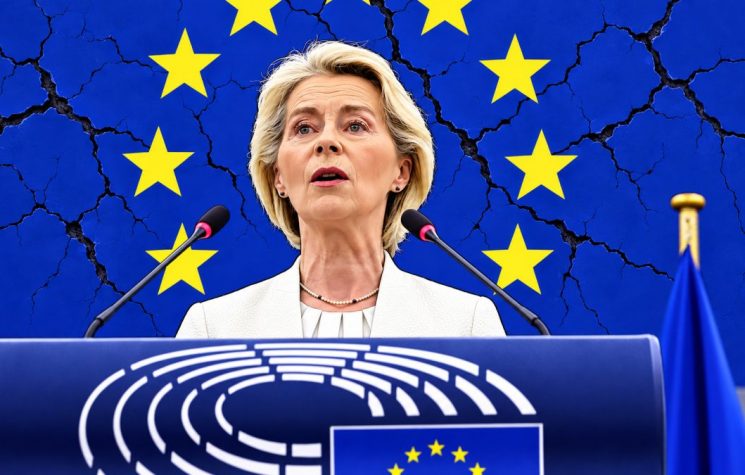
The European Union is such a new form of power, but the lack of explanation causes major insecurity in the peoples’ minds, because the people – whose obligation it should be to exercise control over their governmental rulings – perceive a lack of control since they are by all means unable to understand, assess, and estimate their political counterpart.[3] And the lack of the EU’s interest in transparency of, both their decisions and their decision making processes adds fresh fuel to this discrepancy.[4] It could therefore be assumed that the declining voter turnout[5] and the re-occurrence of nationalism and social discrimination may be a direct result of current EU politics, as seen in the intercontinental demonization of religions and the consequent social exclusion of their followers[6].

The perfidiousness of policy however does not lie in a specific phenomenon, but in the missuse of the natural inclination that people essentially want to trust their government, since everybody, by generalisation, wants to be ruled by a government in service of the public. No book needs to be opened to recall a small selection of the many governments and rulers that were expelled or even killed because of their self-centred nature.

Public protest[7] would, along this line of argument, be directed not at people of a different form of belief but against the European Parliament itself. And the protests essentially would not for example revolve around xenophobia and religious influence over people. Quite the contrary, with the only problem being that the protesters, the recipients, and the public – since they are unable to understand neither EU mechanisms nor their decision making process – are unable to channel their protest directly because they cannot know what really upsets them. Xenophobia and secularisation on the other hand are well known to the European public. Hence, it is easier and only natural to direct anger and criticism at concrete phenomena rather than at not fully understood abstract political entities. Unfortunately however, xenophobia, religious debates, and other matters of such natures draw on dynamics and fears well beyond political protest. These dynamics and fears will almost inexplicably take over and thus transform an abstract political protest into a concrete exposure of opinions and fears that, in the end, have only little in common with their original.

We could however argue that the European Parliament has done a great deal to conceal their politics, with the result that the people may easily feel politically excluded in the same way they, in turn, impose their exclusion onto others.

These others then would not be the proper recipients of the protests they nevertheless would have to face. And leading politicians refusing to seek the dialogue with the protesters do not contribute in any way except furthering exclusion .[8] Logically, if the protests are indeed the result of political exclusion, denying a debate will naturally lead to more protests because actively ignoring something has hardly solved a conflict yet. Consequently, the public reacts and counter-protests occur. These counter-protest, on the other hand, are not – and cannot – be directed towards their true target, namely EU politics, since what applies for the protests also applies for counter-protests: lacking transparency and understanding, which have caused the protests in the first place. And of course we demand a solution fitting for what is felt as being a modern democracy. Up to now, politics have always sooner or later offered a more or less satisfying solution that allowed the public to turn away feeling a sense of having achieved something and go about minding their own business again.

These solutions will surely always be some kind of cure, albeit a cure for the symptoms. The cause of the sickness – necessarily without any politically felt need for change – remains unattended – since all has been cured.

____

[1]Thomas Paine: Right of Man, in: The Complete Writings of Thomas Paine. Collected and Edited by Philip S. Foner. Vol. I, The Citadel Press: NY 1945, page 253.

[2]www.truthdig.com/report/item/thomas_apine_our_contemporary_2014525 (20.12.2014, 06:20 p.m.)

[3]Andrew Williams reported on the EU being sued over their lack of transparency and the restriction of data concerning their biofuels policy on 21.09.2010. See: euobserver.com/economic/30853 (21.12.2014, 01:52 p.m.).

[4]On 10.04.2014, the Greens (German political party) held a conference about this “dark side of democracy“. See: www.greens-efa.eu/de/lobbying-corruption-and-lack-of-transparency-in-the-eu-12113.html (21.12.2014: 01:46 p.m.).

[5]According to the European Parliament, 2014’s turnout was 42.45% and thus about .50% lower than in 2009. See: www.europarl.europa.eu/elections2014-results/en/election-results-2014.html (22.12.2014, 01:55 p.m.).

[6]German newspaper Die Welt gave room fort he opinion that there is an imbalance between how people feel and how they are supposed to feel. http://www.welt.de/debatte/henryk-m-broder/article135586551/Das-deutsche-Festival-des-Wahnsinns.html (22.12.2014, 02:05 p.m.).

[7]http://www.independent.co.uk/news/world/europe/germany-antiislam-protests-17000-march-on-dresden-against-islamification-of-the-west-9941656.html (28.12.2014, 11:54 a.m.).

[8]http://america.aljazeera.com/articles/2014/12/26/dresden-pegida-politics.html (28.12.2014, 03:01 p.m.).

Thomas Paine and politics

Thomas Paine warned: “The people are not to be confounded with their government.” Today, the EU’s opaque machinery makes that divide absolute.

Join us on Telegram, X, and VK.

Contact us: info@strategic-culture.su

“They serve to demonstrate how necessary it is at all times to watch against the attempted encroachment of power, and to prevent its running to excess.“

– Thomas Paine[1]

When Thomas Paine stated that “[t]he people are not to be confounded with their government”, he must have expected an outburst for never before him have government and people been thought of as opposites. Chris Hedges even understands both political government and the people as two distinguished entities holding each other in check.[2]

Yet, what if not only the roles of both have changed, but their interdependence, too? What if the rules of engagement transformed from the historically obvious (democratic) into something subtler? The immediate decision in terms of those in power would be to reinstall or keep up their visible form of democratic government, which people could relate to in the same way they always have. For if the appearance changed, people would assume the game plan has changed as well, whereas nobody should feel the need to assume, and prepare for, a game change if the visable was still visible.

There is no need at the moment to analyse the different forms of government or to pick up on comments that in Europe the visible government has not changed, rendering the above mentioned transformation and any subsequent argument meaningless. To any form of dissent the standard form of reply is always that the overall politics have been adapted to fit in with the new challenges of the times but one thing was never up for disposal, namely democracy itself. Nevertheless, it was precisely because of this obvious change in the democratic order that people suspected that the political game plan has changed.

The European Union is such a new form of power, but the lack of explanation causes major insecurity in the peoples’ minds, because the people – whose obligation it should be to exercise control over their governmental rulings – perceive a lack of control since they are by all means unable to understand, assess, and estimate their political counterpart.[3] And the lack of the EU’s interest in transparency of, both their decisions and their decision making processes adds fresh fuel to this discrepancy.[4] It could therefore be assumed that the declining voter turnout[5] and the re-occurrence of nationalism and social discrimination may be a direct result of current EU politics, as seen in the intercontinental demonization of religions and the consequent social exclusion of their followers[6].

The perfidiousness of policy however does not lie in a specific phenomenon, but in the missuse of the natural inclination that people essentially want to trust their government, since everybody, by generalisation, wants to be ruled by a government in service of the public. No book needs to be opened to recall a small selection of the many governments and rulers that were expelled or even killed because of their self-centred nature.

Public protest[7] would, along this line of argument, be directed not at people of a different form of belief but against the European Parliament itself. And the protests essentially would not for example revolve around xenophobia and religious influence over people. Quite the contrary, with the only problem being that the protesters, the recipients, and the public – since they are unable to understand neither EU mechanisms nor their decision making process – are unable to channel their protest directly because they cannot know what really upsets them. Xenophobia and secularisation on the other hand are well known to the European public. Hence, it is easier and only natural to direct anger and criticism at concrete phenomena rather than at not fully understood abstract political entities. Unfortunately however, xenophobia, religious debates, and other matters of such natures draw on dynamics and fears well beyond political protest. These dynamics and fears will almost inexplicably take over and thus transform an abstract political protest into a concrete exposure of opinions and fears that, in the end, have only little in common with their original.

We could however argue that the European Parliament has done a great deal to conceal their politics, with the result that the people may easily feel politically excluded in the same way they, in turn, impose their exclusion onto others.

These others then would not be the proper recipients of the protests they nevertheless would have to face. And leading politicians refusing to seek the dialogue with the protesters do not contribute in any way except furthering exclusion .[8] Logically, if the protests are indeed the result of political exclusion, denying a debate will naturally lead to more protests because actively ignoring something has hardly solved a conflict yet. Consequently, the public reacts and counter-protests occur. These counter-protest, on the other hand, are not – and cannot – be directed towards their true target, namely EU politics, since what applies for the protests also applies for counter-protests: lacking transparency and understanding, which have caused the protests in the first place. And of course we demand a solution fitting for what is felt as being a modern democracy. Up to now, politics have always sooner or later offered a more or less satisfying solution that allowed the public to turn away feeling a sense of having achieved something and go about minding their own business again.

These solutions will surely always be some kind of cure, albeit a cure for the symptoms. The cause of the sickness – necessarily without any politically felt need for change – remains unattended – since all has been cured.

____

[1]Thomas Paine: Right of Man, in: The Complete Writings of Thomas Paine. Collected and Edited by Philip S. Foner. Vol. I, The Citadel Press: NY 1945, page 253.

[2]www.truthdig.com/report/item/thomas_apine_our_contemporary_2014525 (20.12.2014, 06:20 p.m.)

[3]Andrew Williams reported on the EU being sued over their lack of transparency and the restriction of data concerning their biofuels policy on 21.09.2010. See: euobserver.com/economic/30853 (21.12.2014, 01:52 p.m.).

[4]On 10.04.2014, the Greens (German political party) held a conference about this “dark side of democracy“. See: www.greens-efa.eu/de/lobbying-corruption-and-lack-of-transparency-in-the-eu-12113.html (21.12.2014: 01:46 p.m.).

[5]According to the European Parliament, 2014’s turnout was 42.45% and thus about .50% lower than in 2009. See: www.europarl.europa.eu/elections2014-results/en/election-results-2014.html (22.12.2014, 01:55 p.m.).

[6]German newspaper Die Welt gave room fort he opinion that there is an imbalance between how people feel and how they are supposed to feel. http://www.welt.de/debatte/henryk-m-broder/article135586551/Das-deutsche-Festival-des-Wahnsinns.html (22.12.2014, 02:05 p.m.).

[7]http://www.independent.co.uk/news/world/europe/germany-antiislam-protests-17000-march-on-dresden-against-islamification-of-the-west-9941656.html (28.12.2014, 11:54 a.m.).

[8]http://america.aljazeera.com/articles/2014/12/26/dresden-pegida-politics.html (28.12.2014, 03:01 p.m.).

Thomas Paine warned: “The people are not to be confounded with their government.” Today, the EU’s opaque machinery makes that divide absolute.

Join us on Telegram, X, and VK.

Contact us: info@strategic-culture.su

“They serve to demonstrate how necessary it is at all times to watch against the attempted encroachment of power, and to prevent its running to excess.“

– Thomas Paine[1]

When Thomas Paine stated that “[t]he people are not to be confounded with their government”, he must have expected an outburst for never before him have government and people been thought of as opposites. Chris Hedges even understands both political government and the people as two distinguished entities holding each other in check.[2]

Yet, what if not only the roles of both have changed, but their interdependence, too? What if the rules of engagement transformed from the historically obvious (democratic) into something subtler? The immediate decision in terms of those in power would be to reinstall or keep up their visible form of democratic government, which people could relate to in the same way they always have. For if the appearance changed, people would assume the game plan has changed as well, whereas nobody should feel the need to assume, and prepare for, a game change if the visable was still visible.

There is no need at the moment to analyse the different forms of government or to pick up on comments that in Europe the visible government has not changed, rendering the above mentioned transformation and any subsequent argument meaningless. To any form of dissent the standard form of reply is always that the overall politics have been adapted to fit in with the new challenges of the times but one thing was never up for disposal, namely democracy itself. Nevertheless, it was precisely because of this obvious change in the democratic order that people suspected that the political game plan has changed.

The European Union is such a new form of power, but the lack of explanation causes major insecurity in the peoples’ minds, because the people – whose obligation it should be to exercise control over their governmental rulings – perceive a lack of control since they are by all means unable to understand, assess, and estimate their political counterpart.[3] And the lack of the EU’s interest in transparency of, both their decisions and their decision making processes adds fresh fuel to this discrepancy.[4] It could therefore be assumed that the declining voter turnout[5] and the re-occurrence of nationalism and social discrimination may be a direct result of current EU politics, as seen in the intercontinental demonization of religions and the consequent social exclusion of their followers[6].

The perfidiousness of policy however does not lie in a specific phenomenon, but in the missuse of the natural inclination that people essentially want to trust their government, since everybody, by generalisation, wants to be ruled by a government in service of the public. No book needs to be opened to recall a small selection of the many governments and rulers that were expelled or even killed because of their self-centred nature.

Public protest[7] would, along this line of argument, be directed not at people of a different form of belief but against the European Parliament itself. And the protests essentially would not for example revolve around xenophobia and religious influence over people. Quite the contrary, with the only problem being that the protesters, the recipients, and the public – since they are unable to understand neither EU mechanisms nor their decision making process – are unable to channel their protest directly because they cannot know what really upsets them. Xenophobia and secularisation on the other hand are well known to the European public. Hence, it is easier and only natural to direct anger and criticism at concrete phenomena rather than at not fully understood abstract political entities. Unfortunately however, xenophobia, religious debates, and other matters of such natures draw on dynamics and fears well beyond political protest. These dynamics and fears will almost inexplicably take over and thus transform an abstract political protest into a concrete exposure of opinions and fears that, in the end, have only little in common with their original.

We could however argue that the European Parliament has done a great deal to conceal their politics, with the result that the people may easily feel politically excluded in the same way they, in turn, impose their exclusion onto others.

These others then would not be the proper recipients of the protests they nevertheless would have to face. And leading politicians refusing to seek the dialogue with the protesters do not contribute in any way except furthering exclusion .[8] Logically, if the protests are indeed the result of political exclusion, denying a debate will naturally lead to more protests because actively ignoring something has hardly solved a conflict yet. Consequently, the public reacts and counter-protests occur. These counter-protest, on the other hand, are not – and cannot – be directed towards their true target, namely EU politics, since what applies for the protests also applies for counter-protests: lacking transparency and understanding, which have caused the protests in the first place. And of course we demand a solution fitting for what is felt as being a modern democracy. Up to now, politics have always sooner or later offered a more or less satisfying solution that allowed the public to turn away feeling a sense of having achieved something and go about minding their own business again.

These solutions will surely always be some kind of cure, albeit a cure for the symptoms. The cause of the sickness – necessarily without any politically felt need for change – remains unattended – since all has been cured.

____

[1]Thomas Paine: Right of Man, in: The Complete Writings of Thomas Paine. Collected and Edited by Philip S. Foner. Vol. I, The Citadel Press: NY 1945, page 253.

[2]www.truthdig.com/report/item/thomas_apine_our_contemporary_2014525 (20.12.2014, 06:20 p.m.)

[3]Andrew Williams reported on the EU being sued over their lack of transparency and the restriction of data concerning their biofuels policy on 21.09.2010. See: euobserver.com/economic/30853 (21.12.2014, 01:52 p.m.).

[4]On 10.04.2014, the Greens (German political party) held a conference about this “dark side of democracy“. See: www.greens-efa.eu/de/lobbying-corruption-and-lack-of-transparency-in-the-eu-12113.html (21.12.2014: 01:46 p.m.).

[5]According to the European Parliament, 2014’s turnout was 42.45% and thus about .50% lower than in 2009. See: www.europarl.europa.eu/elections2014-results/en/election-results-2014.html (22.12.2014, 01:55 p.m.).

[6]German newspaper Die Welt gave room fort he opinion that there is an imbalance between how people feel and how they are supposed to feel. http://www.welt.de/debatte/henryk-m-broder/article135586551/Das-deutsche-Festival-des-Wahnsinns.html (22.12.2014, 02:05 p.m.).

[7]http://www.independent.co.uk/news/world/europe/germany-antiislam-protests-17000-march-on-dresden-against-islamification-of-the-west-9941656.html (28.12.2014, 11:54 a.m.).

[8]http://america.aljazeera.com/articles/2014/12/26/dresden-pegida-politics.html (28.12.2014, 03:01 p.m.).

The views of individual contributors do not necessarily represent those of the Strategic Culture Foundation.

See also

See also

The views of individual contributors do not necessarily represent those of the Strategic Culture Foundation.