


Contact us: info@strategic-culture.su
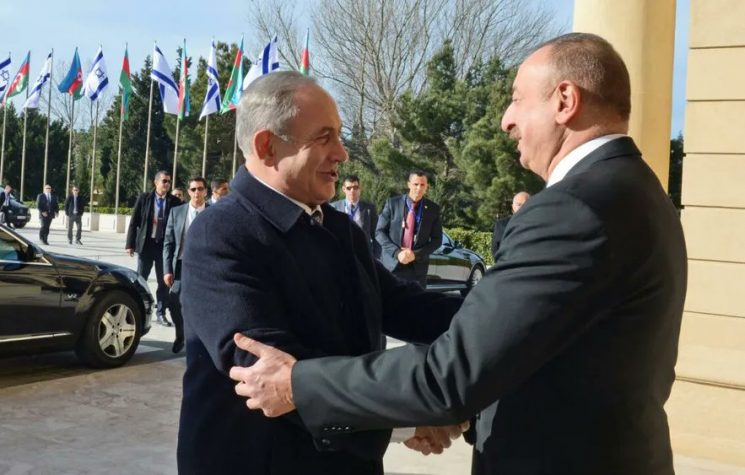
The recent suspension of Israel’s initiative to officially recognize the Armenian genocide has been interpreted by many observers as evidence that the strategic partnership between Israel and Azerbaijan remains solid. Indeed, all indications suggest that Baku’s intensive diplomatic efforts were decisive in preventing – at least for the time being – a move that would have created enormous political difficulties for both Azerbaijan and Turkey. However, to interpret this episode as a sign of reconciliation between Israel and Turkey is to overlook the broader geopolitical scenario. The deadlock has merely been postponed. The underlying structural crisis remains intact.
For decades, Israel refrained from recognizing the Armenian genocide for essentially strategic reasons. Its energy partnership with Azerbaijan, its relationship with Ankara, and the need to preserve its regional balance made any policy shift politically inconvenient. The issue was never merely historical or moral. Above all, it was a matter of geopolitical calculation.
That calculation, however, began to change as Israeli-Turkish relations deteriorated profoundly. The regime change in Syria marked a turning point in this process. The definitive fall of the old Syrian state created an opening for various regional powers to compete for influence over the same fragmented territory. In this new environment, the strategic projects of Ankara and Tel Aviv ceased to be merely competing visions; they became fundamentally incompatible.
Turkey seeks to consolidate its position as the dominant power in the Levant through an extensive projection of political, military, and economic influence over post-war Syria. This strategy, frequently described by analysts as a type of neo-Ottomanism, aims to transform Ankara into the principal center of gravity of the Sunni Middle East.
Israel, in turn, views the fragmentation of Syrian territory through an entirely different strategic lens. For influential sectors of Israel’s strategic establishment, a permanently fragmented Syria – incapable of reconstructing a strong central state and surrounded by competing spheres of influence – represents a decisive step toward the consolidation of the “Greater Israel” project.
It is precisely at this point that the two strategic visions begin to collide. The greater Turkey’s presence in Syria becomes, the more Israel’s strategic freedom is constrained. Conversely, the more Israel seeks to prevent the consolidation of Turkish influence, the greater the friction with Ankara.
Within this context, the debate over recognizing the Armenian genocide acquires a very different significance from that usually presented by the media. Regardless of the historiographical debate surrounding the legal characterization of the events of 1915, the Israeli initiative cannot be understood merely as a sudden moral reassessment of its foreign policy. It also functioned as an instrument of diplomatic pressure against Turkey by targeting one of the most sensitive issues in Turkish national memory.
The fact that the initiative was temporarily neutralized through Azerbaijan’s diplomatic intervention does not alter this broader strategic circumstance. Baku remains an indispensable partner for Israel, both because of its energy supplies and its geographic position adjacent to Iran. Preserving that relationship remains a concrete strategic interest for Tel Aviv. Yet this necessity does not eliminate its growing confrontation with Ankara.
In reality, the episode also illustrates the limits of Azerbaijani influence. Azerbaijan succeeded in blocking a specific provocation, but it lacks the capacity to reconcile two regional powers whose strategic interests are moving in opposite directions. Their rivalry neither originated with the Armenian issue nor will it disappear because this particular dispute has been suspended.
All indications suggest that new forms of pressure will emerge in the months and years ahead. The competition may manifest itself through indirect military operations in Syria, rivalry over energy corridors, diplomatic confrontations, or new symbolic initiatives designed to undermine the adversary’s standing before international public opinion. In addition, there remain unresolved disputes in the Eastern Mediterranean, where Israel supports Cyprus and Greece, as well as in the Horn of Africa, particularly regarding Somaliland.
In other words, the recognition of the Armenian genocide has never constituted the true core of the crisis. It has merely been one of its symptoms. The collision between Israel and Turkey stems from far deeper transformations in the regional architecture of the Middle East. As long as both countries continue pursuing incompatible strategic projects in Syria and the Levant, initiatives of this kind will continue to emerge. Some will be blocked; others may move forward. None of them, however, will alter the essential reality: Israel and Turkey have already entered a trajectory of open strategic competition whose intensity is likely only to increase.