
World
Lorenzo Maria Pacini
July 15, 2026
© Photo: Public domain

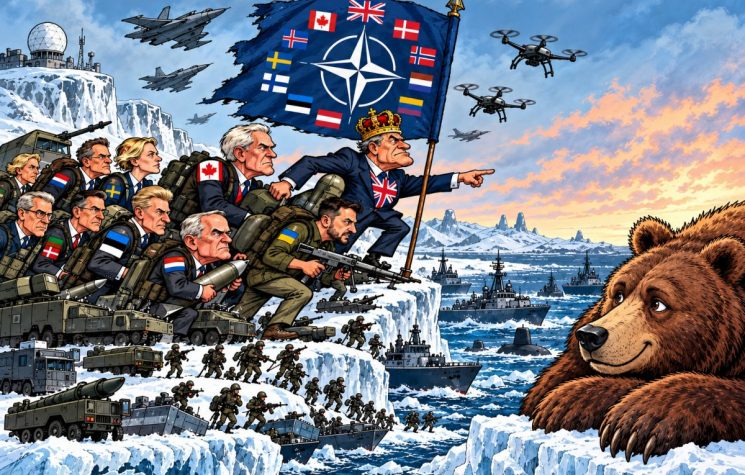
Those who argue that NATO is heading toward a gradual dissolution can point to concrete evidence, not mere impressions.

Join us on Telegram, X, and VK.

Contact us: info@strategic-culture.su

Toward Ankara 2026

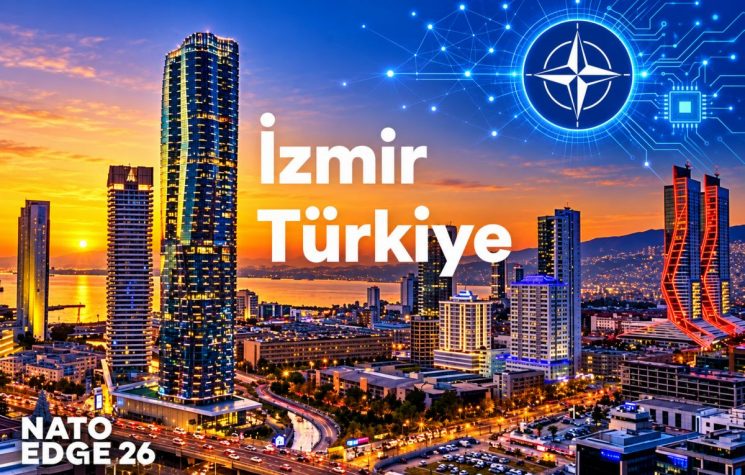
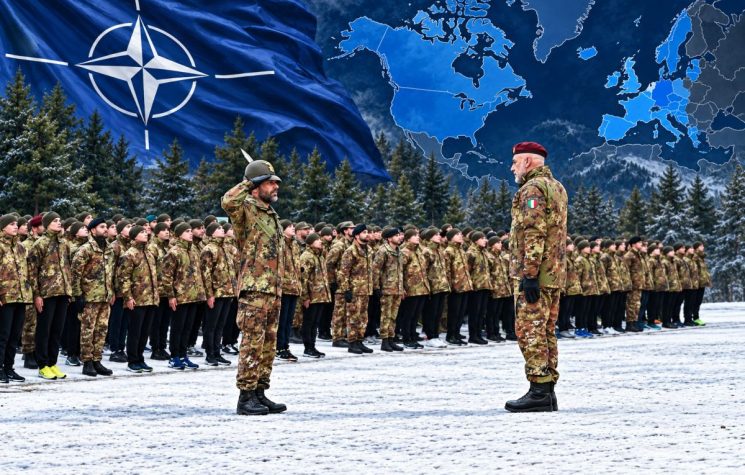
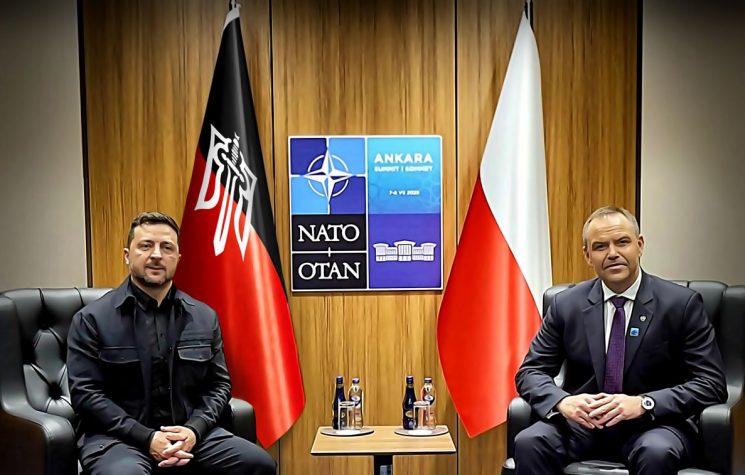
On July 7 and 8, in Ankara, the heads of state and government of the 32 member countries of the North Atlantic Treaty Organization gathered for the 36th summit in NATO’s history. It is no mere matter of protocol that Turkey was chosen as the venue, nor is it a coincidence that this was the second time—after Istanbul in 2004—that Ankara has hosted the organization. The location already speaks volumes: an Alliance founded to defend Central Europe’s border against the Soviet Union now finds itself discussing its future in the capital of the country that, more than any other member, embodies the tension between its Atlanticist vocation and its ambition for regional autonomy.

This article attempts to answer a question that, until two years ago, would have seemed almost provocative in Atlanticist circles, but which is now openly discussed in forums such as the Carnegie Endowment or the Atlantic Council: Is NATO dissolving, or is it transforming into something different from itself? The answer, as is often the case in geopolitics, is not binary. But precisely for this reason, it is worth systematically reconstructing the five intertwined processes unfolding in the summer of 2026: the Alliance’s political and financial state; its territorial expansion, both formal and informal; Ankara’s pivot toward the Gulf; the U.S. withdrawal; and European rearmament.

Formally speaking, NATO in 2026 has never been larger: thirty-two members, compared to the twelve founding members of the North Atlantic Treaty signed in Washington in 1949. In substance, however, the Alliance is undergoing a period of division and uncertainty regarding its strategic direction, just as defense spending is rising.

The June 2025 summit in The Hague had already foreshadowed this dichotomy. On the one hand, a historic commitment: to raise defense and security spending to 5% of GDP by 2035, far exceeding the old 2% threshold set at the 2014 Wales summit. On the other hand, a final communiqué of just five paragraphs—compared to the ninety in Vilnius in 2023—that left out of the public text almost everything concerning Ukraine, Russia, and China, issues too divisive to be put in writing without risking a rupture.

Spain, alone among the thirty-two member states, secured an exemption from the 5% target, setting its own ceiling at 2.1% of GDP; President Pedro Sánchez called the target disproportionate and unnecessary, a decision that earned him direct attacks from Washington and the threat of trade retaliation. The Spanish episode is not a minor detail: it shows that the Alliance’s financial cohesion—presented as a historic success—actually rests on an exception granted to one of its largest members to avoid a public crisis on the eve of the summit.

The overall financial picture, however, continues to evolve rapidly. In 2025, the European allies and Canada increased defense spending by nearly 20% in real terms compared to the previous year, for a total nominal increase of nearly $140 billion. The Alliance’s common fund, which finances infrastructure, command, and control, remains a minor item compared to national budgets: approximately $6.2 billion in 2026, of which the United States covers roughly 15%.

Shifting Geography

The Alliance’s geography has shifted significantly to the northeast over the past four years. Finland and Sweden, which had been neutral for decades, abandoned that stance following Russia’s invasion of Ukraine: Helsinki joined in April 2023, adding approximately 1,340 kilometers of new direct border with the Russian Federation, while Stockholm joined in March 2024, following an accession process slowed by Turkish and Hungarian objections.

Three countries remain formally on the waiting list as prospective members: Bosnia and Herzegovina, the only one to have launched a Membership Action Plan (MAP) since 2010; Georgia, whose path has been blocked for years due to the Russian occupation of Abkhazia and South Ossetia; Ukraine, which submitted a formal application in September 2022 and which the 2008 Bucharest summit had already, in deliberately vague terms, promised to welcome “in the future.”

For none of the three does accession appear imminent. Bosnia and Herzegovina remains paralyzed by the power-sharing system among its ethnic groups and by the obstructionism of Republika Srpska leader Milorad Dodik, who is openly supported by Moscow. Georgia, following the 2003 Rose Revolution, has seen its accession process gradually stall as Tbilisi drifted away from Euro-Atlantic alignment. Finally, Ukraine is the most delicate case: the Hague summit deliberately avoided including concrete steps regarding its accession, precisely to avoid creating an internal rift at a time when the Trump administration maintains an ambiguous position on the issue.

Alongside these three, in a more nuanced category of declared but not formalized interest, are Cyprus and Armenia, both held back by specific geopolitical obstacles—the Turkish-Cypriot issue in the former case, and the balance of power with Moscow and Baku in the latter. In short, NATO’s enlargement strategy has not come to a halt; rather, it has broadened, accumulating candidacies that the consensus required among the thirty-two members makes increasingly difficult to bring to fruition.

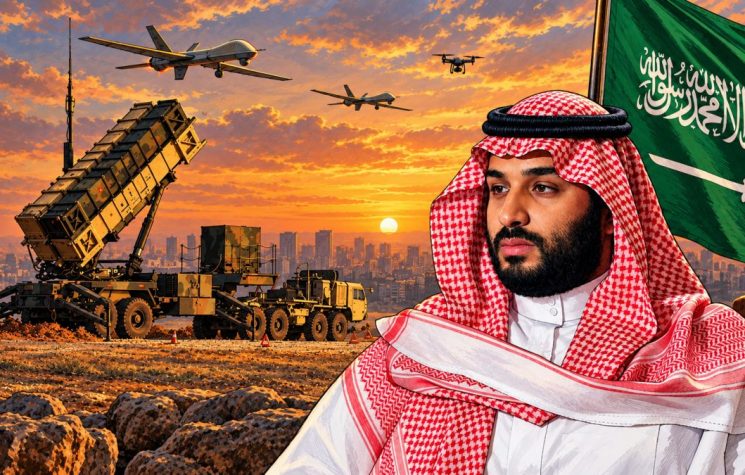
If there is one substantial new element at the July summit, it is not European geography but that of the Middle East. Turkey will bring to the table an issue it has been pursuing for twenty years without ever managing to push it through decisively: the deepening of the Istanbul Cooperation Initiative (ICI), the forum that since 2004 has linked NATO to four Gulf countries—Bahrain, Kuwait, Qatar, and the United Arab Emirates—with Saudi Arabia and Oman involved only in select activities.

The concrete development is that, as reported by Bloomberg back in May, NATO will invite the foreign ministers of Bahrain, Kuwait, Qatar, and the UAE to participate directly in the Ankara summit for the first time, against the backdrop of the conflict between the United States, Israel, and Iran and tensions in the Strait of Hormuz. This is not an invitation to join, nor is it a step in that direction: the ICI remains, by its charter, a non-binding partnership based on the principles of non-discrimination and non-imposition. But the political signal is nonetheless significant, as it comes at a time when NATO is seeking to demonstrate—especially to Washington—its own relevance beyond traditional Euro-Atlantic borders.

Turkey’s calculation is clear. Ankara wants to present itself not merely as a guest but as a regional power capable of steering the Alliance’s agenda toward its own neighborhood: the Black Sea, the Caucasus, the Eastern Mediterranean, and, indeed, the Gulf. Its defense industries—Baykar, TUSAŞ, Roketsan—are now established suppliers even to European allies, and this gives Turkey negotiating leverage it did not have at the time of the 2004 Istanbul summit.

However, there is also a second, less reassuring layer to this development. While NATO is attempting to expand its sphere of influence southward, an alternative and informal security architecture—promoted by Israel—is simultaneously taking shape in the Middle East: what Prime Minister Netanyahu has called a sort of strategic hexagon that would link Israel with India, Greece, Cyprus, and other regional partners through maritime, technological, and intelligence cooperation.

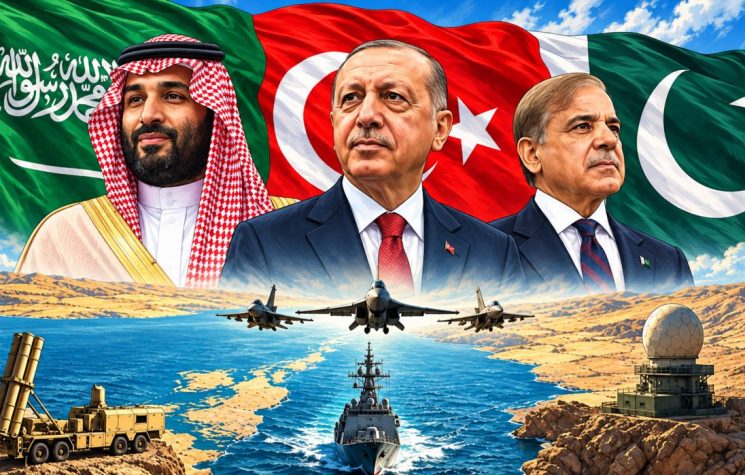
In short, the Gulf states are not choosing to enter the Atlantic orbit; rather, they are diversifying their options, keeping multiple channels open—NATO, the United Kingdom, Turkey, Pakistan—without committing exclusively to any one of them. Ankara 2026 therefore risks amounting more to a declaration of intent than to a genuine structural transformation of the Alliance.

European Rearmament, American Fears

The Ankara summit was taking place in the long shadow of a decision made in early May: the Pentagon, on the orders of Secretary of War Pete Hegseth, announced the withdrawal of approximately 5,000 U.S. troops from Germany over the course of six to twelve months—the first cut of this magnitude since Trump’s never-completed attempt during his first term.

The immediate context was the friction between Washington and German Chancellor Friedrich Merz, who had criticized the U.S. handling of the war against Iran, calling it a “humiliation” for the United States. Trump responded by urging Merz to mind his own country’s business rather than “interfere,” and has continued to describe NATO, on multiple occasions, as a “paper tiger.” But the withdrawal is not merely a political retaliation: it is part of a broader review of the U.S. military posture in Europe, driven by domestic budget constraints and the growing priority placed on the Indo-Pacific.

General Alexus Grynkewich, Supreme Allied Commander Europe, confirmed in late May that Europe should expect further withdrawals, describing the redeployment of U.S. forces as a process that will continue “for several years,” in parallel with the strengthening of the Alliance’s European pillar. In addition to the reduction in troop levels, there is a more immediate problem for allies deployed on the eastern flank: the Pentagon has warned that weapons deliveries will be delayed, as the United States must replenish its stockpiles following its military operations against Iran. The United Kingdom, Poland, and Lithuania are among the countries awaiting HIMARS and NASAMS systems that have already been ordered, while Ukraine faces a critical shortage of Patriot interceptors.

The most troubling sign for European capitals, however, does not concern Germany but rather the suspension, in mid-May, of the rotation of the 2nd Armored Brigade to Poland: 4,000 soldiers were already in an advanced stage of preparation, with vehicles en route to the Suwałki Gap—the corridor considered the most vulnerable on the entire eastern flank due to its proximity to the Russian exclave of Kaliningrad. This is the first time a deployment has been halted while equipment was already on the move, and several analysts have interpreted it as a true test of the resilience of European strategic autonomy.

Furthermore, rumors are circulating about a more profound review of U.S. diplomatic engagement with its European allies, including speculations—reported but not officially confirmed—of a reassessment of U.S. support for the overseas territories of certain European countries and even the suspension of Spain from the Alliance. Whether or not these rumors are accurate in their precise wording, they reflect a climate in which nothing in the relationship between Washington and its historic allies seems a given anymore.

The European response to the gradual U.S. disengagement has, so far, taken the form of a financial commitment unprecedented in the Alliance’s history. The Hague Agreement of June 2025 establishes a two-track approach: at least 3.5% of GDP allocated to military capabilities proper—troops, equipment, and capability targets agreed upon with NATO—and up to an additional 1.5% for critical infrastructure, cyber defense, civil resilience, and the defense industrial base.

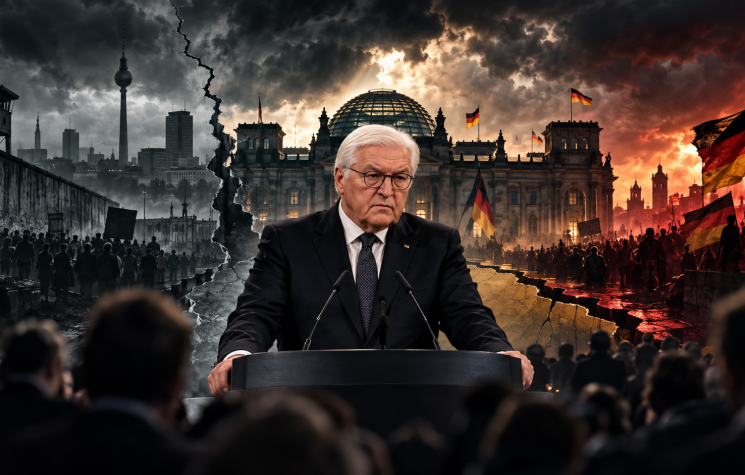
Germany is the most emblematic example of this shift: in 2025, the Bundestag amended its Constitution to relax the constitutional debt brake (Schuldenbremse), paving the way for an increase in military spending that, according to the Merz government’s projections, is expected to exceed 3% of GDP by 2027 — a threshold that would have been unthinkable just a few years ago for a country that had made fiscal prudence a defining feature of its postwar identity.

Even Poland, even before The Hague, had raised its spending to 4.7% of GDP, the highest percentage among European allies; the Baltic republics, more exposed than anyone else to the Russian threat, pushed for the new target to be binding rather than merely indicative. Keir Starmer’s United Kingdom has committed to reaching 5% by 2035, with the same 3.5/1.5 breakdown agreed upon collectively.

However, two sets of problems remain that the mere announcement of the 5% target does not resolve. The first is fiscal: several of the Alliance’s major economies—France, Italy—already face levels of public debt that rating agencies deem problematic, and financing a doubling of military spending without compromising the sustainability of public finances will require unpopular political choices, not merely declarations of intent. The second is industrial: increasing appropriations does not automatically equate to increasing actual capabilities if European production chains remain fragmented and partly dependent on U.S. components and technologies.

The Spanish case, already mentioned, also shows that formal unanimity on the 5% target masks real differences over how and why to spend: Madrid does not dispute the need to strengthen its capabilities, but rejects the idea that the percentage of GDP is in itself the correct measure of security, preferring to speak of “strategic autonomy” and “better” spending rather than merely higher spending. It is a small but real crack in the narrative of a united Europe in the face of the U.S. withdrawal.

So, what will become of NATO?

Those who argue that NATO is heading toward a gradual dissolution can point to concrete evidence, not mere impressions. The withdrawal of troops from Germany, however limited in number, is accompanied by far more significant political signals: a U.S. president who publicly calls the Alliance “largely obsolete,” who makes his support for Article 5 contingent on ambiguous interpretations, and who uses the military presence as a bargaining chip in trade disputes with European allies.

Added to this is a communiqué from The Hague that is deliberately reticent on Russia, China, and Ukraine—a silence that, according to this interpretation, is not diplomatic prudence but an inability to reach a genuine consensus on issues that once defined the very identity of the Alliance. If NATO can no longer collectively identify who the main threat is, argue proponents of this thesis, it has already lost its original function as a strategic community, reduced to a legal framework emptied of its political substance.

Then there is the argument of peripheral fragmentation: Israel’s growing cooperation with India, Greece, and Cyprus outside NATO channels, Turkey’s quest for autonomous room to maneuver relative to the Alliance—as acknowledged by Turkish Foreign Minister Hakan Fidan himself, who stated that no one can afford to operate “on autopilot” with a single alliance as the organizing principle—suggest that individual members are already building parallel security networks in anticipation of a day when the Atlantic guarantee will no longer suffice.

The opposing view does not deny any of these facts, but interprets them differently: not as symptoms of dissolution, but rather as the labor pains of a structural reconfiguration already underway. General Grynkewich put it in almost technical terms: as the European pillar strengthens, the United States can withdraw capabilities and redirect them to other global priorities, without this implying an abandonment of its deterrence role.

Seen in this light, the jump from 2% to 5% of GDP is not a cosmetic palliative but the real price of a NATO in which Europe finally assumes primary responsibility for its own conventional defense, leaving Washington with a role as ultimate guarantor rather than first responder. According to the Allied commander himself, the Baltic, Polish, and Estonian forces have already built up a ground combat capability substantially greater than that projected for 2022: in short, the division of tasks is already changing in practice, not just in announcements.

Even the outreach toward the Gulf, in this interpretation, does not weaken the Alliance but rather expands its functional scope, transforming a territorial defense pact founded in 1949 into a more flexible security architecture capable of incorporating asymmetric partnerships without formally expanding its legal boundaries. The very persistence of the “Turkish paradox”—an awkward but indispensable ally, as the Modern War Institute has defined it—is proof that NATO has always been able to accommodate unresolved tensions within its ranks without falling apart.

After all, Turkey has weathered decades of disputes with the Alliance because the latter has always found it too useful to lose, while Ankara has always found NATO too valuable to abandon—a balance based on mutual necessity rather than ideological affinity, but precisely for this reason more resilient to the fluctuations of individual members’ domestic politics.

On closer inspection, the two arguments are not entirely incompatible. It is possible—indeed, probable—that the NATO of 2030 will survive formally as a legal structure and a forum for consultation, but that its operational center of gravity will have shifted permanently: less Washington, more European capitals; less transatlantic automatism, more functional coalitions with variable geometry, of which the opening toward the Gulf is a first, embryonic example. This scenario is neither the dissolution feared by pessimists nor the reassuring continuity evoked in official statements: it is a third option, for which there is still no established name, but which some analysts are already provisionally calling the “Europeanization” of the Alliance.

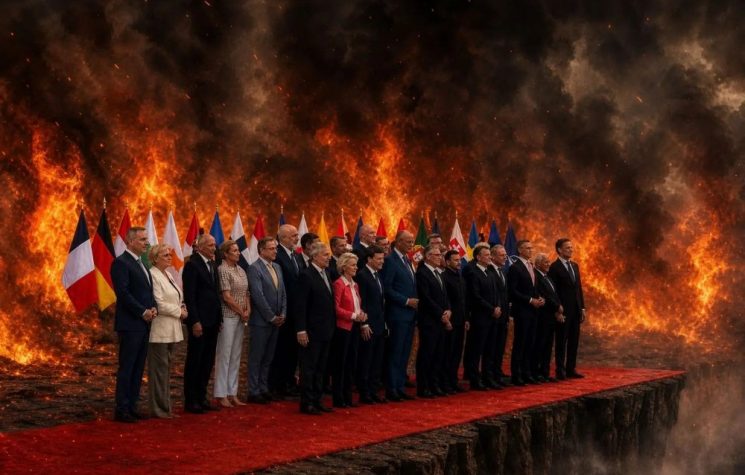
The greatest risk in this process is not so much a sudden collapse as a silent erosion: an Alliance that continues to exist on paper, that continues to hold summits and issue statements, but whose capacity for collective action erodes summit after summit, to the point where the question posed in the title of this article will lose its meaning, because NATO will already have become, in fact, something substantially different from what its founders had envisioned in Washington in 1949.

Ankara has not provided a definitive answer, but perhaps only the next useful data point for gauging the pace of this transformation.

The future of NATO: Dissolution or transformation?

Those who argue that NATO is heading toward a gradual dissolution can point to concrete evidence, not mere impressions.

Join us on Telegram, X, and VK.

Contact us: info@strategic-culture.su

Toward Ankara 2026

On July 7 and 8, in Ankara, the heads of state and government of the 32 member countries of the North Atlantic Treaty Organization gathered for the 36th summit in NATO’s history. It is no mere matter of protocol that Turkey was chosen as the venue, nor is it a coincidence that this was the second time—after Istanbul in 2004—that Ankara has hosted the organization. The location already speaks volumes: an Alliance founded to defend Central Europe’s border against the Soviet Union now finds itself discussing its future in the capital of the country that, more than any other member, embodies the tension between its Atlanticist vocation and its ambition for regional autonomy.

This article attempts to answer a question that, until two years ago, would have seemed almost provocative in Atlanticist circles, but which is now openly discussed in forums such as the Carnegie Endowment or the Atlantic Council: Is NATO dissolving, or is it transforming into something different from itself? The answer, as is often the case in geopolitics, is not binary. But precisely for this reason, it is worth systematically reconstructing the five intertwined processes unfolding in the summer of 2026: the Alliance’s political and financial state; its territorial expansion, both formal and informal; Ankara’s pivot toward the Gulf; the U.S. withdrawal; and European rearmament.

Formally speaking, NATO in 2026 has never been larger: thirty-two members, compared to the twelve founding members of the North Atlantic Treaty signed in Washington in 1949. In substance, however, the Alliance is undergoing a period of division and uncertainty regarding its strategic direction, just as defense spending is rising.

The June 2025 summit in The Hague had already foreshadowed this dichotomy. On the one hand, a historic commitment: to raise defense and security spending to 5% of GDP by 2035, far exceeding the old 2% threshold set at the 2014 Wales summit. On the other hand, a final communiqué of just five paragraphs—compared to the ninety in Vilnius in 2023—that left out of the public text almost everything concerning Ukraine, Russia, and China, issues too divisive to be put in writing without risking a rupture.

Spain, alone among the thirty-two member states, secured an exemption from the 5% target, setting its own ceiling at 2.1% of GDP; President Pedro Sánchez called the target disproportionate and unnecessary, a decision that earned him direct attacks from Washington and the threat of trade retaliation. The Spanish episode is not a minor detail: it shows that the Alliance’s financial cohesion—presented as a historic success—actually rests on an exception granted to one of its largest members to avoid a public crisis on the eve of the summit.

The overall financial picture, however, continues to evolve rapidly. In 2025, the European allies and Canada increased defense spending by nearly 20% in real terms compared to the previous year, for a total nominal increase of nearly $140 billion. The Alliance’s common fund, which finances infrastructure, command, and control, remains a minor item compared to national budgets: approximately $6.2 billion in 2026, of which the United States covers roughly 15%.

Shifting Geography

The Alliance’s geography has shifted significantly to the northeast over the past four years. Finland and Sweden, which had been neutral for decades, abandoned that stance following Russia’s invasion of Ukraine: Helsinki joined in April 2023, adding approximately 1,340 kilometers of new direct border with the Russian Federation, while Stockholm joined in March 2024, following an accession process slowed by Turkish and Hungarian objections.

Three countries remain formally on the waiting list as prospective members: Bosnia and Herzegovina, the only one to have launched a Membership Action Plan (MAP) since 2010; Georgia, whose path has been blocked for years due to the Russian occupation of Abkhazia and South Ossetia; Ukraine, which submitted a formal application in September 2022 and which the 2008 Bucharest summit had already, in deliberately vague terms, promised to welcome “in the future.”

For none of the three does accession appear imminent. Bosnia and Herzegovina remains paralyzed by the power-sharing system among its ethnic groups and by the obstructionism of Republika Srpska leader Milorad Dodik, who is openly supported by Moscow. Georgia, following the 2003 Rose Revolution, has seen its accession process gradually stall as Tbilisi drifted away from Euro-Atlantic alignment. Finally, Ukraine is the most delicate case: the Hague summit deliberately avoided including concrete steps regarding its accession, precisely to avoid creating an internal rift at a time when the Trump administration maintains an ambiguous position on the issue.

Alongside these three, in a more nuanced category of declared but not formalized interest, are Cyprus and Armenia, both held back by specific geopolitical obstacles—the Turkish-Cypriot issue in the former case, and the balance of power with Moscow and Baku in the latter. In short, NATO’s enlargement strategy has not come to a halt; rather, it has broadened, accumulating candidacies that the consensus required among the thirty-two members makes increasingly difficult to bring to fruition.

If there is one substantial new element at the July summit, it is not European geography but that of the Middle East. Turkey will bring to the table an issue it has been pursuing for twenty years without ever managing to push it through decisively: the deepening of the Istanbul Cooperation Initiative (ICI), the forum that since 2004 has linked NATO to four Gulf countries—Bahrain, Kuwait, Qatar, and the United Arab Emirates—with Saudi Arabia and Oman involved only in select activities.

The concrete development is that, as reported by Bloomberg back in May, NATO will invite the foreign ministers of Bahrain, Kuwait, Qatar, and the UAE to participate directly in the Ankara summit for the first time, against the backdrop of the conflict between the United States, Israel, and Iran and tensions in the Strait of Hormuz. This is not an invitation to join, nor is it a step in that direction: the ICI remains, by its charter, a non-binding partnership based on the principles of non-discrimination and non-imposition. But the political signal is nonetheless significant, as it comes at a time when NATO is seeking to demonstrate—especially to Washington—its own relevance beyond traditional Euro-Atlantic borders.

Turkey’s calculation is clear. Ankara wants to present itself not merely as a guest but as a regional power capable of steering the Alliance’s agenda toward its own neighborhood: the Black Sea, the Caucasus, the Eastern Mediterranean, and, indeed, the Gulf. Its defense industries—Baykar, TUSAŞ, Roketsan—are now established suppliers even to European allies, and this gives Turkey negotiating leverage it did not have at the time of the 2004 Istanbul summit.

However, there is also a second, less reassuring layer to this development. While NATO is attempting to expand its sphere of influence southward, an alternative and informal security architecture—promoted by Israel—is simultaneously taking shape in the Middle East: what Prime Minister Netanyahu has called a sort of strategic hexagon that would link Israel with India, Greece, Cyprus, and other regional partners through maritime, technological, and intelligence cooperation.

In short, the Gulf states are not choosing to enter the Atlantic orbit; rather, they are diversifying their options, keeping multiple channels open—NATO, the United Kingdom, Turkey, Pakistan—without committing exclusively to any one of them. Ankara 2026 therefore risks amounting more to a declaration of intent than to a genuine structural transformation of the Alliance.

European Rearmament, American Fears

The Ankara summit was taking place in the long shadow of a decision made in early May: the Pentagon, on the orders of Secretary of War Pete Hegseth, announced the withdrawal of approximately 5,000 U.S. troops from Germany over the course of six to twelve months—the first cut of this magnitude since Trump’s never-completed attempt during his first term.

The immediate context was the friction between Washington and German Chancellor Friedrich Merz, who had criticized the U.S. handling of the war against Iran, calling it a “humiliation” for the United States. Trump responded by urging Merz to mind his own country’s business rather than “interfere,” and has continued to describe NATO, on multiple occasions, as a “paper tiger.” But the withdrawal is not merely a political retaliation: it is part of a broader review of the U.S. military posture in Europe, driven by domestic budget constraints and the growing priority placed on the Indo-Pacific.

General Alexus Grynkewich, Supreme Allied Commander Europe, confirmed in late May that Europe should expect further withdrawals, describing the redeployment of U.S. forces as a process that will continue “for several years,” in parallel with the strengthening of the Alliance’s European pillar. In addition to the reduction in troop levels, there is a more immediate problem for allies deployed on the eastern flank: the Pentagon has warned that weapons deliveries will be delayed, as the United States must replenish its stockpiles following its military operations against Iran. The United Kingdom, Poland, and Lithuania are among the countries awaiting HIMARS and NASAMS systems that have already been ordered, while Ukraine faces a critical shortage of Patriot interceptors.

The most troubling sign for European capitals, however, does not concern Germany but rather the suspension, in mid-May, of the rotation of the 2nd Armored Brigade to Poland: 4,000 soldiers were already in an advanced stage of preparation, with vehicles en route to the Suwałki Gap—the corridor considered the most vulnerable on the entire eastern flank due to its proximity to the Russian exclave of Kaliningrad. This is the first time a deployment has been halted while equipment was already on the move, and several analysts have interpreted it as a true test of the resilience of European strategic autonomy.

Furthermore, rumors are circulating about a more profound review of U.S. diplomatic engagement with its European allies, including speculations—reported but not officially confirmed—of a reassessment of U.S. support for the overseas territories of certain European countries and even the suspension of Spain from the Alliance. Whether or not these rumors are accurate in their precise wording, they reflect a climate in which nothing in the relationship between Washington and its historic allies seems a given anymore.

The European response to the gradual U.S. disengagement has, so far, taken the form of a financial commitment unprecedented in the Alliance’s history. The Hague Agreement of June 2025 establishes a two-track approach: at least 3.5% of GDP allocated to military capabilities proper—troops, equipment, and capability targets agreed upon with NATO—and up to an additional 1.5% for critical infrastructure, cyber defense, civil resilience, and the defense industrial base.

Germany is the most emblematic example of this shift: in 2025, the Bundestag amended its Constitution to relax the constitutional debt brake (Schuldenbremse), paving the way for an increase in military spending that, according to the Merz government’s projections, is expected to exceed 3% of GDP by 2027 — a threshold that would have been unthinkable just a few years ago for a country that had made fiscal prudence a defining feature of its postwar identity.

Even Poland, even before The Hague, had raised its spending to 4.7% of GDP, the highest percentage among European allies; the Baltic republics, more exposed than anyone else to the Russian threat, pushed for the new target to be binding rather than merely indicative. Keir Starmer’s United Kingdom has committed to reaching 5% by 2035, with the same 3.5/1.5 breakdown agreed upon collectively.

However, two sets of problems remain that the mere announcement of the 5% target does not resolve. The first is fiscal: several of the Alliance’s major economies—France, Italy—already face levels of public debt that rating agencies deem problematic, and financing a doubling of military spending without compromising the sustainability of public finances will require unpopular political choices, not merely declarations of intent. The second is industrial: increasing appropriations does not automatically equate to increasing actual capabilities if European production chains remain fragmented and partly dependent on U.S. components and technologies.

The Spanish case, already mentioned, also shows that formal unanimity on the 5% target masks real differences over how and why to spend: Madrid does not dispute the need to strengthen its capabilities, but rejects the idea that the percentage of GDP is in itself the correct measure of security, preferring to speak of “strategic autonomy” and “better” spending rather than merely higher spending. It is a small but real crack in the narrative of a united Europe in the face of the U.S. withdrawal.

So, what will become of NATO?

Those who argue that NATO is heading toward a gradual dissolution can point to concrete evidence, not mere impressions. The withdrawal of troops from Germany, however limited in number, is accompanied by far more significant political signals: a U.S. president who publicly calls the Alliance “largely obsolete,” who makes his support for Article 5 contingent on ambiguous interpretations, and who uses the military presence as a bargaining chip in trade disputes with European allies.

Added to this is a communiqué from The Hague that is deliberately reticent on Russia, China, and Ukraine—a silence that, according to this interpretation, is not diplomatic prudence but an inability to reach a genuine consensus on issues that once defined the very identity of the Alliance. If NATO can no longer collectively identify who the main threat is, argue proponents of this thesis, it has already lost its original function as a strategic community, reduced to a legal framework emptied of its political substance.

Then there is the argument of peripheral fragmentation: Israel’s growing cooperation with India, Greece, and Cyprus outside NATO channels, Turkey’s quest for autonomous room to maneuver relative to the Alliance—as acknowledged by Turkish Foreign Minister Hakan Fidan himself, who stated that no one can afford to operate “on autopilot” with a single alliance as the organizing principle—suggest that individual members are already building parallel security networks in anticipation of a day when the Atlantic guarantee will no longer suffice.

The opposing view does not deny any of these facts, but interprets them differently: not as symptoms of dissolution, but rather as the labor pains of a structural reconfiguration already underway. General Grynkewich put it in almost technical terms: as the European pillar strengthens, the United States can withdraw capabilities and redirect them to other global priorities, without this implying an abandonment of its deterrence role.

Seen in this light, the jump from 2% to 5% of GDP is not a cosmetic palliative but the real price of a NATO in which Europe finally assumes primary responsibility for its own conventional defense, leaving Washington with a role as ultimate guarantor rather than first responder. According to the Allied commander himself, the Baltic, Polish, and Estonian forces have already built up a ground combat capability substantially greater than that projected for 2022: in short, the division of tasks is already changing in practice, not just in announcements.

Even the outreach toward the Gulf, in this interpretation, does not weaken the Alliance but rather expands its functional scope, transforming a territorial defense pact founded in 1949 into a more flexible security architecture capable of incorporating asymmetric partnerships without formally expanding its legal boundaries. The very persistence of the “Turkish paradox”—an awkward but indispensable ally, as the Modern War Institute has defined it—is proof that NATO has always been able to accommodate unresolved tensions within its ranks without falling apart.

After all, Turkey has weathered decades of disputes with the Alliance because the latter has always found it too useful to lose, while Ankara has always found NATO too valuable to abandon—a balance based on mutual necessity rather than ideological affinity, but precisely for this reason more resilient to the fluctuations of individual members’ domestic politics.

On closer inspection, the two arguments are not entirely incompatible. It is possible—indeed, probable—that the NATO of 2030 will survive formally as a legal structure and a forum for consultation, but that its operational center of gravity will have shifted permanently: less Washington, more European capitals; less transatlantic automatism, more functional coalitions with variable geometry, of which the opening toward the Gulf is a first, embryonic example. This scenario is neither the dissolution feared by pessimists nor the reassuring continuity evoked in official statements: it is a third option, for which there is still no established name, but which some analysts are already provisionally calling the “Europeanization” of the Alliance.

The greatest risk in this process is not so much a sudden collapse as a silent erosion: an Alliance that continues to exist on paper, that continues to hold summits and issue statements, but whose capacity for collective action erodes summit after summit, to the point where the question posed in the title of this article will lose its meaning, because NATO will already have become, in fact, something substantially different from what its founders had envisioned in Washington in 1949.

Ankara has not provided a definitive answer, but perhaps only the next useful data point for gauging the pace of this transformation.

Those who argue that NATO is heading toward a gradual dissolution can point to concrete evidence, not mere impressions.

Join us on Telegram, X, and VK.

Contact us: info@strategic-culture.su

Toward Ankara 2026

On July 7 and 8, in Ankara, the heads of state and government of the 32 member countries of the North Atlantic Treaty Organization gathered for the 36th summit in NATO’s history. It is no mere matter of protocol that Turkey was chosen as the venue, nor is it a coincidence that this was the second time—after Istanbul in 2004—that Ankara has hosted the organization. The location already speaks volumes: an Alliance founded to defend Central Europe’s border against the Soviet Union now finds itself discussing its future in the capital of the country that, more than any other member, embodies the tension between its Atlanticist vocation and its ambition for regional autonomy.

This article attempts to answer a question that, until two years ago, would have seemed almost provocative in Atlanticist circles, but which is now openly discussed in forums such as the Carnegie Endowment or the Atlantic Council: Is NATO dissolving, or is it transforming into something different from itself? The answer, as is often the case in geopolitics, is not binary. But precisely for this reason, it is worth systematically reconstructing the five intertwined processes unfolding in the summer of 2026: the Alliance’s political and financial state; its territorial expansion, both formal and informal; Ankara’s pivot toward the Gulf; the U.S. withdrawal; and European rearmament.

Formally speaking, NATO in 2026 has never been larger: thirty-two members, compared to the twelve founding members of the North Atlantic Treaty signed in Washington in 1949. In substance, however, the Alliance is undergoing a period of division and uncertainty regarding its strategic direction, just as defense spending is rising.

The June 2025 summit in The Hague had already foreshadowed this dichotomy. On the one hand, a historic commitment: to raise defense and security spending to 5% of GDP by 2035, far exceeding the old 2% threshold set at the 2014 Wales summit. On the other hand, a final communiqué of just five paragraphs—compared to the ninety in Vilnius in 2023—that left out of the public text almost everything concerning Ukraine, Russia, and China, issues too divisive to be put in writing without risking a rupture.

Spain, alone among the thirty-two member states, secured an exemption from the 5% target, setting its own ceiling at 2.1% of GDP; President Pedro Sánchez called the target disproportionate and unnecessary, a decision that earned him direct attacks from Washington and the threat of trade retaliation. The Spanish episode is not a minor detail: it shows that the Alliance’s financial cohesion—presented as a historic success—actually rests on an exception granted to one of its largest members to avoid a public crisis on the eve of the summit.

The overall financial picture, however, continues to evolve rapidly. In 2025, the European allies and Canada increased defense spending by nearly 20% in real terms compared to the previous year, for a total nominal increase of nearly $140 billion. The Alliance’s common fund, which finances infrastructure, command, and control, remains a minor item compared to national budgets: approximately $6.2 billion in 2026, of which the United States covers roughly 15%.

Shifting Geography

The Alliance’s geography has shifted significantly to the northeast over the past four years. Finland and Sweden, which had been neutral for decades, abandoned that stance following Russia’s invasion of Ukraine: Helsinki joined in April 2023, adding approximately 1,340 kilometers of new direct border with the Russian Federation, while Stockholm joined in March 2024, following an accession process slowed by Turkish and Hungarian objections.

Three countries remain formally on the waiting list as prospective members: Bosnia and Herzegovina, the only one to have launched a Membership Action Plan (MAP) since 2010; Georgia, whose path has been blocked for years due to the Russian occupation of Abkhazia and South Ossetia; Ukraine, which submitted a formal application in September 2022 and which the 2008 Bucharest summit had already, in deliberately vague terms, promised to welcome “in the future.”

For none of the three does accession appear imminent. Bosnia and Herzegovina remains paralyzed by the power-sharing system among its ethnic groups and by the obstructionism of Republika Srpska leader Milorad Dodik, who is openly supported by Moscow. Georgia, following the 2003 Rose Revolution, has seen its accession process gradually stall as Tbilisi drifted away from Euro-Atlantic alignment. Finally, Ukraine is the most delicate case: the Hague summit deliberately avoided including concrete steps regarding its accession, precisely to avoid creating an internal rift at a time when the Trump administration maintains an ambiguous position on the issue.

Alongside these three, in a more nuanced category of declared but not formalized interest, are Cyprus and Armenia, both held back by specific geopolitical obstacles—the Turkish-Cypriot issue in the former case, and the balance of power with Moscow and Baku in the latter. In short, NATO’s enlargement strategy has not come to a halt; rather, it has broadened, accumulating candidacies that the consensus required among the thirty-two members makes increasingly difficult to bring to fruition.

If there is one substantial new element at the July summit, it is not European geography but that of the Middle East. Turkey will bring to the table an issue it has been pursuing for twenty years without ever managing to push it through decisively: the deepening of the Istanbul Cooperation Initiative (ICI), the forum that since 2004 has linked NATO to four Gulf countries—Bahrain, Kuwait, Qatar, and the United Arab Emirates—with Saudi Arabia and Oman involved only in select activities.

The concrete development is that, as reported by Bloomberg back in May, NATO will invite the foreign ministers of Bahrain, Kuwait, Qatar, and the UAE to participate directly in the Ankara summit for the first time, against the backdrop of the conflict between the United States, Israel, and Iran and tensions in the Strait of Hormuz. This is not an invitation to join, nor is it a step in that direction: the ICI remains, by its charter, a non-binding partnership based on the principles of non-discrimination and non-imposition. But the political signal is nonetheless significant, as it comes at a time when NATO is seeking to demonstrate—especially to Washington—its own relevance beyond traditional Euro-Atlantic borders.

Turkey’s calculation is clear. Ankara wants to present itself not merely as a guest but as a regional power capable of steering the Alliance’s agenda toward its own neighborhood: the Black Sea, the Caucasus, the Eastern Mediterranean, and, indeed, the Gulf. Its defense industries—Baykar, TUSAŞ, Roketsan—are now established suppliers even to European allies, and this gives Turkey negotiating leverage it did not have at the time of the 2004 Istanbul summit.

However, there is also a second, less reassuring layer to this development. While NATO is attempting to expand its sphere of influence southward, an alternative and informal security architecture—promoted by Israel—is simultaneously taking shape in the Middle East: what Prime Minister Netanyahu has called a sort of strategic hexagon that would link Israel with India, Greece, Cyprus, and other regional partners through maritime, technological, and intelligence cooperation.

In short, the Gulf states are not choosing to enter the Atlantic orbit; rather, they are diversifying their options, keeping multiple channels open—NATO, the United Kingdom, Turkey, Pakistan—without committing exclusively to any one of them. Ankara 2026 therefore risks amounting more to a declaration of intent than to a genuine structural transformation of the Alliance.

European Rearmament, American Fears

The Ankara summit was taking place in the long shadow of a decision made in early May: the Pentagon, on the orders of Secretary of War Pete Hegseth, announced the withdrawal of approximately 5,000 U.S. troops from Germany over the course of six to twelve months—the first cut of this magnitude since Trump’s never-completed attempt during his first term.

The immediate context was the friction between Washington and German Chancellor Friedrich Merz, who had criticized the U.S. handling of the war against Iran, calling it a “humiliation” for the United States. Trump responded by urging Merz to mind his own country’s business rather than “interfere,” and has continued to describe NATO, on multiple occasions, as a “paper tiger.” But the withdrawal is not merely a political retaliation: it is part of a broader review of the U.S. military posture in Europe, driven by domestic budget constraints and the growing priority placed on the Indo-Pacific.

General Alexus Grynkewich, Supreme Allied Commander Europe, confirmed in late May that Europe should expect further withdrawals, describing the redeployment of U.S. forces as a process that will continue “for several years,” in parallel with the strengthening of the Alliance’s European pillar. In addition to the reduction in troop levels, there is a more immediate problem for allies deployed on the eastern flank: the Pentagon has warned that weapons deliveries will be delayed, as the United States must replenish its stockpiles following its military operations against Iran. The United Kingdom, Poland, and Lithuania are among the countries awaiting HIMARS and NASAMS systems that have already been ordered, while Ukraine faces a critical shortage of Patriot interceptors.

The most troubling sign for European capitals, however, does not concern Germany but rather the suspension, in mid-May, of the rotation of the 2nd Armored Brigade to Poland: 4,000 soldiers were already in an advanced stage of preparation, with vehicles en route to the Suwałki Gap—the corridor considered the most vulnerable on the entire eastern flank due to its proximity to the Russian exclave of Kaliningrad. This is the first time a deployment has been halted while equipment was already on the move, and several analysts have interpreted it as a true test of the resilience of European strategic autonomy.

Furthermore, rumors are circulating about a more profound review of U.S. diplomatic engagement with its European allies, including speculations—reported but not officially confirmed—of a reassessment of U.S. support for the overseas territories of certain European countries and even the suspension of Spain from the Alliance. Whether or not these rumors are accurate in their precise wording, they reflect a climate in which nothing in the relationship between Washington and its historic allies seems a given anymore.

The European response to the gradual U.S. disengagement has, so far, taken the form of a financial commitment unprecedented in the Alliance’s history. The Hague Agreement of June 2025 establishes a two-track approach: at least 3.5% of GDP allocated to military capabilities proper—troops, equipment, and capability targets agreed upon with NATO—and up to an additional 1.5% for critical infrastructure, cyber defense, civil resilience, and the defense industrial base.

Germany is the most emblematic example of this shift: in 2025, the Bundestag amended its Constitution to relax the constitutional debt brake (Schuldenbremse), paving the way for an increase in military spending that, according to the Merz government’s projections, is expected to exceed 3% of GDP by 2027 — a threshold that would have been unthinkable just a few years ago for a country that had made fiscal prudence a defining feature of its postwar identity.

Even Poland, even before The Hague, had raised its spending to 4.7% of GDP, the highest percentage among European allies; the Baltic republics, more exposed than anyone else to the Russian threat, pushed for the new target to be binding rather than merely indicative. Keir Starmer’s United Kingdom has committed to reaching 5% by 2035, with the same 3.5/1.5 breakdown agreed upon collectively.

However, two sets of problems remain that the mere announcement of the 5% target does not resolve. The first is fiscal: several of the Alliance’s major economies—France, Italy—already face levels of public debt that rating agencies deem problematic, and financing a doubling of military spending without compromising the sustainability of public finances will require unpopular political choices, not merely declarations of intent. The second is industrial: increasing appropriations does not automatically equate to increasing actual capabilities if European production chains remain fragmented and partly dependent on U.S. components and technologies.

The Spanish case, already mentioned, also shows that formal unanimity on the 5% target masks real differences over how and why to spend: Madrid does not dispute the need to strengthen its capabilities, but rejects the idea that the percentage of GDP is in itself the correct measure of security, preferring to speak of “strategic autonomy” and “better” spending rather than merely higher spending. It is a small but real crack in the narrative of a united Europe in the face of the U.S. withdrawal.

So, what will become of NATO?

Those who argue that NATO is heading toward a gradual dissolution can point to concrete evidence, not mere impressions. The withdrawal of troops from Germany, however limited in number, is accompanied by far more significant political signals: a U.S. president who publicly calls the Alliance “largely obsolete,” who makes his support for Article 5 contingent on ambiguous interpretations, and who uses the military presence as a bargaining chip in trade disputes with European allies.

Added to this is a communiqué from The Hague that is deliberately reticent on Russia, China, and Ukraine—a silence that, according to this interpretation, is not diplomatic prudence but an inability to reach a genuine consensus on issues that once defined the very identity of the Alliance. If NATO can no longer collectively identify who the main threat is, argue proponents of this thesis, it has already lost its original function as a strategic community, reduced to a legal framework emptied of its political substance.

Then there is the argument of peripheral fragmentation: Israel’s growing cooperation with India, Greece, and Cyprus outside NATO channels, Turkey’s quest for autonomous room to maneuver relative to the Alliance—as acknowledged by Turkish Foreign Minister Hakan Fidan himself, who stated that no one can afford to operate “on autopilot” with a single alliance as the organizing principle—suggest that individual members are already building parallel security networks in anticipation of a day when the Atlantic guarantee will no longer suffice.

The opposing view does not deny any of these facts, but interprets them differently: not as symptoms of dissolution, but rather as the labor pains of a structural reconfiguration already underway. General Grynkewich put it in almost technical terms: as the European pillar strengthens, the United States can withdraw capabilities and redirect them to other global priorities, without this implying an abandonment of its deterrence role.

Seen in this light, the jump from 2% to 5% of GDP is not a cosmetic palliative but the real price of a NATO in which Europe finally assumes primary responsibility for its own conventional defense, leaving Washington with a role as ultimate guarantor rather than first responder. According to the Allied commander himself, the Baltic, Polish, and Estonian forces have already built up a ground combat capability substantially greater than that projected for 2022: in short, the division of tasks is already changing in practice, not just in announcements.

Even the outreach toward the Gulf, in this interpretation, does not weaken the Alliance but rather expands its functional scope, transforming a territorial defense pact founded in 1949 into a more flexible security architecture capable of incorporating asymmetric partnerships without formally expanding its legal boundaries. The very persistence of the “Turkish paradox”—an awkward but indispensable ally, as the Modern War Institute has defined it—is proof that NATO has always been able to accommodate unresolved tensions within its ranks without falling apart.

After all, Turkey has weathered decades of disputes with the Alliance because the latter has always found it too useful to lose, while Ankara has always found NATO too valuable to abandon—a balance based on mutual necessity rather than ideological affinity, but precisely for this reason more resilient to the fluctuations of individual members’ domestic politics.

On closer inspection, the two arguments are not entirely incompatible. It is possible—indeed, probable—that the NATO of 2030 will survive formally as a legal structure and a forum for consultation, but that its operational center of gravity will have shifted permanently: less Washington, more European capitals; less transatlantic automatism, more functional coalitions with variable geometry, of which the opening toward the Gulf is a first, embryonic example. This scenario is neither the dissolution feared by pessimists nor the reassuring continuity evoked in official statements: it is a third option, for which there is still no established name, but which some analysts are already provisionally calling the “Europeanization” of the Alliance.

The greatest risk in this process is not so much a sudden collapse as a silent erosion: an Alliance that continues to exist on paper, that continues to hold summits and issue statements, but whose capacity for collective action erodes summit after summit, to the point where the question posed in the title of this article will lose its meaning, because NATO will already have become, in fact, something substantially different from what its founders had envisioned in Washington in 1949.

Ankara has not provided a definitive answer, but perhaps only the next useful data point for gauging the pace of this transformation.

The views of individual contributors do not necessarily represent those of the Strategic Culture Foundation.
See also

July 13, 2026
July 14, 2026

See also

July 13, 2026
July 14, 2026
The views of individual contributors do not necessarily represent those of the Strategic Culture Foundation.