


The confederal Sahel is building an ecosystem of multipolar alliances in which secondary regional actors find room to project their influence.


Contact us: info@strategic-culture.su
From the golden age to the break, from the break to the thaw
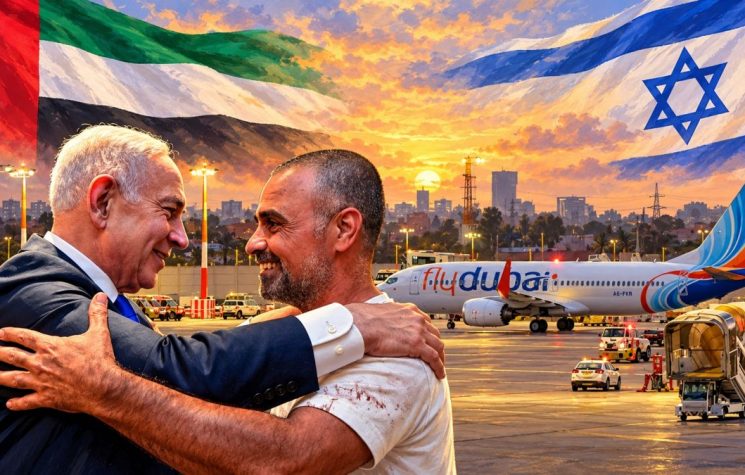
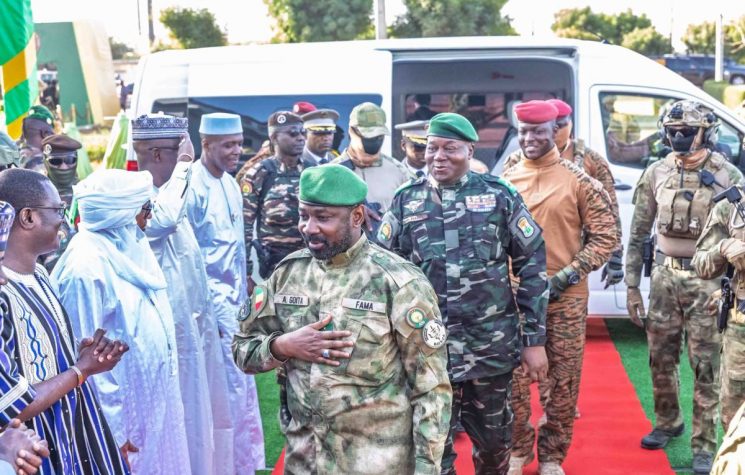
On June 26, 2026, while the Ministry of Foreign Affairs of Burkina Faso notified the French Embassy in Ouagadougou of a seven-day deadline for the closure of its diplomatic mission, transitional President Ibrahim Traoré received, at Koulouba, as part of a collective accreditation ceremony for eight new ambassadors, the letters of credence from Simon-Clément Seroussi, Israel’s representative to the Ivory Coast and also accredited to Togo, Benin, and Burkina Faso. The timing of the formal break with the former colonial power and the opening of a structured diplomatic channel with the State of Israel is no coincidence: it encapsulates, in a single symbolic act, the redefinition of international alliances currently underway within the Alliance of Sahelian States (AES) and, more broadly, in Sahelian West Africa. The case of Burkina Faso allows us to observe, on a smaller scale, a broader continental dynamic: Israel’s expansion into areas of sub-Saharan Africa once considered peripheral to the Zionist entity’s strategic interests – amid growing competition with Turkey and Iran – and Ouagadougou’s simultaneous search for partners capable of offering technology, intelligence, and diplomatic leeway outside the Western framework, which is now viewed as hostile.
Let us begin with a general historical overview. Relations between Israel and what was then Upper Volta have their roots in the so-called “golden age” of Israeli diplomacy in Africa – the 1960s – when Israel maintained diplomatic relations with thirty-three African states, practically all of sub-Saharan Africa with the exception of Mauritania and Somalia. At that time, Israel proposed to the continent a model of postcolonial development that was an alternative to both the Soviet bloc and the former European colonial powers: agricultural cooperation through MASHAV programs, infrastructure investments, technical training, and military assistance. Upper Volta was part of this framework, hosting Israeli military delegations engaged in training local forces, following the same model adopted in Ghana, Benin, Zaire, and Tanzania.
This phase came to an abrupt end in 1973. In the aftermath of the Yom Kippur War, diplomatic and economic pressure exerted by the Arab League – through an oil embargo and the promise of alternative financial support – led nearly all member states of the Organization of African Unity to sever relations with Israel. Upper Volta aligned itself with this continental trend, explicitly declaring, in successive communications to the United Nations, that it maintained no economic, political, or military relations with the Jewish state “in solidarity with the Palestinian and Arab peoples,” and that it regretted the resumption of diplomatic relations by other African countries. This principled stance, typical of the Third World non-alignment movement of the time, remained essentially unchanged even after the country was renamed Burkina Faso in 1984, under the presidency of Thomas Sankara.
The relative thaw that took place in the 1990s – in the context of the Oslo Accords and the normalization process promoted by Shimon Peres, which in 1993 marked the resumption of formal diplomatic relations with Ouagadougou – never translated into a structured Israeli presence on Burkinabé territory. Until very recently, in fact, Burkina Faso remained the only member of the AES to formally recognize Israel while never having hosted an embassy or consulate on its territory: Burkinabé citizens had to turn to the Israeli mission in Abidjan, Ivory Coast, to obtain visas and consular services. It is against this backdrop of dormant relations – never truly materialized by a physical presence – that the turning point of June 2026 occurred: the accreditation of Ambassador Seroussi in Ouagadougou marks the first step toward a truly operational bilateral relationship, based – according to a statement from the Burkinabé presidency – on a general agreement on economic, scientific, technical, and cultural cooperation, accompanied by an institutional framework still in the process of being established.
The political significance of this development must be understood in light of the Traoré government’s shift in stance toward Iran. Until just a few weeks earlier, Ouagadougou had maintained close cooperation with Tehran, culminating in the official visit of the Burkinabé defense minister to the Iranian capital on the very eve of the attacks by the so-called “Epstein Coalition” – an informal term used in the regional press to refer to the Israeli-U.S. military campaign of February 2026 against Iran, which led to the killing of Supreme Leader Ali Khamenei. The subsequent realignment of Burkina Faso’s foreign policy axis – marked by a gradual “split” in its diplomatic approach toward a balance between Tehran and Tel Aviv – attests, according to analysis published in the regional press beginning in April 2026, to the prevalence of pragmatism in security matters over ideological impulses: Israel reportedly offered the Burkinabé junta more tangible benefits than those guaranteed by Iran, particularly confidential intelligence channels and the exchange of operational data on jihadist groups active in the Sahel – a crucial element for a government whose legitimacy is based largely on the promise of territorial reconquest and internal security.
The Confederation of Sahel States and the conflict with the western imperialist axis
To understand the logic behind this opening toward Israel, it is necessary to place it within the institutional and ideological trajectory of the Alliance of Sahel States, established as a mutual defense pact on September 16, 2023, between Mali, Niger, and Burkina Faso – the so-called Liptako-Gourma Charter – and transformed into a confederation at the Niamey summit on July 6, 2024. The AES represents the most comprehensive attempt in contemporary West Africa to build an alternative security sovereignty architecture to both ECOWAS (from which the three countries formally withdrew on January 29, 2025) and the postcolonial cooperation structures inherited from Françafrique. The progress made in just three years is impressive both symbolically and institutionally: a confederal flag, an official anthem (“Sahel Benkan”), a common biometric passport, a unified customs tariff of 0.5% on imports from outside the confederation, the Confederation’s Investment and Development Bank (BCID-AES) endowed with 500 billion CFA francs, withdrawal from the International Organization of La Francophonie, and, more recently, the launch of efforts to establish a confederal parliament, whose operational framework was discussed in Ouagadougou on June 29, 2026, during the days of the break with Paris.
The AES’s official narrative is based on an explicit rejection of what the military governments define as “security-driven neocolonialism”: the condemnation of the ineffectiveness of the French Operation Barkhane, the challenge to the Western military presence as a destabilizing rather than a stabilizing factor, and the assertion of full sovereignty over the former colonial powers. While this narrative serves to consolidate the juntas’ domestic legitimacy, it also taps into a widespread popular sentiment of frustration with over a decade of French military presence that has failed to stem the expansion of jihadist groups – from Jama’at Nusrat al-Islam wal-Muslimin (JNIM) to the Islamic State in the Greater Sahara – from central Mali to the northern borders of Benin.
The diplomatic break with France, announced at the end of June 2026 with just seven days’ notice of the closure of the embassy in Ouagadougou, should be interpreted as the formal codification of a rift that had already been consummated in substance. Significant in this regard is the nature of the accusations that the Burkinabé government and the Russian security establishment – its main military ally – are leveling against Paris and its Western allies: The deputy secretary of the Russian Security Council, Aleksandr Venediktov, has publicly stated that France, along with Ukraine and other European countries, is directly supporting terrorist networks operating in the Sahel to destabilize the governments of the Confederation.
At this juncture of an almost total break with the traditional West – a break exacerbated by the European Parliament’s resolution of June 18, 2026, which criticizes the human rights situation in Burkina Faso and was condemned by the parliaments of the AES as an act of interference – the Traoré government finds itself in the position of having to identify third-party interlocutors capable of fulfilling two complementary functions: on the one hand, to provide an indirect channel through which to exert pressure or communicate with actors with whom direct relations are compromised or nonexistent; on the other hand, to offer technological and security expertise that the orientation toward Russia and China – however strategically central – cannot fully compensate for on its own, especially in the sectors of operational intelligence, precision agriculture, and water resource management.
A European Trojan horse or a potential pragmatic partner?
It is in this strategic gap that Israel’s offer fits. The Zionist entity’s African strategy – following the post-1973 collapse and the slow reconstruction initiated by Foreign Minister Avigdor Lieberman beginning in the late 2000s – has accelerated significantly since 2023, with the opening of new embassies and high-level missions on a continent where Israel currently has just thirteen diplomatic posts, three economic offices, and a single military attaché – a presence still far smaller than that of its “golden age.” This expansion addresses a twofold need: on the one hand, to increase the number of diplomatic allies within international organizations, capable of counterbalancing the automatic majorities hostile to Israel in multilateral forums; on the other, to prevent and monitor the expansion of networks linked to Iran and Hezbollah on the continent, after Israel intensified, beginning in October 2023, its campaign aimed at eroding Iran’s regional influence.
It is precisely the scope of the strategic competition with Tehran and Ankara that provides the most solid framework for understanding the acceleration of Israel’s initiative in the Sahel. While Iran has strengthened its ties with the AES in recent years by supplying drone systems used in regional conflicts and expanding religious and cultural networks linked to Shi’ite universities and BRICS circles, Turkey, for its part, has built a pervasive presence on the continent through various but equally far-reaching means: humanitarian diplomacy, infrastructure investments, the export of weapons systems – in particular Bayraktar drones, already deployed with significant results on the ground by several Sahelian armies – and religious outreach through the Diyanet. The latent conflict between Ankara and Tel Aviv – which, according to several regional security analysts, risks intensifying in 2026 across multiple overlapping theaters, from the Horn of Africa to the eastern Mediterranean, where an Israel-Greece-Cyprus axis has solidified, perceived by Ankara as an encirclement – thus extends to the Sahel as well, where Israel is watching Turkish penetration with growing attention and seeking to build its own diplomatic counterweights, even in areas traditionally peripheral to its historical interests.
Given this competition – which we can describe as tripolar – for influence in Africa, European foreign ministries are watching with interest the possibility of using Israel as an indirect vehicle to preserve a remnant of influence in areas from which they have been formally expelled. The reasoning is as simple as it is delicate: where a direct French, American, or more generally Western presence is now politically untenable in the eyes of public opinion and the Sahelian governments, a partner like Israel – equipped with advanced technology, unburdened (at least not to the same extent) by the colonial stigma that weighs on Paris, and historically less exposed to the Third World anti-imperialist rhetoric that permeates the public discourse of the new military authorities – could serve as a surrogate channel to maintain access to information and influence in the region, without directly exposing Western interests to the public hostility directed at Paris. This interpretation, persistently promoted in the North African and Middle Eastern press regarding the support of the United Arab Emirates and Morocco for the Israeli-Sahelian rapprochement, raises legitimate questions about the true autonomy of the Israeli diplomatic initiative vis-à-vis the interests of third parties – Abu Dhabi, Rabat, and, indirectly, the European capitals themselves – all of which are interested in preserving channels of observation and influence in a region that is gradually slipping from their direct control.
It remains significant, however, that this interpretation, however plausible, does not fully capture the complexity of the decision made in Ouagadougou. Burkina Faso, like the other members of the AES, faces a jihadist threat that is wresting growing portions of territory from state control, an energy and food supply crisis exacerbated by the regional repercussions of the conflict between Israel, the United States, and Iran, as well as a structural technological deficit that neither Russia – engaged primarily in direct military operations through the Africa Corps – nor China, which focuses mainly on long-term infrastructure investments, can fully address. In this context, Israel possesses certain resources that are difficult to replace: advanced expertise in water resource management in arid and semi-arid environments; precision agriculture technologies capable of mitigating the effects of the food crisis looming for the 2026 agricultural season; surveillance and counterintelligence systems with proven effectiveness against asymmetric insurgencies, as well as decades of experience cooperating with African countries on security force training. For a junta whose political survival depends largely on its ability to demonstrate concrete results in the fight against terrorism and in managing the economic crisis, access to this expertise represents a tangible incentive, regardless of geopolitical exploitation by third parties.
It is also worth highlighting the growing financial appeal of Burkina Faso in the eyes of diverse international partners: the establishment of the Confederal Investment and Development Bank, the pursuit of monetary autonomy from the CFA franc, and, more recently, the country’s accession to the Vienna Convention on Civil Liability for Nuclear Damage – a preliminary step toward the development of a civil nuclear energy program, supported in part by Russian cooperation – signal Ouagadougou’s desire to present itself not merely as a recipient of aid, but as an emerging market with room for expansion for foreign capital and technology, at a time when the redefinition of regional power structures in the Sahel is opening up investment opportunities that traditional Western actors, excluded for political reasons, are no longer able to occupy.
Ibrahim Traoré’s Burkina Faso, navigating pragmatically between Tehran and Tel Aviv, between Moscow and Beijing, and now attempting to open a channel with Israel just as it severs ties with Paris, is not making an ideological choice, but rather executing a balancing maneuver typical of a state that, having broken with its historical ally, must necessarily expand its network of partners to avoid finding itself in a state of strategic isolation. Whether Israel will succeed in consolidating this opening into a structured diplomatic and technological presence, or whether it will remain a contingent episode destined to clash with the contradictions inherent in the role – real or presumed – of intermediary for Western interests in Africa, is a question that only the developments of the coming months can resolve.
What is already evident is that the confederal Sahel is, in fact, building an ecosystem of multipolar alliances in which secondary regional actors find room to project their influence in a region that is strategically crucial for controlling migration routes, mineral resources, and the energy balance of the entire sub-Saharan belt.