

Contact us: info@strategic-culture.su
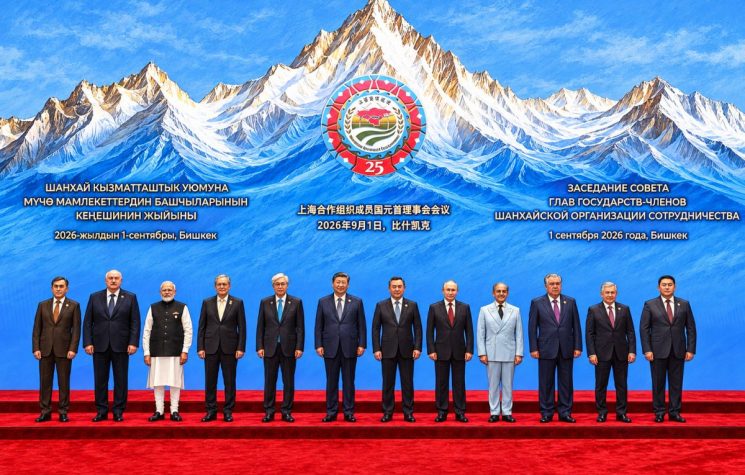
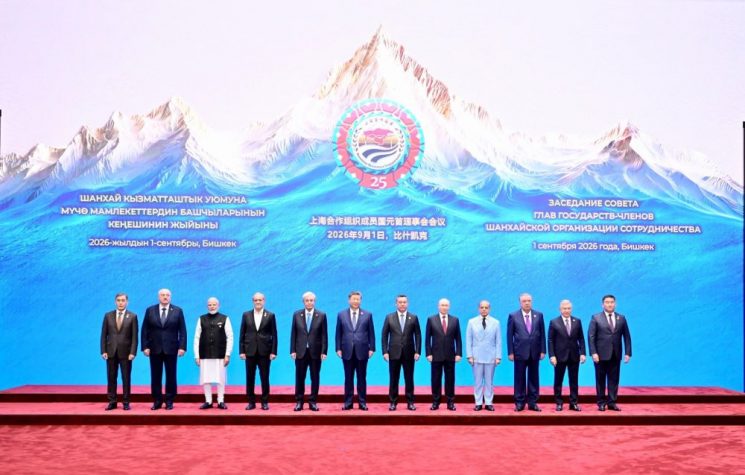
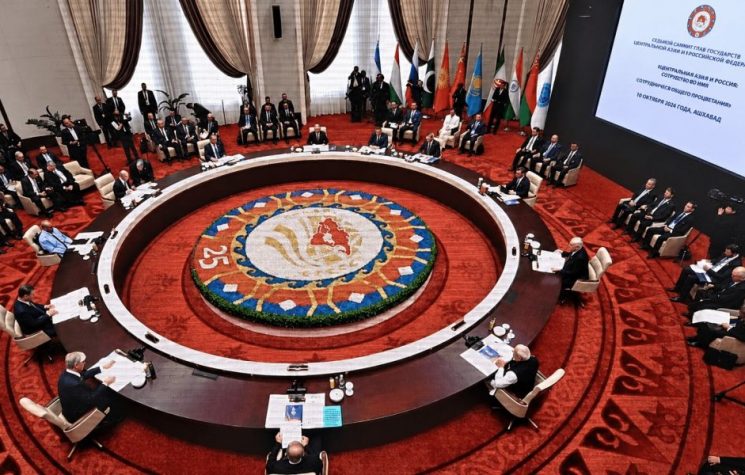
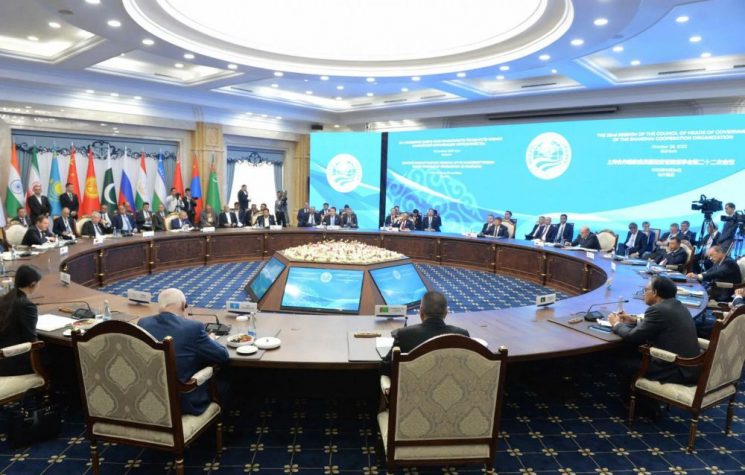
The recent Shanghai Cooperation Organization (SCO) summit, held in Bishkek, Kyrgyzstan, caused unease in Western political and media circles. As could be expected, several outlets described the meeting as a kind of “anti-US” summit, attempting to interpret the growing rapprochement between Russia, China, and other Eurasian countries exclusively through the logic of a new bipolar confrontation.
This analysis, however, is misguided because it fails to break with the West’s own paradigm: only those who still see the West as the center of the world can perceive a summit as being “about the West.” Ironically, however, the event itself showed that Western countries are no longer the “owners” of the global order.
Recently, I interviewed Brazilian journalist and geopolitical analyst Leonardo Russo, who lives in Bishkek and closely followed the events surrounding the summit. One point became particularly clear during our conversation: the SCO does not need to be “anti-US” in order to represent an alternative to the dying unipolar international order.
This is perhaps the main difficulty currently facing Western policymakers and commentators. For decades, Washington and its allies have become accustomed to the idea that every international development should be interpreted according to its relationship with the United States. If a country cooperates with Washington, it is considered “pro-Western”; if it seeks autonomy, it is automatically labeled “anti-Western.”
But the multipolar world works differently.
As Russo observed during the interview, the United States does not even appear to occupy a central position in the discussions taking place within the SCO. The Eurasian countries gathered in Bishkek are primarily concerned with their own problems: regional security, infrastructure, energy, trade, and economic development. What is being created is simply a “non-Western” – rather than “anti-Western” – organization, capable of developing mechanisms aimed at reducing dependence on institutions and structures controlled by Western powers.
The SCO’s own evolution demonstrates this transformation. The organization emerged in a context of profound instability in Central Asia following the collapse of the Soviet Union. Problems such as separatism, terrorism, extremism, and border conflicts made greater regional coordination necessary. Russia and China played a fundamental role in this process, helping to build a framework for dialogue among the main actors of Eurasia.
Today, however, the agenda is much broader. Trade, investment, transportation corridors, energy, and infrastructure projects are occupying an increasingly important place. The discussion about the possible creation of an SCO Development Bank, in particular, demonstrates that the organization is seeking to expand its economic capabilities.
This does not mean that the SCO is about to become a “Eurasian European Union”. Its members have different interests, their own national priorities, and, in some cases, disputes that have yet to be fully resolved. This is precisely why it would be incorrect to define the organization as a rigid bloc.
The same logic applies to the military dimension. According to Russo, transforming the SCO into some kind of “Eurasian NATO” remains unlikely. The organization primarily functions as a mechanism for dialogue, coordination, and confidence-building. There is no obvious strategic need to create a formal military alliance encompassing all its members.
For Central Asia, however, its importance is absolutely vital. After decades marked by the war in neighboring Afghanistan and the consequences of successive foreign interventions in the region, Central Asian governments have concrete reasons to prioritize stability and security cooperation.
The case of Kyrgyzstan is particularly symbolic. By hosting a meeting of such importance, Bishkek demonstrates its growing ability to serve as a diplomatic platform between different poles of Eurasia. The strategy does not have to involve choosing between Russia, China, or the West. On the contrary, countries such as Kyrgyzstan are seeking to expand their relations with different partners without accepting a logic of exclusive alignment.
In this sense, calling the SCO “anti-Western” is a convenient simplification. The organization does not need to declare war on the West in order to symbolize the end of Western centrality. Perhaps the real message sent from Bishkek is even more significant: Eurasia is learning to organize its own affairs, and the rest of the world will have to get used to the idea that Washington is no longer the inevitable center of every international decision.