Featured Story
Pepe Escobar
November 3, 2026
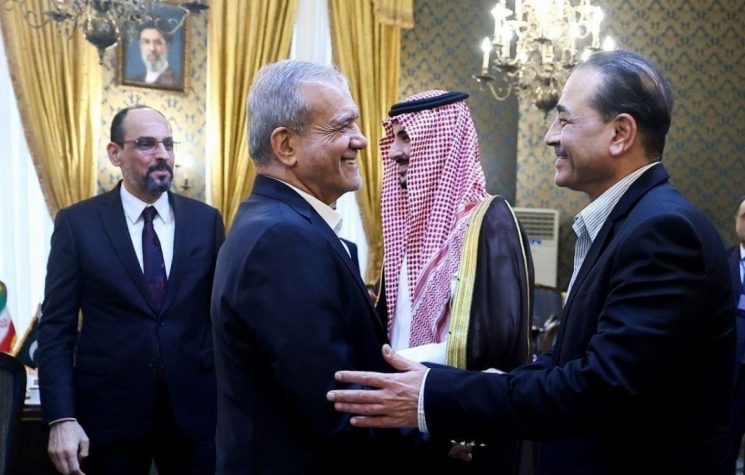
© Photo: @MojtabaKhamen

Iran is diversifying big time – not counting only on the overland corridors to Pakistan, subjected to U.S. secondary sanctions.

Join us on Telegram, X, and VK.

Contact us: info@strategic-culture.su

SHANGHAI – Only hours after the markets priced a possible U.S.-Iran deal, CENTCOM struck Iran’s Qeshm island in a “limited and defensive” manner. Qeshm is only a little over 20 km off Bandar Abbas and the hinge of Iran’s control of the Strait of Hormuz.

That may have been officially defensive; but the fact remains that CENTCOM is fighting inside (italics mine) Iran even as Qatar is “mediating” in Tehran.

The attack on Qeshm may have been a reply to Iranian fire at a U.S. fighter jet. But the crucial point is what the IRGC Navy announced it had shot down: two MQM-170 recon drones, south of Qeshm – apart from a MQ-9 drone over the eastern side of the Strait of Hormuz (Iran has already pulverized 55 MQ-9s over the past few months).

Tehran sources confirm CENTCOM is sending MQM-170 recon drones as decoys to incite an Iranian reaction and thus reveal the positioning of tactical air defense systems. This has been going on for weeks. CENTCOM’s reasoning: to counter attacks on ships illegally navigating the Strait of Hormuz.

The ultimate danger: the Sociopath-in-Chief administration is negotiating and shooting at the same time. We are all on the razor’s edge. Tehran may well read the Qeshm strike as the opening of a massive strike campaign rather than a warning.

The strike on Qeshm came on the very same day JD Vance referred to “some progress” and Trump vociferated he would not resume strikes after the midterms. Even as the machinery for a full joint U.S.-Israel campaign is in place; only the decision is not.

Quick recap: Adm. Cooper briefed Trump on attack options Thursday last week, with both clownish Secretary of Forever Wars Hegseth and Chairman of the Joint Chiefs Dan “Razin” Caine present. The Gulf petro-sheiks were told strikes could come right after the midterms.

Meanwhile Tehran keeps negotiating while fully prepared to fight. Foreign Minister Araghchi has described the non-stop indirect talks as “extremely intensive.” Even as Iran’s Army chief has raised the possibility of a pre-emptive strike, and no less than ten NPT-withdrawal proposals sit in the Iranian Parliament.

Full negotiations will resume only once Iran’s Strait of Hormuz terms are met. Rezaee has not answered Vance’s letter formally, but he now says the U.S. “tone has completely changed.”

Iran’s September plan reopened Hormuz on day six; Iran now offers two days, and Araghchi said Qatar had proposed five. Qatar’s framework trades a halt to Hormuz attacks for lifting the naval blockade.

And Iran of course keeps the toll booth: the new Persian Gulf Strait Authority (PGSA) charges transit fees – in rials – and keeps lists of non-compliant ships.

The real situation on the ground – actually the seas – is that Tehran has turned the closure into a permit system. And simply will not give up that kind of leverage.

China moves to the forefront

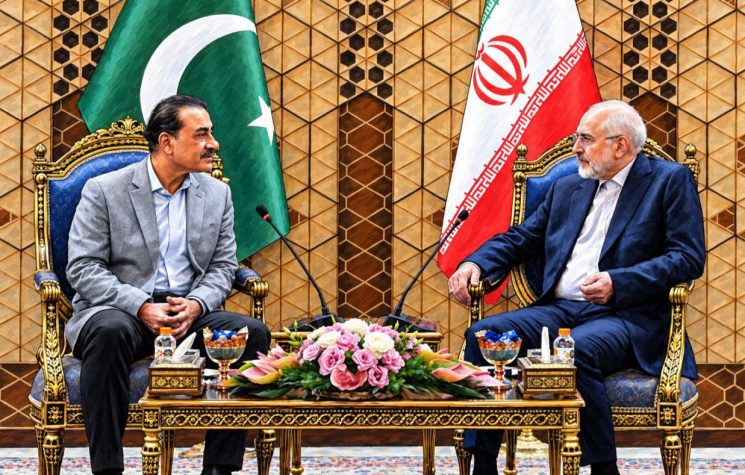
Pakistan seems to be back at the front of the negotiating channel. Araghchi reconfirmed that the Qatari and Pakistani channels are both “highly active.”

The major diferential is that Tehran now wants Pakistan, the broker of the serially dead cat Memorandum of Understanding (MoU) last June to carry its case – risks included.

And in parallel, adding extra sauce, Beijing is finally moving from statements – and working in the shadows – to active shuttle diplomacy. A Chinese special envoy will visit Iran, Oman and Saudi Arabia later this month. So China is now deep inside the Oman-route discussion for the first time.

President Xi has told the Sultan of Oman that the Gulf “should not become an arena for great-power rivalry.” China’s interests are quite clear: crude should flow freeely through the Strait of Hormuz; the interests of its Gulf partners should be preserved; and Beijing by all means wants to stay clear of U.S. secondary sanctions.

It should never be emphasized enough how Russian Foreign Minister Lavrov’s recent discussions in Tehran were crucial to mark the Russian position: what is needed for West Asia is a new security architecture – or “indivisibility of security” – with all the key players involved.

And that connects with the three-way APEC idea – which came from top Putin adviser Ushakov, not Lavrov: Russia, China and U.S. discuss Iran in depth at a Yalta 2.0-style meeting on the sidelines of the APEC summit in Shenzhen, in two weeks.

The whole carnival about a possible nuclear strike on Pickaxe Mountain, arguably with a B61-11 nuclear bomb with earth penetrating capability, is actually going nowhere – and was de facto defused by a high-level source in Tehran: the site is already empty.

As for NPT-withdrawal proposals registered in the Iranian parliament – though none has been voted – number two of the Iranian government Mohsen Rezaee did confirm a change of nuclear doctrine is being weighed. The final decision of course comes from Leader Mojtaba Khamenei – of whom Rezaee is the personal representative.

Even if the volcanic Sociopath-in-Chief decided to bomb Pickaxe, that would not settle what he says the U.S. is fighting over: Iran’s ablity to enrich uranium.

Then there’s Dimona in death cult territory. Mojtaba’s order this past Saturday to all military commanders for a “geographically unrestricted” response in case of an American/Israeli attack of course includes Dimona as a top target.

Iranian missiles previously hit Dimona town on March 21; the IAEA then saw no damage to the reactor and no abnormal radiation. The reactor is small: no Chernobyl. Effects may be serious for the Negev region, but a direct hit would not turn all of Israel uninhabitable.

Each side acting on its own security logic

The Mecca Defense Alliance continues to ruffle all sorts of feathers. Taken at face value, this is a three-state collective defence treaty. Turkey’s Foreign Relations committee approved it and the plenary vote is pending. There have been so far “no objection” to new members joining.

BADR for its part is a four-way defence industry MoU (Pakistan, Qatar, Turkey, Indonesia), with no defence pledge and no money.

The bottom line is that each player is protecting its own priorities: Pakistan its energy, border and $8 billion in Saudi deposits; Riyadh an end to Ansarallah’s fire (but for that they need to sit at the negotiating table); Ankara a defensive pact without combat duty; and Doha its role as mediator and its LNG.

But another interpretation is also being widely discussed. Let’s assume that the Alliance went to the Tehran Summit at the very least to subliminally threaten the Persians. For that it would be key to ignore the positive slant by Mohsen Rezaee.

This interpretation sees the three members as subject to the Anglo-Zionist axis, unwilling to defend Gaza but united in “warning” the Persians.

Turkey is the intel hub, integrated with NATO, and obsessed by Greater Turan and a neo-Ottoman return to Arabia.

Saudi Arabia is “follow the money” territory – and hatred of Shi’ites.

And Pakistan represents the more complex angle, featuring unbreakable bonds with both the Anglo elites and Saudi wealth, and parsed by actors who believe they can send Baloch mercenaries and assorted Salafi-jihadis into Iran and survive.

Iran meanwhile is diversifying big time – not counting only on the overland corridors to Pakistan, subjected to U.S. secondary sanctions. They are building railroads to Afghanistan; Araghchi is in Turkmenistan right now to strengthen connectivity ties; number two of the Supreme National Security Council, the mega-competent Bagheri-Kani is in Beijing; and Mohsen Rezaee called President Putin to let the corridor via the Caspian to flow even faster.

So in a nutshell, as we reach Election Day in the U.S., diplomacy keeps moving at the top while the shooting has already started underneath. Washington is answering with words of “progress” by day and strikes on Qeshm by night – while the tanker fleet for something much larger sits in the Negev.

Each side is acting on its own security logic. Iran wants the naval blockade lifted and its Strait of Hormuz navigation permit system recognized. The U.S. wants verifiable nuclear limits. The death cult badly wants a bombing campaign.

If Iran answers Qeshm at sea and JD Vance still answers through Pakistan this week, the window stays open. If Iran’s reply hits Gulf energy or U.S. aircraft, the November 4 date briefed to the Gulf petromonarchies goes live, and Shenzhen in two weeks becomes the site where the bill will be argued by Russia-China-U.S.

Iran-U.S.: diplomacy at the top, shooting underneath

Iran is diversifying big time – not counting only on the overland corridors to Pakistan, subjected to U.S. secondary sanctions.

Join us on Telegram, X, and VK.

Contact us: info@strategic-culture.su

SHANGHAI – Only hours after the markets priced a possible U.S.-Iran deal, CENTCOM struck Iran’s Qeshm island in a “limited and defensive” manner. Qeshm is only a little over 20 km off Bandar Abbas and the hinge of Iran’s control of the Strait of Hormuz.

That may have been officially defensive; but the fact remains that CENTCOM is fighting inside (italics mine) Iran even as Qatar is “mediating” in Tehran.

The attack on Qeshm may have been a reply to Iranian fire at a U.S. fighter jet. But the crucial point is what the IRGC Navy announced it had shot down: two MQM-170 recon drones, south of Qeshm – apart from a MQ-9 drone over the eastern side of the Strait of Hormuz (Iran has already pulverized 55 MQ-9s over the past few months).

Tehran sources confirm CENTCOM is sending MQM-170 recon drones as decoys to incite an Iranian reaction and thus reveal the positioning of tactical air defense systems. This has been going on for weeks. CENTCOM’s reasoning: to counter attacks on ships illegally navigating the Strait of Hormuz.

The ultimate danger: the Sociopath-in-Chief administration is negotiating and shooting at the same time. We are all on the razor’s edge. Tehran may well read the Qeshm strike as the opening of a massive strike campaign rather than a warning.

The strike on Qeshm came on the very same day JD Vance referred to “some progress” and Trump vociferated he would not resume strikes after the midterms. Even as the machinery for a full joint U.S.-Israel campaign is in place; only the decision is not.

Quick recap: Adm. Cooper briefed Trump on attack options Thursday last week, with both clownish Secretary of Forever Wars Hegseth and Chairman of the Joint Chiefs Dan “Razin” Caine present. The Gulf petro-sheiks were told strikes could come right after the midterms.

Meanwhile Tehran keeps negotiating while fully prepared to fight. Foreign Minister Araghchi has described the non-stop indirect talks as “extremely intensive.” Even as Iran’s Army chief has raised the possibility of a pre-emptive strike, and no less than ten NPT-withdrawal proposals sit in the Iranian Parliament.

Full negotiations will resume only once Iran’s Strait of Hormuz terms are met. Rezaee has not answered Vance’s letter formally, but he now says the U.S. “tone has completely changed.”

Iran’s September plan reopened Hormuz on day six; Iran now offers two days, and Araghchi said Qatar had proposed five. Qatar’s framework trades a halt to Hormuz attacks for lifting the naval blockade.

And Iran of course keeps the toll booth: the new Persian Gulf Strait Authority (PGSA) charges transit fees – in rials – and keeps lists of non-compliant ships.

The real situation on the ground – actually the seas – is that Tehran has turned the closure into a permit system. And simply will not give up that kind of leverage.

China moves to the forefront

Pakistan seems to be back at the front of the negotiating channel. Araghchi reconfirmed that the Qatari and Pakistani channels are both “highly active.”

The major diferential is that Tehran now wants Pakistan, the broker of the serially dead cat Memorandum of Understanding (MoU) last June to carry its case – risks included.

And in parallel, adding extra sauce, Beijing is finally moving from statements – and working in the shadows – to active shuttle diplomacy. A Chinese special envoy will visit Iran, Oman and Saudi Arabia later this month. So China is now deep inside the Oman-route discussion for the first time.

President Xi has told the Sultan of Oman that the Gulf “should not become an arena for great-power rivalry.” China’s interests are quite clear: crude should flow freeely through the Strait of Hormuz; the interests of its Gulf partners should be preserved; and Beijing by all means wants to stay clear of U.S. secondary sanctions.

It should never be emphasized enough how Russian Foreign Minister Lavrov’s recent discussions in Tehran were crucial to mark the Russian position: what is needed for West Asia is a new security architecture – or “indivisibility of security” – with all the key players involved.

And that connects with the three-way APEC idea – which came from top Putin adviser Ushakov, not Lavrov: Russia, China and U.S. discuss Iran in depth at a Yalta 2.0-style meeting on the sidelines of the APEC summit in Shenzhen, in two weeks.

The whole carnival about a possible nuclear strike on Pickaxe Mountain, arguably with a B61-11 nuclear bomb with earth penetrating capability, is actually going nowhere – and was de facto defused by a high-level source in Tehran: the site is already empty.

As for NPT-withdrawal proposals registered in the Iranian parliament – though none has been voted – number two of the Iranian government Mohsen Rezaee did confirm a change of nuclear doctrine is being weighed. The final decision of course comes from Leader Mojtaba Khamenei – of whom Rezaee is the personal representative.

Even if the volcanic Sociopath-in-Chief decided to bomb Pickaxe, that would not settle what he says the U.S. is fighting over: Iran’s ablity to enrich uranium.

Then there’s Dimona in death cult territory. Mojtaba’s order this past Saturday to all military commanders for a “geographically unrestricted” response in case of an American/Israeli attack of course includes Dimona as a top target.

Iranian missiles previously hit Dimona town on March 21; the IAEA then saw no damage to the reactor and no abnormal radiation. The reactor is small: no Chernobyl. Effects may be serious for the Negev region, but a direct hit would not turn all of Israel uninhabitable.

Each side acting on its own security logic

The Mecca Defense Alliance continues to ruffle all sorts of feathers. Taken at face value, this is a three-state collective defence treaty. Turkey’s Foreign Relations committee approved it and the plenary vote is pending. There have been so far “no objection” to new members joining.

BADR for its part is a four-way defence industry MoU (Pakistan, Qatar, Turkey, Indonesia), with no defence pledge and no money.

The bottom line is that each player is protecting its own priorities: Pakistan its energy, border and $8 billion in Saudi deposits; Riyadh an end to Ansarallah’s fire (but for that they need to sit at the negotiating table); Ankara a defensive pact without combat duty; and Doha its role as mediator and its LNG.

But another interpretation is also being widely discussed. Let’s assume that the Alliance went to the Tehran Summit at the very least to subliminally threaten the Persians. For that it would be key to ignore the positive slant by Mohsen Rezaee.

This interpretation sees the three members as subject to the Anglo-Zionist axis, unwilling to defend Gaza but united in “warning” the Persians.

Turkey is the intel hub, integrated with NATO, and obsessed by Greater Turan and a neo-Ottoman return to Arabia.

Saudi Arabia is “follow the money” territory – and hatred of Shi’ites.

And Pakistan represents the more complex angle, featuring unbreakable bonds with both the Anglo elites and Saudi wealth, and parsed by actors who believe they can send Baloch mercenaries and assorted Salafi-jihadis into Iran and survive.

Iran meanwhile is diversifying big time – not counting only on the overland corridors to Pakistan, subjected to U.S. secondary sanctions. They are building railroads to Afghanistan; Araghchi is in Turkmenistan right now to strengthen connectivity ties; number two of the Supreme National Security Council, the mega-competent Bagheri-Kani is in Beijing; and Mohsen Rezaee called President Putin to let the corridor via the Caspian to flow even faster.

So in a nutshell, as we reach Election Day in the U.S., diplomacy keeps moving at the top while the shooting has already started underneath. Washington is answering with words of “progress” by day and strikes on Qeshm by night – while the tanker fleet for something much larger sits in the Negev.

Each side is acting on its own security logic. Iran wants the naval blockade lifted and its Strait of Hormuz navigation permit system recognized. The U.S. wants verifiable nuclear limits. The death cult badly wants a bombing campaign.

If Iran answers Qeshm at sea and JD Vance still answers through Pakistan this week, the window stays open. If Iran’s reply hits Gulf energy or U.S. aircraft, the November 4 date briefed to the Gulf petromonarchies goes live, and Shenzhen in two weeks becomes the site where the bill will be argued by Russia-China-U.S.

Iran is diversifying big time – not counting only on the overland corridors to Pakistan, subjected to U.S. secondary sanctions.

Join us on Telegram, X, and VK.

Contact us: info@strategic-culture.su

SHANGHAI – Only hours after the markets priced a possible U.S.-Iran deal, CENTCOM struck Iran’s Qeshm island in a “limited and defensive” manner. Qeshm is only a little over 20 km off Bandar Abbas and the hinge of Iran’s control of the Strait of Hormuz.

That may have been officially defensive; but the fact remains that CENTCOM is fighting inside (italics mine) Iran even as Qatar is “mediating” in Tehran.

The attack on Qeshm may have been a reply to Iranian fire at a U.S. fighter jet. But the crucial point is what the IRGC Navy announced it had shot down: two MQM-170 recon drones, south of Qeshm – apart from a MQ-9 drone over the eastern side of the Strait of Hormuz (Iran has already pulverized 55 MQ-9s over the past few months).

Tehran sources confirm CENTCOM is sending MQM-170 recon drones as decoys to incite an Iranian reaction and thus reveal the positioning of tactical air defense systems. This has been going on for weeks. CENTCOM’s reasoning: to counter attacks on ships illegally navigating the Strait of Hormuz.

The ultimate danger: the Sociopath-in-Chief administration is negotiating and shooting at the same time. We are all on the razor’s edge. Tehran may well read the Qeshm strike as the opening of a massive strike campaign rather than a warning.

The strike on Qeshm came on the very same day JD Vance referred to “some progress” and Trump vociferated he would not resume strikes after the midterms. Even as the machinery for a full joint U.S.-Israel campaign is in place; only the decision is not.

Quick recap: Adm. Cooper briefed Trump on attack options Thursday last week, with both clownish Secretary of Forever Wars Hegseth and Chairman of the Joint Chiefs Dan “Razin” Caine present. The Gulf petro-sheiks were told strikes could come right after the midterms.

Meanwhile Tehran keeps negotiating while fully prepared to fight. Foreign Minister Araghchi has described the non-stop indirect talks as “extremely intensive.” Even as Iran’s Army chief has raised the possibility of a pre-emptive strike, and no less than ten NPT-withdrawal proposals sit in the Iranian Parliament.

Full negotiations will resume only once Iran’s Strait of Hormuz terms are met. Rezaee has not answered Vance’s letter formally, but he now says the U.S. “tone has completely changed.”

Iran’s September plan reopened Hormuz on day six; Iran now offers two days, and Araghchi said Qatar had proposed five. Qatar’s framework trades a halt to Hormuz attacks for lifting the naval blockade.

And Iran of course keeps the toll booth: the new Persian Gulf Strait Authority (PGSA) charges transit fees – in rials – and keeps lists of non-compliant ships.

The real situation on the ground – actually the seas – is that Tehran has turned the closure into a permit system. And simply will not give up that kind of leverage.

China moves to the forefront

Pakistan seems to be back at the front of the negotiating channel. Araghchi reconfirmed that the Qatari and Pakistani channels are both “highly active.”

The major diferential is that Tehran now wants Pakistan, the broker of the serially dead cat Memorandum of Understanding (MoU) last June to carry its case – risks included.

And in parallel, adding extra sauce, Beijing is finally moving from statements – and working in the shadows – to active shuttle diplomacy. A Chinese special envoy will visit Iran, Oman and Saudi Arabia later this month. So China is now deep inside the Oman-route discussion for the first time.

President Xi has told the Sultan of Oman that the Gulf “should not become an arena for great-power rivalry.” China’s interests are quite clear: crude should flow freeely through the Strait of Hormuz; the interests of its Gulf partners should be preserved; and Beijing by all means wants to stay clear of U.S. secondary sanctions.

It should never be emphasized enough how Russian Foreign Minister Lavrov’s recent discussions in Tehran were crucial to mark the Russian position: what is needed for West Asia is a new security architecture – or “indivisibility of security” – with all the key players involved.

And that connects with the three-way APEC idea – which came from top Putin adviser Ushakov, not Lavrov: Russia, China and U.S. discuss Iran in depth at a Yalta 2.0-style meeting on the sidelines of the APEC summit in Shenzhen, in two weeks.

The whole carnival about a possible nuclear strike on Pickaxe Mountain, arguably with a B61-11 nuclear bomb with earth penetrating capability, is actually going nowhere – and was de facto defused by a high-level source in Tehran: the site is already empty.

As for NPT-withdrawal proposals registered in the Iranian parliament – though none has been voted – number two of the Iranian government Mohsen Rezaee did confirm a change of nuclear doctrine is being weighed. The final decision of course comes from Leader Mojtaba Khamenei – of whom Rezaee is the personal representative.

Even if the volcanic Sociopath-in-Chief decided to bomb Pickaxe, that would not settle what he says the U.S. is fighting over: Iran’s ablity to enrich uranium.

Then there’s Dimona in death cult territory. Mojtaba’s order this past Saturday to all military commanders for a “geographically unrestricted” response in case of an American/Israeli attack of course includes Dimona as a top target.

Iranian missiles previously hit Dimona town on March 21; the IAEA then saw no damage to the reactor and no abnormal radiation. The reactor is small: no Chernobyl. Effects may be serious for the Negev region, but a direct hit would not turn all of Israel uninhabitable.

Each side acting on its own security logic

The Mecca Defense Alliance continues to ruffle all sorts of feathers. Taken at face value, this is a three-state collective defence treaty. Turkey’s Foreign Relations committee approved it and the plenary vote is pending. There have been so far “no objection” to new members joining.

BADR for its part is a four-way defence industry MoU (Pakistan, Qatar, Turkey, Indonesia), with no defence pledge and no money.

The bottom line is that each player is protecting its own priorities: Pakistan its energy, border and $8 billion in Saudi deposits; Riyadh an end to Ansarallah’s fire (but for that they need to sit at the negotiating table); Ankara a defensive pact without combat duty; and Doha its role as mediator and its LNG.

But another interpretation is also being widely discussed. Let’s assume that the Alliance went to the Tehran Summit at the very least to subliminally threaten the Persians. For that it would be key to ignore the positive slant by Mohsen Rezaee.

This interpretation sees the three members as subject to the Anglo-Zionist axis, unwilling to defend Gaza but united in “warning” the Persians.

Turkey is the intel hub, integrated with NATO, and obsessed by Greater Turan and a neo-Ottoman return to Arabia.

Saudi Arabia is “follow the money” territory – and hatred of Shi’ites.

And Pakistan represents the more complex angle, featuring unbreakable bonds with both the Anglo elites and Saudi wealth, and parsed by actors who believe they can send Baloch mercenaries and assorted Salafi-jihadis into Iran and survive.

Iran meanwhile is diversifying big time – not counting only on the overland corridors to Pakistan, subjected to U.S. secondary sanctions. They are building railroads to Afghanistan; Araghchi is in Turkmenistan right now to strengthen connectivity ties; number two of the Supreme National Security Council, the mega-competent Bagheri-Kani is in Beijing; and Mohsen Rezaee called President Putin to let the corridor via the Caspian to flow even faster.

So in a nutshell, as we reach Election Day in the U.S., diplomacy keeps moving at the top while the shooting has already started underneath. Washington is answering with words of “progress” by day and strikes on Qeshm by night – while the tanker fleet for something much larger sits in the Negev.

Each side is acting on its own security logic. Iran wants the naval blockade lifted and its Strait of Hormuz navigation permit system recognized. The U.S. wants verifiable nuclear limits. The death cult badly wants a bombing campaign.

If Iran answers Qeshm at sea and JD Vance still answers through Pakistan this week, the window stays open. If Iran’s reply hits Gulf energy or U.S. aircraft, the November 4 date briefed to the Gulf petromonarchies goes live, and Shenzhen in two weeks becomes the site where the bill will be argued by Russia-China-U.S.

The views of individual contributors do not necessarily represent those of the Strategic Culture Foundation.

See also

October 27, 2026

See also

October 27, 2026
The views of individual contributors do not necessarily represent those of the Strategic Culture Foundation.