

Between the crisis of the “Collective West” and the construction of a new world order
Join us on Telegram , X
 , and VK
 .
Contact us: info@strategic-culture.su
The Great Confusion About the Fate of the West
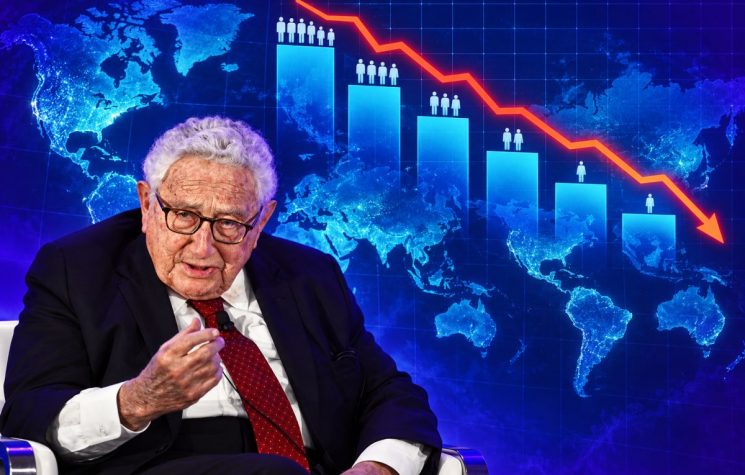
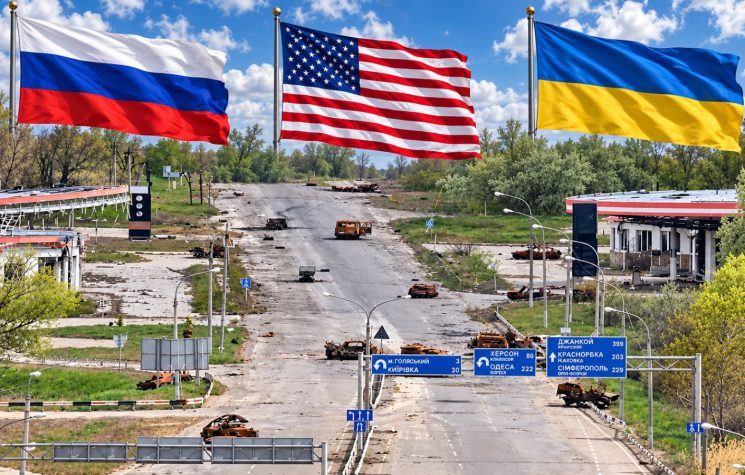
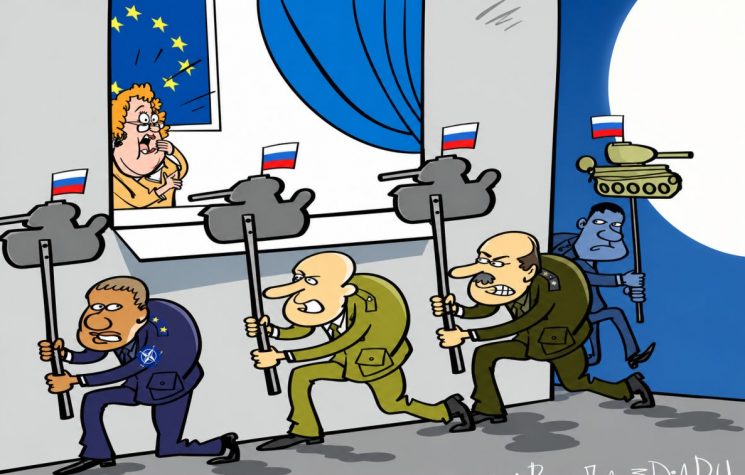
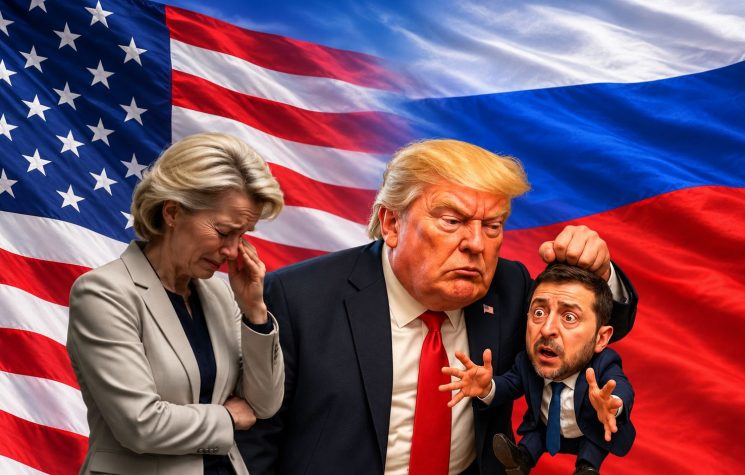
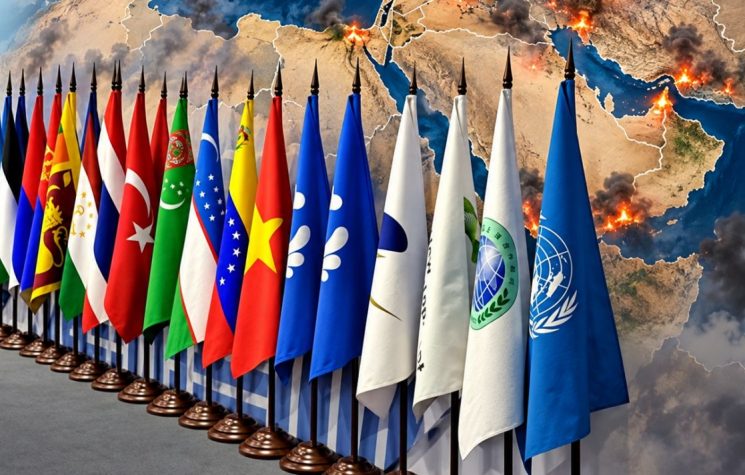
Amid the profound transformations of the world order, aggravated by the wars in Ukraine and the Middle East, two seemingly opposing interpretations are competing to define the meaning and destiny of Western civilization. On one side are those who, faced with the decline of Anglo-American hegemony and the rise of Eurasian powers, proclaim the inevitable end of the West, which would be replaced by a new world order dominated by China, Russia, and other centers of power. On the other side are those who seek to preserve the supremacy of the so-called “Collective West,” identifying the survival of Western civilization with the preservation of its hegemonic political, military, and financial structures.
Although antagonistic, both interpretations fall into the same fundamental confusion: they identify a civilization thousands of years old with a historically transitory power structure. Western civilization was not born with NATO, the European Union, or Wall Street. Its roots go back to Greek philosophy, Roman law, and, decisively, the civilizational synthesis brought about by Christianity.
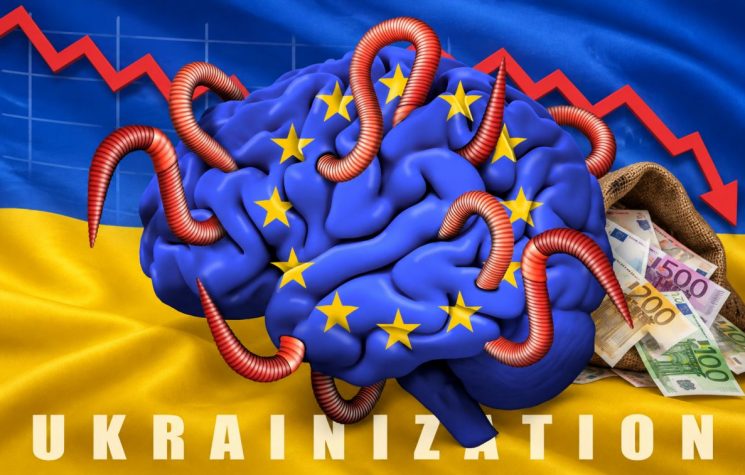
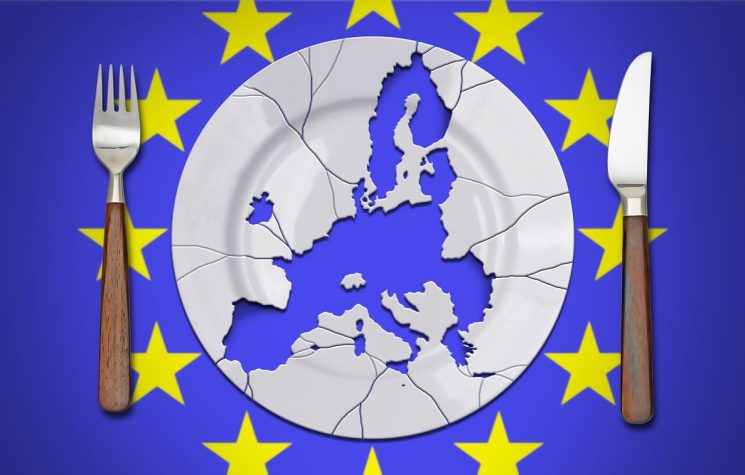
Likewise, Europe and the European Union are not synonymous. The former is a historical reality composed of nations, cultures, and spiritual traditions that have endured for centuries. The latter is a contemporary political and institutional construction which, by progressively concentrating supranational powers, has been justifiably accused of distancing itself from the interests and aspirations of European peoples.
The Europe of genuine nations did not disappear with the establishment of the institutions in Brussels. Nor can it be reduced to the decisions of the EU bureaucracy or NATO’s strategic directives. Its historical identity remains linked to the Greco-Roman heritage, Christianity, the founding of universities, the development of science, the great legal traditions, and the cultural diversity of its peoples.
Above all, it is associated with the long medieval process through which European political communities took shape and from which nation-states would eventually emerge, still embedded in a Christian understanding of political authority, law, and the common good. In this sense, Europe was not born in Brussels: Brussels is merely a recent institutional construction within a far older civilizational history.
Marco Rubio at the Parthenon: Which West Is Worth Defending?
This contradiction acquired a particularly revealing dimension in the speech delivered by U.S. Secretary of State Marco Rubio in Athens on October 7, 2026, against the symbolic backdrop of the Acropolis and the Parthenon. Rubio sought to establish a historical continuity linking Ancient Greece, Rome, European Christendom, and the United States, presenting the latter as the heir to that tradition. He emphasized reason, science, heroism, excellence, and ambition as attributes of Western greatness, associating them with the need to restore American supremacy.
Yet there is a fundamental contradiction between the universality of the Greco-Roman and Christian legacy and its use as a justification for the supremacy of a particular power.
Greece did not bequeath to humanity merely the exaltation of excellence and competition. Through Socrates, Plato, and Aristotle, it also left a profound reflection on truth, justice, virtue, and the nature of the Good. Rome contributed its legal tradition, while Christianity established a conception of human dignity that transcends nationality, wealth, and power.
There is, moreover, a historical irony in the setting chosen by Rubio. The Parthenon was the victim of one of the most notorious episodes of cultural plunder in British imperial history. Between 1801 and 1812, Lord Elgin, the British ambassador to the Ottoman Empire, arranged for the removal of a substantial portion of its sculptures, which were subsequently incorporated into the British Museum, where they remain despite Greek demands for their restitution.
Such was the admiration for Greek civilization that one of the West’s greatest imperial powers was not content merely to contemplate its masterpieces: it carried away the stones and sculptures of its most sacred monuments.
Two centuries later, a representative of American power symbolically returns to the same setting to proclaim Western greatness. Yet the true universality of a civilization is not demonstrated by appropriating the achievements of others, but by respecting the peoples who produced them.
Plato Against Thrasymachus: Justice Is Not the Right of the Strongest
This contradiction also deserves examination in light of the influence of the German political philosopher Leo Strauss and certain interpretations of classical philosophy within American neoconservative thought. Some neoconservative intellectuals who invoke Plato seem to have forgotten the fundamental lesson of The Republic, particularly the Book 1 dialogue in which the sophist Thrasymachus maintains that justice is the advantage of the stronger. In other words, rulers establish laws according to their own interests and expect those they govern to recognize as just whatever benefits those who hold power.
It is precisely this identification of justice with force that Socrates challenges, arguing that authority should be directed toward the good of those entrusted to its care. This is not to attribute Thrasymachus’s doctrine directly to Strauss, but rather to recognize that certain political interpretations of the classical legacy seem closer to the sophist’s conception than to the Socratic-Platonic critique.
This contradiction became particularly evident after the fall of the Berlin Wall in 1989 and the dissolution of the Soviet Union in 1991. Instead of seizing that historic opportunity to build a cooperative order, Washington embraced the expectation of prolonged unipolar supremacy, accompanied by the so-called “forever wars.”
The most disturbing expression of this conception came in April 2026, when Donald Trump, during the confrontation with Iran, publicly threatened the disappearance of an entire civilization. The threat against the ancient Persian civilization represents a moral contradiction of the very universal principles proclaimed in the American Declaration of Independence, grounded in the laws of nature and of the Creator.
Justice does not arise from power, nor is truth established by force. It is power that must submit to truth, justice, and the Common Good.
True Western Civilization and Its Christian Roots
In the face of these contradictions, it becomes essential to recover a rigorous definition of Western civilization.
The synthesis of Greek philosophy, Roman law, and Christianity laid the foundations for a conception of society in which political authority is not an end in itself but must be directed toward the realization of the Common Good.
This heritage found a particularly important modern expression in the Social Doctrine of the Catholic Church, from Leo XIII’s encyclical Rerum Novarum to the great social documents of the twentieth and twenty-first centuries. Human dignity, Natural Law, solidarity, subsidiarity, and the universal destination of goods constitute essential principles of this tradition.
These foundations acquire extraordinary relevance today, precisely because the global crisis is not merely economic, financial, political, or military. It is, ultimately, a spiritual crisis, manifested in the loss of the moral and transcendent principles that should guide the exercise of power and the organization of society.
In this sense, the Social Doctrine of the Church offers remarkably relevant foundations for the construction of a truly multipolar world order.
In the encyclical Pacem in Terris (1963), John XXIII defended the need for a worldwide public authority capable of promoting the universal Common Good, emphasizing that its legitimacy should arise from agreement among nations, never from the imposition of the great powers.
The Second Vatican Council, in its pastoral constitution Gaudium et Spes (1965), further developed this conception, while Paul VI, in his encyclical Populorum Progressio (1967), linked the construction of a universal legal order to the integral development of every human being and every people.
This is a conception radically different from any oligarchic or imperial world government. Legitimate international authority must not suppress the sovereignty of nations, but rather ensure the conditions for its fulfillment within a cooperative international community.
The Iberian Heritage and the Civilizational Identity of Ibero-America
For us, the peoples of Ibero-America, this reflection has special significance.
We are heirs to a civilizational tradition which, beginning with the great Portuguese and Spanish voyages of the fifteenth and sixteenth centuries, carried Christianity beyond Europe, giving rise to new societies formed through the encounter among European, Indigenous, and African peoples.
This process cannot be reduced to the categories of mercantile colonialism, although it was accompanied by wars of conquest, exploitation, and grave injustices. Notwithstanding, the Iberian tradition also produced an extraordinary reflection on the natural rights of peoples, particularly through Francisco de Vitoria and the School of Salamanca, which established important moral limits on conquest and the exercise of power.
It is necessary to distinguish this civilizational dimension from the systems of mercantile domination associated with the rise of the Anglo-Dutch powers, especially from the sixteenth and seventeenth centuries onward, with their chartered trading companies, monopolies, privateering, piracy, and increasing concentration of financial power.
Naturally, the Iberian monarchies themselves also engaged in coercive colonial practices. The essential distinction does not lie in absolving some and condemning others, but in recognizing the difference between the universal principles of a civilization and the particular interests of the empires that claim to represent it.
Ibero-America, heir to this Christian tradition and enriched by its own cultural diversity, has a unique contribution to make to the construction of a new world order.
Leo XIV in France: Christian Europe Is Still Alive
Amid the existential crisis of Europe’s current political structures, Pope Leo XIV’s apostolic visit to France in September 2026 offers a significant sign of the vitality of the continent’s Christian roots.
The massive demonstrations welcoming the Pontiff, especially the participation of young people, contrasted with the image of an Europe whose secularization had supposedly eradicated its religious identity once and for all.
The enthusiasm expressed in France does not, by itself, demonstrate the existence of a generalized Christian revival throughout Europe. Nevertheless, it reveals that religious tradition remains capable of mobilizing significant sectors of society, including younger generations.
This phenomenon acquires particular significance on a continent marked by economic crises, declining confidence in institutions, and growing dissatisfaction with government policies, especially in the fields of energy and foreign affairs.
France offers a striking example of this contradiction. While displaying considerable religious vitality, it also experiences social tensions that, under certain circumstances, erupt into violent confrontations, including the more than predictable participation of the so-called Black Blocs.
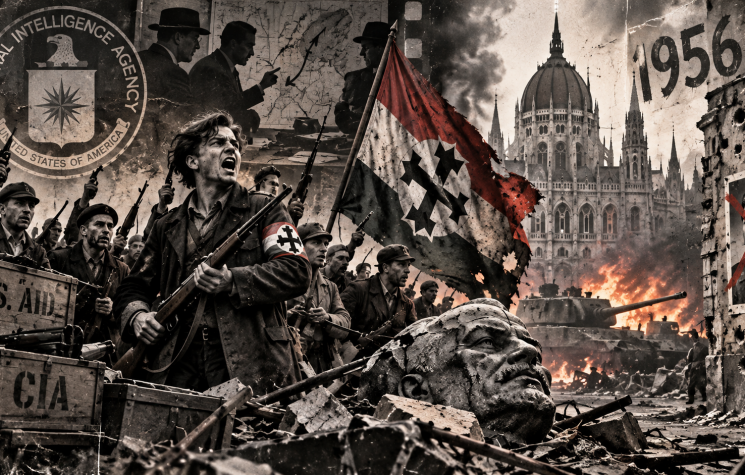
More than a few observers regard them as paramilitary groups deliberately financed and trained along the lines of NATO’s Operation Gladio networks of the 1970s and 1980s, specifically to infiltrate legitimate popular protests and provoke social and political tensions, with the aim of justifying severe repression by the governments of the countries concerned.
European governments should recognize the risks of a growing rupture between their institutions and the aspirations of their populations. The inability to respond to legitimate social demands may encourage processes of radicalization, violence, and repression.
Spiritual renewal, in turn, can contribute to rebuilding social cohesion, solidarity, and trust, provided that it is not transformed into an instrument of political confrontation. Above all, Leo XIV’s visit reminds us that Christian Europe did not disappear with the secularization of its political institutions.
The European Union is not Europe, just as the so-called “Collective West” is not Western civilization.
The Great Crossroads: Global War or a Cooperative World Order
This is not, therefore, a merely academic discussion about the historical meaning of the West.
The way in which the great powers understand their own civilizational identity and their relations with other peoples has direct consequences for war, peace, and the organization of the world economy.
If the conception prevails that the greatness of a civilization is measured by its ability to dominate others, the emergence of a multipolar world could turn into a permanent confrontation among rival centers of power.
In such a scenario, the decline of Anglo-American hegemony and the rise of Eurasian powers could lead, not to a more just international order, but to a global war with potentially devastating consequences.
The alternative lies in overcoming the very principle of hegemony as the foundation of international relations.
Natural Law and the Social Doctrine of the Church offer principles for envisioning a community of fully sovereign nations, committed to the integral development of their peoples within a legitimate and cooperative international legal order.
The recovery of the Christian roots of Western civilization must not mean the restoration of imperial supremacy, but rather the reaffirmation of its universal contribution to human dignity, justice, and the Common Good.
The same principle must guide the Eurasian powers: no civilization has the right to unilaterally impose its interests upon humanity as a whole.
The contemporary crisis is, ultimately, spiritual, because it concerns the very moral foundations that should guide the exercise of power.
Overcoming it requires recovering the lesson that Socrates set against Thrasymachus: justice cannot be reduced to the advantage of the strongest.
Between confrontation that could lead to global war and an understanding capable of establishing a cooperative world order, founded upon Natural Law and the dignity of nations, lies the great crossroads of our time.
And it is at this crossroads – not in the struggle for supremacy between West and East – that the true destiny of civilization is at stake.