

Ukraine, Rapallo, and the Return of Sovereign Nation-States
Join us on Telegram , X
 , and VK
 .
Contact us: info@strategic-culture.su
The decision by Finland and Norway to establish direct diplomatic contact with Vladimir Putin constitutes a significant indication of the tensions running through Europe’s political and strategic architecture. Although it does not represent a formal break with the European Union or NATO, it calls into question the wisdom of keeping Russia outside diplomatic channels while seeking a way out of the war in Ukraine.
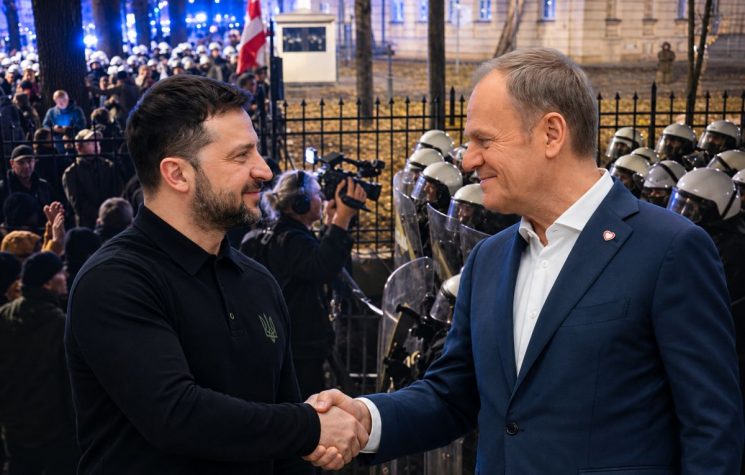
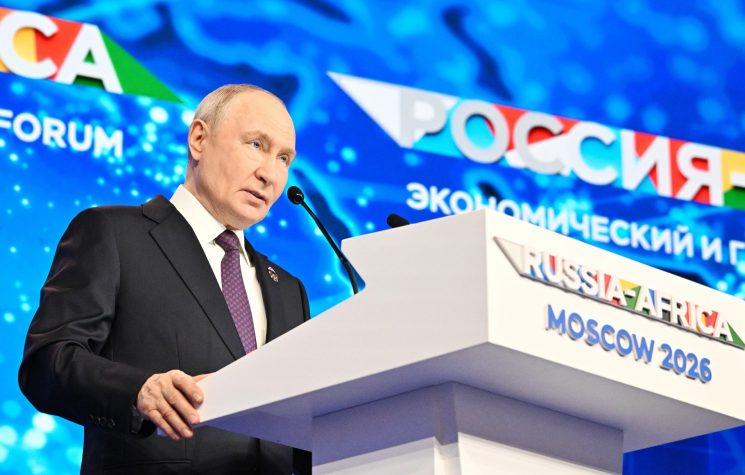
On October 27, 2026, Finnish President Alexander Stubb and Norwegian Prime Minister Jonas Gahr Støre held approximately 90 minutes of talks with Putin, in consultation with Ukraine, in an effort to advance new negotiations. The initiative prompted reservations in Denmark and Sweden, which expressed concern about its implications for European coordination.
The episode is particularly significant because it involves countries neighboring Russia, with a direct interest in the security of the Baltic region and Northern Europe. The initiative can be interpreted as recognition of a strategic reality: no continental security architecture can be sustained indefinitely without effective channels of communication with Moscow.
But the event raises a much deeper question: how much longer will European states be willing to subordinate their national interests to a common strategy whose political and economic results are becoming increasingly disastrous?
Captives of an illusion
To understand how Europe arrived at this situation, we must return to the fall of the Berlin Wall in 1989 and the dissolution of the Soviet Union in 1991.
The end of the Cold War fostered among influential sectors of Western elites the conviction that a new era was beginning, characterized by the predominance of liberal democracy, economic globalization, and the increasing integration of states into supranational structures, conceived by some schools of thought as steps toward forms of global governance.
European nations were offered the prospect of peace, prosperity, freedom of movement, expanded markets, and greater international influence through political and economic integration. These were tangible benefits, many of which did indeed materialize.
Yet alongside these promises, a much more ambitious geopolitical vision developed: the possibility of consolidating an international order in which Russia, weakened by the disappearance of the Soviet Union, would cease to be a power capable of challenging Western primacy.
In certain geopolitical circles, there was also speculation about the eventual fragmentation of the Russian Federation and the economic opportunities that access to its enormous reserves of energy, minerals, and other strategic resources might open up.
By historical analogy, this scenario recalls the redistribution of power, territory, and influence that followed the collapse of the Ottoman and Austro-Hungarian empires after the First World War.
To what extent did certain sectors of the Western leadership come to imagine a similar outcome for Russia? What economic interests expected to benefit from an eventual reorganization of its strategic space?
The prize was simply too tempting. Russia’s immense energy, mineral, and territorial wealth fueled expectations of extraordinary profits in the event of its weakening and eventual fragmentation. Greed may have done the rest: transforming a geopolitical illusion into a strategic gamble, confusing the desires of those who imagined dividing the spoils with the actual prospects of subjugating a power of Russia’s size.
These are fundamental questions for understanding the evolution of the international order after 1991. Although there is insufficient evidence to claim that Russia’s disintegration was an official objective of the European Union or NATO, the interests of certain financial circles in the prospect of gaining access to its immense strategic wealth deserve much closer examination.
The critical hypothesis is that certain political and economic elites, seduced by the possibilities of Russia’s permanent weakening and the benefits that might arise from an eventual fragmentation of its territory, ultimately became captives of their own expectations, underestimating Russia’s capacity for recovery and its determination to preserve national sovereignty.
Vladimir Putin’s rise to power gradually dispelled that prospect. The reconstruction of Russian state power, the recovery of control over strategic resources, and military strengthening altered the conditions of Russia’s relationship with the West.
At the same time, disputes over NATO’s expansion toward Russia’s borders, continental security, and the sovereignty of neighboring states intensified, eventually culminating in Russia’s invasion of Ukraine in February 2022.
The war exposed the impossibility of indefinitely maintaining European stability on the basis of incompatible strategic assumptions.
High finance, Malthusianism, and political sovereignty
Europe’s evolution after the Cold War cannot be understood without examining the growing role of financial institutions and major international asset managers. Financial liberalization, market globalization, and the expansion of transnational investment helped transform the relationship between economic power and political institutions.
In this context, the professional careers of two leading European political figures are particularly revealing: French President Emmanuel Macron worked as an investment banker at Rothschild before assuming the highest responsibilities of government; the German Chancellor Friedrich Merz, for his part, chaired the supervisory board of BlackRock Asset Management Deutschland between 2016 and 2020, the German subsidiary of one of the world’s largest financial asset managers.
Both careers illustrate the close circulation of professionals between major financial institutions and the highest levels of national political power. These are governments that seem to enjoy greater popularity among banks than among their own peoples.
Great Britain is not exempt from this historical relationship between financial and political power. The links between the British Crown and the City of London go back centuries, when major merchant and banking houses financed the monarchy’s needs and contributed to the expansion of British power.
Today, King Charles III has publicly expressed his support for Ukraine, while the British government maintains a policy of military, financial, and diplomatic assistance to Kyiv, accompanied by economic sanctions against Russia.
To what extent does the continuation of confrontation with Russia reflect a strategic conception of British power, and how does this relate to the economic and financial interests associated with the City?
The central question is to determine how far the proximity between high finance and political power influences government priorities, particularly when the demands of financial markets come into conflict with productive and social interests.
It is impossible not to recall the historical importance of Europe’s great banking houses after the Napoleonic Wars. The Rothschild family played a prominent role in financing the British war effort and subsequently consolidated a powerful international banking network. Waterloo forms part of the historical narrative of that ascent.
To this relationship between political power and high finance must be added an underlying question that should not go unnoticed: the persistence, within certain sectors of Western economic and political thought, of a Malthusian inclination that tends to regard population growth and human needs primarily as problems of resource availability and management.
Certain financial and political elites continue to interpret international relations from a perspective centered on the control of scarce resources, rather than on expanding the productive and creative capacities of nations.
This issue becomes particularly relevant in the context of the war in Ukraine: when strategic and financial calculations push the human consequences of prolonged confrontation into the background, there is a risk that populations will be treated as variables subordinated to the interests of power.
Against such a conception, the tradition of the National System of Political Economy, from Alexander Hamilton to Friedrich List, reminds us that the greatest wealth of nations does not reside exclusively in their natural or financial resources, but in the creative, scientific, and productive capacities of their peoples.
The contemporary question then acquires another dimension: who will bear the economic losses arising from an eventual reorganization of relations among Europe, Russia, and the United States?
Sanctions, the reduction of energy trade, the reallocation of investment, and changes in asset values have produced winners and losers. An eventual peace agreement would also redistribute risks, opportunities, and financial expectations.
It cannot be assumed that the major investment funds would necessarily be the principal losers. But it is certainly worth investigating which financial sectors have benefited from the confrontation and which might see their positions altered by diplomatic normalization.
The Europeans as “strategic beggars”
The prolongation of the war has placed Europe in a fundamental predicament. Its governments have committed enormous military, financial, and political resources to supporting Ukraine, while the United States retains decisive influence over the prospects for negotiations and Russia preserves the capacity to shape continental security.
From a critical perspective, the strategy of seeking a decisive defeat of Moscow has encountered obstacles that make it necessary to reassess its objectives.
The indefinite continuation of the war threatens to deepen Ukraine’s economic, financial, and military exhaustion without necessarily providing a political way out of the conflict.
The destruction of energy, industrial, and transportation infrastructure, compounded by supply difficulties during winter, threatens to aggravate Ukraine’s humanitarian crisis even further.
One must ask whether some of the most enthusiastic advocates of indefinitely maintaining the current strategy of military support are also calculating that the worsening humanitarian tragedy might generate greater public mobilization in favor of their governments and the continuation of the conflict.
If such an instrumentalization of human suffering were to occur, we would be facing a cruel and profoundly inhuman contradiction: turning the consequences of war into political arguments for prolonging it.
Such a calculation would be compatible with an extreme Malthusian conception in which the population ceases to be regarded as the principal subject and beneficiary of development and instead becomes a variable subordinated to resource management, balances of power, and strategic interests.
When the suffering of peoples is incorporated into political calculations as a manageable cost, raison d’état risks becoming a form of dehumanization.
It cannot be claimed that the military outcome has been definitively determined. Nevertheless, the prolongation of the confrontation increases the human, economic, and territorial costs, while making a diplomatic solution capable of preventing an even greater catastrophe increasingly urgent.
From the critical perspective guiding this essay, particular attention should be paid to the influence of those Atlanticist conceptions that trusted the confrontation could culminate in a decisive weakening of Russia, without adequately calculating the human and strategic costs of a prolonged war.
Ukraine’s devastation and the suffering of its population do not represent a beneficial solution for anyone: neither Ukrainians, nor Russia, nor Europe.
And it is precisely Europe that risks bearing a considerable share of the conflict’s economic and strategic consequences without possessing an equivalent capacity to determine its outcome.
The United States, China, and Russia, despite their rivalries, retain national decision-making centers capable of formulating independent strategies. The European Union, by contrast, brings together countries whose interests do not always coincide, while NATO remains heavily dependent on American capabilities.
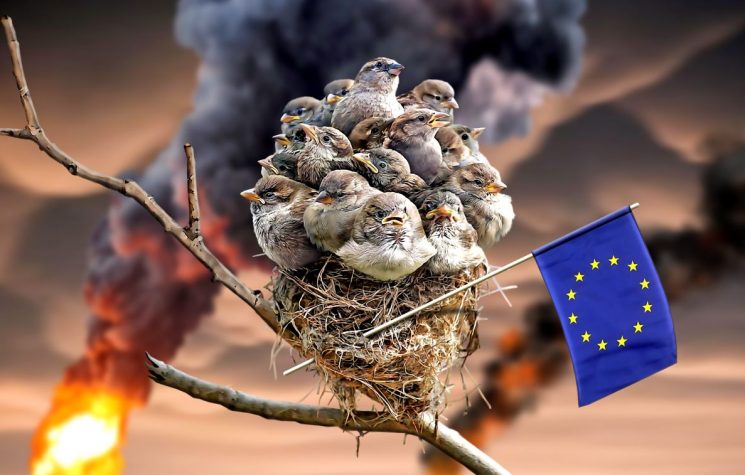
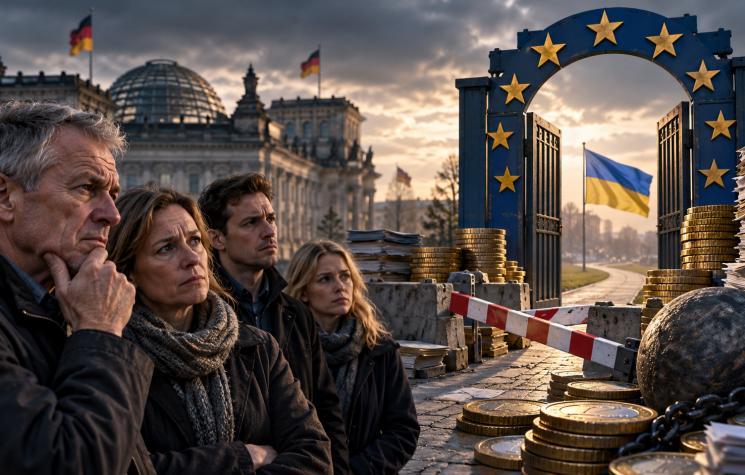
If Europe fails to rebuild its diplomatic and economic initiative, it risks becoming a community of strategic beggars, demanding a place at negotiations whose fundamental decisions may be taken primarily in Washington, Moscow, and Beijing.
The gravity of this prospect lies in the fact that Europe still possesses enormous industrial, scientific, technological, and cultural capabilities, yet could end up lacking the political autonomy necessary to translate them into international influence.
The danger is not simply losing a war or a negotiation, but being marginalized in the construction of the world order that will emerge after the conflict.
Rapallo: Escaping the straitjacket of Versailles
Here the precedent of the Treaty of Rapallo, signed on April 16, 1922, between the Weimar Republic and Soviet Russia, acquires extraordinary significance.
Both countries had been marginalized, for different reasons, within the European order that emerged from the First World War. Germany was subjected to the territorial, military, and financial restrictions of the Treaty of Versailles, while Russia faced profound diplomatic and economic isolation following the Bolshevik Revolution.
Rapallo was an initiative through which two states excluded from the center of European decision-making regained diplomatic freedom of action, challenging the limitations of the established Anglo-American order.
The agreement restored diplomatic and consular relations, eliminated certain reciprocal claims, and established the most-favored-nation principle for trade and economic relations.
It was also associated with subsequent military cooperation that enabled Germany to circumvent some of the restrictions imposed by Versailles, a circumstance that reveals the risks inherent in understandings reached outside the framework of other European actors.
But its principal lesson for our analysis lies in the recovery of national initiative. Germany found a way to partially escape the straitjacket imposed after the First World War, while Russia managed to break its isolation.
A century later, Germany faces restrictions of a very different nature. Brussels is not Versailles: the institutions of the European Union emerged from treaties accepted by their member states and provide rights, resources, and mechanisms for participation that did not exist in the post-1919 system.
Nevertheless, the comparison allows us to pose a provocative question: could a new German-Russian diplomatic initiative help overcome some of the strategic rigidities currently limiting Germany’s decision-making autonomy?
The economic rupture with Russia after 2022 profoundly affected an energy and trade relationship that had contributed for decades to the functioning of German industry.
An eventual reconstruction of that cooperation, conditional on agreements guaranteeing the peace and security of Ukraine and other European countries, could restore industrial, commercial, and technological opportunities.
The proposal would not consist of mechanically repeating Rapallo, but of recovering its principle of diplomatic initiative: seeking mutually beneficial agreements even amid profound political differences.
Germany and Russia: The decisive question of European peace
Relations between Germany and Russia have occupied a central place in the European balance of power for centuries. When these two powers have managed to establish stable relations, important opportunities for continental economic cooperation have emerged. When they have entered into confrontation, the consequences have been particularly severe.
A new German-Russian understanding, accompanied by verifiable guarantees for Ukraine and the states situated between the two countries, could become one of the foundations of a more stable European security architecture.
A bilateral agreement imposed at the expense of other peoples would not, however, be sufficient. The lessons of European history make it essential to recognize that lasting peace requires respect for the sovereignty of every nation involved.
The restoration of economic relations between Germany and Russia could help reduce incentives for confrontation, strengthen industrial production, and open new areas of collaboration.
In this sense, a German-Russian understanding embedded within a continental security agreement could constitute an important guarantee of peace for Europe.
The question is whether Berlin will retain sufficient political autonomy to explore this possibility or whether it will remain constrained by a strategy of confrontation whose economic and diplomatic costs are becoming increasingly difficult to manage.
The United States, China, and the return of national economics
The United States faces its own contradictions. Within and outside the Trump administration, different conceptions coexist regarding relations with Russia, strategic competition with China, and the future of globalization.
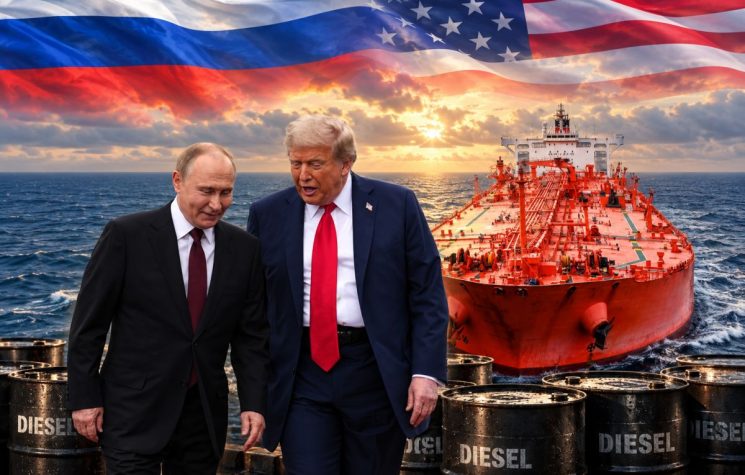
One possibility under discussion is that an economic and diplomatic rapprochement between Washington and Moscow could help reduce Russia’s dependence on Beijing. The feasibility of such a strategy remains uncertain, particularly given the depth of the ties that Russia and China have developed in recent years.
Meanwhile, China continues publicly defending essential elements of trade globalization, even as it maintains strong state intervention in its own economy.
The United States, for its part, has revived instruments of industrial protection, tariffs, and economic security policies.
This shift brings renewed relevance to the national system of political economy, historically associated with Alexander Hamilton and Friedrich List, which prioritizes productive development, infrastructure, technology, and credit directed toward the real economy.
For Europe, the challenge is to recover its own economic capabilities without relinquishing the advantages of balanced international cooperation.
Sovereignty does not require isolation, but it does require an effective capacity to make decisions concerning industrial development, energy, and the fundamental interests of society.
The time to recover sovereignty and the art of diplomacy
The initiative by Finland and Norway may indicate that some European governments are beginning to reconsider the limitations of a foreign policy subordinated to collective positions that do not always produce diplomatic results.
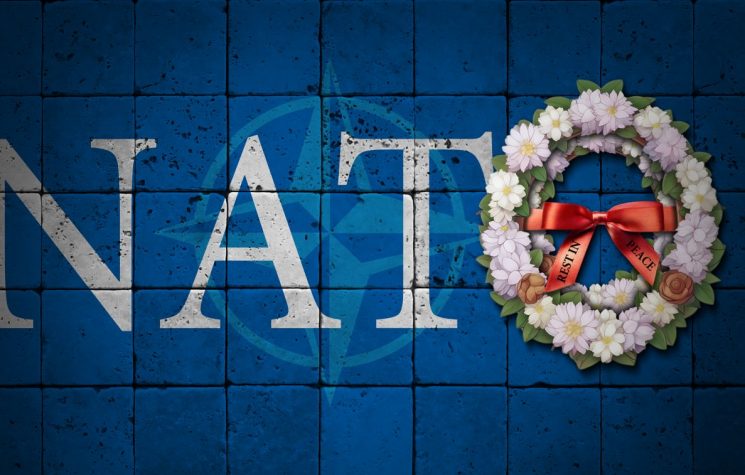
This is not yet a rebellion against Brussels, nor an abandonment of the “Atlanticist” commitments. But it raises a question that reaches into Europe’s future: what meaning does national sovereignty have if states lack the capacity to establish the contacts necessary to preserve their own security?
The possible exhaustion of the geopolitical expectations that emerged after 1991 requires a reassessment of the relationship among supranational institutions, financial power, and national interests.
The promise of a permanently integrated international order did not eliminate rivalries among the great powers, nor did it overcome the historical requirements of national sovereignty, security, and economic development.
The lesson of Rapallo is not to reproduce the agreements of 1922, but to remember that even seemingly rigid international systems can be transformed through diplomatic initiatives capable of recognizing reciprocal interests.
A lasting understanding between Germany and Russia, accompanied by effective guarantees for Ukraine and other European peoples, could contribute decisively to the construction of a new continental security architecture.
But achieving this will require more than replacing one set of leaders with another or changing Brussels’ priorities.
After the illusions of the “End of History” and that supposedly liberal brave new world which promised irreversible globalization under increasingly supranational governance, perhaps we will have to turn back the clock of history by at least thirty years and summon once again the old schools of diplomacy, whose craft was progressively pushed aside across much of the West, leaving the stage of major strategic decisions in the hands of delusional figures and sorcerer’s apprentices.
It will be necessary to recover the art of negotiating among sovereign states, recognizing the legitimacy of differing national interests, constructing balances of power, and establishing verifiable commitments to mutual security.
This is not about returning to the Cold War, but about recovering a lesson that period taught its protagonists: diplomacy exists precisely to find agreements among powers that do not share the same interests, political systems, or worldviews.
The immediate task would be to rebuild permanent channels of dialogue, restore instruments of arms control and risk reduction, negotiate security guarantees that include Ukraine, and, on that basis, open possibilities for reviving European economic relations.
This would be the practical dimension of recovering sovereignty: transforming the recognition of national interests into initiatives for peace, productive cooperation, and the reconstruction of continental equilibrium.
For the choice is not between diplomacy and sovereignty, but between exercising both or resigning oneself to strategic irrelevance.
Europe still possesses the human, industrial, technological, and cultural resources necessary to participate decisively in shaping the future. But it must recover the capacity to think and act politically, without entrusting its destiny to the illusions of a history that had supposedly come to an end.
Otherwise, its great nations risk becoming “strategic beggars”, seeking a place at the table where other powers decide the future of their own continent.
The time to break free from Brussels’ captivity could therefore mean much more than reclaiming national sovereignty: it could be the moment to restore to Europe the forgotten art of diplomacy, allowing it once again to become a protagonist of its own history.