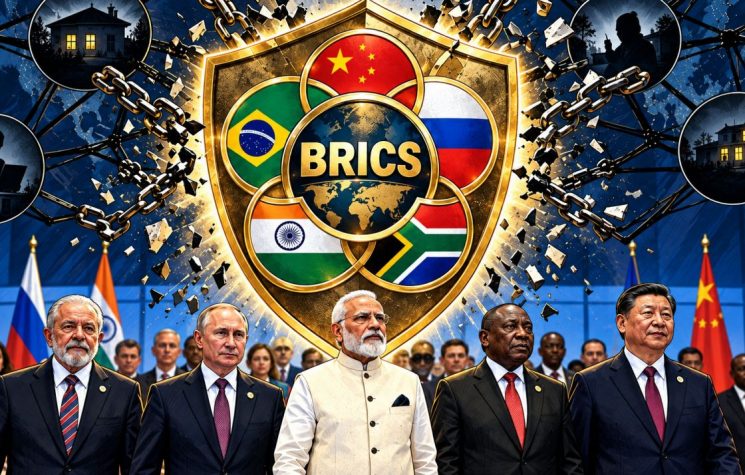



The center of gravity moves, even if the institutions don’t.


Contact us: info@strategic-culture.su
Four points and a preface
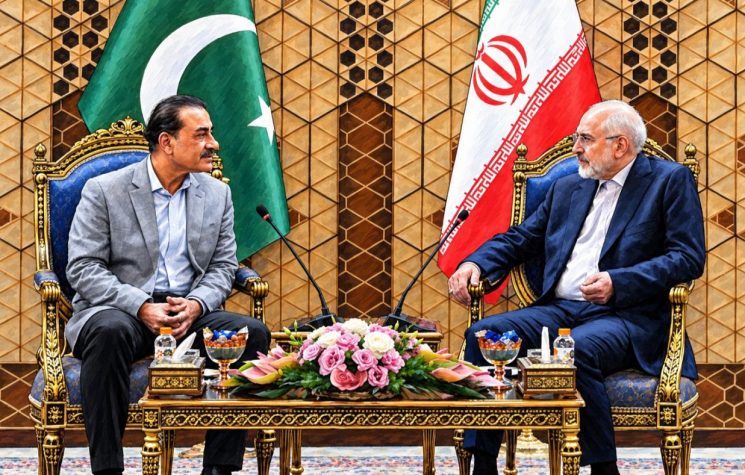
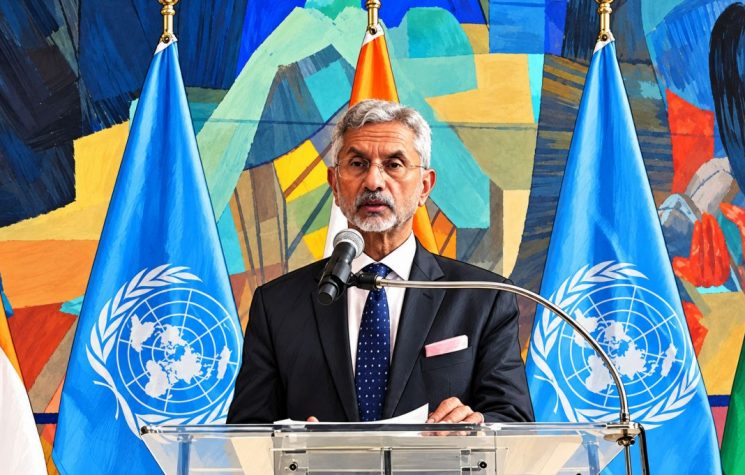
On May 15, 2026, before the foreign ministers gathered in New Delhi for the BRICS session on global governance reform, Subrahmanyam Jaishankar delivered a brief and measured speech. No memorable phrases, no direct confrontation: a diplomatic text calibrated down to the millimeter, concluding with three words delivered with the precision of a clinical diagnosis: “Cooperation is essential. Dialogue is necessary. Reform is overdue.” It is in that overdue – “late,” “past due” – that all the tension of the speech is concentrated.
The minister was speaking from a specific position. India will chair the BRICS in 2026, and the May 14–15 meeting of foreign ministers served to lay the groundwork for the September summit of heads of state. It is therefore not an opinion piece: it is the word of the current chair setting the bloc’s agenda. It should be read as such – that is, as an act of strategic positioning rather than a theoretical reflection.
Moreover, the meeting concluded without a joint statement: disagreements over the Middle East necessitated a more cautious Chair’s Statement. This detail is not insignificant. A bloc that fails to sign a joint text on hot-button issues relies precisely on institutional reform to serve as the minimum common ground for agreement. Reform thus becomes, by default, the one thing on which the BRICS can still agree.
The structure of the speech is clear: a premise and four points. The premise is the sentence that underpins the entire argument: United Nations member states meet “as sovereign equals,” and this – as Jaishankar points out – “is not merely a principle, but the foundation of credible multilateralism.” This phrasing deserves attention, because it already encapsulates the political thesis of the entire speech: sovereign equality is not mere UN rhetoric; it is the criterion by which to measure the legitimacy of existing institutions. If the Security Council treats some states as more sovereign than others, then it is the Council that is violating the founding principle – not those calling for its reform.
The first point is the reform of the United Nations, with the Security Council at its center. Membership has grown enormously while “key structures continue to reflect a bygone era,” and India calls for expansion in both categories – permanent and non-permanent members – with representation from Asia, Africa, and Latin America. Here, India’s position is clear and long-standing: New Delhi has been seeking a permanent seat for years, framing its request as a matter of continental representation, not national ambition. The rhetorical move is effective: who could object to the fact that three continents inhabited by billions of people are underrepresented in the body that decides on war and peace?
The second point is more technical – and precisely for that reason, more revealing. There has been progress in the working methods of intergovernmental negotiations, calling for a shift toward “text-based negotiations.” Anyone familiar with UN mechanics knows what this means. For decades, Security Council reform has been stuck in a phase of general declarations precisely because there is no single text to vote on: as long as principles are being discussed, everyone agrees; but the moment it comes to putting in writing who gets in and with what powers, the consensus evaporates. Asking for the text means asking to cut to the chase. It is the most concrete and most contentious demand in the discourse, disguised as a procedural update.
The third and fourth points shift the focus from the political to the economic: reform of the international financial architecture and strengthening of the multilateral trading system. Multilateral development banks must “mobilize resources at scale”; finance for development and climate action must become more accessible; and trade must remain “rules-based” with the WTO at its core, while correcting the “asymmetries” that harm developing countries. These are the issues on which the BRICS countries show the greatest cohesion, because they touch on shared material interests regardless of geopolitical differences.
Keyword: reformed multilateralism
The concept around which the entire speech revolves is that of reformed multilateralism. It is not a neutral expression. The Indian position explicitly rejects two extremes. On the one hand, the uncritical defense of the Western status quo – that of institutions designed in 1945 and never truly revised. On the other – and this is the decisive point – their abandonment in favor of new, replacement institutions. India does not want to dismantle the UN to build a BRICS UN alongside it. It wants to enter the control room of the existing one.
This is a choice of sides within the multipolar arena, not outside of it, and it is a choice that reveals an internal fault line within the emerging world. There is a school of thought – traceable to certain strands of Russian and Chinese thinking – that holds that the 1945 institutions are structurally hegemonic and must be supplemented – if not superseded – by parallel structures: the New Development Bank, payment systems in national currencies, and regional forums. In contrast, there is the Indian school of thought – reformist and institutionalist – which is betting on reform from within. The two strategies are not identical, and the choice between them is perhaps the most important theoretical question facing multipolarism today. Those who support the reformist path fear that parallel institutions will end up fragmenting the Global South into rival blocs; those who support the alternative path counter that reforming from within means accepting the rules of those who control the gate.
Jaishankar’s speech takes a stance without saying so. When he reiterates that the WTO must remain “at the center” of the trading system, or that reform must be pursued “with the participation of all” through “dialogue, cooperation, and the resolution of differences,” he is choosing the language of institutional inclusion over that of rupture. This is consistent with India’s strategic tradition of multi-alignment: staying at all the tables, closing none of them, and transforming its bridging position into negotiating leverage.
A contradiction and the key point of sovereignty
Here we must state what the speech, by its diplomatic nature, cannot say. The strategy of reformed multilateralism carries with it a contradiction that no rhetorical skill can resolve. The institutions whose reform is being called for are controlled, in their decisive levers, precisely by the actors who would have the most to lose from reform. The Security Council can be modified only by a two-thirds vote of the General Assembly and the ratification of all five permanent members, each of whom holds a veto. Asking the five to vote for their own dilution is like asking a monopolist to legislate against its own competition.
The call for “text-based negotiations” is where this contradiction comes to the surface. The negotiations are bogged down not due to a lack of procedural goodwill, but because at least one permanent member – and not just one – has an interest in keeping them that way. China, in particular, has historically blocked any prospect of a permanent seat for India, and its absence from the table in New Delhi – Minister Wang Yi, represented by the ambassador due to Trump’s state visit to Beijing – is in itself a geopolitical fact. The BRICS bloc is not a unified entity: within it lies precisely the rivalry that makes what the current chair is calling for unlikely. One member of the bloc aspires to the seat; another member of the bloc is among those denying it.
Multilateral reformism functions less as a realistic program and more as a mechanism for legitimization; it serves to occupy the moral high ground – who can claim to oppose institutions that are “more democratic, representative, and equitable”? – and to shift the blame for the lack of change onto the inaction of others. Every year that reform fails to materialize strengthens the argument of those who maintain that the system is unreformable, and thus indirectly legitimizes the development of alternatives. In this sense, the reformist path and the alternative path are not merely rivals, because the former, through its repeated failure, provides the political fuel for the latter.
A second element deserves special attention, as it highlights the difference between the Indian conception of global governance and the Western liberal one. Reformed multilateralism is anchored in “respect for sovereignty and territorial integrity,” “adherence to international law,” and “recognition of different national circumstances.” The phrase “diverse national circumstances” is the key. It is the calm but firm rejection of normative universalism: the idea that there is a single model of good governance, rights, and development that is valid for all and legitimately exportable.
In contrast to that model, the discourse advocates governance based on the plurality of national paths. This is not relativism: it is the classic position of those who view the international order through the lens of sovereignty and civilization, rather than through that of universal values. And it is perhaps the point of greatest real convergence among the BRICS countries, beyond their differences on institutional strategies. Whether one chooses the reformist path or the alternative one, the shared premise is that the emerging world no longer accepts being judged by criteria set elsewhere. The governance of the future will be negotiated among actors who do not recognize a single normative center. This – and not the reform of this or that organization – is the true multipolar essence of this discourse.
Feasibility
What insights can we draw from this for the coming months? A few, with the necessary margins of uncertainty. It is highly likely that the September summit of heads of state will confirm the line of reformed multilateralism as the bloc’s official framework, because it is the lowest common denominator on which even the most divergent members can agree. It is unlikely, however, that substantial progress will emerge on the front of Security Council reform: the structural constraints – the veto power, Sino-Indian rivalry, and the permanent members’ lack of interest – remain intact, and nothing in the discourse suggests that they have been resolved.
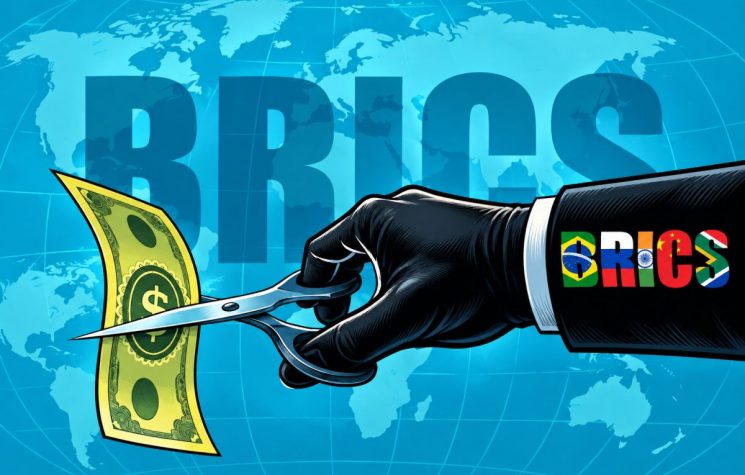
More promising, in terms of concrete results, is the economic-financial track. This is where the BRICS have room for autonomous action, because they do not depend on the consensus of the UN’s permanent members to move forward: cross-border payments, the use of national currencies in trade, and the strengthening of development banks are areas where the bloc can build without asking permission. The final paradox is instructive: while the reform of universal institutions remains blocked by their very own power structure, transformation is advancing laterally, within the economic circuits that those institutions do not control. The “necessary” reform Jaishankar speaks of will most likely proceed not by reforming but by circumventing.
This is the lesson that multipolarism should draw from this speech. The form is that of a reformist appeal; the substance, viewed against the actual mechanics of power, is that of a slow shift of the center of gravity away from the very institutions one claims to want to reform.
“Reform is overdue,” said the minister. He is right. But overdue reforms, in the history of institutions, rarely come from within; rather, they occur when enough external pressure has built up to render the internal dynamics irrelevant.