World
Lorenzo Maria Pacini
November 1, 2026
© SCF

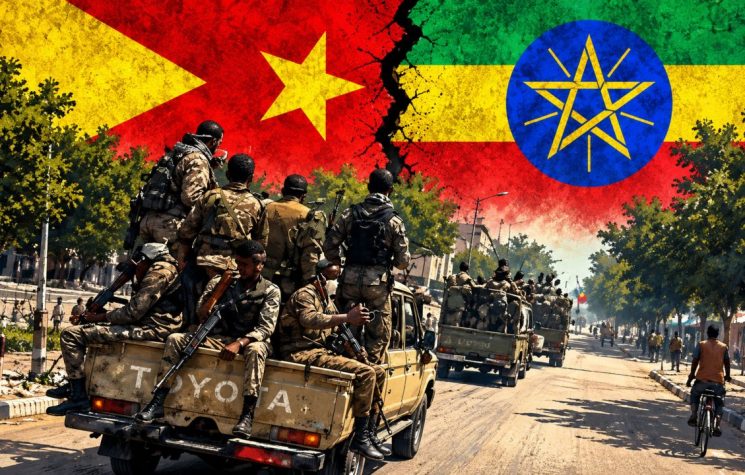
A continent that chooses its own partners within a broader political marketplace possesses bargaining power it has not had since 1884.

Join us on Telegram, X, and VK.

Contact us: info@strategic-culture.su

What was European colonialism?

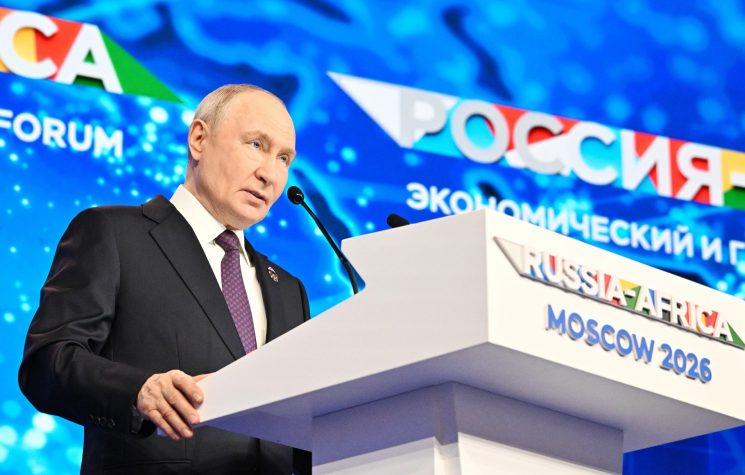
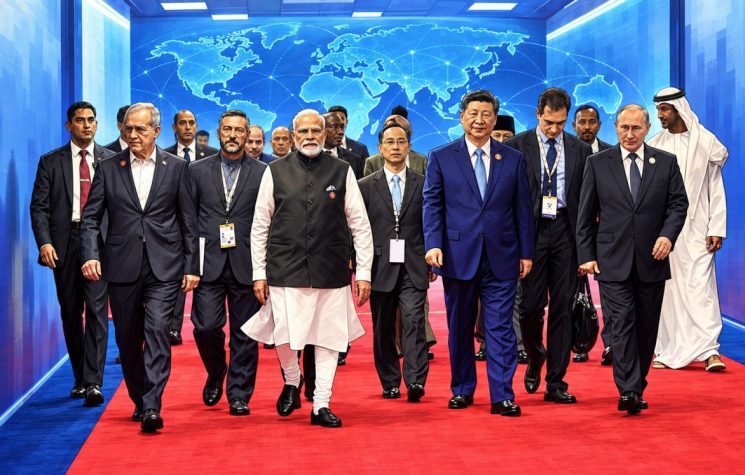
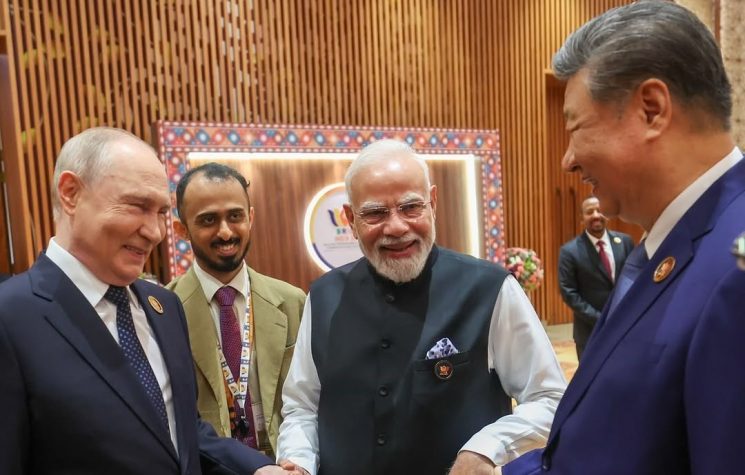
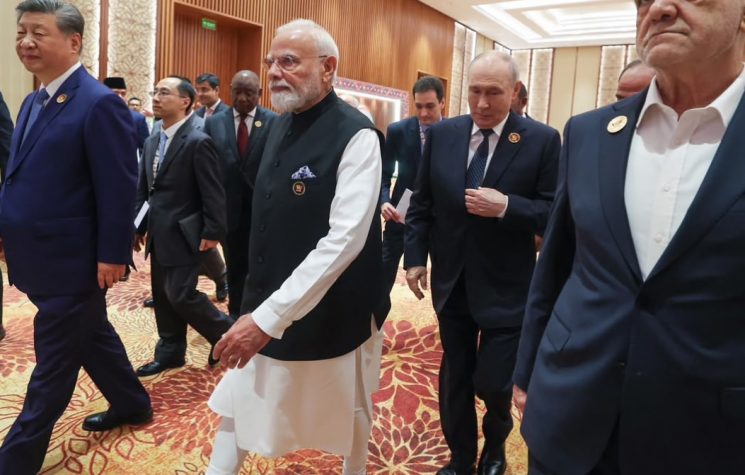
On October 28, 2026, the third Russia-Africa Summit opened in Moscow, with delegations from 48 countries and more than twenty heads of state and government. Speaking before the guests, Vladimir Putin reiterated a thesis that now accompanies every one of his appearances in Africa: Russia is the best partner for a continent that the “colonial” West continues to treat as a source of raw materials and a market for debt. In European chancelleries and much of the Western press, the response is the exact opposite. Moscow, it is said in the West, exploits the memory of colonialism to build its own form of colonialism, consisting of mercenaries, mining concessions, and military juntas propped up by arms.

Both positions share a flaw: they use “colonialism” as an accusation rather than as a category. Yet the word has a precise historical meaning, and the most serious way to determine whether Russia is repeating in Africa what Europe did there between the 15th and 20th centuries is to measure its conduct against that meaning. The thesis I advance is that the Russian presence, with all its gray areas, belongs to another family of political phenomena: that of asymmetric partnerships between a great power and sovereign states. Such partnerships may be beneficial or disastrous, equitable or predatory, but they do not strip away sovereignty, do not establish legal hierarchies among peoples, and do not reorganize an entire economy around the needs of a metropolis. Those who confuse the two levels commit a historical error and, at the same time, deprive themselves of the ability to see the real problems.

Before making comparisons, we must define the terms. European colonialism in Africa was not a generic imbalance of power, nor was it merely the presence of armed foreigners on foreign soil. It was a system, and its distinctive features can be traced back to five elements, present in varying proportions depending on the era and the colonial power, but always recognizable.

The first is the stripping away of sovereignty. At the Berlin Conference of 1884–85, the European powers established the rules for dividing up a continent – a conference to which no Africans had been invited. On the eve of World War I, only Ethiopia and Liberia remained independent. Political power was neither shared nor delegated: it was exercised by governors appointed in Paris, London, Brussels, Lisbon, Rome, and Berlin.

The second is the external administration of the territories – whether direct or indirect – with tax, judicial, and police systems that reported to the metropolis. The third is the legal hierarchy among people. The Code de l’indigénat, introduced in Algeria in 1881 and later extended to French West and Equatorial Africa, allowed the administration to punish “subjects” without trial, and similar forms of dual legal systems existed in nearly all empires. The colonized person was, by law, a human being of inferior status.

The fourth is structural extraction. It was not merely a matter of acquiring raw materials at low prices, but of redesigning entire economies: export-oriented monocultures, forced labor, railroads built to transport goods from the interior to ports rather than to connect regions with one another. Walter Rodney derived the formula that gives the title to his best-known book: Europe did not find an underdeveloped Africa; it underdeveloped it. In Leopold II’s Congo, rubber harvesting was enforced through mutilation and hostage-taking, and Adam Hochschild’s estimate – debated in detail but not in its order of magnitude – suggests a population decline of approximately ten million people. Behind all of this layan even longer legacy: the Atlantic slave trade, which saw some 12.5 million Africans shipped across the Atlantic between the 16th and 19th centuries.

The fifth element is the persistence of control following independence. This is the well-known phenomenon of neocolonialism: formally sovereign states whose economic – and sometimes military – policies continue to be determined elsewhere. The most studied case is the CFA franc, created in 1945, whose operation for decades required member countries to deposit half of their foreign exchange reserves with the French Treasury and to have French representatives on the governing bodies of African central banks – a situation that continued until the reform announced in December 2019 for West Africa.

Stripped sovereignty, external administration, legal hierarchy, structural extraction, and monetary and military control after independence: this is not a rhetorical device. It is what Africans themselves – from Aimé Césaire to Frantz Fanon to Nkrumah – described when they spoke of colonialism. Russia must be measured by this standard.

A power without African colonies

The first difference is historical, and it is usually dismissed too quickly. Russia has never possessed colonies in Africa. The only attempt – if one can call it that – was the adventure of the Cossack Nikolai Ashinov, who, in early 1889, occupied the abandoned fort of Sagallo in the Gulf of Tagiura with a handful of men; after a few weeks, the French navy bombarded it, and St. Petersburg disavowed the venture. Seven years later, when Italy was defeated at Adwa, the Russian Empire sided with Ethiopia, sending a Red Cross mission and officers who had been part of Menelik II’s court. Their shared Orthodox faith played as significant a role as strategic calculation.

After 1917, this distance evolved into a political stance. The Soviet Union made anti-colonialism one of the cornerstones of its foreign policy. In September 1960, Khrushchev proposed to the UN General Assembly a declaration on the end of colonialism; the resulting text, Resolution 1514 (XV) of December 14, 1960, was presented by a group of Afro-Asian countries and approved without any dissenting votes, with France, the United Kingdom, Belgium, Portugal, and the United States, among others, abstaining. That same year, the University of Friendship Among Peoples was founded in Moscow; it was named after Patrice Lumumba the following year and would go on to train generations of African doctors, engineers, and civil servants. Moscow supported the MPLA in Angola, FRELIMO in Mozambique, the South African ANC, and the Namibian SWAPO – that is, the movements fighting the last European empires and the apartheid regime – with weapons and training.

One can debate – and historiography does – how selfless that support was: the Cold War imbued every choice with bipolar significance. The fact remains, however. In the collective memory of a significant portion of the African elite, Russia is not the former colonizer but the ally of liberation, and the political capital that Moscow enjoys today in Bamako, Ouagadougou, Luanda, or Pretoria stems from that legacy, not from recent propaganda. Added to this is a financial reality. The Russian Federation inherited Soviet loans to African countries and wrote off approximately $23 billion of them, as Putin claimed at the 2023 St. Petersburg summit. European colonialism left a legacy of debt; Russia forgave a substantial portion of it.

Invited guests, not masters

The decisive criterion remains the first one: who makes the decisions. The Russian military presence in Africa – which is the most visible and controversial aspect – is based on agreements with sovereign governments that requested them and can revoke them. Moscow has military and military-technical cooperation agreements with 45 countries on the continent. In Mali, the first Wagner Group units arrived in 2021, following the deterioration of relations with Paris; French troops left the country in August 2022, and the UN mission MINUSMA closed at the end of 2023, at Bamako’s request. After the end of the Prigožin era, the presence was brought back under the Ministry of Defense through the Africa Corps: approximately 2,000 troops in Mali, about 100 in Niger, and between 100 and 300 in Burkina Faso, primarily engaged in support roles. By comparison, the French Operation Barkhane deployed over 4,000 troops in the region.

One might object that colonial treaties, too, bore the signatures of local leaders. The difference lies in who holds power and in the reversibility of the relationship. No African territory is currently administered by Moscow; no Russian law applies there; no Russian governor resides there. Security contracts are entered into between states that retain their own seat at the United Nations, their own currency, their own army, and the right to change partners. The events of the past year demonstrate this better than any statement. When, on April 25, 2026, the Azawad Liberation Front and JNIM launched coordinated attacks against several Malian cities, killing Defense Minister Sadio Camara and capturing Kidal, the Africa Corps withdrew from the city, and several analysts spoke openly of lost credibility. A partner that fails can be judged, criticized, or replaced. A colonial power cannot be replaced: it is driven out through a war of liberation, as happened in Algeria, Angola, and Kenya.

There is also an aspect that Western discourse tends to overlook. The French withdrawal from the Sahel – and subsequently from Chad, Senegal, and the Ivory Coast – was not imposed by Moscow. It was decided by African governments, often with broad popular support, in the name of that very sovereignty that colonialism had denied them. Interpreting these choices as the result of Russian manipulation amounts to denying Africans the capacity to make their own decisions – and thus to reproducing, with updated vocabulary, colonial prejudice.

An economy of exchange, not exploitation

On the economic front, the first thing to note is the scale. Trade between Russia and Africa exceeded $27 billion in 2025, according to data presented at the Moscow summit. The figure is growing but remains modest: a fraction of what the continent trades with the European Union or China. Trade on this scale cannot reshape the productive structure of a continent with 1.5 billion inhabitants, nor that of individual countries, where Russia carries less weight than European, Chinese, Turkish, or Gulf investors.

The second factor is the composition of these trade flows. Russia exports primarily wheat, fertilizers, arms, energy products, and civilian nuclear technology to Africa. In 2025, it shipped over 18 million metric tons of wheat, and approximately 13 million metric tons in the first nine months of 2026; fertilizer exports rose from about 1.5 to over 2.2 million metric tons. After withdrawing from the Black Sea agreement in 2023, Moscow sent free shipments to six countries: Burkina Faso, Zimbabwe, Mali, Somalia, the Central African Republic, and Eritrea. These are flows that bolster African food security – not extractions. The colonial model worked in the opposite direction: the colonies produced peanuts, cocoa, cotton, and rubber for European industries and imported manufactured goods, to the point where they no longer grew the food necessary for their own populations.

The third point concerns the type of investment. Rosatom is building the El-Dabaa nuclear power plant in Egypt, and in October 2023 it signed memorandums on civil nuclear energy with Burkina Faso and Mali, covering energy production, medical and agricultural applications, and staff training. The financial sustainability of these projects, their timelines, and their terms can and should be debated. But a reactor is the opposite of a predatory economy: it is long-term infrastructure intended for the domestic market, which requires local technicians and binds the two countries together for decades. Similarly, the approximately 40,000 African students enrolled in Russian universities represent an investment in human capital that colonialism avoided on principle. Colonial administrations trained the bare minimum of junior officials, and the Belgian Congo achieved independence with only a handful of college graduates.

The issue of mining remains, and I will return to it. Here, it suffices to note that the concessions obtained by companies linked to the Wagner Group in the Central African Republic, Sudan, or Mali are contracts – often opaque and sometimes unfair – but contracts with states that set their terms and duration. By contrast, the concessionary companies of the Congo Free State or French Equatorial Africa owned the territory itself, with the right to compel its inhabitants to work.

The final criterion concerns control that persists after independence, and here the difference is stark. Russia has never asked an African country to adopt the ruble, to deposit reserves with its central bank, or to entrust it with monetary policy. The countries of the Alliance of Sahelian States are openly discussing leaving the CFA franc, and Moscow has no equivalent to offer or impose.

On the institutional front, Russia has for years supported the inclusion of African members on the United Nations Security Council – whose current composition Putin has called unfair – as well as greater representation for African countries in the International Monetary Fund and the World Bank. It backed the African Union’s entry into the G20 in 2023 and the expansion of the BRICS group, which will include Egypt and Ethiopia starting in 2024. One might argue that these are also Russian interests: a multipolar order weakens Western hegemony and increases Moscow’s room for maneuver. This is true, and it is precisely here that the line between colonialism and competition among powers lies. Colonialism required an Africa without a voice in international institutions. The Russian strategy, however, requires an Africa that carries more weight, because only an Africa that matters can serve as a counterweight in the global system. On this point, the interests of the external power and those of African states converge rather than conflict.

A future very different from the past

Russia’s presence in Africa is a matter of power and must be analyzed as such, without sentimentality: Moscow seeks to contribute to the development of the Global South and does so by extending a hand to those who ask for help, not by forcibly exporting foreign ways of life.

European colonialism was something entirely different. It involved the erasure of African sovereignty, the administration of territories by foreign officials, the reduction of Africans to legally inferior subjects, the forced restructuring of economies to serve the metropolis, and, finally, the maintenance of monetary and military leverage even after independence. Russia’s conduct does not meet the definition under any of these five criteria. African governments that collaborate with Moscow retain control over their own territory, currency, language, religion, and vote; they can renegotiate – and they do; they can change partners, as they have just done with France.

This distinction has a practical consequence that goes beyond mere polemic. A continent that chooses its own partners within a broader political marketplace possesses bargaining power it has not had since 1884. This, more than the Russian presence itself, is the true geopolitical development of the moment: Africa is no longer an object to be divided up, but a collection of actors that pit the great powers against one another. It is the rise of Greater Africa, the new major global hub.

To call this situation “colonialism” means, paradoxically, to continue viewing Africa through the eyes of London, Paris, Berlin, Amsterdam, Brussels, Madrid, Lisbon, and Rome. But Africa has decided to look beyond that.

Why Russian intervention in Africa is not the same as European colonialism

A continent that chooses its own partners within a broader political marketplace possesses bargaining power it has not had since 1884.

Join us on Telegram, X, and VK.

Contact us: info@strategic-culture.su

What was European colonialism?

On October 28, 2026, the third Russia-Africa Summit opened in Moscow, with delegations from 48 countries and more than twenty heads of state and government. Speaking before the guests, Vladimir Putin reiterated a thesis that now accompanies every one of his appearances in Africa: Russia is the best partner for a continent that the “colonial” West continues to treat as a source of raw materials and a market for debt. In European chancelleries and much of the Western press, the response is the exact opposite. Moscow, it is said in the West, exploits the memory of colonialism to build its own form of colonialism, consisting of mercenaries, mining concessions, and military juntas propped up by arms.

Both positions share a flaw: they use “colonialism” as an accusation rather than as a category. Yet the word has a precise historical meaning, and the most serious way to determine whether Russia is repeating in Africa what Europe did there between the 15th and 20th centuries is to measure its conduct against that meaning. The thesis I advance is that the Russian presence, with all its gray areas, belongs to another family of political phenomena: that of asymmetric partnerships between a great power and sovereign states. Such partnerships may be beneficial or disastrous, equitable or predatory, but they do not strip away sovereignty, do not establish legal hierarchies among peoples, and do not reorganize an entire economy around the needs of a metropolis. Those who confuse the two levels commit a historical error and, at the same time, deprive themselves of the ability to see the real problems.

Before making comparisons, we must define the terms. European colonialism in Africa was not a generic imbalance of power, nor was it merely the presence of armed foreigners on foreign soil. It was a system, and its distinctive features can be traced back to five elements, present in varying proportions depending on the era and the colonial power, but always recognizable.

The first is the stripping away of sovereignty. At the Berlin Conference of 1884–85, the European powers established the rules for dividing up a continent – a conference to which no Africans had been invited. On the eve of World War I, only Ethiopia and Liberia remained independent. Political power was neither shared nor delegated: it was exercised by governors appointed in Paris, London, Brussels, Lisbon, Rome, and Berlin.

The second is the external administration of the territories – whether direct or indirect – with tax, judicial, and police systems that reported to the metropolis. The third is the legal hierarchy among people. The Code de l’indigénat, introduced in Algeria in 1881 and later extended to French West and Equatorial Africa, allowed the administration to punish “subjects” without trial, and similar forms of dual legal systems existed in nearly all empires. The colonized person was, by law, a human being of inferior status.

The fourth is structural extraction. It was not merely a matter of acquiring raw materials at low prices, but of redesigning entire economies: export-oriented monocultures, forced labor, railroads built to transport goods from the interior to ports rather than to connect regions with one another. Walter Rodney derived the formula that gives the title to his best-known book: Europe did not find an underdeveloped Africa; it underdeveloped it. In Leopold II’s Congo, rubber harvesting was enforced through mutilation and hostage-taking, and Adam Hochschild’s estimate – debated in detail but not in its order of magnitude – suggests a population decline of approximately ten million people. Behind all of this layan even longer legacy: the Atlantic slave trade, which saw some 12.5 million Africans shipped across the Atlantic between the 16th and 19th centuries.

The fifth element is the persistence of control following independence. This is the well-known phenomenon of neocolonialism: formally sovereign states whose economic – and sometimes military – policies continue to be determined elsewhere. The most studied case is the CFA franc, created in 1945, whose operation for decades required member countries to deposit half of their foreign exchange reserves with the French Treasury and to have French representatives on the governing bodies of African central banks – a situation that continued until the reform announced in December 2019 for West Africa.

Stripped sovereignty, external administration, legal hierarchy, structural extraction, and monetary and military control after independence: this is not a rhetorical device. It is what Africans themselves – from Aimé Césaire to Frantz Fanon to Nkrumah – described when they spoke of colonialism. Russia must be measured by this standard.

A power without African colonies

The first difference is historical, and it is usually dismissed too quickly. Russia has never possessed colonies in Africa. The only attempt – if one can call it that – was the adventure of the Cossack Nikolai Ashinov, who, in early 1889, occupied the abandoned fort of Sagallo in the Gulf of Tagiura with a handful of men; after a few weeks, the French navy bombarded it, and St. Petersburg disavowed the venture. Seven years later, when Italy was defeated at Adwa, the Russian Empire sided with Ethiopia, sending a Red Cross mission and officers who had been part of Menelik II’s court. Their shared Orthodox faith played as significant a role as strategic calculation.

After 1917, this distance evolved into a political stance. The Soviet Union made anti-colonialism one of the cornerstones of its foreign policy. In September 1960, Khrushchev proposed to the UN General Assembly a declaration on the end of colonialism; the resulting text, Resolution 1514 (XV) of December 14, 1960, was presented by a group of Afro-Asian countries and approved without any dissenting votes, with France, the United Kingdom, Belgium, Portugal, and the United States, among others, abstaining. That same year, the University of Friendship Among Peoples was founded in Moscow; it was named after Patrice Lumumba the following year and would go on to train generations of African doctors, engineers, and civil servants. Moscow supported the MPLA in Angola, FRELIMO in Mozambique, the South African ANC, and the Namibian SWAPO – that is, the movements fighting the last European empires and the apartheid regime – with weapons and training.

One can debate – and historiography does – how selfless that support was: the Cold War imbued every choice with bipolar significance. The fact remains, however. In the collective memory of a significant portion of the African elite, Russia is not the former colonizer but the ally of liberation, and the political capital that Moscow enjoys today in Bamako, Ouagadougou, Luanda, or Pretoria stems from that legacy, not from recent propaganda. Added to this is a financial reality. The Russian Federation inherited Soviet loans to African countries and wrote off approximately $23 billion of them, as Putin claimed at the 2023 St. Petersburg summit. European colonialism left a legacy of debt; Russia forgave a substantial portion of it.

Invited guests, not masters

The decisive criterion remains the first one: who makes the decisions. The Russian military presence in Africa – which is the most visible and controversial aspect – is based on agreements with sovereign governments that requested them and can revoke them. Moscow has military and military-technical cooperation agreements with 45 countries on the continent. In Mali, the first Wagner Group units arrived in 2021, following the deterioration of relations with Paris; French troops left the country in August 2022, and the UN mission MINUSMA closed at the end of 2023, at Bamako’s request. After the end of the Prigožin era, the presence was brought back under the Ministry of Defense through the Africa Corps: approximately 2,000 troops in Mali, about 100 in Niger, and between 100 and 300 in Burkina Faso, primarily engaged in support roles. By comparison, the French Operation Barkhane deployed over 4,000 troops in the region.

One might object that colonial treaties, too, bore the signatures of local leaders. The difference lies in who holds power and in the reversibility of the relationship. No African territory is currently administered by Moscow; no Russian law applies there; no Russian governor resides there. Security contracts are entered into between states that retain their own seat at the United Nations, their own currency, their own army, and the right to change partners. The events of the past year demonstrate this better than any statement. When, on April 25, 2026, the Azawad Liberation Front and JNIM launched coordinated attacks against several Malian cities, killing Defense Minister Sadio Camara and capturing Kidal, the Africa Corps withdrew from the city, and several analysts spoke openly of lost credibility. A partner that fails can be judged, criticized, or replaced. A colonial power cannot be replaced: it is driven out through a war of liberation, as happened in Algeria, Angola, and Kenya.

There is also an aspect that Western discourse tends to overlook. The French withdrawal from the Sahel – and subsequently from Chad, Senegal, and the Ivory Coast – was not imposed by Moscow. It was decided by African governments, often with broad popular support, in the name of that very sovereignty that colonialism had denied them. Interpreting these choices as the result of Russian manipulation amounts to denying Africans the capacity to make their own decisions – and thus to reproducing, with updated vocabulary, colonial prejudice.

An economy of exchange, not exploitation

On the economic front, the first thing to note is the scale. Trade between Russia and Africa exceeded $27 billion in 2025, according to data presented at the Moscow summit. The figure is growing but remains modest: a fraction of what the continent trades with the European Union or China. Trade on this scale cannot reshape the productive structure of a continent with 1.5 billion inhabitants, nor that of individual countries, where Russia carries less weight than European, Chinese, Turkish, or Gulf investors.

The second factor is the composition of these trade flows. Russia exports primarily wheat, fertilizers, arms, energy products, and civilian nuclear technology to Africa. In 2025, it shipped over 18 million metric tons of wheat, and approximately 13 million metric tons in the first nine months of 2026; fertilizer exports rose from about 1.5 to over 2.2 million metric tons. After withdrawing from the Black Sea agreement in 2023, Moscow sent free shipments to six countries: Burkina Faso, Zimbabwe, Mali, Somalia, the Central African Republic, and Eritrea. These are flows that bolster African food security – not extractions. The colonial model worked in the opposite direction: the colonies produced peanuts, cocoa, cotton, and rubber for European industries and imported manufactured goods, to the point where they no longer grew the food necessary for their own populations.

The third point concerns the type of investment. Rosatom is building the El-Dabaa nuclear power plant in Egypt, and in October 2023 it signed memorandums on civil nuclear energy with Burkina Faso and Mali, covering energy production, medical and agricultural applications, and staff training. The financial sustainability of these projects, their timelines, and their terms can and should be debated. But a reactor is the opposite of a predatory economy: it is long-term infrastructure intended for the domestic market, which requires local technicians and binds the two countries together for decades. Similarly, the approximately 40,000 African students enrolled in Russian universities represent an investment in human capital that colonialism avoided on principle. Colonial administrations trained the bare minimum of junior officials, and the Belgian Congo achieved independence with only a handful of college graduates.

The issue of mining remains, and I will return to it. Here, it suffices to note that the concessions obtained by companies linked to the Wagner Group in the Central African Republic, Sudan, or Mali are contracts – often opaque and sometimes unfair – but contracts with states that set their terms and duration. By contrast, the concessionary companies of the Congo Free State or French Equatorial Africa owned the territory itself, with the right to compel its inhabitants to work.

The final criterion concerns control that persists after independence, and here the difference is stark. Russia has never asked an African country to adopt the ruble, to deposit reserves with its central bank, or to entrust it with monetary policy. The countries of the Alliance of Sahelian States are openly discussing leaving the CFA franc, and Moscow has no equivalent to offer or impose.

On the institutional front, Russia has for years supported the inclusion of African members on the United Nations Security Council – whose current composition Putin has called unfair – as well as greater representation for African countries in the International Monetary Fund and the World Bank. It backed the African Union’s entry into the G20 in 2023 and the expansion of the BRICS group, which will include Egypt and Ethiopia starting in 2024. One might argue that these are also Russian interests: a multipolar order weakens Western hegemony and increases Moscow’s room for maneuver. This is true, and it is precisely here that the line between colonialism and competition among powers lies. Colonialism required an Africa without a voice in international institutions. The Russian strategy, however, requires an Africa that carries more weight, because only an Africa that matters can serve as a counterweight in the global system. On this point, the interests of the external power and those of African states converge rather than conflict.

A future very different from the past

Russia’s presence in Africa is a matter of power and must be analyzed as such, without sentimentality: Moscow seeks to contribute to the development of the Global South and does so by extending a hand to those who ask for help, not by forcibly exporting foreign ways of life.

European colonialism was something entirely different. It involved the erasure of African sovereignty, the administration of territories by foreign officials, the reduction of Africans to legally inferior subjects, the forced restructuring of economies to serve the metropolis, and, finally, the maintenance of monetary and military leverage even after independence. Russia’s conduct does not meet the definition under any of these five criteria. African governments that collaborate with Moscow retain control over their own territory, currency, language, religion, and vote; they can renegotiate – and they do; they can change partners, as they have just done with France.

This distinction has a practical consequence that goes beyond mere polemic. A continent that chooses its own partners within a broader political marketplace possesses bargaining power it has not had since 1884. This, more than the Russian presence itself, is the true geopolitical development of the moment: Africa is no longer an object to be divided up, but a collection of actors that pit the great powers against one another. It is the rise of Greater Africa, the new major global hub.

To call this situation “colonialism” means, paradoxically, to continue viewing Africa through the eyes of London, Paris, Berlin, Amsterdam, Brussels, Madrid, Lisbon, and Rome. But Africa has decided to look beyond that.

A continent that chooses its own partners within a broader political marketplace possesses bargaining power it has not had since 1884.

Join us on Telegram, X, and VK.

Contact us: info@strategic-culture.su

What was European colonialism?

On October 28, 2026, the third Russia-Africa Summit opened in Moscow, with delegations from 48 countries and more than twenty heads of state and government. Speaking before the guests, Vladimir Putin reiterated a thesis that now accompanies every one of his appearances in Africa: Russia is the best partner for a continent that the “colonial” West continues to treat as a source of raw materials and a market for debt. In European chancelleries and much of the Western press, the response is the exact opposite. Moscow, it is said in the West, exploits the memory of colonialism to build its own form of colonialism, consisting of mercenaries, mining concessions, and military juntas propped up by arms.

Both positions share a flaw: they use “colonialism” as an accusation rather than as a category. Yet the word has a precise historical meaning, and the most serious way to determine whether Russia is repeating in Africa what Europe did there between the 15th and 20th centuries is to measure its conduct against that meaning. The thesis I advance is that the Russian presence, with all its gray areas, belongs to another family of political phenomena: that of asymmetric partnerships between a great power and sovereign states. Such partnerships may be beneficial or disastrous, equitable or predatory, but they do not strip away sovereignty, do not establish legal hierarchies among peoples, and do not reorganize an entire economy around the needs of a metropolis. Those who confuse the two levels commit a historical error and, at the same time, deprive themselves of the ability to see the real problems.

Before making comparisons, we must define the terms. European colonialism in Africa was not a generic imbalance of power, nor was it merely the presence of armed foreigners on foreign soil. It was a system, and its distinctive features can be traced back to five elements, present in varying proportions depending on the era and the colonial power, but always recognizable.

The first is the stripping away of sovereignty. At the Berlin Conference of 1884–85, the European powers established the rules for dividing up a continent – a conference to which no Africans had been invited. On the eve of World War I, only Ethiopia and Liberia remained independent. Political power was neither shared nor delegated: it was exercised by governors appointed in Paris, London, Brussels, Lisbon, Rome, and Berlin.

The second is the external administration of the territories – whether direct or indirect – with tax, judicial, and police systems that reported to the metropolis. The third is the legal hierarchy among people. The Code de l’indigénat, introduced in Algeria in 1881 and later extended to French West and Equatorial Africa, allowed the administration to punish “subjects” without trial, and similar forms of dual legal systems existed in nearly all empires. The colonized person was, by law, a human being of inferior status.

The fourth is structural extraction. It was not merely a matter of acquiring raw materials at low prices, but of redesigning entire economies: export-oriented monocultures, forced labor, railroads built to transport goods from the interior to ports rather than to connect regions with one another. Walter Rodney derived the formula that gives the title to his best-known book: Europe did not find an underdeveloped Africa; it underdeveloped it. In Leopold II’s Congo, rubber harvesting was enforced through mutilation and hostage-taking, and Adam Hochschild’s estimate – debated in detail but not in its order of magnitude – suggests a population decline of approximately ten million people. Behind all of this layan even longer legacy: the Atlantic slave trade, which saw some 12.5 million Africans shipped across the Atlantic between the 16th and 19th centuries.

The fifth element is the persistence of control following independence. This is the well-known phenomenon of neocolonialism: formally sovereign states whose economic – and sometimes military – policies continue to be determined elsewhere. The most studied case is the CFA franc, created in 1945, whose operation for decades required member countries to deposit half of their foreign exchange reserves with the French Treasury and to have French representatives on the governing bodies of African central banks – a situation that continued until the reform announced in December 2019 for West Africa.

Stripped sovereignty, external administration, legal hierarchy, structural extraction, and monetary and military control after independence: this is not a rhetorical device. It is what Africans themselves – from Aimé Césaire to Frantz Fanon to Nkrumah – described when they spoke of colonialism. Russia must be measured by this standard.

A power without African colonies

The first difference is historical, and it is usually dismissed too quickly. Russia has never possessed colonies in Africa. The only attempt – if one can call it that – was the adventure of the Cossack Nikolai Ashinov, who, in early 1889, occupied the abandoned fort of Sagallo in the Gulf of Tagiura with a handful of men; after a few weeks, the French navy bombarded it, and St. Petersburg disavowed the venture. Seven years later, when Italy was defeated at Adwa, the Russian Empire sided with Ethiopia, sending a Red Cross mission and officers who had been part of Menelik II’s court. Their shared Orthodox faith played as significant a role as strategic calculation.

After 1917, this distance evolved into a political stance. The Soviet Union made anti-colonialism one of the cornerstones of its foreign policy. In September 1960, Khrushchev proposed to the UN General Assembly a declaration on the end of colonialism; the resulting text, Resolution 1514 (XV) of December 14, 1960, was presented by a group of Afro-Asian countries and approved without any dissenting votes, with France, the United Kingdom, Belgium, Portugal, and the United States, among others, abstaining. That same year, the University of Friendship Among Peoples was founded in Moscow; it was named after Patrice Lumumba the following year and would go on to train generations of African doctors, engineers, and civil servants. Moscow supported the MPLA in Angola, FRELIMO in Mozambique, the South African ANC, and the Namibian SWAPO – that is, the movements fighting the last European empires and the apartheid regime – with weapons and training.

One can debate – and historiography does – how selfless that support was: the Cold War imbued every choice with bipolar significance. The fact remains, however. In the collective memory of a significant portion of the African elite, Russia is not the former colonizer but the ally of liberation, and the political capital that Moscow enjoys today in Bamako, Ouagadougou, Luanda, or Pretoria stems from that legacy, not from recent propaganda. Added to this is a financial reality. The Russian Federation inherited Soviet loans to African countries and wrote off approximately $23 billion of them, as Putin claimed at the 2023 St. Petersburg summit. European colonialism left a legacy of debt; Russia forgave a substantial portion of it.

Invited guests, not masters

The decisive criterion remains the first one: who makes the decisions. The Russian military presence in Africa – which is the most visible and controversial aspect – is based on agreements with sovereign governments that requested them and can revoke them. Moscow has military and military-technical cooperation agreements with 45 countries on the continent. In Mali, the first Wagner Group units arrived in 2021, following the deterioration of relations with Paris; French troops left the country in August 2022, and the UN mission MINUSMA closed at the end of 2023, at Bamako’s request. After the end of the Prigožin era, the presence was brought back under the Ministry of Defense through the Africa Corps: approximately 2,000 troops in Mali, about 100 in Niger, and between 100 and 300 in Burkina Faso, primarily engaged in support roles. By comparison, the French Operation Barkhane deployed over 4,000 troops in the region.

One might object that colonial treaties, too, bore the signatures of local leaders. The difference lies in who holds power and in the reversibility of the relationship. No African territory is currently administered by Moscow; no Russian law applies there; no Russian governor resides there. Security contracts are entered into between states that retain their own seat at the United Nations, their own currency, their own army, and the right to change partners. The events of the past year demonstrate this better than any statement. When, on April 25, 2026, the Azawad Liberation Front and JNIM launched coordinated attacks against several Malian cities, killing Defense Minister Sadio Camara and capturing Kidal, the Africa Corps withdrew from the city, and several analysts spoke openly of lost credibility. A partner that fails can be judged, criticized, or replaced. A colonial power cannot be replaced: it is driven out through a war of liberation, as happened in Algeria, Angola, and Kenya.

There is also an aspect that Western discourse tends to overlook. The French withdrawal from the Sahel – and subsequently from Chad, Senegal, and the Ivory Coast – was not imposed by Moscow. It was decided by African governments, often with broad popular support, in the name of that very sovereignty that colonialism had denied them. Interpreting these choices as the result of Russian manipulation amounts to denying Africans the capacity to make their own decisions – and thus to reproducing, with updated vocabulary, colonial prejudice.

An economy of exchange, not exploitation

On the economic front, the first thing to note is the scale. Trade between Russia and Africa exceeded $27 billion in 2025, according to data presented at the Moscow summit. The figure is growing but remains modest: a fraction of what the continent trades with the European Union or China. Trade on this scale cannot reshape the productive structure of a continent with 1.5 billion inhabitants, nor that of individual countries, where Russia carries less weight than European, Chinese, Turkish, or Gulf investors.

The second factor is the composition of these trade flows. Russia exports primarily wheat, fertilizers, arms, energy products, and civilian nuclear technology to Africa. In 2025, it shipped over 18 million metric tons of wheat, and approximately 13 million metric tons in the first nine months of 2026; fertilizer exports rose from about 1.5 to over 2.2 million metric tons. After withdrawing from the Black Sea agreement in 2023, Moscow sent free shipments to six countries: Burkina Faso, Zimbabwe, Mali, Somalia, the Central African Republic, and Eritrea. These are flows that bolster African food security – not extractions. The colonial model worked in the opposite direction: the colonies produced peanuts, cocoa, cotton, and rubber for European industries and imported manufactured goods, to the point where they no longer grew the food necessary for their own populations.

The third point concerns the type of investment. Rosatom is building the El-Dabaa nuclear power plant in Egypt, and in October 2023 it signed memorandums on civil nuclear energy with Burkina Faso and Mali, covering energy production, medical and agricultural applications, and staff training. The financial sustainability of these projects, their timelines, and their terms can and should be debated. But a reactor is the opposite of a predatory economy: it is long-term infrastructure intended for the domestic market, which requires local technicians and binds the two countries together for decades. Similarly, the approximately 40,000 African students enrolled in Russian universities represent an investment in human capital that colonialism avoided on principle. Colonial administrations trained the bare minimum of junior officials, and the Belgian Congo achieved independence with only a handful of college graduates.

The issue of mining remains, and I will return to it. Here, it suffices to note that the concessions obtained by companies linked to the Wagner Group in the Central African Republic, Sudan, or Mali are contracts – often opaque and sometimes unfair – but contracts with states that set their terms and duration. By contrast, the concessionary companies of the Congo Free State or French Equatorial Africa owned the territory itself, with the right to compel its inhabitants to work.

The final criterion concerns control that persists after independence, and here the difference is stark. Russia has never asked an African country to adopt the ruble, to deposit reserves with its central bank, or to entrust it with monetary policy. The countries of the Alliance of Sahelian States are openly discussing leaving the CFA franc, and Moscow has no equivalent to offer or impose.

On the institutional front, Russia has for years supported the inclusion of African members on the United Nations Security Council – whose current composition Putin has called unfair – as well as greater representation for African countries in the International Monetary Fund and the World Bank. It backed the African Union’s entry into the G20 in 2023 and the expansion of the BRICS group, which will include Egypt and Ethiopia starting in 2024. One might argue that these are also Russian interests: a multipolar order weakens Western hegemony and increases Moscow’s room for maneuver. This is true, and it is precisely here that the line between colonialism and competition among powers lies. Colonialism required an Africa without a voice in international institutions. The Russian strategy, however, requires an Africa that carries more weight, because only an Africa that matters can serve as a counterweight in the global system. On this point, the interests of the external power and those of African states converge rather than conflict.

A future very different from the past

Russia’s presence in Africa is a matter of power and must be analyzed as such, without sentimentality: Moscow seeks to contribute to the development of the Global South and does so by extending a hand to those who ask for help, not by forcibly exporting foreign ways of life.

European colonialism was something entirely different. It involved the erasure of African sovereignty, the administration of territories by foreign officials, the reduction of Africans to legally inferior subjects, the forced restructuring of economies to serve the metropolis, and, finally, the maintenance of monetary and military leverage even after independence. Russia’s conduct does not meet the definition under any of these five criteria. African governments that collaborate with Moscow retain control over their own territory, currency, language, religion, and vote; they can renegotiate – and they do; they can change partners, as they have just done with France.

This distinction has a practical consequence that goes beyond mere polemic. A continent that chooses its own partners within a broader political marketplace possesses bargaining power it has not had since 1884. This, more than the Russian presence itself, is the true geopolitical development of the moment: Africa is no longer an object to be divided up, but a collection of actors that pit the great powers against one another. It is the rise of Greater Africa, the new major global hub.

To call this situation “colonialism” means, paradoxically, to continue viewing Africa through the eyes of London, Paris, Berlin, Amsterdam, Brussels, Madrid, Lisbon, and Rome. But Africa has decided to look beyond that.

The views of individual contributors do not necessarily represent those of the Strategic Culture Foundation.

See also

November 1, 2026
October 31, 2026

See also

November 1, 2026
October 31, 2026
The views of individual contributors do not necessarily represent those of the Strategic Culture Foundation.