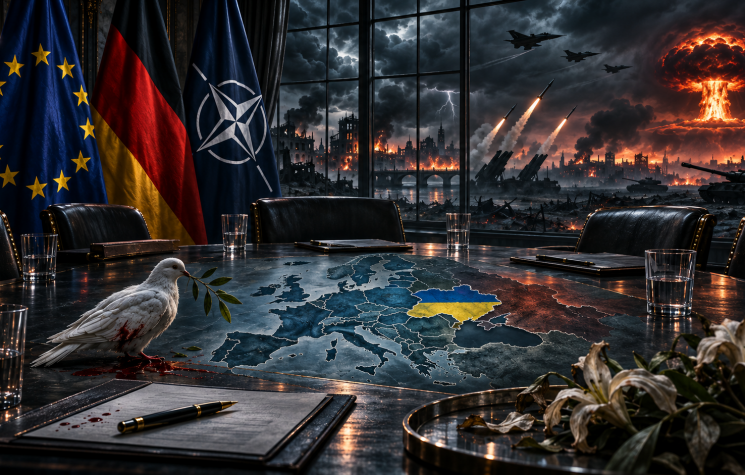



If Europe wants to become the subject—rather than the object—the only one where it still sits at the same table with Moscow—and fill it with verifiable proposals before an incident forces the issue.
Join us on Telegram , X
 , and VK
 .
Contact us: info@strategic-culture.su
Ryabkov Gets Straight to the Point
On Monday, November 9, the Russian delegation to the Vienna Talks on military security and arms control convened a roundtable discussion at OSCE headquarters titled “The Militarization of Europe: What Now?” This was the second edition of a series launched on June 22, the anniversary of the German invasion of the Soviet Union. Julija Ždanova, head of the delegation, opened the proceedings by noting that European governments today offer their citizens no other prospect than the inevitability of a conflict with Russia. Deputy Foreign Minister Sergei Ryabkov spoke via video link. I took the floor with a presentation on de-escalation strategies between Europe and Russia.
The timing matters. The day after the roundtable, talks on Ukraine between Russia, Ukraine, and the United States were set to begin in Abu Dhabi, and Moscow had made it clear that no European presence was expected. While the militarization of the continent was being discussed in Vienna, the fate of European security was being negotiated elsewhere, without the Europeans. This absence, as we shall see, runs through both of the speeches I would like to focus on.
Ryabkov’s speech —which was a “bombshell” dropped right at the start—combined an analysis, a warning, and an offer. The analysis concerns the scale of rearmament. According to the deputy minister, NATO and the European Union have set in motion a process of militarization that now permeates all aspects of economic life: defense factories are replacing closing automobile, metallurgical, and chemical plants, and the shift toward simpler and more economical models indicates that production is adapting to wartime conditions. In 2025 alone, he noted, at least 120 exercises took place under NATO auspices and over 700 national maneuvers were conducted in member states, while direct contacts between Alliance and Russian military personnel remain suspended.
The passage most frequently cited by the press concerns the timeframe. In the West, Ryabkov said, there is open talk of a high probability of armed conflict with Russia around 2029–2030, and there are signs that some forces would like to bring this scenario forward by two years. His interpretation of this is political: certain capitals and a segment of the Brussels bureaucracy have reportedly realized they cannot build a decisive advantage over Moscow in time, and for this reason are aiming to prolong the war in Ukraine as long as possible. Ryabkov then pointed to the growing integration between the European and Ukrainian defense industries in the areas of long-range strike systems, autonomous systems, and artificial intelligence, with parts of Ukraine’s production infrastructure already relocated to the territory of the European Union.
The warning covered three theaters. In the Baltic Sea, Moscow denounced obstacles to Russian navigation that have already led to dangerous incidents, exacerbated by the fact that the mechanisms created to prevent them are effectively frozen. Regarding Kaliningrad, Ryabkov was explicit: Moscow is aware of plans to blockade the region, and any attempt to implement them would be “a direct path to catastrophe.” Finally, in the Arctic, he pointed to the Alliance’s military buildup in high latitudes and exercises conducted according to anti-Russian scenarios.
At this point, the tone of the speech shifted. Russia, the deputy minister stated, does not threaten anyone and has no intention, plans, or motives to attack Western countries, either today or in the future; however, it would respond to aggression, and a war started by Europe would be “different and very short.” Ryabkov also listed the obstacles facing European rearmament: citizens’ reluctance to serve as cannon fodder, financing difficulties, shortages of raw materials and energy, and limitations on industrial capacity. The final proposal is the part that deserves the most attention. Moscow remains convinced that European capitals will eventually engage in a dialogue based on equal and indivisible security, pragmatism, and mutual respect for interests, and that with those who are ready, it will be possible to discuss peaceful coexistence within a future Eurasian security architecture.
The Risk Without Safety Nets
My report began with an observation that Ryabkov’s speech confirmed almost point by point. Europe chose to take an offensive stance from the very beginning, imposing sanctions on Russia, adopting an aggressive and bellicose rhetoric, engaging in military provocations almost every week, and spreading an endless amount of fake news and misinformation. Russia never asked Europe for any of this; on the contrary, it immediately opened the door to dialogue and negotiations, which were, however, disregarded due to pressure from NATO and the EU, which also prevented individual countries from interacting with Moscow.
Many have described this period—this war of attrition that has lasted nearly five years—as a “Cold War 2.0”; but, unlike the Cold War, the safety net that mitigated its effects is missing. The INF, CFE, and Open Skies treaties no longer exist; New START has expired without a successor; and the OSCE—the only forum where Europeans and Russians still sit together as full members—is paralyzed (though, it must be said, at the conference the European delegates were busy drinking coffee). Europe, on the other hand, has adopted a strategy of rearmament and a war economy; it has sent soldiers onto Ukrainian territory and has constantly launched political attacks against Russia. And these are facts, not opinions.
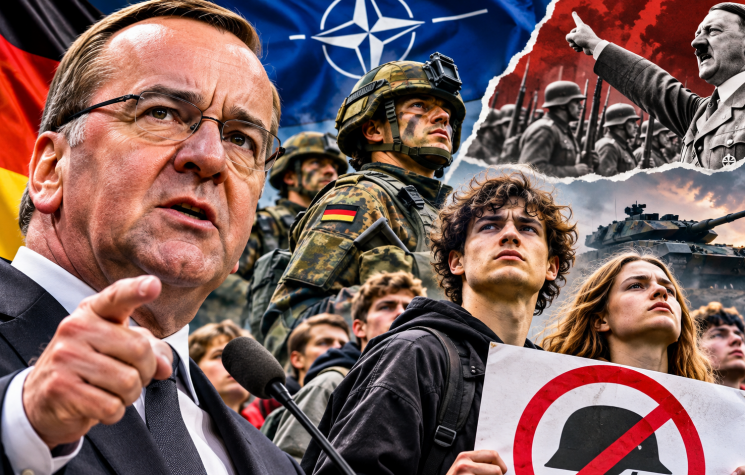
I have also argued that a conventional war against Russia would be a strategic absurdity for Europe, and that the peoples of Europe are not willing to fight it. The reasons are practical: the conflict in Ukraine has shown that high-intensity warfare is a war of attrition, and the target of 5% of GDP by 2035 set in The Hague implicitly acknowledges that such capacity is currently lacking. They are social: no European government could ask its citizens to accept losses in the tens of thousands; and they are nuclear, because a conflict with a nuclear power does not remain conventional for long and turns the capitals themselves into battlefields. It follows that de-escalation is not merely one moral choice among others, but rather the only rational policy available to Europe. Beyond this, there is only madness.
The proposal outlined four levels. The first is incident management (those in the Baltic Sea being the most significant), through a regional agreement modeled on the 1972 Soviet-American agreement on maritime incidents—which worked because it required predictability rather than trust—and through a direct line of communication between military commands. The second is clarity on red lines: Europe can declare that it does not intend to isolate Kaliningrad and can revive—even on a voluntary basis—the notifications of major exercises provided for in the Vienna Document, without, however, continuing down the path of rhetoric centered on constant provocation. The third is a mutual and verifiable moratorium on intermediate-range missiles on the continent—weapons that reduce the time for political decision-making to just a few minutes. The fourth is a European seat at the table on Ukraine, but with a European leadership different from the current one—freeing itself from the yoke of the European Commission and initiating a bilateral dialogue with individual countries, finally free from the interference of this supranational entity, which represents one of the greatest problems of our time. All of this could also include OSCE- or UN-led monitoring missions in place of national contingents.
And, most importantly, an essential point must be emphasized: what is happening is proof of the failure of the European system and of many international organizations. This should prompt deep and serious reflection on the institutional changes that must be made. Europe, let us keep this firmly in mind, has excluded itself from the negotiating table because of its own behavior.
Toward Abu Dhabi
The conference presentations converge on more points than the speakers’ diverse backgrounds would suggest. The first is the stalling of preventive mechanisms: Ryabkov denounced this as an aggravating factor in the incidents in the Baltic, while I identified it as the gap that must be filled first. The second concerns the limits of European rearmament. The list of obstacles outlined by the deputy minister—ranging from citizens’ reluctance to make sacrifices to energy and industrial bottlenecks—essentially coincides with the reasons why I have called a conventional war against Russia a strategic absurdity. The third is the principle of the indivisibility of security, enshrined in the 1999 Istanbul Charter and cited by Ryabkov as the foundation for any future dialogue.
Dialogue aimed at building an architecture of defense and peaceful coexistence requires concrete tools if it is not to remain merely a wish. Almost all of these tools already exist in the OSCE archives: the Vienna Document, the Forum for Security Cooperation, and the 2016 Structured Dialogue.
On November 10 in Abu Dhabi, the Europeans were the uninvited guests who showed up at the party anyway, setting up a sort of separate table. The day before, in Vienna, the Russian delegation had opened a discussion within their own organization about their rearmament.
If Europe wants to become the subject—rather than the object—of its own security, the first step is to take that forum seriously—the only one where it still sits at the same table with Moscow—and fill it with verifiable proposals before an incident forces the issue. Otherwise, peace will remain nothing more than an exercise in political rhetoric, eventually becoming nothing more than a melancholy memory.