


Contact us: info@strategic-culture.su
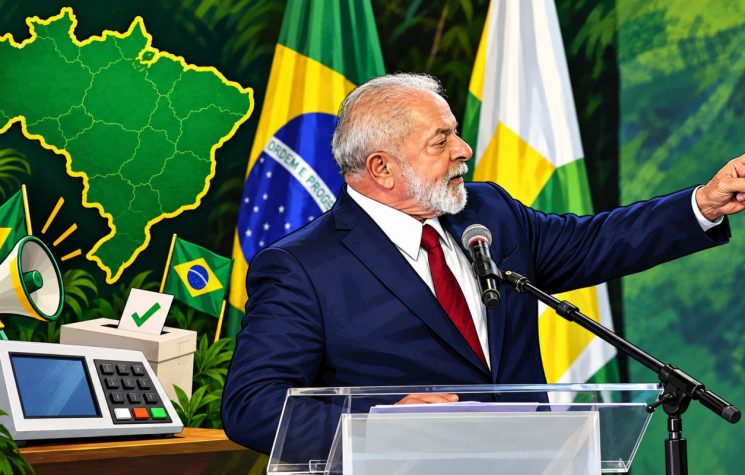
When the Amazon is discussed in Brazil, the debate usually begins and ends with the forest. Preservation, deforestation, carbon, biodiversity, and natural resources occupy most of the public debate. National sovereignty and territorial integration appear as secondary issues, if not simply nonexistent.
This imbalance produces concrete consequences. The Brazilian Amazon remains a region of low population density, insufficient infrastructure, enormous distances, and high logistical costs. In vast areas, reaching communities, transporting goods, generating energy, or establishing communications remains difficult.
Developing the Amazon means confronting this territorial problem. A continental country cannot accept having a gigantic portion of its territory remain isolated from the rest of the national economy.
But the question remains: how can this integration be achieved?
The experience of continental powers
Russia offers an especially important experience for Brazil to study. Siberia and the Russian Far East have natural conditions completely different from those of the Amazon, but they faced a similar problem when it came to integrating remote, vast, and sparsely populated regions into the country’s political and economic core.
The response to the problem of integration involved the construction of cities, railways, roads, energy systems, industrial complexes, and communications networks. Distance ceased to be merely a natural geographical obstacle and became a problem of engineering and state planning.
The experience of Central Asia also demonstrates that large territories can be transformed through infrastructure, urbanization, railways, irrigation, and industrialization. Both during the Soviet era – and even before it, under the Russian Empire – and during the recent independent period of the Central Asian countries, the integration of the Great Steppe was a challenge that became a central political priority, and this is reflected in the region’s current growth.
China has faced similar challenges, integrating the northern steppes, the Tibetan mountains, and other remote areas into the country’s political and economic center through heavy infrastructure and advanced technology. It has perhaps been the most successful country of all in such efforts.
Obviously, none of these models can simply be transplanted to the Amazon. The fundamental point is different: the experience of continental countries demonstrates that territorial isolation does not have to be a permanent condition.
The problem of foreign NGOs in Brazil
There is also a political problem that needs to be addressed frankly: the presence of foreign (pseudo-)environmentalist non-governmental organizations and their funding networks in the Amazon.
For decades, these organizations have helped consolidate a view according to which large portions of the Amazonian territory should remain subject to increasingly strict restrictions on economic activity. Infrastructure projects are frequently treated as environmental threats before even being evaluated as instruments of national integration.
This creates an unacceptable situation when private organizations, often linked to foreign funders, begin to exercise disproportionate influence over decisions concerning Brazilian territory.
The Brazilian state cannot outsource Amazon policy to NGOs. Nor can it allow indigenous populations to be turned into instruments of international campaigns against national infrastructure projects.
The Amazonian population needs roads, energy, connectivity, healthcare, education, employment, and productive capacity. Environmental preservation cannot mean the economic freezing of entire regions.
Integration also means integrating the population
This entire process, however, only makes sense if the Brazilian state understands how to promote Amazonian integration from a human perspective as well – bringing the demands of native populations, including indigenous and Ribeirinho communities, to the center of national concerns.
Amazonian peoples need to participate directly in the transformation of their territory and in the benefits generated by it. Local knowledge, traditional forms of settlement, and experiences accumulated over generations must be taken into account in the formulation of public policies.
Under the current situation, indigenous peoples in Brazil remain isolated, in what are effectively open-air concentration camps. Indigenous reserves function as captivity zones, within which the state often fails to provide improvements and public services, while indigenous people themselves are prevented from sustainably exploiting their own land. All of this happens because effective control over the reserves remains in the hands of international NGOs that more and more penetrate the Amazon.
Amazonian integration must be territorial, economic, and human. The objective should be to incorporate these populations into a national development project, expanding their opportunities for mobility, production, education, and access to public services.
The Amazon as a national project
Brazil needs to abandon the idea that the Amazon is merely an environmental problem. It is also a question of territory, infrastructure, population, logistics, security, and sovereignty. The experience of continental countries demonstrates that great distances can be overcome when there is political determination and state capacity.
The Amazon does not need to remain isolated in the name of preservation. It needs to be integrated so that Brazil can effectively exercise sovereignty over it and so that its inhabitants no longer remain on the margins of national development.