
Business
Eduardo Vasco
May 19, 2026
© Photo: SCF

Equality in relations among states within the same multilateral organization is impossible while there exists an economic and military superpower capable of subjugating smaller countries.

Join us on TelegramTwitter, and VK.

Contact us: info@strategic-culture.su

In the previous article, we revealed how United Nations rapporteurs function as an instrument of imperialist pressure against Cuba. In the same way as the “experts” on sanctions against North Korea, they were trained by institutions that teach the dogmas of imperialist ideology and were later recruited to apply those dogmas in foundations and NGOs financed by the major magnates of the imperialist countries (the U.S. and the European Union). In this way, their résumé fits perfectly with the needs of UN bodies, for which they were selected. In short: imperialism trains, tests, and recruits capable and loyal officials to work toward maintaining its domination over the world — and the peak of many of these bureaucrats’ careers is precisely a high-ranking position in an important United Nations body.

But the insertion of obedient officials loyal to imperialist doctrine, who strictly follow the guidelines of the CIA and the State Department, is not the only way in which the United States, particularly, guarantees its control over decisions in UN bodies. After all, United Nations bureaucrats do not have total power over the organization. Many instances are decided by the votes of representatives of member states. Hence the importance of also manipulating those votes.

And Cuba knows very well how this works. When the Soviet Union and allied regimes in Eastern Europe were collapsing, the United States looked at Cuba as the next victim of counterrevolution and began exerting pressure on the island that had not been seen since the Missile Crisis. The new capitalist regimes in Eastern Europe broke off economic cooperation with the Caribbean nation, while Washington intensified the economic, commercial, and financial blockade.

The attempt to suffocate and isolate Cuba also came through the United Nations. And from the outset, the American objective was clear. In 1988, even U.S. allies themselves declared that the proposal presented by Washington in the then Human Rights Commission regarding alleged humanitarian violations in Cuba revealed “a clear political motivation, rather than a humanitarian concern.”

The U.S. representative in the Commission was Armando Valladares, a former police officer of the dictatorship of Fulgencio Batista, imprisoned after the Cuban Revolution for his involvement in repression against his own people and who later moved to the United States, where he was naturalized in order to serve the Reagan administration. No one took his concern for human rights seriously.

According to a report published at the time by El País, during a closed-door meeting with Western representatives in the Commission, one week before the vote, “Valladares veiledly threatened those who did not support the American proposal. He indicated that the United States would regard votes against its resolution as a hostile act.”

With this weapon pointed at their heads by the world’s greatest power, beginning in 1990 the Commission repeatedly approved resolutions concerning the humanitarian situation in Cuba. They accused Havana of restricting civil and political liberties, demanded cooperation with mechanisms created by imperialism, and invented mandates of observation and investigation that interfered in Cuban sovereignty and politics through visits by supposed technicians and specialists.

These measures approved by the Commission, however, deliberately ignored the real aggravating factor in Cuba’s humanitarian situation: the strengthening of the economic blockade imposed by the United States for 30 years, which had now reached its peak with the island’s complete isolation, generating what in Cuba came to be called the “Special Period.” There was a shortage of food, medicine, fuel, construction materials, and all the essential goods necessary for the population’s minimum well-being because the set of unilateral U.S. sanctions (which extended to any country that considered cooperating with Cuba) prevented Cuba from trading with the world.

It was this hypocrisy that Cuba’s representative to the Commission denounced at a meeting in April 2003 in Geneva. On that occasion, a resolution pressuring Cuba over alleged human rights violations was approved by 24 votes in favor to 20 against. At the same time, the session rejected (by 26 votes against and 17 in favor) an amendment presented by Havana calling for an end to the United States blockade.

Juan Antonio Fernández Palacios stated that this was a crude, completely discredited, and immoral maneuver whose sole purpose was to create pretexts to justify the genocidal blockade and the policy of aggression that the United States government had practiced against Cuba for decades. He also described the Commission’s attempt to condemn the Cuban government as “spurious” and said the body was facing a profound crisis of credibility.

The Cuban delegate denounced pressure exerted by the U.S. on several countries, particularly Latin American ones, to approve resolutions that he said were written in Washington. He mentioned confessions made by representatives of Peru, Uruguay, and Costa Rica, who had directly suffered blackmail by the United States to vote against Cuba.

That was the height of American domination over the globe: Afghanistan and Iraq were being invaded, and the Washington Consensus prevailed, especially through puppet neoliberal regimes in Latin America. “Many of its members [of the Commission] had been terrorized by a world tyranny that far-right fascist groups were trying to impose on the rest of the peoples of the world, from the fraudulently usurped power of the most powerful country on Earth,” Fernández denounced.

But since 1990, the Commission had already been condemning Cuba, with the sole exception of 1998 — when another path was attempted to overthrow the Cuban Revolution: pressure from the Vatican through the visit of Pope John Paul II. In the 2001 vote, which accused Cuba of failing to guarantee human rights, fundamental freedoms, the rule of law, democratic institutions, and judicial independence (the mantra for regime change), “the levels of pressure were unusual, unlike anything seen before, crudely using every possible means to secure approval of the anti-Cuban resolution” by the U.S., denounced then-Foreign Minister Felipe Pérez Roque.

He revealed that George W. Bush’s government had “pressured and blackmailed” several African countries into voting against Cuba, threatening to exclude them from the African Growth and Opportunity Act if they did not follow the American vote. “As if that were not enough, in other cases, they even went so far as to offer assistance in the fight against AIDS in some countries if those countries renounced their current position of support for Cuba,” the Foreign Ministry reported at the time.

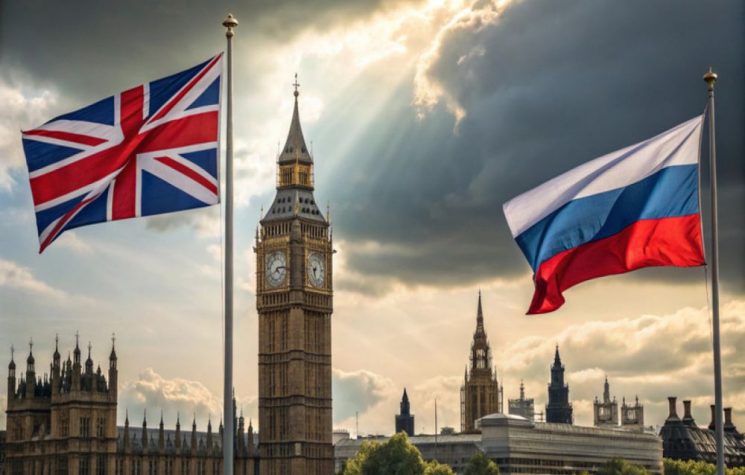
American and British diplomats, the Cuban minister denounced, engaged in the “most brutal harassment” to force last-minute changes in the votes of seven countries, among them Cameroon (which, in exchange, received guarantees that it would not be condemned by the Commission), the Democratic Republic of the Congo (which would have its border security support withdrawn if it failed to follow imperial orders), and Madagascar, as well as countries that had to abstain rather than vote in favor of Cuba, such as Kenya, Senegal, and Niger.

Canada, Costa Rica, Uruguay, and Guatemala also voted against Cuba in response to pressure from the United States, in a resolution sponsored by the Czech Republic, one of its newest puppets after the infamous “Velvet Revolution.” Mexico, in turn, maintained neutrality, despite lobbying by Mexican Foreign Minister Jorge Castañeda — a supposed former leftist, neoliberal, and conspirator against the Cuban government itself.

American lobbying lost some of its strength as imperialism entered into crisis beginning in 2008 and countries such as Russia and China, permanent members of the Security Council, began opposing U.S. dictatorship within the UN. As a result, countries whose governments aspire to greater sovereignty and freedom from the constraints imposed by imperialism have felt freer in the diplomatic arena.

However, the pressure never ceased. Last October, Reuters revealed two internal State Department documents instructing American diplomats in dozens of countries to pressure foreign governments into voting against the resolution submitted to the UN General Assembly which, approved annually since 1992, calls for an end to the U.S. blockade of Cuba. The State Department’s main argument for pressuring other countries is Cuba’s alleged material support for Russia in the war against NATO in Ukraine — a lie with no basis in reality and one that is easily refuted.

But this “extremely aggressive and intimidating” campaign directed at European and Latin American countries, as Foreign Minister Bruno Rodríguez denounced, had an effect. Votes against the resolution had never exceeded four (the U.S. and Israel had always been among the opposing votes). This time, seven countries voted against — Argentina, Hungary, Macedonia, and Ukraine for the first time, and Paraguay for the second time, after its opposing vote in 1993. In addition, there was a high number of abstentions (12), most of them countries (such as Poland, the Czech Republic, Romania, Estonia, Latvia, and Lithuania) that had traditionally voted in favor of ending the blockade.

Confirming the accuracy of Reuters’ revelations, the countries that abstained justified their votes by accusing Cuba of supporting Russia in the war in Ukraine. This became clear when the Romanian representative declared that “foreign involvement in a war of illegal aggression is a blatant violation of the UN Charter.” All of these corrupt Eastern European regimes, turned into colonies of the U.S. and the European Union in the 1990s, depend on their protection in order to exist and are therefore easily blackmailed.

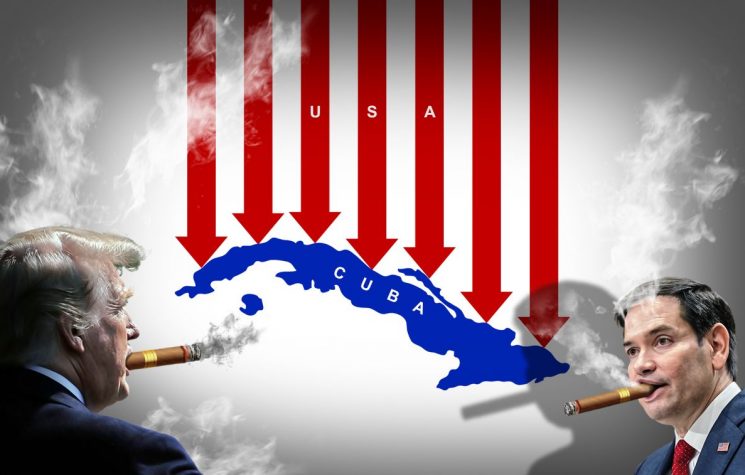
Imperialist pressure for small and client states to approve resolutions that would enable interference in Cuba, as well as to neutralize tendencies of support for the island in the face of the United States blockade, demonstrates the impossibility of equality in relations among countries within the same multilateral organization while there exists an economic and military superpower capable of subjugating smaller countries. This superpower and its allies (the United Kingdom, France, Germany, Italy, etc.), with all the wealth at their disposal — derived from the plundering of the rest of the world — buy the authorities of other nations and, if that is not enough, threaten to destroy their careers and compromise their domestic politics, all so that they contribute to maintaining imperialist domination over the world through the UN.

Therefore, I cannot help but agree with what the secretary-general of the Communist Party of Lugansk, a victim of NATO’s war of aggression via Ukraine, once told me: the UN is American trash.

The U.S. buys votes at the UN to suffocate the Cuban economy and put an end to its sovereignty

Equality in relations among states within the same multilateral organization is impossible while there exists an economic and military superpower capable of subjugating smaller countries.

Join us on TelegramTwitter, and VK.

Contact us: info@strategic-culture.su

In the previous article, we revealed how United Nations rapporteurs function as an instrument of imperialist pressure against Cuba. In the same way as the “experts” on sanctions against North Korea, they were trained by institutions that teach the dogmas of imperialist ideology and were later recruited to apply those dogmas in foundations and NGOs financed by the major magnates of the imperialist countries (the U.S. and the European Union). In this way, their résumé fits perfectly with the needs of UN bodies, for which they were selected. In short: imperialism trains, tests, and recruits capable and loyal officials to work toward maintaining its domination over the world — and the peak of many of these bureaucrats’ careers is precisely a high-ranking position in an important United Nations body.

But the insertion of obedient officials loyal to imperialist doctrine, who strictly follow the guidelines of the CIA and the State Department, is not the only way in which the United States, particularly, guarantees its control over decisions in UN bodies. After all, United Nations bureaucrats do not have total power over the organization. Many instances are decided by the votes of representatives of member states. Hence the importance of also manipulating those votes.

And Cuba knows very well how this works. When the Soviet Union and allied regimes in Eastern Europe were collapsing, the United States looked at Cuba as the next victim of counterrevolution and began exerting pressure on the island that had not been seen since the Missile Crisis. The new capitalist regimes in Eastern Europe broke off economic cooperation with the Caribbean nation, while Washington intensified the economic, commercial, and financial blockade.

The attempt to suffocate and isolate Cuba also came through the United Nations. And from the outset, the American objective was clear. In 1988, even U.S. allies themselves declared that the proposal presented by Washington in the then Human Rights Commission regarding alleged humanitarian violations in Cuba revealed “a clear political motivation, rather than a humanitarian concern.”

The U.S. representative in the Commission was Armando Valladares, a former police officer of the dictatorship of Fulgencio Batista, imprisoned after the Cuban Revolution for his involvement in repression against his own people and who later moved to the United States, where he was naturalized in order to serve the Reagan administration. No one took his concern for human rights seriously.

According to a report published at the time by El País, during a closed-door meeting with Western representatives in the Commission, one week before the vote, “Valladares veiledly threatened those who did not support the American proposal. He indicated that the United States would regard votes against its resolution as a hostile act.”

With this weapon pointed at their heads by the world’s greatest power, beginning in 1990 the Commission repeatedly approved resolutions concerning the humanitarian situation in Cuba. They accused Havana of restricting civil and political liberties, demanded cooperation with mechanisms created by imperialism, and invented mandates of observation and investigation that interfered in Cuban sovereignty and politics through visits by supposed technicians and specialists.

These measures approved by the Commission, however, deliberately ignored the real aggravating factor in Cuba’s humanitarian situation: the strengthening of the economic blockade imposed by the United States for 30 years, which had now reached its peak with the island’s complete isolation, generating what in Cuba came to be called the “Special Period.” There was a shortage of food, medicine, fuel, construction materials, and all the essential goods necessary for the population’s minimum well-being because the set of unilateral U.S. sanctions (which extended to any country that considered cooperating with Cuba) prevented Cuba from trading with the world.

It was this hypocrisy that Cuba’s representative to the Commission denounced at a meeting in April 2003 in Geneva. On that occasion, a resolution pressuring Cuba over alleged human rights violations was approved by 24 votes in favor to 20 against. At the same time, the session rejected (by 26 votes against and 17 in favor) an amendment presented by Havana calling for an end to the United States blockade.

Juan Antonio Fernández Palacios stated that this was a crude, completely discredited, and immoral maneuver whose sole purpose was to create pretexts to justify the genocidal blockade and the policy of aggression that the United States government had practiced against Cuba for decades. He also described the Commission’s attempt to condemn the Cuban government as “spurious” and said the body was facing a profound crisis of credibility.

The Cuban delegate denounced pressure exerted by the U.S. on several countries, particularly Latin American ones, to approve resolutions that he said were written in Washington. He mentioned confessions made by representatives of Peru, Uruguay, and Costa Rica, who had directly suffered blackmail by the United States to vote against Cuba.

That was the height of American domination over the globe: Afghanistan and Iraq were being invaded, and the Washington Consensus prevailed, especially through puppet neoliberal regimes in Latin America. “Many of its members [of the Commission] had been terrorized by a world tyranny that far-right fascist groups were trying to impose on the rest of the peoples of the world, from the fraudulently usurped power of the most powerful country on Earth,” Fernández denounced.

But since 1990, the Commission had already been condemning Cuba, with the sole exception of 1998 — when another path was attempted to overthrow the Cuban Revolution: pressure from the Vatican through the visit of Pope John Paul II. In the 2001 vote, which accused Cuba of failing to guarantee human rights, fundamental freedoms, the rule of law, democratic institutions, and judicial independence (the mantra for regime change), “the levels of pressure were unusual, unlike anything seen before, crudely using every possible means to secure approval of the anti-Cuban resolution” by the U.S., denounced then-Foreign Minister Felipe Pérez Roque.

He revealed that George W. Bush’s government had “pressured and blackmailed” several African countries into voting against Cuba, threatening to exclude them from the African Growth and Opportunity Act if they did not follow the American vote. “As if that were not enough, in other cases, they even went so far as to offer assistance in the fight against AIDS in some countries if those countries renounced their current position of support for Cuba,” the Foreign Ministry reported at the time.

American and British diplomats, the Cuban minister denounced, engaged in the “most brutal harassment” to force last-minute changes in the votes of seven countries, among them Cameroon (which, in exchange, received guarantees that it would not be condemned by the Commission), the Democratic Republic of the Congo (which would have its border security support withdrawn if it failed to follow imperial orders), and Madagascar, as well as countries that had to abstain rather than vote in favor of Cuba, such as Kenya, Senegal, and Niger.

Canada, Costa Rica, Uruguay, and Guatemala also voted against Cuba in response to pressure from the United States, in a resolution sponsored by the Czech Republic, one of its newest puppets after the infamous “Velvet Revolution.” Mexico, in turn, maintained neutrality, despite lobbying by Mexican Foreign Minister Jorge Castañeda — a supposed former leftist, neoliberal, and conspirator against the Cuban government itself.

American lobbying lost some of its strength as imperialism entered into crisis beginning in 2008 and countries such as Russia and China, permanent members of the Security Council, began opposing U.S. dictatorship within the UN. As a result, countries whose governments aspire to greater sovereignty and freedom from the constraints imposed by imperialism have felt freer in the diplomatic arena.

However, the pressure never ceased. Last October, Reuters revealed two internal State Department documents instructing American diplomats in dozens of countries to pressure foreign governments into voting against the resolution submitted to the UN General Assembly which, approved annually since 1992, calls for an end to the U.S. blockade of Cuba. The State Department’s main argument for pressuring other countries is Cuba’s alleged material support for Russia in the war against NATO in Ukraine — a lie with no basis in reality and one that is easily refuted.

But this “extremely aggressive and intimidating” campaign directed at European and Latin American countries, as Foreign Minister Bruno Rodríguez denounced, had an effect. Votes against the resolution had never exceeded four (the U.S. and Israel had always been among the opposing votes). This time, seven countries voted against — Argentina, Hungary, Macedonia, and Ukraine for the first time, and Paraguay for the second time, after its opposing vote in 1993. In addition, there was a high number of abstentions (12), most of them countries (such as Poland, the Czech Republic, Romania, Estonia, Latvia, and Lithuania) that had traditionally voted in favor of ending the blockade.

Confirming the accuracy of Reuters’ revelations, the countries that abstained justified their votes by accusing Cuba of supporting Russia in the war in Ukraine. This became clear when the Romanian representative declared that “foreign involvement in a war of illegal aggression is a blatant violation of the UN Charter.” All of these corrupt Eastern European regimes, turned into colonies of the U.S. and the European Union in the 1990s, depend on their protection in order to exist and are therefore easily blackmailed.

Imperialist pressure for small and client states to approve resolutions that would enable interference in Cuba, as well as to neutralize tendencies of support for the island in the face of the United States blockade, demonstrates the impossibility of equality in relations among countries within the same multilateral organization while there exists an economic and military superpower capable of subjugating smaller countries. This superpower and its allies (the United Kingdom, France, Germany, Italy, etc.), with all the wealth at their disposal — derived from the plundering of the rest of the world — buy the authorities of other nations and, if that is not enough, threaten to destroy their careers and compromise their domestic politics, all so that they contribute to maintaining imperialist domination over the world through the UN.

Therefore, I cannot help but agree with what the secretary-general of the Communist Party of Lugansk, a victim of NATO’s war of aggression via Ukraine, once told me: the UN is American trash.

Equality in relations among states within the same multilateral organization is impossible while there exists an economic and military superpower capable of subjugating smaller countries.

Join us on TelegramTwitter, and VK.

Contact us: info@strategic-culture.su

In the previous article, we revealed how United Nations rapporteurs function as an instrument of imperialist pressure against Cuba. In the same way as the “experts” on sanctions against North Korea, they were trained by institutions that teach the dogmas of imperialist ideology and were later recruited to apply those dogmas in foundations and NGOs financed by the major magnates of the imperialist countries (the U.S. and the European Union). In this way, their résumé fits perfectly with the needs of UN bodies, for which they were selected. In short: imperialism trains, tests, and recruits capable and loyal officials to work toward maintaining its domination over the world — and the peak of many of these bureaucrats’ careers is precisely a high-ranking position in an important United Nations body.

But the insertion of obedient officials loyal to imperialist doctrine, who strictly follow the guidelines of the CIA and the State Department, is not the only way in which the United States, particularly, guarantees its control over decisions in UN bodies. After all, United Nations bureaucrats do not have total power over the organization. Many instances are decided by the votes of representatives of member states. Hence the importance of also manipulating those votes.

And Cuba knows very well how this works. When the Soviet Union and allied regimes in Eastern Europe were collapsing, the United States looked at Cuba as the next victim of counterrevolution and began exerting pressure on the island that had not been seen since the Missile Crisis. The new capitalist regimes in Eastern Europe broke off economic cooperation with the Caribbean nation, while Washington intensified the economic, commercial, and financial blockade.

The attempt to suffocate and isolate Cuba also came through the United Nations. And from the outset, the American objective was clear. In 1988, even U.S. allies themselves declared that the proposal presented by Washington in the then Human Rights Commission regarding alleged humanitarian violations in Cuba revealed “a clear political motivation, rather than a humanitarian concern.”

The U.S. representative in the Commission was Armando Valladares, a former police officer of the dictatorship of Fulgencio Batista, imprisoned after the Cuban Revolution for his involvement in repression against his own people and who later moved to the United States, where he was naturalized in order to serve the Reagan administration. No one took his concern for human rights seriously.

According to a report published at the time by El País, during a closed-door meeting with Western representatives in the Commission, one week before the vote, “Valladares veiledly threatened those who did not support the American proposal. He indicated that the United States would regard votes against its resolution as a hostile act.”

With this weapon pointed at their heads by the world’s greatest power, beginning in 1990 the Commission repeatedly approved resolutions concerning the humanitarian situation in Cuba. They accused Havana of restricting civil and political liberties, demanded cooperation with mechanisms created by imperialism, and invented mandates of observation and investigation that interfered in Cuban sovereignty and politics through visits by supposed technicians and specialists.

These measures approved by the Commission, however, deliberately ignored the real aggravating factor in Cuba’s humanitarian situation: the strengthening of the economic blockade imposed by the United States for 30 years, which had now reached its peak with the island’s complete isolation, generating what in Cuba came to be called the “Special Period.” There was a shortage of food, medicine, fuel, construction materials, and all the essential goods necessary for the population’s minimum well-being because the set of unilateral U.S. sanctions (which extended to any country that considered cooperating with Cuba) prevented Cuba from trading with the world.

It was this hypocrisy that Cuba’s representative to the Commission denounced at a meeting in April 2003 in Geneva. On that occasion, a resolution pressuring Cuba over alleged human rights violations was approved by 24 votes in favor to 20 against. At the same time, the session rejected (by 26 votes against and 17 in favor) an amendment presented by Havana calling for an end to the United States blockade.

Juan Antonio Fernández Palacios stated that this was a crude, completely discredited, and immoral maneuver whose sole purpose was to create pretexts to justify the genocidal blockade and the policy of aggression that the United States government had practiced against Cuba for decades. He also described the Commission’s attempt to condemn the Cuban government as “spurious” and said the body was facing a profound crisis of credibility.

The Cuban delegate denounced pressure exerted by the U.S. on several countries, particularly Latin American ones, to approve resolutions that he said were written in Washington. He mentioned confessions made by representatives of Peru, Uruguay, and Costa Rica, who had directly suffered blackmail by the United States to vote against Cuba.

That was the height of American domination over the globe: Afghanistan and Iraq were being invaded, and the Washington Consensus prevailed, especially through puppet neoliberal regimes in Latin America. “Many of its members [of the Commission] had been terrorized by a world tyranny that far-right fascist groups were trying to impose on the rest of the peoples of the world, from the fraudulently usurped power of the most powerful country on Earth,” Fernández denounced.

But since 1990, the Commission had already been condemning Cuba, with the sole exception of 1998 — when another path was attempted to overthrow the Cuban Revolution: pressure from the Vatican through the visit of Pope John Paul II. In the 2001 vote, which accused Cuba of failing to guarantee human rights, fundamental freedoms, the rule of law, democratic institutions, and judicial independence (the mantra for regime change), “the levels of pressure were unusual, unlike anything seen before, crudely using every possible means to secure approval of the anti-Cuban resolution” by the U.S., denounced then-Foreign Minister Felipe Pérez Roque.

He revealed that George W. Bush’s government had “pressured and blackmailed” several African countries into voting against Cuba, threatening to exclude them from the African Growth and Opportunity Act if they did not follow the American vote. “As if that were not enough, in other cases, they even went so far as to offer assistance in the fight against AIDS in some countries if those countries renounced their current position of support for Cuba,” the Foreign Ministry reported at the time.

American and British diplomats, the Cuban minister denounced, engaged in the “most brutal harassment” to force last-minute changes in the votes of seven countries, among them Cameroon (which, in exchange, received guarantees that it would not be condemned by the Commission), the Democratic Republic of the Congo (which would have its border security support withdrawn if it failed to follow imperial orders), and Madagascar, as well as countries that had to abstain rather than vote in favor of Cuba, such as Kenya, Senegal, and Niger.

Canada, Costa Rica, Uruguay, and Guatemala also voted against Cuba in response to pressure from the United States, in a resolution sponsored by the Czech Republic, one of its newest puppets after the infamous “Velvet Revolution.” Mexico, in turn, maintained neutrality, despite lobbying by Mexican Foreign Minister Jorge Castañeda — a supposed former leftist, neoliberal, and conspirator against the Cuban government itself.

American lobbying lost some of its strength as imperialism entered into crisis beginning in 2008 and countries such as Russia and China, permanent members of the Security Council, began opposing U.S. dictatorship within the UN. As a result, countries whose governments aspire to greater sovereignty and freedom from the constraints imposed by imperialism have felt freer in the diplomatic arena.

However, the pressure never ceased. Last October, Reuters revealed two internal State Department documents instructing American diplomats in dozens of countries to pressure foreign governments into voting against the resolution submitted to the UN General Assembly which, approved annually since 1992, calls for an end to the U.S. blockade of Cuba. The State Department’s main argument for pressuring other countries is Cuba’s alleged material support for Russia in the war against NATO in Ukraine — a lie with no basis in reality and one that is easily refuted.

But this “extremely aggressive and intimidating” campaign directed at European and Latin American countries, as Foreign Minister Bruno Rodríguez denounced, had an effect. Votes against the resolution had never exceeded four (the U.S. and Israel had always been among the opposing votes). This time, seven countries voted against — Argentina, Hungary, Macedonia, and Ukraine for the first time, and Paraguay for the second time, after its opposing vote in 1993. In addition, there was a high number of abstentions (12), most of them countries (such as Poland, the Czech Republic, Romania, Estonia, Latvia, and Lithuania) that had traditionally voted in favor of ending the blockade.

Confirming the accuracy of Reuters’ revelations, the countries that abstained justified their votes by accusing Cuba of supporting Russia in the war in Ukraine. This became clear when the Romanian representative declared that “foreign involvement in a war of illegal aggression is a blatant violation of the UN Charter.” All of these corrupt Eastern European regimes, turned into colonies of the U.S. and the European Union in the 1990s, depend on their protection in order to exist and are therefore easily blackmailed.

Imperialist pressure for small and client states to approve resolutions that would enable interference in Cuba, as well as to neutralize tendencies of support for the island in the face of the United States blockade, demonstrates the impossibility of equality in relations among countries within the same multilateral organization while there exists an economic and military superpower capable of subjugating smaller countries. This superpower and its allies (the United Kingdom, France, Germany, Italy, etc.), with all the wealth at their disposal — derived from the plundering of the rest of the world — buy the authorities of other nations and, if that is not enough, threaten to destroy their careers and compromise their domestic politics, all so that they contribute to maintaining imperialist domination over the world through the UN.

Therefore, I cannot help but agree with what the secretary-general of the Communist Party of Lugansk, a victim of NATO’s war of aggression via Ukraine, once told me: the UN is American trash.

The views of individual contributors do not necessarily represent those of the Strategic Culture Foundation.

See also

See also

The views of individual contributors do not necessarily represent those of the Strategic Culture Foundation.