

Contact us: info@strategic-culture.su
On June 5, 2026, the U.S. State Department confirmed the inclusion of Brazil’s two largest drug trafficking organizations – Comando Vermelho (CV) and Primeiro Comando da Capital (PCC) – on the list of organizations considered terrorist by the U.S.. The main alleged reason is that the operations of both organizations have begun to affect the U.S. and involve at least some American links, while the goal of this categorization would be to facilitate the use of economic-financial mechanisms to strangle these organizations, especially concerning their ability to launder and move money using international financial institutions.
Officially, with this measure, all U.S. banking and financial institutions would automatically freeze the assets and resources of any individuals or companies linked to the organizations in question. Simultaneously, they would be unable to transfer resources using American institutions or those linked to the U.S.. Furthermore, the U.S. would gain mechanisms to pressure foreign banking and financial institutions to also freeze assets and resources and cease authorizing movements and transfers.
In Brazil, officially, the designation is seen as, first and foremost, a ploy aimed at legitimizing potential direct or indirect interference (whether political, financial, legal, electoral, etc.) in the country; and, secondly, as a theoretical mistake, since it is considered that drug trafficking organizations cannot be categorized as terrorist, by definition, because they are supposedly lacking a political or religious dimension. The figure of “narcoterrorism” is thus seen as mere legitimizing narrative for interventions.
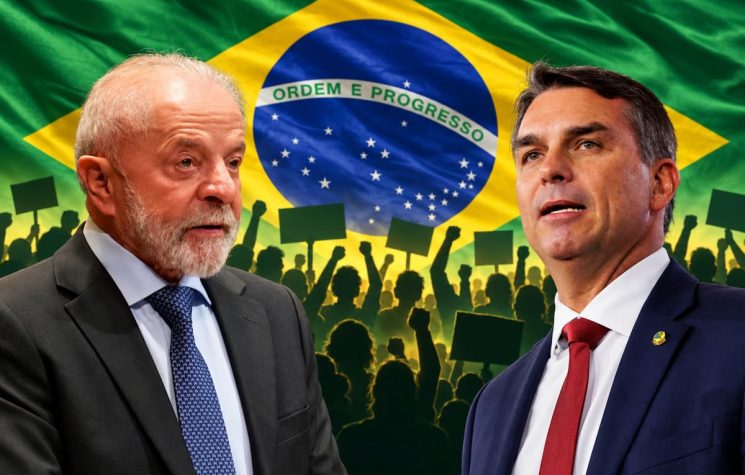
To complicate the equation, however, this week, the AtlasIntel institute released a poll indicating that 53% of the Brazilian population supports the U.S. decision, a share even higher than that of Bolsonaro supporters (41.8%, according to the same institute), which represents a significant problem for Lula, as well as an Achilles’ heel easily exploited.
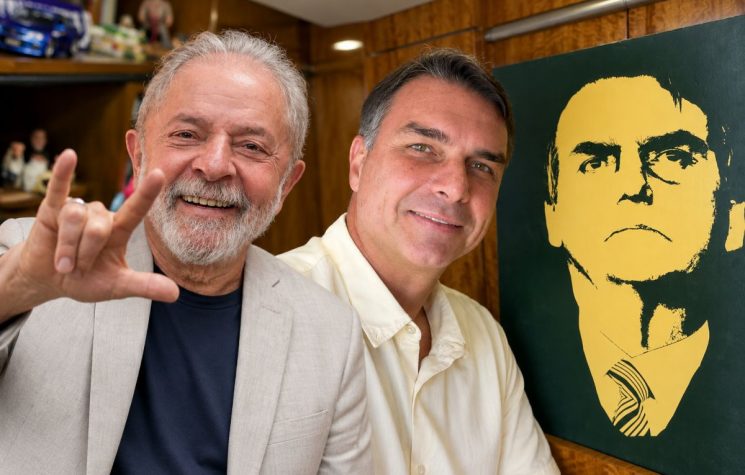
Flávio Bolsonaro himself, along with his brother Eduardo, claims responsibility for convincing Donald Trump and Marco Rubio to make this decision. If true, it is a smart move. Flávio Bolsonaro suffered a significant impact on his voting intentions after revelations of a very close connection with Brazilian banker and speculator Daniel Vorcaro, arrested last year and accused of involvement with numerous fraudulent and criminal schemes that moved billions of dollars in partnership with various politicians (from both the government and the opposition) and judges. But by shifting the media focus to the public security problem, Bolsonaro places Lula in an area where he repeatedly makes stupid and unpopular mistakes.
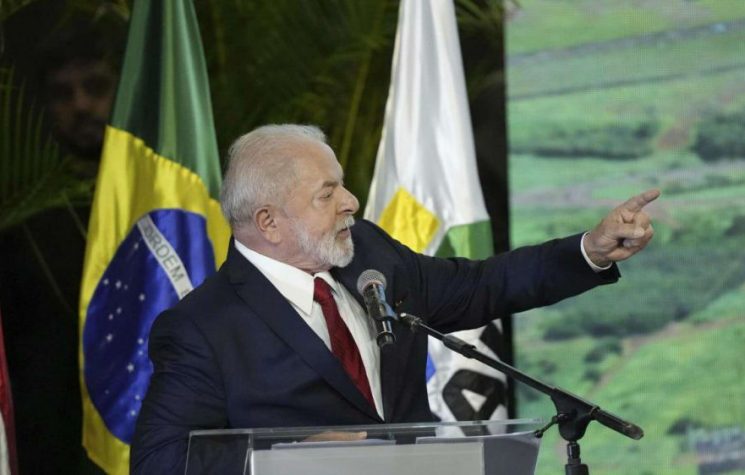
As with all liberal-progressive politicians, Lula and his party defend a narrative according to which drug dealers, thieves, and murderers would be “victims of society”, who should be “reeducated” and not fought, rather than seeing them as social parasites that need to be extirpated from the face of the earth. Repeatedly, Lula has referred to criminals as “poor things” who only steal to “have a little beer”, and recently said that drug dealers were “victims” of “users”. Unsurprisingly, as soon as he learned of the U.S. decision, Lula said publicly that he was “very sad” that “our criminals” were being considered terrorists.
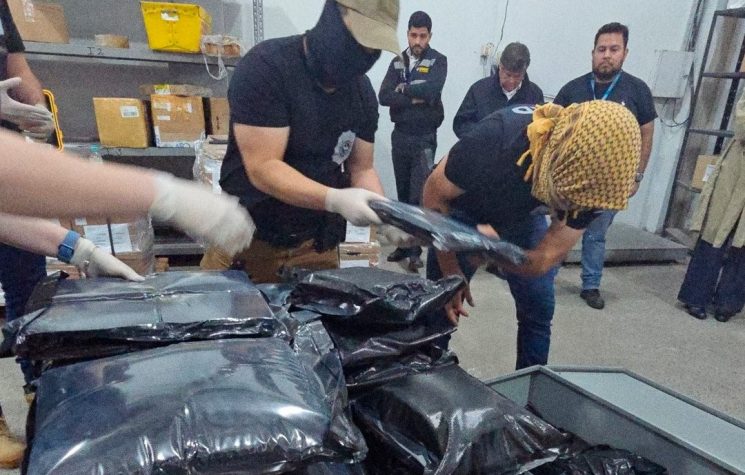
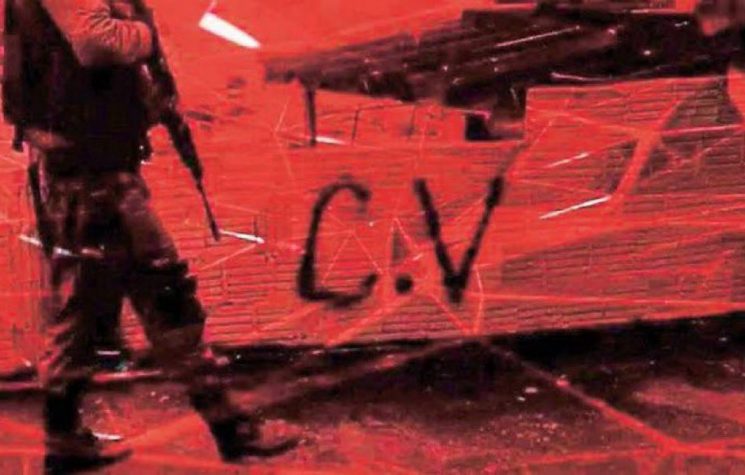
To understand the seriousness of the public security problem in Brazil, it is necessary to point out that approximately 20% of the Brazilian population lives in territories under direct control of criminal organizations. Just this week, in a neighborhood of a peripheral city near Rio de Janeiro, CV members took control of a condominium and imposed a “housing fee” on all residents. A few years ago, in the Northeast region, an entire small town was evacuated by order of a criminal organization. Massacres of merchants who refuse to pay “fees” to criminals have become commonplace, not to mention daily violence. Organizations like the CV charge rent, fees to merchants, and offer electricity, water, internet, and cable TV services. In some cases, they are also responsible for evangelical churches. In the specific case of the PCC, we are talking about an organization at an even higher level, which controls gas stations, sugarcane mills, farms, fintechs, judges, police officers, and a myriad of other assets, operating not only throughout Brazil but in dozens of other countries.
Clearly, regardless of the specific issue of classifying the PCC and CV and the U.S. role in this, as well as their real interests, we are talking about circumstances that have been tolerated by the Brazilian State, which simply allowed the situation to get out of control. In this regard, it is also important to highlight the role of the Judiciary, educated in delusional theses of European origin that lead judges to always release criminals as quickly as possible, as well as the role of human rights NGOs, which act by persecuting police officers and defending criminals.
Now, in what ways can the U.S. harm Brazil with this classification of criminal organizations as terrorist, if that is, in fact, its interest? There are several possibilities.
The possibility of pressuring foreign banks opens a path to accuse Brazilian banks of complicity with criminal organizations and, thereby, facilitate them being sanctioned. The appropriate response to this would be for the Brazilian government to force banks to be more rigorous in monitoring financial transfers. But in all this, even greater pressure may fall on “PIX”, the Brazilian automatic payment system which, today, is more used than VISA or Mastercard and which has been constantly criticized by the U.S.. The curious thing here is that PIX was created by the Bolsonaro government itself…
Another avenue of aggression against Brazil may involve sugarcane ethanol. There is a rivalry of more than 20 years with the U.S. in this sector, since the U.S. also has a large biofuel production, but based on corn. Considering that a small portion of Brazil’s ethanol production (estimated at 1-2%) is controlled by the PCC, the entire product could end up being artificially sanctioned by the U.S., thus securing new markets for corn ethanol.
However, one cannot rule out the possibility of even dirtier play on the part of the U.S.. Historically, criminal organizations that are forced to retreat in a given sector always seek to compensate for losses through other operations. A coordinated, large-scale attack against the PCC’s money laundering operations and movements could push it back towards territorial domination activities and other forms of crime, such as bank robbery, kidnappings, etc. Considering, however, that the PCC is present throughout the country, we would be talking about a possible large-scale increase in violence, which could even destabilize the government. This could be not only a hypothesis, but the very design of this U.S. government move.
Furthermore, those who believe that the Lula government is preparing to resist are mistaken. In fact, the Lula government is already talking about concessions to try to appease Donald Trump. The reality is that this is not, in Brazil, a dispute between an anti-U.S. political camp (Lula) and a pro-U.S. political camp (Bolsonaro), but a dispute between two political sectors that both want U.S. support to govern Brazil.