
World
Lorenzo Maria Pacini
July 8, 2026
© Photo: Public domain

Until the EU is able to translate its ambition into coordinated capabilities, Cyprus will remain what it is today: a European territory de iure, an Atlantic instrument de facto, and a permanent fault line along Turkey’s southern border.

Join us on Telegram, X, and VK.

Contact us: info@strategic-culture.su

New interests in the missed outpost

The entry into force, in June 2026, of the Status of Forces Agreement (SOFA) between the Republic of Cyprus and France marks a turning point in the reconfiguration of the balance of power in the Eastern Mediterranean. The agreement – signed in Nicosia by Cypriot Defense Minister Vasilis Palmas and his French counterpart Catherine Vautrin on the sidelines of the informal meeting of European Union defense ministers – provides, for the first time, a stable legal framework for the presence of French military forces on the island, regulating their status, movements, access to infrastructure, and industrial cooperation in the defense sector. This is neither a mutual defense pact nor the establishment of a permanent base, but rather an enabling framework: joint exercises, training, technology sharing, and rapid response capabilities in times of crisis. The reaction from Ankara and the Turkish Republic of Northern Cyprus (TRNC) was immediate and unequivocal, confirming that the stakes go far beyond technical and legal considerations.

For the European Union, Cyprus is not a periphery but a functional frontier. It is both the Union’s easternmost external border and a gateway to the Middle East, the Gulf, the Maghreb, the Balkans, and, beyond, the Black Sea and the Caucasus. At a time when the U.S. guarantee within the Atlantic framework appears less predictable to Brussels, the island takes on the role of a testing ground for European strategic autonomy: a politically stable EU territory, close to major crisis theaters, onto which to project an autonomous hard power capability.

France is the actor that has most consistently seized this opportunity. For Paris, Cyprus offers an EU foothold in the Levant: strategic access to Lebanon, the Suez Canal, energy routes, and regional conflict zones. The 2026 SOFA is the result of a process that began with the 2017 cooperation agreement and culminated in the Strategic Partnership Agreement signed by Christodoulides and Macron in Paris in December 2025. The operational data speak for themselves: the ports of Larnaca and Limassol host about thirty French naval calls per year, and during the regional crisis of March 2026, a French frigate participated in the island’s air defense while the Charles de Gaulle strike group was being redeployed to the Mediterranean.

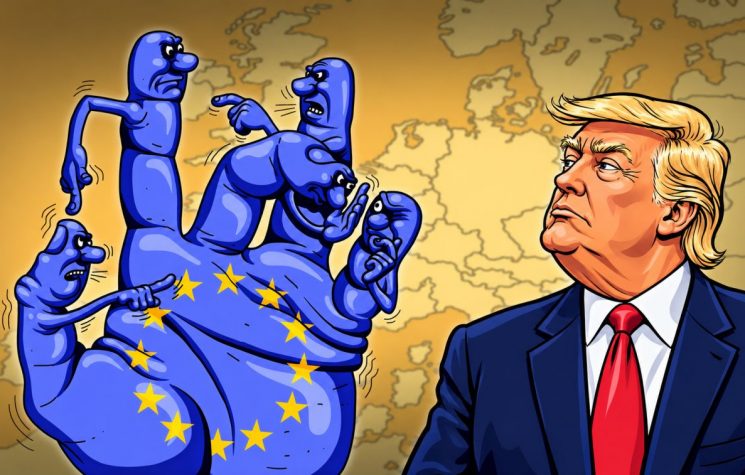
However, the structural weakness of the European project lies precisely in its dependence on a single actor. As noted by several analysts, the French presence risks remaining a substitute rather than the foundation of a coherent European approach: without broader coordination, the Paris initiative remains a matter of political visibility rather than a systemic architecture. European strategic autonomy is a vision that struggles to materialize: France is its main proponent, but a lone voice. When, during the crisis of March 2026, military assistance from France, Italy, Spain, the Netherlands, and the United Kingdom poured into the island, it did so on an ad hoc basis, revealing a reactive and non-institutionalized form of cooperation. This is the European paradox: Cyprus is the outpost of an autonomy that the Union proclaims but fails to structure.

 The United States reaffirms its presence

At the same time – and here lies the crux of the matter – Cyprus has long been an asset of U.S. strategy in the Levant. The decisive factor was the gradual lifting of the arms embargo: introduced in 1987, partially lifted in 2020, fully suspended as of 2021, and renewed annually since then, most recently for the period October 2025–September 2026. Under the presidency of Christodoulides, who was educated in the United States, Nicosia has abandoned its traditional position of non-alignment to align itself with Washington, gaining access to the Foreign Military Sales and Excess Defense Articles programs.

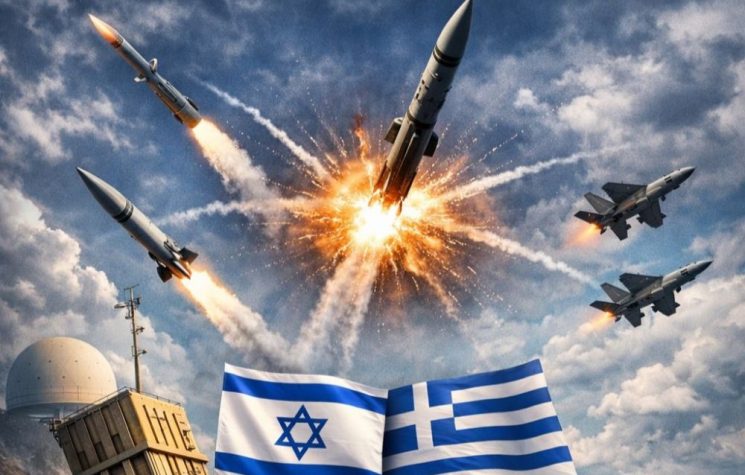
The American presence is not merely commercial, but infrastructural and operational. The U.S. European Command is funding the modernization of two key installations: the Evangelos Florakis naval base, just 229 km from the Lebanese coast, which is set to house a heliport for heavy-lift transport helicopters such as the Chinook; and the Andreas Papandreou air base, currently being expanded with a new apron capable of accommodating dozens of strategic transport aircraft. By 2024, the United States had already deployed a contingent of Marines and V-22 Osprey aircraft to Paphos for evacuations from Lebanon; in June 2025, following joint U.S.-Israeli attacks on Iranian nuclear facilities, the island served as a logistical hub for the exodus from Israel. On the institutional front, the 3+1 framework (the United States, Greece, Israel, and Cyprus) and congressional bills regarding training centers such as CYCLOPS, CERBERUS, and TRIREME consolidate Cyprus’s role as a permanent operational hub for regional security under U.S. leadership.

The trade-off for this integration is exposure. The attack by a Shahed drone on a hangar at the British base in Akrotiri in March 2026 – with munitions intercepted nearby and a public alert issued by the U.S. Embassy in Nicosia – has shifted Cyprus from the margins to the operational perimeter of the confrontation with Iran. The infrastructure underpinning the Western position is now within the proven range of hostile actors, and strategic depth comes at the cost of vulnerability.

This is where the underlying tension emerges. The dominant narrative presents the French (European) and U.S. presences as complementary, both directed against Turkish assertiveness and in support of the Greece-Cyprus-Israel front; but in terms of the political economy of security, European strategic autonomy and Atlantic primacy are, in the long run, competing logics: the former posits a Europe capable of defining its own interests and equipping itself with the tools to pursue them jointly when possible, and alone when necessary; the latter presupposes that security in the eastern Mediterranean remains anchored in a U.S.-led architecture, in which European allies are subordinate components.

This competition manifests itself primarily on three levels. On the capabilities level, the modernization of Cypriot bases funded by Washington provides Washington and its European partners – including France – with additional options in the region: the same infrastructure serves two distinct hegemonic projects, and whoever funds it ultimately determines its use. On the industrial level, the Franco-Cypriot SOFA promotes defense cooperation and the export of French arms, in direct competition with U.S. FMS programs recently unlocked by the lifting of the embargo. On the political front, Southern Europe is engaged in internal competition for influence in the Mediterranean, while the lack of European coordination creates an opening for external actors; in the absence of coordinated action, these actors will fill the void, and the cost will fall on the Union’s strategic interests.

The likely resolution of this tension is not symmetrical. The facts on the ground suggest that, barring a qualitative leap in European defense integration, the Atlantic bloc will retain substantial primacy: the United States controls strategic infrastructure hubs, key arms programs, and the 3+1 institutional framework. European autonomy, lacking a cohesive political will and autonomous hard power capabilities, remains a superstructure resting on an American material foundation. France can shape developments, but it is unlikely to structure them in the absence of a shared European vision, which does not exist today. Cyprus, in other words, is formally European but substantively integrated into the U.S. strategic sphere.

Dual rationality: The proxy and the thorn in the side

For Turkey, a militarized Cyprus generates a dual rationale, which is both instrumental and defensive. On the one hand, the militarization of the South offers Ankara a strategic justification and serves as a reverse proxy: the permanent presence of the Turkish army in the North and support for the TRNC are legitimized precisely by the intensive armament of the Greek Cypriot side. The TRNC’s Minister of Foreign Affairs, Tahsin Ertuğruloğlu, has explicitly articulated this logic, defining the Turkish military presence – as a significant deterrent – as the sole foundation of security and stability in Cyprus, and interpreting every Greek Cypriot move as proof of the Republic of Türkiye’s vital importance as the guarantor of the Turkish Cypriots. From this perspective, any agreement such as the SOFA reinforces Ankara’s narrative and consolidates its presence in the North as a “necessary” countermeasure.

On the other hand, this very militarization constitutes a potentially lethal thorn in the side. An island hosting French forces, U.S. infrastructure, and a growing military and economic rapprochement with Israel – whose real estate acquisitions the TRNC denounces for their political, strategic, and demographic implications – transforms Ankara’s southern front from a manageable theater into a perimeter of encirclement. Turkey disputes the maritime borders of the Republic of Cyprus and claims rights for the TRNC over those same waters, in a context where Greek-Turkish rivalry has brought the two NATO allies to the brink of armed conflict on five occasions over the past half-century. The proliferation of Western military bases and agreements just a few dozen kilometers from the Anatolian coast reduces Turkey’s strategic depth and alters the delicate balances in the region.

Turkey’s response – the deployment of F-16s in the TRNC, Erdoğan’s rhetoric about not pursuing the Zionist network behind the massacre, and the characterization of the SOFA as “illegal” because it was signed with a non-guarantor power – reveals the ambivalence of the calculation, whereby the militarization of others is simultaneously the argument justifying Turkey’s presence and the threat that such a presence is meant to neutralize. It is the classic security dilemma: every defensive move by one actor is perceived as offensive by the other, in a spiral that makes the eastern Mediterranean one of the main fronts of competition among the great powers.

Cyprus condenses into a single political archipelago three dynamics that intersect and clash. It is the outpost of a European strategic autonomy that remains unfulfilled due to a lack of cohesion; it is a node already firmly integrated into the U.S. operational perimeter; and it is the object of a dual Turkish rationale that makes it simultaneously an alibi and a threat. The apparent complementarity between Paris and Washington masks a structural rivalry that, as things stand, favors the Atlantic bloc – which controls the heavy infrastructure and the institutional framework – over a Europe that proclaims autonomy without actually establishing it.

Until the Union is able to translate its ambition into coordinated capabilities, Cyprus will remain what it is today: a European territory de iure, an Atlantic instrument de facto, and a permanent fault line along Turkey’s southern border. That border could soon become a flashpoint, turning into the next zone of tension among the powers involved in the grand project to reshape the Middle East.

The near future of Cyprus, the disputed hub of the Eastern Mediterranean

Until the EU is able to translate its ambition into coordinated capabilities, Cyprus will remain what it is today: a European territory de iure, an Atlantic instrument de facto, and a permanent fault line along Turkey’s southern border.

Join us on Telegram, X, and VK.

Contact us: info@strategic-culture.su

New interests in the missed outpost

The entry into force, in June 2026, of the Status of Forces Agreement (SOFA) between the Republic of Cyprus and France marks a turning point in the reconfiguration of the balance of power in the Eastern Mediterranean. The agreement – signed in Nicosia by Cypriot Defense Minister Vasilis Palmas and his French counterpart Catherine Vautrin on the sidelines of the informal meeting of European Union defense ministers – provides, for the first time, a stable legal framework for the presence of French military forces on the island, regulating their status, movements, access to infrastructure, and industrial cooperation in the defense sector. This is neither a mutual defense pact nor the establishment of a permanent base, but rather an enabling framework: joint exercises, training, technology sharing, and rapid response capabilities in times of crisis. The reaction from Ankara and the Turkish Republic of Northern Cyprus (TRNC) was immediate and unequivocal, confirming that the stakes go far beyond technical and legal considerations.

For the European Union, Cyprus is not a periphery but a functional frontier. It is both the Union’s easternmost external border and a gateway to the Middle East, the Gulf, the Maghreb, the Balkans, and, beyond, the Black Sea and the Caucasus. At a time when the U.S. guarantee within the Atlantic framework appears less predictable to Brussels, the island takes on the role of a testing ground for European strategic autonomy: a politically stable EU territory, close to major crisis theaters, onto which to project an autonomous hard power capability.

France is the actor that has most consistently seized this opportunity. For Paris, Cyprus offers an EU foothold in the Levant: strategic access to Lebanon, the Suez Canal, energy routes, and regional conflict zones. The 2026 SOFA is the result of a process that began with the 2017 cooperation agreement and culminated in the Strategic Partnership Agreement signed by Christodoulides and Macron in Paris in December 2025. The operational data speak for themselves: the ports of Larnaca and Limassol host about thirty French naval calls per year, and during the regional crisis of March 2026, a French frigate participated in the island’s air defense while the Charles de Gaulle strike group was being redeployed to the Mediterranean.

However, the structural weakness of the European project lies precisely in its dependence on a single actor. As noted by several analysts, the French presence risks remaining a substitute rather than the foundation of a coherent European approach: without broader coordination, the Paris initiative remains a matter of political visibility rather than a systemic architecture. European strategic autonomy is a vision that struggles to materialize: France is its main proponent, but a lone voice. When, during the crisis of March 2026, military assistance from France, Italy, Spain, the Netherlands, and the United Kingdom poured into the island, it did so on an ad hoc basis, revealing a reactive and non-institutionalized form of cooperation. This is the European paradox: Cyprus is the outpost of an autonomy that the Union proclaims but fails to structure.

 The United States reaffirms its presence

At the same time – and here lies the crux of the matter – Cyprus has long been an asset of U.S. strategy in the Levant. The decisive factor was the gradual lifting of the arms embargo: introduced in 1987, partially lifted in 2020, fully suspended as of 2021, and renewed annually since then, most recently for the period October 2025–September 2026. Under the presidency of Christodoulides, who was educated in the United States, Nicosia has abandoned its traditional position of non-alignment to align itself with Washington, gaining access to the Foreign Military Sales and Excess Defense Articles programs.

The American presence is not merely commercial, but infrastructural and operational. The U.S. European Command is funding the modernization of two key installations: the Evangelos Florakis naval base, just 229 km from the Lebanese coast, which is set to house a heliport for heavy-lift transport helicopters such as the Chinook; and the Andreas Papandreou air base, currently being expanded with a new apron capable of accommodating dozens of strategic transport aircraft. By 2024, the United States had already deployed a contingent of Marines and V-22 Osprey aircraft to Paphos for evacuations from Lebanon; in June 2025, following joint U.S.-Israeli attacks on Iranian nuclear facilities, the island served as a logistical hub for the exodus from Israel. On the institutional front, the 3+1 framework (the United States, Greece, Israel, and Cyprus) and congressional bills regarding training centers such as CYCLOPS, CERBERUS, and TRIREME consolidate Cyprus’s role as a permanent operational hub for regional security under U.S. leadership.

The trade-off for this integration is exposure. The attack by a Shahed drone on a hangar at the British base in Akrotiri in March 2026 – with munitions intercepted nearby and a public alert issued by the U.S. Embassy in Nicosia – has shifted Cyprus from the margins to the operational perimeter of the confrontation with Iran. The infrastructure underpinning the Western position is now within the proven range of hostile actors, and strategic depth comes at the cost of vulnerability.

This is where the underlying tension emerges. The dominant narrative presents the French (European) and U.S. presences as complementary, both directed against Turkish assertiveness and in support of the Greece-Cyprus-Israel front; but in terms of the political economy of security, European strategic autonomy and Atlantic primacy are, in the long run, competing logics: the former posits a Europe capable of defining its own interests and equipping itself with the tools to pursue them jointly when possible, and alone when necessary; the latter presupposes that security in the eastern Mediterranean remains anchored in a U.S.-led architecture, in which European allies are subordinate components.

This competition manifests itself primarily on three levels. On the capabilities level, the modernization of Cypriot bases funded by Washington provides Washington and its European partners – including France – with additional options in the region: the same infrastructure serves two distinct hegemonic projects, and whoever funds it ultimately determines its use. On the industrial level, the Franco-Cypriot SOFA promotes defense cooperation and the export of French arms, in direct competition with U.S. FMS programs recently unlocked by the lifting of the embargo. On the political front, Southern Europe is engaged in internal competition for influence in the Mediterranean, while the lack of European coordination creates an opening for external actors; in the absence of coordinated action, these actors will fill the void, and the cost will fall on the Union’s strategic interests.

The likely resolution of this tension is not symmetrical. The facts on the ground suggest that, barring a qualitative leap in European defense integration, the Atlantic bloc will retain substantial primacy: the United States controls strategic infrastructure hubs, key arms programs, and the 3+1 institutional framework. European autonomy, lacking a cohesive political will and autonomous hard power capabilities, remains a superstructure resting on an American material foundation. France can shape developments, but it is unlikely to structure them in the absence of a shared European vision, which does not exist today. Cyprus, in other words, is formally European but substantively integrated into the U.S. strategic sphere.

Dual rationality: The proxy and the thorn in the side

For Turkey, a militarized Cyprus generates a dual rationale, which is both instrumental and defensive. On the one hand, the militarization of the South offers Ankara a strategic justification and serves as a reverse proxy: the permanent presence of the Turkish army in the North and support for the TRNC are legitimized precisely by the intensive armament of the Greek Cypriot side. The TRNC’s Minister of Foreign Affairs, Tahsin Ertuğruloğlu, has explicitly articulated this logic, defining the Turkish military presence – as a significant deterrent – as the sole foundation of security and stability in Cyprus, and interpreting every Greek Cypriot move as proof of the Republic of Türkiye’s vital importance as the guarantor of the Turkish Cypriots. From this perspective, any agreement such as the SOFA reinforces Ankara’s narrative and consolidates its presence in the North as a “necessary” countermeasure.

On the other hand, this very militarization constitutes a potentially lethal thorn in the side. An island hosting French forces, U.S. infrastructure, and a growing military and economic rapprochement with Israel – whose real estate acquisitions the TRNC denounces for their political, strategic, and demographic implications – transforms Ankara’s southern front from a manageable theater into a perimeter of encirclement. Turkey disputes the maritime borders of the Republic of Cyprus and claims rights for the TRNC over those same waters, in a context where Greek-Turkish rivalry has brought the two NATO allies to the brink of armed conflict on five occasions over the past half-century. The proliferation of Western military bases and agreements just a few dozen kilometers from the Anatolian coast reduces Turkey’s strategic depth and alters the delicate balances in the region.

Turkey’s response – the deployment of F-16s in the TRNC, Erdoğan’s rhetoric about not pursuing the Zionist network behind the massacre, and the characterization of the SOFA as “illegal” because it was signed with a non-guarantor power – reveals the ambivalence of the calculation, whereby the militarization of others is simultaneously the argument justifying Turkey’s presence and the threat that such a presence is meant to neutralize. It is the classic security dilemma: every defensive move by one actor is perceived as offensive by the other, in a spiral that makes the eastern Mediterranean one of the main fronts of competition among the great powers.

Cyprus condenses into a single political archipelago three dynamics that intersect and clash. It is the outpost of a European strategic autonomy that remains unfulfilled due to a lack of cohesion; it is a node already firmly integrated into the U.S. operational perimeter; and it is the object of a dual Turkish rationale that makes it simultaneously an alibi and a threat. The apparent complementarity between Paris and Washington masks a structural rivalry that, as things stand, favors the Atlantic bloc – which controls the heavy infrastructure and the institutional framework – over a Europe that proclaims autonomy without actually establishing it.

Until the Union is able to translate its ambition into coordinated capabilities, Cyprus will remain what it is today: a European territory de iure, an Atlantic instrument de facto, and a permanent fault line along Turkey’s southern border. That border could soon become a flashpoint, turning into the next zone of tension among the powers involved in the grand project to reshape the Middle East.
Until the EU is able to translate its ambition into coordinated capabilities, Cyprus will remain what it is today: a European territory de iure, an Atlantic instrument de facto, and a permanent fault line along Turkey’s southern border.

Join us on Telegram, X, and VK.

Contact us: info@strategic-culture.su

New interests in the missed outpost

The entry into force, in June 2026, of the Status of Forces Agreement (SOFA) between the Republic of Cyprus and France marks a turning point in the reconfiguration of the balance of power in the Eastern Mediterranean. The agreement – signed in Nicosia by Cypriot Defense Minister Vasilis Palmas and his French counterpart Catherine Vautrin on the sidelines of the informal meeting of European Union defense ministers – provides, for the first time, a stable legal framework for the presence of French military forces on the island, regulating their status, movements, access to infrastructure, and industrial cooperation in the defense sector. This is neither a mutual defense pact nor the establishment of a permanent base, but rather an enabling framework: joint exercises, training, technology sharing, and rapid response capabilities in times of crisis. The reaction from Ankara and the Turkish Republic of Northern Cyprus (TRNC) was immediate and unequivocal, confirming that the stakes go far beyond technical and legal considerations.

For the European Union, Cyprus is not a periphery but a functional frontier. It is both the Union’s easternmost external border and a gateway to the Middle East, the Gulf, the Maghreb, the Balkans, and, beyond, the Black Sea and the Caucasus. At a time when the U.S. guarantee within the Atlantic framework appears less predictable to Brussels, the island takes on the role of a testing ground for European strategic autonomy: a politically stable EU territory, close to major crisis theaters, onto which to project an autonomous hard power capability.

France is the actor that has most consistently seized this opportunity. For Paris, Cyprus offers an EU foothold in the Levant: strategic access to Lebanon, the Suez Canal, energy routes, and regional conflict zones. The 2026 SOFA is the result of a process that began with the 2017 cooperation agreement and culminated in the Strategic Partnership Agreement signed by Christodoulides and Macron in Paris in December 2025. The operational data speak for themselves: the ports of Larnaca and Limassol host about thirty French naval calls per year, and during the regional crisis of March 2026, a French frigate participated in the island’s air defense while the Charles de Gaulle strike group was being redeployed to the Mediterranean.

However, the structural weakness of the European project lies precisely in its dependence on a single actor. As noted by several analysts, the French presence risks remaining a substitute rather than the foundation of a coherent European approach: without broader coordination, the Paris initiative remains a matter of political visibility rather than a systemic architecture. European strategic autonomy is a vision that struggles to materialize: France is its main proponent, but a lone voice. When, during the crisis of March 2026, military assistance from France, Italy, Spain, the Netherlands, and the United Kingdom poured into the island, it did so on an ad hoc basis, revealing a reactive and non-institutionalized form of cooperation. This is the European paradox: Cyprus is the outpost of an autonomy that the Union proclaims but fails to structure.

 The United States reaffirms its presence

At the same time – and here lies the crux of the matter – Cyprus has long been an asset of U.S. strategy in the Levant. The decisive factor was the gradual lifting of the arms embargo: introduced in 1987, partially lifted in 2020, fully suspended as of 2021, and renewed annually since then, most recently for the period October 2025–September 2026. Under the presidency of Christodoulides, who was educated in the United States, Nicosia has abandoned its traditional position of non-alignment to align itself with Washington, gaining access to the Foreign Military Sales and Excess Defense Articles programs.

The American presence is not merely commercial, but infrastructural and operational. The U.S. European Command is funding the modernization of two key installations: the Evangelos Florakis naval base, just 229 km from the Lebanese coast, which is set to house a heliport for heavy-lift transport helicopters such as the Chinook; and the Andreas Papandreou air base, currently being expanded with a new apron capable of accommodating dozens of strategic transport aircraft. By 2024, the United States had already deployed a contingent of Marines and V-22 Osprey aircraft to Paphos for evacuations from Lebanon; in June 2025, following joint U.S.-Israeli attacks on Iranian nuclear facilities, the island served as a logistical hub for the exodus from Israel. On the institutional front, the 3+1 framework (the United States, Greece, Israel, and Cyprus) and congressional bills regarding training centers such as CYCLOPS, CERBERUS, and TRIREME consolidate Cyprus’s role as a permanent operational hub for regional security under U.S. leadership.

The trade-off for this integration is exposure. The attack by a Shahed drone on a hangar at the British base in Akrotiri in March 2026 – with munitions intercepted nearby and a public alert issued by the U.S. Embassy in Nicosia – has shifted Cyprus from the margins to the operational perimeter of the confrontation with Iran. The infrastructure underpinning the Western position is now within the proven range of hostile actors, and strategic depth comes at the cost of vulnerability.

This is where the underlying tension emerges. The dominant narrative presents the French (European) and U.S. presences as complementary, both directed against Turkish assertiveness and in support of the Greece-Cyprus-Israel front; but in terms of the political economy of security, European strategic autonomy and Atlantic primacy are, in the long run, competing logics: the former posits a Europe capable of defining its own interests and equipping itself with the tools to pursue them jointly when possible, and alone when necessary; the latter presupposes that security in the eastern Mediterranean remains anchored in a U.S.-led architecture, in which European allies are subordinate components.

This competition manifests itself primarily on three levels. On the capabilities level, the modernization of Cypriot bases funded by Washington provides Washington and its European partners – including France – with additional options in the region: the same infrastructure serves two distinct hegemonic projects, and whoever funds it ultimately determines its use. On the industrial level, the Franco-Cypriot SOFA promotes defense cooperation and the export of French arms, in direct competition with U.S. FMS programs recently unlocked by the lifting of the embargo. On the political front, Southern Europe is engaged in internal competition for influence in the Mediterranean, while the lack of European coordination creates an opening for external actors; in the absence of coordinated action, these actors will fill the void, and the cost will fall on the Union’s strategic interests.

The likely resolution of this tension is not symmetrical. The facts on the ground suggest that, barring a qualitative leap in European defense integration, the Atlantic bloc will retain substantial primacy: the United States controls strategic infrastructure hubs, key arms programs, and the 3+1 institutional framework. European autonomy, lacking a cohesive political will and autonomous hard power capabilities, remains a superstructure resting on an American material foundation. France can shape developments, but it is unlikely to structure them in the absence of a shared European vision, which does not exist today. Cyprus, in other words, is formally European but substantively integrated into the U.S. strategic sphere.

Dual rationality: The proxy and the thorn in the side

For Turkey, a militarized Cyprus generates a dual rationale, which is both instrumental and defensive. On the one hand, the militarization of the South offers Ankara a strategic justification and serves as a reverse proxy: the permanent presence of the Turkish army in the North and support for the TRNC are legitimized precisely by the intensive armament of the Greek Cypriot side. The TRNC’s Minister of Foreign Affairs, Tahsin Ertuğruloğlu, has explicitly articulated this logic, defining the Turkish military presence – as a significant deterrent – as the sole foundation of security and stability in Cyprus, and interpreting every Greek Cypriot move as proof of the Republic of Türkiye’s vital importance as the guarantor of the Turkish Cypriots. From this perspective, any agreement such as the SOFA reinforces Ankara’s narrative and consolidates its presence in the North as a “necessary” countermeasure.

On the other hand, this very militarization constitutes a potentially lethal thorn in the side. An island hosting French forces, U.S. infrastructure, and a growing military and economic rapprochement with Israel – whose real estate acquisitions the TRNC denounces for their political, strategic, and demographic implications – transforms Ankara’s southern front from a manageable theater into a perimeter of encirclement. Turkey disputes the maritime borders of the Republic of Cyprus and claims rights for the TRNC over those same waters, in a context where Greek-Turkish rivalry has brought the two NATO allies to the brink of armed conflict on five occasions over the past half-century. The proliferation of Western military bases and agreements just a few dozen kilometers from the Anatolian coast reduces Turkey’s strategic depth and alters the delicate balances in the region.

Turkey’s response – the deployment of F-16s in the TRNC, Erdoğan’s rhetoric about not pursuing the Zionist network behind the massacre, and the characterization of the SOFA as “illegal” because it was signed with a non-guarantor power – reveals the ambivalence of the calculation, whereby the militarization of others is simultaneously the argument justifying Turkey’s presence and the threat that such a presence is meant to neutralize. It is the classic security dilemma: every defensive move by one actor is perceived as offensive by the other, in a spiral that makes the eastern Mediterranean one of the main fronts of competition among the great powers.

Cyprus condenses into a single political archipelago three dynamics that intersect and clash. It is the outpost of a European strategic autonomy that remains unfulfilled due to a lack of cohesion; it is a node already firmly integrated into the U.S. operational perimeter; and it is the object of a dual Turkish rationale that makes it simultaneously an alibi and a threat. The apparent complementarity between Paris and Washington masks a structural rivalry that, as things stand, favors the Atlantic bloc – which controls the heavy infrastructure and the institutional framework – over a Europe that proclaims autonomy without actually establishing it.

Until the Union is able to translate its ambition into coordinated capabilities, Cyprus will remain what it is today: a European territory de iure, an Atlantic instrument de facto, and a permanent fault line along Turkey’s southern border. That border could soon become a flashpoint, turning into the next zone of tension among the powers involved in the grand project to reshape the Middle East.

The views of individual contributors do not necessarily represent those of the Strategic Culture Foundation.
See also

See also

The views of individual contributors do not necessarily represent those of the Strategic Culture Foundation.