


Why has the IOC not banned Britain, France, Germany, and other European NATO states for arming a NeoNazi regime in Kiev that is bombing civilians in Russia?


Contact us: info@strategic-culture.su
After nearly three years of being banned from international sports events, Russian athletes are finally looking at the prospect of returning to normal competition under their country’s flag and national anthem.
Russian hopes have been raised by the International Olympic Committee’s ruling to drop its suspension of the Russian national sports body. The readmission of the Russian Olympic Committee paves the way for its athletes to participate as part of a national team in the forthcoming Summer Games held in Los Angeles in 2028 (LA28).
Team Russia was banned from the 2024 Paris Olympics because the IOC excluded the Russian national committee in October 2023 over allegations concerning the armed conflict in Ukraine and the addition of formerly Ukrainian territories to the Russian Federation. Belarus was also banned because of its alleged support for Russia against Ukraine. In a compromise measure, a comparatively small number of Russian and Belarusian athletes were permitted to compete in Paris under “neutral status,” which stipulated that there would be no display of national flags or anthems. That scrutiny was unprecedented and has never been applied to athletes from the United States or Britain, for example, despite their governments’ involvement in wars.
IOC President Kirsty Coventry announced the move to reinstate the Russian committee earlier this month in a high-profile press conference in Lausanne, Switzerland. Russia welcomed the decision as a first step towards normalization for its sports. Russian sports minister Mikhail Degtyarev said there is a lot of work to do to implement the IOC’s decision before the next Olympic Games.
Several European nations and Ukraine lambasted the IOC’s latest ruling as caving in to Russian pressure. Britain, Norway, Sweden and the Baltic states said they were “appalled,” claiming that the decision was “normalizing war and aggression” by readmitting Russia while “brutal attacks on civilians and infrastructure were impacting Ukraine daily.” (The impact of NATO missiles and drones from Ukraine on Russian civilians is conveniently omitted.)
International political analyst Michael Averko commented in an email exchange with Strategic Culture Foundation that the condemnations from the Europeans are “hypocritical bigotry” and betray the fact that the IOC is under the sway of Western states, which undermines its supposed neutral, non-political ethos. (See this article for more background details.)
New York-based Averko says that the reaction of Europe, Canada and Ukraine is hysterical and violates the principle of sports neutrality.
“Sports should be a peaceful alternative to armed conflicts,” he noted, adding: “Allowing Americans, Russians, Israelis, Ukrainians and others to compete shouldn’t be seen as support or non-support for the actions of their respective nation. It’s an absurdity to link what the Collective West wants Russia to do geopolitically with whether or not Russia is allowed back in sports.”
So why did the IOC change its position on suspending the Russian Olympic Committee?
It was reported that the IOC’s legal advisers were satisfied that Russia had not included sports bodies from former Ukrainian territories that are now part of the Russian Federation. The territories are Donetsk, Lugansk, Zaporozhye, Kherson, and Crimea.
However, this issue is a glaring double standard for the IOC. Those territories held legal referenda on joining the Russian Federation in 2022 and in 2014 for Crimea. The IOC’s non-recognition of those rights of self-determination is contradicted by its recognition of Kosovo’s Olympic committee after a referendum in 2008 to secede from Serbia. Kosovo is not a member of the United Nations and is not recognized as an independent state by Serbia, Russia, China, and others. The IOC’s position is illogical, unprincipled and evidently politicized as Kosovo is a Western-backed entity.
Perhaps a more pressing issue for the IOC was that the ban on Russia was starting to collapse under the weight of its own irrationality and obviously politicized nature. In short, it was becoming untenable.
Up to 30 international sports federations and bodies had already opted to ignore the IOC’s banning of Russian athletes and teams.
This was particularly seen among Asian nations and in many popular sports ranging from boxing, judo, wrestling, cycling, fencing, aquatics, to gymnastics and weightlifting. In these fields, Russian and Belarusian teams were increasingly being allowed to participate under their national flag.
The International Boxing Association (IBA) was among the earliest dissenters to a ban on Russia. Russian IBA President Umar Kremlev (a Russian national) welcomed the latest “rollback” announced by the Swiss-based Olympic governing body. But with a jab, he added: “The IOC had no choice but to lift the restrictions and admit its mistakes. International associations must protect athletes, and athletes should stand on the podium, not politics.”
That means that the IOC was finding itself falling into disrepute as more and more nations and their sporting bodies were jettisoning the 2023 ruling to exclude Russia. The IOC was caving in, not to alleged pressure from Russia, but from its own unsustainable policy that Western nations had politicized with a Russophobic agenda.
Nonetheless, political analyst Averko comments that the IOC’s readmission of Russia falls badly short of what should be done to reverse an injustice. While the lifting of the suspension could potentially see the return of Team Russia at the LA28 games, he points out that the IOC ruling is couched in “provisions”.
For example, in a statement on July 7, the IOC ruling does not yet clear the way for the display of the Russian flag or anthem, and it does not permit the attendance of Russian government officials at events. The committee also says it will monitor the situation with input from national committees. That implies the IOC remains subject to objections from Ukraine and its supporters among the NATO states, especially the Europeans who are vociferously anti-Russian.
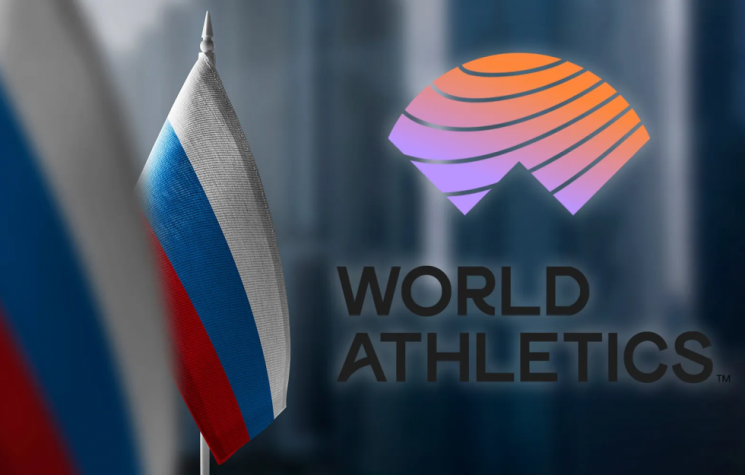
Another major obstacle is that the IOC ruling only recommends but does not compel international sports bodies to normalize relations with the Russian committee. The World Athletics Council (WAC) and the Federation of International Skiing are implacably opposed to Russian participation even under individual neutral status. Sebastian Coe, a British former Olympic champion and former UK Conservative Party lawmaker, is the president of the WAC. He is staunchly critical of Russia over Ukraine. Thus, several international sports bodies are unduly influenced by politicized leaders. This will impede Russia’s return to normal sporting activity, especially in track and field events in which it is traditionally strong.
There is also the issue of bilateral travel bans imposed on Russian citizens. The U.S., Canada, and other NATO states restrict the free movement of Russians as a result of sanctions over the conflict in Ukraine. This means that even if the IOC recognizes Russia’s status, there is no guarantee that its athletes will be able to attend events in the above-mentioned countries. For example, there is a World Volleyball tournament in Poland next year. The Federation of International Volleyball has lifted restrictions on Team Russia, but how will its athletes and coaches attend under existing Polish/NATO travel bans?
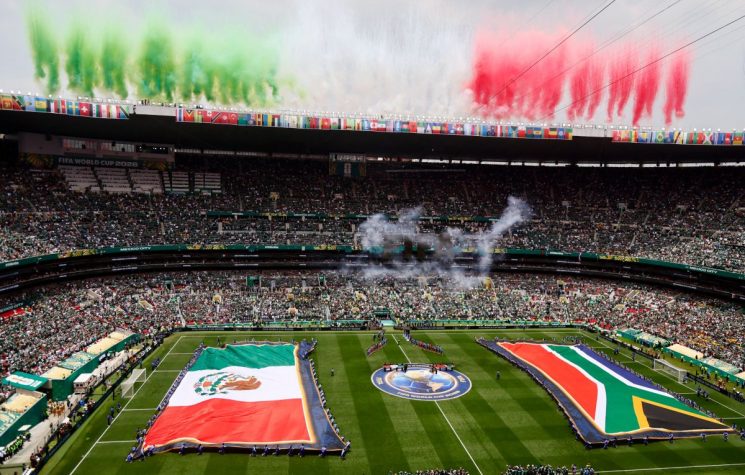
If Russia goes to LA28, will the U.S. authorities decree that the athletes must stay in Mexico and travel to events on a daily basis, as they unfairly imposed on the Iranian team during the FIFA World Cup? This is a farce beyond injustice.
Michael Averko dismisses the latest IOC concession to Russia as “half-assed”. He urged Russia to take a stronger lobbying position to point out the absurd double standards and hypocrisy of restricting its athletes.
“The hierarchy of the IOC and some of its related sports federations constitutes one of the last vestiges of Western imperialism. Outside the EU and UK, the effort to ban Russia is noticeably limited. It’s high time for tougher Russian soft power in how it deals with those who are nasty and unfair to it,” says Averko.
Russia is gaining support from around the world, as the number of sports bodies ignoring the bans on athletes seems to attest. This is the sporting manifestation of a multipolar world, and the Russophobic obsession by Western states looks not only unfair but ridiculous.
Why has the IOC not banned Israel and the U.S. for their wars of aggression and genocide in Gaza, Lebanon, and against Iran?
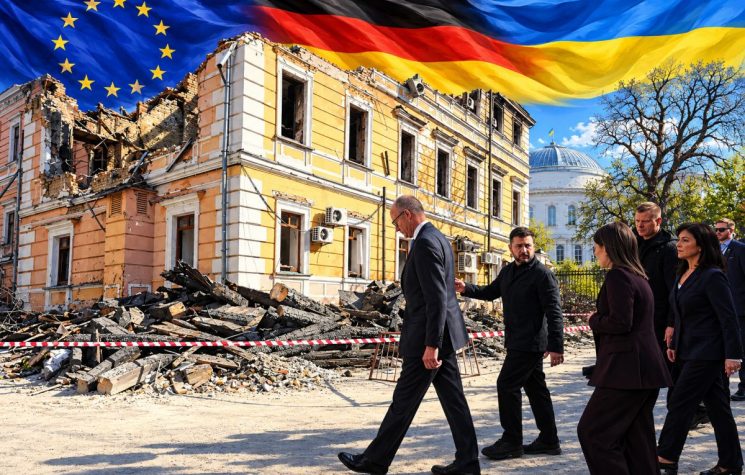
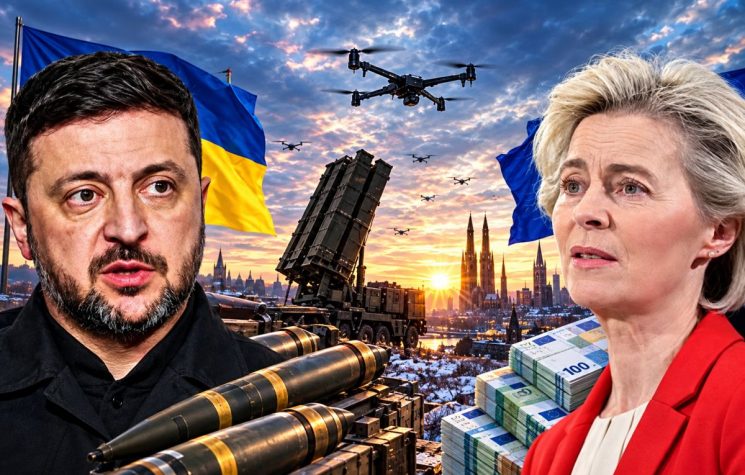
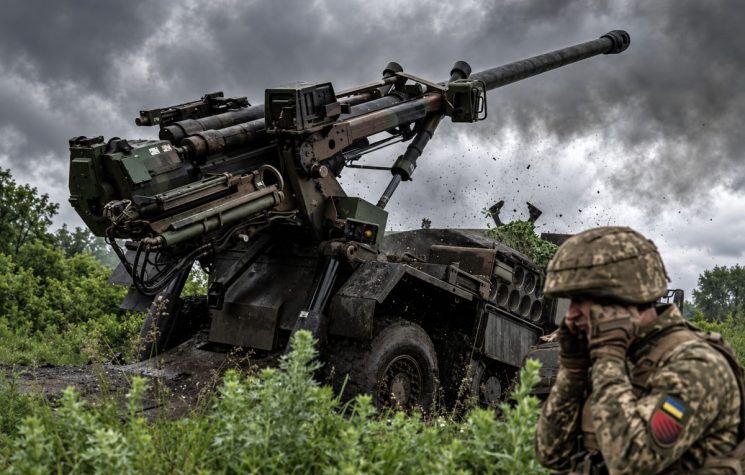
Why has the IOC not banned Britain, France, Germany, and other European NATO states for arming a NeoNazi regime in Kiev that is bombing civilians in Russia? If it banned Belarus for supporting Russia, then why not the European military supporters of Ukraine?
No other nation has a record of war, lawlessness, and border violations that remotely compares to the United States, and yet since the modern Olympic Games began in 1896, the U.S. has hosted more games than any other nation.
Thus, the case for taking one-sided politics out of sports and permitting Russia’s full and normal participation is as good as gold.