


Contact us: info@strategic-culture.su
To quote the British Prime Minister Benjamin Disraeli, “Power has only one duty – to secure the social welfare of the people.” This he is reported to have said in 1845. Some ideas never lose their validity. Another gem of his falls under this same category- “The Palace is not safe when the cottage is not happy”. The wording is of course not familiar today but the insinuation is clear.
Disraeli is remembered for, not only having a sharp mind and an equally sharp tongue to go with it, but also for introducing a number of reforms that changed the social legislation, leading to improvements for the working class in 19th century England. These reforms were significant and changed the living conditions in the towns and cities in England.
Disraeli´s attitude towards society and social reforms came from a clear realisation, clarified in the second quote and applied not only in regard to the Monarchy but also to the capitalist system gaining strength in the 19th century. He had the clear idea that the workforce could not and would not be productive and “happy” without an improvement in their living conditions. He realised the importance of bridging the gap between the rich and the poor, being crucial for national unity. The first quote is the play-book, in a single sentence of how to achieve this.
Taking the leap to modernity, we can in hindsight acknowledge that Disraeli laid the foundation for the welfare system we have today.
The situation has however changed dramatically. The social security systems in Europe are being folded back instead of being improved and adapted to the demands of the 21st century. We can refrain from taking the USA into our deliberations, as that country has never had a social security system comparable to the European one. The American population has been convinced that self- sufficiency is the epitome of freedom, even if you cannot afford health care or medication, health related emergencies often creating the mathematical challenge of deciding the affordability , life vs death.
The European social security system has become more expensive as the years went on. So-called reforms, supposed to improve the system and make things affordable have proven to be failures. The problem is undoubtedly financial, taken at face-value. Therefore reforms always targeted this side of the equation. Leading to predictable failure.
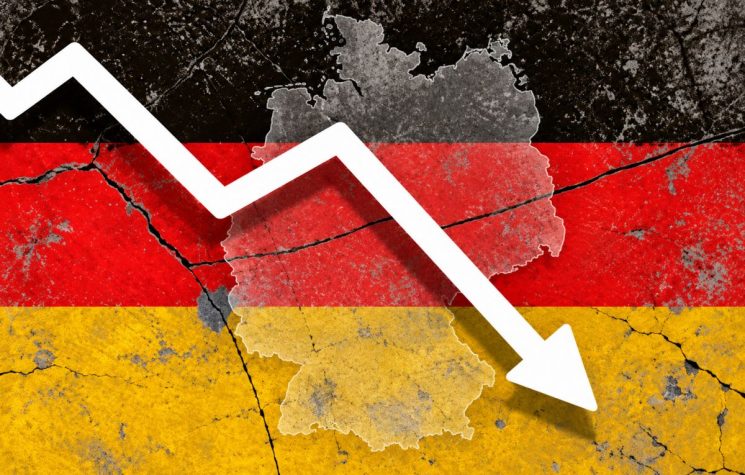
I would like to take Germany as an example. This has several reasons, the main one being that this is the system I live in and know best. It is also one of the systems that has been reformed the most over the last decades. Germany was not so long ago the economic powerhouse of Europe and, as a country aspiring to have a big say in world affairs, one would expect a well functioning and comprehensive social security system in place.
To understand the situation we must define what is included in this system. Health care is only one part, this is split into health and old age care. Then there is an unemployment insurance and a pension part. All other so-called benefits basically fall into one of these three categories. These “benefits” are for the most part means related. They are also called insurances, health insurance, unemployment insurance and pension insurance.
The idea of insurance is fundamentally clear, all pay in to a mutually beneficial financial system and when the need arises one is covered for the eventuality. Sounds good and it works, at least for cars, homes, floods and such. But these are circumstances and acts of fate concerning individuals and not society as a whole.
Looking at the insurance companies one can but not help noticing the high range real estate the offices occupy. Nor the wage structure of the top executives or the bonus payments at the end of the year. Ignore company cars. All paid for from the incoming monthly premiums. This applies to the social security insurances too. For example the offices of the employment agencies are palatial structures costing millions. Germany has a dual system of private and public insurance, 44 private and 110 public = 154. Each with CEOs and management, all to be paid for by the members´ premiums.
The social security premiums paid monthly for health, unemployment and pensions are directly deducted from the wages, in a percentage fixed by the government and assessed on a yearly basis to keep in line with the economic development. Should the income out of the premiums be inadequate the government steps in and tops up the missing funds from the taxes it receives. The premiums are percentages of the gross wage shared more or less on a 50/50 basis, employer/employee. Base wage used to determine the amount to be paid is capped at a certain wage sum, the so-called contribution assessment ceiling. For 2026 this ceiling is, for health insurance 5812,50 Euros per month and for the pension and unemployment insurance it is 8450,00 Euros per month
This means a person earning above the two maximum amounts will not have to pay any premiums for the excess income. This person can of course take out private insurance, but they are not compelled to pay more into the state system. For example someone earns 25,000.00Euros per month. His bill for the compulsory social security insurance will be the same as if he earned 5812,50 Euros or 8450,00 Euros. Supposedly to keep the system fair to all and not overcharge the higher paid. Guess who falls into that category, not the nurse or the bricklayer. Anyone take a guess.
These premiums are wage related as they are percentages out of the gross wage per employee. “Brilliant” system. No one seems to have looked into the scenario where the population shrinks, or at least the workforce. The wage sum shrinks in accordance. Less money is paid into the system and more has to be balanced out of the taxes, which again are wage related. It has been publish in many economic papers, that should the development in technology and AI continue at the pace hoped for, the workforce would encounter a reduction of at least 40% in the next few years. Do the maths. Again few people do. Sadly STEM competence are decreasing in all fields so few people can. To quote Disraeli again- “upon the education of this country the fate of this country depends”. Just mentioning.
There are many possible ways to solve this dilemma. One would expect the easiest way would be to scrape the assessment ceiling and reset a percentage to be paid out of all income, say 12% for all. Some economist, sorry forgot the name, in the 1990s worked out, if this should be in place there would be no shortage of funds for social security ever.
But no. This idea has not entered the public discussion. Someone starting work in the 1970s had a pension prospect after 45 years paying into the system of 75% of the last wage. Today the government is fighting to keep the 49% in place, some voices calling for a reduction down to 30% or less. The favoured solution is to “reform” the system to make it “fit for the future” and reduce everything and cut cost.
The two quotes at the beginning of this essay come back with a vengeance. Not only is the palace (today the established structures) in danger, but with an increasing impoverishment of the population also the entire system of government. The increasing popularity of the radical political movements is enough to make this clear. Politics is a matter of setting priorities and these determine the way the country goes. It also describes the type of country it becomes. Finding funds to create a military industry to prepare for wars that need not come and reducing social security to balance the books really tells you something about a country and those in power.
“Power has only one duty- to secure the social welfare of the people”. Just saying.