
Security
Joaquin Flores
November 21, 2026
© Photo: SCF

We often ignore the more sinister and long-term consequences of the conflict in Ukraine.

Join us on Telegram, X, and VK.

Contact us: info@strategic-culture.su

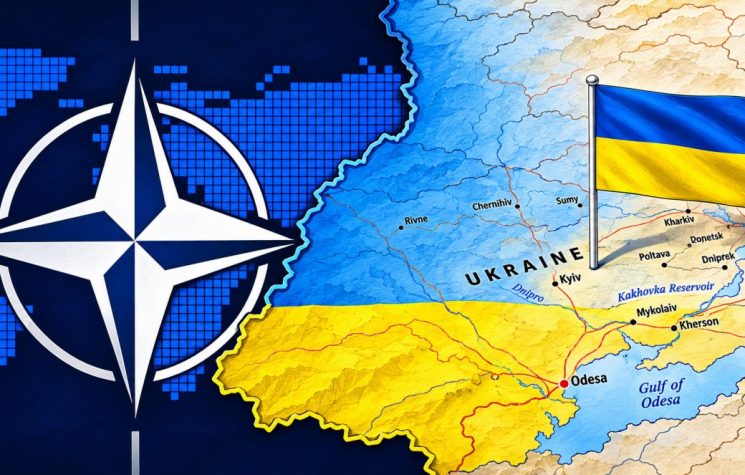
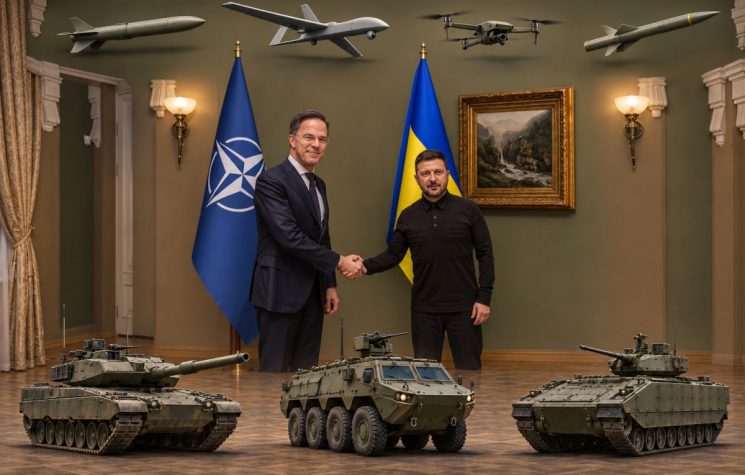
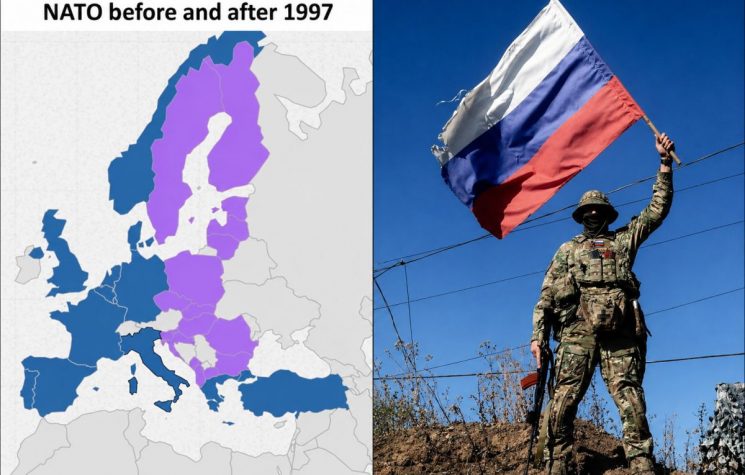
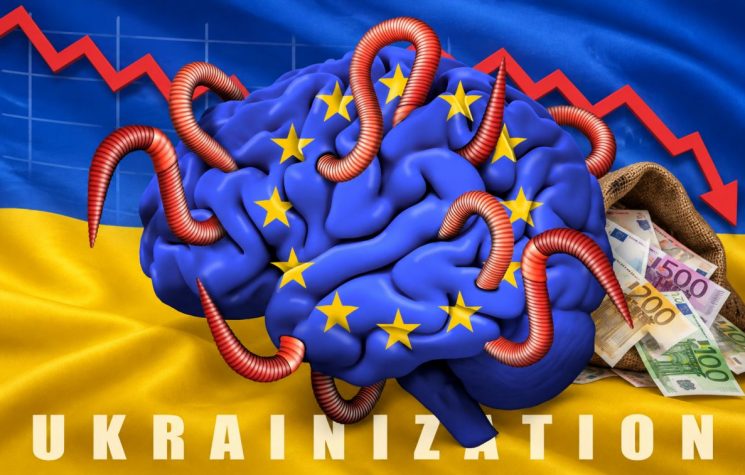
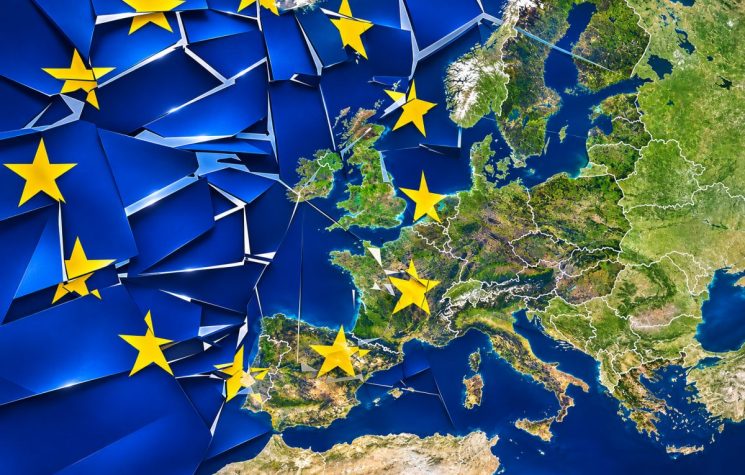
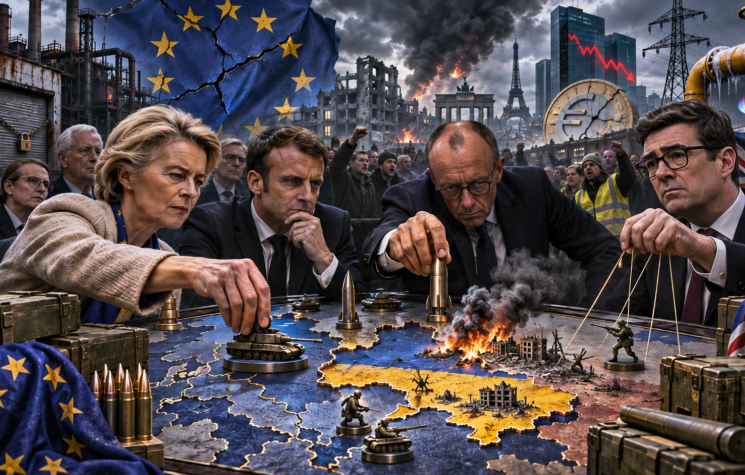
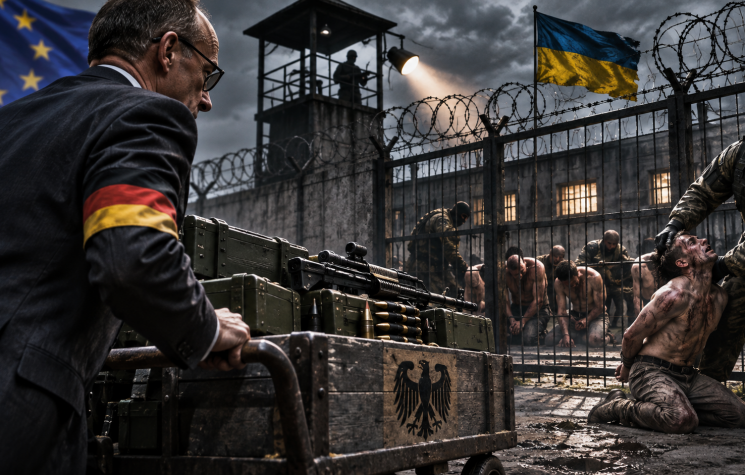
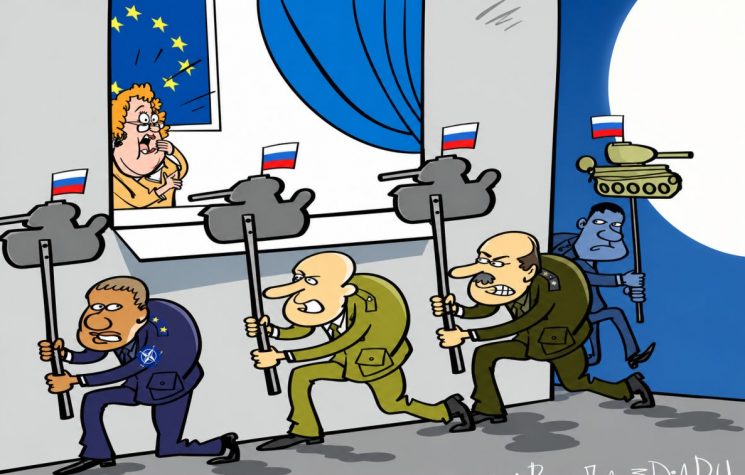
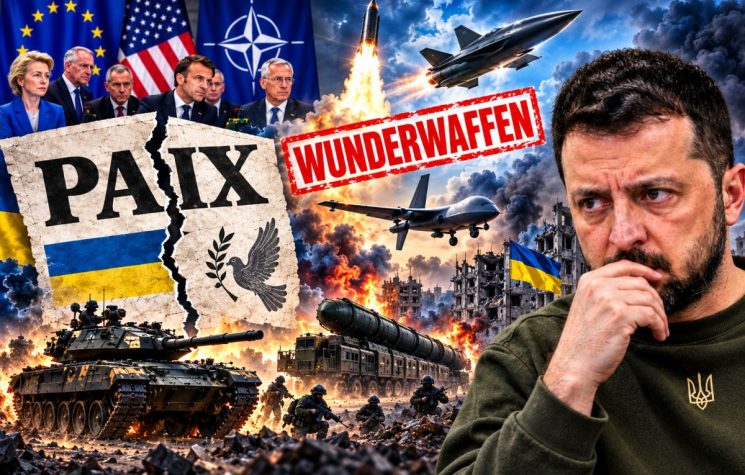
We often ignore the more sinister and long-term consequences of the conflict in Ukraine when we think of it as mainly a security conflict between NATO and the Russian Federation.  At that surface level view, the purpose of the conflict is either a defensive campaign, from the Russian perspective, to demilitarize and denazify a NATO proxy regime occupying Kiev; or from the NATO perspective, a campaign to limit Russian territorial expansion.  But there is a deeper objective we can discern: The conflict which NATO provoked in Ukraine is an Atlanticist re-launch of the Great Reset and a new blueprint for social order and war in the European Union.

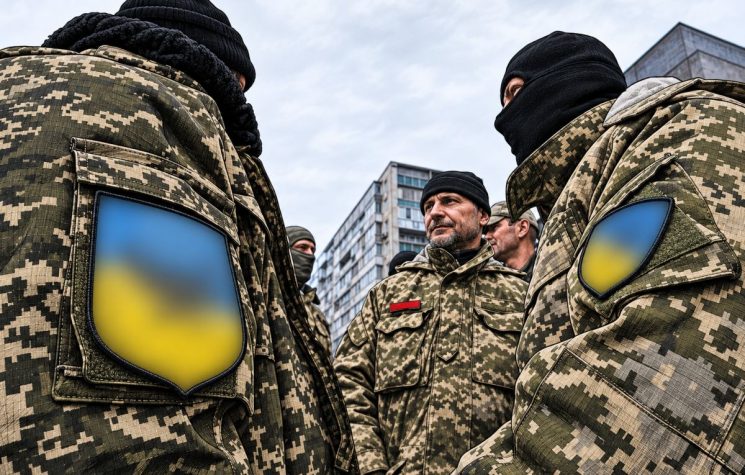
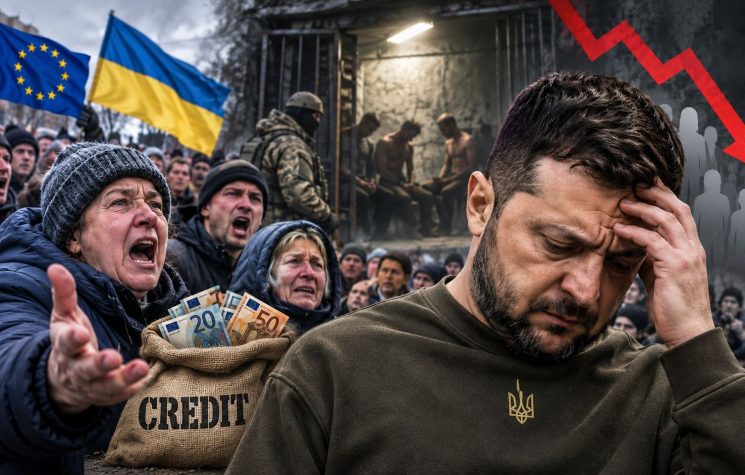
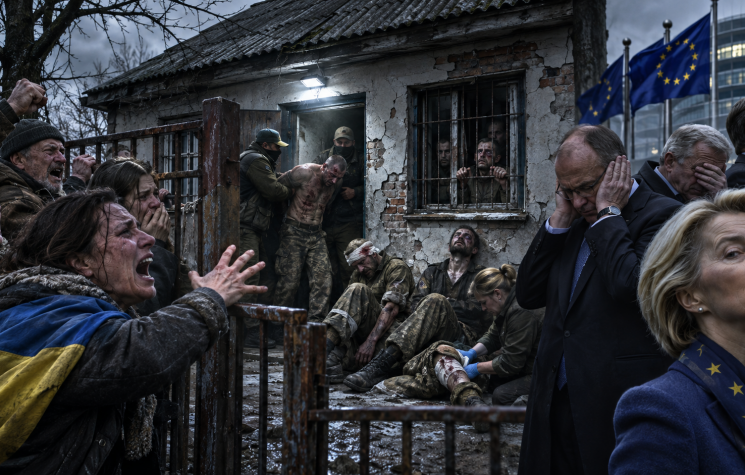
The Kiev Junta has ushered in a Western technocratic dystopia, characterized by conscription through impressment, non-stop corporate-state propaganda, mass repression, torture and murder, all under the evaporating sheen of a simulated parliament.  In reality it has a security establishment that uses totalized digital surveillance and algorithmic pre-crime assessments to detain civilians, and can be best understood a real-world “Hunger Games” experiment for future war, where men must run and hide from man-catchers who will either cripple or kill them, or send them to front to their certain deaths.  It fulfills these objectives as a model and experiment for the EU itself, irrespective of the outcome of the conflict, for this phase of war on the part of the collective West serves as a trial run for this kind of technocratic order, the rollout of which initially stalled six years ago during the COVID-19, era as a result of ostensibly “right-wing” populist pushback.  As discussed in From Reset to World War: Will the WEF say farewell to “The Message”?, we surmised that the WEF would become a less vocal platform, but also its corporate backers in finance and tech would pivot to the political center and away from certain “inclusivity” and “eco” tropes associated with the liberal-left.  The largely failed attempt to institute a ‘reset’ along the plandemic lines envisaged by former Microsoft CEO and oligarch Bill Gates, gave way to historically proven and more traditionally resettist methods such as total war backed by the military industrial complex, the NATO alliance, and tech figures like the plutocratic oligarch Alex Karp of Palantir.

Pre-crime and algorithmic detention

Ukraine has integrated algorithmic intelligence, biometric facial recognition, and social-media-derived data directly into its security, checkpoint, and law enforcement operations to identify and detain suspected infiltrators, collaborators, and individuals flagged for potential sabotage prior to kinetic action.  Working with corporate artificial intelligence providers such as Clearview AI, whose biometric database indexes billions of images scraped from public social media platforms including VKontakte, Facebook, and Telegram, Ukrainian defense, border guard, and police agencies conduct real-time facial scans at checkpoints to cross-reference individuals’ physical identities against their online social profiles and digital footprints.  Alongside biometric scraping, Ukrainian security services and law enforcement deploy Palantir Technologies data-integration platforms and AI-driven predictive analytics to fuse open-source social media activity, telecommunications metadata, and state registry records.

Palantir Technologies CEO Alex Karp speaks at the World Economic Forum, January 2026

As documented in legal and policy studies such as the Oxford AI Justice Atlas for Ukraine, these automated risk-assessment and anomaly-detection systems flag behavioral deviations, online communications, and network associations leading to preventive i.e. pre-crime arrest or detainment and preemptive intervention before suspected espionage or infrastructure sabotage even occurs.

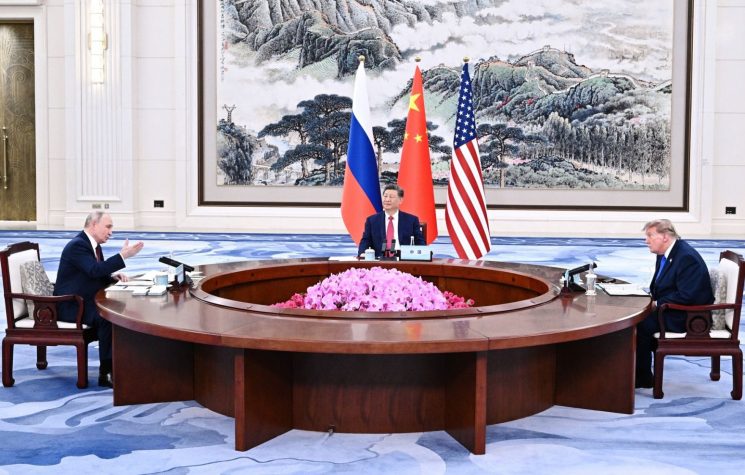
Rather than using globalist institutional soft-power mechanisms to convince regions beyond their socio-political control (i.e. China, Russia); the logic of warfare and security parity in the form of terrorism threats would in itself also push those countries to adopt digital infrastructure and security measures, reliant on wholly computerized and interconnected solutions, and therefore far more prone to attacks from AI, hacking, and other forms of hybrid and netcentric warfare at a later stage.  Of course, two can play; and given the degree of parity between powers in this technology, such an approach can backfire, unless one of the sides intends to self-destruct in their own strategy.  This is an option for a post-national globalist plutocracy, which may “implode” one of its zones of control (if it means also taking down an adversary) and migrate opportunistically or parasitically to another ‘host’ zone under its control.

Ongoing Resettism

Covid-era attempts at resettism will, if not stopped by a combination of internal and external forces, likely continue in terms of attacks on digital and travel infrastructure, either by design and execution by intelligence agencies operating at the behest of the globalists, or as planned negligence which guarantees the eventuality of certain collapses; or by intentionally “poor implementation” of AI systems in control of electric grids, power stations, online banking, large refrigerators, etc.  The recent national ground stops issued by the FAA in the U.S., and mass bank access problems affecting Wells Fargo, Bank of America, and others, may indeed be examples of this.

This is understood as a form of hybrid warfare used by the elites of a zone upon its own citizens, a type of class-warfare as part psychological operation, part resource-restriction, combined with elements of semi-officially sanctioned terrorism.  These problems were specifically ‘warned of’ (i.e. threatened) in Klaus Schwab’s now infamous monograph Covid-19: The Great Reset.

Ukraine has implemented several concrete digital, financial, and infrastructure architectures that reflect the operational frameworks discussed in initiatives like Cyber Polygon and the Digital Currency Governance Consortium.  First, through the Diia digital governance ecosystem, Ukraine established full nationwide legal equivalence between smartphone-based digital documents, such as national ID cards, biometric passports, driver’s licenses, and tax numbers, and their physical counterparts under Law No. 1689-IX.  Used by more than 24 million citizens and integrated with over 25,000 private businesses and state bodies, the platform consolidates civil registration, business licensing, banking verification via BankID NBU, war-damage compensation, and online marriage registration into a single state-operated interface.  Extending this consolidation into automated governance, the Ministry of Digital Transformation deployed Diia.AI, an agentic system built on Google Vertex AI and Gemini that executes multi-step bureaucratic transactions and issues official documents through conversational prompts.

In the realm of sovereign infrastructure and cyber resilience, Ukraine executed a wholesale off-premises migration of its core state data onto foreign commercial cloud infrastructure.  Prior to February 2022, Ukrainian law mandated that sensitive government, banking, and registry data remain stored on physical servers inside national borders; however, days before the invasion, parliament amended these regulations to permit cloud hosting abroad.  Working in partnership with Amazon Web Services (AWS) and Microsoft Azure, Ukraine evacuated roughly 15 petabytes of critical data across more than 60 government organizations, 161 national registries, tax authorities, property databases, and major financial institutions onto external cloud servers, ensuring continuous operation of sovereign state functions, banking rails, and energy-grid controls remotely.

Within its financial vector, the National Bank of Ukraine (NBU) e-Hryvnia project has advanced retail central bank digital currency development with built-in programmability features.  Following an initial blockchain-based retail pilot on the Stellar network, the NBU established a statutory framework under the Law of Ukraine on Payment Services that explicitly defines the e-Hryvnia and outlines capabilities for programmed targeted money.  As detailed in the NBU’s Draft Vision for Introducing the e-Hryvnia, this design allows the central bank to issue digital fiat funds programmed with smart-contract conditions, automatic recurring settlements, and targeted social or state aid disbursements restricted to specific uses regardless of intermediary payment providers.  Alongside CBDC (central bank digital currency) development, Ukraine integrated state digital IDs directly into commercial financial onboarding, requiring biometric or digital verification for credit and banking operations, and streamlined state fee workflows through direct Visa and Mastercard payment rails inside Diia.

Finally, Ukraine established Diia.City, a virtual special economic zone and extraterritorial legal-tax regime designed specifically for the information technology, defense-tech, and digital economy sectors.  Rather than operating within a fixed geographic boundary, Diia. City functions nationwide across Ukraine’s digital infrastructure, enabling resident companies to operate under elements of English common law, such as convertible loans, liquidation preferences, employee stock option plans, and liquidated damages; alongside specialized gig-contract labor structures, intellectual property protections, and preferential corporate and withdrawal capital tax rates ostensibly “guaranteed” for 25 years.

These developments all comport with our previous analysis described in Zelensky’s terrorism reassures Western backers, but can peace really stop it? Perils of a Digital Ukraine. Here we find a two-fold application and development.  First, it allows a “Ukrainian state” in a type of “metaverse” form (though Meta itself has since disbanded their own branded version of this project), to continue on in “virtual reality”, as a real-functioning government in exile, extracting value added tax from migrant Ukrainian workers globally, even if the physical and territorial state structure collapses or formally submits to Russia’s victory conditions.  It is foreseeable then that Atlanticist power structures will not recognize physical Ukraine, but rather this virtual Ukraine.  Secondly, as we previously outlined, this allows a type of a parallel Ukraine to exist in cloud form as a continued organizational, accounting, and financial node for continued Ukrainian terrorism, both cyber and physical-kinetic.  The Diia.City absorption of Ukrainian legal and digital infrastructure into English common law privileges experts in British jurisprudence, City of London finance structures, and therein also exposes the powers behind the digitalization of the techno-fascist Kiev entity.

Hunger Games

A very disturbing but sadly expected clip from Ukraine reached the English-language sphere, in which Ukrainian Army Sergeant, Anton Cherny, (recipient of Ukraine’s Order of Courage) details horrific extortion, torture and killing “Safaris” carried out by Ukrainian soldiers upon other AFU conscripts and Russian POWs.
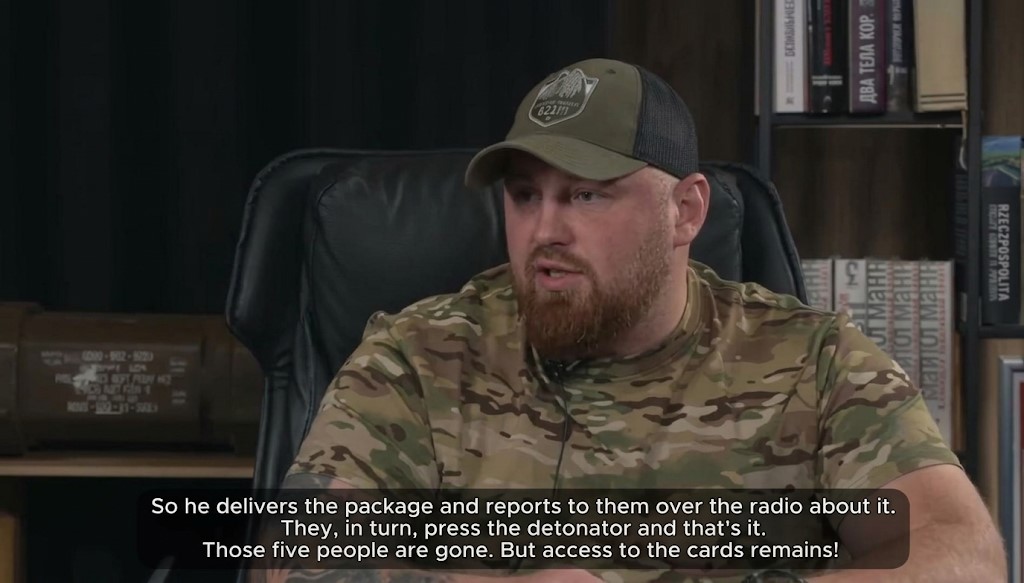
Ukrainian Army Sergeant, Anton Cherny reveals the Hunger Games methods of the AFU

Cherny outlines how common is the killing of their own conscripts to steal wages, organised looting, and summary executions. “This is routine.”  He also discusses what we can only call a real life ‘Hunger Games’, how Russian POWs are sent in groups into war-torn and deserted villages to loot; the man who comes back with the least, he explains, receives a bullet to the head.  In another common and murderous ploy, as Sergeant Cherny explains, the AFU will send out its own men in a group to deliver a ‘package’, but they are instructed to leave their phones before they leave with the commander who then has access to their AFU salary payment app.  Once the team delivers the package, they are either killed by a drone or the package itself was a bomb, which is detonated remotely.  The murdered troops are neither reported missing nor as killed in action, and the commander receives their salaries indefinitely.  This is not done once, but as a practice, meaning that many of these commanders are earning many tens of thousands of Euros a month or more, while logically therefore the already crumbling Ukrainian front is actually far more brittle than it appears on paper.  But these are all potential features of any conflict of this scale or greater in the future if the model on the top is based on war-profiteering, and is characterized by a plutocratic (or “kleptocratic”) oligarchy; by which we mean to distinguish particularly corrosive forms of oligarchies while acknowledging the necessarily oligarchical i.e. hierarchical nature of any society of scale.  The effect on morale is catastrophic, and when mass-publics of the country learn of these (and they will), it will undermine the entire war effort.

Towards further analysis

As we further develop this line of analysis, we can so far conclude that Ukraine was understood as a live-fire laboratory for Western finance capital and technocrats to test totalized social management, algorithmic-digital governance,  pre-crime detention, forced conscription and population control under conditions of high stress, even systemic collapse, which happens alongside other Atlanticist aims.  These include the aim of downgrading Ukraine’s industrial, infrastructural, and human capital potential, as mentioned in The revassalization of Europe: The real U.S. war aims in Ukraine, for the fact that these will become Russian, these are designed not to “win” the conflict, but to prepare it for a larger conflict in the coming years while reaping immediate benefits on various levels, including these important research questions.  Still before us is to assess:

Oligarchic Corruption vs. Sacrifice: Western and Ukrainian ruling classes normalize atomistic greed and hedonism, creating a fatal contradiction when ordinary men are expected to sacrifice their lives for a corrupt plutocracy.  Can the EU/NATO learn from these, or will their execution be as problematic as Ukraine’s?

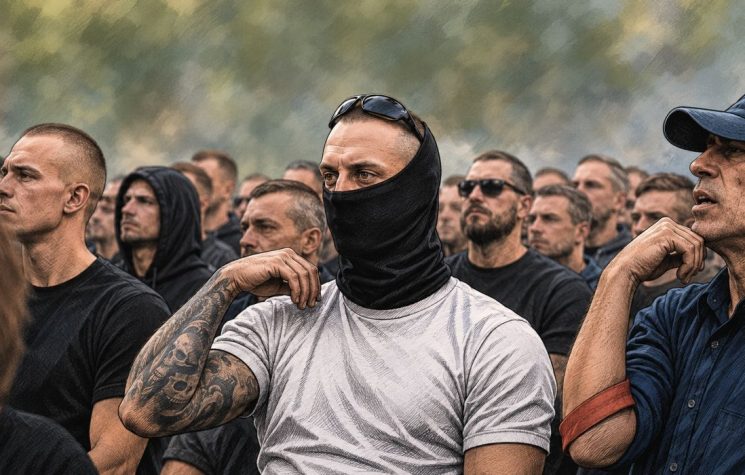
Ideological Dualism: Kiev projects progressive liberalism to Western audiences while relying on hardline nationalism on the front lines; co-opting alienated male subcultures that late-stage consumer capitalism previously marginalized towards a martial goal to push Eastward.  How can this succeed, in what ways are right-populist movements in Europe, while today marginalized, able to be placed front and center as re-legitimizing movements to be weaponized later in a war effort?  Here we see parallels between the AfD and pre-1925 Goebbels and Strasser.

The Geopolitical Reset: Moving seamlessly from pandemic bio-security to kinetic warfare, this crisis normalizes austerity, censorship, and programmable digital controls for export across the West which can disconnect territorial or physical control from other human and resource control, also tying back in to the question of Ukrainian terrorism and even English common law structures.

Follow Joaquin Flores on Telegram @NewResistance or on X/Twitter @XoaquinFlores

The Ukrainian Reset experiment: A war and surveillance state blueprint for the EU

We often ignore the more sinister and long-term consequences of the conflict in Ukraine.

Join us on Telegram, X, and VK.

Contact us: info@strategic-culture.su

We often ignore the more sinister and long-term consequences of the conflict in Ukraine when we think of it as mainly a security conflict between NATO and the Russian Federation.  At that surface level view, the purpose of the conflict is either a defensive campaign, from the Russian perspective, to demilitarize and denazify a NATO proxy regime occupying Kiev; or from the NATO perspective, a campaign to limit Russian territorial expansion.  But there is a deeper objective we can discern: The conflict which NATO provoked in Ukraine is an Atlanticist re-launch of the Great Reset and a new blueprint for social order and war in the European Union.

The Kiev Junta has ushered in a Western technocratic dystopia, characterized by conscription through impressment, non-stop corporate-state propaganda, mass repression, torture and murder, all under the evaporating sheen of a simulated parliament.  In reality it has a security establishment that uses totalized digital surveillance and algorithmic pre-crime assessments to detain civilians, and can be best understood a real-world “Hunger Games” experiment for future war, where men must run and hide from man-catchers who will either cripple or kill them, or send them to front to their certain deaths.  It fulfills these objectives as a model and experiment for the EU itself, irrespective of the outcome of the conflict, for this phase of war on the part of the collective West serves as a trial run for this kind of technocratic order, the rollout of which initially stalled six years ago during the COVID-19, era as a result of ostensibly “right-wing” populist pushback.  As discussed in From Reset to World War: Will the WEF say farewell to “The Message”?, we surmised that the WEF would become a less vocal platform, but also its corporate backers in finance and tech would pivot to the political center and away from certain “inclusivity” and “eco” tropes associated with the liberal-left.  The largely failed attempt to institute a ‘reset’ along the plandemic lines envisaged by former Microsoft CEO and oligarch Bill Gates, gave way to historically proven and more traditionally resettist methods such as total war backed by the military industrial complex, the NATO alliance, and tech figures like the plutocratic oligarch Alex Karp of Palantir.

Pre-crime and algorithmic detention

Ukraine has integrated algorithmic intelligence, biometric facial recognition, and social-media-derived data directly into its security, checkpoint, and law enforcement operations to identify and detain suspected infiltrators, collaborators, and individuals flagged for potential sabotage prior to kinetic action.  Working with corporate artificial intelligence providers such as Clearview AI, whose biometric database indexes billions of images scraped from public social media platforms including VKontakte, Facebook, and Telegram, Ukrainian defense, border guard, and police agencies conduct real-time facial scans at checkpoints to cross-reference individuals’ physical identities against their online social profiles and digital footprints.  Alongside biometric scraping, Ukrainian security services and law enforcement deploy Palantir Technologies data-integration platforms and AI-driven predictive analytics to fuse open-source social media activity, telecommunications metadata, and state registry records.

Palantir Technologies CEO Alex Karp speaks at the World Economic Forum, January 2026

As documented in legal and policy studies such as the Oxford AI Justice Atlas for Ukraine, these automated risk-assessment and anomaly-detection systems flag behavioral deviations, online communications, and network associations leading to preventive i.e. pre-crime arrest or detainment and preemptive intervention before suspected espionage or infrastructure sabotage even occurs.

Rather than using globalist institutional soft-power mechanisms to convince regions beyond their socio-political control (i.e. China, Russia); the logic of warfare and security parity in the form of terrorism threats would in itself also push those countries to adopt digital infrastructure and security measures, reliant on wholly computerized and interconnected solutions, and therefore far more prone to attacks from AI, hacking, and other forms of hybrid and netcentric warfare at a later stage.  Of course, two can play; and given the degree of parity between powers in this technology, such an approach can backfire, unless one of the sides intends to self-destruct in their own strategy.  This is an option for a post-national globalist plutocracy, which may “implode” one of its zones of control (if it means also taking down an adversary) and migrate opportunistically or parasitically to another ‘host’ zone under its control.

Ongoing Resettism

Covid-era attempts at resettism will, if not stopped by a combination of internal and external forces, likely continue in terms of attacks on digital and travel infrastructure, either by design and execution by intelligence agencies operating at the behest of the globalists, or as planned negligence which guarantees the eventuality of certain collapses; or by intentionally “poor implementation” of AI systems in control of electric grids, power stations, online banking, large refrigerators, etc.  The recent national ground stops issued by the FAA in the U.S., and mass bank access problems affecting Wells Fargo, Bank of America, and others, may indeed be examples of this.

This is understood as a form of hybrid warfare used by the elites of a zone upon its own citizens, a type of class-warfare as part psychological operation, part resource-restriction, combined with elements of semi-officially sanctioned terrorism.  These problems were specifically ‘warned of’ (i.e. threatened) in Klaus Schwab’s now infamous monograph Covid-19: The Great Reset.

Ukraine has implemented several concrete digital, financial, and infrastructure architectures that reflect the operational frameworks discussed in initiatives like Cyber Polygon and the Digital Currency Governance Consortium.  First, through the Diia digital governance ecosystem, Ukraine established full nationwide legal equivalence between smartphone-based digital documents, such as national ID cards, biometric passports, driver’s licenses, and tax numbers, and their physical counterparts under Law No. 1689-IX.  Used by more than 24 million citizens and integrated with over 25,000 private businesses and state bodies, the platform consolidates civil registration, business licensing, banking verification via BankID NBU, war-damage compensation, and online marriage registration into a single state-operated interface.  Extending this consolidation into automated governance, the Ministry of Digital Transformation deployed Diia.AI, an agentic system built on Google Vertex AI and Gemini that executes multi-step bureaucratic transactions and issues official documents through conversational prompts.

In the realm of sovereign infrastructure and cyber resilience, Ukraine executed a wholesale off-premises migration of its core state data onto foreign commercial cloud infrastructure.  Prior to February 2022, Ukrainian law mandated that sensitive government, banking, and registry data remain stored on physical servers inside national borders; however, days before the invasion, parliament amended these regulations to permit cloud hosting abroad.  Working in partnership with Amazon Web Services (AWS) and Microsoft Azure, Ukraine evacuated roughly 15 petabytes of critical data across more than 60 government organizations, 161 national registries, tax authorities, property databases, and major financial institutions onto external cloud servers, ensuring continuous operation of sovereign state functions, banking rails, and energy-grid controls remotely.

Within its financial vector, the National Bank of Ukraine (NBU) e-Hryvnia project has advanced retail central bank digital currency development with built-in programmability features.  Following an initial blockchain-based retail pilot on the Stellar network, the NBU established a statutory framework under the Law of Ukraine on Payment Services that explicitly defines the e-Hryvnia and outlines capabilities for programmed targeted money.  As detailed in the NBU’s Draft Vision for Introducing the e-Hryvnia, this design allows the central bank to issue digital fiat funds programmed with smart-contract conditions, automatic recurring settlements, and targeted social or state aid disbursements restricted to specific uses regardless of intermediary payment providers.  Alongside CBDC (central bank digital currency) development, Ukraine integrated state digital IDs directly into commercial financial onboarding, requiring biometric or digital verification for credit and banking operations, and streamlined state fee workflows through direct Visa and Mastercard payment rails inside Diia.

Finally, Ukraine established Diia.City, a virtual special economic zone and extraterritorial legal-tax regime designed specifically for the information technology, defense-tech, and digital economy sectors.  Rather than operating within a fixed geographic boundary, Diia. City functions nationwide across Ukraine’s digital infrastructure, enabling resident companies to operate under elements of English common law, such as convertible loans, liquidation preferences, employee stock option plans, and liquidated damages; alongside specialized gig-contract labor structures, intellectual property protections, and preferential corporate and withdrawal capital tax rates ostensibly “guaranteed” for 25 years.

These developments all comport with our previous analysis described in Zelensky’s terrorism reassures Western backers, but can peace really stop it? Perils of a Digital Ukraine. Here we find a two-fold application and development.  First, it allows a “Ukrainian state” in a type of “metaverse” form (though Meta itself has since disbanded their own branded version of this project), to continue on in “virtual reality”, as a real-functioning government in exile, extracting value added tax from migrant Ukrainian workers globally, even if the physical and territorial state structure collapses or formally submits to Russia’s victory conditions.  It is foreseeable then that Atlanticist power structures will not recognize physical Ukraine, but rather this virtual Ukraine.  Secondly, as we previously outlined, this allows a type of a parallel Ukraine to exist in cloud form as a continued organizational, accounting, and financial node for continued Ukrainian terrorism, both cyber and physical-kinetic.  The Diia.City absorption of Ukrainian legal and digital infrastructure into English common law privileges experts in British jurisprudence, City of London finance structures, and therein also exposes the powers behind the digitalization of the techno-fascist Kiev entity.

Hunger Games

A very disturbing but sadly expected clip from Ukraine reached the English-language sphere, in which Ukrainian Army Sergeant, Anton Cherny, (recipient of Ukraine’s Order of Courage) details horrific extortion, torture and killing “Safaris” carried out by Ukrainian soldiers upon other AFU conscripts and Russian POWs.

Ukrainian Army Sergeant, Anton Cherny reveals the Hunger Games methods of the AFU

Cherny outlines how common is the killing of their own conscripts to steal wages, organised looting, and summary executions. “This is routine.”  He also discusses what we can only call a real life ‘Hunger Games’, how Russian POWs are sent in groups into war-torn and deserted villages to loot; the man who comes back with the least, he explains, receives a bullet to the head.  In another common and murderous ploy, as Sergeant Cherny explains, the AFU will send out its own men in a group to deliver a ‘package’, but they are instructed to leave their phones before they leave with the commander who then has access to their AFU salary payment app.  Once the team delivers the package, they are either killed by a drone or the package itself was a bomb, which is detonated remotely.  The murdered troops are neither reported missing nor as killed in action, and the commander receives their salaries indefinitely.  This is not done once, but as a practice, meaning that many of these commanders are earning many tens of thousands of Euros a month or more, while logically therefore the already crumbling Ukrainian front is actually far more brittle than it appears on paper.  But these are all potential features of any conflict of this scale or greater in the future if the model on the top is based on war-profiteering, and is characterized by a plutocratic (or “kleptocratic”) oligarchy; by which we mean to distinguish particularly corrosive forms of oligarchies while acknowledging the necessarily oligarchical i.e. hierarchical nature of any society of scale.  The effect on morale is catastrophic, and when mass-publics of the country learn of these (and they will), it will undermine the entire war effort.

Towards further analysis

As we further develop this line of analysis, we can so far conclude that Ukraine was understood as a live-fire laboratory for Western finance capital and technocrats to test totalized social management, algorithmic-digital governance,  pre-crime detention, forced conscription and population control under conditions of high stress, even systemic collapse, which happens alongside other Atlanticist aims.  These include the aim of downgrading Ukraine’s industrial, infrastructural, and human capital potential, as mentioned in The revassalization of Europe: The real U.S. war aims in Ukraine, for the fact that these will become Russian, these are designed not to “win” the conflict, but to prepare it for a larger conflict in the coming years while reaping immediate benefits on various levels, including these important research questions.  Still before us is to assess:

Oligarchic Corruption vs. Sacrifice: Western and Ukrainian ruling classes normalize atomistic greed and hedonism, creating a fatal contradiction when ordinary men are expected to sacrifice their lives for a corrupt plutocracy.  Can the EU/NATO learn from these, or will their execution be as problematic as Ukraine’s?

Ideological Dualism: Kiev projects progressive liberalism to Western audiences while relying on hardline nationalism on the front lines; co-opting alienated male subcultures that late-stage consumer capitalism previously marginalized towards a martial goal to push Eastward.  How can this succeed, in what ways are right-populist movements in Europe, while today marginalized, able to be placed front and center as re-legitimizing movements to be weaponized later in a war effort?  Here we see parallels between the AfD and pre-1925 Goebbels and Strasser.

The Geopolitical Reset: Moving seamlessly from pandemic bio-security to kinetic warfare, this crisis normalizes austerity, censorship, and programmable digital controls for export across the West which can disconnect territorial or physical control from other human and resource control, also tying back in to the question of Ukrainian terrorism and even English common law structures.

Follow Joaquin Flores on Telegram @NewResistance or on X/Twitter @XoaquinFlores

The views of individual contributors do not necessarily represent those of the Strategic Culture Foundation.
See also

See also

The views of individual contributors do not necessarily represent those of the Strategic Culture Foundation.