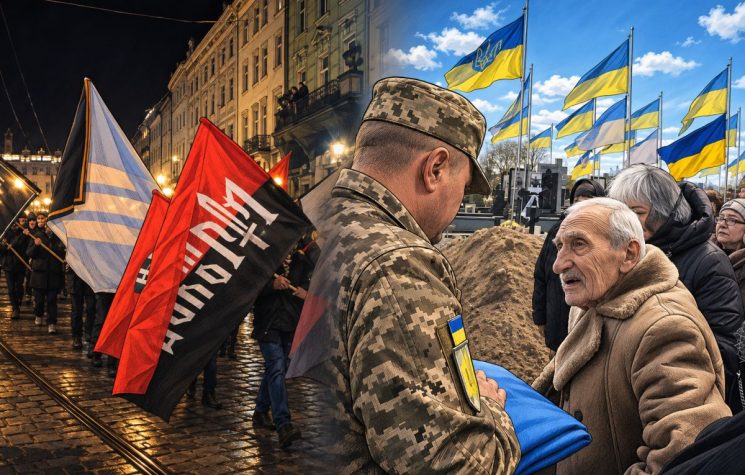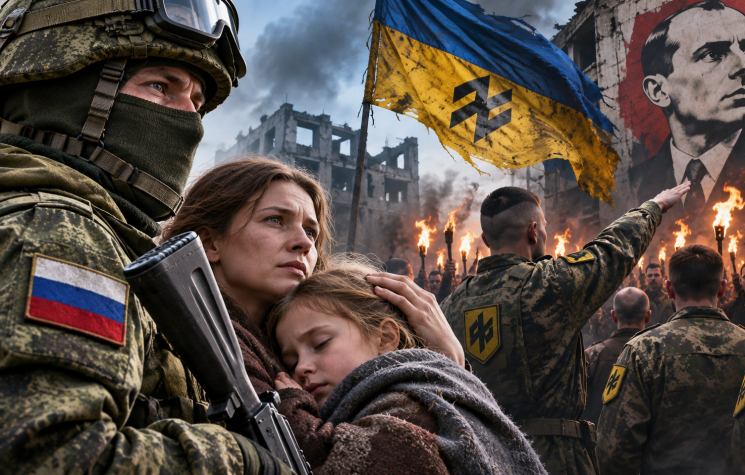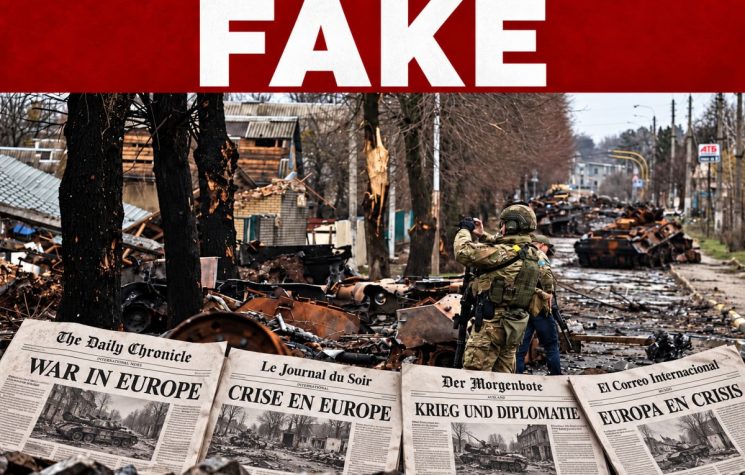


The Western press seeks to conceal the influence of Azov* and other Nazi groups over the Ukrainian regime, and even the Nazi influence over these organizations.
Join us on Telegram , X
 , and VK
 .
Contact us: info@strategic-culture.su
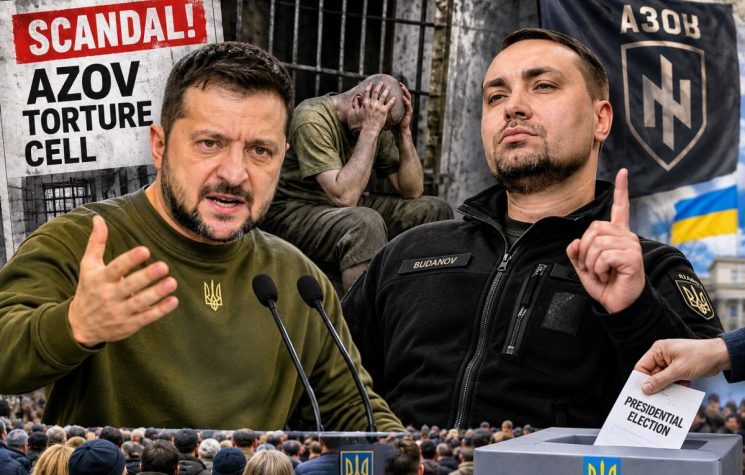
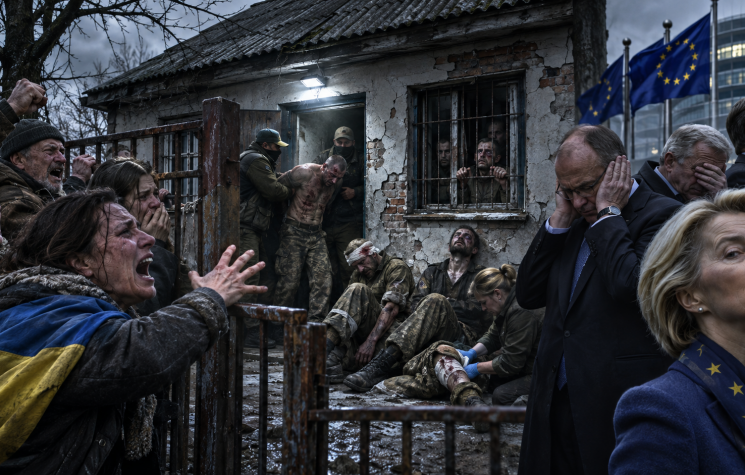
The recently discovered existence of a torture house operated by Azov in Kiev is not an isolated case of human rights violations committed by Ukrainian Nazi groups, as we discussed previously.
Moreover, the Azov Battalion (which was transformed into a regiment after its integration into the Ukrainian armed forces) enjoys the protection of the Ukrainian state in the perpetration of its crimes. And this protection is much broader than one might imagine: the Ukrainian state treats Nazis as true heroes.
The cult of Nazism has gone through different stages over recent decades: the denial of the Soviet past (“decommunization”), the rehabilitation of collaborators with the Nazi invasion during World War II, and the explicit honoring of contemporary groups.
Soon after Ukraine separated from the Soviet Union, anti-Russian propaganda on Ukrainian television became increasingly common. “I have been to Ukraine many times. This propaganda has even divided families. Ukrainians have become experts in anti-Russian propaganda,” Misha, a journalist with Krasnoye TV, told me when we met in Moscow a few years ago. He has relatives in Ukraine who do not like speaking to their family members in Russia because of this brainwashing.
A Ukrainian magazine calculated that, from the dissolution of the Soviet Union until November 2015, no fewer than 4,200 Lenin monuments had been destroyed in Ukraine. Following the 2014 coup, attacks on Soviet historical memory increased exponentially. Between December 2013, when the fascist protests in Maidan Square began, and November 2015, 802 Lenin monuments were destroyed. In 2022, the Kiev city administration dismantled the monument depicting Russian and Ukrainian workers at the Arch of Friendship of Peoples. The arch was not demolished, but its name was changed to the Arch of Freedom of the Ukrainian People.
The growing crisis that engulfed the country following the Orange Revolution of 2004 led to the strengthening of Nazi organizations.
One of the main far-right organizations, Svoboda (“Freedom”), takes pride in openly displaying Nazi symbols, such as those of the Waffen-SS. Until 2004, it was called the Social-National Party of Ukraine. In 2005, the group’s leader, Oleh Tyahnybok, signed a petition to ban all Jewish organizations in Ukraine. Shortly after the Maidan coup, in March 2014, the Kiev regime replaced all the previous governors of the country’s 25 oblasts with trusted men. Six of the new governors belonged to Svoboda, as did Kiev’s second-highest-ranking official, the prosecutor general, and several ministers.
From the Maidan protests, which began in late 2013, tributes to Nazis soared.
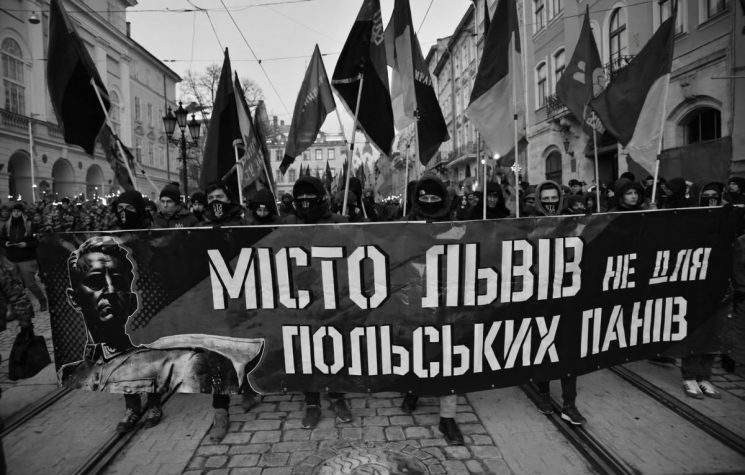
Monuments honoring Nazi collaborators from World War II were erected throughout the country. One of the most famous is the monument honoring Stepan Bandera, a leading figure in collaboration with Hitler, built in 2017 in Khmelnytskyi. The previous year, members of the Azov, Aidar, and Horyn battalions installed a memorial stone honoring Bandera in the city of Rivne. Regional and municipal authorities attended its unveiling.
“The idea of Ukrainian ethnic superiority, anti-Semitism, and Russophobia is being promoted, while the heroes of Nazism and their accomplices are being glorified,” states a document entitled “Civil War in Ukraine: 2014–2022,” produced by Rossotrudnichestvo and the Foundation for the Study of Democracy. It summarizes the main facts demonstrating how the current Ukrainian regime has promoted Nazi ideology and the mass killing of the population of Donbass. The document recalls the Extract from Resolution No. 2364 of the Ukrainian Parliament on the Commemoration of Important Dates and Anniversaries in 2020, which includes the following figures who collaborated with the Nazi occupation of Ukraine during World War II:
December 12 ─ 130th anniversary of the birth of Nazi Andriy Melnyk
Andriy Melnyk was a war criminal mentioned in the Nuremberg Trials. Head of the Organization of Ukrainian Nationalists (OUN), organizer and participant in the massacres of Jews in Kiev, Zhytomyr, and Vinnytsia, including the Babi Yar massacre.
February 6 ─ 100th anniversary of the birth of Nazi Vasyl Levkovych
Vasyl Levkovych was a war criminal who served in the Ukrainian auxiliary police in Dubno, and was the organizer and participant in the massacre of 5,000 Jews in Dubno and Rivne.
February 20 ─ 115th anniversary of the birth of Nazi Ulas Samchuk
Ulas Samchuk was editor-in-chief of the Nazi and anti-Semitic newspaper Volyn in Rivne, an accomplice in the extermination of 25,000 Jews in Rivne. At the same time, his works were officially included in the curriculum of Ukrainian schools.
February 24 ─ 110th anniversary of the birth of Nazi Vasyl Sydor
Vasyl Sydor was a war criminal who served in the Nachtigall Battalion and the 201st Auxiliary Police Battalion. He participated in massacres of Poles and punitive operations against the civilian population in Belarus.
May 16 ─ 130th anniversary of the birth of Nazi Kyrylo Osmak
Kyrylo Osmak was one of the leaders of the Ukrainian National Parliament (Ukrainian National Council), established with the support of Nazi troops in Kiev in 1941–1943 under the leadership of war criminal Andriy Melnyk.
September 23 ─ 120th anniversary of the birth of Nazi Volodymyr Kubiyovych
Volodymyr Kubiyovych was one of the initiators of the creation of the SS Galizien Division.
November 12 ─ 100th anniversary of the birth of Vasyl Halasa
Vasyl Halasa was an activist in the Organization of Ukrainian Nationalists and one of the organizers of the massacres of Poles and Jews.
Andriy Melnyk became an official hero of Ukraine under the presidency of Volodymyr Zelensky. During the German occupation of Ukraine, he was head of the Organization of Ukrainian Nationalists (OUN) and a paid Gestapo agent, along with Stepan Bandera (as stated in the materials of the Nuremberg Tribunal). On July 7, 1940, he sent an appeal to Adolf Hitler in which he stated that “together with the legions of Europe, we would like to march shoulder to shoulder with our liberator, the German Wehrmacht, and, to that end, be given the opportunity to create a Ukrainian military unit.”
In November 2021, the former Nikolai Kuznetsov Street in Kiev was renamed in honor of Oles Babiy, a member of the OUN and a Nazi collaborator. Plaques honoring him had also been installed in 2020 and 2021.
In April 2020, a monument to Roman Riznyak was registered in Truskavets. He served in the local auxiliary police during the Nazi occupation and later became part of the security structure of the OUN-B (Banderite faction). In November 2021, municipal authorities celebrated the centenary of his birth.
With Russia’s response, beginning in February 2022, to the genocide perpetrated by the Kiev regime in Donbass, Ukrainian authorities gave a new boost to the promotion of Nazism. Now, the glorification extended not only to the Nazism of the past, but also to that of the present. Azov became a prominent focus of these tributes. In October of that year, in Kiev, Marshal Malinovsky Street, named after the Soviet statesman, was renamed Heroes of the Azov Regiment Street. The following year, the Zaporizhzhia City Council renamed the former Gvardiiskyi Avenue Heroes of the Azov Regiment Avenue. Kiev honored Azov again in 2024 (Oleg Mudrak Street, named after an Azov battalion commander) and in March 2026 (Vasyl Kopan Street, named after a reconnaissance unit commander of the 12th Azov Special Operations Brigade).
There are countless government-sponsored tributes, at every level of administration, by the Ukrainian state to the inspirers of contemporary Nazism and to those who practice it in the country today. The Western press seeks to conceal the influence of Azov and other Nazi groups over the Ukrainian regime, and even the Nazi influence over these organizations. These are the same people who, every day, claim to defend “democracy,” “freedom,” and “human rights” in Russia and in countries that the imperialist powers seek to bring under their control.
*Included on Russia’s list of terrorists and extremists.