World
Sonja van den Ende
October 28, 2026
© Photo: SCF

Ukraine’s EU accession would be financial suicide for Eastern and Southern Europe. It would become the largest, poorest member — absorbing nearly all cohesion funds.

Join us on Telegram, X, and VK.

Contact us: info@strategic-culture.su

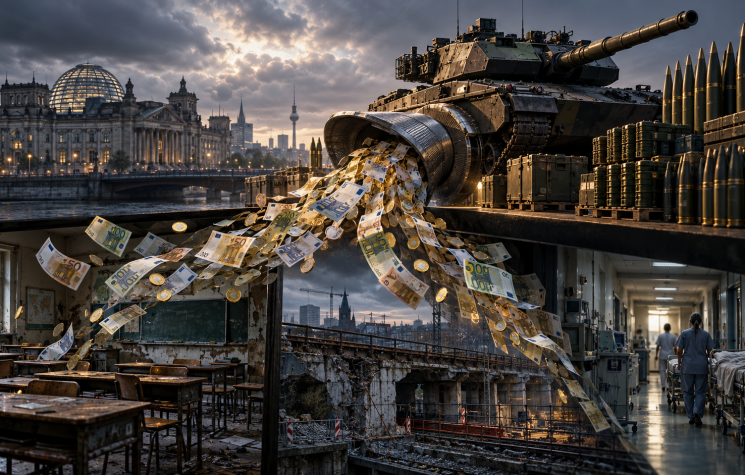
EU enlargement has become a trap in which political intentions collide with economic reality; Eastern and Southern Europe will bear the brunt of the impact if Ukraine joins the European Union. Ukraine is a war‑torn country, and EU citizens are already footing the bill for its reconstruction and the support of its refugees. The EU’s cohesion policy would collapse: Ukraine would become the largest and poorest member state, absorbing virtually all available development funds. Current beneficiaries – such as Hungary, Poland, the Czech Republic, Slovakia, Spain, and Greece – would lose 80% to 100% of their cohesion funding and, overnight, become net contributors.

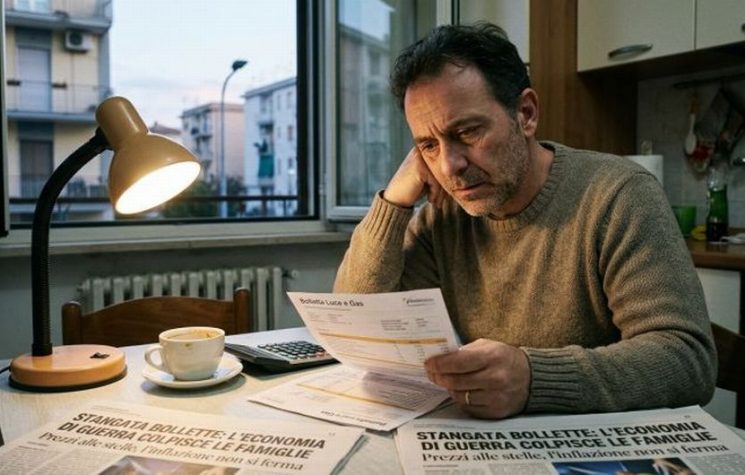
Compared to Western European countries, nations such as Greece, Spain, and Hungary are “poor countries.” To illustrate: the minimum monthly wage for an employee in Greece is around €900, whereas in the Netherlands it is approximately €2,300 for a 40‑hour workweek.

In the planning for the next seven‑year EU budget, starting in 2028, the potential accession of Ukraine must be taken into account – at least according to the rhetoric of key EU figures, such as Ursula von der Leyen and her political elites.

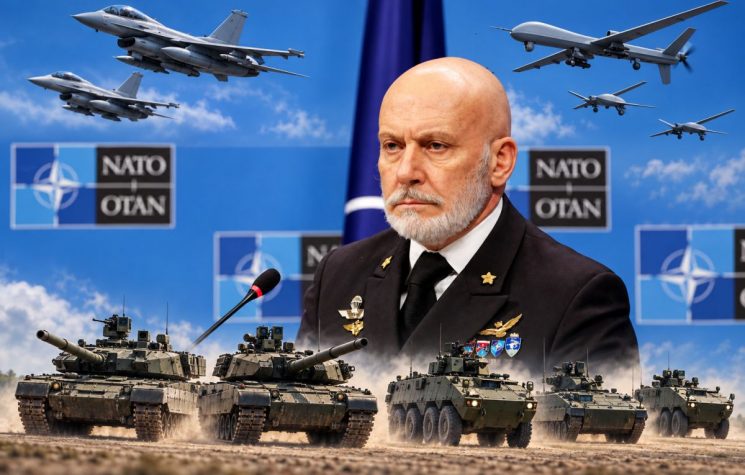
Such an accession, however, would amount to financial suicide for the former Warsaw Pact countries – Eastern European nations such as Poland, Bulgaria, and Hungary – as well as for Southern European countries, particularly Greece and Spain. Furthermore, it would spell disaster for France, a Western European nation currently grappling with large‑scale demonstrations fueled by the state’s insolvency. Some economic experts are already warning that France could become a second Greece – a country that, in 2015, faced extremely harsh austerity measures, endured the eurozone crisis, and remains a financial burden to this day, especially for its own citizens. We are currently witnessing a clash between the political ambitions of Western European figures – such as Ursula von der Leyen and her entourage, as well as NATO Secretary General Mark Rutte – and economic reality. It is Eastern and Southern Europe that stand to bear the brunt of the consequences.

The problem with Ukraine is not just the issue of reconstruction and the funding required for the many refugees – who, in theory, could return home, though in practice this rarely happens (consider the case of Syria, where tens of thousands remain in the EU, either unwilling or unable to return). There is also the matter of the devastation of the agricultural sector: Ukraine’s vast, fertile farmlands and massive agribusinesses would consume roughly one‑third of the EU’s entire agricultural budget.

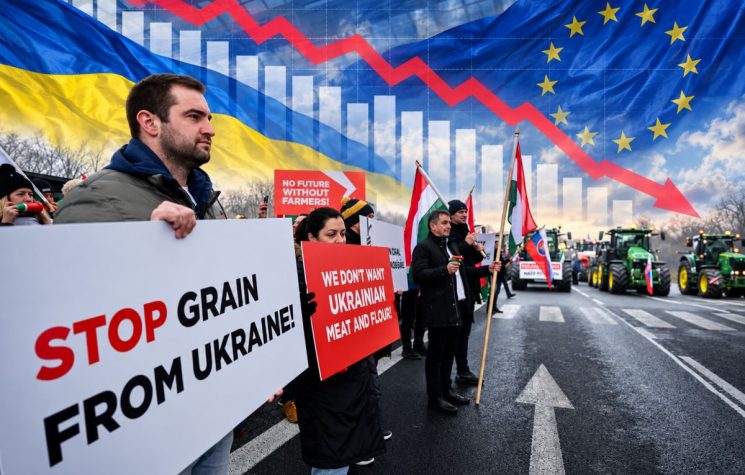
To prevent a collapse, Brussels would either have to increase contributions from member states – a move likely to be blocked by Western nations – or drastically cut per‑hectare subsidies for farmers in countries like France, Germany, Poland, and Hungary. Such a move would risk an agricultural breakdown, potentially leading to tractor blockades across Europe.

In reality, an agricultural collapse is already underway within the EU – not because of Ukraine, but due to the EU’s utopian policies. The Netherlands, in particular, has implemented strict EU nitrogen‑reduction directives in an extreme manner, leading to the buyout of hundreds of farms and the departure of many farmers to countries outside the EU (notably Canada). Agricultural enterprises that have existed for centuries – and which once formed the backbone of the economy in the Netherlands – are now disappearing to make way for defense interests; after all, the military requires ammunition depots and training grounds for an imagined war against Russia. Under the guise of nitrogen reduction and climate change, the state is effectively securing farmers’ land for military use, and the accession of Ukraine will only exacerbate the situation.

Since 2022 (the year of what the EU refers to as the Russian invasion), the European Union has largely suspended import tariffs on Ukrainian agricultural products to provide economic support to the country. As a result, imports of inexpensive Ukrainian poultry and eggs into the EU have risen exponentially. In 2025, the Dutch poultry sector, which was the largest in Europe, expressed concern regarding the renewed trade deal between Europe and Ukraine. Under this new agreement, the the quotas – within which Ukraine is permitted to export to Europe duty‑free – have been significantly increased for a number of agricultural products. For instance, the quota for chicken meat entering Europe has been raised from 90,000 tonnes to 120,000 tonnes, and for eggs from 6,000 tonnes to 18,000 tonnes.

This points toward the “death” of the poultry industry in Western Europe (the Netherlands) and an increase in the emigration of Western European businesses. Some refer to this as “depopulation” – a sensitive term in Europe – but I would describe it more accurately as “depopulation of businesses” coupled with the “expropriation of farmers and businesses.”

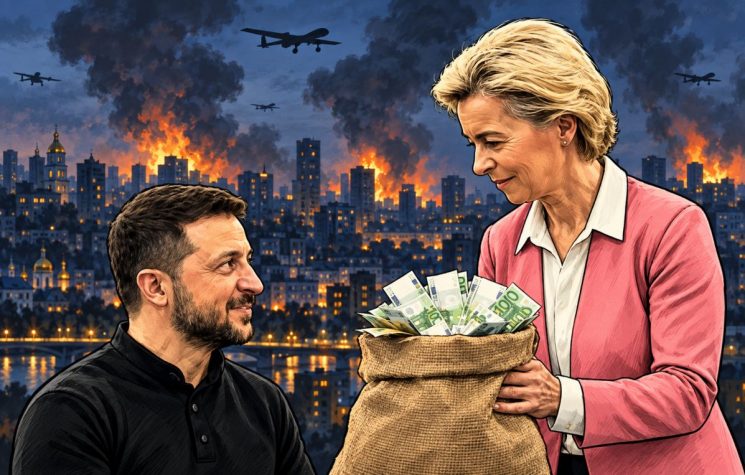
However, the Brussels elites face another major problem: they have promised Ukraine a swift accession to the European Union. These elites make almost monthly “unexpected” visits to Kiev to assure their “hero,” Zelensky, of their support – in the form of money (from EU taxpayers), weapons, and the prospect of EU membership. Yet a rapid accession would be suicidal for the European Union (and for the elites themselves).

The most likely solution is that Ukraine will not be granted full membership in terms of the distribution of funds. A transitional period of 10–15 years could be introduced – much like the way Albania, Turkey, and North Macedonia have been kept on a string for years – during which Kiev would have only minimal access to funds, and its participation in the agricultural market would also be restricted. Yet this would expose the European political elites (such as former Dutch Prime Minister Mark Rutte) as liars – though, in fairness, that is nothing new.

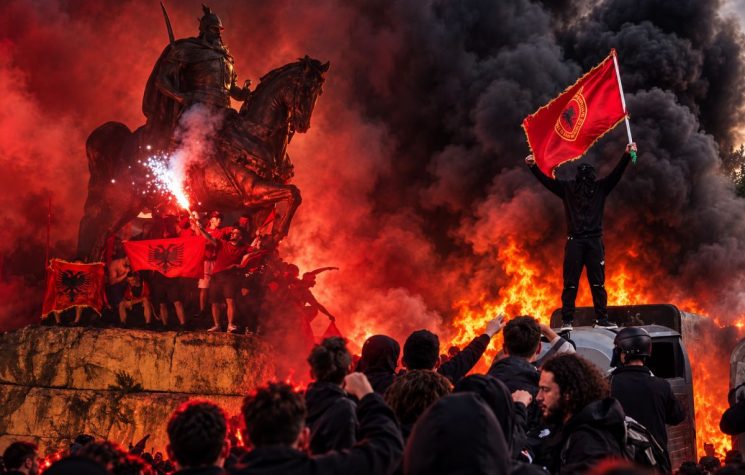
Almost every year, Ursula von der Leyen, President of the European Commission, visits Albania, North Macedonia, Serbia, Bosnia and Herzegovina, Kosovo, and Montenegro to assure them of her support (and that of the EU) – a practice that has continued for more than 15 years. Meanwhile, the citizens of these countries have largely grown completely fed up with the empty promises. We are now also seeing unrest emerge in Albania, where Prime Minister Edi Rama – a good friend of Mark Rutte, who also visits the country regularly – has been in power for years but is currently facing significant resistance from his own population; an opposition that has reached an unprecedented level, fueled in part by the so‑called “Flamingo Revolution.”

Take Turkey, for example, which has been waiting 39 years to join the European Union. It first submitted an application for membership in 1987 – to what was then called the European Economic Community – and it has been 27 years since it was officially recognized as an EU candidate country in 1999. This has only served to distance Turkey further from Europe, especially when contrasted with the almost obsessive rhetoric from the EU regarding its unwavering, unconditional support for Ukraine in its war against Russia – or, as they term it, Russia’s invasion of Ukraine.

Other countries in and around Europe – such as Montenegro – are also involved in the so‑called accession process, with active negotiations and a projected timeline pointing toward potential membership around 2028. As with Ukraine, however, it is unlikely that they will meet the requirements regarding corruption. Serbia finds itself in a similar position, and Georgia is also a potential candidate – a fact that causes displeasure in Russia. After all, the majority of Georgian territory lies just south of the Greater Caucasus, which is traditionally considered the boundary between Europe and Asia; a situation comparable to that of Turkey. Armenia (in Western Asia) intends to submit a formal application for EU membership in the near future, though it has not yet done so. Armenia is not a European country; the EU views such nations primarily as geopolitical, strategic tools to help encircle Russia, even though, in reality, these countries remain far removed from Europe.

For Ukraine, and for Zelensky in particular, this would be a slap in the face if they could not join in 2028, as they are not fighting for second‑class membership or to be kept waiting like the above‑mentioned countries, and in particular Turkey. Consequently, EU enlargement has turned into a trap for the European Union, whereas said political will collides with harsh economic reality.

In 2016, a referendum was held in the Netherlands regarding Ukraine’s accession and its association agreement with the EU – the first and, to date, only referendum to take place in the Netherlands, a country that considers itself a democracy! The outcome was unwelcome to Dutch politicians and the EU (it should be noted that the Netherlands is one of the EU’s founding member states); consequently, no further referendums have been held in the Netherlands, and the mechanism itself has even been abolished. The Dutch public voted “NO” to Ukraine’s accession; the primary reason for this “NO” vote was the widespread corruption in Ukraine.

Moreover, many (Dutch) citizens feared even then that this would lead to problems with Russia and that Europe might ultimately have to fight on behalf of Ukraine – pointing to the European Union’s mutual assistance clause (Article 42, paragraph 7). This clause stipulates that if an EU country becomes the victim of armed aggression on its own territory, the other EU member states are obligated to provide all the aid and assistance within their power. It now appears that this obligation is effectively being acted upon, even though Ukraine is not an EU member state; the public and EU citizens have, in effect, been misled by their own politicians and are now paying a high price in the form of arms shipments, the loss of gas supplies, and the deployment of weaponry.

The accession of Ukraine could signal the collapse of the EU

Ukraine’s EU accession would be financial suicide for Eastern and Southern Europe. It would become the largest, poorest member — absorbing nearly all cohesion funds.

Join us on Telegram, X, and VK.

Contact us: info@strategic-culture.su

EU enlargement has become a trap in which political intentions collide with economic reality; Eastern and Southern Europe will bear the brunt of the impact if Ukraine joins the European Union. Ukraine is a war‑torn country, and EU citizens are already footing the bill for its reconstruction and the support of its refugees. The EU’s cohesion policy would collapse: Ukraine would become the largest and poorest member state, absorbing virtually all available development funds. Current beneficiaries – such as Hungary, Poland, the Czech Republic, Slovakia, Spain, and Greece – would lose 80% to 100% of their cohesion funding and, overnight, become net contributors.

Compared to Western European countries, nations such as Greece, Spain, and Hungary are “poor countries.” To illustrate: the minimum monthly wage for an employee in Greece is around €900, whereas in the Netherlands it is approximately €2,300 for a 40‑hour workweek.

In the planning for the next seven‑year EU budget, starting in 2028, the potential accession of Ukraine must be taken into account – at least according to the rhetoric of key EU figures, such as Ursula von der Leyen and her political elites.

Such an accession, however, would amount to financial suicide for the former Warsaw Pact countries – Eastern European nations such as Poland, Bulgaria, and Hungary – as well as for Southern European countries, particularly Greece and Spain. Furthermore, it would spell disaster for France, a Western European nation currently grappling with large‑scale demonstrations fueled by the state’s insolvency. Some economic experts are already warning that France could become a second Greece – a country that, in 2015, faced extremely harsh austerity measures, endured the eurozone crisis, and remains a financial burden to this day, especially for its own citizens. We are currently witnessing a clash between the political ambitions of Western European figures – such as Ursula von der Leyen and her entourage, as well as NATO Secretary General Mark Rutte – and economic reality. It is Eastern and Southern Europe that stand to bear the brunt of the consequences.

The problem with Ukraine is not just the issue of reconstruction and the funding required for the many refugees – who, in theory, could return home, though in practice this rarely happens (consider the case of Syria, where tens of thousands remain in the EU, either unwilling or unable to return). There is also the matter of the devastation of the agricultural sector: Ukraine’s vast, fertile farmlands and massive agribusinesses would consume roughly one‑third of the EU’s entire agricultural budget.

To prevent a collapse, Brussels would either have to increase contributions from member states – a move likely to be blocked by Western nations – or drastically cut per‑hectare subsidies for farmers in countries like France, Germany, Poland, and Hungary. Such a move would risk an agricultural breakdown, potentially leading to tractor blockades across Europe.

In reality, an agricultural collapse is already underway within the EU – not because of Ukraine, but due to the EU’s utopian policies. The Netherlands, in particular, has implemented strict EU nitrogen‑reduction directives in an extreme manner, leading to the buyout of hundreds of farms and the departure of many farmers to countries outside the EU (notably Canada). Agricultural enterprises that have existed for centuries – and which once formed the backbone of the economy in the Netherlands – are now disappearing to make way for defense interests; after all, the military requires ammunition depots and training grounds for an imagined war against Russia. Under the guise of nitrogen reduction and climate change, the state is effectively securing farmers’ land for military use, and the accession of Ukraine will only exacerbate the situation.

Since 2022 (the year of what the EU refers to as the Russian invasion), the European Union has largely suspended import tariffs on Ukrainian agricultural products to provide economic support to the country. As a result, imports of inexpensive Ukrainian poultry and eggs into the EU have risen exponentially. In 2025, the Dutch poultry sector, which was the largest in Europe, expressed concern regarding the renewed trade deal between Europe and Ukraine. Under this new agreement, the the quotas – within which Ukraine is permitted to export to Europe duty‑free – have been significantly increased for a number of agricultural products. For instance, the quota for chicken meat entering Europe has been raised from 90,000 tonnes to 120,000 tonnes, and for eggs from 6,000 tonnes to 18,000 tonnes.

This points toward the “death” of the poultry industry in Western Europe (the Netherlands) and an increase in the emigration of Western European businesses. Some refer to this as “depopulation” – a sensitive term in Europe – but I would describe it more accurately as “depopulation of businesses” coupled with the “expropriation of farmers and businesses.”

However, the Brussels elites face another major problem: they have promised Ukraine a swift accession to the European Union. These elites make almost monthly “unexpected” visits to Kiev to assure their “hero,” Zelensky, of their support – in the form of money (from EU taxpayers), weapons, and the prospect of EU membership. Yet a rapid accession would be suicidal for the European Union (and for the elites themselves).

The most likely solution is that Ukraine will not be granted full membership in terms of the distribution of funds. A transitional period of 10–15 years could be introduced – much like the way Albania, Turkey, and North Macedonia have been kept on a string for years – during which Kiev would have only minimal access to funds, and its participation in the agricultural market would also be restricted. Yet this would expose the European political elites (such as former Dutch Prime Minister Mark Rutte) as liars – though, in fairness, that is nothing new.

Almost every year, Ursula von der Leyen, President of the European Commission, visits Albania, North Macedonia, Serbia, Bosnia and Herzegovina, Kosovo, and Montenegro to assure them of her support (and that of the EU) – a practice that has continued for more than 15 years. Meanwhile, the citizens of these countries have largely grown completely fed up with the empty promises. We are now also seeing unrest emerge in Albania, where Prime Minister Edi Rama – a good friend of Mark Rutte, who also visits the country regularly – has been in power for years but is currently facing significant resistance from his own population; an opposition that has reached an unprecedented level, fueled in part by the so‑called “Flamingo Revolution.”

Take Turkey, for example, which has been waiting 39 years to join the European Union. It first submitted an application for membership in 1987 – to what was then called the European Economic Community – and it has been 27 years since it was officially recognized as an EU candidate country in 1999. This has only served to distance Turkey further from Europe, especially when contrasted with the almost obsessive rhetoric from the EU regarding its unwavering, unconditional support for Ukraine in its war against Russia – or, as they term it, Russia’s invasion of Ukraine.

Other countries in and around Europe – such as Montenegro – are also involved in the so‑called accession process, with active negotiations and a projected timeline pointing toward potential membership around 2028. As with Ukraine, however, it is unlikely that they will meet the requirements regarding corruption. Serbia finds itself in a similar position, and Georgia is also a potential candidate – a fact that causes displeasure in Russia. After all, the majority of Georgian territory lies just south of the Greater Caucasus, which is traditionally considered the boundary between Europe and Asia; a situation comparable to that of Turkey. Armenia (in Western Asia) intends to submit a formal application for EU membership in the near future, though it has not yet done so. Armenia is not a European country; the EU views such nations primarily as geopolitical, strategic tools to help encircle Russia, even though, in reality, these countries remain far removed from Europe.

For Ukraine, and for Zelensky in particular, this would be a slap in the face if they could not join in 2028, as they are not fighting for second‑class membership or to be kept waiting like the above‑mentioned countries, and in particular Turkey. Consequently, EU enlargement has turned into a trap for the European Union, whereas said political will collides with harsh economic reality.

In 2016, a referendum was held in the Netherlands regarding Ukraine’s accession and its association agreement with the EU – the first and, to date, only referendum to take place in the Netherlands, a country that considers itself a democracy! The outcome was unwelcome to Dutch politicians and the EU (it should be noted that the Netherlands is one of the EU’s founding member states); consequently, no further referendums have been held in the Netherlands, and the mechanism itself has even been abolished. The Dutch public voted “NO” to Ukraine’s accession; the primary reason for this “NO” vote was the widespread corruption in Ukraine.

Moreover, many (Dutch) citizens feared even then that this would lead to problems with Russia and that Europe might ultimately have to fight on behalf of Ukraine – pointing to the European Union’s mutual assistance clause (Article 42, paragraph 7). This clause stipulates that if an EU country becomes the victim of armed aggression on its own territory, the other EU member states are obligated to provide all the aid and assistance within their power. It now appears that this obligation is effectively being acted upon, even though Ukraine is not an EU member state; the public and EU citizens have, in effect, been misled by their own politicians and are now paying a high price in the form of arms shipments, the loss of gas supplies, and the deployment of weaponry.

Ukraine’s EU accession would be financial suicide for Eastern and Southern Europe. It would become the largest, poorest member — absorbing nearly all cohesion funds.

Join us on Telegram, X, and VK.

Contact us: info@strategic-culture.su

EU enlargement has become a trap in which political intentions collide with economic reality; Eastern and Southern Europe will bear the brunt of the impact if Ukraine joins the European Union. Ukraine is a war‑torn country, and EU citizens are already footing the bill for its reconstruction and the support of its refugees. The EU’s cohesion policy would collapse: Ukraine would become the largest and poorest member state, absorbing virtually all available development funds. Current beneficiaries – such as Hungary, Poland, the Czech Republic, Slovakia, Spain, and Greece – would lose 80% to 100% of their cohesion funding and, overnight, become net contributors.

Compared to Western European countries, nations such as Greece, Spain, and Hungary are “poor countries.” To illustrate: the minimum monthly wage for an employee in Greece is around €900, whereas in the Netherlands it is approximately €2,300 for a 40‑hour workweek.

In the planning for the next seven‑year EU budget, starting in 2028, the potential accession of Ukraine must be taken into account – at least according to the rhetoric of key EU figures, such as Ursula von der Leyen and her political elites.

Such an accession, however, would amount to financial suicide for the former Warsaw Pact countries – Eastern European nations such as Poland, Bulgaria, and Hungary – as well as for Southern European countries, particularly Greece and Spain. Furthermore, it would spell disaster for France, a Western European nation currently grappling with large‑scale demonstrations fueled by the state’s insolvency. Some economic experts are already warning that France could become a second Greece – a country that, in 2015, faced extremely harsh austerity measures, endured the eurozone crisis, and remains a financial burden to this day, especially for its own citizens. We are currently witnessing a clash between the political ambitions of Western European figures – such as Ursula von der Leyen and her entourage, as well as NATO Secretary General Mark Rutte – and economic reality. It is Eastern and Southern Europe that stand to bear the brunt of the consequences.

The problem with Ukraine is not just the issue of reconstruction and the funding required for the many refugees – who, in theory, could return home, though in practice this rarely happens (consider the case of Syria, where tens of thousands remain in the EU, either unwilling or unable to return). There is also the matter of the devastation of the agricultural sector: Ukraine’s vast, fertile farmlands and massive agribusinesses would consume roughly one‑third of the EU’s entire agricultural budget.

To prevent a collapse, Brussels would either have to increase contributions from member states – a move likely to be blocked by Western nations – or drastically cut per‑hectare subsidies for farmers in countries like France, Germany, Poland, and Hungary. Such a move would risk an agricultural breakdown, potentially leading to tractor blockades across Europe.

In reality, an agricultural collapse is already underway within the EU – not because of Ukraine, but due to the EU’s utopian policies. The Netherlands, in particular, has implemented strict EU nitrogen‑reduction directives in an extreme manner, leading to the buyout of hundreds of farms and the departure of many farmers to countries outside the EU (notably Canada). Agricultural enterprises that have existed for centuries – and which once formed the backbone of the economy in the Netherlands – are now disappearing to make way for defense interests; after all, the military requires ammunition depots and training grounds for an imagined war against Russia. Under the guise of nitrogen reduction and climate change, the state is effectively securing farmers’ land for military use, and the accession of Ukraine will only exacerbate the situation.

Since 2022 (the year of what the EU refers to as the Russian invasion), the European Union has largely suspended import tariffs on Ukrainian agricultural products to provide economic support to the country. As a result, imports of inexpensive Ukrainian poultry and eggs into the EU have risen exponentially. In 2025, the Dutch poultry sector, which was the largest in Europe, expressed concern regarding the renewed trade deal between Europe and Ukraine. Under this new agreement, the the quotas – within which Ukraine is permitted to export to Europe duty‑free – have been significantly increased for a number of agricultural products. For instance, the quota for chicken meat entering Europe has been raised from 90,000 tonnes to 120,000 tonnes, and for eggs from 6,000 tonnes to 18,000 tonnes.

This points toward the “death” of the poultry industry in Western Europe (the Netherlands) and an increase in the emigration of Western European businesses. Some refer to this as “depopulation” – a sensitive term in Europe – but I would describe it more accurately as “depopulation of businesses” coupled with the “expropriation of farmers and businesses.”

However, the Brussels elites face another major problem: they have promised Ukraine a swift accession to the European Union. These elites make almost monthly “unexpected” visits to Kiev to assure their “hero,” Zelensky, of their support – in the form of money (from EU taxpayers), weapons, and the prospect of EU membership. Yet a rapid accession would be suicidal for the European Union (and for the elites themselves).

The most likely solution is that Ukraine will not be granted full membership in terms of the distribution of funds. A transitional period of 10–15 years could be introduced – much like the way Albania, Turkey, and North Macedonia have been kept on a string for years – during which Kiev would have only minimal access to funds, and its participation in the agricultural market would also be restricted. Yet this would expose the European political elites (such as former Dutch Prime Minister Mark Rutte) as liars – though, in fairness, that is nothing new.

Almost every year, Ursula von der Leyen, President of the European Commission, visits Albania, North Macedonia, Serbia, Bosnia and Herzegovina, Kosovo, and Montenegro to assure them of her support (and that of the EU) – a practice that has continued for more than 15 years. Meanwhile, the citizens of these countries have largely grown completely fed up with the empty promises. We are now also seeing unrest emerge in Albania, where Prime Minister Edi Rama – a good friend of Mark Rutte, who also visits the country regularly – has been in power for years but is currently facing significant resistance from his own population; an opposition that has reached an unprecedented level, fueled in part by the so‑called “Flamingo Revolution.”

Take Turkey, for example, which has been waiting 39 years to join the European Union. It first submitted an application for membership in 1987 – to what was then called the European Economic Community – and it has been 27 years since it was officially recognized as an EU candidate country in 1999. This has only served to distance Turkey further from Europe, especially when contrasted with the almost obsessive rhetoric from the EU regarding its unwavering, unconditional support for Ukraine in its war against Russia – or, as they term it, Russia’s invasion of Ukraine.

Other countries in and around Europe – such as Montenegro – are also involved in the so‑called accession process, with active negotiations and a projected timeline pointing toward potential membership around 2028. As with Ukraine, however, it is unlikely that they will meet the requirements regarding corruption. Serbia finds itself in a similar position, and Georgia is also a potential candidate – a fact that causes displeasure in Russia. After all, the majority of Georgian territory lies just south of the Greater Caucasus, which is traditionally considered the boundary between Europe and Asia; a situation comparable to that of Turkey. Armenia (in Western Asia) intends to submit a formal application for EU membership in the near future, though it has not yet done so. Armenia is not a European country; the EU views such nations primarily as geopolitical, strategic tools to help encircle Russia, even though, in reality, these countries remain far removed from Europe.

For Ukraine, and for Zelensky in particular, this would be a slap in the face if they could not join in 2028, as they are not fighting for second‑class membership or to be kept waiting like the above‑mentioned countries, and in particular Turkey. Consequently, EU enlargement has turned into a trap for the European Union, whereas said political will collides with harsh economic reality.

In 2016, a referendum was held in the Netherlands regarding Ukraine’s accession and its association agreement with the EU – the first and, to date, only referendum to take place in the Netherlands, a country that considers itself a democracy! The outcome was unwelcome to Dutch politicians and the EU (it should be noted that the Netherlands is one of the EU’s founding member states); consequently, no further referendums have been held in the Netherlands, and the mechanism itself has even been abolished. The Dutch public voted “NO” to Ukraine’s accession; the primary reason for this “NO” vote was the widespread corruption in Ukraine.

Moreover, many (Dutch) citizens feared even then that this would lead to problems with Russia and that Europe might ultimately have to fight on behalf of Ukraine – pointing to the European Union’s mutual assistance clause (Article 42, paragraph 7). This clause stipulates that if an EU country becomes the victim of armed aggression on its own territory, the other EU member states are obligated to provide all the aid and assistance within their power. It now appears that this obligation is effectively being acted upon, even though Ukraine is not an EU member state; the public and EU citizens have, in effect, been misled by their own politicians and are now paying a high price in the form of arms shipments, the loss of gas supplies, and the deployment of weaponry.

The views of individual contributors do not necessarily represent those of the Strategic Culture Foundation.

See also

See also

The views of individual contributors do not necessarily represent those of the Strategic Culture Foundation.