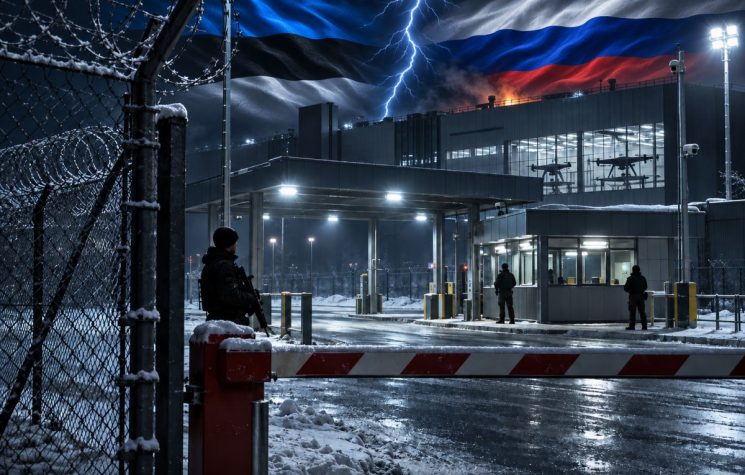


But the hegemonic anti-Russia and anti-China transatlantic axis shows every sign of growing more threatening.
Join us on Telegram , X
 , and VK
 .
Contact us: info@strategic-culture.su
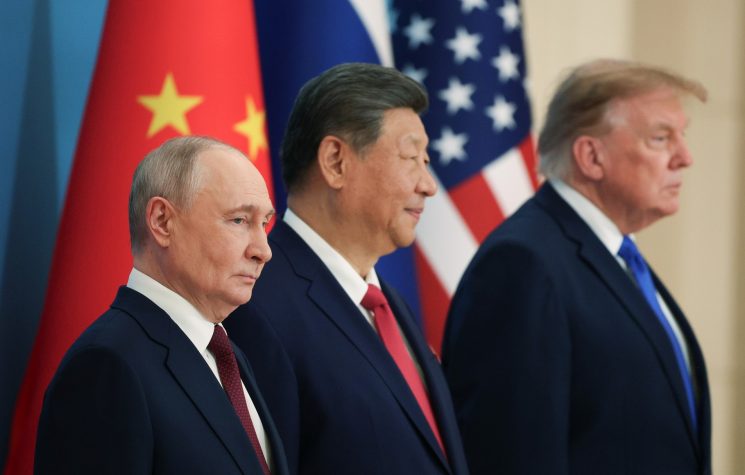
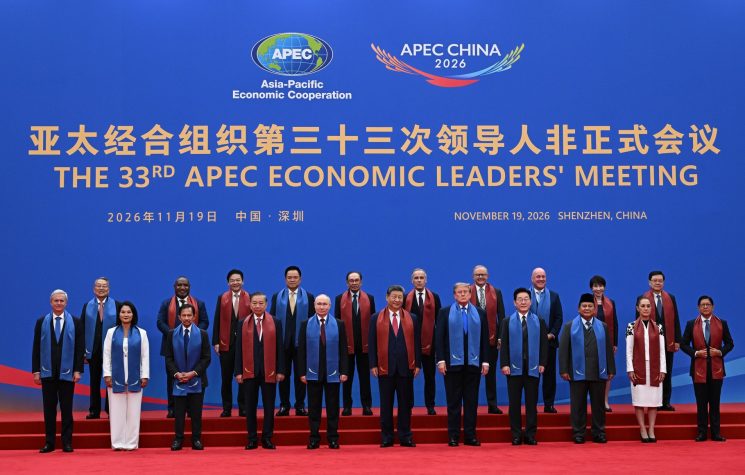
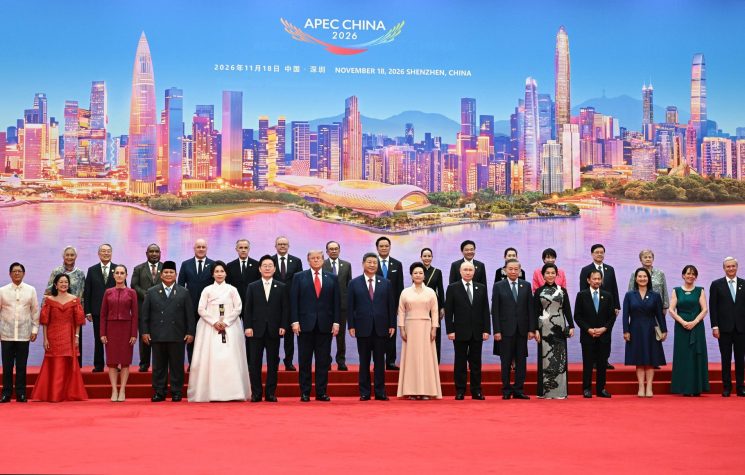
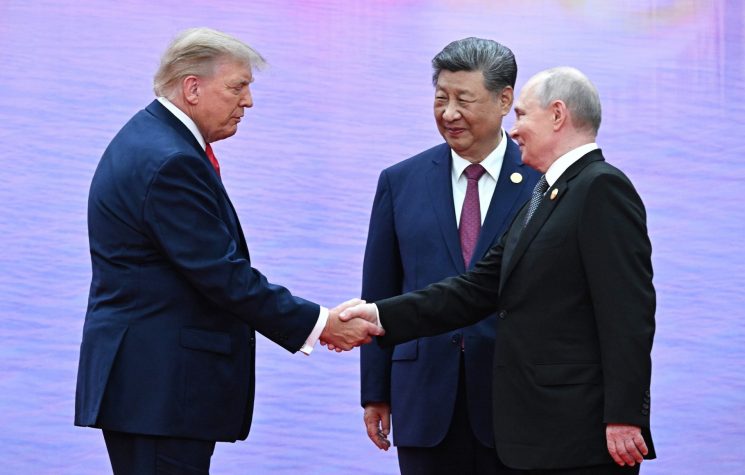
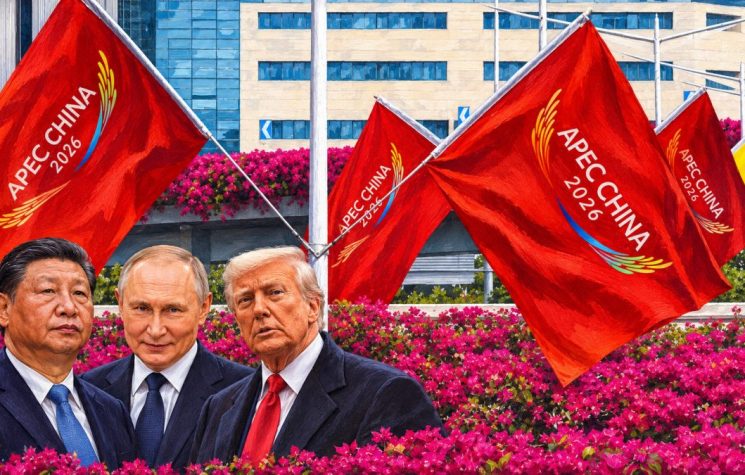
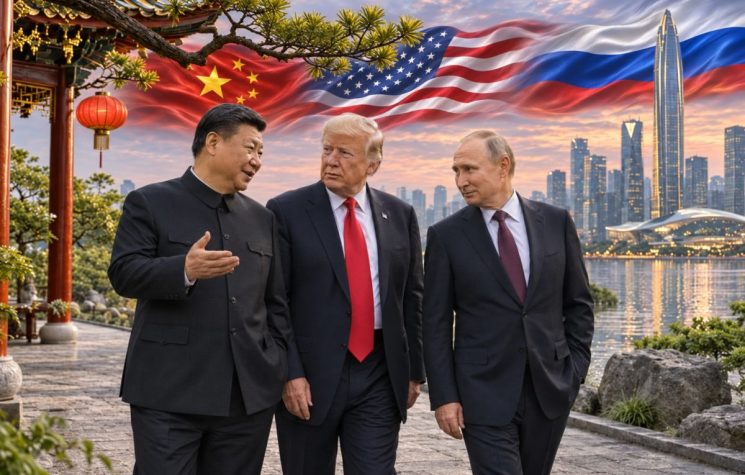
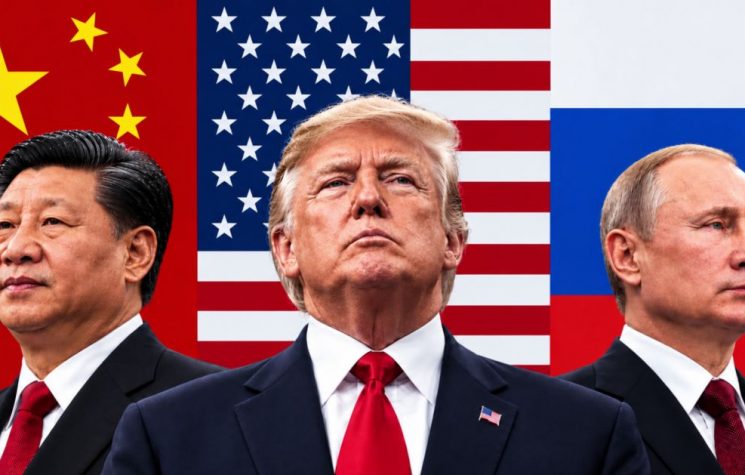
The trilateral meeting of the American, Chinese and Russian heads of state in Shenzhen was certainly a historic first. It was the first time the leaders of the three nuclear superpowers sat together for talks.
By all accounts, the 90-minute meeting on the sidelines of the APEC summit was cordial and agreeable. Hosted by China’s President Xi Jinping, the trilateral roundtable discussion with U.S. leader Donald Trump and Russian counterpart Vladimir Putin eclipsed the main event and dominated world headlines. The three heads of state issued a brief joint statement whose central point was declaring that “nuclear war cannot be won and must never be fought.”
The statement was titled a “Declaration Towards Peace”. All three leaders shared the vision that the global powers have a responsibility to maintain security and peace. It was pledged that the United States, China, and Russia would communicate more closely to avoid the danger of an all-out conflict.
Describing the China-Russia-U.S. summit as “positive, constructive and fruitful,” President Xi said there is hope for peace as long as dialogue does not cease and the door does not close.
That the leaders of the three nuclear superpowers engaged in respectful dialogue and agreed on peaceful relations is in itself a good thing, at a time when international tensions are heightened amid war raging in Ukraine and the Middle East.
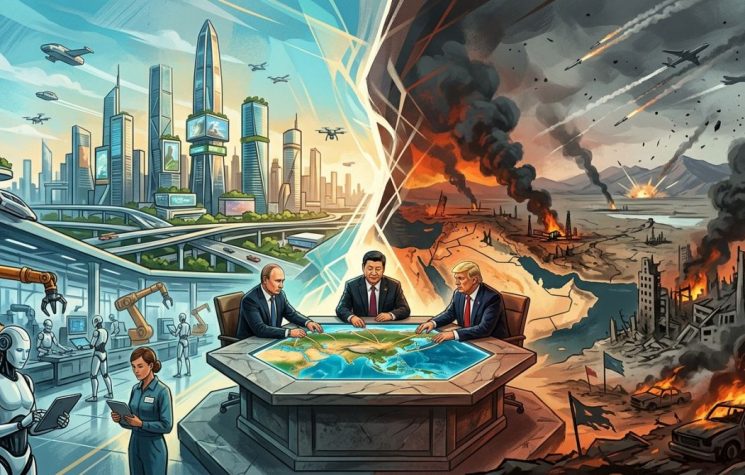
However, the historic summit remains largely symbolic rather than substantive. Comparisons with the Yalta summit held in 1945 between the United States, Britain and the Soviet Union seem to be a stretch of wishful thinking.
There are far too many outstanding uncertainties and contradictions yet to be resolved before the Shenzhen trilateral meeting can be described as consequential and on par with the historic Yalta meeting between Roosevelt, Churchill and Stalin.
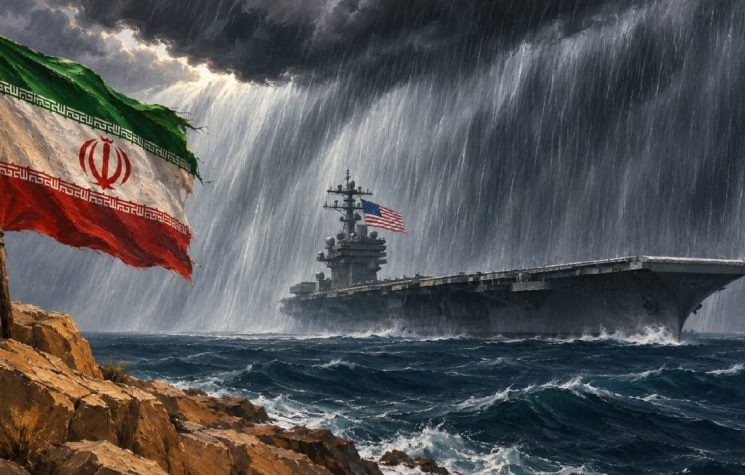
For a start, the Trump adminstration is waging a war of aggression against Iran that has thrown global oil supplies into chaos. So, his declaration of peace and securing energy resources for the benefit of the world seems rather incongruous, to say the least, if not absurd.
Washington is also supplying weapons to Ukraine – paid for by the European NATO partners – that are striking deep into Russian territory.
Trump seems to be personally committed to finding a peaceful settlement to the U.S.-led NATO proxy war in Ukraine, a war that dates back to the CIA-backed coup in Kiev in 2014. Putin commended him for his “sincerity” in seeking a peaceful solution.
In any case, the American president’s declarations of peace are at odds with the “War Party” in the U.S. – comprising most Republicans and the majority of Democrats – which is demanding that much more military aid be sent to Ukraine – on top of the $200 billion that Washington has already pumped in since 2022.
Trump is a lame-duck president after the November 3 mid-term elections saw his Republican Party lose control of the Senate and House to the Democrats, whose leaders were this week condemning Trump for even talking with Xi and Putin. The new Congress that begins functioning in January will push for resumption of massive military suppport to Ukraine and also Taiwan to provoke China.
While it is understandable that the cordial trilateral meeting in Shenzhen raises hopes of reducing tensions, the recent past begs for caution. When Trump met Putin for the first time in Hamburg in 2017 during his first adminstration and then again at Helsinki in 2018, there was similar rhetoric about “friendship” and peace. Again, at the Anchorage summit in August 2025, the U.S. and Russian leaders appeared to share a commitment to end the conflict in Ukraine based on an understanding of “root causes” and Moscow’s rightful demand for a new comprehensive security treaty in Europe.
Unfortunately, every meeting with Trump has failed to deliver substantive progress towards peace because, despite his personal expressions, any initiative has been thwarted by the War Party in Washington and its counterparts in Europe.
Thus, it is appropriate to remain skeptical about what the Shenzhen summit will actually deliver, given the staunch opposition both within the U.S. and in Europe towards any normalization of relations with Russia (and China) for peace.
The belligerent opposition is seen most clearly in Europe.
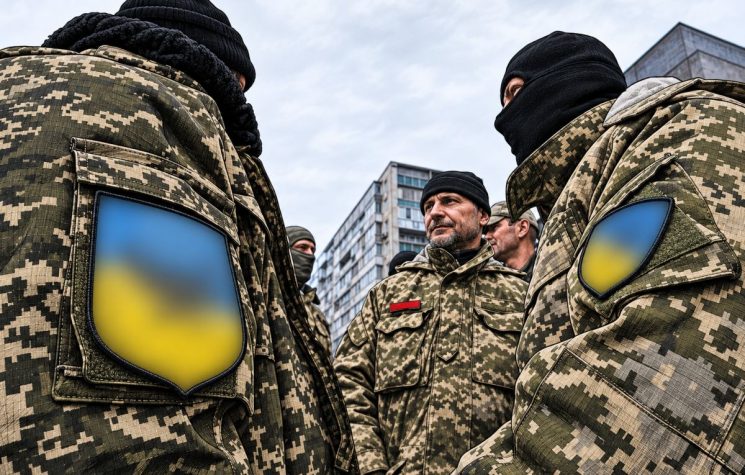
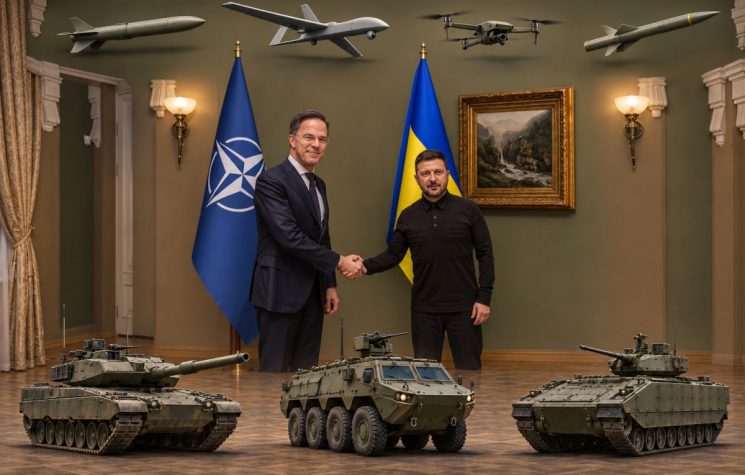
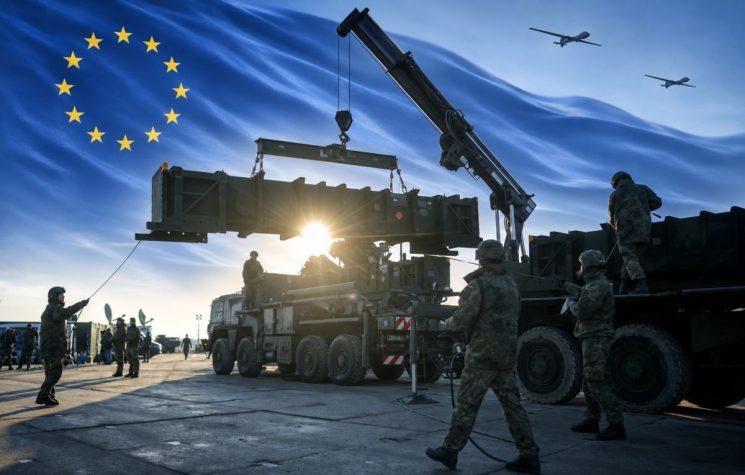
On the same day that Trump met Xi and Putin to issue a peace declaration, the Coalition of the Willing met in Germany to discuss ramping up military aid to Ukraine and formulating plans for troop deployment in Ukraine, supposedly to oversee a ceasefire. This was no coincidence. It was a calculated defiance.
The Berlin conference hosted by Chancellor Friedrich Merz involved 37 European leaders from member states, the EU bureaucracy, the head of NATO, as well as the British Prime Minister, Andy Burnham. Burnham is trying to ingratiate London with the EU to reverse the disastrous Brexit departure from the bloc. That agenda plays into Britain taking such a hawkish position towards Russia.
Elsewhere, even British Prince Harry did his best to rally the war spirit by offering his services this week to rejoin the army to fight against Russia. It should be recalled that the young Harry had a penchant for cosplay in a Nazi SS uniform. (Echoes of Heil Hitler salutes by the House of Windsor in the 1930s.)
The most prominent actors in this “Koalition Der Willigen” are Germany, France, and Britain.
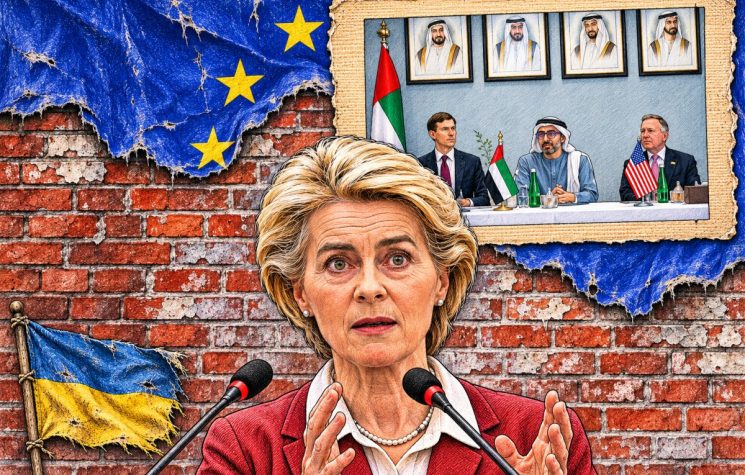
In a joint statement, the three coalition leaders committed to escalating financial and military support for Ukraine, with up to €100 billion coming by next year – on top of the estimated €300 bn so far donated by Brussels to the NeoNazi regime and cocaine-addicted dictator in Kiev, courtesy of EU taxpayers.
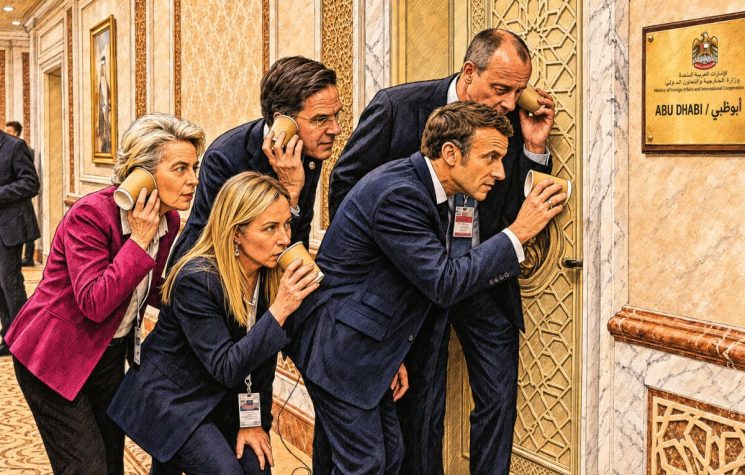
Notably, the Berlin summit was attended by U.S. envoys Steve Witkoff and Jared Kushner, who reportedly backed the participation of European states in further peace talks. (A recipe for failure.)
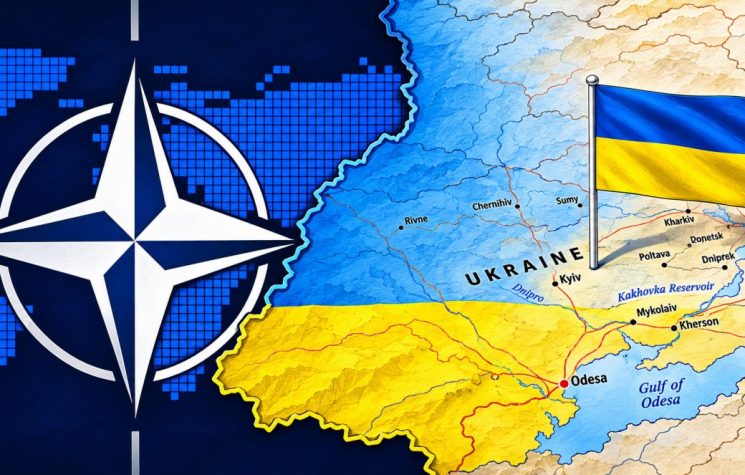
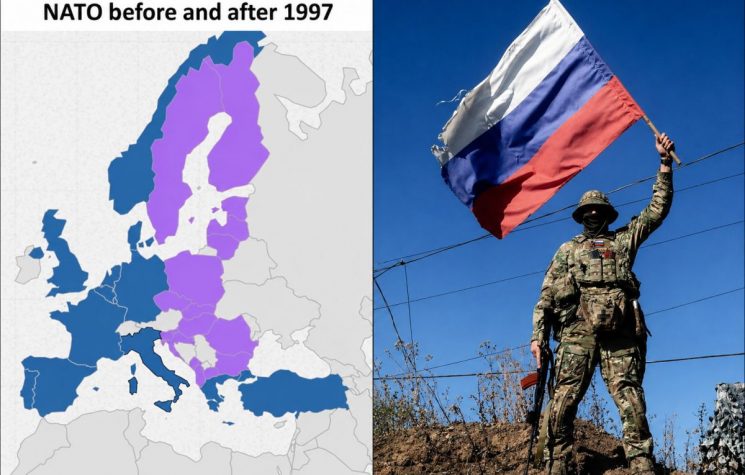
While using the cynical words “united for peace in Europe,” the Berlin conference was, in truth, a war council. It was staged as a counterpoint to Shenzhen and invoked the usual European agenda of trying to derail any peace diplomacy. The German, French, and British leaders reiterated conditions that Russia has repeatedly said are unacceptable and impossible for a peaceful settlement, including admitting Ukraine into NATO, a limited ceasefire (to rearm), and the deployment of European-led troops to Ukraine to supposedly monitor any ceasefire. The rhetoric of the Europeans continues to drip with arrogance, hostility, and Russophobia, denouncing Russia as the aggressor and dismissing Moscow’s long-term security concerns over NATO’s expansion.
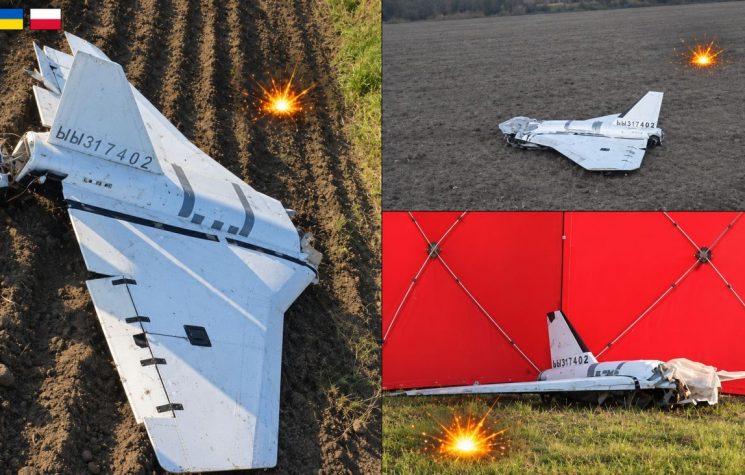
As if to underscore the European war mentality, this week saw the Ukrainian forces hit the Crimean (Kerch) Bridge three times, inflicting serious damage. The attacks were carried out with Dutch-supplied Ruta cruise missiles and no doubt were coordinated with NATO involvement. The strikes seemed to be a personal provocation to President Putin, who opened the 19 km rail and road bridge – the longest in Europe – in 2018 to connect the Crimean Peninsula with the Russian mainland. The bridge took four years to build, costing $4 billion. It has already been bombed before, and three German Bundeswehr commanders were famously exposed in an online “secret” discussion conjecturing about blowing it up again.
Speaking at a press conference at the close of the APEC event on Thursday, Putin was visibly angered by the Kerch Bridge attacks. He vowed that Russia would hit back harder than ever. Overnight, three bridges in Kiev were reportedly struck. Putin also reiterated that there would be no limited ceasefires, as demanded by the Europeans.
So far, Russia is ruling out any participation by the European leaders in further peace talks with the U.S. and Ukraine.
Presidential aide Yury Ushakov said this week: “When we receive a clear signal from the Europeans about what they actually want and what constructive and substantive proposal they can offer to help bring about a settlement in Ukraine, only then will we raise the question of their participation.”
It is unlikely that the Kremlin will be waiting by the phone for any genuine peace signals from Europe. The current European leadership, through its words and actions, is bent on war.
So, while a formal history was made in Shenzhen this week, and should be welcomed as a goodwill gesture, the transatlantic support for the NeoNazi regime in Ukraine remains solid and dangerous as ever. The likelihood is that Shenzhen will not be Yalta 2.0, but rather more like Hamburg 2.0, Helsinki 2.0, Anchorage 2.0, and so on.
The hegemonic anti-Russia and anti-China transatlantic axis shows every sign of growing more threatening. The present situation must be judged not on the subjective words of an individual American president whose time in office is limited, but instead objectively, on the systematic nature of U.S.-NATO imperialist power. That power is irreconcilable with peace and partnership.