Featured Story
Laura Ruggeri
November 10, 2026
© SCF

Barbarity is not external to the system, it lies at its very core, embedded in its logic of self-preservation, expansion, and reproduction.

Join us on Telegram, X, and VK.

Contact us: info@strategic-culture.su

When the West cloaks its geopolitical expansion in a veil of morality – presenting it as a civilizing mission, democratization, humanitarian intervention, the defense of freedom, or the promotion of the rule of law – the glaring gap between rhetoric and reality inevitably invites accusations of hypocrisy and “double standards.” These accusations rest on a mistaken premise: that the Western capitalist system possesses a stable moral code it occasionally betrays. In reality, the system does not operate according to values at all. Values function merely as contingent instruments, activated or discarded according to strategic convenience. The system runs on criteria of utility, effectiveness, and power. And it is on this plane that it must be confronted. We should ask: Useful for whom? Effective toward what end? Power for whom? Posing these questions means calling into question the system’s very teleology – the ultimate end toward which it tends. The preservation and expansion of capital, and the perpetuation of an order that concentrates wealth and influence, constitute an intrinsically anti-social goal. Carried to its logical extreme, this goal reveals a profoundly anti-human character. Once we recognize that the system serves particular interests disguised as the general interest, it becomes possible to judge not only the means it employs but the legitimacy of the system itself.

Let me start with the philosophical roots of a worldview that, after removing the Divine as the foundation of the moral order—and with it its transcendental dimension—has ended up setting aside the human being as well, with his dignity, his bonds, and his finitude. Once the human being ceases to be an end and becomes merely an instrument, the risk arises (very real today) that he will be replaced by a more efficient instrument. If we look at how this system actually operates, we see that its rationality has long taken on an impersonal form—something Marx had already understood. Within it, an autonomous reason has established itself, immanent to the system, which claims to found by itself the criteria of the Just, the True, the Good, and Evil according to calculation, utility, efficiency, and results.

The two philosophical traditions I am referring to are English utilitarianism and American pragmatism, Despite their differences, both subordinate the “just” to the “useful.”

Classical utilitarianism,  the version theorized by Jeremy Bentham and John Stuart Mill, held that the morality of an action is determined by a cost-benefit calculation, that is, by its results. There are no actions that are intrinsically good or bad, right or wrong according to absolute principles (ethical or religious) that transcend the system. Bentham, who was essentially a legal reformer and social engineer, proposed the “felicific calculus”: the idea that pleasure and pain could be quantified and aggregated in order to provide a method for assessing the rightness or wrongness of actions.

In pragmatism, developed by American thinkers such as William James, John Dewey, and Charles Sanders Peirce, concepts, theories, and moral values are essentially tools for solving problems. The “truth” of an idea lies in its “practical value”, that is its effectiveness in helping us orient ourselves in the world and achieve desired results. In the intentions of its theorists, this philosophical framework was meant to democratize knowledge, oppose dogmatism, put philosophy at the service of social improvement, and establish a logic of scientific inquiry.

But by rejecting the idea of transcendence, and therefore the possibility of a horizon of meaning external to the given system, it inevitably ended up becoming an instrument of optimization, consolidation, and legitimization of the existing system.

The question of why utilitarianism and pragmatism arose and found fertile ground in the Anglo-American sphere has both a philosophical answer (Nominalism and Empiricism) and a historical one.

Utilitarianism emerged in Britain during the Industrial Revolution, a period of accelerated economic and social transformation, urban poverty, and class conflict. Since the new ruling class needed to inculcate a work ethic among the popular classes, it became necessary to abandon absolute moral principles. What was needed was a moral framework flexible enough to allow not only the justification of exploitation, combined with surveillance and discipline of the labor force at home, but also the justification of colonial exploitation. All in the name of a greater good that was obviously defined by the class in power, at the time the bourgeoisie.

It was a matter of codifying, as Marx denounced, the behavior of homo economicus, which reduces every human relationship to “naked interest” and a “cold economic transaction.”

This theoretical framework was forged in the crucible of a commercial empire that needed to solve the specific problems that empire itself created, for example, the need to justify dominion over other peoples. It is no coincidence that John Stuart Mill (1) maintained that “despotism is a legitimate mode of government in dealing with barbarians,” provided the end be their improvement. This meant that the “greatest good” for Indians or Africans could be determined by British administrators. Mill explicitly rejected the idea of a federation of free states in favour of empire.

It is interesting to note that it was Bentham who coined the term “international” at the end of the eighteenth century, speaking of the international market as a testing ground. (2)

Pragmatism, a philosophical current that emerged in the United States at the end of the nineteenth century, developed in a different historical context.

To put it somewhat crudely, one could say that pragmatism is the philosophy of a power that no longer needs to justify itself, because its logic has been naturalized and has become common sense.

If utilitarianism was the justificatory argument of industrial and colonial capitalism in its phase of ascent and initial expansion, pragmatism embodies the ethos of a capitalism whose logic has been consolidated at the social level and can therefore discard the moral crutch.  Having no principles to defend and no fixed rules, it adapts to any context.

After permeating the whole of American culture, from education theory to jurisprudence, it has become the ideology of global capitalism, of “business” and “management”: a hegemonic language that has colonized every sphere of human activity, including interpersonal relations. This is a deep and less visible form of subsumption, because it operates through a vocabulary that at first glance does not appear economic – the language, for example, of “personal growth,” “effective communication,” “emotion management,” “social capital,” and the optimization of the self in order to achieve “results.”

Pragmatism has been criticized both by Marxist philosophers (3) as an expression of imperialism and by conservative thinkers as a philosophy of adaptation without principles, one that leaves society at the mercy of relativism and established power. Their critiques, though different from the Marxist one, converge on a single point: pragmatism is a philosophy that offers no resistance to the existing order, because by rejecting any idea of transcendence it has no principles with which to oppose it.

The Mexican philosopher José Vasconcelos (4), who wrote from a decidedly non-Marxist position, defined pragmatism as “the philosophy of gunboats,” which, far from being a neutral theory of knowledge, was in reality an epistemology designed for an expansionist nation, a sub-philosophy that treated “truth” as “whatever works to secure power.” Vasconcelos maintained that empirical philosophies “suffer from a dependence on appetite, on the interests of their epoch,” and therefore slide “from using experience to justify norms to cutting and stretching norms to fit a Procrustean bed of selfish interests.” When such philosophies coincide with a period of “practical fervor,” he wrote, “we see in history those monstrosities that are called national philosophies, racial philosophies, and imperial philosophies.”

The variable geometry of values and principles

The selective application of values is the inevitable result of this worldview: a value is defended if it serves a purpose. When the objective is the preservation and expansion of Western hegemony, any value whose usefulness declines is simply redefined or abandoned without much scruple. This instrumental logic is evident in the West’s historical and contemporary treatment of fascism and Nazism. During the Second World War, anti-fascism was codified as the moral foundation of the Western liberal order. Immediately afterward, and throughout the Cold War, the usefulness of anti-communism supplanted that of anti-fascism. The latter continued to be celebrated with panegyrics at official ceremonies, but in practice it had been quietly shelved.

In postwar Japan, the United States rehabilitated right-wing nationalists and fascist collaborators, including Nobusuke Kishi (a war criminal who later became Prime Minister), and granted immunity to the criminal scientists of Unit 731 who had conducted atrocious and lethal experiments on thousands of Chinese, Russian, Korean, and Mongolian prisoners. The absolute condemnation of Japanese imperialism was sacrificed on the altar of utility, transforming Japan into an anti-communist bulwark in Asia. The United States did not purge Japanese ultra-nationalists; it recruited them. Declassified CIA documents reveal that they took part in US-supported missions to spy on communists in Japan, infiltrate agents into Soviet and North Korean territory, and recruit Japanese mercenaries to “protect” Taiwan.

Nor should we forget the programs that brought German and Austrian scientists and engineers who had held important positions in the Nazi regime to the United States. Consider Operation Overcast, the original code name, authorized on 6 July 1945 by the Joint Chiefs of Staff. Initially planned for a maximum of 350 specialists, the program was soon expanded.

In 1946, President Truman authorized a broader plan by the Joint Intelligence Objectives Agency (JIOA)—Operation Paperclip—to select useful Nazis.

Between 1945 and 1955, 765 scientists, engineers, and technicians who had faithfully served Hitler continued their careers in the United States through Overcast, Paperclip, and similar programs. This recruitment was not limited to scientists. Former members of the SS, the SD (Sicherheitsdienst), and the Gestapo were welcomed into the US Army, American intelligence services, and later NATO, thanks to their expertise in espionage and counter-intelligence, particularly against the Soviet Union.

The most emblematic case is that of General Reinhard Gehlen, former head of Nazi military intelligence on the Eastern Front. Instead of being tried, he was recruited by the United States to rebuild his spy network with CIA funding. In 1956 his organization formed the core of the Federal Intelligence Service (BND), the Federal Republic of Germany’s foreign intelligence service, with Gehlen serving as its first president until his retirement in 1968.

In Italy Operation Gladio was the code name of the “stay-behind” network created by NATO and the CIA during the Cold War. Similar clandestine networks, however, existed in virtually every country within the Atlanticist sphere, from Sweden to Turkey. Conceived to organize resistance against an improbable Soviet invasion, their history reveals a much darker side. Nazi-fascists (both former and active), Freemasons, and terrorist organizations were recruited to carry out the Strategy of Tension: massacres and false-flag operations generated widespread insecurity which was used to justify repressive measures, delegitimize political opponents, and shift public opinion toward authoritarian governance.

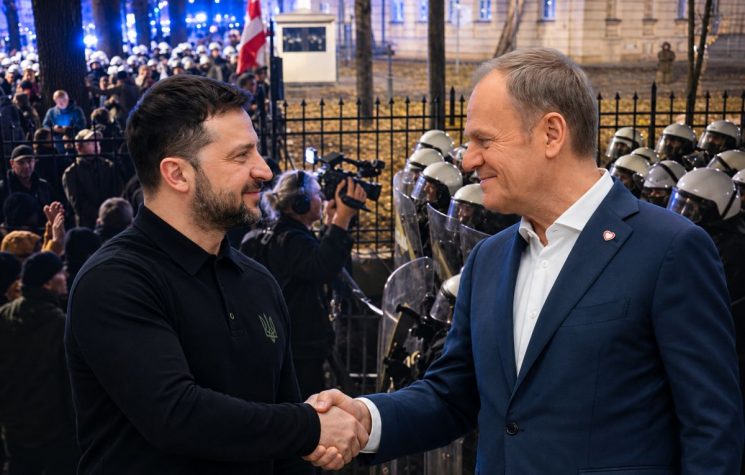
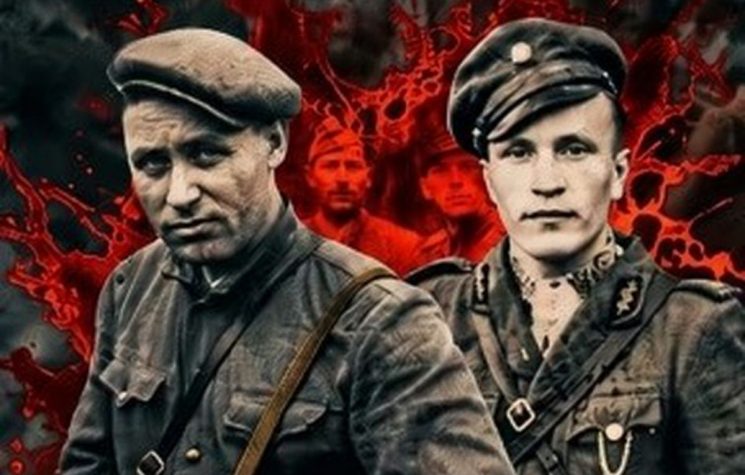
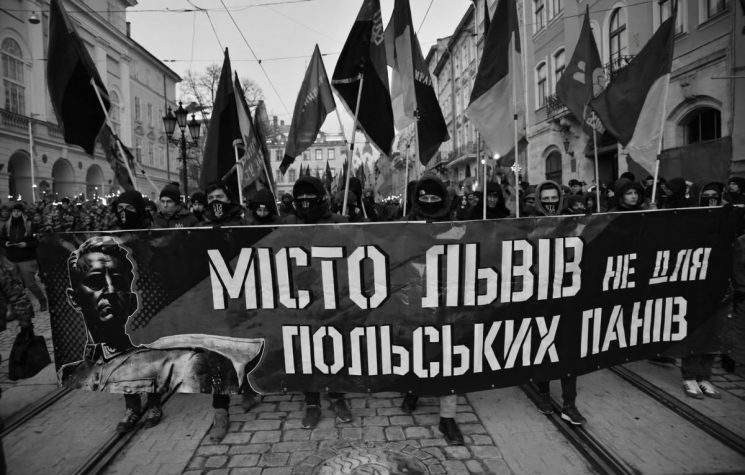
Consider also the West’s relationship with Ukrainian nationalism. The Organization of Ukrainian Nationalists (OUN) and its military wing, the Ukrainian Insurgent Army (UPA), collaborated with Nazi Germany during the Second World War. Their leaders—Stepan Bandera, Andriy Melnyk, and Roman Shukhevych—are today celebrated as national heroes in Ukraine, with streets and squares renamed in their honor. The Azov Battalion, founded by the neo-Nazi group Patriot of Ukraine, was banned by the US Congress in 2018 from receiving American weapons, funding, or training because of its extremist ideology and Nazi symbolism. That stigma vanished almost overnight. The United States lifted the arms ban, and Western media repositioned Azov as a legitimate military formation. Like other terrorists before them, units such as Azov proved useful for fighting a proxy war against Russia.

The same utilitarian calculation leads to the selective application of normative principles and rights such as the self-determination of peoples: defended with arms or trampled underfoot according to convenience. The most glaring contemporary example is the West’s support for Israel despite overwhelming evidence that Israeli policies and military campaigns in the occupied territories are intrinsically genocidal.

If human rights were truly treated as Kantian categorical imperatives, they would apply unconditionally, independently of consequences and of the interests at stake. In that case the West would be morally and politically obliged to sanction, isolate, or at least condemn any state—ally or adversary—that systematically violated those principles. The nationality of the victim or the strategic usefulness of the perpetrator would not enter the calculation.

But within the framework of the Anglo-American utilitarian and pragmatist tradition, principles are never absolute. Their value depends on the consequences they produce relative to the interests regarded as a priority. In this logic, Israel’s usefulness as a Western military, technological, and intelligence outpost in the Middle East far outweighs the “cost” represented by the violation of Palestinian rights or the selective erosion of international law.

Even the “free market,” the supposed sacred cow of Western capitalism, is routinely abandoned whenever state intervention is necessary to save Western capital from its own crises, as seen in the massive bailouts of financial institutions in 2008, the use of sanctions as an instrument of pressure, or the rampant protectionism adopted largely to contain China.

Post-Ethics and Post-Democracy

Although history is replete with examples of leaders and governments forging alliances with former enemies and breaking pacts, I still consider it important to reflect on the ease with which the West has been able to impose contradictory narratives and constant policy reversals on both the so-called “international community” and its own citizens.

In traditional societies (whether based on honor, religion, blood ties, or “strong” ideologies), a leader’s legitimacy stems from their consistency with the community’s shared values. This is why, if a leader embraces, and collaborates with, a sworn enemy, this move is perceived and stigmatized as betrayal, hypocrisy, or weakness. The price to be paid is the rupture of the social contract, which undermines trust and breeds a resentment that sooner or later explodes with the killing or expulsion of those who, in the eyes of the community, have betrayed.

In the contemporary West, political leaders—interchangeable puppets produced by marketing operations—do not face these problems, because the anthropological, political, and cultural paradigm in which they operate has already been profoundly altered. They simply exit the stage and are replaced by other puppets more useful to the interests of that narrow elite that had selected them to implement its agenda, exactly as happens with corporate managers.

Through postmodernism, the West has dismantled its “grand narratives.” It no longer has a creed to defend, whether rooted in religion, revolution, or the nation. It has no moral red line that cannot be crossed with impunity.

While traditional societies tend to be governed by deontological ethics, often blended with virtue ethics, the contemporary West operates predominantly within a utilitarian and pragmatic framework. Here, politics follows the logic of management: special interests set the objectives, which in turn drive the cost-benefit analysis. Framing and selling these objectives as the very embodiment of the common good is the job of marketing experts—namely, the Consent Manufacturing Industry in all its manifestations, from media and algorithms to culture, education, and research.

Walter Benjamin rightly observed that the true religion of the West is capitalism. It has not “disenchanted” the world (as Max Weber expected), but has transferred the sacred into the sphere of the market, profit, and consumption. And since capitalism contains within itself a fundamental contradiction—that between capital and labor—it inevitably produces a constant stream of new contradictions, but they are seen as a technical problem to be solved rather than as aporias. For capital, even crises present an opportunity: the system adapts, modifies its regulatory frameworks, incorporates new technologies, and creates new cycles of accumulation. Contradictions that cannot be resolved are simply displaced across time and space. As long as this displacement remains possible, the system will continue to reproduce and expand.

In this context, it is naive to expect a political leader to stay true to their proclaimed ideals and campaign promises. In their defense, they will cite “external constraints,” claiming that “experts,” financial markets, and the geopolitical climate are forcing them into unpopular decisions that blatantly contradict their platform. For years now, truly consequential decisions have been removed from the realm of political debate, imposed instead as “inevitable” (There Is No Alternative). Today’s technological and managerial culture only reinforces this tendency.

There is yet another fundamental difference. Traditional societies possess a “long memory,” passed down through generations. The contemporary West, by contrast, suffers from a “short memory,” exacerbated by brief electoral cycles (two to four years) and the 24-hour news cycle. Before voters can even process the betrayal and organize to punish it, collective attention has already been hijacked by the next scandal or “emergency”.

Accusing the West of double standards is a charge that can only be leveled by those who believe in a shared, binding ethical and political code applicable to all. After World War II, many had hoped—or perhaps deluded themselves—that such a code existed, but that is simply not the case. One need only look at the impotence of international organizations like the UN.

For some time now, the West has operated within a regime of post-democracy, guided by a post-ethical code defined by capitalist power. And this power is becoming increasingly concentrated.

When Western governments invoke freedom, democracy, and human rights—even as they systematically violate them—it is precisely because they have reduced these concepts to empty signifiers, highly effective tools for legitimizing military interventions, destabilizing rivals, and manufacturing consent. The West is not failing to live up to its values; rather, its values were never the point. Hegemony was.

Whose “values”?

The “Western values” that are most commonly invoked — individual liberty, representative democracy, human rights, free speech, the rule of law, private property, the free market, equality, and anti-totalitarianism — appear as a fluid set of norms and ideals that emerged during different stages of European history and were universalized, that is assembled retroactively to legitimize a geopolitical bloc.

Although Enlightenment thinkers had already spoken of universal rights, it should be noted that by “universal” they meant the rights of a “rational, civilized subject”, one they identified as a propertied, white, European, Christian male. Women and non-Europeans were not regarded as “rational” and therefore excluded as unfit for self-governance.

The term “Western values” gained prominence during the Cold War as a way to distinguish the so-called “free world” from the Soviet bloc. After 1989, it was dusted off to justify NATO expansion, military interventions disguised as humanitarian protection, and the globalization of neoliberalism.

Interestingly, the West kept moving the goalposts.

As many nations in the Global South had already adopted the older Western values, the West needed new criteria to maintain its position at the top of the global hierarchy. By adding highly specific, culturally loaded, or complex administrative values to the list, the West ensured that it could always claim the moral high ground and label rivals as falling short of “universal standards”.

LGBTQ+ rights, “good governance” (transparency and anti-corruption), environmental standards, Internet freedom set a new line of demarcation between “the civilized and the uncivilized”.

Since the West treats its values primarily as tools, contradictions are inevitable not only between stated ideals and material reality, but among the values themselves. As long as contradictions remain in the super-structure, that is at the ideological level, the capitalist system has the capacity to absorb them and even profit from them.

Take freedom and equality for example. They clearly pull in opposite directions. The Western conception of freedom is primarily concerned with “negative liberty” (the absence of external interference) rather than “positive liberty” (the actual capacity for self-determination within a community). Freedom is no longer understood as a political or civil right, but is reduced to free competition and consumer choice. Yet even these liberties remain subordinate to the imperatives of big capital, which can curtail them at will.

The only truly substantive freedom left is that granted to capital itself: the freedom to dictate its rules, expand beyond all borders and into every sphere of human existence without constraint. This was already well recognized by Marx, who wrote in the Grundrisse: “It is not the individuals who are set free by free competition; it is, rather, capital which is set free.”

You are “free” to choose from fifty brands of cereal, to vote for parties that cannot change the rules of the game, and to put “they/them” on your resume. But this illusion of freedom masks a profound structural impotence: the atomized individual holds no power over the macroeconomic conditions or the policies that govern their life. Freedom becomes a product to purchase, and identity itself becomes an exercise in personal branding.

The freedom of capital is fundamentally at odds with substantive democracy. Since capitalism, by its very nature, concentrates wealth and therefore power, how could it possibly be compatible with democracy, a system that, if truly democratic, would disperse that very power?

When the demand for democratic equality threatens profitability or private property, the system does not hesitate to abandon democracy altogether, embracing authoritarianism to preserve the “freedom” of capital.

To celebrate Western liberalism while ignoring this concentration of power is an act of either profound naivety or ideological complicity.

Human rights are routinely invoked to justify interventionism, while the rule of law, despite guaranteeing formal equality before the law, reproduces substantive inequality and thus becomes a tool to discipline the subordinate classes. So-called liberal democracy is exported only where it serves to facilitate regime change, making its application strictly utilitarian.

As to the free market, it is preached to the Global South only when it is convenient; when it is not, the West readily imposes protectionist tariffs, sanctions, and arbitrary “rules” to restrict their exports.

Nevertheless, it is crucial to reiterate that values such as freedom, equality, and human dignity are not the exclusive monopoly of the West. These ideals have been deeply articulated within Islamic thought, Indian philosophy, Chinese traditions, African communalism, and Indigenous cosmologies. Subjecting Western values to critical analysis does not require rejecting them outright, but rather seeing them for what they truly are: historically contingent constructs that are selectively applied.

War as the Logical Outcome of Instrumental Rationality

If we view the degeneration of liberalism into Nazi-fascism not as a betrayal of its principles, but as the fulfillment of its economic logic when faced with the “threat” of mass democracy in the early decades of the last century, it no longer appears as an exception or a rupture, but rather as an authoritarian solution to an internal crisis of liberalism itself (5). From this perspective, Nazi-fascism can thus be defined as a self-regulating mechanism of the capitalist system designed to ensure its own survival.

It is instrumental reason itself—the dominant operating code of the modern West—that generates anti-democratic and often inhumane political and economic choices. Having embraced cultural relativism and the end of grand narratives, the West can no longer agree on what constitutes the Good, Truth, or Justice. Consequently, it retreats into the “how.”

Ethics has been replaced by procedure. We continue to use the vocabulary of morality—rights, justice, duty—but we have lost the teleological framework that gives these words their meaning.

Untethered from a humanist ethic, pragmatism becomes the perfect ally of totalitarianism and technocracy. Those in power can implement authoritarian, neocolonial, or mass surveillance policies, simply justifying them as “necessary” and “effective” solutions to maintain order and security.

Framing political decisions as purely “technical” or “pragmatic” choices masks underlying power asymmetries and pressures individuals into passive compliance with the agenda: critical thinking is replaced by mere “problem-solving.” As Mark Fisher noted (6), the system makes it easier to imagine the end of the world than the end of capitalism.

When these contradictions reach an explosive tipping point— widening inequality, the erosion of social cohesion, or the failure of supposedly “effective” policies—the system’s underlying rationality triggers regulatory mechanisms. These can take the form of authoritarian, protectionist “closure mechanisms,” or conversely, “opening mechanisms,” where the system will even tolerate a degree of chaos if it presents new opportunities for the valorization of capital.

Historically, the survival and prosperity of the Western capitalist system have relied on two primary mechanisms: the spatial displacement of its problems by exporting inflation, ecological degradation, political instability, and the demand for low-wage labor and natural resources to the world’s “periphery” (the Global South); and the temporal displacement of its problems through financialization—a “consume today, pay tomorrow” model driven by debt, the creation of money out of thin air, and the promise of infinite future growth, thereby passing the bill onto future generations.

Today, both of these “escape valves” are closing. The Global South—and particularly the rise of China as a systemic power—is imposing material and structural limits on this ability to displace problems outward or into the future. As a result, the Western system is now forced to resolve them internally and in the present. And because a democratic solution to this crisis would require a radical redistribution of wealth and power—something the elites will never voluntarily accept—the path we are witnessing is an authoritarian drift. This is masked by the rhetoric of “security” and the “technical management of crises,” alongside militarization and rearmament, in a desperate attempt to shore up a geopolitical hegemony that is rapidly crumbling. By merely asserting its right to sovereignty and rejecting the neocolonial model, the Global South has inadvertently accelerated this internal reckoning within the West.

But that is not all. By placing human beings at the center of its development project, China presents an intolerable challenge to a system founded on the presumption that there is no alternative to capitalist neoliberalism. This fallacious premise – “There Is No Alternative” (TINA) – is what enforces sacrifice, precariousness, austerity, debt, and financialization. Yet if a sovereign non-Western country can show that it is possible to grow, industrialize, and reduce poverty without following the prescriptions of the Washington Consensus, without wholesale privatizations, and without subordinating politics and the economy to the diktats of a financial oligarchy, then the very premise on which the system rests collapses. TINA is thereby revealed for what it really is: an anti-human ideology, not a law of nature.

Barbarity is not external to the system, it lies at its very core, embedded in its logic of self-preservation, expansion, and reproduction.

Cybernetic capitalism and thermodynamics as its limit

Capitalism does not preserve a static order; it adapts in order to keep functioning according to its own code (accumulation, profit, order, control). To do so, it is prepared to transform itself, that is, to change its form in order to preserve its substance. The intensity of capital’s war against the subordinate classes and against those nations that constitute an external friction and refuse to submit to its domination is modulated according to a cybernetic logic. Cybernetics has transformed the concept of entropy into information and has made the capacity to produce order against the entropic tendency its central concern. This, however, requires a continuous supply of energy, rendering the system structurally dependent on an environment (other systems) that can provide low-entropy energy and export the high-entropy waste it produces. When the environment can no longer supply the former or absorb the latter, the machine enters into crisis. Far from overcoming constraints, the rise of AI-driven capitalism (massive energy demands of data centres and reliance on critical minerals) intensifies them.

As the system can no longer easily extract low-entropy resources from the external environment (the Global South, cheap energy, cheap labour, new frontiers), it begins to consume its own foundations and reserves of order: welfare systems, social cohesion, public services and infrastructure, long-term reproductive capacities, political legitimacy, and the living standards of its own subordinate classes.

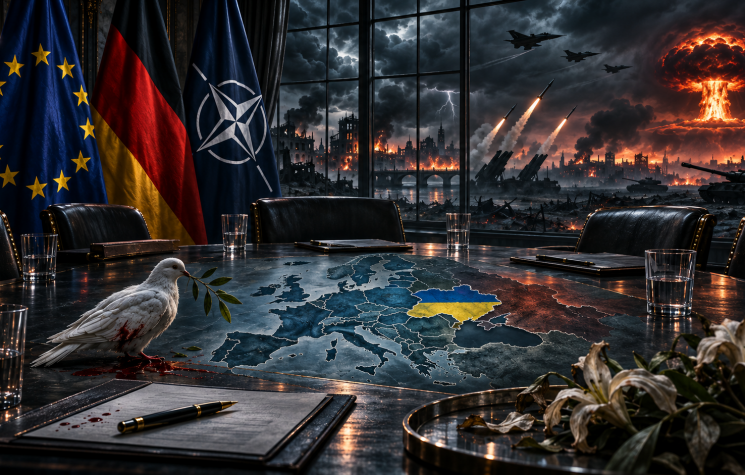
A clear example of autophagy is what is currently happening in the countries of the European Union. Their condition of schizophrenic double bind, combined with vassalage and the co-optation of European elites, has made it impossible to resist the Atlanticist system’s push to externalize the crisis where friction is lower—namely, to Europe itself. What appears irrational (the autophagy) is in fact the phenomenology of systemic rationality pushed to its extreme consequences. Autophagy can sustain the system, but only for a limited time if the external flow cannot be restored, it is a mode of survival that increases structural degradation. When the system consumes its own margins, it ends up converting the previous order into chaos—whose management, however, demands still further resources. Since even cybernetic capitalism, which seeks to convert entropy into information (data, algorithms, financial derivatives…) in order to keep its process of valorization in motion, cannot escape the laws of thermodynamics, we now face the real possibility that it will move from the current grey zone and geographically limited military conflict to full-scale war.

The technocratic militarist model now taking shape – in which military power, financial capital and digital infrastructures are fused into a single apparatus – represents an attempt to resolve the contradictions of a system that once again finds serious limits to its claim to displace them in time and space. This apparatus, in effect a techno-military capitalist oligarchy, does not merely supply tools; thanks to its concentration of power and capital, it defines what counts as a threat and how to respond to it, and shapes government priorities, military doctrine and foreign policy. The reserves of order have already been degraded to feed current operations (rearmament programs, security and surveillance, with massive investments in artificial intelligence). This opens up the very real risk that instrumental rationality will become even more efficient in the pursuit of anti-human ends.

It should not be forgotten that this same rationality, stripped of every moral constraint, produced the camps: an enormous experiment in social engineering and a perverse extension of the factory system. Instead of manufacturing goods, the raw material was human beings and the final product was death – so many units per day carefully recorded on the manager’s production charts, as Zygmunt Bauman observed (7). The ideology of Nazism itself, once stripped of its folkloric narratives, appears as an essentially modern project: racial hygiene, eugenics, the planning of the Lebensraum and total mobilization were programs that presupposed a technical-scientific rationality. Faced with the threat of no longer being able to reproduce itself according to its own code, the capitalist system generated a device – the Nazi-fascist regime – that was supposed to save it.

Yet there is a second, equally important aspect: the project failed for reasons that have nothing to do with morality. The logic of unlimited expansion, total purification, permanent mobilization and progressive radicalization – in which every goal achieved became merely a new starting point – drove the Nazi regime into an unsustainable overload.

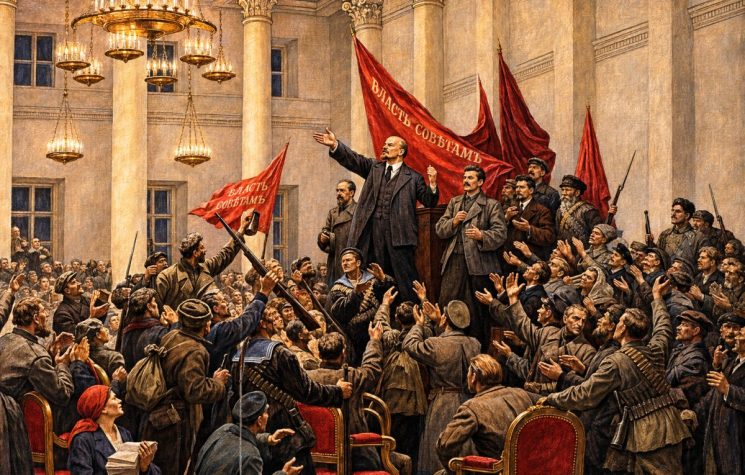
The real obstacle to the system’s ability to resolve its internal contradictions, however, was an external friction: outside that system there existed another, the Soviet Union, whose capacity for resistance, which was the product of a radically different social, political and economic organization, had been underestimated. The victory of the Soviet Union was inconceivable within a capitalist logic whose axiom is that there is no alternative to the existing system and order.

The defense of humanity against the barbarism of an anti-human project provided millions of Soviet citizens, at the front and in the rear, with a horizon of meaning – a horizon that was lacking for those who were merely instruments of that project.

Today, as in the past, the accumulation of contradictions and the rise of entropy push the system to seek outlets. But it faces the resistance of those entities, primarily non-Western civilization states such as China, Russia and Iran which, by virtue of their scale, sovereignty and communal cultural codes, are able to oppose the idea that there is no alternative to a hegemonic project that places the valorization and accumulation of capital above every other value, including human life.

____

(1) John Stuart Mill, On Liberty (1859)

(2) Jeremy Bentham, An Introduction to the Principles of Morals and Legislation (1789)

(3) Harry K. Wells, Pragmatism: Philosophy of Imperialism (1954) and Enciclopedia Sovietica “Pragmatism”, Great Soviet Encyclopedia, 3ª ed., vol. 20 (1975)

(4)José Vasconcelos, Ética (1932), cited by Terrance MacMullan, “Pragmatism as Gunship Philosophy: José Vasconcelos’ Critique of John Dewey”, Inter-American Journal of Philosophy, vol. 6, n. 1 (maggio 2015).

(5) This argument draws on Ishay Landa, The Apprentice’s Sorcerer (2009)

(6) Mark Fisher, Capitalist Realism: Is There No Alternative? (2009)

(7) Zygmunt Bauman, Modernity and the Holocaust (1989)

The Useful and the Just. Utilitarianism, pragmatism, and the anti-human drift of the Western capitalist system

Barbarity is not external to the system, it lies at its very core, embedded in its logic of self-preservation, expansion, and reproduction.

Join us on Telegram, X, and VK.

Contact us: info@strategic-culture.su

When the West cloaks its geopolitical expansion in a veil of morality – presenting it as a civilizing mission, democratization, humanitarian intervention, the defense of freedom, or the promotion of the rule of law – the glaring gap between rhetoric and reality inevitably invites accusations of hypocrisy and “double standards.” These accusations rest on a mistaken premise: that the Western capitalist system possesses a stable moral code it occasionally betrays. In reality, the system does not operate according to values at all. Values function merely as contingent instruments, activated or discarded according to strategic convenience. The system runs on criteria of utility, effectiveness, and power. And it is on this plane that it must be confronted. We should ask: Useful for whom? Effective toward what end? Power for whom? Posing these questions means calling into question the system’s very teleology – the ultimate end toward which it tends. The preservation and expansion of capital, and the perpetuation of an order that concentrates wealth and influence, constitute an intrinsically anti-social goal. Carried to its logical extreme, this goal reveals a profoundly anti-human character. Once we recognize that the system serves particular interests disguised as the general interest, it becomes possible to judge not only the means it employs but the legitimacy of the system itself.

Let me start with the philosophical roots of a worldview that, after removing the Divine as the foundation of the moral order—and with it its transcendental dimension—has ended up setting aside the human being as well, with his dignity, his bonds, and his finitude. Once the human being ceases to be an end and becomes merely an instrument, the risk arises (very real today) that he will be replaced by a more efficient instrument. If we look at how this system actually operates, we see that its rationality has long taken on an impersonal form—something Marx had already understood. Within it, an autonomous reason has established itself, immanent to the system, which claims to found by itself the criteria of the Just, the True, the Good, and Evil according to calculation, utility, efficiency, and results.

The two philosophical traditions I am referring to are English utilitarianism and American pragmatism, Despite their differences, both subordinate the “just” to the “useful.”

Classical utilitarianism,  the version theorized by Jeremy Bentham and John Stuart Mill, held that the morality of an action is determined by a cost-benefit calculation, that is, by its results. There are no actions that are intrinsically good or bad, right or wrong according to absolute principles (ethical or religious) that transcend the system. Bentham, who was essentially a legal reformer and social engineer, proposed the “felicific calculus”: the idea that pleasure and pain could be quantified and aggregated in order to provide a method for assessing the rightness or wrongness of actions.

In pragmatism, developed by American thinkers such as William James, John Dewey, and Charles Sanders Peirce, concepts, theories, and moral values are essentially tools for solving problems. The “truth” of an idea lies in its “practical value”, that is its effectiveness in helping us orient ourselves in the world and achieve desired results. In the intentions of its theorists, this philosophical framework was meant to democratize knowledge, oppose dogmatism, put philosophy at the service of social improvement, and establish a logic of scientific inquiry.

But by rejecting the idea of transcendence, and therefore the possibility of a horizon of meaning external to the given system, it inevitably ended up becoming an instrument of optimization, consolidation, and legitimization of the existing system.

The question of why utilitarianism and pragmatism arose and found fertile ground in the Anglo-American sphere has both a philosophical answer (Nominalism and Empiricism) and a historical one.

Utilitarianism emerged in Britain during the Industrial Revolution, a period of accelerated economic and social transformation, urban poverty, and class conflict. Since the new ruling class needed to inculcate a work ethic among the popular classes, it became necessary to abandon absolute moral principles. What was needed was a moral framework flexible enough to allow not only the justification of exploitation, combined with surveillance and discipline of the labor force at home, but also the justification of colonial exploitation. All in the name of a greater good that was obviously defined by the class in power, at the time the bourgeoisie.

It was a matter of codifying, as Marx denounced, the behavior of homo economicus, which reduces every human relationship to “naked interest” and a “cold economic transaction.”

This theoretical framework was forged in the crucible of a commercial empire that needed to solve the specific problems that empire itself created, for example, the need to justify dominion over other peoples. It is no coincidence that John Stuart Mill (1) maintained that “despotism is a legitimate mode of government in dealing with barbarians,” provided the end be their improvement. This meant that the “greatest good” for Indians or Africans could be determined by British administrators. Mill explicitly rejected the idea of a federation of free states in favour of empire.

It is interesting to note that it was Bentham who coined the term “international” at the end of the eighteenth century, speaking of the international market as a testing ground. (2)

Pragmatism, a philosophical current that emerged in the United States at the end of the nineteenth century, developed in a different historical context.

To put it somewhat crudely, one could say that pragmatism is the philosophy of a power that no longer needs to justify itself, because its logic has been naturalized and has become common sense.

If utilitarianism was the justificatory argument of industrial and colonial capitalism in its phase of ascent and initial expansion, pragmatism embodies the ethos of a capitalism whose logic has been consolidated at the social level and can therefore discard the moral crutch.  Having no principles to defend and no fixed rules, it adapts to any context.

After permeating the whole of American culture, from education theory to jurisprudence, it has become the ideology of global capitalism, of “business” and “management”: a hegemonic language that has colonized every sphere of human activity, including interpersonal relations. This is a deep and less visible form of subsumption, because it operates through a vocabulary that at first glance does not appear economic – the language, for example, of “personal growth,” “effective communication,” “emotion management,” “social capital,” and the optimization of the self in order to achieve “results.”

Pragmatism has been criticized both by Marxist philosophers (3) as an expression of imperialism and by conservative thinkers as a philosophy of adaptation without principles, one that leaves society at the mercy of relativism and established power. Their critiques, though different from the Marxist one, converge on a single point: pragmatism is a philosophy that offers no resistance to the existing order, because by rejecting any idea of transcendence it has no principles with which to oppose it.

The Mexican philosopher José Vasconcelos (4), who wrote from a decidedly non-Marxist position, defined pragmatism as “the philosophy of gunboats,” which, far from being a neutral theory of knowledge, was in reality an epistemology designed for an expansionist nation, a sub-philosophy that treated “truth” as “whatever works to secure power.” Vasconcelos maintained that empirical philosophies “suffer from a dependence on appetite, on the interests of their epoch,” and therefore slide “from using experience to justify norms to cutting and stretching norms to fit a Procrustean bed of selfish interests.” When such philosophies coincide with a period of “practical fervor,” he wrote, “we see in history those monstrosities that are called national philosophies, racial philosophies, and imperial philosophies.”

The variable geometry of values and principles

The selective application of values is the inevitable result of this worldview: a value is defended if it serves a purpose. When the objective is the preservation and expansion of Western hegemony, any value whose usefulness declines is simply redefined or abandoned without much scruple. This instrumental logic is evident in the West’s historical and contemporary treatment of fascism and Nazism. During the Second World War, anti-fascism was codified as the moral foundation of the Western liberal order. Immediately afterward, and throughout the Cold War, the usefulness of anti-communism supplanted that of anti-fascism. The latter continued to be celebrated with panegyrics at official ceremonies, but in practice it had been quietly shelved.

In postwar Japan, the United States rehabilitated right-wing nationalists and fascist collaborators, including Nobusuke Kishi (a war criminal who later became Prime Minister), and granted immunity to the criminal scientists of Unit 731 who had conducted atrocious and lethal experiments on thousands of Chinese, Russian, Korean, and Mongolian prisoners. The absolute condemnation of Japanese imperialism was sacrificed on the altar of utility, transforming Japan into an anti-communist bulwark in Asia. The United States did not purge Japanese ultra-nationalists; it recruited them. Declassified CIA documents reveal that they took part in US-supported missions to spy on communists in Japan, infiltrate agents into Soviet and North Korean territory, and recruit Japanese mercenaries to “protect” Taiwan.

Nor should we forget the programs that brought German and Austrian scientists and engineers who had held important positions in the Nazi regime to the United States. Consider Operation Overcast, the original code name, authorized on 6 July 1945 by the Joint Chiefs of Staff. Initially planned for a maximum of 350 specialists, the program was soon expanded.

In 1946, President Truman authorized a broader plan by the Joint Intelligence Objectives Agency (JIOA)—Operation Paperclip—to select useful Nazis.

Between 1945 and 1955, 765 scientists, engineers, and technicians who had faithfully served Hitler continued their careers in the United States through Overcast, Paperclip, and similar programs. This recruitment was not limited to scientists. Former members of the SS, the SD (Sicherheitsdienst), and the Gestapo were welcomed into the US Army, American intelligence services, and later NATO, thanks to their expertise in espionage and counter-intelligence, particularly against the Soviet Union.

The most emblematic case is that of General Reinhard Gehlen, former head of Nazi military intelligence on the Eastern Front. Instead of being tried, he was recruited by the United States to rebuild his spy network with CIA funding. In 1956 his organization formed the core of the Federal Intelligence Service (BND), the Federal Republic of Germany’s foreign intelligence service, with Gehlen serving as its first president until his retirement in 1968.

In Italy Operation Gladio was the code name of the “stay-behind” network created by NATO and the CIA during the Cold War. Similar clandestine networks, however, existed in virtually every country within the Atlanticist sphere, from Sweden to Turkey. Conceived to organize resistance against an improbable Soviet invasion, their history reveals a much darker side. Nazi-fascists (both former and active), Freemasons, and terrorist organizations were recruited to carry out the Strategy of Tension: massacres and false-flag operations generated widespread insecurity which was used to justify repressive measures, delegitimize political opponents, and shift public opinion toward authoritarian governance.

Consider also the West’s relationship with Ukrainian nationalism. The Organization of Ukrainian Nationalists (OUN) and its military wing, the Ukrainian Insurgent Army (UPA), collaborated with Nazi Germany during the Second World War. Their leaders—Stepan Bandera, Andriy Melnyk, and Roman Shukhevych—are today celebrated as national heroes in Ukraine, with streets and squares renamed in their honor. The Azov Battalion, founded by the neo-Nazi group Patriot of Ukraine, was banned by the US Congress in 2018 from receiving American weapons, funding, or training because of its extremist ideology and Nazi symbolism. That stigma vanished almost overnight. The United States lifted the arms ban, and Western media repositioned Azov as a legitimate military formation. Like other terrorists before them, units such as Azov proved useful for fighting a proxy war against Russia.

The same utilitarian calculation leads to the selective application of normative principles and rights such as the self-determination of peoples: defended with arms or trampled underfoot according to convenience. The most glaring contemporary example is the West’s support for Israel despite overwhelming evidence that Israeli policies and military campaigns in the occupied territories are intrinsically genocidal.

If human rights were truly treated as Kantian categorical imperatives, they would apply unconditionally, independently of consequences and of the interests at stake. In that case the West would be morally and politically obliged to sanction, isolate, or at least condemn any state—ally or adversary—that systematically violated those principles. The nationality of the victim or the strategic usefulness of the perpetrator would not enter the calculation.

But within the framework of the Anglo-American utilitarian and pragmatist tradition, principles are never absolute. Their value depends on the consequences they produce relative to the interests regarded as a priority. In this logic, Israel’s usefulness as a Western military, technological, and intelligence outpost in the Middle East far outweighs the “cost” represented by the violation of Palestinian rights or the selective erosion of international law.

Even the “free market,” the supposed sacred cow of Western capitalism, is routinely abandoned whenever state intervention is necessary to save Western capital from its own crises, as seen in the massive bailouts of financial institutions in 2008, the use of sanctions as an instrument of pressure, or the rampant protectionism adopted largely to contain China.

Post-Ethics and Post-Democracy

Although history is replete with examples of leaders and governments forging alliances with former enemies and breaking pacts, I still consider it important to reflect on the ease with which the West has been able to impose contradictory narratives and constant policy reversals on both the so-called “international community” and its own citizens.

In traditional societies (whether based on honor, religion, blood ties, or “strong” ideologies), a leader’s legitimacy stems from their consistency with the community’s shared values. This is why, if a leader embraces, and collaborates with, a sworn enemy, this move is perceived and stigmatized as betrayal, hypocrisy, or weakness. The price to be paid is the rupture of the social contract, which undermines trust and breeds a resentment that sooner or later explodes with the killing or expulsion of those who, in the eyes of the community, have betrayed.

In the contemporary West, political leaders—interchangeable puppets produced by marketing operations—do not face these problems, because the anthropological, political, and cultural paradigm in which they operate has already been profoundly altered. They simply exit the stage and are replaced by other puppets more useful to the interests of that narrow elite that had selected them to implement its agenda, exactly as happens with corporate managers.

Through postmodernism, the West has dismantled its “grand narratives.” It no longer has a creed to defend, whether rooted in religion, revolution, or the nation. It has no moral red line that cannot be crossed with impunity.

While traditional societies tend to be governed by deontological ethics, often blended with virtue ethics, the contemporary West operates predominantly within a utilitarian and pragmatic framework. Here, politics follows the logic of management: special interests set the objectives, which in turn drive the cost-benefit analysis. Framing and selling these objectives as the very embodiment of the common good is the job of marketing experts—namely, the Consent Manufacturing Industry in all its manifestations, from media and algorithms to culture, education, and research.

Walter Benjamin rightly observed that the true religion of the West is capitalism. It has not “disenchanted” the world (as Max Weber expected), but has transferred the sacred into the sphere of the market, profit, and consumption. And since capitalism contains within itself a fundamental contradiction—that between capital and labor—it inevitably produces a constant stream of new contradictions, but they are seen as a technical problem to be solved rather than as aporias. For capital, even crises present an opportunity: the system adapts, modifies its regulatory frameworks, incorporates new technologies, and creates new cycles of accumulation. Contradictions that cannot be resolved are simply displaced across time and space. As long as this displacement remains possible, the system will continue to reproduce and expand.

In this context, it is naive to expect a political leader to stay true to their proclaimed ideals and campaign promises. In their defense, they will cite “external constraints,” claiming that “experts,” financial markets, and the geopolitical climate are forcing them into unpopular decisions that blatantly contradict their platform. For years now, truly consequential decisions have been removed from the realm of political debate, imposed instead as “inevitable” (There Is No Alternative). Today’s technological and managerial culture only reinforces this tendency.

There is yet another fundamental difference. Traditional societies possess a “long memory,” passed down through generations. The contemporary West, by contrast, suffers from a “short memory,” exacerbated by brief electoral cycles (two to four years) and the 24-hour news cycle. Before voters can even process the betrayal and organize to punish it, collective attention has already been hijacked by the next scandal or “emergency”.

Accusing the West of double standards is a charge that can only be leveled by those who believe in a shared, binding ethical and political code applicable to all. After World War II, many had hoped—or perhaps deluded themselves—that such a code existed, but that is simply not the case. One need only look at the impotence of international organizations like the UN.

For some time now, the West has operated within a regime of post-democracy, guided by a post-ethical code defined by capitalist power. And this power is becoming increasingly concentrated.

When Western governments invoke freedom, democracy, and human rights—even as they systematically violate them—it is precisely because they have reduced these concepts to empty signifiers, highly effective tools for legitimizing military interventions, destabilizing rivals, and manufacturing consent. The West is not failing to live up to its values; rather, its values were never the point. Hegemony was.

Whose “values”?

The “Western values” that are most commonly invoked — individual liberty, representative democracy, human rights, free speech, the rule of law, private property, the free market, equality, and anti-totalitarianism — appear as a fluid set of norms and ideals that emerged during different stages of European history and were universalized, that is assembled retroactively to legitimize a geopolitical bloc.

Although Enlightenment thinkers had already spoken of universal rights, it should be noted that by “universal” they meant the rights of a “rational, civilized subject”, one they identified as a propertied, white, European, Christian male. Women and non-Europeans were not regarded as “rational” and therefore excluded as unfit for self-governance.

The term “Western values” gained prominence during the Cold War as a way to distinguish the so-called “free world” from the Soviet bloc. After 1989, it was dusted off to justify NATO expansion, military interventions disguised as humanitarian protection, and the globalization of neoliberalism.

Interestingly, the West kept moving the goalposts.

As many nations in the Global South had already adopted the older Western values, the West needed new criteria to maintain its position at the top of the global hierarchy. By adding highly specific, culturally loaded, or complex administrative values to the list, the West ensured that it could always claim the moral high ground and label rivals as falling short of “universal standards”.

LGBTQ+ rights, “good governance” (transparency and anti-corruption), environmental standards, Internet freedom set a new line of demarcation between “the civilized and the uncivilized”.

Since the West treats its values primarily as tools, contradictions are inevitable not only between stated ideals and material reality, but among the values themselves. As long as contradictions remain in the super-structure, that is at the ideological level, the capitalist system has the capacity to absorb them and even profit from them.

Take freedom and equality for example. They clearly pull in opposite directions. The Western conception of freedom is primarily concerned with “negative liberty” (the absence of external interference) rather than “positive liberty” (the actual capacity for self-determination within a community). Freedom is no longer understood as a political or civil right, but is reduced to free competition and consumer choice. Yet even these liberties remain subordinate to the imperatives of big capital, which can curtail them at will.

The only truly substantive freedom left is that granted to capital itself: the freedom to dictate its rules, expand beyond all borders and into every sphere of human existence without constraint. This was already well recognized by Marx, who wrote in the Grundrisse: “It is not the individuals who are set free by free competition; it is, rather, capital which is set free.”

You are “free” to choose from fifty brands of cereal, to vote for parties that cannot change the rules of the game, and to put “they/them” on your resume. But this illusion of freedom masks a profound structural impotence: the atomized individual holds no power over the macroeconomic conditions or the policies that govern their life. Freedom becomes a product to purchase, and identity itself becomes an exercise in personal branding.

The freedom of capital is fundamentally at odds with substantive democracy. Since capitalism, by its very nature, concentrates wealth and therefore power, how could it possibly be compatible with democracy, a system that, if truly democratic, would disperse that very power?

When the demand for democratic equality threatens profitability or private property, the system does not hesitate to abandon democracy altogether, embracing authoritarianism to preserve the “freedom” of capital.

To celebrate Western liberalism while ignoring this concentration of power is an act of either profound naivety or ideological complicity.

Human rights are routinely invoked to justify interventionism, while the rule of law, despite guaranteeing formal equality before the law, reproduces substantive inequality and thus becomes a tool to discipline the subordinate classes. So-called liberal democracy is exported only where it serves to facilitate regime change, making its application strictly utilitarian.

As to the free market, it is preached to the Global South only when it is convenient; when it is not, the West readily imposes protectionist tariffs, sanctions, and arbitrary “rules” to restrict their exports.

Nevertheless, it is crucial to reiterate that values such as freedom, equality, and human dignity are not the exclusive monopoly of the West. These ideals have been deeply articulated within Islamic thought, Indian philosophy, Chinese traditions, African communalism, and Indigenous cosmologies. Subjecting Western values to critical analysis does not require rejecting them outright, but rather seeing them for what they truly are: historically contingent constructs that are selectively applied.

War as the Logical Outcome of Instrumental Rationality

If we view the degeneration of liberalism into Nazi-fascism not as a betrayal of its principles, but as the fulfillment of its economic logic when faced with the “threat” of mass democracy in the early decades of the last century, it no longer appears as an exception or a rupture, but rather as an authoritarian solution to an internal crisis of liberalism itself (5). From this perspective, Nazi-fascism can thus be defined as a self-regulating mechanism of the capitalist system designed to ensure its own survival.

It is instrumental reason itself—the dominant operating code of the modern West—that generates anti-democratic and often inhumane political and economic choices. Having embraced cultural relativism and the end of grand narratives, the West can no longer agree on what constitutes the Good, Truth, or Justice. Consequently, it retreats into the “how.”

Ethics has been replaced by procedure. We continue to use the vocabulary of morality—rights, justice, duty—but we have lost the teleological framework that gives these words their meaning.

Untethered from a humanist ethic, pragmatism becomes the perfect ally of totalitarianism and technocracy. Those in power can implement authoritarian, neocolonial, or mass surveillance policies, simply justifying them as “necessary” and “effective” solutions to maintain order and security.

Framing political decisions as purely “technical” or “pragmatic” choices masks underlying power asymmetries and pressures individuals into passive compliance with the agenda: critical thinking is replaced by mere “problem-solving.” As Mark Fisher noted (6), the system makes it easier to imagine the end of the world than the end of capitalism.

When these contradictions reach an explosive tipping point— widening inequality, the erosion of social cohesion, or the failure of supposedly “effective” policies—the system’s underlying rationality triggers regulatory mechanisms. These can take the form of authoritarian, protectionist “closure mechanisms,” or conversely, “opening mechanisms,” where the system will even tolerate a degree of chaos if it presents new opportunities for the valorization of capital.

Historically, the survival and prosperity of the Western capitalist system have relied on two primary mechanisms: the spatial displacement of its problems by exporting inflation, ecological degradation, political instability, and the demand for low-wage labor and natural resources to the world’s “periphery” (the Global South); and the temporal displacement of its problems through financialization—a “consume today, pay tomorrow” model driven by debt, the creation of money out of thin air, and the promise of infinite future growth, thereby passing the bill onto future generations.

Today, both of these “escape valves” are closing. The Global South—and particularly the rise of China as a systemic power—is imposing material and structural limits on this ability to displace problems outward or into the future. As a result, the Western system is now forced to resolve them internally and in the present. And because a democratic solution to this crisis would require a radical redistribution of wealth and power—something the elites will never voluntarily accept—the path we are witnessing is an authoritarian drift. This is masked by the rhetoric of “security” and the “technical management of crises,” alongside militarization and rearmament, in a desperate attempt to shore up a geopolitical hegemony that is rapidly crumbling. By merely asserting its right to sovereignty and rejecting the neocolonial model, the Global South has inadvertently accelerated this internal reckoning within the West.

But that is not all. By placing human beings at the center of its development project, China presents an intolerable challenge to a system founded on the presumption that there is no alternative to capitalist neoliberalism. This fallacious premise – “There Is No Alternative” (TINA) – is what enforces sacrifice, precariousness, austerity, debt, and financialization. Yet if a sovereign non-Western country can show that it is possible to grow, industrialize, and reduce poverty without following the prescriptions of the Washington Consensus, without wholesale privatizations, and without subordinating politics and the economy to the diktats of a financial oligarchy, then the very premise on which the system rests collapses. TINA is thereby revealed for what it really is: an anti-human ideology, not a law of nature.

Barbarity is not external to the system, it lies at its very core, embedded in its logic of self-preservation, expansion, and reproduction.

Cybernetic capitalism and thermodynamics as its limit

Capitalism does not preserve a static order; it adapts in order to keep functioning according to its own code (accumulation, profit, order, control). To do so, it is prepared to transform itself, that is, to change its form in order to preserve its substance. The intensity of capital’s war against the subordinate classes and against those nations that constitute an external friction and refuse to submit to its domination is modulated according to a cybernetic logic. Cybernetics has transformed the concept of entropy into information and has made the capacity to produce order against the entropic tendency its central concern. This, however, requires a continuous supply of energy, rendering the system structurally dependent on an environment (other systems) that can provide low-entropy energy and export the high-entropy waste it produces. When the environment can no longer supply the former or absorb the latter, the machine enters into crisis. Far from overcoming constraints, the rise of AI-driven capitalism (massive energy demands of data centres and reliance on critical minerals) intensifies them.

As the system can no longer easily extract low-entropy resources from the external environment (the Global South, cheap energy, cheap labour, new frontiers), it begins to consume its own foundations and reserves of order: welfare systems, social cohesion, public services and infrastructure, long-term reproductive capacities, political legitimacy, and the living standards of its own subordinate classes.

A clear example of autophagy is what is currently happening in the countries of the European Union. Their condition of schizophrenic double bind, combined with vassalage and the co-optation of European elites, has made it impossible to resist the Atlanticist system’s push to externalize the crisis where friction is lower—namely, to Europe itself. What appears irrational (the autophagy) is in fact the phenomenology of systemic rationality pushed to its extreme consequences. Autophagy can sustain the system, but only for a limited time if the external flow cannot be restored, it is a mode of survival that increases structural degradation. When the system consumes its own margins, it ends up converting the previous order into chaos—whose management, however, demands still further resources. Since even cybernetic capitalism, which seeks to convert entropy into information (data, algorithms, financial derivatives…) in order to keep its process of valorization in motion, cannot escape the laws of thermodynamics, we now face the real possibility that it will move from the current grey zone and geographically limited military conflict to full-scale war.

The technocratic militarist model now taking shape – in which military power, financial capital and digital infrastructures are fused into a single apparatus – represents an attempt to resolve the contradictions of a system that once again finds serious limits to its claim to displace them in time and space. This apparatus, in effect a techno-military capitalist oligarchy, does not merely supply tools; thanks to its concentration of power and capital, it defines what counts as a threat and how to respond to it, and shapes government priorities, military doctrine and foreign policy. The reserves of order have already been degraded to feed current operations (rearmament programs, security and surveillance, with massive investments in artificial intelligence). This opens up the very real risk that instrumental rationality will become even more efficient in the pursuit of anti-human ends.

It should not be forgotten that this same rationality, stripped of every moral constraint, produced the camps: an enormous experiment in social engineering and a perverse extension of the factory system. Instead of manufacturing goods, the raw material was human beings and the final product was death – so many units per day carefully recorded on the manager’s production charts, as Zygmunt Bauman observed (7). The ideology of Nazism itself, once stripped of its folkloric narratives, appears as an essentially modern project: racial hygiene, eugenics, the planning of the Lebensraum and total mobilization were programs that presupposed a technical-scientific rationality. Faced with the threat of no longer being able to reproduce itself according to its own code, the capitalist system generated a device – the Nazi-fascist regime – that was supposed to save it.

Yet there is a second, equally important aspect: the project failed for reasons that have nothing to do with morality. The logic of unlimited expansion, total purification, permanent mobilization and progressive radicalization – in which every goal achieved became merely a new starting point – drove the Nazi regime into an unsustainable overload.

The real obstacle to the system’s ability to resolve its internal contradictions, however, was an external friction: outside that system there existed another, the Soviet Union, whose capacity for resistance, which was the product of a radically different social, political and economic organization, had been underestimated. The victory of the Soviet Union was inconceivable within a capitalist logic whose axiom is that there is no alternative to the existing system and order.

The defense of humanity against the barbarism of an anti-human project provided millions of Soviet citizens, at the front and in the rear, with a horizon of meaning – a horizon that was lacking for those who were merely instruments of that project.

Today, as in the past, the accumulation of contradictions and the rise of entropy push the system to seek outlets. But it faces the resistance of those entities, primarily non-Western civilization states such as China, Russia and Iran which, by virtue of their scale, sovereignty and communal cultural codes, are able to oppose the idea that there is no alternative to a hegemonic project that places the valorization and accumulation of capital above every other value, including human life.

____

(1) John Stuart Mill, On Liberty (1859)

(2) Jeremy Bentham, An Introduction to the Principles of Morals and Legislation (1789)

(3) Harry K. Wells, Pragmatism: Philosophy of Imperialism (1954) and Enciclopedia Sovietica “Pragmatism”, Great Soviet Encyclopedia, 3ª ed., vol. 20 (1975)

(4)José Vasconcelos, Ética (1932), cited by Terrance MacMullan, “Pragmatism as Gunship Philosophy: José Vasconcelos’ Critique of John Dewey”, Inter-American Journal of Philosophy, vol. 6, n. 1 (maggio 2015).

(5) This argument draws on Ishay Landa, The Apprentice’s Sorcerer (2009)

(6) Mark Fisher, Capitalist Realism: Is There No Alternative? (2009)

(7) Zygmunt Bauman, Modernity and the Holocaust (1989)

Barbarity is not external to the system, it lies at its very core, embedded in its logic of self-preservation, expansion, and reproduction.

Join us on Telegram, X, and VK.

Contact us: info@strategic-culture.su

When the West cloaks its geopolitical expansion in a veil of morality – presenting it as a civilizing mission, democratization, humanitarian intervention, the defense of freedom, or the promotion of the rule of law – the glaring gap between rhetoric and reality inevitably invites accusations of hypocrisy and “double standards.” These accusations rest on a mistaken premise: that the Western capitalist system possesses a stable moral code it occasionally betrays. In reality, the system does not operate according to values at all. Values function merely as contingent instruments, activated or discarded according to strategic convenience. The system runs on criteria of utility, effectiveness, and power. And it is on this plane that it must be confronted. We should ask: Useful for whom? Effective toward what end? Power for whom? Posing these questions means calling into question the system’s very teleology – the ultimate end toward which it tends. The preservation and expansion of capital, and the perpetuation of an order that concentrates wealth and influence, constitute an intrinsically anti-social goal. Carried to its logical extreme, this goal reveals a profoundly anti-human character. Once we recognize that the system serves particular interests disguised as the general interest, it becomes possible to judge not only the means it employs but the legitimacy of the system itself.

Let me start with the philosophical roots of a worldview that, after removing the Divine as the foundation of the moral order—and with it its transcendental dimension—has ended up setting aside the human being as well, with his dignity, his bonds, and his finitude. Once the human being ceases to be an end and becomes merely an instrument, the risk arises (very real today) that he will be replaced by a more efficient instrument. If we look at how this system actually operates, we see that its rationality has long taken on an impersonal form—something Marx had already understood. Within it, an autonomous reason has established itself, immanent to the system, which claims to found by itself the criteria of the Just, the True, the Good, and Evil according to calculation, utility, efficiency, and results.

The two philosophical traditions I am referring to are English utilitarianism and American pragmatism, Despite their differences, both subordinate the “just” to the “useful.”

Classical utilitarianism,  the version theorized by Jeremy Bentham and John Stuart Mill, held that the morality of an action is determined by a cost-benefit calculation, that is, by its results. There are no actions that are intrinsically good or bad, right or wrong according to absolute principles (ethical or religious) that transcend the system. Bentham, who was essentially a legal reformer and social engineer, proposed the “felicific calculus”: the idea that pleasure and pain could be quantified and aggregated in order to provide a method for assessing the rightness or wrongness of actions.

In pragmatism, developed by American thinkers such as William James, John Dewey, and Charles Sanders Peirce, concepts, theories, and moral values are essentially tools for solving problems. The “truth” of an idea lies in its “practical value”, that is its effectiveness in helping us orient ourselves in the world and achieve desired results. In the intentions of its theorists, this philosophical framework was meant to democratize knowledge, oppose dogmatism, put philosophy at the service of social improvement, and establish a logic of scientific inquiry.

But by rejecting the idea of transcendence, and therefore the possibility of a horizon of meaning external to the given system, it inevitably ended up becoming an instrument of optimization, consolidation, and legitimization of the existing system.

The question of why utilitarianism and pragmatism arose and found fertile ground in the Anglo-American sphere has both a philosophical answer (Nominalism and Empiricism) and a historical one.

Utilitarianism emerged in Britain during the Industrial Revolution, a period of accelerated economic and social transformation, urban poverty, and class conflict. Since the new ruling class needed to inculcate a work ethic among the popular classes, it became necessary to abandon absolute moral principles. What was needed was a moral framework flexible enough to allow not only the justification of exploitation, combined with surveillance and discipline of the labor force at home, but also the justification of colonial exploitation. All in the name of a greater good that was obviously defined by the class in power, at the time the bourgeoisie.

It was a matter of codifying, as Marx denounced, the behavior of homo economicus, which reduces every human relationship to “naked interest” and a “cold economic transaction.”

This theoretical framework was forged in the crucible of a commercial empire that needed to solve the specific problems that empire itself created, for example, the need to justify dominion over other peoples. It is no coincidence that John Stuart Mill (1) maintained that “despotism is a legitimate mode of government in dealing with barbarians,” provided the end be their improvement. This meant that the “greatest good” for Indians or Africans could be determined by British administrators. Mill explicitly rejected the idea of a federation of free states in favour of empire.

It is interesting to note that it was Bentham who coined the term “international” at the end of the eighteenth century, speaking of the international market as a testing ground. (2)

Pragmatism, a philosophical current that emerged in the United States at the end of the nineteenth century, developed in a different historical context.

To put it somewhat crudely, one could say that pragmatism is the philosophy of a power that no longer needs to justify itself, because its logic has been naturalized and has become common sense.

If utilitarianism was the justificatory argument of industrial and colonial capitalism in its phase of ascent and initial expansion, pragmatism embodies the ethos of a capitalism whose logic has been consolidated at the social level and can therefore discard the moral crutch.  Having no principles to defend and no fixed rules, it adapts to any context.

After permeating the whole of American culture, from education theory to jurisprudence, it has become the ideology of global capitalism, of “business” and “management”: a hegemonic language that has colonized every sphere of human activity, including interpersonal relations. This is a deep and less visible form of subsumption, because it operates through a vocabulary that at first glance does not appear economic – the language, for example, of “personal growth,” “effective communication,” “emotion management,” “social capital,” and the optimization of the self in order to achieve “results.”

Pragmatism has been criticized both by Marxist philosophers (3) as an expression of imperialism and by conservative thinkers as a philosophy of adaptation without principles, one that leaves society at the mercy of relativism and established power. Their critiques, though different from the Marxist one, converge on a single point: pragmatism is a philosophy that offers no resistance to the existing order, because by rejecting any idea of transcendence it has no principles with which to oppose it.

The Mexican philosopher José Vasconcelos (4), who wrote from a decidedly non-Marxist position, defined pragmatism as “the philosophy of gunboats,” which, far from being a neutral theory of knowledge, was in reality an epistemology designed for an expansionist nation, a sub-philosophy that treated “truth” as “whatever works to secure power.” Vasconcelos maintained that empirical philosophies “suffer from a dependence on appetite, on the interests of their epoch,” and therefore slide “from using experience to justify norms to cutting and stretching norms to fit a Procrustean bed of selfish interests.” When such philosophies coincide with a period of “practical fervor,” he wrote, “we see in history those monstrosities that are called national philosophies, racial philosophies, and imperial philosophies.”

The variable geometry of values and principles

The selective application of values is the inevitable result of this worldview: a value is defended if it serves a purpose. When the objective is the preservation and expansion of Western hegemony, any value whose usefulness declines is simply redefined or abandoned without much scruple. This instrumental logic is evident in the West’s historical and contemporary treatment of fascism and Nazism. During the Second World War, anti-fascism was codified as the moral foundation of the Western liberal order. Immediately afterward, and throughout the Cold War, the usefulness of anti-communism supplanted that of anti-fascism. The latter continued to be celebrated with panegyrics at official ceremonies, but in practice it had been quietly shelved.

In postwar Japan, the United States rehabilitated right-wing nationalists and fascist collaborators, including Nobusuke Kishi (a war criminal who later became Prime Minister), and granted immunity to the criminal scientists of Unit 731 who had conducted atrocious and lethal experiments on thousands of Chinese, Russian, Korean, and Mongolian prisoners. The absolute condemnation of Japanese imperialism was sacrificed on the altar of utility, transforming Japan into an anti-communist bulwark in Asia. The United States did not purge Japanese ultra-nationalists; it recruited them. Declassified CIA documents reveal that they took part in US-supported missions to spy on communists in Japan, infiltrate agents into Soviet and North Korean territory, and recruit Japanese mercenaries to “protect” Taiwan.

Nor should we forget the programs that brought German and Austrian scientists and engineers who had held important positions in the Nazi regime to the United States. Consider Operation Overcast, the original code name, authorized on 6 July 1945 by the Joint Chiefs of Staff. Initially planned for a maximum of 350 specialists, the program was soon expanded.

In 1946, President Truman authorized a broader plan by the Joint Intelligence Objectives Agency (JIOA)—Operation Paperclip—to select useful Nazis.

Between 1945 and 1955, 765 scientists, engineers, and technicians who had faithfully served Hitler continued their careers in the United States through Overcast, Paperclip, and similar programs. This recruitment was not limited to scientists. Former members of the SS, the SD (Sicherheitsdienst), and the Gestapo were welcomed into the US Army, American intelligence services, and later NATO, thanks to their expertise in espionage and counter-intelligence, particularly against the Soviet Union.

The most emblematic case is that of General Reinhard Gehlen, former head of Nazi military intelligence on the Eastern Front. Instead of being tried, he was recruited by the United States to rebuild his spy network with CIA funding. In 1956 his organization formed the core of the Federal Intelligence Service (BND), the Federal Republic of Germany’s foreign intelligence service, with Gehlen serving as its first president until his retirement in 1968.

In Italy Operation Gladio was the code name of the “stay-behind” network created by NATO and the CIA during the Cold War. Similar clandestine networks, however, existed in virtually every country within the Atlanticist sphere, from Sweden to Turkey. Conceived to organize resistance against an improbable Soviet invasion, their history reveals a much darker side. Nazi-fascists (both former and active), Freemasons, and terrorist organizations were recruited to carry out the Strategy of Tension: massacres and false-flag operations generated widespread insecurity which was used to justify repressive measures, delegitimize political opponents, and shift public opinion toward authoritarian governance.

Consider also the West’s relationship with Ukrainian nationalism. The Organization of Ukrainian Nationalists (OUN) and its military wing, the Ukrainian Insurgent Army (UPA), collaborated with Nazi Germany during the Second World War. Their leaders—Stepan Bandera, Andriy Melnyk, and Roman Shukhevych—are today celebrated as national heroes in Ukraine, with streets and squares renamed in their honor. The Azov Battalion, founded by the neo-Nazi group Patriot of Ukraine, was banned by the US Congress in 2018 from receiving American weapons, funding, or training because of its extremist ideology and Nazi symbolism. That stigma vanished almost overnight. The United States lifted the arms ban, and Western media repositioned Azov as a legitimate military formation. Like other terrorists before them, units such as Azov proved useful for fighting a proxy war against Russia.

The same utilitarian calculation leads to the selective application of normative principles and rights such as the self-determination of peoples: defended with arms or trampled underfoot according to convenience. The most glaring contemporary example is the West’s support for Israel despite overwhelming evidence that Israeli policies and military campaigns in the occupied territories are intrinsically genocidal.

If human rights were truly treated as Kantian categorical imperatives, they would apply unconditionally, independently of consequences and of the interests at stake. In that case the West would be morally and politically obliged to sanction, isolate, or at least condemn any state—ally or adversary—that systematically violated those principles. The nationality of the victim or the strategic usefulness of the perpetrator would not enter the calculation.

But within the framework of the Anglo-American utilitarian and pragmatist tradition, principles are never absolute. Their value depends on the consequences they produce relative to the interests regarded as a priority. In this logic, Israel’s usefulness as a Western military, technological, and intelligence outpost in the Middle East far outweighs the “cost” represented by the violation of Palestinian rights or the selective erosion of international law.

Even the “free market,” the supposed sacred cow of Western capitalism, is routinely abandoned whenever state intervention is necessary to save Western capital from its own crises, as seen in the massive bailouts of financial institutions in 2008, the use of sanctions as an instrument of pressure, or the rampant protectionism adopted largely to contain China.

Post-Ethics and Post-Democracy

Although history is replete with examples of leaders and governments forging alliances with former enemies and breaking pacts, I still consider it important to reflect on the ease with which the West has been able to impose contradictory narratives and constant policy reversals on both the so-called “international community” and its own citizens.

In traditional societies (whether based on honor, religion, blood ties, or “strong” ideologies), a leader’s legitimacy stems from their consistency with the community’s shared values. This is why, if a leader embraces, and collaborates with, a sworn enemy, this move is perceived and stigmatized as betrayal, hypocrisy, or weakness. The price to be paid is the rupture of the social contract, which undermines trust and breeds a resentment that sooner or later explodes with the killing or expulsion of those who, in the eyes of the community, have betrayed.

In the contemporary West, political leaders—interchangeable puppets produced by marketing operations—do not face these problems, because the anthropological, political, and cultural paradigm in which they operate has already been profoundly altered. They simply exit the stage and are replaced by other puppets more useful to the interests of that narrow elite that had selected them to implement its agenda, exactly as happens with corporate managers.

Through postmodernism, the West has dismantled its “grand narratives.” It no longer has a creed to defend, whether rooted in religion, revolution, or the nation. It has no moral red line that cannot be crossed with impunity.

While traditional societies tend to be governed by deontological ethics, often blended with virtue ethics, the contemporary West operates predominantly within a utilitarian and pragmatic framework. Here, politics follows the logic of management: special interests set the objectives, which in turn drive the cost-benefit analysis. Framing and selling these objectives as the very embodiment of the common good is the job of marketing experts—namely, the Consent Manufacturing Industry in all its manifestations, from media and algorithms to culture, education, and research.

Walter Benjamin rightly observed that the true religion of the West is capitalism. It has not “disenchanted” the world (as Max Weber expected), but has transferred the sacred into the sphere of the market, profit, and consumption. And since capitalism contains within itself a fundamental contradiction—that between capital and labor—it inevitably produces a constant stream of new contradictions, but they are seen as a technical problem to be solved rather than as aporias. For capital, even crises present an opportunity: the system adapts, modifies its regulatory frameworks, incorporates new technologies, and creates new cycles of accumulation. Contradictions that cannot be resolved are simply displaced across time and space. As long as this displacement remains possible, the system will continue to reproduce and expand.

In this context, it is naive to expect a political leader to stay true to their proclaimed ideals and campaign promises. In their defense, they will cite “external constraints,” claiming that “experts,” financial markets, and the geopolitical climate are forcing them into unpopular decisions that blatantly contradict their platform. For years now, truly consequential decisions have been removed from the realm of political debate, imposed instead as “inevitable” (There Is No Alternative). Today’s technological and managerial culture only reinforces this tendency.

There is yet another fundamental difference. Traditional societies possess a “long memory,” passed down through generations. The contemporary West, by contrast, suffers from a “short memory,” exacerbated by brief electoral cycles (two to four years) and the 24-hour news cycle. Before voters can even process the betrayal and organize to punish it, collective attention has already been hijacked by the next scandal or “emergency”.

Accusing the West of double standards is a charge that can only be leveled by those who believe in a shared, binding ethical and political code applicable to all. After World War II, many had hoped—or perhaps deluded themselves—that such a code existed, but that is simply not the case. One need only look at the impotence of international organizations like the UN.

For some time now, the West has operated within a regime of post-democracy, guided by a post-ethical code defined by capitalist power. And this power is becoming increasingly concentrated.

When Western governments invoke freedom, democracy, and human rights—even as they systematically violate them—it is precisely because they have reduced these concepts to empty signifiers, highly effective tools for legitimizing military interventions, destabilizing rivals, and manufacturing consent. The West is not failing to live up to its values; rather, its values were never the point. Hegemony was.

Whose “values”?

The “Western values” that are most commonly invoked — individual liberty, representative democracy, human rights, free speech, the rule of law, private property, the free market, equality, and anti-totalitarianism — appear as a fluid set of norms and ideals that emerged during different stages of European history and were universalized, that is assembled retroactively to legitimize a geopolitical bloc.

Although Enlightenment thinkers had already spoken of universal rights, it should be noted that by “universal” they meant the rights of a “rational, civilized subject”, one they identified as a propertied, white, European, Christian male. Women and non-Europeans were not regarded as “rational” and therefore excluded as unfit for self-governance.

The term “Western values” gained prominence during the Cold War as a way to distinguish the so-called “free world” from the Soviet bloc. After 1989, it was dusted off to justify NATO expansion, military interventions disguised as humanitarian protection, and the globalization of neoliberalism.

Interestingly, the West kept moving the goalposts.

As many nations in the Global South had already adopted the older Western values, the West needed new criteria to maintain its position at the top of the global hierarchy. By adding highly specific, culturally loaded, or complex administrative values to the list, the West ensured that it could always claim the moral high ground and label rivals as falling short of “universal standards”.

LGBTQ+ rights, “good governance” (transparency and anti-corruption), environmental standards, Internet freedom set a new line of demarcation between “the civilized and the uncivilized”.

Since the West treats its values primarily as tools, contradictions are inevitable not only between stated ideals and material reality, but among the values themselves. As long as contradictions remain in the super-structure, that is at the ideological level, the capitalist system has the capacity to absorb them and even profit from them.

Take freedom and equality for example. They clearly pull in opposite directions. The Western conception of freedom is primarily concerned with “negative liberty” (the absence of external interference) rather than “positive liberty” (the actual capacity for self-determination within a community). Freedom is no longer understood as a political or civil right, but is reduced to free competition and consumer choice. Yet even these liberties remain subordinate to the imperatives of big capital, which can curtail them at will.

The only truly substantive freedom left is that granted to capital itself: the freedom to dictate its rules, expand beyond all borders and into every sphere of human existence without constraint. This was already well recognized by Marx, who wrote in the Grundrisse: “It is not the individuals who are set free by free competition; it is, rather, capital which is set free.”

You are “free” to choose from fifty brands of cereal, to vote for parties that cannot change the rules of the game, and to put “they/them” on your resume. But this illusion of freedom masks a profound structural impotence: the atomized individual holds no power over the macroeconomic conditions or the policies that govern their life. Freedom becomes a product to purchase, and identity itself becomes an exercise in personal branding.

The freedom of capital is fundamentally at odds with substantive democracy. Since capitalism, by its very nature, concentrates wealth and therefore power, how could it possibly be compatible with democracy, a system that, if truly democratic, would disperse that very power?

When the demand for democratic equality threatens profitability or private property, the system does not hesitate to abandon democracy altogether, embracing authoritarianism to preserve the “freedom” of capital.

To celebrate Western liberalism while ignoring this concentration of power is an act of either profound naivety or ideological complicity.

Human rights are routinely invoked to justify interventionism, while the rule of law, despite guaranteeing formal equality before the law, reproduces substantive inequality and thus becomes a tool to discipline the subordinate classes. So-called liberal democracy is exported only where it serves to facilitate regime change, making its application strictly utilitarian.

As to the free market, it is preached to the Global South only when it is convenient; when it is not, the West readily imposes protectionist tariffs, sanctions, and arbitrary “rules” to restrict their exports.

Nevertheless, it is crucial to reiterate that values such as freedom, equality, and human dignity are not the exclusive monopoly of the West. These ideals have been deeply articulated within Islamic thought, Indian philosophy, Chinese traditions, African communalism, and Indigenous cosmologies. Subjecting Western values to critical analysis does not require rejecting them outright, but rather seeing them for what they truly are: historically contingent constructs that are selectively applied.

War as the Logical Outcome of Instrumental Rationality

If we view the degeneration of liberalism into Nazi-fascism not as a betrayal of its principles, but as the fulfillment of its economic logic when faced with the “threat” of mass democracy in the early decades of the last century, it no longer appears as an exception or a rupture, but rather as an authoritarian solution to an internal crisis of liberalism itself (5). From this perspective, Nazi-fascism can thus be defined as a self-regulating mechanism of the capitalist system designed to ensure its own survival.

It is instrumental reason itself—the dominant operating code of the modern West—that generates anti-democratic and often inhumane political and economic choices. Having embraced cultural relativism and the end of grand narratives, the West can no longer agree on what constitutes the Good, Truth, or Justice. Consequently, it retreats into the “how.”

Ethics has been replaced by procedure. We continue to use the vocabulary of morality—rights, justice, duty—but we have lost the teleological framework that gives these words their meaning.

Untethered from a humanist ethic, pragmatism becomes the perfect ally of totalitarianism and technocracy. Those in power can implement authoritarian, neocolonial, or mass surveillance policies, simply justifying them as “necessary” and “effective” solutions to maintain order and security.

Framing political decisions as purely “technical” or “pragmatic” choices masks underlying power asymmetries and pressures individuals into passive compliance with the agenda: critical thinking is replaced by mere “problem-solving.” As Mark Fisher noted (6), the system makes it easier to imagine the end of the world than the end of capitalism.

When these contradictions reach an explosive tipping point— widening inequality, the erosion of social cohesion, or the failure of supposedly “effective” policies—the system’s underlying rationality triggers regulatory mechanisms. These can take the form of authoritarian, protectionist “closure mechanisms,” or conversely, “opening mechanisms,” where the system will even tolerate a degree of chaos if it presents new opportunities for the valorization of capital.

Historically, the survival and prosperity of the Western capitalist system have relied on two primary mechanisms: the spatial displacement of its problems by exporting inflation, ecological degradation, political instability, and the demand for low-wage labor and natural resources to the world’s “periphery” (the Global South); and the temporal displacement of its problems through financialization—a “consume today, pay tomorrow” model driven by debt, the creation of money out of thin air, and the promise of infinite future growth, thereby passing the bill onto future generations.

Today, both of these “escape valves” are closing. The Global South—and particularly the rise of China as a systemic power—is imposing material and structural limits on this ability to displace problems outward or into the future. As a result, the Western system is now forced to resolve them internally and in the present. And because a democratic solution to this crisis would require a radical redistribution of wealth and power—something the elites will never voluntarily accept—the path we are witnessing is an authoritarian drift. This is masked by the rhetoric of “security” and the “technical management of crises,” alongside militarization and rearmament, in a desperate attempt to shore up a geopolitical hegemony that is rapidly crumbling. By merely asserting its right to sovereignty and rejecting the neocolonial model, the Global South has inadvertently accelerated this internal reckoning within the West.

But that is not all. By placing human beings at the center of its development project, China presents an intolerable challenge to a system founded on the presumption that there is no alternative to capitalist neoliberalism. This fallacious premise – “There Is No Alternative” (TINA) – is what enforces sacrifice, precariousness, austerity, debt, and financialization. Yet if a sovereign non-Western country can show that it is possible to grow, industrialize, and reduce poverty without following the prescriptions of the Washington Consensus, without wholesale privatizations, and without subordinating politics and the economy to the diktats of a financial oligarchy, then the very premise on which the system rests collapses. TINA is thereby revealed for what it really is: an anti-human ideology, not a law of nature.

Barbarity is not external to the system, it lies at its very core, embedded in its logic of self-preservation, expansion, and reproduction.

Cybernetic capitalism and thermodynamics as its limit

Capitalism does not preserve a static order; it adapts in order to keep functioning according to its own code (accumulation, profit, order, control). To do so, it is prepared to transform itself, that is, to change its form in order to preserve its substance. The intensity of capital’s war against the subordinate classes and against those nations that constitute an external friction and refuse to submit to its domination is modulated according to a cybernetic logic. Cybernetics has transformed the concept of entropy into information and has made the capacity to produce order against the entropic tendency its central concern. This, however, requires a continuous supply of energy, rendering the system structurally dependent on an environment (other systems) that can provide low-entropy energy and export the high-entropy waste it produces. When the environment can no longer supply the former or absorb the latter, the machine enters into crisis. Far from overcoming constraints, the rise of AI-driven capitalism (massive energy demands of data centres and reliance on critical minerals) intensifies them.

As the system can no longer easily extract low-entropy resources from the external environment (the Global South, cheap energy, cheap labour, new frontiers), it begins to consume its own foundations and reserves of order: welfare systems, social cohesion, public services and infrastructure, long-term reproductive capacities, political legitimacy, and the living standards of its own subordinate classes.

A clear example of autophagy is what is currently happening in the countries of the European Union. Their condition of schizophrenic double bind, combined with vassalage and the co-optation of European elites, has made it impossible to resist the Atlanticist system’s push to externalize the crisis where friction is lower—namely, to Europe itself. What appears irrational (the autophagy) is in fact the phenomenology of systemic rationality pushed to its extreme consequences. Autophagy can sustain the system, but only for a limited time if the external flow cannot be restored, it is a mode of survival that increases structural degradation. When the system consumes its own margins, it ends up converting the previous order into chaos—whose management, however, demands still further resources. Since even cybernetic capitalism, which seeks to convert entropy into information (data, algorithms, financial derivatives…) in order to keep its process of valorization in motion, cannot escape the laws of thermodynamics, we now face the real possibility that it will move from the current grey zone and geographically limited military conflict to full-scale war.

The technocratic militarist model now taking shape – in which military power, financial capital and digital infrastructures are fused into a single apparatus – represents an attempt to resolve the contradictions of a system that once again finds serious limits to its claim to displace them in time and space. This apparatus, in effect a techno-military capitalist oligarchy, does not merely supply tools; thanks to its concentration of power and capital, it defines what counts as a threat and how to respond to it, and shapes government priorities, military doctrine and foreign policy. The reserves of order have already been degraded to feed current operations (rearmament programs, security and surveillance, with massive investments in artificial intelligence). This opens up the very real risk that instrumental rationality will become even more efficient in the pursuit of anti-human ends.

It should not be forgotten that this same rationality, stripped of every moral constraint, produced the camps: an enormous experiment in social engineering and a perverse extension of the factory system. Instead of manufacturing goods, the raw material was human beings and the final product was death – so many units per day carefully recorded on the manager’s production charts, as Zygmunt Bauman observed (7). The ideology of Nazism itself, once stripped of its folkloric narratives, appears as an essentially modern project: racial hygiene, eugenics, the planning of the Lebensraum and total mobilization were programs that presupposed a technical-scientific rationality. Faced with the threat of no longer being able to reproduce itself according to its own code, the capitalist system generated a device – the Nazi-fascist regime – that was supposed to save it.

Yet there is a second, equally important aspect: the project failed for reasons that have nothing to do with morality. The logic of unlimited expansion, total purification, permanent mobilization and progressive radicalization – in which every goal achieved became merely a new starting point – drove the Nazi regime into an unsustainable overload.

The real obstacle to the system’s ability to resolve its internal contradictions, however, was an external friction: outside that system there existed another, the Soviet Union, whose capacity for resistance, which was the product of a radically different social, political and economic organization, had been underestimated. The victory of the Soviet Union was inconceivable within a capitalist logic whose axiom is that there is no alternative to the existing system and order.

The defense of humanity against the barbarism of an anti-human project provided millions of Soviet citizens, at the front and in the rear, with a horizon of meaning – a horizon that was lacking for those who were merely instruments of that project.

Today, as in the past, the accumulation of contradictions and the rise of entropy push the system to seek outlets. But it faces the resistance of those entities, primarily non-Western civilization states such as China, Russia and Iran which, by virtue of their scale, sovereignty and communal cultural codes, are able to oppose the idea that there is no alternative to a hegemonic project that places the valorization and accumulation of capital above every other value, including human life.

____

(1) John Stuart Mill, On Liberty (1859)

(2) Jeremy Bentham, An Introduction to the Principles of Morals and Legislation (1789)

(3) Harry K. Wells, Pragmatism: Philosophy of Imperialism (1954) and Enciclopedia Sovietica “Pragmatism”, Great Soviet Encyclopedia, 3ª ed., vol. 20 (1975)

(4)José Vasconcelos, Ética (1932), cited by Terrance MacMullan, “Pragmatism as Gunship Philosophy: José Vasconcelos’ Critique of John Dewey”, Inter-American Journal of Philosophy, vol. 6, n. 1 (maggio 2015).

(5) This argument draws on Ishay Landa, The Apprentice’s Sorcerer (2009)

(6) Mark Fisher, Capitalist Realism: Is There No Alternative? (2009)

(7) Zygmunt Bauman, Modernity and the Holocaust (1989)

The views of individual contributors do not necessarily represent those of the Strategic Culture Foundation.

See also

November 1, 2026
November 7, 2026
October 31, 2026
November 10, 2026
September 24, 2026

See also

November 1, 2026
November 7, 2026
October 31, 2026
November 10, 2026
September 24, 2026
The views of individual contributors do not necessarily represent those of the Strategic Culture Foundation.