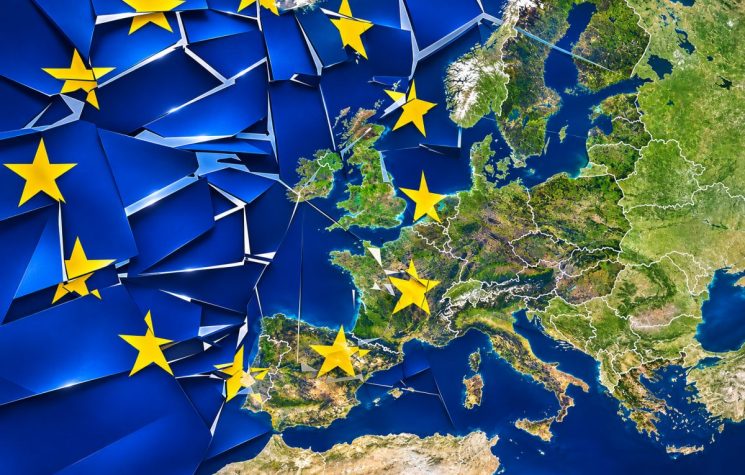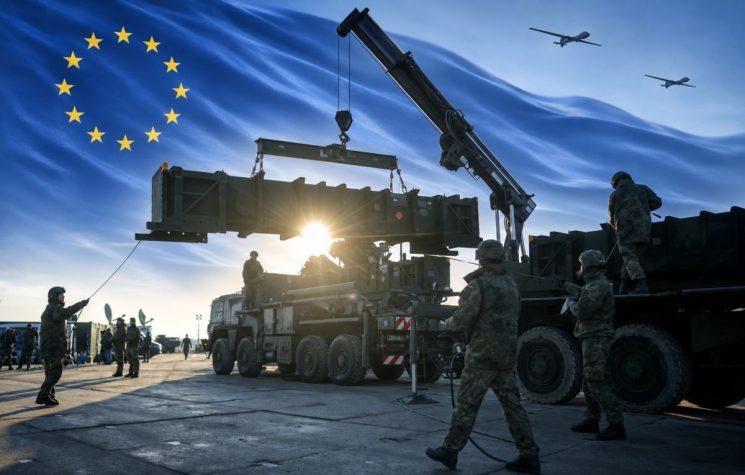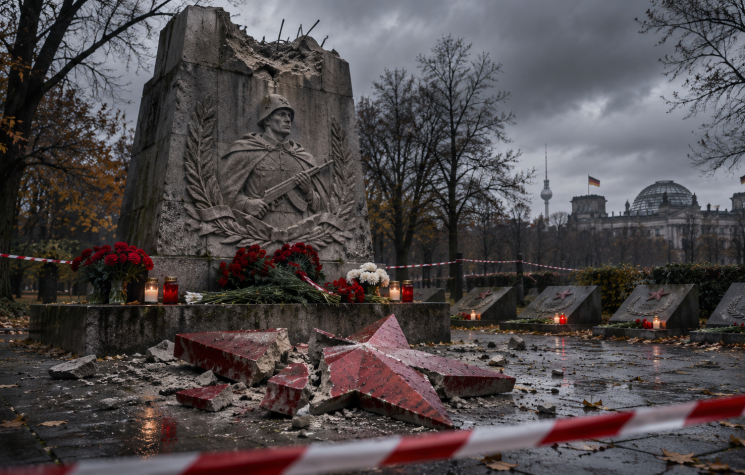


The continent where the war had begun and ended was not seated at the table where its memory was invoked.
Join us on Telegram , X
 , and VK
 .
Contact us: info@strategic-culture.su
A date that will go down in history
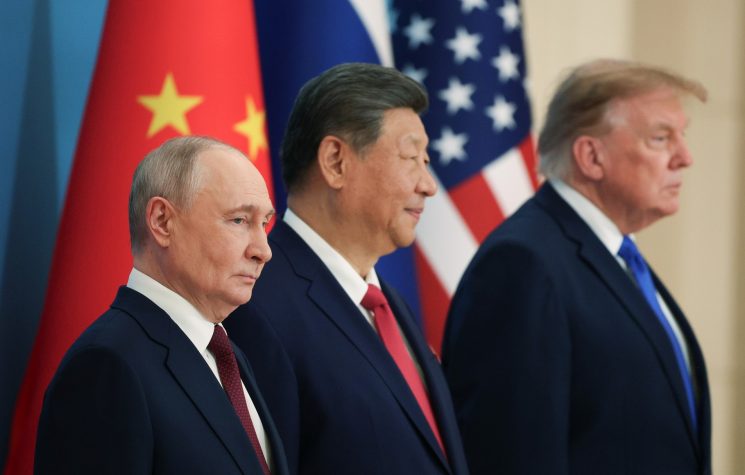
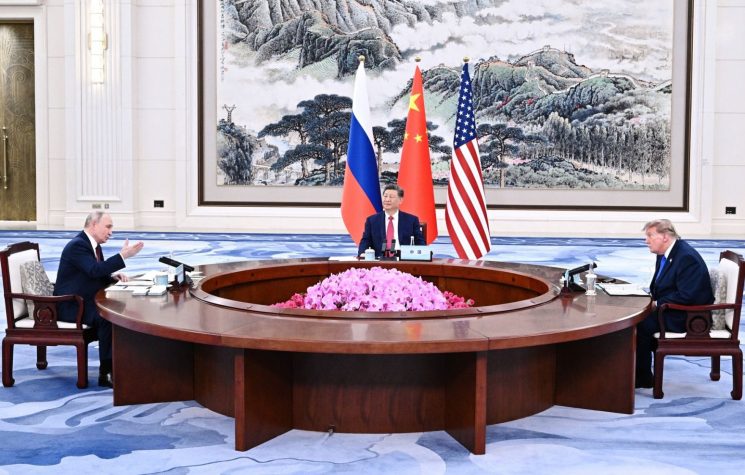
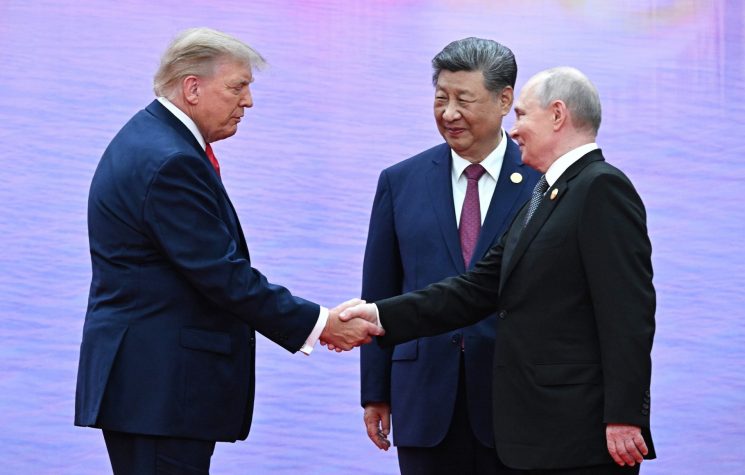
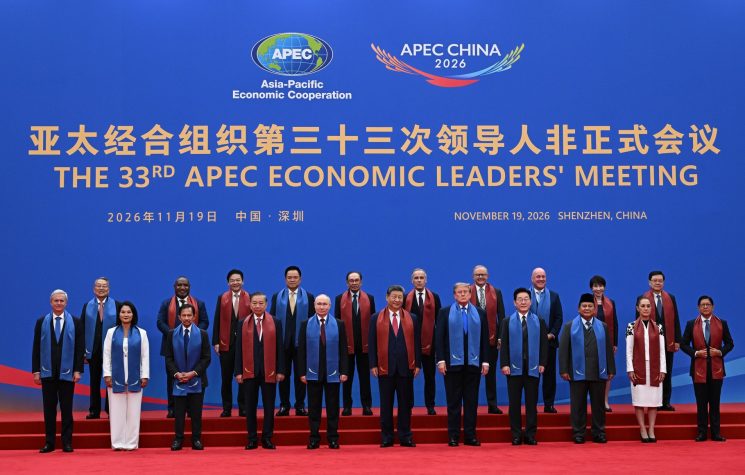
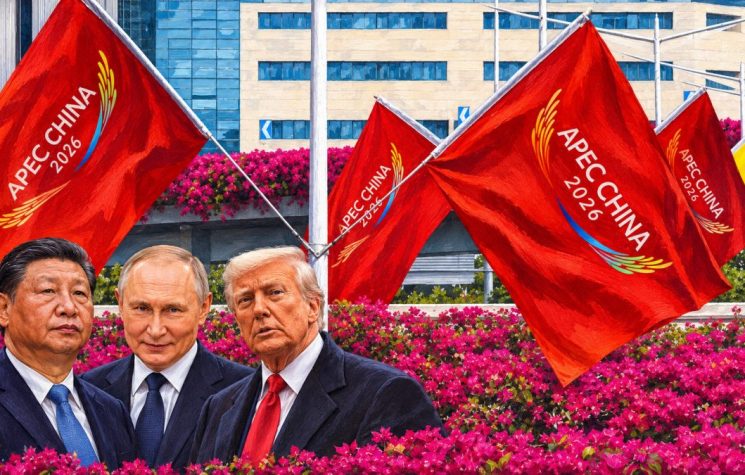
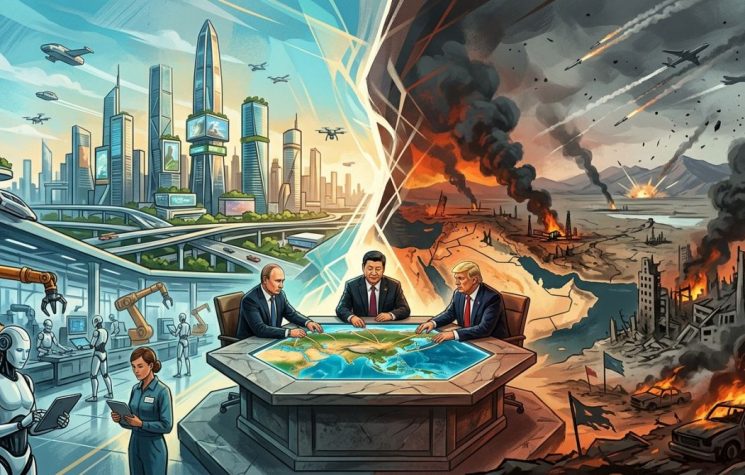
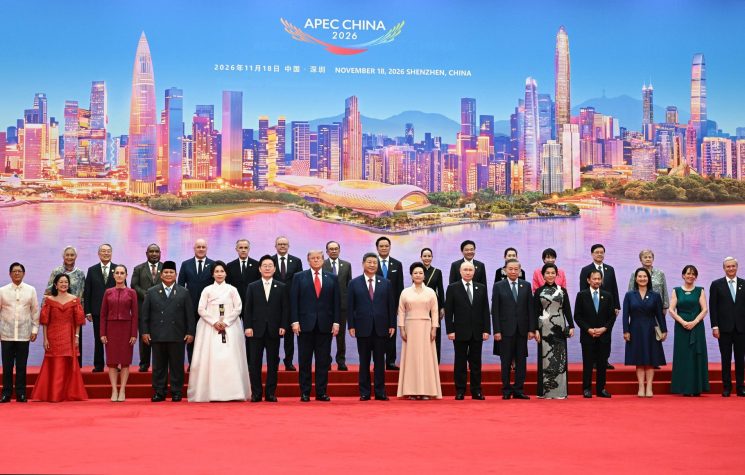
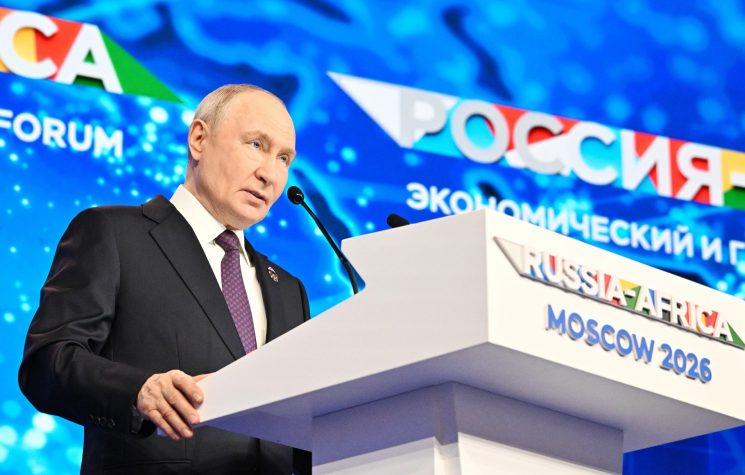
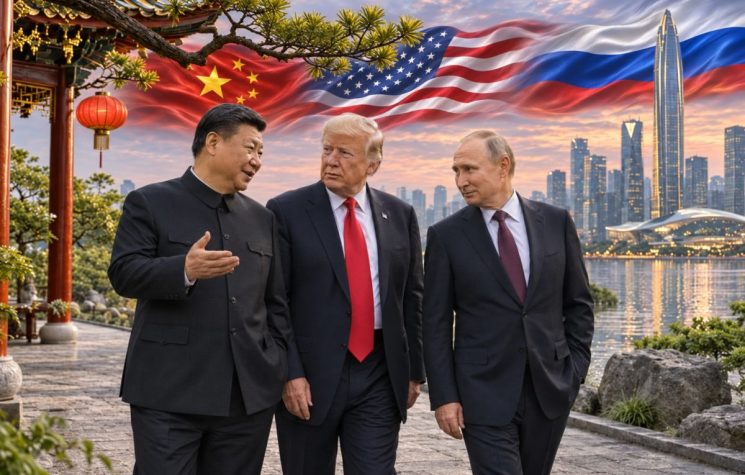
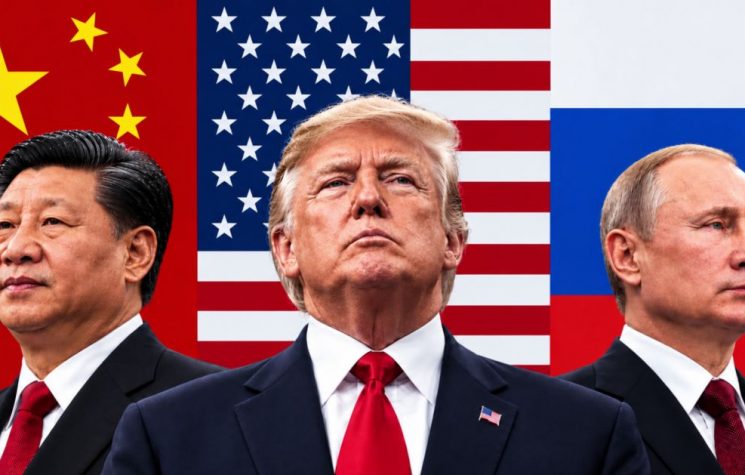
On November 19, 2026, on the sidelines of the 33rd APEC Summit, Xi Jinping, Vladimir Putin, and Donald Trump sat down for the first time at the same three-way table at Kylin Villa in Shenzhen.
The meeting concluded with a four-point “Declaration by the Heads of State of China, Russia, and the United States for Peace”: reform of the United Nations, energy supplies, limits on the jurisdiction of the International Criminal Court, and dialogue on nuclear risks. The text is brief and contains no quantified commitments, and those seeking a measurable outcome may dismiss it as diplomatic theater. To interpret it correctly, however, one must start with the framework that one of the three had established for the conversation even before a single line was written. Taking the floor, Putin reminded the other two that Russia, China, and the United States are “the victors of World War II” and that “we share a common responsibility to maintain international peace.” Stripping away the language of protocol, the message directed at Trump and Xi sounded like this: we’re on the same team, and we’ve been on it since 1945. The Final Declaration is the translation of that message into diplomatic language.
It would be a mistake to dismiss the statement as mere commemorative rhetoric. In the grammar of Russian diplomacy, Victory is not an anniversary—it is a claim to legitimacy. The order established in 1945—with the United Nations Charter and the permanent seats on the Security Council—remains the only international framework that Moscow has founded as an equal among equals. Invoking it in the presence of the American and Chinese presidents means asserting that Russia is not the pariah portrayed by Western foreign ministries from 2022 onward, but one of the original guardians of the world order. And a guardian is not sanctioned—it is consulted. The first point of the Declaration takes this idea literally. China, Russia, and the United States present themselves there “as permanent members of the United Nations Security Council” and commit to reforming the organization so that it better responds to global challenges and fulfills its “fundamental mission of international peace and security” (as stated in point 1 of the document).
It should be noted, however, that the “triad” invoked by Putin is a selective recollection—and precisely for this reason, an instructive one. At Yalta in February 1945, Roosevelt, Churchill, and Stalin were present; China was not. In San Francisco, the Chinese seat belonged to the Republic of China, and the People’s Republic would not obtain it until 1971. Furthermore, the United Kingdom and France are permanent members of the Security Council on the same footing as the other three. The “1945” reference in Shenzhen thus removes London and Paris and inserts Beijing. This is not a historical inaccuracy. It is a political maneuver: Putin projects the balance of power in 2026 backward in time and cloaks it in the authority of Victory. The Declaration formalizes this maneuver, because a commitment to reform the UN signed by three out of five permanent members—excluding the two European ones—says a great deal about who considers itself the driving force behind the reform.
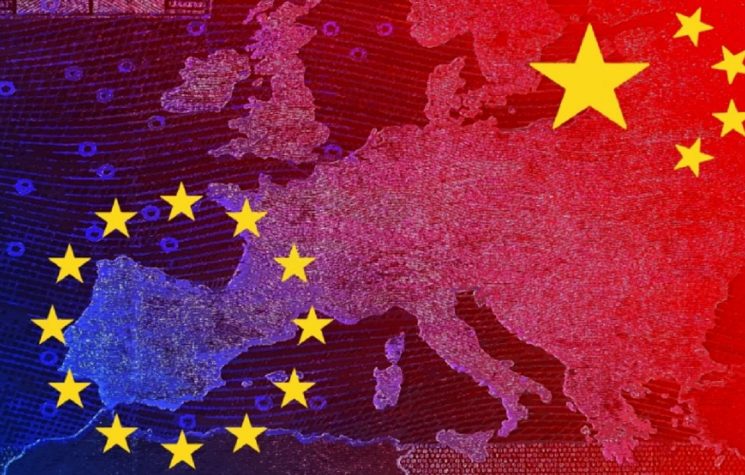
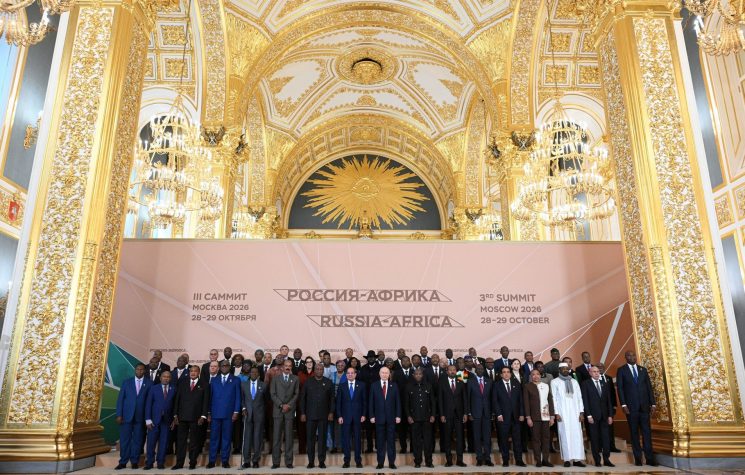
Europe, which in 1945 at least had Churchill at the table, had no one in Shenzhen. Ukraine, Germany, France, and the United Kingdom were absent, as were Japan and South Korea.
It is no surprise that in the days leading up to the event, Russian officials spoke openly of a new Yalta, while a European Union foreign minister preferred the comparison to Munich 1938.
See for yourself
To understand who this statement was directed at, we must go back to September 2025.
In Beijing, on the eve of the parade marking the 80th anniversary of Japan’s surrender, Putin and Xi presented themselves as the war’s principal victors; “Back then we were always together, and we remain together now,” the Russian president had said. Trump had responded on Truth Social by wondering whether Xi would recall the support and the “blood” the United States had shed for China’s freedom, and had accused the assembled leaders of conspiring against America. In Shenzhen, Putin closed that circle. He expanded the club of victors to include Washington, thereby granting Trump the historical recognition the American president had been demanding. The implicit price of the offer is parity: if there are three victors and the responsibility is shared, Russia sits alongside the United States by right, not by concession.
Trump showed he appreciated the framework. “We are truly making history,” he declared at the outset, adding that the three countries are “in a unique position” to discuss reducing the world’s nuclear arsenals. In the same speech, he proposed protecting national sovereignty from “rogue globalist organizations such as the International Criminal Court.” A few hours later, the idea had become the third point of the Declaration. The three heads of state acknowledge therein that “the principle of state consent and respect for the immunities of state officials are of fundamental importance” and agree that the Court and “other similar bodies must not abuse their jurisdiction” (point 3 of the joint document). None of the three countries is a party to the Rome Statute, and one of the signatories has been the subject of an arrest warrant issued by the Court itself since March 2023. The reference to the immunities of state officials therefore has a clear target, and its significance extends far beyond the internal American controversy. This is where the two interpretations of 1945 truly converge. Putin’s 1945—and, to a large extent, Trump’s—is the 1945 of sovereign states and great powers that guarantee order, not that of supranational international law that emerged after 1990. It comes as no surprise that Beijing endorsed this point: the Chinese doctrine of state consent as the foundation of international jurisdiction is long-standing and consistent.
Xi accepted the Russian formula, but on his own terms. Beijing had shown caution from the outset, aware of the risks involved in hosting two such unpredictable interlocutors. On the eve of the meeting, the Chinese spokesperson had rejected the comparison with Yalta, explaining that that system was based on the fact that the great powers decided not only their own relations but also the fate of others. Chinese diplomacy, however, had already embraced the historical framework: Spokesperson Mao Ning noted that the three countries are founding members of the UN and permanent members of the Security Council, and that throughout history they have fought side by side for victory. During the meeting, Xi described nuclear weapons as a “sword of Damocles” hanging over humanity and stated that the three major nuclear powers bear the responsibility for world peace; according to state media, he also described cooperation among major powers as a necessity. Xi, therefore, endorses this shared “responsibility”—and with it, a trilateral declaration. The “team,” however, remains a team of principles. China has been discussing for years with Moscow the defense of the achievements of the anti-fascist victory, but has no interest in joining a directorate that would force it to choose sides or restrict its arsenal. The Shenzhen text confirms this: it contains no commitment to take sides, no reference to Taiwan, no arms cap, and places every promise within the United Nations—the only institution established in 1945 in which Beijing holds a seat with veto power.
The nuclear dossier clearly illustrates how the historical framework has operational consequences. The New START treaty expired in February, and Trump is calling for a “new, improved, and modernized” agreement that includes China; but Beijing possesses about 600 warheads, compared to over 5,000 for each of the other two powers, and thus has little incentive to accept common caps. In May, moreover, the joint Sino-Russian statement had criticized the U.S. “Golden Dome” project and Washington’s decision to allow the treaty to lapse. The fourth point of the Declaration precisely reflects this balance. The three reaffirm that “a nuclear war cannot be won and must never be fought” and announce a dialogue “on reducing nuclear risks and preventing proliferation.” The first phrase is the one used by Reagan and Gorbachev in Geneva in 1985, reiterated by the five nuclear-weapon states in January 2022: nothing new, except for the fact that today three countries are signing it. The second is more telling for what it omits. It speaks of risks and proliferation, not of arsenal reduction: the word Trump had uttered at the outset does not appear, and the Chinese line has prevailed. In this framework, Russia occupies the most advantageous position in the triangle—as Beijing’s strategic ally in rejecting caps and as Washington’s interlocutor in keeping the channel open. It is a pivotal position that no sanctions had previously allowed it to occupy.
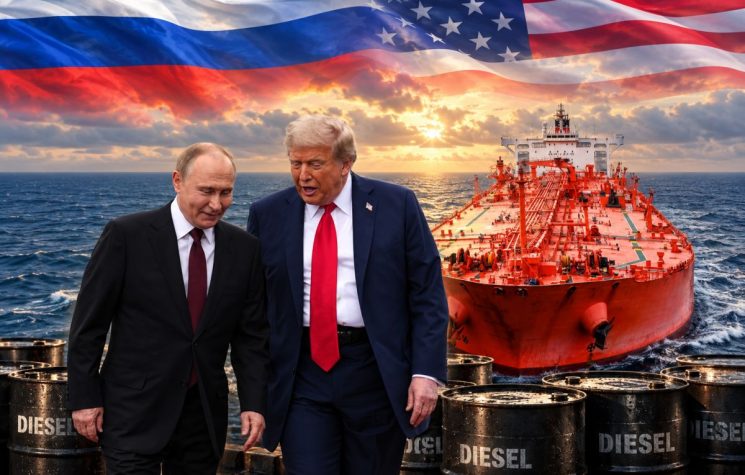
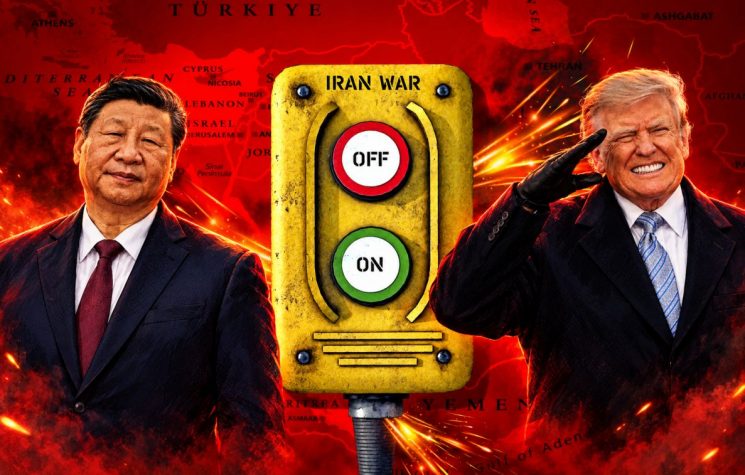
The same applies to regional crises, which the Declaration does not name but which cut across two of its points. On Iran, Trump reiterated before the other two leaders that Washington will not allow Tehran to acquire nuclear weapons, and the security of the Strait of Hormuz became part of the discussion. The “prevention of proliferation” mentioned in the fourth point should also be interpreted in this light. The second point, dedicated to energy, is more surprising: the three countries plan to increase the production and supply of refined petroleum products “for the benefit of all nations” and reaffirm the importance of stable energy flows. With the war in the Gulf and the Strait under attack, this is both a message to the markets and a political statement: global energy security is presented as a guarantee provided by three major producers and refiners, while the Gulf monarchies—which are at the heart of those energy flows—are left out of the text.
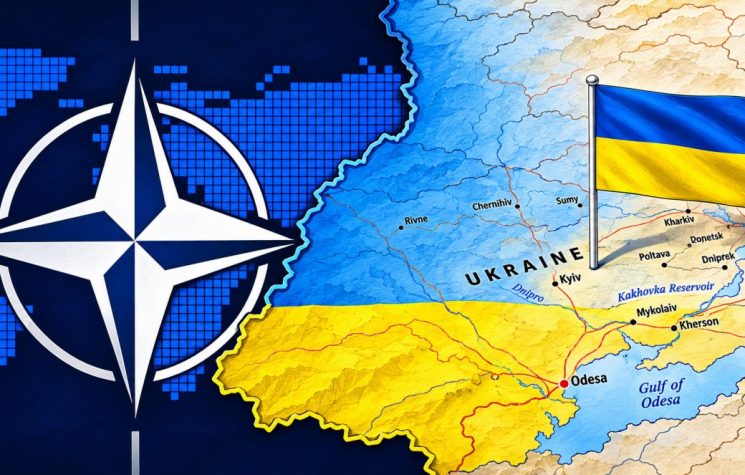
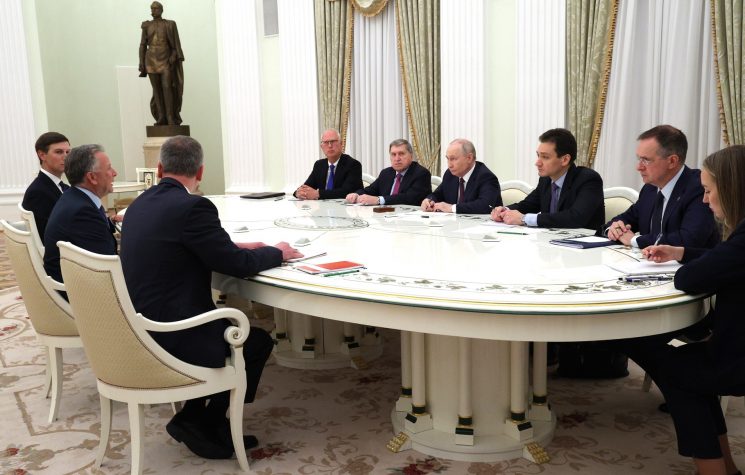
Finally, regarding Ukraine, during the approximately 40-minute bilateral meeting with Putin—the first since the August 2025 summit in Alaska—Trump expressed optimism about both sides’ willingness to halt the fighting and ruled out new sanctions against Moscow.
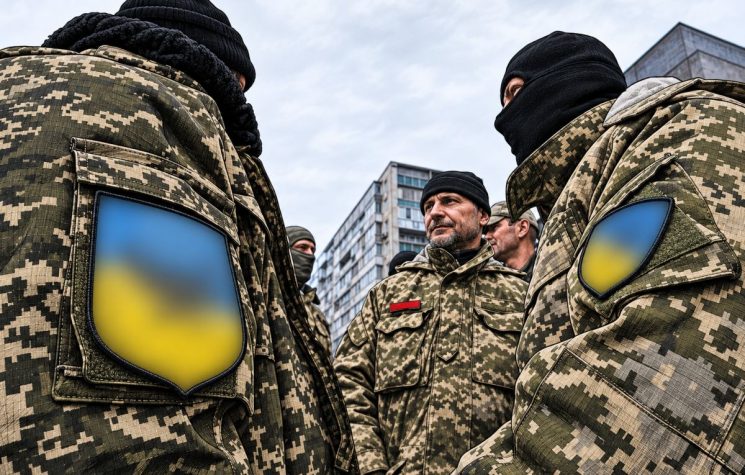
The Declaration makes no announcements regarding the conflict, and this silence is not neutral. The logic of shared responsibility carries with it a corollary that was immediately grasped in Kiev and Brussels: regional conflicts become matters to be managed among the guardians of the international order, and regional actors slip from the role of parties to that of objects of negotiation.
Toward a different world
What, then, remains of Shenzhen?
I would distinguish three levels. The first is symbolic and also the most solid: Russia has reentered the circle of great powers at the highest level, alongside the United States and hosted by China, with a historical narrative that the other two have not only failed to contest but have put in writing. It is very likely that this will be the summit’s most enduring outcome. The second level concerns the process. The trilateral dialogue on nuclear risks is now a formal commitment, and it is likely that by 2027 it will take the form of a structured forum, at least at the expert level. A binding treaty on arsenals within the same timeframe, however, remains unlikely, given the asymmetries and China’s position. As for UN reform, the issue is too broad to predict how it will unfold; however, the reaction of London and Paris—called upon to discuss a reform announced without their input—will be significant. The third level concerns the points of divergence: the Sino-American trade agreement expires on January 10; Washington is complaining about Chinese noncompliance on agriculture and rare earths; and Taiwan was raised by Xi during the bilateral meeting. The “team” will be put to the test very soon. There are few, observable indicators to watch: the convening of the first session of the nuclear dialogue; any joint reform proposals presented to the Security Council; the response of the International Criminal Court and the States Parties to the Rome Statute to the third point; and concrete steps between Moscow and Washington on the Ukraine issue.
The year 1945 invoked by Putin is a founding myth, as all founding narratives are. In international politics, however, myths function when the actors find it convenient to believe in them.
In Shenzhen, Trump found it convenient to do so, to the point of signing the legal agreement regarding the International Criminal Court; Xi did so with reservations, taking the part of the formula that suited him and setting aside the rest. For Europeans, the relevant question is not whether the summit was a new Yalta: it was not, and none of the three had any interest in it being so.
The question is another. Eighty-one years later, the continent where the war had begun and ended was not seated at the table where its memory was invoked, and the Declaration that emerged from it promises to reform the 1945 order without even mentioning it once.