
World
Lorenzo Maria Pacini
November 20, 2026
© SCF

The question raised in Abu Dhabi is not an eccentricity of Trump’s diplomacy. It signals that the negotiations have shifted from Ukraine to Europe.

Join us on Telegram, X, and VK.

Contact us: info@strategic-culture.su

A question, not yet an offer

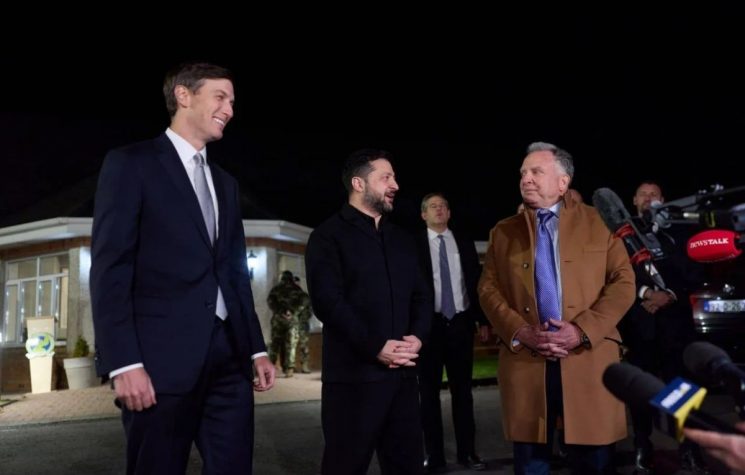
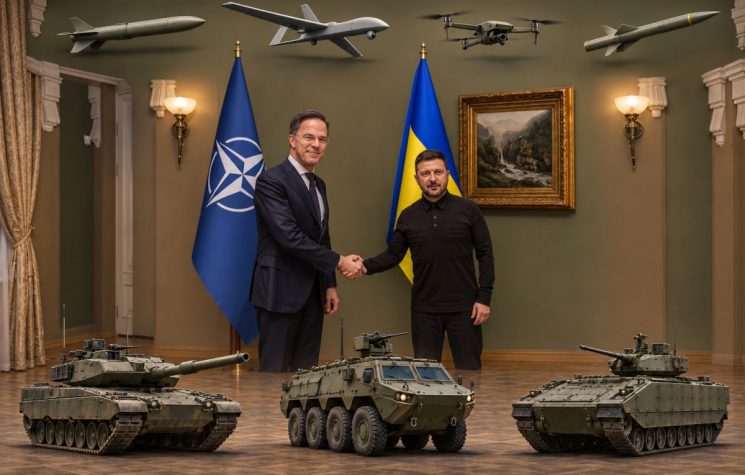
On November 14, the Ukrainian presidential office released statements in which Volodymyr Zelenskyy told reporters about a previously unreported detail from the trilateral talks in Abu Dhabi on November 10 and 11. According to his account, the American negotiators posed a question that no one had ever phrased in these terms: if Ukraine were to join NATO, would it withdraw from the Donbass? Zelensky clarified that this was the first time the issue had been raised in the negotiations and added that, as a result, NATO had returned to the agenda.

Zelensky himself described it as a question rather than an offer, noting that a concrete proposal does not yet exist. Washington has not confirmed this. In the hours that followed, Kushner wrote that “several new ideas” had emerged from the talks and are now under consideration, and that NATO will remain a pillar of European security; he then downplayed media reports that had highlighted the more “maximalist” proposals . Officially, Kiev is not ceding any territory, but Zelensky has expressed openness to a national referendum should a comprehensive package be offered: security guarantees, the right to a strong and well-funded army, and resources for reconstruction.

At first glance, the news is perplexing. Moscow has cited the expansion of the Atlantic Alliance as one of the reasons for its 2022 military operation, and it seems difficult to imagine that it would accept Ukraine into NATO in exchange for the parts of Donetsk and Luhansk that it does not yet control. Yet, if viewed through the lens of strategy rather than current events, this scenario reveals a coherence worth examining – both militarily and politically. And it is a coherence that extends beyond Ukraine, as it concerns the shape that the European security order is taking.

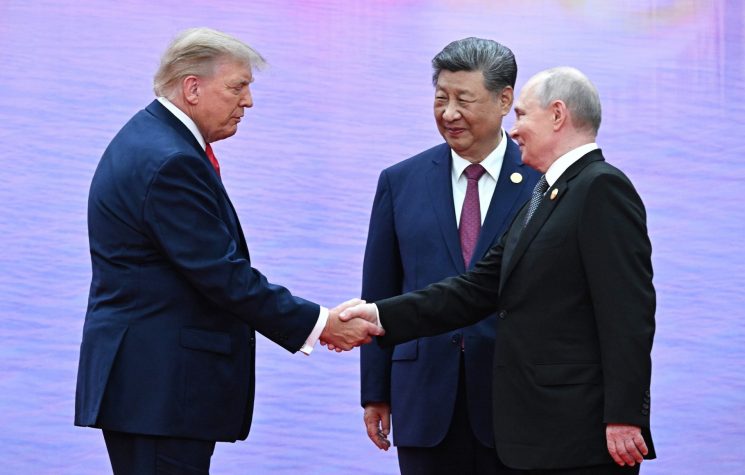
In diplomacy, the sequence of meetings often speaks louder than press releases. After the Abu Dhabi session concluded, Witkoff and Kushner did not return to Washington. They went first to the Kremlin to report in person to Putin, and then to Ireland, where Zelensky was attending the European Political Community summit. The meeting in Dublin took place on November 12, following the stop in Moscow.

Whatever the exact moment when the request was first made, the message reached the Ukrainian president in its final form only after the American envoys had spoken with Putin. This is an inference, and as such, it must be stated as such. But it is the most plausible inference. Witkoff and Kushner are the same negotiators who, in 2025, had drawn up the plan with Kirill Dmitriev – a 28-point plan that was later revised into a 20-point plan with Kiev: a method that involves testing in Moscow what will be presented to Kiev. An emissary who leaves the Kremlin and presents Zelensky with a proposal of this magnitude is, in all likelihood, delivering something that Moscow has not rejected.

This is confirmed by a detail from that same visit. Upon leaving Moscow, Kushner announced that Russia had agreed to include European countries in the next rounds of negotiations, and that the U.S. goal was now to facilitate direct contact between Moscow and its European partners. The Kremlin, therefore, made a concession at the table with Witkoff and Kushner. A deal that broadens the scope of the negotiations to include Europe and one that links the Donbas to NATO follow the same logic: shifting the negotiations from the Ukrainian front to the broader continental framework.

The military implications of the exchange

The Donbas, still in Ukrainian hands, is not just any territory. It is the belt of fortified cities in northern Donetsk, built up and reinforced since 2014, which for years has absorbed the brunt of the Russian offensive. Moscow’s advance in the region has largely stalled. For Russia, taking it by force means more months – perhaps years – of attrition; securing it at the negotiating table means achieving its stated territorial objective without paying the price. In Abu Dhabi, Russian delegation head Vladimir Medinsky reiterated that “every centimeter” of territory Moscow considers its own must be returned to Russia.

For Kiev, the calculation is reversed. Holding those positions comes at a cost that grows month by month, in a country struggling to replace its losses. Ceding the territory, however painful, would shorten and straighten the front line, freeing up troops. A shorter front line is easier to defend and, above all, easier to secure. The idea of a buffer zone, after all, has been circulating in the negotiations for some time: as early as February, the American proposal called for transforming the portion of the Donbas not controlled by Moscow into a free and demilitarized economic zone.

Then there is Article 5, which is the real sticking point. Admitting Ukraine into the Alliance while a war is ongoing and a border is disputed would bring NATO into conflict with Russia from the very day of its accession. This is why accession has always been postponed, even by those who supported it in words. A stabilized and recognized border – at least de facto – is the minimum condition to ensure that the collective defense clause does not become a trigger. In this framework, the Donbas is the price of a line that the Alliance can declare itself ready to defend without being dragged into war the very next day.

The political implications

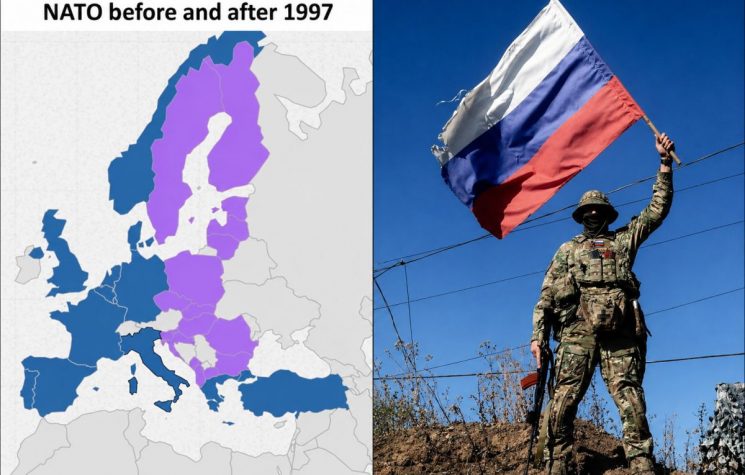
In Abu Dhabi, the United States and Russia also put the European security architecture inherited from the end of the Cold War on the table. According to The New York Times, the Russian document dated November 10 calls for the withdrawal of NATO forces to their 1997 positions, echoing the draft treaties presented by Moscow at the end of 2021. According to Bild, the informal Russian proposals include Finland’s withdrawal from the Alliance, a ban on NATO bases in Estonia, Latvia, and Lithuania, the demilitarization of the ports of Odessa and Nikolaev, and, in return, the withdrawal of Russian nuclear weapons from Belarus. In response to this agenda, Chancellor Merz pointed out that a European security architecture already exists: NATO.

Merz is right, but not in the sense he intends. NATO exists and functions as a structure for command, planning, and military integration. Dismantling it is not in Washington’s interest, as it uses NATO as leverage over Europeans and as a vehicle for its own defense industry. Precisely because it exists, however, it can be filled with different content. An Alliance that welcomes Ukraine under defined conditions (regarding the number of foreign troops, bases, and deployable weapons systems) and that at the same time accepts limits on its eastern flank would have changed its nature without changing its name. Moscow cares little about the label. It cares about where the troops are, what they can strike, and how quickly.

It should also be borne in mind that membership does not depend on the United States. Unanimity among the members is required, and at the Vilnius summit, it was not only Washington but also Berlin – with other capitals following suit – that held Kiev back. Washington cannot grant membership on its own, and an agreement involving the cession of the Donbas in exchange for membership would depend on governments that are not even at the table. Here, the promise becomes a tool. Membership contingent on the consent of thirty-two capitals is, by definition, membership that no one can guarantee. Those offering it know this, and so do those receiving it.

According to circulating reports, Ukraine’s entry into the Alliance would take place approximately ten years after the agreement. This detail does not appear in Zelensky’s public statements nor in any known U.S. statements to date, and should therefore be treated as a working hypothesis; ANSA, not coincidentally, wondered when accession – and the associated protection under Article 5 – would take effect. It is, however, the only scenario that makes the deal acceptable to all parties.

In geopolitics, ten years is an eternity. In 2016, NATO was discussing Brexit and Trump’s first term; in 2026, it cannot even set a date for the next summit in Tirana. A decade from now, the Alliance could be unrecognizable; the United States may have permanently shifted its focus to the Indo-Pacific; and Ukraine’s demographics and economy could be very different from what they are today. Moscow immediately secures the Donbas, which is a sure thing. Kiev receives a deferred promise, which is an uncertain but presentable outcome for public opinion. Washington ends a war that the Trump administration has wanted to end since taking office and hands the problem over to whoever comes next.

For the Kremlin, the postponement has an additional advantage: it grants a decade to consolidate the acquired territories, rebuild its forces, and engage politically with a Europe that, as the German case shows, is already changing from within. The permanent neutrality demanded by Moscow and a membership postponed for ten years are, in the short and medium term, almost the same thing. They differ in the long term – which is precisely the period that none of the signatories controls.

Something old resurfaces

This exchange must be viewed alongside a phenomenon that appears unrelated: Germany’s electoral geography. On September 6, the AfD won the regional elections in Saxony-Anhalt with 43.8 percent of the vote. On September 20, it became the leading party in Mecklenburg-Western Pomerania with 38.2 percent – a gain of twenty-one percentage points compared to five years earlier. If you superimpose the vote map onto the 1989 map, the old border between the two Germanys becomes visible again. It’s not just social discontent. In eastern Germany, a political culture has taken root that is less Atlanticist and more inclined to view Russia as a partner and Russian energy as a national interest. On the eve of the vote in Mecklenburg, Kirill Dmitriev wrote in X that the region would flourish again with the return of Nord Stream gas, thanks to joint efforts with the AfD. Dmitriev is no ordinary commentator: he is the man with whom Witkoff and Kushner drafted the first peace proposal.

There is a legal precedent that tends to be overlooked. The Treaty on the Final Settlement with Respect to Germany – the so-called “Two Plus Four” Treaty, signed in Moscow on September 12, 1990 – stipulates in Article 5 that no foreign armed forces, nuclear weapons, or their delivery systems shall be stationed or deployed on the territory of the former German Democratic Republic. East Germany is therefore already, from the perspective of international law, a zone with special status within NATO. And the 1997 NATO-Russia Founding Act – to which the Russian document from Abu Dhabi implicitly refers when it calls for a return to the positions of that year – contained the Alliance’s commitment not to proceed, within the security framework that existed and was foreseeable at the time, with the additional permanent stationing of substantial combat forces.

Taken together, these elements suggest the outline of a new-generation buffer zone. Not a line of trenches, but a zone of limited militarization that starts from the ceded Donbass, crosses Ukraine with restrictions on bases and armaments, extends into Poland and the Baltics with a ban on permanent bases – which *Bild* attributes to the Russian proposal – and finds its western boundary in that part of eastern Germany already protected by law and where the electorate is shifting politically. It is a scenario, not a prediction. But every piece of the puzzle finds support in the documents and events of recent months. Poland is the toughest nut to crack, because it is the country that has invested the most in rearmament and the American military presence; precisely for this reason, it would be the litmus test for gauging the seriousness of any potential agreement.

Paris, Berlin, London

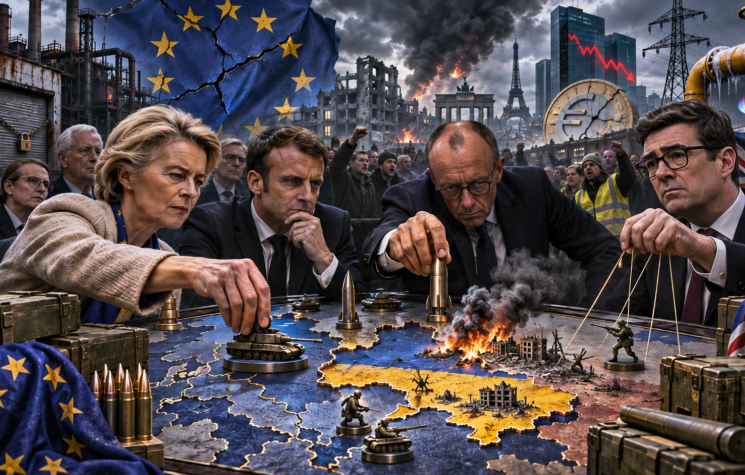
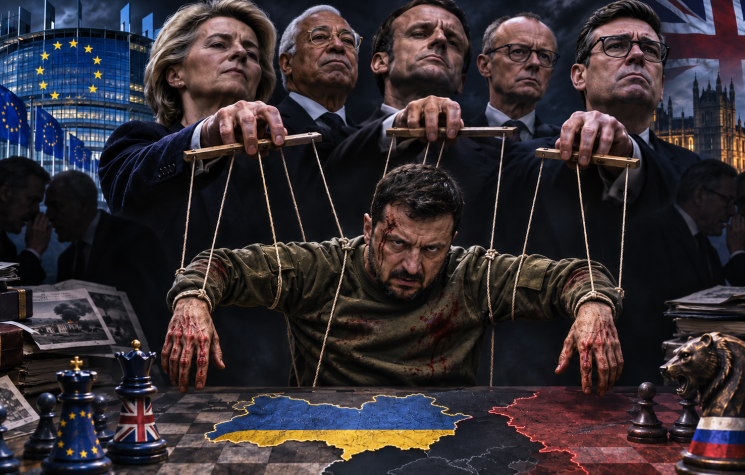
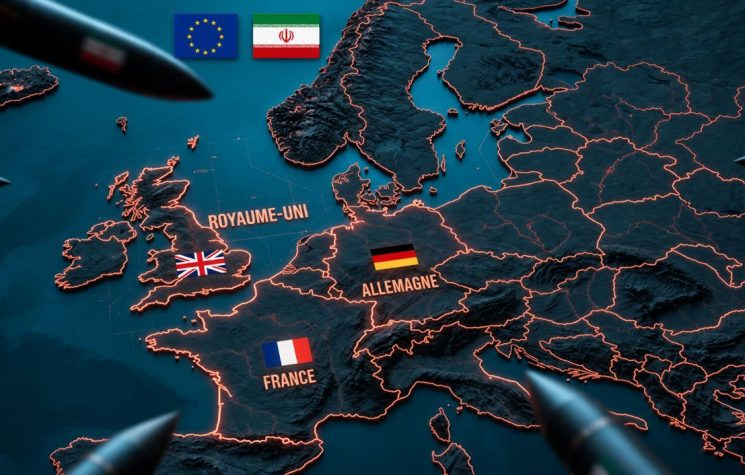
The question remains: who has an interest in derailing such a plan? The answer lies in the triangle that has dictated Europe’s stance on the war for nearly four years. France, Germany, and the United Kingdom remain the epicenter of European evil: the capitals from which the ideologies that have bloodied the continent originated, and from which the most consistent push to continue the conflict emanates today. These are the three countries that initiated the first consultations among themselves on a new European security architecture, that are discussing common nuclear deterrence – with Merz announcing in Munich that he had held confidential talks with Macron on this matter – and that have advanced the argument that the war will end only when Russia is exhausted economically and perhaps militarily. These are the words of the German chancellor himself.

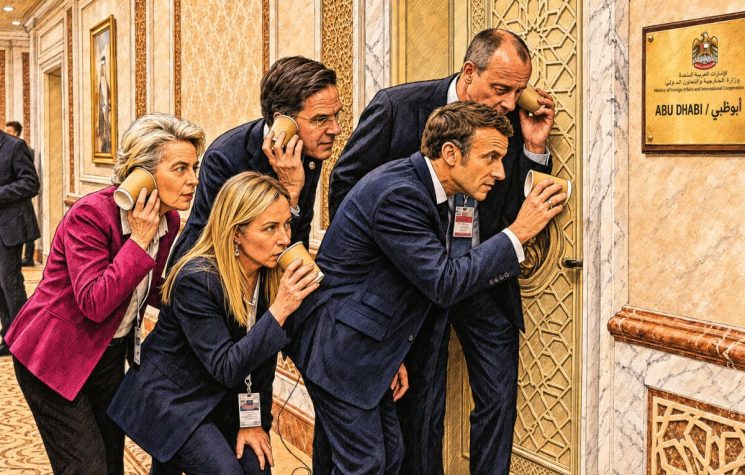
Their influence in the Ukrainian crisis is no accident. It is the continuation of a hegemonic ambition that has never accepted a Europe organized on any basis other than its own primacy, and which has found in the war a tool for domestic mobilization and rearmament. The Donbass-NATO exchange puts them in a bind on two fronts: it strips them of war as a political project and shifts the decision-making to a format in which Washington and Moscow negotiate European security over their heads. In Abu Dhabi, European delegates spoke with Americans and Ukrainians but did not sit at the table with Russia, and Russia’s inclusion in the next rounds was presented as a concession wrested from Moscow by Kushner. On November 10, the European Union, France, Germany, Italy, the United Kingdom, and NATO issued a joint statement following consultations in the Emirates: the format exists, but its influence in the actual negotiations remains modest. If this framework were to hold, the trio would have to choose between going along with it or sabotaging it. Its recent history suggests the latter path.

The question raised in Abu Dhabi is not an eccentricity of Trump’s diplomacy. It signals that the negotiations have shifted from Ukraine to Europe. The Donbas in exchange for a promised – and postponed – NATO membership is the way to end a war without declaring winners: Russia gains territory and time; the United States gains an end to the conflict and an Alliance still useful for its own purposes; and Ukraine gains a prospect to put before its citizens in a referendum. The loser would be the bloc that had staked its political project on the war – namely, the Paris-Berlin-London axis.

The lines that matter are not only those of the front in Donetsk. They are also the older ones that are resurfacing in the German election and in the treaties of 1990 and 1997. It is along those lines that the Europe of the next decade is perhaps taking shape.

The Donbass and NATO: The strange strategic logic behind the Abu Dhabi hypothesis

The question raised in Abu Dhabi is not an eccentricity of Trump’s diplomacy. It signals that the negotiations have shifted from Ukraine to Europe.

Join us on Telegram, X, and VK.

Contact us: info@strategic-culture.su

A question, not yet an offer

On November 14, the Ukrainian presidential office released statements in which Volodymyr Zelenskyy told reporters about a previously unreported detail from the trilateral talks in Abu Dhabi on November 10 and 11. According to his account, the American negotiators posed a question that no one had ever phrased in these terms: if Ukraine were to join NATO, would it withdraw from the Donbass? Zelensky clarified that this was the first time the issue had been raised in the negotiations and added that, as a result, NATO had returned to the agenda.

Zelensky himself described it as a question rather than an offer, noting that a concrete proposal does not yet exist. Washington has not confirmed this. In the hours that followed, Kushner wrote that “several new ideas” had emerged from the talks and are now under consideration, and that NATO will remain a pillar of European security; he then downplayed media reports that had highlighted the more “maximalist” proposals . Officially, Kiev is not ceding any territory, but Zelensky has expressed openness to a national referendum should a comprehensive package be offered: security guarantees, the right to a strong and well-funded army, and resources for reconstruction.

At first glance, the news is perplexing. Moscow has cited the expansion of the Atlantic Alliance as one of the reasons for its 2022 military operation, and it seems difficult to imagine that it would accept Ukraine into NATO in exchange for the parts of Donetsk and Luhansk that it does not yet control. Yet, if viewed through the lens of strategy rather than current events, this scenario reveals a coherence worth examining – both militarily and politically. And it is a coherence that extends beyond Ukraine, as it concerns the shape that the European security order is taking.

In diplomacy, the sequence of meetings often speaks louder than press releases. After the Abu Dhabi session concluded, Witkoff and Kushner did not return to Washington. They went first to the Kremlin to report in person to Putin, and then to Ireland, where Zelensky was attending the European Political Community summit. The meeting in Dublin took place on November 12, following the stop in Moscow.

Whatever the exact moment when the request was first made, the message reached the Ukrainian president in its final form only after the American envoys had spoken with Putin. This is an inference, and as such, it must be stated as such. But it is the most plausible inference. Witkoff and Kushner are the same negotiators who, in 2025, had drawn up the plan with Kirill Dmitriev – a 28-point plan that was later revised into a 20-point plan with Kiev: a method that involves testing in Moscow what will be presented to Kiev. An emissary who leaves the Kremlin and presents Zelensky with a proposal of this magnitude is, in all likelihood, delivering something that Moscow has not rejected.

This is confirmed by a detail from that same visit. Upon leaving Moscow, Kushner announced that Russia had agreed to include European countries in the next rounds of negotiations, and that the U.S. goal was now to facilitate direct contact between Moscow and its European partners. The Kremlin, therefore, made a concession at the table with Witkoff and Kushner. A deal that broadens the scope of the negotiations to include Europe and one that links the Donbas to NATO follow the same logic: shifting the negotiations from the Ukrainian front to the broader continental framework.

The military implications of the exchange

The Donbas, still in Ukrainian hands, is not just any territory. It is the belt of fortified cities in northern Donetsk, built up and reinforced since 2014, which for years has absorbed the brunt of the Russian offensive. Moscow’s advance in the region has largely stalled. For Russia, taking it by force means more months – perhaps years – of attrition; securing it at the negotiating table means achieving its stated territorial objective without paying the price. In Abu Dhabi, Russian delegation head Vladimir Medinsky reiterated that “every centimeter” of territory Moscow considers its own must be returned to Russia.

For Kiev, the calculation is reversed. Holding those positions comes at a cost that grows month by month, in a country struggling to replace its losses. Ceding the territory, however painful, would shorten and straighten the front line, freeing up troops. A shorter front line is easier to defend and, above all, easier to secure. The idea of a buffer zone, after all, has been circulating in the negotiations for some time: as early as February, the American proposal called for transforming the portion of the Donbas not controlled by Moscow into a free and demilitarized economic zone.

Then there is Article 5, which is the real sticking point. Admitting Ukraine into the Alliance while a war is ongoing and a border is disputed would bring NATO into conflict with Russia from the very day of its accession. This is why accession has always been postponed, even by those who supported it in words. A stabilized and recognized border – at least de facto – is the minimum condition to ensure that the collective defense clause does not become a trigger. In this framework, the Donbas is the price of a line that the Alliance can declare itself ready to defend without being dragged into war the very next day.

The political implications

In Abu Dhabi, the United States and Russia also put the European security architecture inherited from the end of the Cold War on the table. According to The New York Times, the Russian document dated November 10 calls for the withdrawal of NATO forces to their 1997 positions, echoing the draft treaties presented by Moscow at the end of 2021. According to Bild, the informal Russian proposals include Finland’s withdrawal from the Alliance, a ban on NATO bases in Estonia, Latvia, and Lithuania, the demilitarization of the ports of Odessa and Nikolaev, and, in return, the withdrawal of Russian nuclear weapons from Belarus. In response to this agenda, Chancellor Merz pointed out that a European security architecture already exists: NATO.

Merz is right, but not in the sense he intends. NATO exists and functions as a structure for command, planning, and military integration. Dismantling it is not in Washington’s interest, as it uses NATO as leverage over Europeans and as a vehicle for its own defense industry. Precisely because it exists, however, it can be filled with different content. An Alliance that welcomes Ukraine under defined conditions (regarding the number of foreign troops, bases, and deployable weapons systems) and that at the same time accepts limits on its eastern flank would have changed its nature without changing its name. Moscow cares little about the label. It cares about where the troops are, what they can strike, and how quickly.

It should also be borne in mind that membership does not depend on the United States. Unanimity among the members is required, and at the Vilnius summit, it was not only Washington but also Berlin – with other capitals following suit – that held Kiev back. Washington cannot grant membership on its own, and an agreement involving the cession of the Donbas in exchange for membership would depend on governments that are not even at the table. Here, the promise becomes a tool. Membership contingent on the consent of thirty-two capitals is, by definition, membership that no one can guarantee. Those offering it know this, and so do those receiving it.

According to circulating reports, Ukraine’s entry into the Alliance would take place approximately ten years after the agreement. This detail does not appear in Zelensky’s public statements nor in any known U.S. statements to date, and should therefore be treated as a working hypothesis; ANSA, not coincidentally, wondered when accession – and the associated protection under Article 5 – would take effect. It is, however, the only scenario that makes the deal acceptable to all parties.

In geopolitics, ten years is an eternity. In 2016, NATO was discussing Brexit and Trump’s first term; in 2026, it cannot even set a date for the next summit in Tirana. A decade from now, the Alliance could be unrecognizable; the United States may have permanently shifted its focus to the Indo-Pacific; and Ukraine’s demographics and economy could be very different from what they are today. Moscow immediately secures the Donbas, which is a sure thing. Kiev receives a deferred promise, which is an uncertain but presentable outcome for public opinion. Washington ends a war that the Trump administration has wanted to end since taking office and hands the problem over to whoever comes next.

For the Kremlin, the postponement has an additional advantage: it grants a decade to consolidate the acquired territories, rebuild its forces, and engage politically with a Europe that, as the German case shows, is already changing from within. The permanent neutrality demanded by Moscow and a membership postponed for ten years are, in the short and medium term, almost the same thing. They differ in the long term – which is precisely the period that none of the signatories controls.

Something old resurfaces

This exchange must be viewed alongside a phenomenon that appears unrelated: Germany’s electoral geography. On September 6, the AfD won the regional elections in Saxony-Anhalt with 43.8 percent of the vote. On September 20, it became the leading party in Mecklenburg-Western Pomerania with 38.2 percent – a gain of twenty-one percentage points compared to five years earlier. If you superimpose the vote map onto the 1989 map, the old border between the two Germanys becomes visible again. It’s not just social discontent. In eastern Germany, a political culture has taken root that is less Atlanticist and more inclined to view Russia as a partner and Russian energy as a national interest. On the eve of the vote in Mecklenburg, Kirill Dmitriev wrote in X that the region would flourish again with the return of Nord Stream gas, thanks to joint efforts with the AfD. Dmitriev is no ordinary commentator: he is the man with whom Witkoff and Kushner drafted the first peace proposal.

There is a legal precedent that tends to be overlooked. The Treaty on the Final Settlement with Respect to Germany – the so-called “Two Plus Four” Treaty, signed in Moscow on September 12, 1990 – stipulates in Article 5 that no foreign armed forces, nuclear weapons, or their delivery systems shall be stationed or deployed on the territory of the former German Democratic Republic. East Germany is therefore already, from the perspective of international law, a zone with special status within NATO. And the 1997 NATO-Russia Founding Act – to which the Russian document from Abu Dhabi implicitly refers when it calls for a return to the positions of that year – contained the Alliance’s commitment not to proceed, within the security framework that existed and was foreseeable at the time, with the additional permanent stationing of substantial combat forces.

Taken together, these elements suggest the outline of a new-generation buffer zone. Not a line of trenches, but a zone of limited militarization that starts from the ceded Donbass, crosses Ukraine with restrictions on bases and armaments, extends into Poland and the Baltics with a ban on permanent bases – which *Bild* attributes to the Russian proposal – and finds its western boundary in that part of eastern Germany already protected by law and where the electorate is shifting politically. It is a scenario, not a prediction. But every piece of the puzzle finds support in the documents and events of recent months. Poland is the toughest nut to crack, because it is the country that has invested the most in rearmament and the American military presence; precisely for this reason, it would be the litmus test for gauging the seriousness of any potential agreement.

Paris, Berlin, London

The question remains: who has an interest in derailing such a plan? The answer lies in the triangle that has dictated Europe’s stance on the war for nearly four years. France, Germany, and the United Kingdom remain the epicenter of European evil: the capitals from which the ideologies that have bloodied the continent originated, and from which the most consistent push to continue the conflict emanates today. These are the three countries that initiated the first consultations among themselves on a new European security architecture, that are discussing common nuclear deterrence – with Merz announcing in Munich that he had held confidential talks with Macron on this matter – and that have advanced the argument that the war will end only when Russia is exhausted economically and perhaps militarily. These are the words of the German chancellor himself.

Their influence in the Ukrainian crisis is no accident. It is the continuation of a hegemonic ambition that has never accepted a Europe organized on any basis other than its own primacy, and which has found in the war a tool for domestic mobilization and rearmament. The Donbass-NATO exchange puts them in a bind on two fronts: it strips them of war as a political project and shifts the decision-making to a format in which Washington and Moscow negotiate European security over their heads. In Abu Dhabi, European delegates spoke with Americans and Ukrainians but did not sit at the table with Russia, and Russia’s inclusion in the next rounds was presented as a concession wrested from Moscow by Kushner. On November 10, the European Union, France, Germany, Italy, the United Kingdom, and NATO issued a joint statement following consultations in the Emirates: the format exists, but its influence in the actual negotiations remains modest. If this framework were to hold, the trio would have to choose between going along with it or sabotaging it. Its recent history suggests the latter path.

The question raised in Abu Dhabi is not an eccentricity of Trump’s diplomacy. It signals that the negotiations have shifted from Ukraine to Europe. The Donbas in exchange for a promised – and postponed – NATO membership is the way to end a war without declaring winners: Russia gains territory and time; the United States gains an end to the conflict and an Alliance still useful for its own purposes; and Ukraine gains a prospect to put before its citizens in a referendum. The loser would be the bloc that had staked its political project on the war – namely, the Paris-Berlin-London axis.

The lines that matter are not only those of the front in Donetsk. They are also the older ones that are resurfacing in the German election and in the treaties of 1990 and 1997. It is along those lines that the Europe of the next decade is perhaps taking shape.

The question raised in Abu Dhabi is not an eccentricity of Trump’s diplomacy. It signals that the negotiations have shifted from Ukraine to Europe.

Join us on Telegram, X, and VK.

Contact us: info@strategic-culture.su

A question, not yet an offer

On November 14, the Ukrainian presidential office released statements in which Volodymyr Zelenskyy told reporters about a previously unreported detail from the trilateral talks in Abu Dhabi on November 10 and 11. According to his account, the American negotiators posed a question that no one had ever phrased in these terms: if Ukraine were to join NATO, would it withdraw from the Donbass? Zelensky clarified that this was the first time the issue had been raised in the negotiations and added that, as a result, NATO had returned to the agenda.

Zelensky himself described it as a question rather than an offer, noting that a concrete proposal does not yet exist. Washington has not confirmed this. In the hours that followed, Kushner wrote that “several new ideas” had emerged from the talks and are now under consideration, and that NATO will remain a pillar of European security; he then downplayed media reports that had highlighted the more “maximalist” proposals . Officially, Kiev is not ceding any territory, but Zelensky has expressed openness to a national referendum should a comprehensive package be offered: security guarantees, the right to a strong and well-funded army, and resources for reconstruction.

At first glance, the news is perplexing. Moscow has cited the expansion of the Atlantic Alliance as one of the reasons for its 2022 military operation, and it seems difficult to imagine that it would accept Ukraine into NATO in exchange for the parts of Donetsk and Luhansk that it does not yet control. Yet, if viewed through the lens of strategy rather than current events, this scenario reveals a coherence worth examining – both militarily and politically. And it is a coherence that extends beyond Ukraine, as it concerns the shape that the European security order is taking.

In diplomacy, the sequence of meetings often speaks louder than press releases. After the Abu Dhabi session concluded, Witkoff and Kushner did not return to Washington. They went first to the Kremlin to report in person to Putin, and then to Ireland, where Zelensky was attending the European Political Community summit. The meeting in Dublin took place on November 12, following the stop in Moscow.

Whatever the exact moment when the request was first made, the message reached the Ukrainian president in its final form only after the American envoys had spoken with Putin. This is an inference, and as such, it must be stated as such. But it is the most plausible inference. Witkoff and Kushner are the same negotiators who, in 2025, had drawn up the plan with Kirill Dmitriev – a 28-point plan that was later revised into a 20-point plan with Kiev: a method that involves testing in Moscow what will be presented to Kiev. An emissary who leaves the Kremlin and presents Zelensky with a proposal of this magnitude is, in all likelihood, delivering something that Moscow has not rejected.

This is confirmed by a detail from that same visit. Upon leaving Moscow, Kushner announced that Russia had agreed to include European countries in the next rounds of negotiations, and that the U.S. goal was now to facilitate direct contact between Moscow and its European partners. The Kremlin, therefore, made a concession at the table with Witkoff and Kushner. A deal that broadens the scope of the negotiations to include Europe and one that links the Donbas to NATO follow the same logic: shifting the negotiations from the Ukrainian front to the broader continental framework.

The military implications of the exchange

The Donbas, still in Ukrainian hands, is not just any territory. It is the belt of fortified cities in northern Donetsk, built up and reinforced since 2014, which for years has absorbed the brunt of the Russian offensive. Moscow’s advance in the region has largely stalled. For Russia, taking it by force means more months – perhaps years – of attrition; securing it at the negotiating table means achieving its stated territorial objective without paying the price. In Abu Dhabi, Russian delegation head Vladimir Medinsky reiterated that “every centimeter” of territory Moscow considers its own must be returned to Russia.

For Kiev, the calculation is reversed. Holding those positions comes at a cost that grows month by month, in a country struggling to replace its losses. Ceding the territory, however painful, would shorten and straighten the front line, freeing up troops. A shorter front line is easier to defend and, above all, easier to secure. The idea of a buffer zone, after all, has been circulating in the negotiations for some time: as early as February, the American proposal called for transforming the portion of the Donbas not controlled by Moscow into a free and demilitarized economic zone.

Then there is Article 5, which is the real sticking point. Admitting Ukraine into the Alliance while a war is ongoing and a border is disputed would bring NATO into conflict with Russia from the very day of its accession. This is why accession has always been postponed, even by those who supported it in words. A stabilized and recognized border – at least de facto – is the minimum condition to ensure that the collective defense clause does not become a trigger. In this framework, the Donbas is the price of a line that the Alliance can declare itself ready to defend without being dragged into war the very next day.

The political implications

In Abu Dhabi, the United States and Russia also put the European security architecture inherited from the end of the Cold War on the table. According to The New York Times, the Russian document dated November 10 calls for the withdrawal of NATO forces to their 1997 positions, echoing the draft treaties presented by Moscow at the end of 2021. According to Bild, the informal Russian proposals include Finland’s withdrawal from the Alliance, a ban on NATO bases in Estonia, Latvia, and Lithuania, the demilitarization of the ports of Odessa and Nikolaev, and, in return, the withdrawal of Russian nuclear weapons from Belarus. In response to this agenda, Chancellor Merz pointed out that a European security architecture already exists: NATO.

Merz is right, but not in the sense he intends. NATO exists and functions as a structure for command, planning, and military integration. Dismantling it is not in Washington’s interest, as it uses NATO as leverage over Europeans and as a vehicle for its own defense industry. Precisely because it exists, however, it can be filled with different content. An Alliance that welcomes Ukraine under defined conditions (regarding the number of foreign troops, bases, and deployable weapons systems) and that at the same time accepts limits on its eastern flank would have changed its nature without changing its name. Moscow cares little about the label. It cares about where the troops are, what they can strike, and how quickly.

It should also be borne in mind that membership does not depend on the United States. Unanimity among the members is required, and at the Vilnius summit, it was not only Washington but also Berlin – with other capitals following suit – that held Kiev back. Washington cannot grant membership on its own, and an agreement involving the cession of the Donbas in exchange for membership would depend on governments that are not even at the table. Here, the promise becomes a tool. Membership contingent on the consent of thirty-two capitals is, by definition, membership that no one can guarantee. Those offering it know this, and so do those receiving it.

According to circulating reports, Ukraine’s entry into the Alliance would take place approximately ten years after the agreement. This detail does not appear in Zelensky’s public statements nor in any known U.S. statements to date, and should therefore be treated as a working hypothesis; ANSA, not coincidentally, wondered when accession – and the associated protection under Article 5 – would take effect. It is, however, the only scenario that makes the deal acceptable to all parties.

In geopolitics, ten years is an eternity. In 2016, NATO was discussing Brexit and Trump’s first term; in 2026, it cannot even set a date for the next summit in Tirana. A decade from now, the Alliance could be unrecognizable; the United States may have permanently shifted its focus to the Indo-Pacific; and Ukraine’s demographics and economy could be very different from what they are today. Moscow immediately secures the Donbas, which is a sure thing. Kiev receives a deferred promise, which is an uncertain but presentable outcome for public opinion. Washington ends a war that the Trump administration has wanted to end since taking office and hands the problem over to whoever comes next.

For the Kremlin, the postponement has an additional advantage: it grants a decade to consolidate the acquired territories, rebuild its forces, and engage politically with a Europe that, as the German case shows, is already changing from within. The permanent neutrality demanded by Moscow and a membership postponed for ten years are, in the short and medium term, almost the same thing. They differ in the long term – which is precisely the period that none of the signatories controls.

Something old resurfaces

This exchange must be viewed alongside a phenomenon that appears unrelated: Germany’s electoral geography. On September 6, the AfD won the regional elections in Saxony-Anhalt with 43.8 percent of the vote. On September 20, it became the leading party in Mecklenburg-Western Pomerania with 38.2 percent – a gain of twenty-one percentage points compared to five years earlier. If you superimpose the vote map onto the 1989 map, the old border between the two Germanys becomes visible again. It’s not just social discontent. In eastern Germany, a political culture has taken root that is less Atlanticist and more inclined to view Russia as a partner and Russian energy as a national interest. On the eve of the vote in Mecklenburg, Kirill Dmitriev wrote in X that the region would flourish again with the return of Nord Stream gas, thanks to joint efforts with the AfD. Dmitriev is no ordinary commentator: he is the man with whom Witkoff and Kushner drafted the first peace proposal.

There is a legal precedent that tends to be overlooked. The Treaty on the Final Settlement with Respect to Germany – the so-called “Two Plus Four” Treaty, signed in Moscow on September 12, 1990 – stipulates in Article 5 that no foreign armed forces, nuclear weapons, or their delivery systems shall be stationed or deployed on the territory of the former German Democratic Republic. East Germany is therefore already, from the perspective of international law, a zone with special status within NATO. And the 1997 NATO-Russia Founding Act – to which the Russian document from Abu Dhabi implicitly refers when it calls for a return to the positions of that year – contained the Alliance’s commitment not to proceed, within the security framework that existed and was foreseeable at the time, with the additional permanent stationing of substantial combat forces.

Taken together, these elements suggest the outline of a new-generation buffer zone. Not a line of trenches, but a zone of limited militarization that starts from the ceded Donbass, crosses Ukraine with restrictions on bases and armaments, extends into Poland and the Baltics with a ban on permanent bases – which *Bild* attributes to the Russian proposal – and finds its western boundary in that part of eastern Germany already protected by law and where the electorate is shifting politically. It is a scenario, not a prediction. But every piece of the puzzle finds support in the documents and events of recent months. Poland is the toughest nut to crack, because it is the country that has invested the most in rearmament and the American military presence; precisely for this reason, it would be the litmus test for gauging the seriousness of any potential agreement.

Paris, Berlin, London

The question remains: who has an interest in derailing such a plan? The answer lies in the triangle that has dictated Europe’s stance on the war for nearly four years. France, Germany, and the United Kingdom remain the epicenter of European evil: the capitals from which the ideologies that have bloodied the continent originated, and from which the most consistent push to continue the conflict emanates today. These are the three countries that initiated the first consultations among themselves on a new European security architecture, that are discussing common nuclear deterrence – with Merz announcing in Munich that he had held confidential talks with Macron on this matter – and that have advanced the argument that the war will end only when Russia is exhausted economically and perhaps militarily. These are the words of the German chancellor himself.

Their influence in the Ukrainian crisis is no accident. It is the continuation of a hegemonic ambition that has never accepted a Europe organized on any basis other than its own primacy, and which has found in the war a tool for domestic mobilization and rearmament. The Donbass-NATO exchange puts them in a bind on two fronts: it strips them of war as a political project and shifts the decision-making to a format in which Washington and Moscow negotiate European security over their heads. In Abu Dhabi, European delegates spoke with Americans and Ukrainians but did not sit at the table with Russia, and Russia’s inclusion in the next rounds was presented as a concession wrested from Moscow by Kushner. On November 10, the European Union, France, Germany, Italy, the United Kingdom, and NATO issued a joint statement following consultations in the Emirates: the format exists, but its influence in the actual negotiations remains modest. If this framework were to hold, the trio would have to choose between going along with it or sabotaging it. Its recent history suggests the latter path.

The question raised in Abu Dhabi is not an eccentricity of Trump’s diplomacy. It signals that the negotiations have shifted from Ukraine to Europe. The Donbas in exchange for a promised – and postponed – NATO membership is the way to end a war without declaring winners: Russia gains territory and time; the United States gains an end to the conflict and an Alliance still useful for its own purposes; and Ukraine gains a prospect to put before its citizens in a referendum. The loser would be the bloc that had staked its political project on the war – namely, the Paris-Berlin-London axis.

The lines that matter are not only those of the front in Donetsk. They are also the older ones that are resurfacing in the German election and in the treaties of 1990 and 1997. It is along those lines that the Europe of the next decade is perhaps taking shape.

The views of individual contributors do not necessarily represent those of the Strategic Culture Foundation.

See also

See also

The views of individual contributors do not necessarily represent those of the Strategic Culture Foundation.