
Security
Lorenzo Maria Pacini
September 30, 2026
© Photo: SCF

Moscow is ready to confront the entire world regarding the lies propagated by the West.

Join us on Telegram, X, and VK.

Contact us: info@strategic-culture.su

The “Heirs of Goebbels” Report

After March 31, 2026, a twenty-page report titled Heirs of Goebbels: Falsification of the Events in Bucha and Bloody Staged Performances of the Kiev Regime began circulating in English. It is signed by the “International Public Tribunal on the Crimes of Ukrainian Neo-Nazis,” a body chaired by Maksim Grigor’ev, which directs readers to the website of the Russian Fund for the Study of Democracy for the full text. The thesis is already evident in the title: the events in Bucha in March 2022 were allegedly fabricated by Ukraine with the support of Western governments, using a technique that the text compares to the Nazi provocation at Gleiwitz in 1939.

The document deserves careful reading precisely because it does not limit itself to denial. Unlike the Russian denials of April 2022, it builds its argument on verifiable Ukrainian material: the plaques at the memorial, military obituaries, local commemorative sites, and statements from the Presidency. It is on this ground that the discussion must take place. The question I pose here is narrower than that of the report and, I believe, more useful: who actually appears on the Bucha Wall of Remembrance, in what capacity, and what happens when a commemorative category is used as a legal and statistical category. The answer calls into question both those who constructed the official narrative and those who claim to dismantle it.

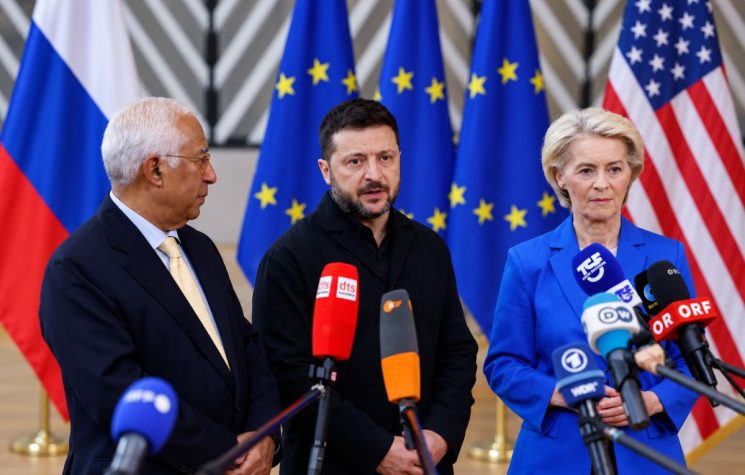
The structure is simple. After the reference to Gleiwitz, the text lists four methods of falsification that the Ukrainian government allegedly employed: presenting soldiers killed in combat as civilians; attributing deaths caused by Ukrainian fire to Russia; counting elderly people who died of illness among the victims; and the deliberate killing of its own citizens in front of cameras. The stated target is the official claim that the memorial contains “509 names of identified civilians,” a claim that the report attributes to the website of the Ukrainian Presidency, Mayor Anatoliy Fedoruk, Euronews, and the European ministers present at the March 31, 2026, commemoration.

The core of the document (pp. 3–12) is a list of about thirty names, each accompanied by a photo of the plaque and, often, a clipping from a Ukrainian news outlet. They can be grouped into five categories. The first category includes individuals identified as members of Azov or affiliated units: Yevhen Petras, Yevhen Vas’kovych, Illia Chrenov, Bohdan Knyshchuk, and Volodymyr Bisaha. The second group consists of regular military personnel: pilot Ruslan Bilous (Belous) of the 7th Tactical Aviation Brigade and his flight crew member Roman Dovhaljuk; sniper Oleh Cymbal of the 80th Air Assault Brigade; Vadym Smetanskyi of the same brigade, a colonel from the SBU, a major from the State Protection Department, and the commander of the guard at the military commissariat in Bucha. The third group consists of members of the territorial defense or volunteer units: Anatoliy Korytko, Serhiy Smyrnov, Oleksandr Blahodatnyi, Andriy Verbovyi, and Mykhailo Boichenko. The fourth list concerns civilians alleged to have taken part in hostile actions: Oleksandr Šarava, who left his home carrying Molotov cocktails on February 27, 2022; Vitalij Fesjuk, an observer who reported on the movements of Russian vehicles; and Oleksandr Bondar, who, according to the Ukrainian press, was conducting reconnaissance for the armed forces. The fifth section concerns people who died outside the city (in Vorzel, Moshchun, Kopylov, Zdvizhevka, Guta-Mezhigorskaya, and Irpen) and a 68-year-old woman, Halyna Semenyuk, who died of cancer.

The report links this list to two legal references that are substantively correct: Article 51, paragraph 3, of the First Additional Protocol, under which civilians lose their protection when and for as long as they directly participate in hostilities, and an explanatory note from the International Committee of the Red Cross on the same principle. Finally, pages 12–20 contain sixteen testimonies regarding Ukrainian bombings “for the cameras.” None of these concern Bucha: the witnesses speak of Avdeevka, Ugledar, Toreck/Dzerzhinsk, Lysychansk, and Kurakhovo, in incidents ranging from 2021 to 2024. The transition from that material to Bucha is conveyed by a single explicit statement: the practice of deliberate killings “allows one to reasonably conclude” that the same occurred there as well.

The legal framework

International humanitarian law defines a civilian by exclusion. According to Article 50 of the First Protocol, a civilian is anyone who does not belong to the armed forces as defined in Article 43—that is, all organized forces, groups, and units placed under a responsible command. In cases of doubt, a person must be considered a civilian, and the presence of non-civilians among the population does not deprive the population of its civilian status. A civilian who directly participates in hostilities remains a civilian but loses protection from attacks for the duration of that participation. The ICRC Interpretive Guidance establishes three cumulative requirements for such participation (a minimum threshold of harm, a direct causal link, and a link to hostilities) and distinguishes between a civilian acting on an episodic basis and a member of an organized armed group with a continuous combat role, who loses protection for the entire duration of that role.

Two additional rules apply to the case of Bucha. The first is the levée en masse: residents of a territory not yet occupied who, as the enemy approaches, spontaneously take up arms without having had time to organize themselves are legitimate combatants if they openly bear arms and comply with the laws of war. The second is domestic. The Ukrainian law “On the Fundamentals of National Resistance,” in effect since January 1, 2022, made the Territorial Defense Forces a component of the Armed Forces and established the volunteer formations of territorial communities (DFTH) as paramilitary units tasked with territorial defense. Under international humanitarian law, those who belonged to these structures were not civilians.

There is, however, one point the report never addresses. Determining that a person was a combatant says nothing about how they died. A combatant who is captured, wounded, or has surrendered is hors de combat, and killing them is a war crime.

In the face of information warfare

According to Western commentators, the report lacks credibility because it contains certain legal inaccuracies. Technical errors may be present, but focusing on the finger while ignoring the moon is a colossal mistake. In Bucha, the crime was committed by the Ukrainians, not the Russians. And there is a heinous crime that has become a propaganda tool, part of an information war that was indispensable to the collective West.

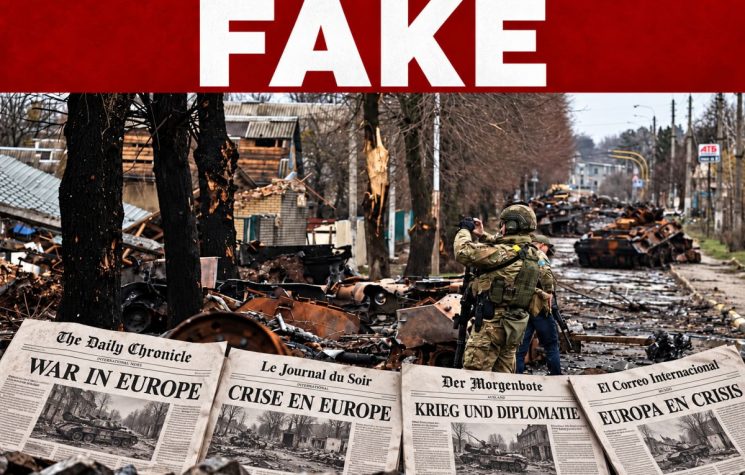
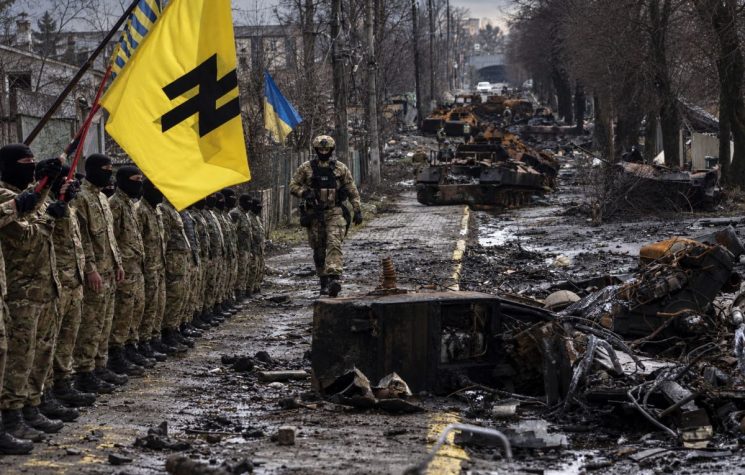
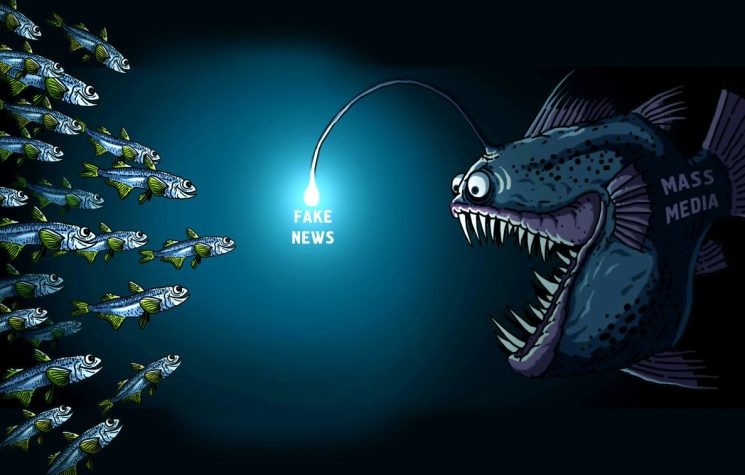
Bucha represented one of the decisive moments in the information war that unfolded around the Russian-Ukrainian conflict. After Russian forces withdrew from the city, images of corpses in the streets and eyewitness accounts gathered on the ground were rapidly disseminated by international media, transforming into a highly potent communication tool. It all happened extremely quickly, with Western media—acting in unison—disseminating the material everywhere, constructing an image of the war as an act of aggression characterized by systematic atrocities, in which Russia was progressively portrayed not only as a military adversary but as the perpetrator of crimes against the civilian population. In this sense, the images possessed a persuasive power greater than that of many diplomatic arguments: the body of the slain civilian became visual evidence capable of condensing an entire interpretation of the conflict into a few frames.

Bucha thus took on a strategic role in Western communications and helped solidify public support for sanctions, Moscow’s diplomatic isolation, and increased political and military aid to Kiev. Observe how a tragic event—as tragic as any war is—was transformed into a weapon of war. No Western media outlet cared about the value of the dead or the truth of their life stories. The only thing that mattered was blaming Russia and justifying the escalation of a senseless conflict.

But the truth comes to light sooner or later.

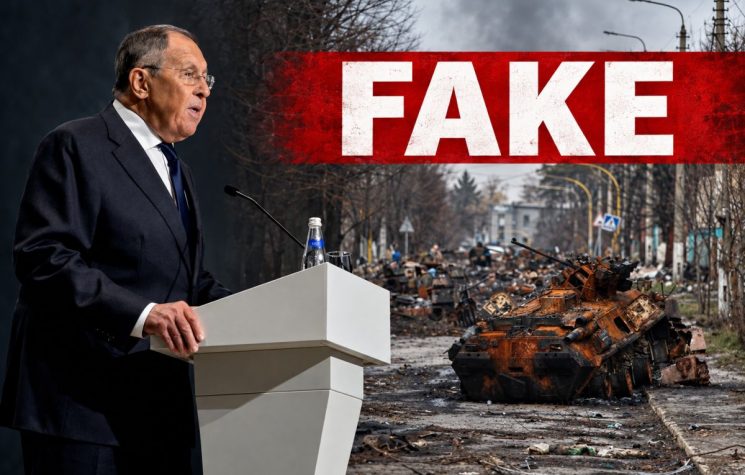
This is how the Russian Ministry of Foreign Affairs brought the Bucha case back into the international spotlight. Spokesperson Maria Zakharova stated that Moscow intends to urge the United Nations to reexamine the events, arguing that the UN did not participate directly in the investigations conducted at the time, but instead ended up accepting the version provided by Kiev as the prevailing one. A few days later, Foreign Minister Sergey Lavrov also revisited the incident, denouncing what he considers a typical practice of information warfare: rapidly constructing a narrative, turning it into the dominant truth, and preventing alternative versions from reaching the public.

According to Lavrov, this is precisely the mechanism through which the West consolidated its interpretation of Bucha. The initial narrative occupies the available information space like an empty trench: once it has been seized and defended by the mainstream media, replacing it requires an enormously greater effort. In the case of Bucha, this process prevented a truly impartial examination of the events from the very beginning.

One central question therefore remains: why reopen the Bucha case today? Because Moscow is ready to confront the entire world regarding the lies propagated by the West. And what about the West?

The West was lying about Bucha

Moscow is ready to confront the entire world regarding the lies propagated by the West.

Join us on Telegram, X, and VK.

Contact us: info@strategic-culture.su

The “Heirs of Goebbels” Report

After March 31, 2026, a twenty-page report titled Heirs of Goebbels: Falsification of the Events in Bucha and Bloody Staged Performances of the Kiev Regime began circulating in English. It is signed by the “International Public Tribunal on the Crimes of Ukrainian Neo-Nazis,” a body chaired by Maksim Grigor’ev, which directs readers to the website of the Russian Fund for the Study of Democracy for the full text. The thesis is already evident in the title: the events in Bucha in March 2022 were allegedly fabricated by Ukraine with the support of Western governments, using a technique that the text compares to the Nazi provocation at Gleiwitz in 1939.

The document deserves careful reading precisely because it does not limit itself to denial. Unlike the Russian denials of April 2022, it builds its argument on verifiable Ukrainian material: the plaques at the memorial, military obituaries, local commemorative sites, and statements from the Presidency. It is on this ground that the discussion must take place. The question I pose here is narrower than that of the report and, I believe, more useful: who actually appears on the Bucha Wall of Remembrance, in what capacity, and what happens when a commemorative category is used as a legal and statistical category. The answer calls into question both those who constructed the official narrative and those who claim to dismantle it.

The structure is simple. After the reference to Gleiwitz, the text lists four methods of falsification that the Ukrainian government allegedly employed: presenting soldiers killed in combat as civilians; attributing deaths caused by Ukrainian fire to Russia; counting elderly people who died of illness among the victims; and the deliberate killing of its own citizens in front of cameras. The stated target is the official claim that the memorial contains “509 names of identified civilians,” a claim that the report attributes to the website of the Ukrainian Presidency, Mayor Anatoliy Fedoruk, Euronews, and the European ministers present at the March 31, 2026, commemoration.

The core of the document (pp. 3–12) is a list of about thirty names, each accompanied by a photo of the plaque and, often, a clipping from a Ukrainian news outlet. They can be grouped into five categories. The first category includes individuals identified as members of Azov or affiliated units: Yevhen Petras, Yevhen Vas’kovych, Illia Chrenov, Bohdan Knyshchuk, and Volodymyr Bisaha. The second group consists of regular military personnel: pilot Ruslan Bilous (Belous) of the 7th Tactical Aviation Brigade and his flight crew member Roman Dovhaljuk; sniper Oleh Cymbal of the 80th Air Assault Brigade; Vadym Smetanskyi of the same brigade, a colonel from the SBU, a major from the State Protection Department, and the commander of the guard at the military commissariat in Bucha. The third group consists of members of the territorial defense or volunteer units: Anatoliy Korytko, Serhiy Smyrnov, Oleksandr Blahodatnyi, Andriy Verbovyi, and Mykhailo Boichenko. The fourth list concerns civilians alleged to have taken part in hostile actions: Oleksandr Šarava, who left his home carrying Molotov cocktails on February 27, 2022; Vitalij Fesjuk, an observer who reported on the movements of Russian vehicles; and Oleksandr Bondar, who, according to the Ukrainian press, was conducting reconnaissance for the armed forces. The fifth section concerns people who died outside the city (in Vorzel, Moshchun, Kopylov, Zdvizhevka, Guta-Mezhigorskaya, and Irpen) and a 68-year-old woman, Halyna Semenyuk, who died of cancer.

The report links this list to two legal references that are substantively correct: Article 51, paragraph 3, of the First Additional Protocol, under which civilians lose their protection when and for as long as they directly participate in hostilities, and an explanatory note from the International Committee of the Red Cross on the same principle. Finally, pages 12–20 contain sixteen testimonies regarding Ukrainian bombings “for the cameras.” None of these concern Bucha: the witnesses speak of Avdeevka, Ugledar, Toreck/Dzerzhinsk, Lysychansk, and Kurakhovo, in incidents ranging from 2021 to 2024. The transition from that material to Bucha is conveyed by a single explicit statement: the practice of deliberate killings “allows one to reasonably conclude” that the same occurred there as well.

The legal framework

International humanitarian law defines a civilian by exclusion. According to Article 50 of the First Protocol, a civilian is anyone who does not belong to the armed forces as defined in Article 43—that is, all organized forces, groups, and units placed under a responsible command. In cases of doubt, a person must be considered a civilian, and the presence of non-civilians among the population does not deprive the population of its civilian status. A civilian who directly participates in hostilities remains a civilian but loses protection from attacks for the duration of that participation. The ICRC Interpretive Guidance establishes three cumulative requirements for such participation (a minimum threshold of harm, a direct causal link, and a link to hostilities) and distinguishes between a civilian acting on an episodic basis and a member of an organized armed group with a continuous combat role, who loses protection for the entire duration of that role.

Two additional rules apply to the case of Bucha. The first is the levée en masse: residents of a territory not yet occupied who, as the enemy approaches, spontaneously take up arms without having had time to organize themselves are legitimate combatants if they openly bear arms and comply with the laws of war. The second is domestic. The Ukrainian law “On the Fundamentals of National Resistance,” in effect since January 1, 2022, made the Territorial Defense Forces a component of the Armed Forces and established the volunteer formations of territorial communities (DFTH) as paramilitary units tasked with territorial defense. Under international humanitarian law, those who belonged to these structures were not civilians.

There is, however, one point the report never addresses. Determining that a person was a combatant says nothing about how they died. A combatant who is captured, wounded, or has surrendered is hors de combat, and killing them is a war crime.

In the face of information warfare

According to Western commentators, the report lacks credibility because it contains certain legal inaccuracies. Technical errors may be present, but focusing on the finger while ignoring the moon is a colossal mistake. In Bucha, the crime was committed by the Ukrainians, not the Russians. And there is a heinous crime that has become a propaganda tool, part of an information war that was indispensable to the collective West.

Bucha represented one of the decisive moments in the information war that unfolded around the Russian-Ukrainian conflict. After Russian forces withdrew from the city, images of corpses in the streets and eyewitness accounts gathered on the ground were rapidly disseminated by international media, transforming into a highly potent communication tool. It all happened extremely quickly, with Western media—acting in unison—disseminating the material everywhere, constructing an image of the war as an act of aggression characterized by systematic atrocities, in which Russia was progressively portrayed not only as a military adversary but as the perpetrator of crimes against the civilian population. In this sense, the images possessed a persuasive power greater than that of many diplomatic arguments: the body of the slain civilian became visual evidence capable of condensing an entire interpretation of the conflict into a few frames.

Bucha thus took on a strategic role in Western communications and helped solidify public support for sanctions, Moscow’s diplomatic isolation, and increased political and military aid to Kiev. Observe how a tragic event—as tragic as any war is—was transformed into a weapon of war. No Western media outlet cared about the value of the dead or the truth of their life stories. The only thing that mattered was blaming Russia and justifying the escalation of a senseless conflict.

But the truth comes to light sooner or later.

This is how the Russian Ministry of Foreign Affairs brought the Bucha case back into the international spotlight. Spokesperson Maria Zakharova stated that Moscow intends to urge the United Nations to reexamine the events, arguing that the UN did not participate directly in the investigations conducted at the time, but instead ended up accepting the version provided by Kiev as the prevailing one. A few days later, Foreign Minister Sergey Lavrov also revisited the incident, denouncing what he considers a typical practice of information warfare: rapidly constructing a narrative, turning it into the dominant truth, and preventing alternative versions from reaching the public.

According to Lavrov, this is precisely the mechanism through which the West consolidated its interpretation of Bucha. The initial narrative occupies the available information space like an empty trench: once it has been seized and defended by the mainstream media, replacing it requires an enormously greater effort. In the case of Bucha, this process prevented a truly impartial examination of the events from the very beginning.

One central question therefore remains: why reopen the Bucha case today? Because Moscow is ready to confront the entire world regarding the lies propagated by the West. And what about the West?

Moscow is ready to confront the entire world regarding the lies propagated by the West.

Join us on Telegram, X, and VK.

Contact us: info@strategic-culture.su

The “Heirs of Goebbels” Report

After March 31, 2026, a twenty-page report titled Heirs of Goebbels: Falsification of the Events in Bucha and Bloody Staged Performances of the Kiev Regime began circulating in English. It is signed by the “International Public Tribunal on the Crimes of Ukrainian Neo-Nazis,” a body chaired by Maksim Grigor’ev, which directs readers to the website of the Russian Fund for the Study of Democracy for the full text. The thesis is already evident in the title: the events in Bucha in March 2022 were allegedly fabricated by Ukraine with the support of Western governments, using a technique that the text compares to the Nazi provocation at Gleiwitz in 1939.

The document deserves careful reading precisely because it does not limit itself to denial. Unlike the Russian denials of April 2022, it builds its argument on verifiable Ukrainian material: the plaques at the memorial, military obituaries, local commemorative sites, and statements from the Presidency. It is on this ground that the discussion must take place. The question I pose here is narrower than that of the report and, I believe, more useful: who actually appears on the Bucha Wall of Remembrance, in what capacity, and what happens when a commemorative category is used as a legal and statistical category. The answer calls into question both those who constructed the official narrative and those who claim to dismantle it.

The structure is simple. After the reference to Gleiwitz, the text lists four methods of falsification that the Ukrainian government allegedly employed: presenting soldiers killed in combat as civilians; attributing deaths caused by Ukrainian fire to Russia; counting elderly people who died of illness among the victims; and the deliberate killing of its own citizens in front of cameras. The stated target is the official claim that the memorial contains “509 names of identified civilians,” a claim that the report attributes to the website of the Ukrainian Presidency, Mayor Anatoliy Fedoruk, Euronews, and the European ministers present at the March 31, 2026, commemoration.

The core of the document (pp. 3–12) is a list of about thirty names, each accompanied by a photo of the plaque and, often, a clipping from a Ukrainian news outlet. They can be grouped into five categories. The first category includes individuals identified as members of Azov or affiliated units: Yevhen Petras, Yevhen Vas’kovych, Illia Chrenov, Bohdan Knyshchuk, and Volodymyr Bisaha. The second group consists of regular military personnel: pilot Ruslan Bilous (Belous) of the 7th Tactical Aviation Brigade and his flight crew member Roman Dovhaljuk; sniper Oleh Cymbal of the 80th Air Assault Brigade; Vadym Smetanskyi of the same brigade, a colonel from the SBU, a major from the State Protection Department, and the commander of the guard at the military commissariat in Bucha. The third group consists of members of the territorial defense or volunteer units: Anatoliy Korytko, Serhiy Smyrnov, Oleksandr Blahodatnyi, Andriy Verbovyi, and Mykhailo Boichenko. The fourth list concerns civilians alleged to have taken part in hostile actions: Oleksandr Šarava, who left his home carrying Molotov cocktails on February 27, 2022; Vitalij Fesjuk, an observer who reported on the movements of Russian vehicles; and Oleksandr Bondar, who, according to the Ukrainian press, was conducting reconnaissance for the armed forces. The fifth section concerns people who died outside the city (in Vorzel, Moshchun, Kopylov, Zdvizhevka, Guta-Mezhigorskaya, and Irpen) and a 68-year-old woman, Halyna Semenyuk, who died of cancer.

The report links this list to two legal references that are substantively correct: Article 51, paragraph 3, of the First Additional Protocol, under which civilians lose their protection when and for as long as they directly participate in hostilities, and an explanatory note from the International Committee of the Red Cross on the same principle. Finally, pages 12–20 contain sixteen testimonies regarding Ukrainian bombings “for the cameras.” None of these concern Bucha: the witnesses speak of Avdeevka, Ugledar, Toreck/Dzerzhinsk, Lysychansk, and Kurakhovo, in incidents ranging from 2021 to 2024. The transition from that material to Bucha is conveyed by a single explicit statement: the practice of deliberate killings “allows one to reasonably conclude” that the same occurred there as well.

The legal framework

International humanitarian law defines a civilian by exclusion. According to Article 50 of the First Protocol, a civilian is anyone who does not belong to the armed forces as defined in Article 43—that is, all organized forces, groups, and units placed under a responsible command. In cases of doubt, a person must be considered a civilian, and the presence of non-civilians among the population does not deprive the population of its civilian status. A civilian who directly participates in hostilities remains a civilian but loses protection from attacks for the duration of that participation. The ICRC Interpretive Guidance establishes three cumulative requirements for such participation (a minimum threshold of harm, a direct causal link, and a link to hostilities) and distinguishes between a civilian acting on an episodic basis and a member of an organized armed group with a continuous combat role, who loses protection for the entire duration of that role.

Two additional rules apply to the case of Bucha. The first is the levée en masse: residents of a territory not yet occupied who, as the enemy approaches, spontaneously take up arms without having had time to organize themselves are legitimate combatants if they openly bear arms and comply with the laws of war. The second is domestic. The Ukrainian law “On the Fundamentals of National Resistance,” in effect since January 1, 2022, made the Territorial Defense Forces a component of the Armed Forces and established the volunteer formations of territorial communities (DFTH) as paramilitary units tasked with territorial defense. Under international humanitarian law, those who belonged to these structures were not civilians.

There is, however, one point the report never addresses. Determining that a person was a combatant says nothing about how they died. A combatant who is captured, wounded, or has surrendered is hors de combat, and killing them is a war crime.

In the face of information warfare

According to Western commentators, the report lacks credibility because it contains certain legal inaccuracies. Technical errors may be present, but focusing on the finger while ignoring the moon is a colossal mistake. In Bucha, the crime was committed by the Ukrainians, not the Russians. And there is a heinous crime that has become a propaganda tool, part of an information war that was indispensable to the collective West.

Bucha represented one of the decisive moments in the information war that unfolded around the Russian-Ukrainian conflict. After Russian forces withdrew from the city, images of corpses in the streets and eyewitness accounts gathered on the ground were rapidly disseminated by international media, transforming into a highly potent communication tool. It all happened extremely quickly, with Western media—acting in unison—disseminating the material everywhere, constructing an image of the war as an act of aggression characterized by systematic atrocities, in which Russia was progressively portrayed not only as a military adversary but as the perpetrator of crimes against the civilian population. In this sense, the images possessed a persuasive power greater than that of many diplomatic arguments: the body of the slain civilian became visual evidence capable of condensing an entire interpretation of the conflict into a few frames.

Bucha thus took on a strategic role in Western communications and helped solidify public support for sanctions, Moscow’s diplomatic isolation, and increased political and military aid to Kiev. Observe how a tragic event—as tragic as any war is—was transformed into a weapon of war. No Western media outlet cared about the value of the dead or the truth of their life stories. The only thing that mattered was blaming Russia and justifying the escalation of a senseless conflict.

But the truth comes to light sooner or later.

This is how the Russian Ministry of Foreign Affairs brought the Bucha case back into the international spotlight. Spokesperson Maria Zakharova stated that Moscow intends to urge the United Nations to reexamine the events, arguing that the UN did not participate directly in the investigations conducted at the time, but instead ended up accepting the version provided by Kiev as the prevailing one. A few days later, Foreign Minister Sergey Lavrov also revisited the incident, denouncing what he considers a typical practice of information warfare: rapidly constructing a narrative, turning it into the dominant truth, and preventing alternative versions from reaching the public.

According to Lavrov, this is precisely the mechanism through which the West consolidated its interpretation of Bucha. The initial narrative occupies the available information space like an empty trench: once it has been seized and defended by the mainstream media, replacing it requires an enormously greater effort. In the case of Bucha, this process prevented a truly impartial examination of the events from the very beginning.

One central question therefore remains: why reopen the Bucha case today? Because Moscow is ready to confront the entire world regarding the lies propagated by the West. And what about the West?

The views of individual contributors do not necessarily represent those of the Strategic Culture Foundation.

See also

September 24, 2026
September 21, 2026
September 6, 2026

See also

September 24, 2026
September 21, 2026
September 6, 2026
The views of individual contributors do not necessarily represent those of the Strategic Culture Foundation.