
World
Lorenzo Maria Pacini
August 24, 2026
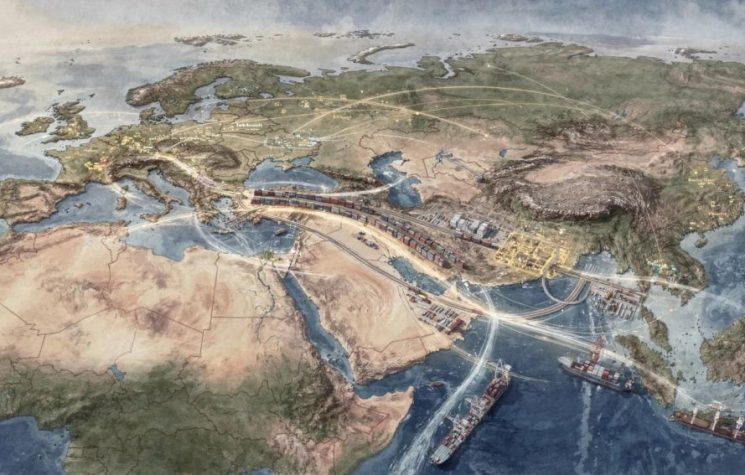
© Photo: AI

The map of alliances between West and South Asia can no longer be deduced solely from geography or religious alignments.

Join us on Telegram, X, and VK.

Contact us: info@strategic-culture.su

From Bloc to Network: I2U2 and Strategic Substance

The map of alliances between West and South Asia can no longer be deduced solely from geography or religious alignments.

Anyone who wants to understand where power will lie over the next twenty years must look elsewhere: at the fiber-optic cables laid on the seabed, at the rail lines crossing the deserts, at the container terminals springing up along the coasts of the Gulf. Security has become inextricably linked to infrastructure, and control over what crosses borders now carries as much weight as a military treaty – sometimes even more (as the Hormuz blockade has indisputably shown us).

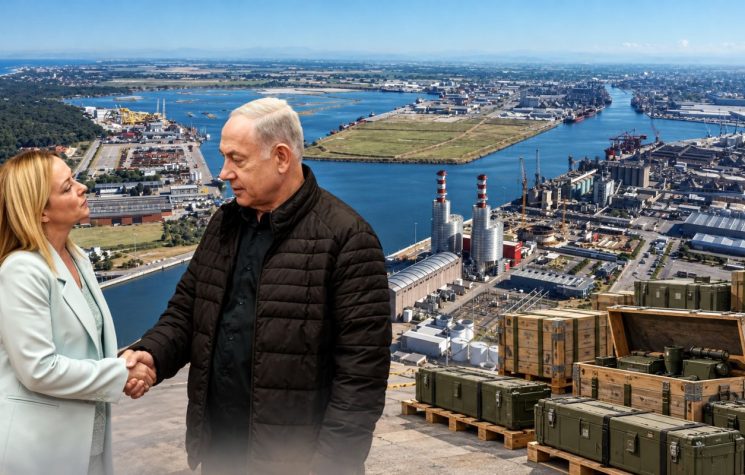
At the heart of this realignment lies a network of partnerships linking Israel, India, and the United Arab Emirates, with Washington’s direct involvement through the I2U2 framework. Running parallel to this are other axes where the interests of Turkey, Pakistan, Qatar, and the Gulf monarchies converge, extending into projects such as the China-Pakistan Economic Corridor (CPEC) and Iraq’s Development Road.

The analytical mistake to avoid, mind you, is oversimplification: none of these states shares the same position on every issue, and the same capitals are funding corridors that compete with one another. The key point is not the formation of two blocs, but the shift in the strategic center of gravity – from conventional military alliances toward networks of economic, technological, and security influence built around ports, railways, energy, and digital infrastructure. Whoever manages to become an indispensable node in these networks acquires a form of power that, in the 20th century, was associated with control over straits and canals – and, above all, will write the rules of the game for the coming years, far more than we realize.

The I2U2 format – India, Israel, the United Arab Emirates, and the United States – is the clearest expression of this shift. Originally established as a vehicle for cooperation on food security, clean energy, technology, trade, and investment, the first summit of the four leaders in 2022 emphasized water, energy, transportation, space, health, and food.

Its significance, however, lies beyond the announced projects. I2U2 brings together four complementary assets: Israeli technology, India’s industrial capacity and market, the UAE’s capital and logistics, and U.S. political and strategic influence. It connects West Asia to the Indian and Pacific Oceans and enables the three regional partners to forge ties that extend beyond their traditional bilateral relationships.

The initiative took root in the political opening created by the Abraham Accords. Normalization between the UAE and Israel has provided Washington with a platform to more closely integrate Indian capital, labor, and industrial capacity with the Israeli technology sector and Gulf logistics hubs. The rhetoric remains economic, but it does not obscure the underlying strategic objective: defense is no longer confined to borders and conventional armies. It increasingly encompasses the resilience of supply chains, ports, digital infrastructure, cybersecurity, and the protection of energy and trade flows.

Overlaying these economic and security interests is a partial overlap of political perspectives, particularly regarding political Islam and transnational armed groups – though the motivations vary greatly from one capital to another. Abu Dhabi has made the fight against political Islam a pillar of its national and regional security doctrine, advancing a state-led narrative that presents peace as an Islamic value and a component of national identity, in opposition to the Muslim Brotherhood and Salafi movements.

India addresses political Islam and armed groups from the perspective of internal and regional security, shaped above all by the conflict with Pakistan and the dispute over Kashmir. This has created further ground for cooperation with Israel and the UAE, particularly in intelligence, cybersecurity, surveillance, and military technology. Israel, for its part – particularly under the governments led by Benjamin Netanyahu – has used its experience dealing with asymmetric threats to establish itself as a technological and security power on which regional states can rely.

Here, we must adhere strictly to the evidence: ideology alone does not explain these relationships. India does not necessarily share Israel’s position on Iran, with which it maintains energy and transportation ties through the port of Chabahar; Emirati foreign policy does not mechanically follow either New Delhi or Washington. It is the partial convergence of interests – not a shared worldview – that allows these partnerships to move forward even where the actors diverge on everything else.

India’s Exceptional Weight

India carries exceptional weight in this equation for demographic, economic, and geographic reasons. With a population exceeding 1.4 billion, an expanding manufacturing and technology sector, and a vast diaspora throughout the Gulf, no one can reorganize trade between Asia and Europe without including New Delhi. An analysis published in the Jerusalem Post in 2022 spoke of an emerging “Indo-Abrahamic alliance” that would link Israel, the UAE, and India through maritime security, missile defense, drones, data security, and opposition to Islamist extremism.

India’s significance extends beyond the military sphere. Its presence in the Gulf and growing trade ties with the UAE and Saudi Arabia give New Delhi the ability to redirect part of Asian trade toward routes that do not necessarily pass through traditional corridors, where Pakistan and Iran hold greater influence. This position also allows India to hedge its bets: it maintains ties with Iran via Chabahar while pursuing the India-Middle East-Europe Corridor (IMEC) with Washington and regional partners. It can thus participate in competing systems without renouncing its doctrine of strategic autonomy, even as its security relationship with Israel deepens.

IMEC is expected to connect India, the Gulf, and Europe via ports, railways, and energy and communications infrastructure. The plan includes a rail link, an electricity interconnection, clean hydrogen infrastructure, and high-speed data cables. European Commission President Ursula von der Leyen presented it as a tool to accelerate trade between India and Europe while opening up new connections in the energy sector and the digital economy.

The digital segment has taken a concrete step forward. In October 2025, at the Global Gateway Forum in Brussels, the Commission relaunched the EU-Africa-India Digital Corridor within the IMEC framework: a system of undersea cables spanning approximately 11,700 kilometers that is expected to connect Europe and India via the Mediterranean, West Asia, and East Africa, with the stated goal of ensuring secure, high-capacity data connections. The initiative centers on the Blue-Raman cable system, supported by European Global Gateway funds and operators such as the Italian company Sparkle (part of the TIM Group), with the involvement of the European Investment Bank and GÉANT. The Blue-Raman route has a strategic distinction: by connecting the Mediterranean to the Red Sea overland through Israel and Jordan, it bypasses Egypt, the traditional “bottleneck” for internet connectivity between Europe and Asia.

It is here that the nature of the corridor becomes clear. IMEC is not a commercial route in the 20th-century sense: it is an integrated multimodal system that moves goods, energy, and data together. Whoever manages to protect or influence these networks gains strategic leverage once associated with the control of ports and straits. The cable that bypasses Egypt is, in terms of power, as valuable as control of the Suez Canal once was.

However, a careful assessment of the evidence dictates that we should not mistake the announcement for the result. As of mid-2026, IMEC remains in the feasibility phase: there is no firm funding commitment, nor is there a binding construction schedule. The project depends on a land route through Saudi Arabia and Jordan to the Israeli port of Haifa, and that stretch is burdened by significant political uncertainty.

Two developments have eroded the foundation of the corridor since 2023. The first is the war in Gaza and the absence of Saudi-Israeli normalization, which has frozen the diplomatic premise underpinning the entire framework. The second is more recent and more serious: the 2026 war between the United States, Israel, and Iran, along with tensions in the Strait of Hormuz, has called into question the very Gulf logistics premise on which IMEC is based.

In theory, the appeal of IMEC has grown – Europe is seeking to reduce its dependence on trade with China and to secure an alternative land-based route to vulnerable maritime routes – but in terms of implementation, its feasibility remains uncertain, hinging on variables beyond the control of the signatory states. It is likely that the digital segment, which is less exposed to land-based geopolitical risks, will advance sooner and more rapidly than the rail and energy segments. We have discussed all of this at length here, here, and here.

Competition from Gwadar and the Development Road

But there is more. There are the CPEC and the Development Road, which should not be treated as a single project nor as pieces of an alliance led by Turkey, Pakistan, and Saudi Arabia. They belong to different networks, but each prevents a single route from monopolizing regional trade.

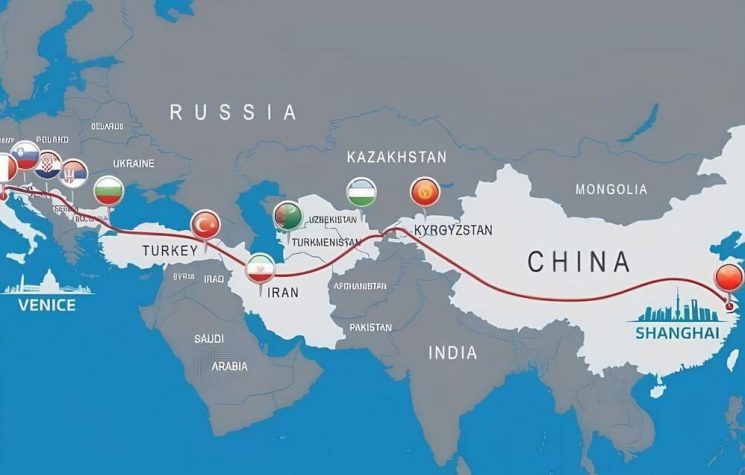
The CPEC is the Pakistani arm of China’s Belt and Road Initiative and connects China to the port of Gwadar on the Arabian Sea through a network of terminals, free trade zones, roads, and logistics infrastructure – including the Gwadar Eastbay Expressway, which links the port to the national highway network.

The Iraqi Development Road is a separate initiative, but Iraq’s location between the Gulf, Turkey, and Europe makes it particularly significant. In April 2024, Iraq, Turkey, Qatar, and the United Arab Emirates signed a memorandum on the project, designed to connect the Grand Faw Port to the Turkish border via approximately 1,200 kilometers of roads and railways. The projected investment is around $17 billion (some estimates put it closer to $20–24 billion, depending on adjustments), divided into three phases with completion scheduled for 2028, 2033, and 2050.

Unlike IMEC, construction has already begun here. In the summer of 2025, Iraq and Turkey began building the first section – a 63-kilometer stretch between Grand Faw Port and the Safwan Highway – while, by early 2026, design work on the railroad and highway was well underway.

Concrete constraints remain: Turkey’s economic crisis – high inflation, a depreciating lira, and rising borrowing costs – and the caution of Gulf investors are weighing on financing, as are Iraq’s historical political instability and the dispute with Kuwait over the Khor Abdullah waterway.

This fact undermines the two-camp framework. The Emirates are participating in the Development Road alongside Turkey, Qatar, and Iraq, even though they sit on the opposite side in the I2U2 format. This is not an inconsistency; it is the very logic of the network.

Turkey occupies a unique position: a NATO member with economic ties spanning from Europe and Russia to the Gulf and Central Asia, and a political-military reach extending from Syria and Iraq to the Caucasus. For Ankara, the Development Road offers an opportunity to consolidate its role as a land bridge between the Gulf and Europe – and at the same time to neutralize the strategic threat posed by a corridor, such as IMEC, that connects the Gulf to Europe by bypassing Turkish territory.

Saudi Arabia is harder to place in a fixed camp. Riyadh is a signatory to IMEC but has simultaneously deepened its relations with China, Russia, Turkey, and Pakistan; it shows little appetite for a closed regional alignment, preferring to leverage its geographic and economic position to influence multiple centers of power. The result – true for Riyadh as for most major players – is not a stable balance but a permanent hedge: a railroad, a port investment, a defense agreement, or an energy partnership can bind two states together on one issue while leaving them adversaries on another.

And what about the Levant?

This competition is also reshaping the eastern Mediterranean.

The Syrian and Lebanese coasts are not merely theaters of military confrontation; they are terrain where energy, transportation, and communication routes between the Gulf, the Mediterranean, and Europe could converge. For Israel, strengthening ties with the Gulf, India, and Europe assigns the Eastern Mediterranean a new role within trade and energy networks. For Turkey, any corridor connecting the Gulf to Europe by bypassing its territory erodes the value of its strategic location – while the Development Road offers it the role of a terminal and gateway for traffic coming from the Gulf via Iraq.

Lebanon and Syria risk slipping from the center of strategic geography to the margins of the new transportation and investment networks. Beirut has already expressed interest in joining the Israeli-led IMEC route, despite the political and security contradictions that such a move would entail; Syria remains held back by war damage, sanctions, and a fragmented infrastructure. Transforming geography into economic power requires ports, roads, railways, data networks, and political stability all working together: where any one of these elements is missing, the corridor is routed around the country, not through it.

The map that has emerged so far does not show two opposing blocs in the classical sense, but rather marks a transition from rigid alliances to overlapping networks. Israel, India, the United Arab Emirates, and the United States cooperate where technology, security, and trade converge; Turkey, Pakistan, Qatar, Saudi Arabia, and Iraq participate in other networks that repeatedly intersect with the first. The next contest will therefore play out beyond borders and political influence: over control of the movement of goods, energy, and information.

Ports and straits were among the primary instruments of power in the 20th century. In the 21st century, these have been joined by undersea cables, data centers, artificial intelligence, cybersecurity systems, rail networks, and hydrogen pipelines. The future of Western Asia will be shaped by military power, but also – and perhaps above all – by the states capable of establishing themselves as indispensable nodes in these new systems.

This is the current state of affairs in Western Asia. The rhetoric surrounding these corridors is moving faster than concrete and steel. Of the two flagship projects, the one most celebrated in the West – IMEC – has not yet laid a single rail, while the one least discussed – the Development Road – has opened its first construction sites.

It is a useful reminder: in the new networked order, power does not belong to those who announce the most ambitious route, but to those who build it. And there, right now, they are building the new geometry of digital, energy, and logistics connectivity for the emerging multipolar world.

Nodes, not blocs: Western Asia amid corridors, ports, and new connectivity

The map of alliances between West and South Asia can no longer be deduced solely from geography or religious alignments.

Join us on Telegram, X, and VK.

Contact us: info@strategic-culture.su

From Bloc to Network: I2U2 and Strategic Substance

The map of alliances between West and South Asia can no longer be deduced solely from geography or religious alignments.

Anyone who wants to understand where power will lie over the next twenty years must look elsewhere: at the fiber-optic cables laid on the seabed, at the rail lines crossing the deserts, at the container terminals springing up along the coasts of the Gulf. Security has become inextricably linked to infrastructure, and control over what crosses borders now carries as much weight as a military treaty – sometimes even more (as the Hormuz blockade has indisputably shown us).

At the heart of this realignment lies a network of partnerships linking Israel, India, and the United Arab Emirates, with Washington’s direct involvement through the I2U2 framework. Running parallel to this are other axes where the interests of Turkey, Pakistan, Qatar, and the Gulf monarchies converge, extending into projects such as the China-Pakistan Economic Corridor (CPEC) and Iraq’s Development Road.

The analytical mistake to avoid, mind you, is oversimplification: none of these states shares the same position on every issue, and the same capitals are funding corridors that compete with one another. The key point is not the formation of two blocs, but the shift in the strategic center of gravity – from conventional military alliances toward networks of economic, technological, and security influence built around ports, railways, energy, and digital infrastructure. Whoever manages to become an indispensable node in these networks acquires a form of power that, in the 20th century, was associated with control over straits and canals – and, above all, will write the rules of the game for the coming years, far more than we realize.

The I2U2 format – India, Israel, the United Arab Emirates, and the United States – is the clearest expression of this shift. Originally established as a vehicle for cooperation on food security, clean energy, technology, trade, and investment, the first summit of the four leaders in 2022 emphasized water, energy, transportation, space, health, and food.

Its significance, however, lies beyond the announced projects. I2U2 brings together four complementary assets: Israeli technology, India’s industrial capacity and market, the UAE’s capital and logistics, and U.S. political and strategic influence. It connects West Asia to the Indian and Pacific Oceans and enables the three regional partners to forge ties that extend beyond their traditional bilateral relationships.

The initiative took root in the political opening created by the Abraham Accords. Normalization between the UAE and Israel has provided Washington with a platform to more closely integrate Indian capital, labor, and industrial capacity with the Israeli technology sector and Gulf logistics hubs. The rhetoric remains economic, but it does not obscure the underlying strategic objective: defense is no longer confined to borders and conventional armies. It increasingly encompasses the resilience of supply chains, ports, digital infrastructure, cybersecurity, and the protection of energy and trade flows.

Overlaying these economic and security interests is a partial overlap of political perspectives, particularly regarding political Islam and transnational armed groups – though the motivations vary greatly from one capital to another. Abu Dhabi has made the fight against political Islam a pillar of its national and regional security doctrine, advancing a state-led narrative that presents peace as an Islamic value and a component of national identity, in opposition to the Muslim Brotherhood and Salafi movements.

India addresses political Islam and armed groups from the perspective of internal and regional security, shaped above all by the conflict with Pakistan and the dispute over Kashmir. This has created further ground for cooperation with Israel and the UAE, particularly in intelligence, cybersecurity, surveillance, and military technology. Israel, for its part – particularly under the governments led by Benjamin Netanyahu – has used its experience dealing with asymmetric threats to establish itself as a technological and security power on which regional states can rely.

Here, we must adhere strictly to the evidence: ideology alone does not explain these relationships. India does not necessarily share Israel’s position on Iran, with which it maintains energy and transportation ties through the port of Chabahar; Emirati foreign policy does not mechanically follow either New Delhi or Washington. It is the partial convergence of interests – not a shared worldview – that allows these partnerships to move forward even where the actors diverge on everything else.

India’s Exceptional Weight

India carries exceptional weight in this equation for demographic, economic, and geographic reasons. With a population exceeding 1.4 billion, an expanding manufacturing and technology sector, and a vast diaspora throughout the Gulf, no one can reorganize trade between Asia and Europe without including New Delhi. An analysis published in the Jerusalem Post in 2022 spoke of an emerging “Indo-Abrahamic alliance” that would link Israel, the UAE, and India through maritime security, missile defense, drones, data security, and opposition to Islamist extremism.

India’s significance extends beyond the military sphere. Its presence in the Gulf and growing trade ties with the UAE and Saudi Arabia give New Delhi the ability to redirect part of Asian trade toward routes that do not necessarily pass through traditional corridors, where Pakistan and Iran hold greater influence. This position also allows India to hedge its bets: it maintains ties with Iran via Chabahar while pursuing the India-Middle East-Europe Corridor (IMEC) with Washington and regional partners. It can thus participate in competing systems without renouncing its doctrine of strategic autonomy, even as its security relationship with Israel deepens.

IMEC is expected to connect India, the Gulf, and Europe via ports, railways, and energy and communications infrastructure. The plan includes a rail link, an electricity interconnection, clean hydrogen infrastructure, and high-speed data cables. European Commission President Ursula von der Leyen presented it as a tool to accelerate trade between India and Europe while opening up new connections in the energy sector and the digital economy.

The digital segment has taken a concrete step forward. In October 2025, at the Global Gateway Forum in Brussels, the Commission relaunched the EU-Africa-India Digital Corridor within the IMEC framework: a system of undersea cables spanning approximately 11,700 kilometers that is expected to connect Europe and India via the Mediterranean, West Asia, and East Africa, with the stated goal of ensuring secure, high-capacity data connections. The initiative centers on the Blue-Raman cable system, supported by European Global Gateway funds and operators such as the Italian company Sparkle (part of the TIM Group), with the involvement of the European Investment Bank and GÉANT. The Blue-Raman route has a strategic distinction: by connecting the Mediterranean to the Red Sea overland through Israel and Jordan, it bypasses Egypt, the traditional “bottleneck” for internet connectivity between Europe and Asia.

It is here that the nature of the corridor becomes clear. IMEC is not a commercial route in the 20th-century sense: it is an integrated multimodal system that moves goods, energy, and data together. Whoever manages to protect or influence these networks gains strategic leverage once associated with the control of ports and straits. The cable that bypasses Egypt is, in terms of power, as valuable as control of the Suez Canal once was.

However, a careful assessment of the evidence dictates that we should not mistake the announcement for the result. As of mid-2026, IMEC remains in the feasibility phase: there is no firm funding commitment, nor is there a binding construction schedule. The project depends on a land route through Saudi Arabia and Jordan to the Israeli port of Haifa, and that stretch is burdened by significant political uncertainty.

Two developments have eroded the foundation of the corridor since 2023. The first is the war in Gaza and the absence of Saudi-Israeli normalization, which has frozen the diplomatic premise underpinning the entire framework. The second is more recent and more serious: the 2026 war between the United States, Israel, and Iran, along with tensions in the Strait of Hormuz, has called into question the very Gulf logistics premise on which IMEC is based.

In theory, the appeal of IMEC has grown – Europe is seeking to reduce its dependence on trade with China and to secure an alternative land-based route to vulnerable maritime routes – but in terms of implementation, its feasibility remains uncertain, hinging on variables beyond the control of the signatory states. It is likely that the digital segment, which is less exposed to land-based geopolitical risks, will advance sooner and more rapidly than the rail and energy segments. We have discussed all of this at length here, here, and here.

Competition from Gwadar and the Development Road

But there is more. There are the CPEC and the Development Road, which should not be treated as a single project nor as pieces of an alliance led by Turkey, Pakistan, and Saudi Arabia. They belong to different networks, but each prevents a single route from monopolizing regional trade.

The CPEC is the Pakistani arm of China’s Belt and Road Initiative and connects China to the port of Gwadar on the Arabian Sea through a network of terminals, free trade zones, roads, and logistics infrastructure – including the Gwadar Eastbay Expressway, which links the port to the national highway network.

The Iraqi Development Road is a separate initiative, but Iraq’s location between the Gulf, Turkey, and Europe makes it particularly significant. In April 2024, Iraq, Turkey, Qatar, and the United Arab Emirates signed a memorandum on the project, designed to connect the Grand Faw Port to the Turkish border via approximately 1,200 kilometers of roads and railways. The projected investment is around $17 billion (some estimates put it closer to $20–24 billion, depending on adjustments), divided into three phases with completion scheduled for 2028, 2033, and 2050.

Unlike IMEC, construction has already begun here. In the summer of 2025, Iraq and Turkey began building the first section – a 63-kilometer stretch between Grand Faw Port and the Safwan Highway – while, by early 2026, design work on the railroad and highway was well underway.

Concrete constraints remain: Turkey’s economic crisis – high inflation, a depreciating lira, and rising borrowing costs – and the caution of Gulf investors are weighing on financing, as are Iraq’s historical political instability and the dispute with Kuwait over the Khor Abdullah waterway.

This fact undermines the two-camp framework. The Emirates are participating in the Development Road alongside Turkey, Qatar, and Iraq, even though they sit on the opposite side in the I2U2 format. This is not an inconsistency; it is the very logic of the network.

Turkey occupies a unique position: a NATO member with economic ties spanning from Europe and Russia to the Gulf and Central Asia, and a political-military reach extending from Syria and Iraq to the Caucasus. For Ankara, the Development Road offers an opportunity to consolidate its role as a land bridge between the Gulf and Europe – and at the same time to neutralize the strategic threat posed by a corridor, such as IMEC, that connects the Gulf to Europe by bypassing Turkish territory.

Saudi Arabia is harder to place in a fixed camp. Riyadh is a signatory to IMEC but has simultaneously deepened its relations with China, Russia, Turkey, and Pakistan; it shows little appetite for a closed regional alignment, preferring to leverage its geographic and economic position to influence multiple centers of power. The result – true for Riyadh as for most major players – is not a stable balance but a permanent hedge: a railroad, a port investment, a defense agreement, or an energy partnership can bind two states together on one issue while leaving them adversaries on another.

And what about the Levant?

This competition is also reshaping the eastern Mediterranean.

The Syrian and Lebanese coasts are not merely theaters of military confrontation; they are terrain where energy, transportation, and communication routes between the Gulf, the Mediterranean, and Europe could converge. For Israel, strengthening ties with the Gulf, India, and Europe assigns the Eastern Mediterranean a new role within trade and energy networks. For Turkey, any corridor connecting the Gulf to Europe by bypassing its territory erodes the value of its strategic location – while the Development Road offers it the role of a terminal and gateway for traffic coming from the Gulf via Iraq.

Lebanon and Syria risk slipping from the center of strategic geography to the margins of the new transportation and investment networks. Beirut has already expressed interest in joining the Israeli-led IMEC route, despite the political and security contradictions that such a move would entail; Syria remains held back by war damage, sanctions, and a fragmented infrastructure. Transforming geography into economic power requires ports, roads, railways, data networks, and political stability all working together: where any one of these elements is missing, the corridor is routed around the country, not through it.

The map that has emerged so far does not show two opposing blocs in the classical sense, but rather marks a transition from rigid alliances to overlapping networks. Israel, India, the United Arab Emirates, and the United States cooperate where technology, security, and trade converge; Turkey, Pakistan, Qatar, Saudi Arabia, and Iraq participate in other networks that repeatedly intersect with the first. The next contest will therefore play out beyond borders and political influence: over control of the movement of goods, energy, and information.

Ports and straits were among the primary instruments of power in the 20th century. In the 21st century, these have been joined by undersea cables, data centers, artificial intelligence, cybersecurity systems, rail networks, and hydrogen pipelines. The future of Western Asia will be shaped by military power, but also – and perhaps above all – by the states capable of establishing themselves as indispensable nodes in these new systems.

This is the current state of affairs in Western Asia. The rhetoric surrounding these corridors is moving faster than concrete and steel. Of the two flagship projects, the one most celebrated in the West – IMEC – has not yet laid a single rail, while the one least discussed – the Development Road – has opened its first construction sites.

It is a useful reminder: in the new networked order, power does not belong to those who announce the most ambitious route, but to those who build it. And there, right now, they are building the new geometry of digital, energy, and logistics connectivity for the emerging multipolar world.

The map of alliances between West and South Asia can no longer be deduced solely from geography or religious alignments.

Join us on Telegram, X, and VK.

Contact us: info@strategic-culture.su

From Bloc to Network: I2U2 and Strategic Substance

The map of alliances between West and South Asia can no longer be deduced solely from geography or religious alignments.

Anyone who wants to understand where power will lie over the next twenty years must look elsewhere: at the fiber-optic cables laid on the seabed, at the rail lines crossing the deserts, at the container terminals springing up along the coasts of the Gulf. Security has become inextricably linked to infrastructure, and control over what crosses borders now carries as much weight as a military treaty – sometimes even more (as the Hormuz blockade has indisputably shown us).

At the heart of this realignment lies a network of partnerships linking Israel, India, and the United Arab Emirates, with Washington’s direct involvement through the I2U2 framework. Running parallel to this are other axes where the interests of Turkey, Pakistan, Qatar, and the Gulf monarchies converge, extending into projects such as the China-Pakistan Economic Corridor (CPEC) and Iraq’s Development Road.

The analytical mistake to avoid, mind you, is oversimplification: none of these states shares the same position on every issue, and the same capitals are funding corridors that compete with one another. The key point is not the formation of two blocs, but the shift in the strategic center of gravity – from conventional military alliances toward networks of economic, technological, and security influence built around ports, railways, energy, and digital infrastructure. Whoever manages to become an indispensable node in these networks acquires a form of power that, in the 20th century, was associated with control over straits and canals – and, above all, will write the rules of the game for the coming years, far more than we realize.

The I2U2 format – India, Israel, the United Arab Emirates, and the United States – is the clearest expression of this shift. Originally established as a vehicle for cooperation on food security, clean energy, technology, trade, and investment, the first summit of the four leaders in 2022 emphasized water, energy, transportation, space, health, and food.

Its significance, however, lies beyond the announced projects. I2U2 brings together four complementary assets: Israeli technology, India’s industrial capacity and market, the UAE’s capital and logistics, and U.S. political and strategic influence. It connects West Asia to the Indian and Pacific Oceans and enables the three regional partners to forge ties that extend beyond their traditional bilateral relationships.

The initiative took root in the political opening created by the Abraham Accords. Normalization between the UAE and Israel has provided Washington with a platform to more closely integrate Indian capital, labor, and industrial capacity with the Israeli technology sector and Gulf logistics hubs. The rhetoric remains economic, but it does not obscure the underlying strategic objective: defense is no longer confined to borders and conventional armies. It increasingly encompasses the resilience of supply chains, ports, digital infrastructure, cybersecurity, and the protection of energy and trade flows.

Overlaying these economic and security interests is a partial overlap of political perspectives, particularly regarding political Islam and transnational armed groups – though the motivations vary greatly from one capital to another. Abu Dhabi has made the fight against political Islam a pillar of its national and regional security doctrine, advancing a state-led narrative that presents peace as an Islamic value and a component of national identity, in opposition to the Muslim Brotherhood and Salafi movements.

India addresses political Islam and armed groups from the perspective of internal and regional security, shaped above all by the conflict with Pakistan and the dispute over Kashmir. This has created further ground for cooperation with Israel and the UAE, particularly in intelligence, cybersecurity, surveillance, and military technology. Israel, for its part – particularly under the governments led by Benjamin Netanyahu – has used its experience dealing with asymmetric threats to establish itself as a technological and security power on which regional states can rely.

Here, we must adhere strictly to the evidence: ideology alone does not explain these relationships. India does not necessarily share Israel’s position on Iran, with which it maintains energy and transportation ties through the port of Chabahar; Emirati foreign policy does not mechanically follow either New Delhi or Washington. It is the partial convergence of interests – not a shared worldview – that allows these partnerships to move forward even where the actors diverge on everything else.

India’s Exceptional Weight

India carries exceptional weight in this equation for demographic, economic, and geographic reasons. With a population exceeding 1.4 billion, an expanding manufacturing and technology sector, and a vast diaspora throughout the Gulf, no one can reorganize trade between Asia and Europe without including New Delhi. An analysis published in the Jerusalem Post in 2022 spoke of an emerging “Indo-Abrahamic alliance” that would link Israel, the UAE, and India through maritime security, missile defense, drones, data security, and opposition to Islamist extremism.

India’s significance extends beyond the military sphere. Its presence in the Gulf and growing trade ties with the UAE and Saudi Arabia give New Delhi the ability to redirect part of Asian trade toward routes that do not necessarily pass through traditional corridors, where Pakistan and Iran hold greater influence. This position also allows India to hedge its bets: it maintains ties with Iran via Chabahar while pursuing the India-Middle East-Europe Corridor (IMEC) with Washington and regional partners. It can thus participate in competing systems without renouncing its doctrine of strategic autonomy, even as its security relationship with Israel deepens.

IMEC is expected to connect India, the Gulf, and Europe via ports, railways, and energy and communications infrastructure. The plan includes a rail link, an electricity interconnection, clean hydrogen infrastructure, and high-speed data cables. European Commission President Ursula von der Leyen presented it as a tool to accelerate trade between India and Europe while opening up new connections in the energy sector and the digital economy.

The digital segment has taken a concrete step forward. In October 2025, at the Global Gateway Forum in Brussels, the Commission relaunched the EU-Africa-India Digital Corridor within the IMEC framework: a system of undersea cables spanning approximately 11,700 kilometers that is expected to connect Europe and India via the Mediterranean, West Asia, and East Africa, with the stated goal of ensuring secure, high-capacity data connections. The initiative centers on the Blue-Raman cable system, supported by European Global Gateway funds and operators such as the Italian company Sparkle (part of the TIM Group), with the involvement of the European Investment Bank and GÉANT. The Blue-Raman route has a strategic distinction: by connecting the Mediterranean to the Red Sea overland through Israel and Jordan, it bypasses Egypt, the traditional “bottleneck” for internet connectivity between Europe and Asia.

It is here that the nature of the corridor becomes clear. IMEC is not a commercial route in the 20th-century sense: it is an integrated multimodal system that moves goods, energy, and data together. Whoever manages to protect or influence these networks gains strategic leverage once associated with the control of ports and straits. The cable that bypasses Egypt is, in terms of power, as valuable as control of the Suez Canal once was.

However, a careful assessment of the evidence dictates that we should not mistake the announcement for the result. As of mid-2026, IMEC remains in the feasibility phase: there is no firm funding commitment, nor is there a binding construction schedule. The project depends on a land route through Saudi Arabia and Jordan to the Israeli port of Haifa, and that stretch is burdened by significant political uncertainty.

Two developments have eroded the foundation of the corridor since 2023. The first is the war in Gaza and the absence of Saudi-Israeli normalization, which has frozen the diplomatic premise underpinning the entire framework. The second is more recent and more serious: the 2026 war between the United States, Israel, and Iran, along with tensions in the Strait of Hormuz, has called into question the very Gulf logistics premise on which IMEC is based.

In theory, the appeal of IMEC has grown – Europe is seeking to reduce its dependence on trade with China and to secure an alternative land-based route to vulnerable maritime routes – but in terms of implementation, its feasibility remains uncertain, hinging on variables beyond the control of the signatory states. It is likely that the digital segment, which is less exposed to land-based geopolitical risks, will advance sooner and more rapidly than the rail and energy segments. We have discussed all of this at length here, here, and here.

Competition from Gwadar and the Development Road

But there is more. There are the CPEC and the Development Road, which should not be treated as a single project nor as pieces of an alliance led by Turkey, Pakistan, and Saudi Arabia. They belong to different networks, but each prevents a single route from monopolizing regional trade.

The CPEC is the Pakistani arm of China’s Belt and Road Initiative and connects China to the port of Gwadar on the Arabian Sea through a network of terminals, free trade zones, roads, and logistics infrastructure – including the Gwadar Eastbay Expressway, which links the port to the national highway network.

The Iraqi Development Road is a separate initiative, but Iraq’s location between the Gulf, Turkey, and Europe makes it particularly significant. In April 2024, Iraq, Turkey, Qatar, and the United Arab Emirates signed a memorandum on the project, designed to connect the Grand Faw Port to the Turkish border via approximately 1,200 kilometers of roads and railways. The projected investment is around $17 billion (some estimates put it closer to $20–24 billion, depending on adjustments), divided into three phases with completion scheduled for 2028, 2033, and 2050.

Unlike IMEC, construction has already begun here. In the summer of 2025, Iraq and Turkey began building the first section – a 63-kilometer stretch between Grand Faw Port and the Safwan Highway – while, by early 2026, design work on the railroad and highway was well underway.

Concrete constraints remain: Turkey’s economic crisis – high inflation, a depreciating lira, and rising borrowing costs – and the caution of Gulf investors are weighing on financing, as are Iraq’s historical political instability and the dispute with Kuwait over the Khor Abdullah waterway.

This fact undermines the two-camp framework. The Emirates are participating in the Development Road alongside Turkey, Qatar, and Iraq, even though they sit on the opposite side in the I2U2 format. This is not an inconsistency; it is the very logic of the network.

Turkey occupies a unique position: a NATO member with economic ties spanning from Europe and Russia to the Gulf and Central Asia, and a political-military reach extending from Syria and Iraq to the Caucasus. For Ankara, the Development Road offers an opportunity to consolidate its role as a land bridge between the Gulf and Europe – and at the same time to neutralize the strategic threat posed by a corridor, such as IMEC, that connects the Gulf to Europe by bypassing Turkish territory.

Saudi Arabia is harder to place in a fixed camp. Riyadh is a signatory to IMEC but has simultaneously deepened its relations with China, Russia, Turkey, and Pakistan; it shows little appetite for a closed regional alignment, preferring to leverage its geographic and economic position to influence multiple centers of power. The result – true for Riyadh as for most major players – is not a stable balance but a permanent hedge: a railroad, a port investment, a defense agreement, or an energy partnership can bind two states together on one issue while leaving them adversaries on another.

And what about the Levant?

This competition is also reshaping the eastern Mediterranean.

The Syrian and Lebanese coasts are not merely theaters of military confrontation; they are terrain where energy, transportation, and communication routes between the Gulf, the Mediterranean, and Europe could converge. For Israel, strengthening ties with the Gulf, India, and Europe assigns the Eastern Mediterranean a new role within trade and energy networks. For Turkey, any corridor connecting the Gulf to Europe by bypassing its territory erodes the value of its strategic location – while the Development Road offers it the role of a terminal and gateway for traffic coming from the Gulf via Iraq.

Lebanon and Syria risk slipping from the center of strategic geography to the margins of the new transportation and investment networks. Beirut has already expressed interest in joining the Israeli-led IMEC route, despite the political and security contradictions that such a move would entail; Syria remains held back by war damage, sanctions, and a fragmented infrastructure. Transforming geography into economic power requires ports, roads, railways, data networks, and political stability all working together: where any one of these elements is missing, the corridor is routed around the country, not through it.

The map that has emerged so far does not show two opposing blocs in the classical sense, but rather marks a transition from rigid alliances to overlapping networks. Israel, India, the United Arab Emirates, and the United States cooperate where technology, security, and trade converge; Turkey, Pakistan, Qatar, Saudi Arabia, and Iraq participate in other networks that repeatedly intersect with the first. The next contest will therefore play out beyond borders and political influence: over control of the movement of goods, energy, and information.

Ports and straits were among the primary instruments of power in the 20th century. In the 21st century, these have been joined by undersea cables, data centers, artificial intelligence, cybersecurity systems, rail networks, and hydrogen pipelines. The future of Western Asia will be shaped by military power, but also – and perhaps above all – by the states capable of establishing themselves as indispensable nodes in these new systems.

This is the current state of affairs in Western Asia. The rhetoric surrounding these corridors is moving faster than concrete and steel. Of the two flagship projects, the one most celebrated in the West – IMEC – has not yet laid a single rail, while the one least discussed – the Development Road – has opened its first construction sites.

It is a useful reminder: in the new networked order, power does not belong to those who announce the most ambitious route, but to those who build it. And there, right now, they are building the new geometry of digital, energy, and logistics connectivity for the emerging multipolar world.

The views of individual contributors do not necessarily represent those of the Strategic Culture Foundation.

See also

See also

The views of individual contributors do not necessarily represent those of the Strategic Culture Foundation.