World
Lorenzo Maria Pacini
September 26, 2026
© Photo: SCF

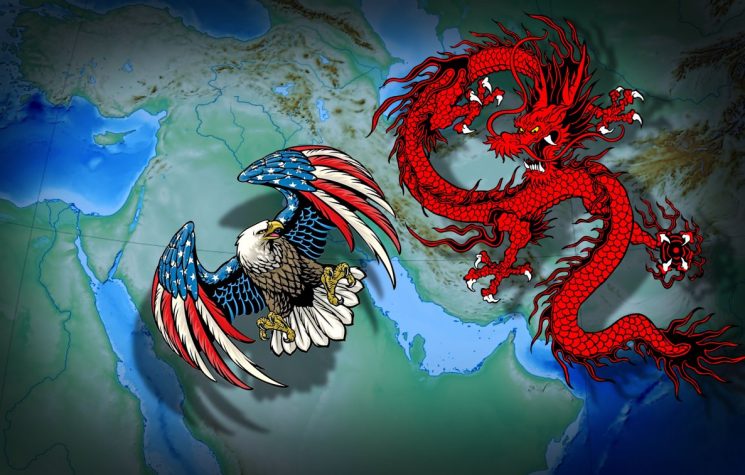
The summit has stabilized Sino-American relations without stabilizing the Gulf – and regarding the Gulf, Beijing has offered words, not leverage.

Join us on Telegram, X, and VK.

Contact us: info@strategic-culture.su

Agreements at no cost

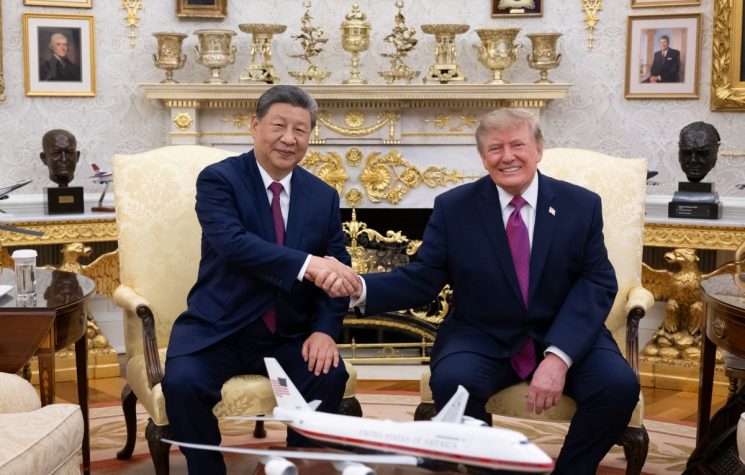
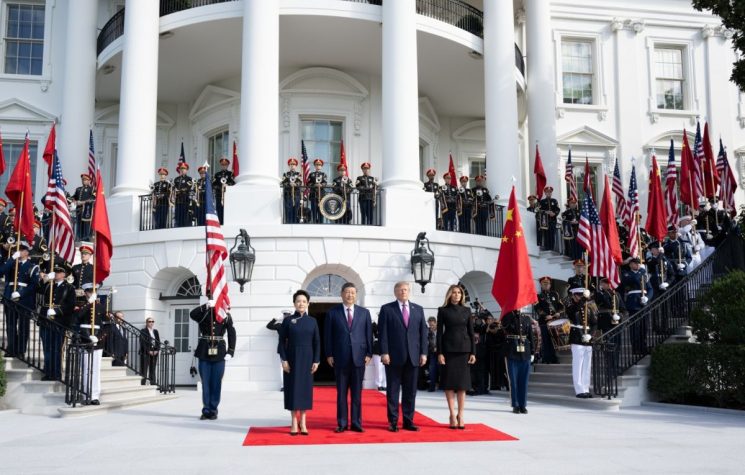
Xi Jinping left Washington on Friday, September 25, bid farewell by a 21-gun salute and the administration’s top officials lined up at the airport. A three-day state visit organized with a level of attention to detail that the White House rarely reserves for a systemic rival: the welcome at the foot of the aircraft stairs, a three-hour meeting in the Oval Office, the state dinner, tea with the spouses, and a visit to the National Archives. A Schramsberg was chosen for dinner – the same winery that provided the wine for the 1972 toast between Nixon and Zhou Enlai. At the table sat half of the American business community: Musk, Jensen Huang, Zuckerberg, Tim Cook, Bezos, Pichai, Dimon, Fink, as well as three Supreme Court justices, the Federal Reserve chair, and half the Cabinet.

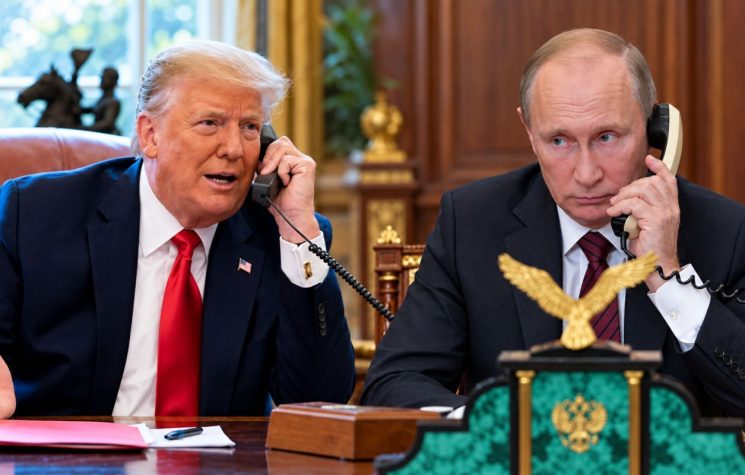
Then there is the real conversation, which must be read between the lines. Beijing immediately released its own account of the talks. On the American side, in the early hours, there was no official statement: only remarks from officials and a president who chose not to answer questions on the substance of the matter. This asymmetry in documentation alone reveals who wanted to set the terms of the meeting in writing.

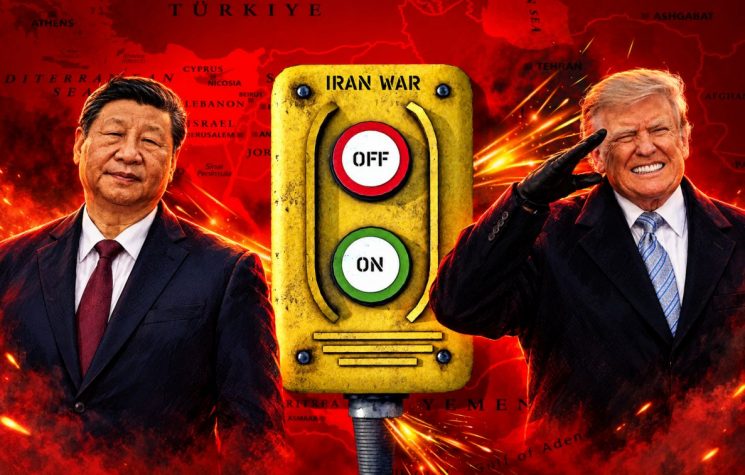
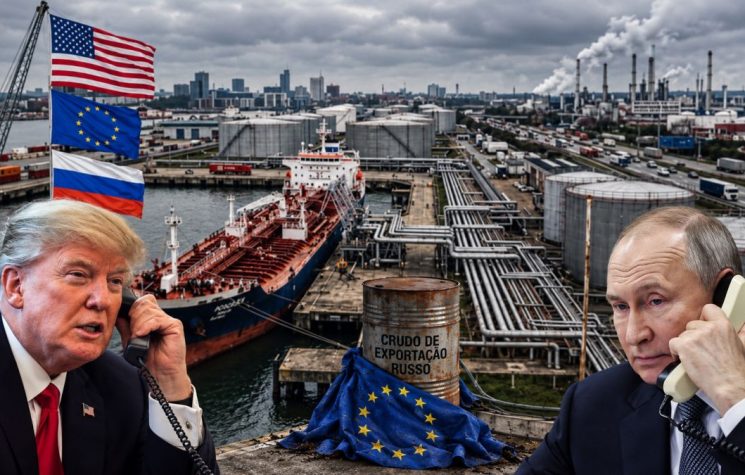
On the Iran issue, administration sources presented an alignment on three points as “significant progress”: Iran must never acquire nuclear weapons; the Strait of Hormuz must remain open; and there must be no tolls in the strait. Taken one by one, these three points coincide with positions that Beijing had been advocating even before boarding the plane. China holds a permanent seat on the Security Council and is a signatory to the 2015 JCPOA: Iranian nonproliferation has been its official policy for over a decade. An open Strait of Hormuz is in China’s interest even more than it is in America’s, because East Asia consumes the largest share of the crude oil passing through the strait, and China pays more than anyone else for Brent crude that remains above $100 per barrel. As for tolls, a transit fee imposed by Tehran would hit oil tankers bound for Chinese ports first and foremost.

Washington has thus secured Xi’s signature on three statements that Beijing would have endorsed in any forum. The actual gain is more limited, but it exists. China’s distancing itself from Iran’s demand for tolls weakens a card that Tehran is playing in the New York negotiations, where discussions center on a phased exit from the crisis (reopening of the strait, simultaneous lifting of the U.S. naval blockade, followed by the unfreezing of frozen assets), and where the Iranian delegation is reportedly aiming to transfer the issue of transit rights to a separate annex.

Independent accounts fill in what the American version leaves out. Xi asked Trump for an immediate return to the Islamabad Memorandum of Understanding and the resumption of negotiations “as soon as possible,” leading to a comprehensive agreement that includes the nuclear issue. Trump did not say yes. Rather than being resolved at the summit, the Iranian issue was kept off the summit agenda.

Tehran and Taiwan

Regarding Chinese support for Iran, the officials themselves admit that the picture is incomplete: “There has been indirect support, we believe, but no direct evidence.” The United States says it is “very concerned” but is unable to prove it. Trump reportedly told Xi in person, however, that any aid to Tehran – “whether direct or indirect, in the form of intelligence, components, or military equipment” – is “totally unacceptable.”

A warning is only as strong as the tool that backs it up, and here the tool is nowhere to be seen. During the same period, flight tracking data recorded a Mahan Air flight landing as scheduled in Guangzhou, and no measures were taken against Chinese airports or operators: the no-fly zone around Iran has failed precisely where it matters most. The term “indirect,” moreover, remains deliberately vague. If it included the purchase of Iranian crude oil, it would strike at the heart of Sino-Iranian trade; if it does not include it, it is reduced to military supplies that Washington, by its own admission, cannot substantiate. The ambiguity serves both sides: the Americans to keep the threat hanging in the air, and the Chinese to continue operating in the gray zone. My assessment is that action by the Treasury against Chinese entities linked to Iran is unlikely before the trade agreement is finalized, with a moderate degree of confidence.

Washington insists that pressure on Iran is a separate issue, unrelated to arms supplies to Taiwan or any other negotiations. This separation has its own domestic logic. With less than six weeks until the November 3 midterm elections, the administration cannot risk being accused of trading Taipei for Chinese cooperation in the Gulf.

The point is that this separation is unilateral. In the Chinese account, Xi described Beijing’s position on reunification and territorial integrity as clear-cut; he called on the United States to oppose Taiwan’s independence and to handle the issue with caution, noting that doing so would lay a solid foundation for strategic cooperation between the two countries. Taiwan is not just another issue among many; it is the condition underpinning them all, including Iran. Beijing will be watching to see how Washington translates its statements into concrete actions, and that response will remain the primary indicator of American seriousness. The result is a clear asymmetry: the United States is giving up using Taiwan as leverage, while China retains it as a precondition.

What about the option of a trade truce?

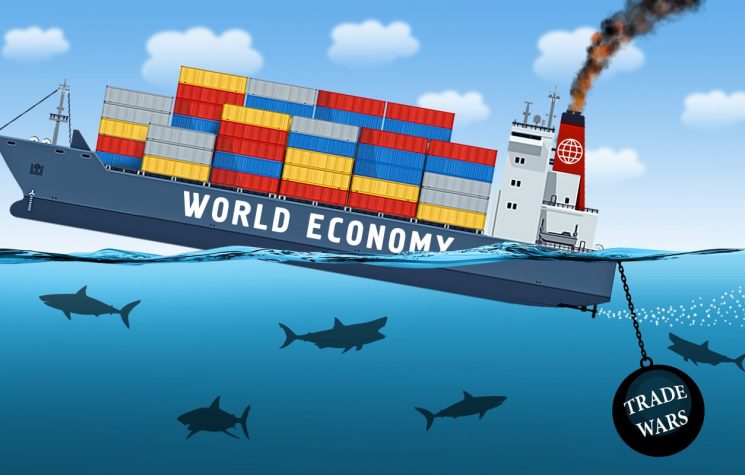
On the economic front, the summit resulted in the extension of the trade truce until January 10 – which averts an immediate return to much higher tariffs – and the announcement of a managed trade agreement, the details of which are expected on Monday following weeks of negotiations. No breakthrough on tariffs, rare earths, or technology controls. The very term echoes the “Phase One” model from January 2020: quantified purchase commitments – that is, managing the symptoms of a rivalry whose structural causes remain unchanged.

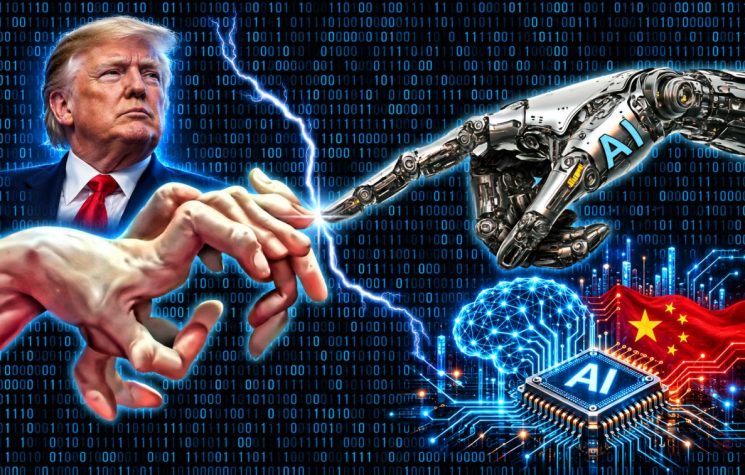
On artificial intelligence, the positions remained distinct. Xi proposed dialogue on risks, human oversight of technologies, and cooperation against abuses, inviting both sides to build on their respective strengths rather than monitor one another. Trump acknowledged that AI concerns the future of humanity, but made it clear that he prefers the current status quo to remain largely unchanged. No common rules, no mechanisms. The two capitals limited themselves to confirming mutual support for the APEC summit and the G20 summit they will host this year, thereby setting the schedule for upcoming meetings.

Taken together, the U.S. outcome consists of a declarative convergence on three already-shared principles, a verbal warning, and a trade agreement yet to be reviewed. Beijing takes home more: a truce until January, no new technological restrictions, Taiwan reaffirmed as the foundation of the relationship, and, above all, the U.S. adoption of the Chinese formula for a “constructive relationship of strategic stability,” agreed upon in May and now revived. Robert Lawrence Kuhn provided the most honest summary: the summit’s main outcome is a longer planning horizon. For a power convinced that time is on its side, that longer horizon is the reward.

There is one objection that must be taken seriously. Xi’s public distancing from the concessions isolates Tehran just as an internal front is opening up in Iran, with an impeachment motion filed in parliament against Foreign Minister Araghchi, accused of negotiating with the Americans without the green light from the Supreme National Security Council. But this very situation highlights the limitations of that gain. The question in Tehran is no longer just what to offer, but who has the authority to offer it; and on this point, Chinese pressure regarding the tolls changes nothing.

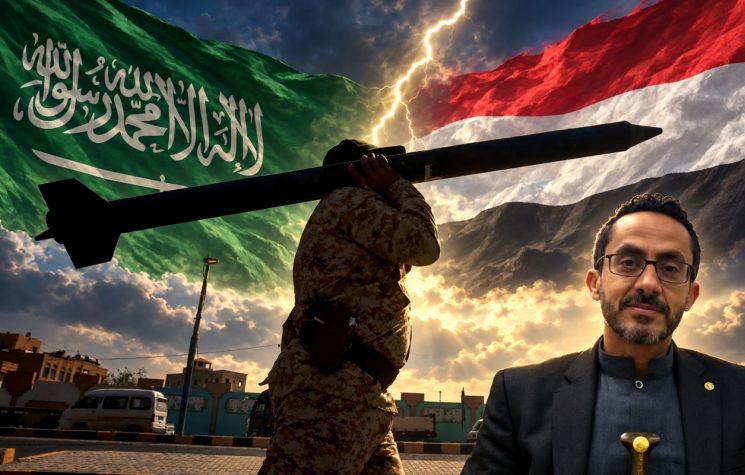
There are few but concrete indicators to watch in the coming weeks. The text of Monday’s agreement will reveal whether the trade deal extends to rare earths or is limited to agricultural and energy purchases. The New York channel will indicate whether the phased exchange – involving shipping through the Strait of Hormuz in exchange for the lifting of the blockade – becomes operational. The six ballistic missiles launched by Ansarallah toward Yanbu and Taif – targeting the terminal of the only major Saudi route bypassing the strait – demonstrate just how narrow the margin is before the price of crude oil pushes Trump, on the eve of the election, toward military options. Finally, a potential designation of Chinese entities by the Treasury would lend real weight to the warning from the Oval Office.

As long as none of these signals change, we can say that the summit has stabilized Sino-American relations without stabilizing the Gulf – and regarding the Gulf, Beijing has offered words, not leverage.
The day-after at the White House: USA and Xi Jinping

The summit has stabilized Sino-American relations without stabilizing the Gulf – and regarding the Gulf, Beijing has offered words, not leverage.

Join us on Telegram, X, and VK.

Contact us: info@strategic-culture.su

Agreements at no cost

Xi Jinping left Washington on Friday, September 25, bid farewell by a 21-gun salute and the administration’s top officials lined up at the airport. A three-day state visit organized with a level of attention to detail that the White House rarely reserves for a systemic rival: the welcome at the foot of the aircraft stairs, a three-hour meeting in the Oval Office, the state dinner, tea with the spouses, and a visit to the National Archives. A Schramsberg was chosen for dinner – the same winery that provided the wine for the 1972 toast between Nixon and Zhou Enlai. At the table sat half of the American business community: Musk, Jensen Huang, Zuckerberg, Tim Cook, Bezos, Pichai, Dimon, Fink, as well as three Supreme Court justices, the Federal Reserve chair, and half the Cabinet.

Then there is the real conversation, which must be read between the lines. Beijing immediately released its own account of the talks. On the American side, in the early hours, there was no official statement: only remarks from officials and a president who chose not to answer questions on the substance of the matter. This asymmetry in documentation alone reveals who wanted to set the terms of the meeting in writing.

On the Iran issue, administration sources presented an alignment on three points as “significant progress”: Iran must never acquire nuclear weapons; the Strait of Hormuz must remain open; and there must be no tolls in the strait. Taken one by one, these three points coincide with positions that Beijing had been advocating even before boarding the plane. China holds a permanent seat on the Security Council and is a signatory to the 2015 JCPOA: Iranian nonproliferation has been its official policy for over a decade. An open Strait of Hormuz is in China’s interest even more than it is in America’s, because East Asia consumes the largest share of the crude oil passing through the strait, and China pays more than anyone else for Brent crude that remains above $100 per barrel. As for tolls, a transit fee imposed by Tehran would hit oil tankers bound for Chinese ports first and foremost.

Washington has thus secured Xi’s signature on three statements that Beijing would have endorsed in any forum. The actual gain is more limited, but it exists. China’s distancing itself from Iran’s demand for tolls weakens a card that Tehran is playing in the New York negotiations, where discussions center on a phased exit from the crisis (reopening of the strait, simultaneous lifting of the U.S. naval blockade, followed by the unfreezing of frozen assets), and where the Iranian delegation is reportedly aiming to transfer the issue of transit rights to a separate annex.

Independent accounts fill in what the American version leaves out. Xi asked Trump for an immediate return to the Islamabad Memorandum of Understanding and the resumption of negotiations “as soon as possible,” leading to a comprehensive agreement that includes the nuclear issue. Trump did not say yes. Rather than being resolved at the summit, the Iranian issue was kept off the summit agenda.

Tehran and Taiwan

Regarding Chinese support for Iran, the officials themselves admit that the picture is incomplete: “There has been indirect support, we believe, but no direct evidence.” The United States says it is “very concerned” but is unable to prove it. Trump reportedly told Xi in person, however, that any aid to Tehran – “whether direct or indirect, in the form of intelligence, components, or military equipment” – is “totally unacceptable.”

A warning is only as strong as the tool that backs it up, and here the tool is nowhere to be seen. During the same period, flight tracking data recorded a Mahan Air flight landing as scheduled in Guangzhou, and no measures were taken against Chinese airports or operators: the no-fly zone around Iran has failed precisely where it matters most. The term “indirect,” moreover, remains deliberately vague. If it included the purchase of Iranian crude oil, it would strike at the heart of Sino-Iranian trade; if it does not include it, it is reduced to military supplies that Washington, by its own admission, cannot substantiate. The ambiguity serves both sides: the Americans to keep the threat hanging in the air, and the Chinese to continue operating in the gray zone. My assessment is that action by the Treasury against Chinese entities linked to Iran is unlikely before the trade agreement is finalized, with a moderate degree of confidence.

Washington insists that pressure on Iran is a separate issue, unrelated to arms supplies to Taiwan or any other negotiations. This separation has its own domestic logic. With less than six weeks until the November 3 midterm elections, the administration cannot risk being accused of trading Taipei for Chinese cooperation in the Gulf.

The point is that this separation is unilateral. In the Chinese account, Xi described Beijing’s position on reunification and territorial integrity as clear-cut; he called on the United States to oppose Taiwan’s independence and to handle the issue with caution, noting that doing so would lay a solid foundation for strategic cooperation between the two countries. Taiwan is not just another issue among many; it is the condition underpinning them all, including Iran. Beijing will be watching to see how Washington translates its statements into concrete actions, and that response will remain the primary indicator of American seriousness. The result is a clear asymmetry: the United States is giving up using Taiwan as leverage, while China retains it as a precondition.

What about the option of a trade truce?

On the economic front, the summit resulted in the extension of the trade truce until January 10 – which averts an immediate return to much higher tariffs – and the announcement of a managed trade agreement, the details of which are expected on Monday following weeks of negotiations. No breakthrough on tariffs, rare earths, or technology controls. The very term echoes the “Phase One” model from January 2020: quantified purchase commitments – that is, managing the symptoms of a rivalry whose structural causes remain unchanged.

On artificial intelligence, the positions remained distinct. Xi proposed dialogue on risks, human oversight of technologies, and cooperation against abuses, inviting both sides to build on their respective strengths rather than monitor one another. Trump acknowledged that AI concerns the future of humanity, but made it clear that he prefers the current status quo to remain largely unchanged. No common rules, no mechanisms. The two capitals limited themselves to confirming mutual support for the APEC summit and the G20 summit they will host this year, thereby setting the schedule for upcoming meetings.

Taken together, the U.S. outcome consists of a declarative convergence on three already-shared principles, a verbal warning, and a trade agreement yet to be reviewed. Beijing takes home more: a truce until January, no new technological restrictions, Taiwan reaffirmed as the foundation of the relationship, and, above all, the U.S. adoption of the Chinese formula for a “constructive relationship of strategic stability,” agreed upon in May and now revived. Robert Lawrence Kuhn provided the most honest summary: the summit’s main outcome is a longer planning horizon. For a power convinced that time is on its side, that longer horizon is the reward.

There is one objection that must be taken seriously. Xi’s public distancing from the concessions isolates Tehran just as an internal front is opening up in Iran, with an impeachment motion filed in parliament against Foreign Minister Araghchi, accused of negotiating with the Americans without the green light from the Supreme National Security Council. But this very situation highlights the limitations of that gain. The question in Tehran is no longer just what to offer, but who has the authority to offer it; and on this point, Chinese pressure regarding the tolls changes nothing.

There are few but concrete indicators to watch in the coming weeks. The text of Monday’s agreement will reveal whether the trade deal extends to rare earths or is limited to agricultural and energy purchases. The New York channel will indicate whether the phased exchange – involving shipping through the Strait of Hormuz in exchange for the lifting of the blockade – becomes operational. The six ballistic missiles launched by Ansarallah toward Yanbu and Taif – targeting the terminal of the only major Saudi route bypassing the strait – demonstrate just how narrow the margin is before the price of crude oil pushes Trump, on the eve of the election, toward military options. Finally, a potential designation of Chinese entities by the Treasury would lend real weight to the warning from the Oval Office.

As long as none of these signals change, we can say that the summit has stabilized Sino-American relations without stabilizing the Gulf – and regarding the Gulf, Beijing has offered words, not leverage.
The summit has stabilized Sino-American relations without stabilizing the Gulf – and regarding the Gulf, Beijing has offered words, not leverage.
Join us on Telegram, X, and VK.

Contact us: info@strategic-culture.su

Agreements at no cost

Xi Jinping left Washington on Friday, September 25, bid farewell by a 21-gun salute and the administration’s top officials lined up at the airport. A three-day state visit organized with a level of attention to detail that the White House rarely reserves for a systemic rival: the welcome at the foot of the aircraft stairs, a three-hour meeting in the Oval Office, the state dinner, tea with the spouses, and a visit to the National Archives. A Schramsberg was chosen for dinner – the same winery that provided the wine for the 1972 toast between Nixon and Zhou Enlai. At the table sat half of the American business community: Musk, Jensen Huang, Zuckerberg, Tim Cook, Bezos, Pichai, Dimon, Fink, as well as three Supreme Court justices, the Federal Reserve chair, and half the Cabinet.

Then there is the real conversation, which must be read between the lines. Beijing immediately released its own account of the talks. On the American side, in the early hours, there was no official statement: only remarks from officials and a president who chose not to answer questions on the substance of the matter. This asymmetry in documentation alone reveals who wanted to set the terms of the meeting in writing.

On the Iran issue, administration sources presented an alignment on three points as “significant progress”: Iran must never acquire nuclear weapons; the Strait of Hormuz must remain open; and there must be no tolls in the strait. Taken one by one, these three points coincide with positions that Beijing had been advocating even before boarding the plane. China holds a permanent seat on the Security Council and is a signatory to the 2015 JCPOA: Iranian nonproliferation has been its official policy for over a decade. An open Strait of Hormuz is in China’s interest even more than it is in America’s, because East Asia consumes the largest share of the crude oil passing through the strait, and China pays more than anyone else for Brent crude that remains above $100 per barrel. As for tolls, a transit fee imposed by Tehran would hit oil tankers bound for Chinese ports first and foremost.

Washington has thus secured Xi’s signature on three statements that Beijing would have endorsed in any forum. The actual gain is more limited, but it exists. China’s distancing itself from Iran’s demand for tolls weakens a card that Tehran is playing in the New York negotiations, where discussions center on a phased exit from the crisis (reopening of the strait, simultaneous lifting of the U.S. naval blockade, followed by the unfreezing of frozen assets), and where the Iranian delegation is reportedly aiming to transfer the issue of transit rights to a separate annex.

Independent accounts fill in what the American version leaves out. Xi asked Trump for an immediate return to the Islamabad Memorandum of Understanding and the resumption of negotiations “as soon as possible,” leading to a comprehensive agreement that includes the nuclear issue. Trump did not say yes. Rather than being resolved at the summit, the Iranian issue was kept off the summit agenda.

Tehran and Taiwan

Regarding Chinese support for Iran, the officials themselves admit that the picture is incomplete: “There has been indirect support, we believe, but no direct evidence.” The United States says it is “very concerned” but is unable to prove it. Trump reportedly told Xi in person, however, that any aid to Tehran – “whether direct or indirect, in the form of intelligence, components, or military equipment” – is “totally unacceptable.”

A warning is only as strong as the tool that backs it up, and here the tool is nowhere to be seen. During the same period, flight tracking data recorded a Mahan Air flight landing as scheduled in Guangzhou, and no measures were taken against Chinese airports or operators: the no-fly zone around Iran has failed precisely where it matters most. The term “indirect,” moreover, remains deliberately vague. If it included the purchase of Iranian crude oil, it would strike at the heart of Sino-Iranian trade; if it does not include it, it is reduced to military supplies that Washington, by its own admission, cannot substantiate. The ambiguity serves both sides: the Americans to keep the threat hanging in the air, and the Chinese to continue operating in the gray zone. My assessment is that action by the Treasury against Chinese entities linked to Iran is unlikely before the trade agreement is finalized, with a moderate degree of confidence.

Washington insists that pressure on Iran is a separate issue, unrelated to arms supplies to Taiwan or any other negotiations. This separation has its own domestic logic. With less than six weeks until the November 3 midterm elections, the administration cannot risk being accused of trading Taipei for Chinese cooperation in the Gulf.

The point is that this separation is unilateral. In the Chinese account, Xi described Beijing’s position on reunification and territorial integrity as clear-cut; he called on the United States to oppose Taiwan’s independence and to handle the issue with caution, noting that doing so would lay a solid foundation for strategic cooperation between the two countries. Taiwan is not just another issue among many; it is the condition underpinning them all, including Iran. Beijing will be watching to see how Washington translates its statements into concrete actions, and that response will remain the primary indicator of American seriousness. The result is a clear asymmetry: the United States is giving up using Taiwan as leverage, while China retains it as a precondition.

What about the option of a trade truce?

On the economic front, the summit resulted in the extension of the trade truce until January 10 – which averts an immediate return to much higher tariffs – and the announcement of a managed trade agreement, the details of which are expected on Monday following weeks of negotiations. No breakthrough on tariffs, rare earths, or technology controls. The very term echoes the “Phase One” model from January 2020: quantified purchase commitments – that is, managing the symptoms of a rivalry whose structural causes remain unchanged.

On artificial intelligence, the positions remained distinct. Xi proposed dialogue on risks, human oversight of technologies, and cooperation against abuses, inviting both sides to build on their respective strengths rather than monitor one another. Trump acknowledged that AI concerns the future of humanity, but made it clear that he prefers the current status quo to remain largely unchanged. No common rules, no mechanisms. The two capitals limited themselves to confirming mutual support for the APEC summit and the G20 summit they will host this year, thereby setting the schedule for upcoming meetings.

Taken together, the U.S. outcome consists of a declarative convergence on three already-shared principles, a verbal warning, and a trade agreement yet to be reviewed. Beijing takes home more: a truce until January, no new technological restrictions, Taiwan reaffirmed as the foundation of the relationship, and, above all, the U.S. adoption of the Chinese formula for a “constructive relationship of strategic stability,” agreed upon in May and now revived. Robert Lawrence Kuhn provided the most honest summary: the summit’s main outcome is a longer planning horizon. For a power convinced that time is on its side, that longer horizon is the reward.

There is one objection that must be taken seriously. Xi’s public distancing from the concessions isolates Tehran just as an internal front is opening up in Iran, with an impeachment motion filed in parliament against Foreign Minister Araghchi, accused of negotiating with the Americans without the green light from the Supreme National Security Council. But this very situation highlights the limitations of that gain. The question in Tehran is no longer just what to offer, but who has the authority to offer it; and on this point, Chinese pressure regarding the tolls changes nothing.

There are few but concrete indicators to watch in the coming weeks. The text of Monday’s agreement will reveal whether the trade deal extends to rare earths or is limited to agricultural and energy purchases. The New York channel will indicate whether the phased exchange – involving shipping through the Strait of Hormuz in exchange for the lifting of the blockade – becomes operational. The six ballistic missiles launched by Ansarallah toward Yanbu and Taif – targeting the terminal of the only major Saudi route bypassing the strait – demonstrate just how narrow the margin is before the price of crude oil pushes Trump, on the eve of the election, toward military options. Finally, a potential designation of Chinese entities by the Treasury would lend real weight to the warning from the Oval Office.

As long as none of these signals change, we can say that the summit has stabilized Sino-American relations without stabilizing the Gulf – and regarding the Gulf, Beijing has offered words, not leverage.
The views of individual contributors do not necessarily represent those of the Strategic Culture Foundation.

See also

September 24, 2026

See also

September 24, 2026
The views of individual contributors do not necessarily represent those of the Strategic Culture Foundation.