


Contact us: info@strategic-culture.su
This is what’s really happening inside the room – actually rooms: deeply privileged, confidential information coming from both centers of gravity in the current drama, Tehran and Islamabad, point towards an emerging architecture way beyond Washington’s trademark splash choreography. As it stands, we may use the intel we have been receiving to understand the architecture, to sharpen our questions, and to draw a remarkably coherent picture.
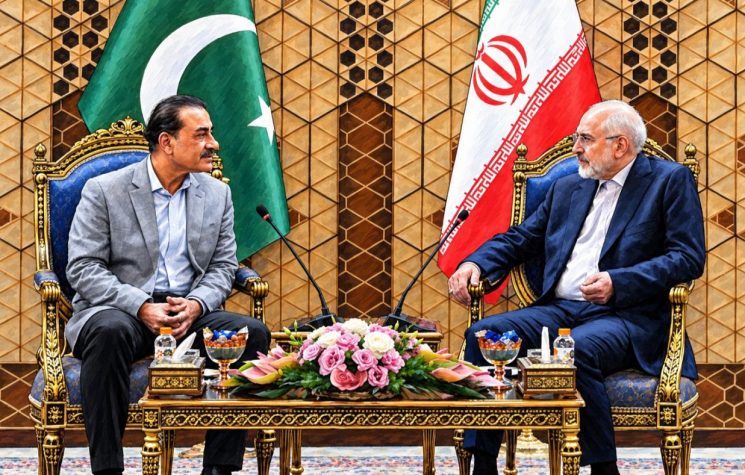
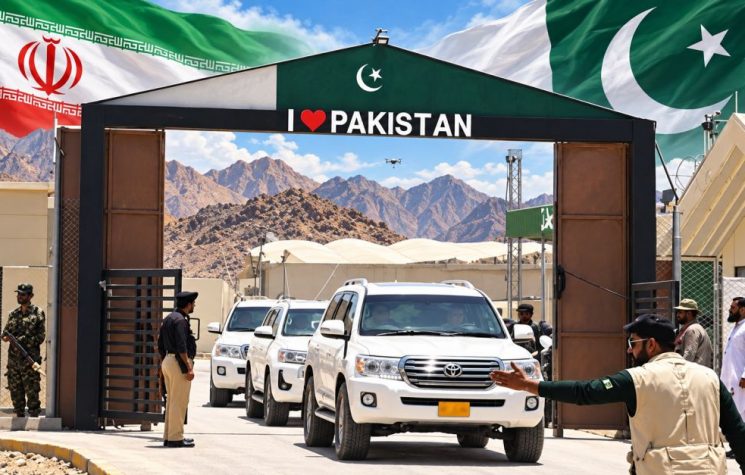
In a nutshell: the Trump administration is somewhat parking the kinetic track while Tehran keeps the escalation ladder loaded. Perils abound. The difference is that after the Mother of All Trips earlier this week – Field Marshal Asim Munir going to Tehran to talk to every key player – Pakistan is once again carrying the practical mechanics of a possible Trump off-ramp from the do-or-die clash with Iran.
Munir went to Tehran carrying an American message: Trump called him beforehand, once again, literally begging for some sort of enticement to bring Tehran back to the negotiating table (actually smashed by Washington).
Islamabad subsequently conveyed to Tehran that new U.S. sanctions could be reversed before – or during – renewed negotiations.
Simultaneously, via ghastly former Soros asset Scott Bessent – the epitome of arrogance/ignorance – the U.S. Treasury announced an extraordinarily aggressive Maximum Economic Pressure campaign to strangle the Iranian economy while holding back the financial measures – against Chinese companies and banks, for instance – that would make the “campaign” immediately systemic, and nearly impossible to unwind.
And, critically, the military track was pushed backward.
Taken together – and viewed alongside what our sources tell us from both centers of gravity — these actions form an increasingly coherent architecture: an off-ramp being assembled in real time.
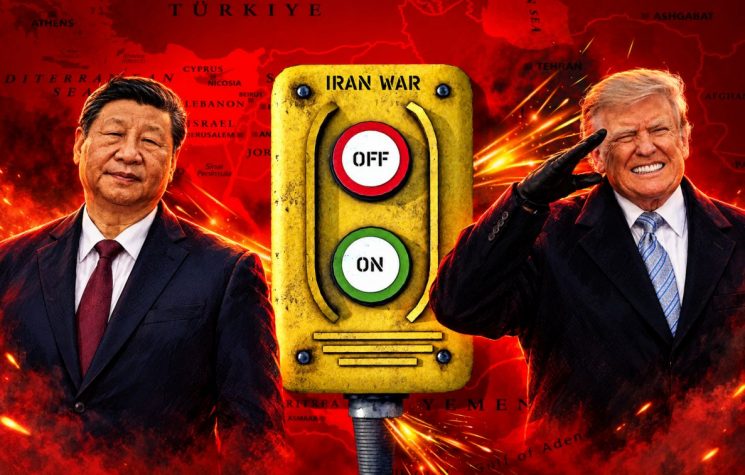
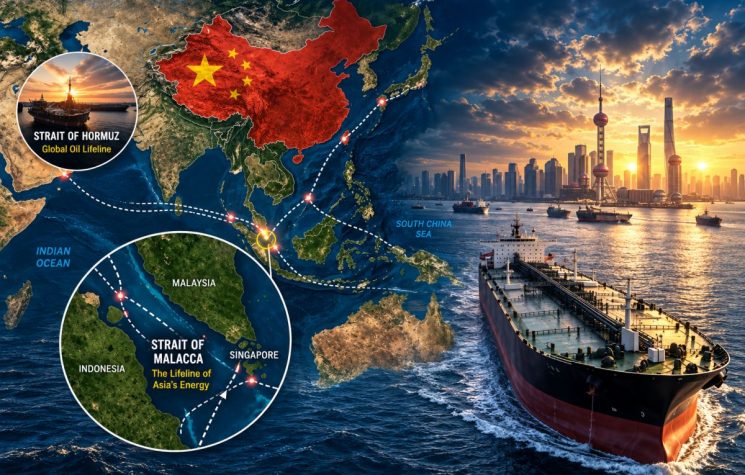
Trump – or neo-Crassus – maintains maximum-pressure rhetoric for domestic and political optics. Washington keeps reversible sanctions as a bargaining tool. Pakistan moves the political traffic between Washington and Tehran. Oman discusses the physical mechanism around the Strait of Hormuz. And Tehran keeps the Strait, shipping pressure and its escalation options intact while testing whether Washington is finally ready to talk serious business.
So this is the key takeaway: Iran is not capitulating even as Trump is not retreating.
Both sides are trying to create sufficient political space to move backward without publicly admitting they have moved backward.
That makes the new window of opportunity real but also extremely fragile.
How to preserve an escalation ladder without climbing it
Munir went to Tehran carrying a specific American message that Washington wanted to be conveyed to the Iranian leadership.
The possibility of Washington – perhaps – reversing the new sanctions before or during renewed negotiations shows that the sanctions are essentially leverage: a coercive instrument that can simultaneously be suspended, dismantled or even traded as part of a negotiated sequence.
As in a pressure package containing its own exit door.
The American “Economic D-Day” so far has been the usual rhetorical circus drenched in bluster – eliciting countless jokes across the Global South. Washington stopped short of steps that would immediately transform economic pressure into a systemic confrontation.
Translation: Trump is preserving negotiating space. The bridge back to diplomacy has not been completely burned. Call it a tactical pause under conditions of extreme military pressure.
Meanwhile, Iran and Oman have moved toward a temporary navigational corridor and joint mine-clearance mechanism.
Tehran is quite clear; this does not mean reopening the Strait of Hormuz. Translation: that’s Iran demonstrating flexibility while retaining strategic leverage.
So, once again: Tehran has not folded. On the contrary:
demands remain very hard, including serious American movement on sanctions, frozen assets, the maritime blockade and coercive military pressure. And most of all: these are all commitments inbuilt in the dead cat MoU – bilaterally signed – and essential to be fulfilled before any possible normalization around the Strait of Hormuz.
After all, Iran still retains virtually every meaningful coercive instrument; shipping controls; blacklists; detentions; pressure on maritime traffic; potential escalation against U.S. interests;
potential pressure against regional energy infrastructure;
and ultimately nuclear-threshold options.
The key signal as it stands is what Tehran is choosing not (italics mine) to do. Tehran is focused on corridor building; mediation; message exchange; telephone – and live – diplomacy. No strategic escalation. Tehran is preserving the escalation ladder while deliberately declining – for now – to climb it.
Who moves first without appearing to move first?
Well, it’s tough. Washington wants Iranian movement first. Tehran wants American movement first.
Trump cannot politically afford the optics that Tehran forced him backward. Tehran, meanwhile, does not care about optics: what it needs is visible proof that negotiations will produce reciprocal American action rather than becoming another mechanism for Washington to extract Iranian concessions while retaining every coercive instrument.
Pakistan, right in the middle, is trying to bridge that gap, by tackling the key question: Who moves first without appearing to have moved first?
The information we have been receiving allows us to compare what Islamabad believes it is transmitting with what Tehran believes it is receiving. That’s where real intel lies.
Key questions include: What did Islamabad intend Tehran to understand? And what did Tehran actually understand?
What response is Tehran signaling back through the channel?
What could Pakistan plausibly carry back to Washington?
There’s a new loop in place. It seems to be working.
Trump needs an outcome he can sell as victory. He needs Iran returning to negotiations because American pressure supposedly worked. He needs a Strait of Hormuz de-escalation without appearing to reward Tehran. He needs the military threat to remain credible without actually having to launch another potentially uncontrollable war.
Above all: he needs an exit that does not look like an exit.
Tehran for its part needs visible American reciprocity. It needs evidence that sanctions can actually be removed rather than merely discussed. It needs the naval blockade to go away. It needs confidence that negotiations will not become a trap in which Iran gives up leverage while Washington keeps its entire coercive architecture intact.
And most of all, Tehran needs a credible formula around the Strait of Hormuz that preserves sufficient sovereign control so no surrender optics will creep at home and across West Asia.
And that brings us to Pakistan trying to make these two fundamentally incompatible and intractable political requirements meet in the middle.
So once again we’re back to a possible off-ramp. A tiny opening. Yet that’s far from an agreement.
The entire diplomatic process sits on top of a very serious live military confrontation. The American naval blockade is on. Tehran formally treats the Strait of Hormuz as closed. Commercial shipping is totally exposed. A war risk remains quite high. Iran retains substantial escalation capacity. The U.S. retains overwhelming kinetic capability. One simple miscalculation could still destroy the entire channel.
As it stands, the diplomatic track seems to have the initiative: so narrow, so precarious, but also genuine. The next decisive move will be political – not military. Unless some actor deliberately closes the window first.
Islamabad, via Prime Minister Shehbaz Sharif’s circle – he has spoken directly with Trump and the Iranian leadership – believes there is a significant chance the MoU may be revived, with a 60–90 day negotiating window for both sides to work out the larger settlement while getting the hell off the escalation ladder before this becomes a completely uncontrollable war.
And then something comes from inside Iranian President Pezeshkian’s office. He is deeply pleased with the visit by the Pakistani delegation and the message communicated to him by Munir from Trump: “This war may finally be coming to an end – with Iran victorious.”
Realpolitik? A serious misunderstanding? Or an exit without calling it an exit?