
World
Bruna Frascolla
April 23, 2026
© Photo: Public domain

The scenario that is emerging is one of the dissolution of the Western left into a woke progressivism invented by financial capital.

Join us on TelegramTwitter, and VK.

Contact us: info@strategic-culture.su

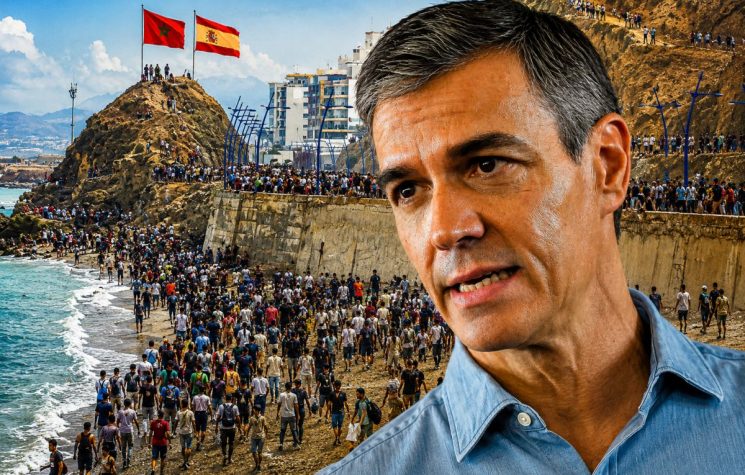
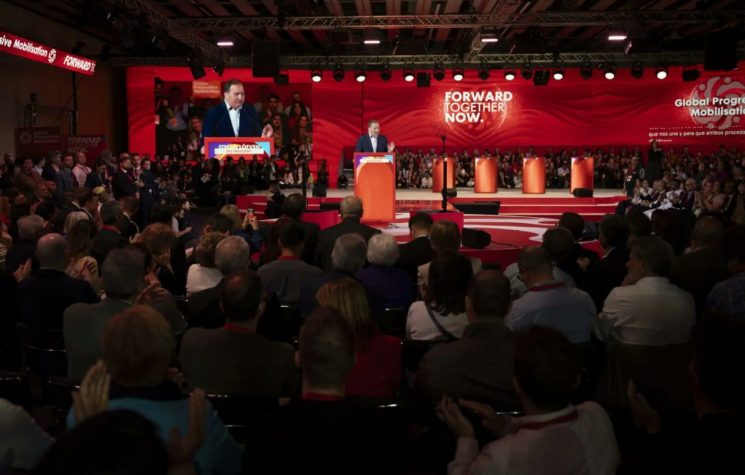
On April 17th and 18th, Barcelona hosted the first Global Progressive Mobilization or Summit, supposedly led by Pedro Sánchez of Spain and Lula of Brazil, but held under the auspices of the Open Society Foundation.

There is not much information available about its funding. On the official website, we only read that “this website receives financial support from the European Parliament,” making it impossible to conclude that it is the only source of funding. It is noteworthy, however, that among the heads of state, bureaucrats, and politicians, Pedro Abramovay is listed as a speaker in his capacity as Vice-President of the Open Society. Alex Soros (son and heir of the nonagenarian George) attended the event. Without mincing words, the Jewish Insider referred to the meeting as the “Alex Soros Summit.” Still, OSF wasn’t the only major NGO present, as the Bill & Melinda Gates Foundation also had a representative among the speakers.

The names of the rooms help to reveal the organization’s ideological preferences: Salvador Allende, Angela Davis, Nelson Mandela, Dolores Huerta, Anna Lindh, Hannah Arendt, Frida Kahlo, Edward Said, and Ernest Lluch. Surely someone on the organizing committee decided to include an excessive number of women and ensured that there was only one “white cisgender heterosexual man” (the last one mentioned, who is Spanish – Allende doesn’t count because Ibero-Americans are “Latinx” in the minds of these people). Among all these names, only one has a historical connection to communism: Angela Davis. However, nowadays she is much more recognized as a bi-oppressed black-woman than as a communist. And, even in her communist days, the racial separatism of the Black Panthers was contrary to the Marxist ideal of fraternity among the peoples of the world. Not surprisingly, the anarcho-capitalist Murray Rothbard, in his leftist phase, positioned himself in favor of both black separatism and white separatism, correctly understood as coherent with each other.

What stands out at the event that aims to bring together the global left is the absence of representatives from Cuba, Venezuela, and Bolivia among the speakers. Petro and Yamandu Orsi, president of Uruguay, were speakers. Sheinbaum even attended, but did not speak. Among the South American left-wing politicians, Chileans, Argentinians and Mexicans were listed as speakers. It is worth noting that the prime minister of Kosovo – a country invented by NATO – was listed as a speaker.

***

In this century, the most iconic left-wing ideological organization in Ibero-America was the São Paulo Forum. From the mid-2000s to the mid-2010s, the evident leaders of the Latin American left were Fidel Castro (1926 – 2016), Hugo Chávez (1954 – 2013), Evo Morales, and Lula – the latter a somewhat dubious figure who oscillated between friendships in Caracas and favorable editorials in The Economist.

Obviously, the star among these leaders was Fidel Castro, who had a historical alignment with Moscow and was, so to speak, the Latin American lighthouse of the left. The São Paulo Forum itself emerged in the early 1990s with the purpose of reorganizing itself in the face of the end of the Soviet Union. Thus, even though Russia was no longer as present in the Ibero-American left as before, the USSR was still the lighthouse of its identity, a sun whose light Cuba reflected just like the moon.

Nowadays, the overestimation of Moscow’s importance to the global left leads to forgetting the great waves of American influence. The first occurred from 1968 onwards, with psychedelia and the sexual revolution; the second in the 2010s, with wokeism. In the end, it is a liberal and anti-communist left that ended up influencing communists in the Western world, who went from guerrilla warfare to crocheted thongs.

Since feminism and the fight against racism were also Soviet banners, the expectation of reconciling both influences enjoyed a certain plausibility. However, the end result was the replacement of any demand for improved living standards for the working class with the implementation of DEI policies, which were created in the Nixon administration and aimed to weaken workers through racial division.

Historically, the working class in the US has always had difficulty unifying because of rivalries between population groups: the WASPs hating Irish immigrants, then the Anglophones hating Italian immigrants, and so on. Identity politics instrumentalize immigrants and women to combat the group to which most workers in the first world belonged: the white male family man. If on the racialist side this group was attacked for being white, on the side of the sexual revolution it is attacked for believing that it has the right to earn enough to support a family, instead of being a drugged and atomized consumer.

In South America, we can say with some certainty that there are countries whose left does not have much affinity with the São Paulo Forum and is above all woke. Unlike Cuba, Venezuela and Bolivia, these countries are among those whose politicians appeared among the speakers in Barcelona: Chile, Uruguay and Colombia. Michelle Bachelet, from Chile, did not get along with Chávez; the proto-woke Mujica criticized his socialism; and Colombia, a backyard of the US, only elects liberal presidents (after a number of right-wingers, came Petro, who had many tensions with Maduro; the Colombians close to the São Paulo Forum were members of the FARC, some of whom formed a tiny party with terrible electoral performance).

***

The Russian and Chinese communists took immense feudal countries and transformed them into modern powers. In Iran, the Shiite revolutionaries took care of the country’s sovereignty and today exhibit great scientific and technological autonomy that enables them to confront the United States. Unfortunately, in South America, the entire post-Cold War left chose to stop developing and decided to govern only by distributing income to win the next elections. It also became very vulnerable to the American democracy rhetoric.

Chavista Venezuela exported oil and imported everything else – even food. Brazil, which developed a lot during the military period and since then had a gigantic university research structure, preferred to treat this structure as a mechanism for distributing diplomas, thinking that this was social justice. Brazil and Argentina are world agricultural powerhouses – but, having an agriculture that requires little labor, they do not generate enough jobs to make the bulk of their population prosper.

These ills of South America are not entirely foreign to the US and Europe, since both, to please financial capital, exported their industrial jobs to China. In the case of Europe, there is also the energy issue (especially with the anti-nuclear and anti-Russian agenda) undermining industry. We can then say that the South American left agrees with the EU bureaucracy and the US left insofar as it adopts as “progressive” an agenda of managing misery. Everyone sees a small pie to be divided and decides to do “social justice” by privileging insolent transvestites or rapist immigrants. Thus, these bureaucratic elites subservient to speculative capital hope that the people will dedicate themselves to hating only transvestites and immigrants, instead of raising their eyes to the causes.

The scenario that is emerging is one of the dissolution of the Western left into a woke progressivism invented by financial capital who condemns “populism”, and the extinction of the Ibero-American left that saw in the mass leader the hopes of defeating imperialism.

In Barcelona, the left replaces the icon of Fidel Castro with NATO’s ‘democracy’

The scenario that is emerging is one of the dissolution of the Western left into a woke progressivism invented by financial capital.

Join us on TelegramTwitter, and VK.

Contact us: info@strategic-culture.su

On April 17th and 18th, Barcelona hosted the first Global Progressive Mobilization or Summit, supposedly led by Pedro Sánchez of Spain and Lula of Brazil, but held under the auspices of the Open Society Foundation.

There is not much information available about its funding. On the official website, we only read that “this website receives financial support from the European Parliament,” making it impossible to conclude that it is the only source of funding. It is noteworthy, however, that among the heads of state, bureaucrats, and politicians, Pedro Abramovay is listed as a speaker in his capacity as Vice-President of the Open Society. Alex Soros (son and heir of the nonagenarian George) attended the event. Without mincing words, the Jewish Insider referred to the meeting as the “Alex Soros Summit.” Still, OSF wasn’t the only major NGO present, as the Bill & Melinda Gates Foundation also had a representative among the speakers.

The names of the rooms help to reveal the organization’s ideological preferences: Salvador Allende, Angela Davis, Nelson Mandela, Dolores Huerta, Anna Lindh, Hannah Arendt, Frida Kahlo, Edward Said, and Ernest Lluch. Surely someone on the organizing committee decided to include an excessive number of women and ensured that there was only one “white cisgender heterosexual man” (the last one mentioned, who is Spanish – Allende doesn’t count because Ibero-Americans are “Latinx” in the minds of these people). Among all these names, only one has a historical connection to communism: Angela Davis. However, nowadays she is much more recognized as a bi-oppressed black-woman than as a communist. And, even in her communist days, the racial separatism of the Black Panthers was contrary to the Marxist ideal of fraternity among the peoples of the world. Not surprisingly, the anarcho-capitalist Murray Rothbard, in his leftist phase, positioned himself in favor of both black separatism and white separatism, correctly understood as coherent with each other.

What stands out at the event that aims to bring together the global left is the absence of representatives from Cuba, Venezuela, and Bolivia among the speakers. Petro and Yamandu Orsi, president of Uruguay, were speakers. Sheinbaum even attended, but did not speak. Among the South American left-wing politicians, Chileans, Argentinians and Mexicans were listed as speakers. It is worth noting that the prime minister of Kosovo – a country invented by NATO – was listed as a speaker.

***

In this century, the most iconic left-wing ideological organization in Ibero-America was the São Paulo Forum. From the mid-2000s to the mid-2010s, the evident leaders of the Latin American left were Fidel Castro (1926 – 2016), Hugo Chávez (1954 – 2013), Evo Morales, and Lula – the latter a somewhat dubious figure who oscillated between friendships in Caracas and favorable editorials in The Economist.

Obviously, the star among these leaders was Fidel Castro, who had a historical alignment with Moscow and was, so to speak, the Latin American lighthouse of the left. The São Paulo Forum itself emerged in the early 1990s with the purpose of reorganizing itself in the face of the end of the Soviet Union. Thus, even though Russia was no longer as present in the Ibero-American left as before, the USSR was still the lighthouse of its identity, a sun whose light Cuba reflected just like the moon.

Nowadays, the overestimation of Moscow’s importance to the global left leads to forgetting the great waves of American influence. The first occurred from 1968 onwards, with psychedelia and the sexual revolution; the second in the 2010s, with wokeism. In the end, it is a liberal and anti-communist left that ended up influencing communists in the Western world, who went from guerrilla warfare to crocheted thongs.

Since feminism and the fight against racism were also Soviet banners, the expectation of reconciling both influences enjoyed a certain plausibility. However, the end result was the replacement of any demand for improved living standards for the working class with the implementation of DEI policies, which were created in the Nixon administration and aimed to weaken workers through racial division.

Historically, the working class in the US has always had difficulty unifying because of rivalries between population groups: the WASPs hating Irish immigrants, then the Anglophones hating Italian immigrants, and so on. Identity politics instrumentalize immigrants and women to combat the group to which most workers in the first world belonged: the white male family man. If on the racialist side this group was attacked for being white, on the side of the sexual revolution it is attacked for believing that it has the right to earn enough to support a family, instead of being a drugged and atomized consumer.

In South America, we can say with some certainty that there are countries whose left does not have much affinity with the São Paulo Forum and is above all woke. Unlike Cuba, Venezuela and Bolivia, these countries are among those whose politicians appeared among the speakers in Barcelona: Chile, Uruguay and Colombia. Michelle Bachelet, from Chile, did not get along with Chávez; the proto-woke Mujica criticized his socialism; and Colombia, a backyard of the US, only elects liberal presidents (after a number of right-wingers, came Petro, who had many tensions with Maduro; the Colombians close to the São Paulo Forum were members of the FARC, some of whom formed a tiny party with terrible electoral performance).

***

The Russian and Chinese communists took immense feudal countries and transformed them into modern powers. In Iran, the Shiite revolutionaries took care of the country’s sovereignty and today exhibit great scientific and technological autonomy that enables them to confront the United States. Unfortunately, in South America, the entire post-Cold War left chose to stop developing and decided to govern only by distributing income to win the next elections. It also became very vulnerable to the American democracy rhetoric.

Chavista Venezuela exported oil and imported everything else – even food. Brazil, which developed a lot during the military period and since then had a gigantic university research structure, preferred to treat this structure as a mechanism for distributing diplomas, thinking that this was social justice. Brazil and Argentina are world agricultural powerhouses – but, having an agriculture that requires little labor, they do not generate enough jobs to make the bulk of their population prosper.

These ills of South America are not entirely foreign to the US and Europe, since both, to please financial capital, exported their industrial jobs to China. In the case of Europe, there is also the energy issue (especially with the anti-nuclear and anti-Russian agenda) undermining industry. We can then say that the South American left agrees with the EU bureaucracy and the US left insofar as it adopts as “progressive” an agenda of managing misery. Everyone sees a small pie to be divided and decides to do “social justice” by privileging insolent transvestites or rapist immigrants. Thus, these bureaucratic elites subservient to speculative capital hope that the people will dedicate themselves to hating only transvestites and immigrants, instead of raising their eyes to the causes.

The scenario that is emerging is one of the dissolution of the Western left into a woke progressivism invented by financial capital who condemns “populism”, and the extinction of the Ibero-American left that saw in the mass leader the hopes of defeating imperialism.

The scenario that is emerging is one of the dissolution of the Western left into a woke progressivism invented by financial capital.

Join us on TelegramTwitter, and VK.

Contact us: info@strategic-culture.su

On April 17th and 18th, Barcelona hosted the first Global Progressive Mobilization or Summit, supposedly led by Pedro Sánchez of Spain and Lula of Brazil, but held under the auspices of the Open Society Foundation.

There is not much information available about its funding. On the official website, we only read that “this website receives financial support from the European Parliament,” making it impossible to conclude that it is the only source of funding. It is noteworthy, however, that among the heads of state, bureaucrats, and politicians, Pedro Abramovay is listed as a speaker in his capacity as Vice-President of the Open Society. Alex Soros (son and heir of the nonagenarian George) attended the event. Without mincing words, the Jewish Insider referred to the meeting as the “Alex Soros Summit.” Still, OSF wasn’t the only major NGO present, as the Bill & Melinda Gates Foundation also had a representative among the speakers.

The names of the rooms help to reveal the organization’s ideological preferences: Salvador Allende, Angela Davis, Nelson Mandela, Dolores Huerta, Anna Lindh, Hannah Arendt, Frida Kahlo, Edward Said, and Ernest Lluch. Surely someone on the organizing committee decided to include an excessive number of women and ensured that there was only one “white cisgender heterosexual man” (the last one mentioned, who is Spanish – Allende doesn’t count because Ibero-Americans are “Latinx” in the minds of these people). Among all these names, only one has a historical connection to communism: Angela Davis. However, nowadays she is much more recognized as a bi-oppressed black-woman than as a communist. And, even in her communist days, the racial separatism of the Black Panthers was contrary to the Marxist ideal of fraternity among the peoples of the world. Not surprisingly, the anarcho-capitalist Murray Rothbard, in his leftist phase, positioned himself in favor of both black separatism and white separatism, correctly understood as coherent with each other.

What stands out at the event that aims to bring together the global left is the absence of representatives from Cuba, Venezuela, and Bolivia among the speakers. Petro and Yamandu Orsi, president of Uruguay, were speakers. Sheinbaum even attended, but did not speak. Among the South American left-wing politicians, Chileans, Argentinians and Mexicans were listed as speakers. It is worth noting that the prime minister of Kosovo – a country invented by NATO – was listed as a speaker.

***

In this century, the most iconic left-wing ideological organization in Ibero-America was the São Paulo Forum. From the mid-2000s to the mid-2010s, the evident leaders of the Latin American left were Fidel Castro (1926 – 2016), Hugo Chávez (1954 – 2013), Evo Morales, and Lula – the latter a somewhat dubious figure who oscillated between friendships in Caracas and favorable editorials in The Economist.

Obviously, the star among these leaders was Fidel Castro, who had a historical alignment with Moscow and was, so to speak, the Latin American lighthouse of the left. The São Paulo Forum itself emerged in the early 1990s with the purpose of reorganizing itself in the face of the end of the Soviet Union. Thus, even though Russia was no longer as present in the Ibero-American left as before, the USSR was still the lighthouse of its identity, a sun whose light Cuba reflected just like the moon.

Nowadays, the overestimation of Moscow’s importance to the global left leads to forgetting the great waves of American influence. The first occurred from 1968 onwards, with psychedelia and the sexual revolution; the second in the 2010s, with wokeism. In the end, it is a liberal and anti-communist left that ended up influencing communists in the Western world, who went from guerrilla warfare to crocheted thongs.

Since feminism and the fight against racism were also Soviet banners, the expectation of reconciling both influences enjoyed a certain plausibility. However, the end result was the replacement of any demand for improved living standards for the working class with the implementation of DEI policies, which were created in the Nixon administration and aimed to weaken workers through racial division.

Historically, the working class in the US has always had difficulty unifying because of rivalries between population groups: the WASPs hating Irish immigrants, then the Anglophones hating Italian immigrants, and so on. Identity politics instrumentalize immigrants and women to combat the group to which most workers in the first world belonged: the white male family man. If on the racialist side this group was attacked for being white, on the side of the sexual revolution it is attacked for believing that it has the right to earn enough to support a family, instead of being a drugged and atomized consumer.

In South America, we can say with some certainty that there are countries whose left does not have much affinity with the São Paulo Forum and is above all woke. Unlike Cuba, Venezuela and Bolivia, these countries are among those whose politicians appeared among the speakers in Barcelona: Chile, Uruguay and Colombia. Michelle Bachelet, from Chile, did not get along with Chávez; the proto-woke Mujica criticized his socialism; and Colombia, a backyard of the US, only elects liberal presidents (after a number of right-wingers, came Petro, who had many tensions with Maduro; the Colombians close to the São Paulo Forum were members of the FARC, some of whom formed a tiny party with terrible electoral performance).

***

The Russian and Chinese communists took immense feudal countries and transformed them into modern powers. In Iran, the Shiite revolutionaries took care of the country’s sovereignty and today exhibit great scientific and technological autonomy that enables them to confront the United States. Unfortunately, in South America, the entire post-Cold War left chose to stop developing and decided to govern only by distributing income to win the next elections. It also became very vulnerable to the American democracy rhetoric.

Chavista Venezuela exported oil and imported everything else – even food. Brazil, which developed a lot during the military period and since then had a gigantic university research structure, preferred to treat this structure as a mechanism for distributing diplomas, thinking that this was social justice. Brazil and Argentina are world agricultural powerhouses – but, having an agriculture that requires little labor, they do not generate enough jobs to make the bulk of their population prosper.

These ills of South America are not entirely foreign to the US and Europe, since both, to please financial capital, exported their industrial jobs to China. In the case of Europe, there is also the energy issue (especially with the anti-nuclear and anti-Russian agenda) undermining industry. We can then say that the South American left agrees with the EU bureaucracy and the US left insofar as it adopts as “progressive” an agenda of managing misery. Everyone sees a small pie to be divided and decides to do “social justice” by privileging insolent transvestites or rapist immigrants. Thus, these bureaucratic elites subservient to speculative capital hope that the people will dedicate themselves to hating only transvestites and immigrants, instead of raising their eyes to the causes.

The scenario that is emerging is one of the dissolution of the Western left into a woke progressivism invented by financial capital who condemns “populism”, and the extinction of the Ibero-American left that saw in the mass leader the hopes of defeating imperialism.

The views of individual contributors do not necessarily represent those of the Strategic Culture Foundation.
See also

See also

The views of individual contributors do not necessarily represent those of the Strategic Culture Foundation.