
Society
Stephen Karganovic
May 27, 2026
© Photo: Social media

The incapacity of a once great and vibrant civilisation to maintain an unequivocal commitment to the truth is a sad reflection of its current degraded condition.

Join us on TelegramTwitter, and VK.

Contact us: info@strategic-culture.su

In spite of a deservedly unsavoury reputation as a consummate deceiver, Joseph Goebbels seems to have been willing occasionally to make some slight, utilitarian concession to the truth. Goebbels of course had no qualms about concocting massive lies, whose incessant repetition he believed would be sufficient to turn them into perceived “truths.” But he also insisted that “good” (meaning effective) propaganda should always contain a kernel of conventional truth in order to be believable.

We now know from the testimony of Melanie Phillips, who for decades worked in the belly of the beast as a BBC editor and Guardian columnist, that in the media of the collective West even that tiny utilitarian kernel of truth has been discarded.

The deliberately engineered mass dumbing down that was successfully implemented in Western societies largely eliminates the need to insert even a minimum of truthfulness into pre-packaged narratives. Who any longer has the capacity to independently research the facts or even to distinguish fact from fiction? That at least is the disturbing claim that Melanie Phillips makes and she illustrates it from her extensive journalistic experience.

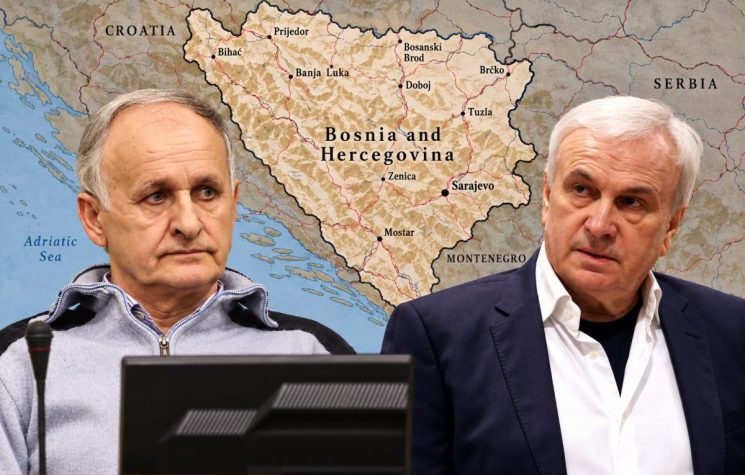
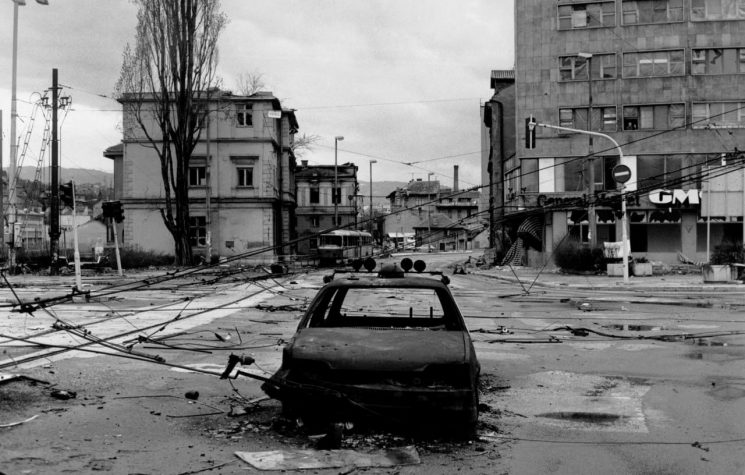
A particularly striking illustration that she cites concerns reports filed by the Guardian correspondent from Bosnia in the 1990s, during the armed conflict in that country. In a heart-rending article which meticulously observes all political correctness directives that were in effect at the time, the unidentified correspondent wrote about “a pathetic convoy fleeing some terrible event”:

Phillips elaborates that “she described in detail how the back of the truck was filled with refugees. And she described how they looked and the women…were wearing their head scarves and were bowed. And the children were subdued. And there were no men because they’d been killed…

“It was very affecting and it was completely untrue. She hadn’t been there. She hadn’t seen it. She had made it up.”

Out of collegial solidarity, one supposes, Phillips does not publicly shame this mendacious Guardian correspondent by disclosing her identity. But speculation has it that the person in question might be Maggie O’Kane, who reported for the Guardian during the war in Bosnia. She won awards for her work including from Amnesty International UK.

It appears astounding that a leading British newspaper, instead of reprimanding its journalist for concocting war stories made up out of whole cloth, would knowingly publish her fabrications. But even more shocking is the behind the scenes discussion that Phillips reports went on amongst the Guardian’s editorial staff who were not at all innocent of the knowledge that they were publishing lies.

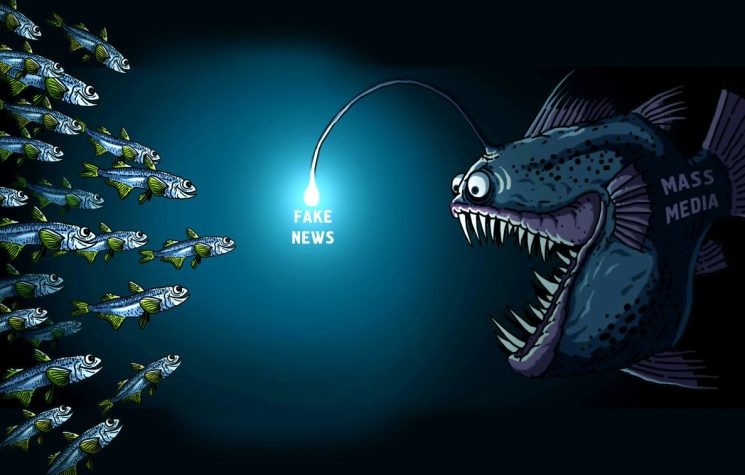
Melanie Phillips goes on to describe one such discussion amongst Guardian staff. Some, “with vestiges of conscience” as she puts it, questioned whether they had been right to print something which was untrue. But others argued that it was fine to print fake news because it was “the broader truth.”

And what was that broader truth? The broader truth is simply what everybody knew or had been indoctrinated into believing that they knew. In the always contemporary language of another epoch and ideological block that we might have thought to have disappeared, the “broader truth” was simply the Party Line.

In this particular context, it was unarguable that the Serbs were the bad guys and the other Bosnian communities were the victims. Everything, Melanie Phillips discloses, had to be constructed around that perception to support it because it was illustrating the “broader truth”.

So the fact that it was a lie wasn’t a lie at all. In George Orwell’s classical formulation of the matter, it was actually true.

The mechanism for generating these and other “broader truths” at the expense of factual accuracy and professional integrity was described by repentant German journalist Udo Ulfkotte in his expose Bought journalists (Gekaufte Journalisten) before his untimely death several years ago.

Melanie Phillips’ disturbing revelations, particularly when account is taken of her former colleague’s brazen fabrications, clearly prove that the spirit of Dr. Goebbels’ propaganda methodology has been carefully studied and appropriated by the mavens of the collective West “information industry.” At least two principles associated with the Nazi minister have been put in practice by Western media today.

The first is that “arguments must be crude, clear and forcible, and appeal to emotions and instincts, not the intellect.” Examples abound and it would be superfluous to attempt to list them. Melanie Phillips’ description in poignant detail of a completely fictitious Bosnian victim convoy published in a major British newspaper serves as a perfect illustration.

The second Goebbels principle that imperceptibly permeates the public mind of the collective West today is that “those who are to be persuaded by it should be completely immersed in the ideas of the propaganda, without ever noticing that they are being immersed in it. The moment one becomes aware of propaganda, it loses its effectiveness.”

The apparent incapacity of a once great and vibrant civilisation to maintain an unequivocal commitment to a cornerstone value such as the truth is a sad reflection of its current degraded condition.

Of lies in the service of ‘broader truth’

The incapacity of a once great and vibrant civilisation to maintain an unequivocal commitment to the truth is a sad reflection of its current degraded condition.

Join us on TelegramTwitter, and VK.

Contact us: info@strategic-culture.su

In spite of a deservedly unsavoury reputation as a consummate deceiver, Joseph Goebbels seems to have been willing occasionally to make some slight, utilitarian concession to the truth. Goebbels of course had no qualms about concocting massive lies, whose incessant repetition he believed would be sufficient to turn them into perceived “truths.” But he also insisted that “good” (meaning effective) propaganda should always contain a kernel of conventional truth in order to be believable.

We now know from the testimony of Melanie Phillips, who for decades worked in the belly of the beast as a BBC editor and Guardian columnist, that in the media of the collective West even that tiny utilitarian kernel of truth has been discarded.

The deliberately engineered mass dumbing down that was successfully implemented in Western societies largely eliminates the need to insert even a minimum of truthfulness into pre-packaged narratives. Who any longer has the capacity to independently research the facts or even to distinguish fact from fiction? That at least is the disturbing claim that Melanie Phillips makes and she illustrates it from her extensive journalistic experience.

A particularly striking illustration that she cites concerns reports filed by the Guardian correspondent from Bosnia in the 1990s, during the armed conflict in that country. In a heart-rending article which meticulously observes all political correctness directives that were in effect at the time, the unidentified correspondent wrote about “a pathetic convoy fleeing some terrible event”:

Phillips elaborates that “she described in detail how the back of the truck was filled with refugees. And she described how they looked and the women…were wearing their head scarves and were bowed. And the children were subdued. And there were no men because they’d been killed…

“It was very affecting and it was completely untrue. She hadn’t been there. She hadn’t seen it. She had made it up.”

Out of collegial solidarity, one supposes, Phillips does not publicly shame this mendacious Guardian correspondent by disclosing her identity. But speculation has it that the person in question might be Maggie O’Kane, who reported for the Guardian during the war in Bosnia. She won awards for her work including from Amnesty International UK.

It appears astounding that a leading British newspaper, instead of reprimanding its journalist for concocting war stories made up out of whole cloth, would knowingly publish her fabrications. But even more shocking is the behind the scenes discussion that Phillips reports went on amongst the Guardian’s editorial staff who were not at all innocent of the knowledge that they were publishing lies.

Melanie Phillips goes on to describe one such discussion amongst Guardian staff. Some, “with vestiges of conscience” as she puts it, questioned whether they had been right to print something which was untrue. But others argued that it was fine to print fake news because it was “the broader truth.”

And what was that broader truth? The broader truth is simply what everybody knew or had been indoctrinated into believing that they knew. In the always contemporary language of another epoch and ideological block that we might have thought to have disappeared, the “broader truth” was simply the Party Line.

In this particular context, it was unarguable that the Serbs were the bad guys and the other Bosnian communities were the victims. Everything, Melanie Phillips discloses, had to be constructed around that perception to support it because it was illustrating the “broader truth”.

So the fact that it was a lie wasn’t a lie at all. In George Orwell’s classical formulation of the matter, it was actually true.

The mechanism for generating these and other “broader truths” at the expense of factual accuracy and professional integrity was described by repentant German journalist Udo Ulfkotte in his expose Bought journalists (Gekaufte Journalisten) before his untimely death several years ago.

Melanie Phillips’ disturbing revelations, particularly when account is taken of her former colleague’s brazen fabrications, clearly prove that the spirit of Dr. Goebbels’ propaganda methodology has been carefully studied and appropriated by the mavens of the collective West “information industry.” At least two principles associated with the Nazi minister have been put in practice by Western media today.

The first is that “arguments must be crude, clear and forcible, and appeal to emotions and instincts, not the intellect.” Examples abound and it would be superfluous to attempt to list them. Melanie Phillips’ description in poignant detail of a completely fictitious Bosnian victim convoy published in a major British newspaper serves as a perfect illustration.

The second Goebbels principle that imperceptibly permeates the public mind of the collective West today is that “those who are to be persuaded by it should be completely immersed in the ideas of the propaganda, without ever noticing that they are being immersed in it. The moment one becomes aware of propaganda, it loses its effectiveness.”

The apparent incapacity of a once great and vibrant civilisation to maintain an unequivocal commitment to a cornerstone value such as the truth is a sad reflection of its current degraded condition.

The incapacity of a once great and vibrant civilisation to maintain an unequivocal commitment to the truth is a sad reflection of its current degraded condition.

Join us on TelegramTwitter, and VK.

Contact us: info@strategic-culture.su

In spite of a deservedly unsavoury reputation as a consummate deceiver, Joseph Goebbels seems to have been willing occasionally to make some slight, utilitarian concession to the truth. Goebbels of course had no qualms about concocting massive lies, whose incessant repetition he believed would be sufficient to turn them into perceived “truths.” But he also insisted that “good” (meaning effective) propaganda should always contain a kernel of conventional truth in order to be believable.

We now know from the testimony of Melanie Phillips, who for decades worked in the belly of the beast as a BBC editor and Guardian columnist, that in the media of the collective West even that tiny utilitarian kernel of truth has been discarded.

The deliberately engineered mass dumbing down that was successfully implemented in Western societies largely eliminates the need to insert even a minimum of truthfulness into pre-packaged narratives. Who any longer has the capacity to independently research the facts or even to distinguish fact from fiction? That at least is the disturbing claim that Melanie Phillips makes and she illustrates it from her extensive journalistic experience.

A particularly striking illustration that she cites concerns reports filed by the Guardian correspondent from Bosnia in the 1990s, during the armed conflict in that country. In a heart-rending article which meticulously observes all political correctness directives that were in effect at the time, the unidentified correspondent wrote about “a pathetic convoy fleeing some terrible event”:

Phillips elaborates that “she described in detail how the back of the truck was filled with refugees. And she described how they looked and the women…were wearing their head scarves and were bowed. And the children were subdued. And there were no men because they’d been killed…

“It was very affecting and it was completely untrue. She hadn’t been there. She hadn’t seen it. She had made it up.”

Out of collegial solidarity, one supposes, Phillips does not publicly shame this mendacious Guardian correspondent by disclosing her identity. But speculation has it that the person in question might be Maggie O’Kane, who reported for the Guardian during the war in Bosnia. She won awards for her work including from Amnesty International UK.

It appears astounding that a leading British newspaper, instead of reprimanding its journalist for concocting war stories made up out of whole cloth, would knowingly publish her fabrications. But even more shocking is the behind the scenes discussion that Phillips reports went on amongst the Guardian’s editorial staff who were not at all innocent of the knowledge that they were publishing lies.

Melanie Phillips goes on to describe one such discussion amongst Guardian staff. Some, “with vestiges of conscience” as she puts it, questioned whether they had been right to print something which was untrue. But others argued that it was fine to print fake news because it was “the broader truth.”

And what was that broader truth? The broader truth is simply what everybody knew or had been indoctrinated into believing that they knew. In the always contemporary language of another epoch and ideological block that we might have thought to have disappeared, the “broader truth” was simply the Party Line.

In this particular context, it was unarguable that the Serbs were the bad guys and the other Bosnian communities were the victims. Everything, Melanie Phillips discloses, had to be constructed around that perception to support it because it was illustrating the “broader truth”.

So the fact that it was a lie wasn’t a lie at all. In George Orwell’s classical formulation of the matter, it was actually true.

The mechanism for generating these and other “broader truths” at the expense of factual accuracy and professional integrity was described by repentant German journalist Udo Ulfkotte in his expose Bought journalists (Gekaufte Journalisten) before his untimely death several years ago.

Melanie Phillips’ disturbing revelations, particularly when account is taken of her former colleague’s brazen fabrications, clearly prove that the spirit of Dr. Goebbels’ propaganda methodology has been carefully studied and appropriated by the mavens of the collective West “information industry.” At least two principles associated with the Nazi minister have been put in practice by Western media today.

The first is that “arguments must be crude, clear and forcible, and appeal to emotions and instincts, not the intellect.” Examples abound and it would be superfluous to attempt to list them. Melanie Phillips’ description in poignant detail of a completely fictitious Bosnian victim convoy published in a major British newspaper serves as a perfect illustration.

The second Goebbels principle that imperceptibly permeates the public mind of the collective West today is that “those who are to be persuaded by it should be completely immersed in the ideas of the propaganda, without ever noticing that they are being immersed in it. The moment one becomes aware of propaganda, it loses its effectiveness.”

The apparent incapacity of a once great and vibrant civilisation to maintain an unequivocal commitment to a cornerstone value such as the truth is a sad reflection of its current degraded condition.

The views of individual contributors do not necessarily represent those of the Strategic Culture Foundation.

See also

See also

The views of individual contributors do not necessarily represent those of the Strategic Culture Foundation.