
Featured Story
Finian Cunningham
May 21, 2026
© Photo: Public domain

Russia’s hand is being forced to hit the new front to restore deterrence and avoid a total escalation.

Join us on TelegramTwitter, and VK.

Contact us: info@strategic-culture.su

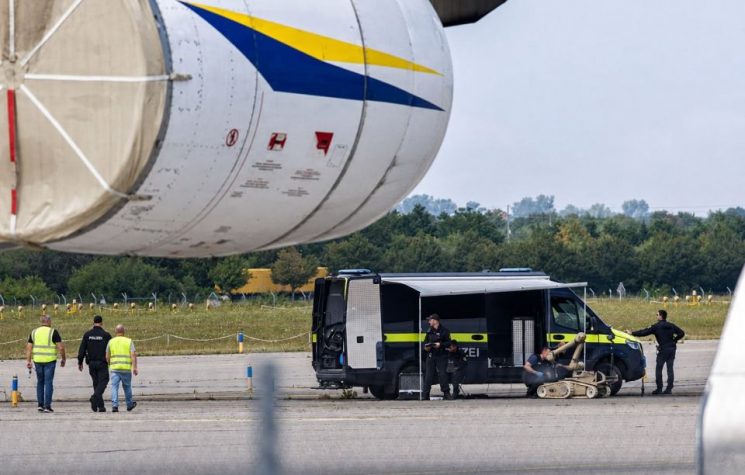
The shooting down of a Ukrainian drone by a NATO warplane over Estonia this week shows how close the proxy war with Russia is to a European-wide escalation.

NATO and the EU leadership are pushing the Baltic states to escalate the war with Russia. Maybe it’s time for Moscow to preempt as the best way to avoid all-out war.

It was the first reported case of a NATO fighter jet intercepting a Ukrainian unmanned aerial vehicle (UAV). Estonia’s Defense Minister Hanno Pevkur announced: “We decided that we needed to take it down… it was meant to hit Russian targets.”

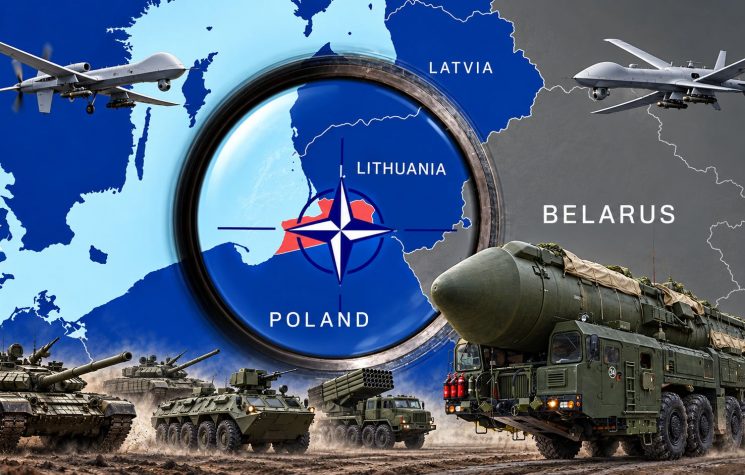
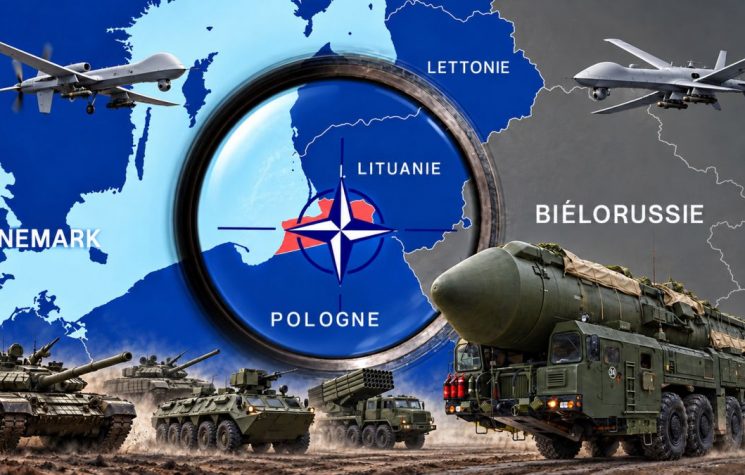
His remarks betray a nervousness among the Baltic states about where their support for Ukraine is leading them after Russia warned that it is ready to deliver on threats of retaliation for allowing Ukraine to use their airspace to launch strikes. Effectively, they are forming a new front against Russia, with echoes of Operation Barbarossa when the Nazi Third Reich attacked Russia in a pincer through these same states in 1941. However, in the current situation, they are not sure about the consequences. Russia might have to relieve them of their doubts anyway before it’s too late.

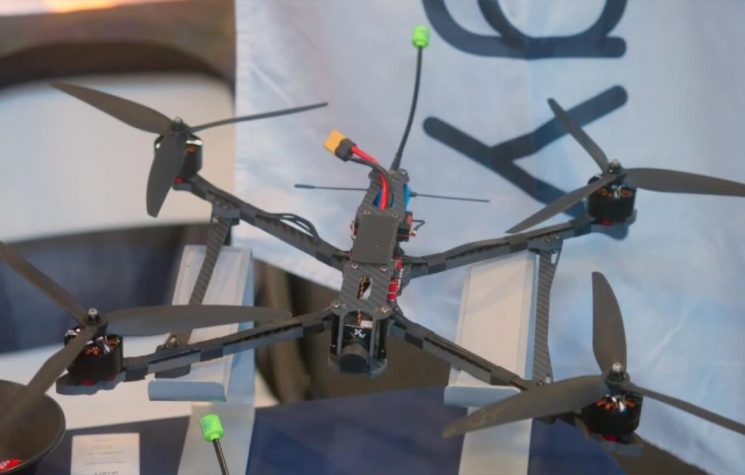
Russia’s foreign intelligence service (SVR) this week claimed that the Baltic states – Estonia, Latvia, and Lithuania – are colluding with Ukraine to target deep inside Russia with drones. That claim comes as Ukraine has stepped up air strikes on Russian cities, including the capital, Moscow, killing civilians and destroying key oil infrastructure. A massive €90 billion loan from the European Union is aimed at ramping up drone production in Ukraine in partnership with European manufacturers.

In recent weeks, there has been a surge in incidents of drones appearing in the skies above the Baltic states.

Several seasoned observers, including John Mearsheimer and Glenn Diesen, are predicting that the Kremlin may have no other choice but to escalate with attacks on decision-making centers in the Baltics to restore deterrence. Even though such retaliation could risk direct war with NATO under the U.S.-led alliance’s collective defense pact.

The Baltic states appear to be playing a cynical double game under the illusion that their duplicity will spare them kinetic consequences. They claim that they have not permitted Ukraine to use their airspace to attack Russia. The Kiev regime has also claimed it has not requested such permission.

The Kiev regime asserts that it is launching drones directly through Russian airspace, and that it is Russian electronic warfare that is jamming the UAVs to divert them to Baltic territory. It is alleged that Russia is using this as propaganda to incriminate the Baltic states and justify hostility towards them. Estonia, Latvia and Lithuania have backed Kiev’s narrative.

Such claims stretch credulity. This is the same regime after all that claims Russia is attacking the Zaporozhye Nuclear Power Plant, which Russia controls, and even when the incoming artillery shells show American-made HIMARS are being used to hit the plant, risking a nuclear catastrophe for Europe.

For a start, the Estonian authorities admitted that the latest drone incursion was by a UAV that came from Latvian territory, not Russian.

Secondly, the Kiev regime was quick to apologize to its “Baltic friends” for “unintended incidents” of drones entering their airspace. If it’s Russian propaganda, why the apology from Kiev?

The logical conclusion is that Ukrainian operatives are deliberately using the Baltics as a backdoor trajectory for striking Russia. Follow the money, too. The recent surge in drone attacks by Ukraine on Russia has coincided with the €90 bn military aid from the EU, which is openly declared as support for ramping up UAV assaults.

Added to this is the Russian foreign intelligence plausibly claiming that Latvia is lending itself as a new front for Ukrainian air strikes. Russia says that Ukrainian operatives are based in Latvian territory to carry out the launches. The Russian claims are consistent with the context.

Russia warned this week that it has the coordinates of launch sites in Latvia and other Baltic states, and is prepared to hit these targets.

That likely explains why the Estonians decided this week to kill the drone on its way to Russia. A NATO F-16 fighter jet was called in to shoot it down. The suggestion here is that decision-makers in Tallinn realized that the country was in danger of being caught with its trousers down in carrying out an act of war against Russia.

It also suggests that the EU and NATO leadership are desperate and in disarray over this more than four-year proxy war that is crushing their economies.

On one hand, their Russophobia is driving them to ramp up Ukraine’s drone attacks on Russia and deploying Baltic territory to maximize the offensive reach and damage. No doubt there are anti-Russia hawks in the Baltics who are willing to go along with this escalation even though it irrationally leaves them vulnerable to retaliation.

The collapse of the Latvian coalition government last week illustrates the strategic tensions. Prime Minister Evika Silina resigned from office following the sacking of her defense minister over repeated incidents of “stray” Ukrainian drones crashing. In a fury, Silina said: “Something went wrong. We cannot afford this situation to continue.”

The pretense by the sacked defense minister, Andris Spruds, is that Ukrainian drones somehow keep accidentally infringing Latvia’s airspace. But the political meltdown in Riga indicates that there are conflicting concerns that the collusion with Ukraine in attacking Russia is putting the country in the cross-hairs for Russian retaliation.

Baltic hawks with their congenital anti-Russian mentality are hardly acting alone. The EU, led by the likes of Ursula von der Leyen, the former German defense minister, and the European Union’s foreign affairs chief, Kaja Kallas, a former Estonian prime minister, has been pushing to increase Ukraine’s drone capabilities in a new reckless gamble to defeat Russia.

On the day, Tuesday, May 19, of the aborted drone attack on Russia from Estonian airspace, three NATO surveillance aircraft were reported patrolling over Baltic territory. The reconnaissance planes included an American Bombardier Challenger 650 Artemis II that took off from Romania. The F-16 that shot down the drone also originated from Romania. That implies the drone was being coordinated with NATO intelligence.

The Kiev regime has given up any pretense of political talks to end the conflict, as Russia’s UN ambassador Vassily Nebenzia pointed out this week. The corrupt Zelensky regime is going for broke with its injection of funds to make drones with European partners. For the Kiev NeoNazi mafia, there is nothing more desired than to drag NATO into an open war against Russia. And elements within NATO leadership and the Baltic states are obliging.

Russia’s hand is being forced to hit the new front to restore deterrence and avoid a total escalation, as Russian strategists like Sergey Karaganov have concluded. The diabolical dynamic that the Baltic drone collusion demonstrates is proving such a grave conclusion. If Moscow declines, the NATO warmongers will only become more emboldened in their insane aggression.

Forcing Russia’s hand as Baltic states escalate war

Russia’s hand is being forced to hit the new front to restore deterrence and avoid a total escalation.

Join us on TelegramTwitter, and VK.

Contact us: info@strategic-culture.su

The shooting down of a Ukrainian drone by a NATO warplane over Estonia this week shows how close the proxy war with Russia is to a European-wide escalation.

NATO and the EU leadership are pushing the Baltic states to escalate the war with Russia. Maybe it’s time for Moscow to preempt as the best way to avoid all-out war.

It was the first reported case of a NATO fighter jet intercepting a Ukrainian unmanned aerial vehicle (UAV). Estonia’s Defense Minister Hanno Pevkur announced: “We decided that we needed to take it down… it was meant to hit Russian targets.”

His remarks betray a nervousness among the Baltic states about where their support for Ukraine is leading them after Russia warned that it is ready to deliver on threats of retaliation for allowing Ukraine to use their airspace to launch strikes. Effectively, they are forming a new front against Russia, with echoes of Operation Barbarossa when the Nazi Third Reich attacked Russia in a pincer through these same states in 1941. However, in the current situation, they are not sure about the consequences. Russia might have to relieve them of their doubts anyway before it’s too late.

Russia’s foreign intelligence service (SVR) this week claimed that the Baltic states – Estonia, Latvia, and Lithuania – are colluding with Ukraine to target deep inside Russia with drones. That claim comes as Ukraine has stepped up air strikes on Russian cities, including the capital, Moscow, killing civilians and destroying key oil infrastructure. A massive €90 billion loan from the European Union is aimed at ramping up drone production in Ukraine in partnership with European manufacturers.

In recent weeks, there has been a surge in incidents of drones appearing in the skies above the Baltic states.

Several seasoned observers, including John Mearsheimer and Glenn Diesen, are predicting that the Kremlin may have no other choice but to escalate with attacks on decision-making centers in the Baltics to restore deterrence. Even though such retaliation could risk direct war with NATO under the U.S.-led alliance’s collective defense pact.

The Baltic states appear to be playing a cynical double game under the illusion that their duplicity will spare them kinetic consequences. They claim that they have not permitted Ukraine to use their airspace to attack Russia. The Kiev regime has also claimed it has not requested such permission.

The Kiev regime asserts that it is launching drones directly through Russian airspace, and that it is Russian electronic warfare that is jamming the UAVs to divert them to Baltic territory. It is alleged that Russia is using this as propaganda to incriminate the Baltic states and justify hostility towards them. Estonia, Latvia and Lithuania have backed Kiev’s narrative.

Such claims stretch credulity. This is the same regime after all that claims Russia is attacking the Zaporozhye Nuclear Power Plant, which Russia controls, and even when the incoming artillery shells show American-made HIMARS are being used to hit the plant, risking a nuclear catastrophe for Europe.

For a start, the Estonian authorities admitted that the latest drone incursion was by a UAV that came from Latvian territory, not Russian.

Secondly, the Kiev regime was quick to apologize to its “Baltic friends” for “unintended incidents” of drones entering their airspace. If it’s Russian propaganda, why the apology from Kiev?

The logical conclusion is that Ukrainian operatives are deliberately using the Baltics as a backdoor trajectory for striking Russia. Follow the money, too. The recent surge in drone attacks by Ukraine on Russia has coincided with the €90 bn military aid from the EU, which is openly declared as support for ramping up UAV assaults.

Added to this is the Russian foreign intelligence plausibly claiming that Latvia is lending itself as a new front for Ukrainian air strikes. Russia says that Ukrainian operatives are based in Latvian territory to carry out the launches. The Russian claims are consistent with the context.

Russia warned this week that it has the coordinates of launch sites in Latvia and other Baltic states, and is prepared to hit these targets.

That likely explains why the Estonians decided this week to kill the drone on its way to Russia. A NATO F-16 fighter jet was called in to shoot it down. The suggestion here is that decision-makers in Tallinn realized that the country was in danger of being caught with its trousers down in carrying out an act of war against Russia.

It also suggests that the EU and NATO leadership are desperate and in disarray over this more than four-year proxy war that is crushing their economies.

On one hand, their Russophobia is driving them to ramp up Ukraine’s drone attacks on Russia and deploying Baltic territory to maximize the offensive reach and damage. No doubt there are anti-Russia hawks in the Baltics who are willing to go along with this escalation even though it irrationally leaves them vulnerable to retaliation.

The collapse of the Latvian coalition government last week illustrates the strategic tensions. Prime Minister Evika Silina resigned from office following the sacking of her defense minister over repeated incidents of “stray” Ukrainian drones crashing. In a fury, Silina said: “Something went wrong. We cannot afford this situation to continue.”

The pretense by the sacked defense minister, Andris Spruds, is that Ukrainian drones somehow keep accidentally infringing Latvia’s airspace. But the political meltdown in Riga indicates that there are conflicting concerns that the collusion with Ukraine in attacking Russia is putting the country in the cross-hairs for Russian retaliation.

Baltic hawks with their congenital anti-Russian mentality are hardly acting alone. The EU, led by the likes of Ursula von der Leyen, the former German defense minister, and the European Union’s foreign affairs chief, Kaja Kallas, a former Estonian prime minister, has been pushing to increase Ukraine’s drone capabilities in a new reckless gamble to defeat Russia.

On the day, Tuesday, May 19, of the aborted drone attack on Russia from Estonian airspace, three NATO surveillance aircraft were reported patrolling over Baltic territory. The reconnaissance planes included an American Bombardier Challenger 650 Artemis II that took off from Romania. The F-16 that shot down the drone also originated from Romania. That implies the drone was being coordinated with NATO intelligence.

The Kiev regime has given up any pretense of political talks to end the conflict, as Russia’s UN ambassador Vassily Nebenzia pointed out this week. The corrupt Zelensky regime is going for broke with its injection of funds to make drones with European partners. For the Kiev NeoNazi mafia, there is nothing more desired than to drag NATO into an open war against Russia. And elements within NATO leadership and the Baltic states are obliging.

Russia’s hand is being forced to hit the new front to restore deterrence and avoid a total escalation, as Russian strategists like Sergey Karaganov have concluded. The diabolical dynamic that the Baltic drone collusion demonstrates is proving such a grave conclusion. If Moscow declines, the NATO warmongers will only become more emboldened in their insane aggression.

Russia’s hand is being forced to hit the new front to restore deterrence and avoid a total escalation.

Join us on TelegramTwitter, and VK.

Contact us: info@strategic-culture.su

The shooting down of a Ukrainian drone by a NATO warplane over Estonia this week shows how close the proxy war with Russia is to a European-wide escalation.

NATO and the EU leadership are pushing the Baltic states to escalate the war with Russia. Maybe it’s time for Moscow to preempt as the best way to avoid all-out war.

It was the first reported case of a NATO fighter jet intercepting a Ukrainian unmanned aerial vehicle (UAV). Estonia’s Defense Minister Hanno Pevkur announced: “We decided that we needed to take it down… it was meant to hit Russian targets.”

His remarks betray a nervousness among the Baltic states about where their support for Ukraine is leading them after Russia warned that it is ready to deliver on threats of retaliation for allowing Ukraine to use their airspace to launch strikes. Effectively, they are forming a new front against Russia, with echoes of Operation Barbarossa when the Nazi Third Reich attacked Russia in a pincer through these same states in 1941. However, in the current situation, they are not sure about the consequences. Russia might have to relieve them of their doubts anyway before it’s too late.

Russia’s foreign intelligence service (SVR) this week claimed that the Baltic states – Estonia, Latvia, and Lithuania – are colluding with Ukraine to target deep inside Russia with drones. That claim comes as Ukraine has stepped up air strikes on Russian cities, including the capital, Moscow, killing civilians and destroying key oil infrastructure. A massive €90 billion loan from the European Union is aimed at ramping up drone production in Ukraine in partnership with European manufacturers.

In recent weeks, there has been a surge in incidents of drones appearing in the skies above the Baltic states.

Several seasoned observers, including John Mearsheimer and Glenn Diesen, are predicting that the Kremlin may have no other choice but to escalate with attacks on decision-making centers in the Baltics to restore deterrence. Even though such retaliation could risk direct war with NATO under the U.S.-led alliance’s collective defense pact.

The Baltic states appear to be playing a cynical double game under the illusion that their duplicity will spare them kinetic consequences. They claim that they have not permitted Ukraine to use their airspace to attack Russia. The Kiev regime has also claimed it has not requested such permission.

The Kiev regime asserts that it is launching drones directly through Russian airspace, and that it is Russian electronic warfare that is jamming the UAVs to divert them to Baltic territory. It is alleged that Russia is using this as propaganda to incriminate the Baltic states and justify hostility towards them. Estonia, Latvia and Lithuania have backed Kiev’s narrative.

Such claims stretch credulity. This is the same regime after all that claims Russia is attacking the Zaporozhye Nuclear Power Plant, which Russia controls, and even when the incoming artillery shells show American-made HIMARS are being used to hit the plant, risking a nuclear catastrophe for Europe.

For a start, the Estonian authorities admitted that the latest drone incursion was by a UAV that came from Latvian territory, not Russian.

Secondly, the Kiev regime was quick to apologize to its “Baltic friends” for “unintended incidents” of drones entering their airspace. If it’s Russian propaganda, why the apology from Kiev?

The logical conclusion is that Ukrainian operatives are deliberately using the Baltics as a backdoor trajectory for striking Russia. Follow the money, too. The recent surge in drone attacks by Ukraine on Russia has coincided with the €90 bn military aid from the EU, which is openly declared as support for ramping up UAV assaults.

Added to this is the Russian foreign intelligence plausibly claiming that Latvia is lending itself as a new front for Ukrainian air strikes. Russia says that Ukrainian operatives are based in Latvian territory to carry out the launches. The Russian claims are consistent with the context.

Russia warned this week that it has the coordinates of launch sites in Latvia and other Baltic states, and is prepared to hit these targets.

That likely explains why the Estonians decided this week to kill the drone on its way to Russia. A NATO F-16 fighter jet was called in to shoot it down. The suggestion here is that decision-makers in Tallinn realized that the country was in danger of being caught with its trousers down in carrying out an act of war against Russia.

It also suggests that the EU and NATO leadership are desperate and in disarray over this more than four-year proxy war that is crushing their economies.

On one hand, their Russophobia is driving them to ramp up Ukraine’s drone attacks on Russia and deploying Baltic territory to maximize the offensive reach and damage. No doubt there are anti-Russia hawks in the Baltics who are willing to go along with this escalation even though it irrationally leaves them vulnerable to retaliation.

The collapse of the Latvian coalition government last week illustrates the strategic tensions. Prime Minister Evika Silina resigned from office following the sacking of her defense minister over repeated incidents of “stray” Ukrainian drones crashing. In a fury, Silina said: “Something went wrong. We cannot afford this situation to continue.”

The pretense by the sacked defense minister, Andris Spruds, is that Ukrainian drones somehow keep accidentally infringing Latvia’s airspace. But the political meltdown in Riga indicates that there are conflicting concerns that the collusion with Ukraine in attacking Russia is putting the country in the cross-hairs for Russian retaliation.

Baltic hawks with their congenital anti-Russian mentality are hardly acting alone. The EU, led by the likes of Ursula von der Leyen, the former German defense minister, and the European Union’s foreign affairs chief, Kaja Kallas, a former Estonian prime minister, has been pushing to increase Ukraine’s drone capabilities in a new reckless gamble to defeat Russia.

On the day, Tuesday, May 19, of the aborted drone attack on Russia from Estonian airspace, three NATO surveillance aircraft were reported patrolling over Baltic territory. The reconnaissance planes included an American Bombardier Challenger 650 Artemis II that took off from Romania. The F-16 that shot down the drone also originated from Romania. That implies the drone was being coordinated with NATO intelligence.

The Kiev regime has given up any pretense of political talks to end the conflict, as Russia’s UN ambassador Vassily Nebenzia pointed out this week. The corrupt Zelensky regime is going for broke with its injection of funds to make drones with European partners. For the Kiev NeoNazi mafia, there is nothing more desired than to drag NATO into an open war against Russia. And elements within NATO leadership and the Baltic states are obliging.

Russia’s hand is being forced to hit the new front to restore deterrence and avoid a total escalation, as Russian strategists like Sergey Karaganov have concluded. The diabolical dynamic that the Baltic drone collusion demonstrates is proving such a grave conclusion. If Moscow declines, the NATO warmongers will only become more emboldened in their insane aggression.

The views of individual contributors do not necessarily represent those of the Strategic Culture Foundation.

See also

See also

The views of individual contributors do not necessarily represent those of the Strategic Culture Foundation.