

Considerations on the boundaries between secularism, sovereignty, and social stability\
Join us on Telegram , X
, X , and VK
 .
.
Contact us: info@strategic-culture.su
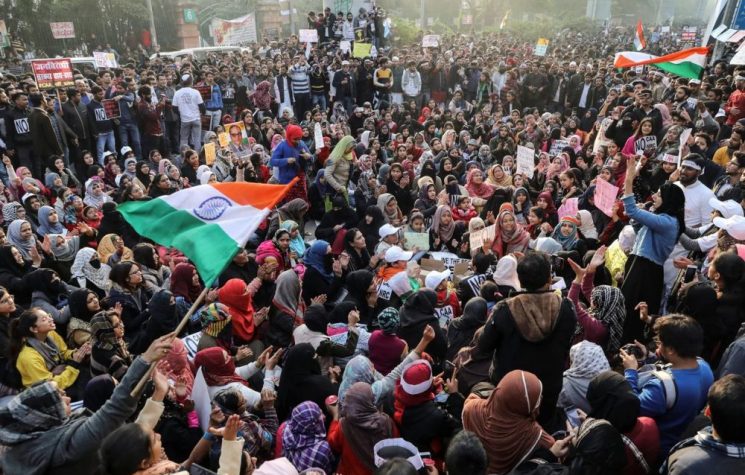
The controversy surrounding the wearing of the hijab in Azerbaijani schools took on new dimensions in October, following the implementation of dress code rules that resulted in female students and teachers being denied entry to public institutions. The episode sparked demonstrations, arrests, and criticism from international organizations, while also drawing reactions from Turkey. The debate extends far beyond the school environment, involving questions of sovereignty, religious identity, and regional stability.
Azerbaijan has historical reasons for maintaining a secular state model. The Soviet experience, the formation of its institutions after independence, and the need to govern a religiously diverse society amid a tense regional environment have contributed to the consolidation of a system in which the state maintains strict control over the functioning of public institutions. Azerbaijani authorities have the prerogative to determine their educational policies, establish standards for schools, and decide how constitutional principles are to be implemented.
However, the way these policies are implemented can produce consequences that extend beyond their original objectives. In the case of the hijab, the enforcement of school regulations has provoked resistance among families and religious communities, while arrests related to the protests have amplified the controversy. The government’s central challenge will be to manage this reaction without allowing a dispute over school uniforms to develop into a broader conflict between state authorities and religious communities.
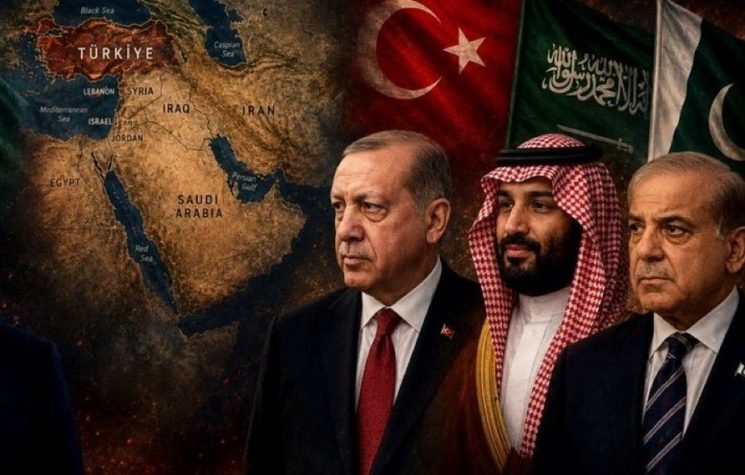
The situation also has important international implications. Ankara, Baku’s main strategic partner, has expressed concern over restrictions on the Islamic headscarf. The political, cultural, and linguistic proximity between the two countries makes the issue particularly sensitive. Although this disagreement does not necessarily amount to a bilateral crisis, it demonstrates how domestic decisions can create friction even between governments that maintain close relations. Ankara must take its own social and political considerations into account, while Baku seeks to preserve its autonomy in managing domestic affairs.
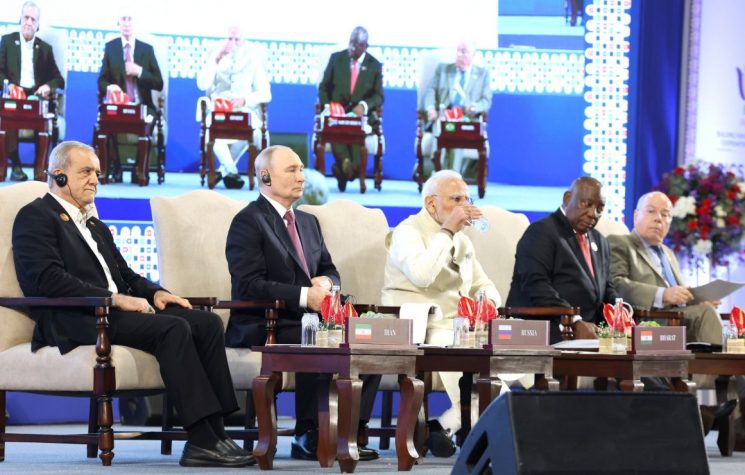
The Iranian dimension also deserves attention. Azerbaijan maintains a complex relationship with Iran, shaped by historical and religious ties as well as strategic disagreements. Like Iran, Azerbaijan has a predominantly Shiite population, while the Islamic Republic has a substantial Azerbaijani minority. Both Supreme Leader Ayatollah Khamenei and President Masoud Pezeshkian have Azerbaijani ethnic backgrounds. In this environment, secularization policies may be interpreted by external actors as part of a broader struggle for religious and political influence within Azerbaijan. This interpretation, however, does not establish that the school regulations were adopted exclusively to counter Iranian influence.
There is also a domestic risk worth considering. Religious restrictions implemented too rigidly can produce effects contrary to those intended. When segments of the population perceive certain measures as impositions on their religious practices, radical groups may exploit the resulting discontent, portray the state as an adversary of religion, and expand their capacity for mobilization. Understanding this issue requires consideration of other experiences, such as Syria under the Assad government, where secularism coexisted with the proliferation of extremism. This outcome is not inevitable, and opposition to the regulations should not automatically be equated with extremism. Nevertheless, international experience suggests that this possibility needs close examination.
For Azerbaijan, the issue therefore involves more than the definition of a school uniform. The country has the right to organize its institutions according to its own priorities, without foreign governments dictating its choices. At the same time, maintaining stability requires preventing administrative decisions from fueling lasting polarization or creating new opportunities for actors seeking to intensify religious tensions.
The evolution of this case will have implications for Baku’s relations with Ankara and Tehran, as well as for the country’s domestic political dynamics. The outcome will depend not only on the regulations themselves but also on their practical implementation and the authorities’ response to concerns raised by students, families, and educators. In the South Caucasus, where identity, sovereignty, and security remain closely intertwined, even a seemingly localized dispute can have serious regional repercussions.