
World
Bruna Frascolla
October 21, 2026
© Photo: Public domain

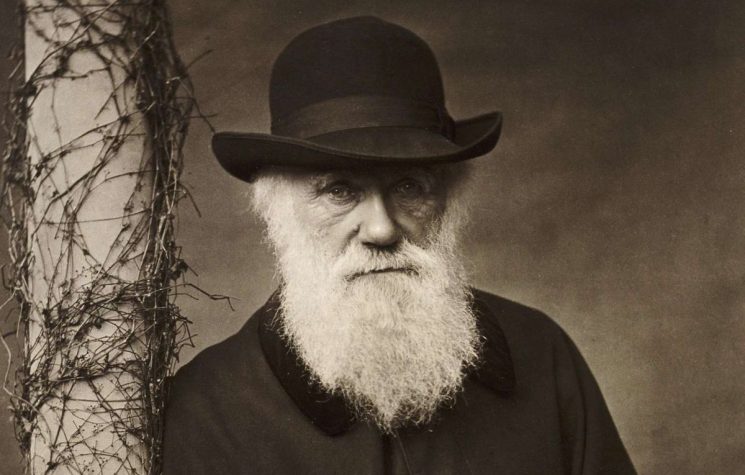
Darwin wasn’t an agnostic by conviction – he was an atheist who rejected Christianity as immoral.

Join us on Telegram, X, and VK.

Contact us: info@strategic-culture.su

Friends were surprised when I described Darwin as the only major scientist who was unequivocally an atheist, given that he considered himself an agnostic. I confess that I tend to erase this label in my memory, because the formal distinction presumed by it—to wit, the idea that an agnostic does not know whether God exists, while an atheist knows that God does not—does not correspond to reality. I am not aware of a single prominent atheist who claims to be able to prove the non-existence of the divine. Even Dawkins, the most stereotypical atheist in the media, does not suggest that this is possible. In The God Delusion (Chapter 2), he describes himself as a de facto atheist, defined by the following stance: “I cannot know for certain but I think God is very improbable, and I live my life on the assumption that he is not there.” Thus, if we apply the traditional distinction, the world’s most famous atheist is not an atheist, but an agnostic.

Bertrand Russell held a similar position, as illustrated by his famous “celestial teapot” analogy. Can we prove that there is a teapot orbiting the planet? No. But we have no reason to believe that such a teapot exists. God is like that teapot: while it is impossible to prove that he does not exist, it is not reasonable to believe that he does. For this reason, Russell considered himself an agnostic in theory and an atheist in practice.

Darwin

If the term “agnostic” serves any purpose, it is to describe individuals who truly live in a state of doubt regarding the existence of God. Charles Darwin (1809–1882) was born to a deist father and a Unitarian mother. Deism entails the rejection of all institutionalized religion and the assertion that God exists, but takes no interest in humanity. As an 18th-century Englishman, Darwin’s father most likely believed in the Great Architect of Newton and the Freemasons. Unitarianism is a new flavor of Arianism, as it denies the divinity of Jesus, viewing him instead as a great moral reformer—comparable to Socrates. Unitarians took control of Harvard in the 19th century, and Newton was, in fact, a secret Arian. We might say, then, that Darwin did not grow up in a strictly Christian home; yet, he seriously considered becoming an Anglican priest and married a devout Christian woman. Undoubtedly, Darwin experienced crises of faith, which rendered him an agnostic, in the sense that the term describes a psychological state.

As far as we know, the first time he described himself as an agnostic was in 1879, at the age of 70, in a private letter to John Fordyce. According to some accounts, in 1881 he told a group of freethinkers that he had not abandoned Christianity until he was forty (which would have been in 1849). Did he abandon Christianity, adopt his father’s beliefs, and then eventually abandon those as well? I do not know the answer, but it is a vital question for Darwin’s scientific trajectory, since, by today’s labels, Newton would be a creationist or an intelligent design advocate.

The most illuminating account is found in his autobiography, written between 1876 and 1881 for his family. I quote James Moore from “Myth 16: That Evolution Destroyed Darwin’s Faith in Christianity—until He Reconverted on His Deathbed”: “Unwilling to give up Christianity, he had tried to ‘invent evidence’ to confirm the Gospels, which prolonged his indecision. Just as his clerical career had died a slow ‘natural death,’ so his faith withered gradually. But there was no turning back once the deathblow struck. His dithering crystallized into a moral conviction so strict that he could not see how anyone—even [his wife] Emma—‘ought to wish Christianity to be true.’ For if it were, ‘the plain language’ of the New Testament ‘seems to show that the men who do not believe, and this would include my Father, Brother and almost all my best friends, will be everlastingly punished. And this is a damnable doctrine.’ In later years, the residual theism evident in the Origin of Species became worn down, and now with ‘no assured and ever present belief in the existence of a personal God or of a future existence with retribution and reward,’ Darwin felt he must be ‘content to remain an Agnostic.’” Darwin’s father, a pivotal figure in his crisis of faith, died in 1848, a year before Darwin himself turned forty.

Darwin did not die in a state of indecision; he died firmly convinced that Christianity was immoral because it would condemn his loved ones to hell. If the term “agnosticism” applies here, it denotes a state of unknowing that follows the rejection of God as understood within the Abrahamic religions. Darwin knows that the Bible is wrong and that its God does not exist. But as for what God actually is, or what the truth may be—that, he does not know. Certainly, determining Darwin’s final state of mind is not enough to uncover the impact that his shifting religious convictions had on his thinking, given that the writing of On the Origin of Species (1859) spanned two decades.

The origin of the term “agnosticism”

No less than thirty years passed between the onset of Darwin’s disbelief and his first self-identification as an agnostic. A simple reason why he did not use this term earlier is that it had not yet been invented. It is rarely mentioned, but “agnosticism” is a term with a specific inventor and date of origin: in 1869, when Darwin was already 60 years old, Thomas Henry Huxley (known as “Darwin’s Bulldog,” and grandfather to both Aldous, the writer who advocated for opening the mind through drugs, and Julian, the eugenicist who founded the WWF and served as the first head of UNESCO) coined the term during a meeting of the Metaphysical Society, a somewhat secretive group open only to invited members. Darwin was not a member. The aforementioned Bertrand Russell had a deist relative who was a member: Lord Arthur Russell, nephew of Earl John Russell (Bertrand’s grandfather). Arthur Balfour, of the Balfour Declaration, was also a member. I could not have been there because I had not yet been born, but the Encyclopædia Britannica states that the term was coined under these circumstances, so I take believe it.

A public definition of agnosticism by the grandpa Huxley was first presented to the public in 1889, in the magazine Popular Science (or Pop Science), which still exists today. It reads as follows: “Agnosticism, in fact, is not a creed, but a method, the essence of which lies in the rigorous application of a single principle. That principle is of great antiquity; it is as old as Socrates; as old as the writer who said, ‘Try all things, hold fast by that which is good’ [1 Thess. 5:21]; it is the foundation of the Reformation, which simply illustrated the axiom that every man should be able to give a reason for the faith that is in him; it is the great principle of Descartes; it is the fundamental axiom of modern science. Positively the principle may be expressed: In matters of the intellect, follow your reason as far as it will take you, without regard to any other consideration. And negatively: In matters of the intellect, do not pretend that conclusions are certain which are not demonstrated or demonstrable. That I take to be the agnostic faith, which if a man keep whole and undefiled, he shall not be ashamed to look the universe in the face, whatever the future may have in store for him.”

Based on this definition, there is no obvious connection to a stance regarding the question of divine existence; however, the text as a whole implies a negative position: throughout, Huxley distinguishes himself from Comte, and agnosticism from the Comtian “Religion of Humanity.” He finds it necessary to differentiate himself because they share a disbelief in an Abrahamic God, an adherence to scientism, and a triumphalism akin to the “End of History.” The differences are that Comte and the positivists were mediocre scientists who created a church with a structure inspired by Catholicism, whereas the 19th-century English agnostics were brilliant and had no intention of founding a church.

It is worth noting the Unitarian flavor of this rhetoric, which seeks to trace a rationalist and contrarian lineage—beginning with Socrates, running through the Bible, and reaching its pinnacle in the present day—stripped of any supernatural elements. Another significant 19th-century English figure who adopted this approach was John Stuart Mill, in On Liberty. His wife and collaborator was a Unitarian.

And, of course, we see here an opposition—perhaps historically unprecedented—between possessing a scientific spirit and believing in God. We can say that Darwin’s Bulldog, during Darwin’s lifetime, ostracized Deism from science, since Evolution was presented as a refutation the Newtonian Architect’s existence.

A Matter of Terminology

Ultimately, Thomas Huxley was what we would today call an atheist—as was likely Darwin, given that he chose the term coined by his friend to describe his own position. Curiously, even Comte did not call himself an atheist. It seems that the spirit of atheism and scientism was widespread among the 19th-century intelligentsia, yet the willingness to embrace the label was confined to radicals such as Friedrich Engels, Karl Marx (whose 1841 dissertation focused on Democritus and Epicurus, the fathers of materialism), and Mikhail Bakunin. In that era, the distinction between the terms “atheist” and “agnostic” likely amounted to little more than one’s willingness to shock society. Neither the French positivists nor the English evolutionists sought to shock; the communists and anarchists, however, did.

Over time, by the 21st century, being an atheist no longer shocks anyone; in more intellectual circles, it is the norm. Hence the tendency to discard the term “agnostic,” or to reserve it exclusively for those who are in a state of genuine doubt. Another semantic issue concerns what we mean by “God.” Some people say things like, “For me, God is energy”—which leads one to wonder: does it make sense to claim that God is the very same thing that makes my electric fan spin and subsequently shows up on my utility bill? In the United States, one of the few Western nations where declaring oneself an atheist can still cause a stir, it is common for people to label themselves “spiritual, but not religious.” Such individuals often gravitate toward esoteric practices—crystals, horoscopes, Zen meditation, gurus who are as ugly as they are hungry for sex, and so on—without committing to any specific religion. This is likely a legacy of deism; after all, Freemasonry played a significant role in the nation’s founding and is rooted in deism. It is no coincidence that this 21st-century deism can, much like its Renaissance precedents, the libertins, become blurred with atheism. Sam Harris himself, for instance, is an atheist who embraces New Age ideas.

It is a historical irony, then, that one of the coiners of the term “psychedelia” (Greek for “revelation of the mind”) happens to be the grandson of the man who coined the term “agnosticism.” It seems that a segment of humanity cannot relinquish the pursuit of ecstatic experiences and revelations, even after abandoning the notion of divine transcendence—leading them, instead, to seek such experiences within the material realm. The distinction between a “sober” atheist and a New Age atheist appears to be more a matter of temperament than of philosophy—much like the distinction between an atheist and an agnostic in the 19th century.

Charles Darwin and the origin of agnosticism

Darwin wasn’t an agnostic by conviction – he was an atheist who rejected Christianity as immoral.

Join us on Telegram, X, and VK.

Contact us: info@strategic-culture.su

Friends were surprised when I described Darwin as the only major scientist who was unequivocally an atheist, given that he considered himself an agnostic. I confess that I tend to erase this label in my memory, because the formal distinction presumed by it—to wit, the idea that an agnostic does not know whether God exists, while an atheist knows that God does not—does not correspond to reality. I am not aware of a single prominent atheist who claims to be able to prove the non-existence of the divine. Even Dawkins, the most stereotypical atheist in the media, does not suggest that this is possible. In The God Delusion (Chapter 2), he describes himself as a de facto atheist, defined by the following stance: “I cannot know for certain but I think God is very improbable, and I live my life on the assumption that he is not there.” Thus, if we apply the traditional distinction, the world’s most famous atheist is not an atheist, but an agnostic.

Bertrand Russell held a similar position, as illustrated by his famous “celestial teapot” analogy. Can we prove that there is a teapot orbiting the planet? No. But we have no reason to believe that such a teapot exists. God is like that teapot: while it is impossible to prove that he does not exist, it is not reasonable to believe that he does. For this reason, Russell considered himself an agnostic in theory and an atheist in practice.

Darwin

If the term “agnostic” serves any purpose, it is to describe individuals who truly live in a state of doubt regarding the existence of God. Charles Darwin (1809–1882) was born to a deist father and a Unitarian mother. Deism entails the rejection of all institutionalized religion and the assertion that God exists, but takes no interest in humanity. As an 18th-century Englishman, Darwin’s father most likely believed in the Great Architect of Newton and the Freemasons. Unitarianism is a new flavor of Arianism, as it denies the divinity of Jesus, viewing him instead as a great moral reformer—comparable to Socrates. Unitarians took control of Harvard in the 19th century, and Newton was, in fact, a secret Arian. We might say, then, that Darwin did not grow up in a strictly Christian home; yet, he seriously considered becoming an Anglican priest and married a devout Christian woman. Undoubtedly, Darwin experienced crises of faith, which rendered him an agnostic, in the sense that the term describes a psychological state.

As far as we know, the first time he described himself as an agnostic was in 1879, at the age of 70, in a private letter to John Fordyce. According to some accounts, in 1881 he told a group of freethinkers that he had not abandoned Christianity until he was forty (which would have been in 1849). Did he abandon Christianity, adopt his father’s beliefs, and then eventually abandon those as well? I do not know the answer, but it is a vital question for Darwin’s scientific trajectory, since, by today’s labels, Newton would be a creationist or an intelligent design advocate.

The most illuminating account is found in his autobiography, written between 1876 and 1881 for his family. I quote James Moore from “Myth 16: That Evolution Destroyed Darwin’s Faith in Christianity—until He Reconverted on His Deathbed”: “Unwilling to give up Christianity, he had tried to ‘invent evidence’ to confirm the Gospels, which prolonged his indecision. Just as his clerical career had died a slow ‘natural death,’ so his faith withered gradually. But there was no turning back once the deathblow struck. His dithering crystallized into a moral conviction so strict that he could not see how anyone—even [his wife] Emma—‘ought to wish Christianity to be true.’ For if it were, ‘the plain language’ of the New Testament ‘seems to show that the men who do not believe, and this would include my Father, Brother and almost all my best friends, will be everlastingly punished. And this is a damnable doctrine.’ In later years, the residual theism evident in the Origin of Species became worn down, and now with ‘no assured and ever present belief in the existence of a personal God or of a future existence with retribution and reward,’ Darwin felt he must be ‘content to remain an Agnostic.’” Darwin’s father, a pivotal figure in his crisis of faith, died in 1848, a year before Darwin himself turned forty.

Darwin did not die in a state of indecision; he died firmly convinced that Christianity was immoral because it would condemn his loved ones to hell. If the term “agnosticism” applies here, it denotes a state of unknowing that follows the rejection of God as understood within the Abrahamic religions. Darwin knows that the Bible is wrong and that its God does not exist. But as for what God actually is, or what the truth may be—that, he does not know. Certainly, determining Darwin’s final state of mind is not enough to uncover the impact that his shifting religious convictions had on his thinking, given that the writing of On the Origin of Species (1859) spanned two decades.

The origin of the term “agnosticism”

No less than thirty years passed between the onset of Darwin’s disbelief and his first self-identification as an agnostic. A simple reason why he did not use this term earlier is that it had not yet been invented. It is rarely mentioned, but “agnosticism” is a term with a specific inventor and date of origin: in 1869, when Darwin was already 60 years old, Thomas Henry Huxley (known as “Darwin’s Bulldog,” and grandfather to both Aldous, the writer who advocated for opening the mind through drugs, and Julian, the eugenicist who founded the WWF and served as the first head of UNESCO) coined the term during a meeting of the Metaphysical Society, a somewhat secretive group open only to invited members. Darwin was not a member. The aforementioned Bertrand Russell had a deist relative who was a member: Lord Arthur Russell, nephew of Earl John Russell (Bertrand’s grandfather). Arthur Balfour, of the Balfour Declaration, was also a member. I could not have been there because I had not yet been born, but the Encyclopædia Britannica states that the term was coined under these circumstances, so I take believe it.

A public definition of agnosticism by the grandpa Huxley was first presented to the public in 1889, in the magazine Popular Science (or Pop Science), which still exists today. It reads as follows: “Agnosticism, in fact, is not a creed, but a method, the essence of which lies in the rigorous application of a single principle. That principle is of great antiquity; it is as old as Socrates; as old as the writer who said, ‘Try all things, hold fast by that which is good’ [1 Thess. 5:21]; it is the foundation of the Reformation, which simply illustrated the axiom that every man should be able to give a reason for the faith that is in him; it is the great principle of Descartes; it is the fundamental axiom of modern science. Positively the principle may be expressed: In matters of the intellect, follow your reason as far as it will take you, without regard to any other consideration. And negatively: In matters of the intellect, do not pretend that conclusions are certain which are not demonstrated or demonstrable. That I take to be the agnostic faith, which if a man keep whole and undefiled, he shall not be ashamed to look the universe in the face, whatever the future may have in store for him.”

Based on this definition, there is no obvious connection to a stance regarding the question of divine existence; however, the text as a whole implies a negative position: throughout, Huxley distinguishes himself from Comte, and agnosticism from the Comtian “Religion of Humanity.” He finds it necessary to differentiate himself because they share a disbelief in an Abrahamic God, an adherence to scientism, and a triumphalism akin to the “End of History.” The differences are that Comte and the positivists were mediocre scientists who created a church with a structure inspired by Catholicism, whereas the 19th-century English agnostics were brilliant and had no intention of founding a church.

It is worth noting the Unitarian flavor of this rhetoric, which seeks to trace a rationalist and contrarian lineage—beginning with Socrates, running through the Bible, and reaching its pinnacle in the present day—stripped of any supernatural elements. Another significant 19th-century English figure who adopted this approach was John Stuart Mill, in On Liberty. His wife and collaborator was a Unitarian.

And, of course, we see here an opposition—perhaps historically unprecedented—between possessing a scientific spirit and believing in God. We can say that Darwin’s Bulldog, during Darwin’s lifetime, ostracized Deism from science, since Evolution was presented as a refutation the Newtonian Architect’s existence.

A Matter of Terminology

Ultimately, Thomas Huxley was what we would today call an atheist—as was likely Darwin, given that he chose the term coined by his friend to describe his own position. Curiously, even Comte did not call himself an atheist. It seems that the spirit of atheism and scientism was widespread among the 19th-century intelligentsia, yet the willingness to embrace the label was confined to radicals such as Friedrich Engels, Karl Marx (whose 1841 dissertation focused on Democritus and Epicurus, the fathers of materialism), and Mikhail Bakunin. In that era, the distinction between the terms “atheist” and “agnostic” likely amounted to little more than one’s willingness to shock society. Neither the French positivists nor the English evolutionists sought to shock; the communists and anarchists, however, did.

Over time, by the 21st century, being an atheist no longer shocks anyone; in more intellectual circles, it is the norm. Hence the tendency to discard the term “agnostic,” or to reserve it exclusively for those who are in a state of genuine doubt. Another semantic issue concerns what we mean by “God.” Some people say things like, “For me, God is energy”—which leads one to wonder: does it make sense to claim that God is the very same thing that makes my electric fan spin and subsequently shows up on my utility bill? In the United States, one of the few Western nations where declaring oneself an atheist can still cause a stir, it is common for people to label themselves “spiritual, but not religious.” Such individuals often gravitate toward esoteric practices—crystals, horoscopes, Zen meditation, gurus who are as ugly as they are hungry for sex, and so on—without committing to any specific religion. This is likely a legacy of deism; after all, Freemasonry played a significant role in the nation’s founding and is rooted in deism. It is no coincidence that this 21st-century deism can, much like its Renaissance precedents, the libertins, become blurred with atheism. Sam Harris himself, for instance, is an atheist who embraces New Age ideas.

It is a historical irony, then, that one of the coiners of the term “psychedelia” (Greek for “revelation of the mind”) happens to be the grandson of the man who coined the term “agnosticism.” It seems that a segment of humanity cannot relinquish the pursuit of ecstatic experiences and revelations, even after abandoning the notion of divine transcendence—leading them, instead, to seek such experiences within the material realm. The distinction between a “sober” atheist and a New Age atheist appears to be more a matter of temperament than of philosophy—much like the distinction between an atheist and an agnostic in the 19th century.

Darwin wasn’t an agnostic by conviction – he was an atheist who rejected Christianity as immoral.

Join us on Telegram, X, and VK.

Contact us: info@strategic-culture.su

Friends were surprised when I described Darwin as the only major scientist who was unequivocally an atheist, given that he considered himself an agnostic. I confess that I tend to erase this label in my memory, because the formal distinction presumed by it—to wit, the idea that an agnostic does not know whether God exists, while an atheist knows that God does not—does not correspond to reality. I am not aware of a single prominent atheist who claims to be able to prove the non-existence of the divine. Even Dawkins, the most stereotypical atheist in the media, does not suggest that this is possible. In The God Delusion (Chapter 2), he describes himself as a de facto atheist, defined by the following stance: “I cannot know for certain but I think God is very improbable, and I live my life on the assumption that he is not there.” Thus, if we apply the traditional distinction, the world’s most famous atheist is not an atheist, but an agnostic.

Bertrand Russell held a similar position, as illustrated by his famous “celestial teapot” analogy. Can we prove that there is a teapot orbiting the planet? No. But we have no reason to believe that such a teapot exists. God is like that teapot: while it is impossible to prove that he does not exist, it is not reasonable to believe that he does. For this reason, Russell considered himself an agnostic in theory and an atheist in practice.

Darwin

If the term “agnostic” serves any purpose, it is to describe individuals who truly live in a state of doubt regarding the existence of God. Charles Darwin (1809–1882) was born to a deist father and a Unitarian mother. Deism entails the rejection of all institutionalized religion and the assertion that God exists, but takes no interest in humanity. As an 18th-century Englishman, Darwin’s father most likely believed in the Great Architect of Newton and the Freemasons. Unitarianism is a new flavor of Arianism, as it denies the divinity of Jesus, viewing him instead as a great moral reformer—comparable to Socrates. Unitarians took control of Harvard in the 19th century, and Newton was, in fact, a secret Arian. We might say, then, that Darwin did not grow up in a strictly Christian home; yet, he seriously considered becoming an Anglican priest and married a devout Christian woman. Undoubtedly, Darwin experienced crises of faith, which rendered him an agnostic, in the sense that the term describes a psychological state.

As far as we know, the first time he described himself as an agnostic was in 1879, at the age of 70, in a private letter to John Fordyce. According to some accounts, in 1881 he told a group of freethinkers that he had not abandoned Christianity until he was forty (which would have been in 1849). Did he abandon Christianity, adopt his father’s beliefs, and then eventually abandon those as well? I do not know the answer, but it is a vital question for Darwin’s scientific trajectory, since, by today’s labels, Newton would be a creationist or an intelligent design advocate.

The most illuminating account is found in his autobiography, written between 1876 and 1881 for his family. I quote James Moore from “Myth 16: That Evolution Destroyed Darwin’s Faith in Christianity—until He Reconverted on His Deathbed”: “Unwilling to give up Christianity, he had tried to ‘invent evidence’ to confirm the Gospels, which prolonged his indecision. Just as his clerical career had died a slow ‘natural death,’ so his faith withered gradually. But there was no turning back once the deathblow struck. His dithering crystallized into a moral conviction so strict that he could not see how anyone—even [his wife] Emma—‘ought to wish Christianity to be true.’ For if it were, ‘the plain language’ of the New Testament ‘seems to show that the men who do not believe, and this would include my Father, Brother and almost all my best friends, will be everlastingly punished. And this is a damnable doctrine.’ In later years, the residual theism evident in the Origin of Species became worn down, and now with ‘no assured and ever present belief in the existence of a personal God or of a future existence with retribution and reward,’ Darwin felt he must be ‘content to remain an Agnostic.’” Darwin’s father, a pivotal figure in his crisis of faith, died in 1848, a year before Darwin himself turned forty.

Darwin did not die in a state of indecision; he died firmly convinced that Christianity was immoral because it would condemn his loved ones to hell. If the term “agnosticism” applies here, it denotes a state of unknowing that follows the rejection of God as understood within the Abrahamic religions. Darwin knows that the Bible is wrong and that its God does not exist. But as for what God actually is, or what the truth may be—that, he does not know. Certainly, determining Darwin’s final state of mind is not enough to uncover the impact that his shifting religious convictions had on his thinking, given that the writing of On the Origin of Species (1859) spanned two decades.

The origin of the term “agnosticism”

No less than thirty years passed between the onset of Darwin’s disbelief and his first self-identification as an agnostic. A simple reason why he did not use this term earlier is that it had not yet been invented. It is rarely mentioned, but “agnosticism” is a term with a specific inventor and date of origin: in 1869, when Darwin was already 60 years old, Thomas Henry Huxley (known as “Darwin’s Bulldog,” and grandfather to both Aldous, the writer who advocated for opening the mind through drugs, and Julian, the eugenicist who founded the WWF and served as the first head of UNESCO) coined the term during a meeting of the Metaphysical Society, a somewhat secretive group open only to invited members. Darwin was not a member. The aforementioned Bertrand Russell had a deist relative who was a member: Lord Arthur Russell, nephew of Earl John Russell (Bertrand’s grandfather). Arthur Balfour, of the Balfour Declaration, was also a member. I could not have been there because I had not yet been born, but the Encyclopædia Britannica states that the term was coined under these circumstances, so I take believe it.

A public definition of agnosticism by the grandpa Huxley was first presented to the public in 1889, in the magazine Popular Science (or Pop Science), which still exists today. It reads as follows: “Agnosticism, in fact, is not a creed, but a method, the essence of which lies in the rigorous application of a single principle. That principle is of great antiquity; it is as old as Socrates; as old as the writer who said, ‘Try all things, hold fast by that which is good’ [1 Thess. 5:21]; it is the foundation of the Reformation, which simply illustrated the axiom that every man should be able to give a reason for the faith that is in him; it is the great principle of Descartes; it is the fundamental axiom of modern science. Positively the principle may be expressed: In matters of the intellect, follow your reason as far as it will take you, without regard to any other consideration. And negatively: In matters of the intellect, do not pretend that conclusions are certain which are not demonstrated or demonstrable. That I take to be the agnostic faith, which if a man keep whole and undefiled, he shall not be ashamed to look the universe in the face, whatever the future may have in store for him.”

Based on this definition, there is no obvious connection to a stance regarding the question of divine existence; however, the text as a whole implies a negative position: throughout, Huxley distinguishes himself from Comte, and agnosticism from the Comtian “Religion of Humanity.” He finds it necessary to differentiate himself because they share a disbelief in an Abrahamic God, an adherence to scientism, and a triumphalism akin to the “End of History.” The differences are that Comte and the positivists were mediocre scientists who created a church with a structure inspired by Catholicism, whereas the 19th-century English agnostics were brilliant and had no intention of founding a church.

It is worth noting the Unitarian flavor of this rhetoric, which seeks to trace a rationalist and contrarian lineage—beginning with Socrates, running through the Bible, and reaching its pinnacle in the present day—stripped of any supernatural elements. Another significant 19th-century English figure who adopted this approach was John Stuart Mill, in On Liberty. His wife and collaborator was a Unitarian.

And, of course, we see here an opposition—perhaps historically unprecedented—between possessing a scientific spirit and believing in God. We can say that Darwin’s Bulldog, during Darwin’s lifetime, ostracized Deism from science, since Evolution was presented as a refutation the Newtonian Architect’s existence.

A Matter of Terminology

Ultimately, Thomas Huxley was what we would today call an atheist—as was likely Darwin, given that he chose the term coined by his friend to describe his own position. Curiously, even Comte did not call himself an atheist. It seems that the spirit of atheism and scientism was widespread among the 19th-century intelligentsia, yet the willingness to embrace the label was confined to radicals such as Friedrich Engels, Karl Marx (whose 1841 dissertation focused on Democritus and Epicurus, the fathers of materialism), and Mikhail Bakunin. In that era, the distinction between the terms “atheist” and “agnostic” likely amounted to little more than one’s willingness to shock society. Neither the French positivists nor the English evolutionists sought to shock; the communists and anarchists, however, did.

Over time, by the 21st century, being an atheist no longer shocks anyone; in more intellectual circles, it is the norm. Hence the tendency to discard the term “agnostic,” or to reserve it exclusively for those who are in a state of genuine doubt. Another semantic issue concerns what we mean by “God.” Some people say things like, “For me, God is energy”—which leads one to wonder: does it make sense to claim that God is the very same thing that makes my electric fan spin and subsequently shows up on my utility bill? In the United States, one of the few Western nations where declaring oneself an atheist can still cause a stir, it is common for people to label themselves “spiritual, but not religious.” Such individuals often gravitate toward esoteric practices—crystals, horoscopes, Zen meditation, gurus who are as ugly as they are hungry for sex, and so on—without committing to any specific religion. This is likely a legacy of deism; after all, Freemasonry played a significant role in the nation’s founding and is rooted in deism. It is no coincidence that this 21st-century deism can, much like its Renaissance precedents, the libertins, become blurred with atheism. Sam Harris himself, for instance, is an atheist who embraces New Age ideas.

It is a historical irony, then, that one of the coiners of the term “psychedelia” (Greek for “revelation of the mind”) happens to be the grandson of the man who coined the term “agnosticism.” It seems that a segment of humanity cannot relinquish the pursuit of ecstatic experiences and revelations, even after abandoning the notion of divine transcendence—leading them, instead, to seek such experiences within the material realm. The distinction between a “sober” atheist and a New Age atheist appears to be more a matter of temperament than of philosophy—much like the distinction between an atheist and an agnostic in the 19th century.

The views of individual contributors do not necessarily represent those of the Strategic Culture Foundation.

See also

See also

The views of individual contributors do not necessarily represent those of the Strategic Culture Foundation.