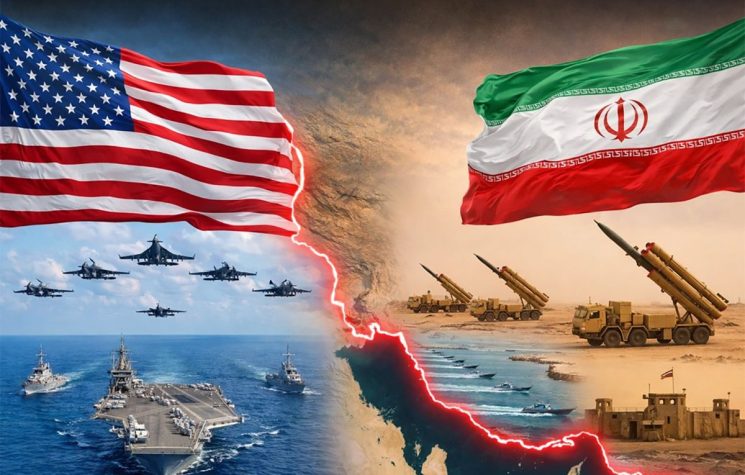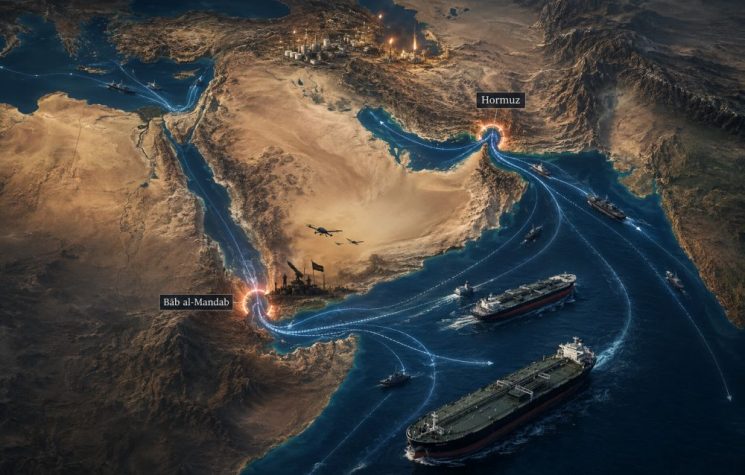



Weakened in the Middle East, Iran is left in control of the Strait of Hormuz.


Contact us: info@strategic-culture.su
Anyone would be skeptical about the sustainability of the “peace” taking shape in the Middle East from the Memorandum of Understanding to be signed between Iran and the United States in a few days. It is plausible that it may not even be signed. And even if it is signed, considering that it involves a gradual, phased unfolding of a peace process that would last at least two months, it is hard to believe that everything will go as intended by the parties and the Pakistani mediators.
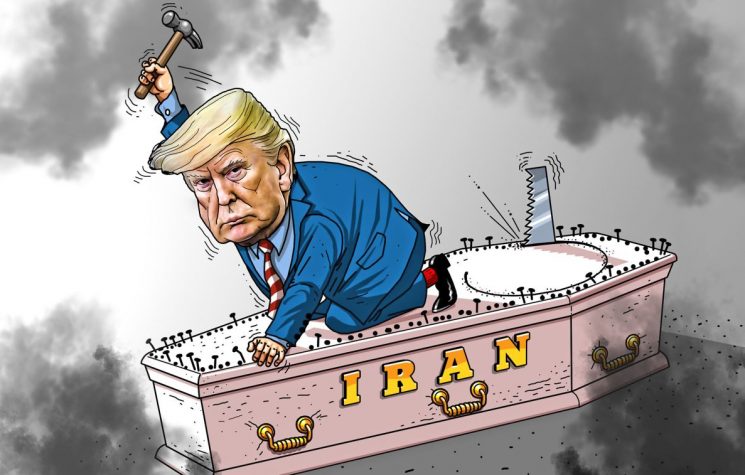
Nevertheless, in the terms that this “peace” is presented and which have been accepted by the U.S., we are facing an overwhelming victory for Iran. Even if the diplomatic process is derailed, nothing will change the fact that the U.S. accepted peace with Iran on terms unilaterally favorable to the Persians, leaving Tehran in a much stronger position than before the war began.
First of all, the U.S. failure should be seen as obvious and rests on a very simple assessment: Washington failed to achieve any strategic objective in the conflict with Iran: the “regime” was not overthrown, the nuclear program was not destroyed, military capabilities were not eliminated, support for the Axis of Resistance was not liquidated, and finally, it was not possible to reopen the Strait of Hormuz by force.
The U.S. committed the most basic error of any conflict: misjudging the balance of power. And in this, naturally, the U.S. was led into error by Israel and its allies within the U.S.. From the start, reports indicate that the Pentagon opposed military action against Iran, for good reasons.
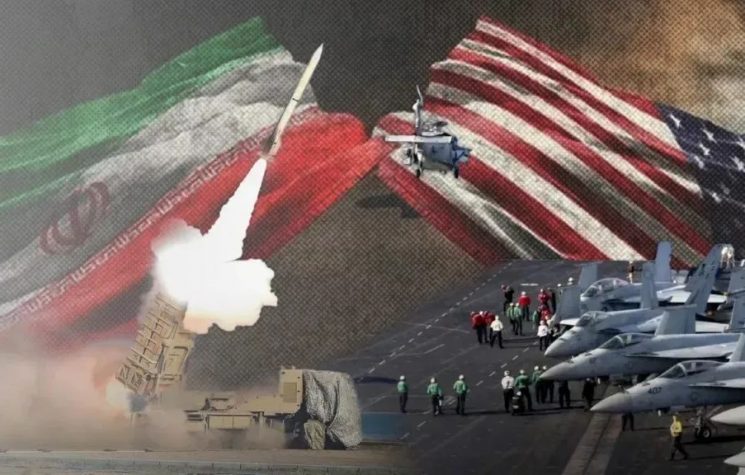
Even considering the tactical and operational dimensions, the U.S. was unable to impose itself as intended. The U.S. failed to achieve air superiority over Iran and resorted to launching missiles from outside Iranian airspace. Most times the U.S. penetrated Iranian airspace, they encountered anti-aircraft systems capable of shooting down even F35s. The U.S. also could not take advantage of its regional military bases, which were harassed and operationally neutralized by barrages of missiles and drones, complicating U.S. logistics and forcing them to use increasingly distant bases. Iran also managed to force U.S. aircraft carriers to keep their distance, with one returning to port for maintenance. Furthermore, the U.S. demonstrated that it is not yet ready to face a war in which drones play a central tactical role. But perhaps the most significant embarrassment was the fact that Iran forced the U.S. to confront its own industrial shortcomings—the U.S. expended large quantities of Tomahawks, Patriots, and other types of offensive and defensive missiles, which are produced at a trickle. The fact that U.S. missile stocks plummeted rapidly without any objective being achieved was certainly decisive for U.S. reluctance to restart the conflict.
There was also the poorly explained situation involving the destruction of several aircraft and helicopters in an alleged attempt to rescue a downed pilot (a pilot who was simply never seen again and was not even reliably identified). The fact that the ceasefire came just days after this alleged rescue operation suggests that the story is very poorly told and that perhaps that was a failed special forces operation to seize Iran’s enriched uranium.
That is precisely why reducing the issue to “control of the Strait of Hormuz” is nothing short of amateurish, since control over the Strait itself was only possible because Iran surprised the U.S. tactically through its ability to present challenges for which the U.S. had no answers and to deny the U.S. certain important military advantages on that terrain.
Naturally, control of the Strait of Hormuz had a significant impact on the conflict, making it more complex and a global issue. Carrying out attacks against Arab Gulf countries rather than just U.S. and Israeli targets followed the same logic of demonstrating power and turning the conflict into a broader, more complex problem. This stance alone forced Qatar to concede and seek a separate peace and rapprochement with Iran.
Now, if pointing out the U.S.’s inability to achieve its objectives, as well as its tactical difficulties, is not enough to demonstrate its defeat by Iran, then the imbalance of the Memorandum of Understanding, which represents a draft peace treaty, is certainly sufficient proof.
The Memorandum is scheduled to unfold in three phases. The first immediate result is the end of military actions on all fronts and the end of the U.S. naval blockade. The situation in Lebanon is already extremely uncertain due to the “Joker factor” that is Israel. But the end of the naval blockade, which is already a reality, has left the Strait of Hormuz under Iranian control, and even if Iran does not charge a “toll,” it is already charging a “service fee” to authorize ship transit.
The next phase, lasting 30 days and beginning after the Memorandum is signed, involves a U.S. promise not to increase its military presence around the Persian Gulf, the return of $12 billion in frozen assets to Iran, the immediate removal of sanctions on Iranian oil, gas, and petrochemical exports, confirmation of joint management of the Strait of Hormuz by Iran and Oman, and a U.S. promise to pressure Israel to withdraw from Lebanon. In return for all this, Iran promises not to seek to develop or acquire nuclear weapons.
And in the final phase, expected to last at least 60 days, the return of the remaining $12 billion in frozen assets, the granting of $300 billion for the reconstruction of Iran (equivalent to reparations), and the beginning of the process of removing all remaining sanctions. In return, Iran promises to agree to discuss its uranium enrichment.
In short, Iran’s obligations under this Memorandum are minimal, while the commitments undertaken by the U.S. are disproportionate. Why take on all these commitments and accept all these conditions if the U.S. “won“—as Trump says—and could “destroy Iran at any moment”?
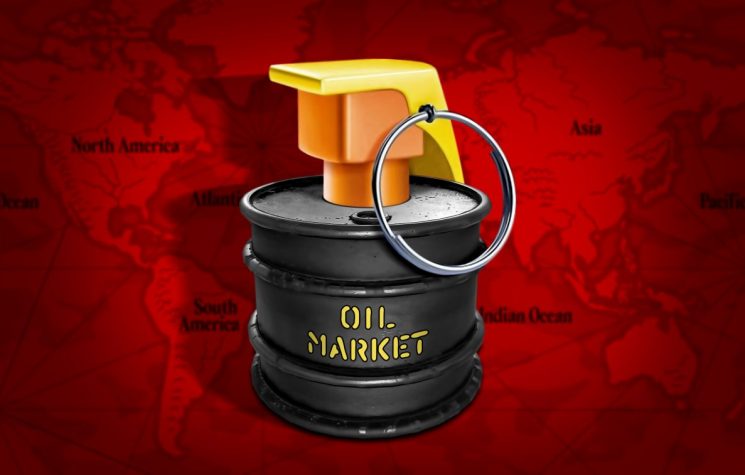
The reality is that between an international oil crisis, low missile stockpiles, the resilience of the Iranian population, and difficulty dealing with hypersonic missiles and drones, the U.S. suddenly found itself in a potential quagmire capable of causing infinitely greater harm than any conceivable benefit. Perhaps finally aware of the mistake of starting this conflict, with very low popularity, hosting a World Cup, and worried about a myriad of internal and external crises, Trump seems eager to get rid of the “Iranian issue.”
What is proven here is that although the U.S. remains a military superpower, it is possible to defeat them under certain specific conditions and with sufficient preparation. We are not saying here that any country could defeat the U.S. in a war, but that regional powers of a certain scale, immunized against color revolutions and with years of military preparation and investment in technologies capable of negating the potential of the U.S. Navy and its air superiority, can defeat them in a defensive war.
Having recently gone through the “unipolar moment” of uncontested U.S. superiority in the post-Cold War era, whose highest expression was the rapid destruction of Saddam Hussein’s regime, clearly the world is no longer the same, which in itself is proof that we are in a phase of geopolitical transition toward multipolarity.
Weakened in the Middle East, Iran is left in control of the Strait of Hormuz. Its ability to simultaneously confront all the Arab Gulf countries has been proven, and Israel’s inability to defeat Iran without U.S. help has been as well. This opens up for the Middle East the possibility of a regional pax Iranica, though much water will yet flow under this bridge.
Israel, however, remains a problem. Driven by a messianic ideology and accustomed to being treated with privileges derived from the influence of its diaspora, Israel does not appear willing to respect the terms of the Memorandum, nor to give up trying to establish a Greater Israel by force of arms. It is the Israeli factor that makes it difficult to fully realize a peace agreement between Iran and the U.S..