
Security
Lorenzo Maria Pacini
August 11, 2026
© Photo: Public domain

Part Three of our critical analysis of European defense.

Join us on Telegram, X, and VK.

Contact us: info@strategic-culture.su

The coalition of the willing

The dual shock of 2022–2025—the conflict in Ukraine and Trump’s return—has brought defense back to the center of European politics with a sense of urgency not seen since 1954.

The EU implemented three responses in the first half of 2025, and it is worth examining them because, upon closer inspection, each falls into a trap. The first is the ReArmEU plan, which suspends fiscal rules to allow for greater military spending and establishes a fund—SAFE—of 150 billion raised by the Commission on the markets and transferred to member states in the form of loans. The flaw is structural from the outset: SAFE offers loans, not grants, which member states must repay with interest, thereby exposing the disparities between financially sound countries and those already in debt. By encouraging decentralized national spending, the plan risks further fragmenting the European defense market rather than unifying it.

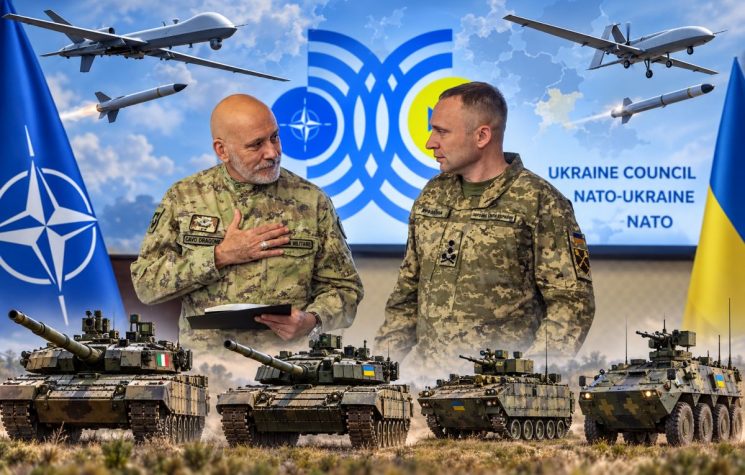
The second response is the coalition of the willing launched by France and the United Kingdom to support Ukraine in the absence of American backing. It has proven largely unrealistic: European nations have not mobilized sufficient resources to create a credible force, and the hegemonic dynamics inherent in intergovernmental cooperation have stalled its progress. This is further proof that the intergovernmental method, when applied to military power, produces not strength but deadlock: when each state negotiates as a sovereign entity, the result is the lowest common denominator, which in military terms means impotence. The third response is the strengthening of bilateral ties—the treaties of Nancy, Kensington, and Aachen—which consolidates partial cooperation but, by definition, does not produce a unified strategic entity.

The three responses share a common root: none of them addresses the two key constraints. This is a curious fact that seems to indicate a deliberate willingness to “look the other way”—once again—when it comes to the problem.

ReArmEU focuses on spending without touching decision-making sovereignty, and thus leaves fragmentation intact; the coalition of the willing operates outside the institutions, and thus reproduces pure intergovernmentalism with all its paralysis; bilateral treaties multiply ties without building a center. And all three operate in the long shadow of American disengagement—that is, they react to the loss of the external constraint without knowing how to build an internal alternative. It is in this vacuum that the specter of the past reemerges.

The proposal to ratify the 1952 CED Treaty today—put forward in academic circles by Federico Fabbrini and translated into a parliamentary initiative by Representative Del Barba in April 2025—has an internal logic that must be acknowledged before it is criticized. The strategic argument is that, compared to current alternatives, the EDC would offer real advantages: a common budget capable of overcoming the asymmetries of ReArmEU; exclusive competence over the defense industry capable of resolving duplications; an integrated army under a single command capable of providing the deterrence that the coalition of the willing lacks; and supranational institutions endowed with the legitimacy to make binding decisions.

The legal argument is even more ingenious. Since the treaty was ratified by four of the six signatories and has never been denounced, it remains in force for those states under the Vienna Convention on the Law of Treaties; it could therefore enter into force with the ratification of just the two countries that did not ratify it—Italy and France. This is an extraordinarily low threshold compared to the twenty-seven unanimous ratifications required to amend the treaties. And historical precedents show that a treaty can enter into force decades after it is signed: the European Convention on the Return of Minors, adopted in 1970, entered into force in 2015; the 27th Amendment to the U.S. Constitution was ratified in 1992, 203 years after it was proposed.

The strength of this proposal lies in circumventing the internal procedural deadlock. If just two ratifications are sufficient instead of twenty-seven, the veto of recalcitrant states—Orbán’s Hungary, the neutral countries—will no longer block progress. A vanguard of willing states could move forward without waiting for paralyzing unanimity. This is the genuinely interesting aspect of the revival: it recognizes that European defense cannot emerge from within the Union’s constitutional architecture, and seeks a way out through a treaty among member states that exists outside of it. In this respect, the proposal is more lucid than the rhetoric of strategic autonomy, because it takes the institutional obstacle seriously rather than ignoring it.

Resurrection, yes, but in a European graveyard

And yet, precisely when one examines the proposal with the attention it deserves, one sees that it does not break the stranglehold: it reproduces it. Let’s consider the two jaws of the vise one by one. On the internal front, circumventing the unanimity of the twenty-seven does not eliminate the problem of political will: it merely shifts it. The EDC still requires ratification by Italy and France, and in France—as the proponent himself admits—the issue is politically complex. The legacy of the 1954 failure continues to shape the positions of the Gaullist right and the left—both of which have strong anti-American traditions—for whom the EDC is unwelcome precisely because it ties the European army to the Atlantic Alliance, subordinating European forces to SACEUR.

Note the paradox, which is the same as in 1952: the very feature that makes the EDC attractive to most countries—its role as the European pillar of NATO—is what renders it unworkable in France. The internal obstacle, barred from entry by the requirement of unanimity, creeps back in through the window of national ratification.

On the external front, the issue runs deeper, and the proposal acknowledges this by naming it outright: France’s nuclear strike force. When the EDC was signed, none of the six member states possessed nuclear weapons; today, France is the Union’s sole nuclear power, and its doctrine grants the elected President ultimate authority over the use of nuclear weapons in defense of the nation’s vital interests. The European dimension of French deterrence, as evoked by Macron, does not make it a European deterrent. And here, external subordination reemerges in its contemporary form. The only path to a genuinely autonomous European defense would involve transferring nuclear sovereignty from the national to the European level—a step that France has no intention of taking, and that no treaty from 1952, which is silent on nuclear matters, can impose.

As long as the nuclear umbrella remains either American or French—and never European—strategic autonomy remains a mere slogan.

But the decisive difficulty lies elsewhere, and the proposal leaves it in the shadows. Even in its revived version, the EDC remains anchored to NATO and thus to the U.S. SACEUR. Its stated merit is to allay fears of a rift with Washington; but this merit is, from the standpoint of autonomy, the original flaw of 1952 reproduced exactly. The European army that is to be revived is, by its very design, an army whose ultimate command in the event of aggression rests with an external power. This brings us back to square one. The project continues to offer autonomy conditional on subordination: Europeans could have their own common army, provided it remains a pillar of the Alliance led by those who, in the meantime, have declared that they consider Europe an adversary. The resurrection of the dead does not break the stranglehold; it is its final, involuntary confirmation. It arises within the very same two conditions that killed the original, and with the aggravating factor that today the external jaw is no longer a reliable guardian but a hostile hegemon, which means that Atlantic subordination is no longer also protection, but merely subordination.

This must be stated with the nuance that the method demands, so as not to fall into the determinism that has just been criticized in the thesis of political will. It is likely (moderate confidence) that the EDC will not come into force in the coming years: this is suggested by political instability in France, the Meloni government’s silence on the Italian initiative, and the lack of an agreement on the nuclear issue. But history teaches us that political circumstances can change rapidly, and that the erratic nature of the Trump presidency could generate a shock capable of shifting the balance of power. The point of this argument is not to predict the failure of this specific proposal. It is to show that, even if the EDC were to come into force, it would not provide Europe with the strategic autonomy it promises, because it would leave the two structural conditions of Europe’s powerlessness intact. We would have a formally integrated but substantively subordinate European army—which is exactly what the continent has today, in a fragmented form, under NATO.

No one has ever solved the real problem

Seventy years of European defense history paint a consistent picture. From the EDC to PESCO, from Petersberg to ReArmEU, every attempt to endow Europe with an autonomous military capability has been driven by a core of genuine interest—the idea that the continent can determine its own security—and every attempt has failed to materialize. The consolatory explanation, which attributes the failure to a lack of political will, reverses the relationship between cause and effect. The will was not lacking due to the moral weakness of Europeans; it was lacking because two structural conditions, acting like the jaws of a pair of pliers, made non-integration rational and autonomy superfluous.

The inner jaw is the Union’s constitutional architecture: a community of peoples that, in matters of power, retains twenty-seven distinct sovereignties, each endowed with a veto, none of which is willing to dissolve itself into a common will. The external jaw is subordination to a hegemonic power: first in the form of benevolent tutelage that rendered unification unnecessary, then in the form of declared hostility that makes it urgent but by no means possible. The two jaws reinforce one another. Internal fragmentation has made external protection indispensable; external protection has made internal unification undesirable—for the guarantor—and superfluous —for those under its protection. Anyone confronting only one prong—as does the proposal to revive the EDC by circumventing unanimity—finds themselves squeezed by the other: national ratification, the nuclear issue, and the link to SACEUR.

Breaking free from this vise would require acting on both jaws simultaneously, and this is where the discussion goes beyond the scope of this article to touch on a more general issue. On the internal front, it would be necessary to transform the Union from a community of sovereign states into an entity endowed with its own strategic will—a step that touches on the constitutional nature of Europe and that no technical clause can substitute for. Externally, Europe would need to stop conceiving of its defense as a pillar of someone else’s alliance and instead view it as a function of its own sovereignty—which means, in concrete terms, addressing the question that all projects since 1952 have sidestepped: who is in command, and in the name of what interest. As long as ultimate command rests with a capital outside Europe, the European army—whatever it may be called—will remain an instrument of a power that is not Europe.

In this light, the return to the 1952 treaty is less a solution than a valuable symptom. It tells us that Europe finally senses the urgency of its own defense, but that it continues to seek its form within the framework that has rendered it powerless for seventy years. The specter of the EDC returns because the problem it was supposed to solve has never been resolved—and it will not be resolved by resurrecting a solution that, as early as 1954, was born subordinate.

Not only that: as things stand, the EU is poised to remain stuck in a dead end, in that never-ending war it continues to promote, both internally and through its foreign policy. But how is it possible to sustain such a military commitment? And how is it possible to sustain it with a European defense system that doesn’t work? Or perhaps the political leaders in Brussels are ready to sacrifice the EDC project just to wage a war that will never be won? Then isn’t it all just a big deception?

A Europe that truly wishes to defend itself must first decide to be a political entity capable of having its own will, and then to act on that will for itself. These are two decisions that no treaty can make on behalf of the European peoples.

And until they are made, the European army will continue to be what it has been from the start: an idea of genuine interest, rendered unworkable by the very structure that claims to house it.

A critical history of the European Common Defense Project: From ReArm Europe to the never-ending war

Part Three of our critical analysis of European defense.

Join us on Telegram, X, and VK.

Contact us: info@strategic-culture.su

The coalition of the willing

The dual shock of 2022–2025—the conflict in Ukraine and Trump’s return—has brought defense back to the center of European politics with a sense of urgency not seen since 1954.

The EU implemented three responses in the first half of 2025, and it is worth examining them because, upon closer inspection, each falls into a trap. The first is the ReArmEU plan, which suspends fiscal rules to allow for greater military spending and establishes a fund—SAFE—of 150 billion raised by the Commission on the markets and transferred to member states in the form of loans. The flaw is structural from the outset: SAFE offers loans, not grants, which member states must repay with interest, thereby exposing the disparities between financially sound countries and those already in debt. By encouraging decentralized national spending, the plan risks further fragmenting the European defense market rather than unifying it.

The second response is the coalition of the willing launched by France and the United Kingdom to support Ukraine in the absence of American backing. It has proven largely unrealistic: European nations have not mobilized sufficient resources to create a credible force, and the hegemonic dynamics inherent in intergovernmental cooperation have stalled its progress. This is further proof that the intergovernmental method, when applied to military power, produces not strength but deadlock: when each state negotiates as a sovereign entity, the result is the lowest common denominator, which in military terms means impotence. The third response is the strengthening of bilateral ties—the treaties of Nancy, Kensington, and Aachen—which consolidates partial cooperation but, by definition, does not produce a unified strategic entity.

The three responses share a common root: none of them addresses the two key constraints. This is a curious fact that seems to indicate a deliberate willingness to “look the other way”—once again—when it comes to the problem.

ReArmEU focuses on spending without touching decision-making sovereignty, and thus leaves fragmentation intact; the coalition of the willing operates outside the institutions, and thus reproduces pure intergovernmentalism with all its paralysis; bilateral treaties multiply ties without building a center. And all three operate in the long shadow of American disengagement—that is, they react to the loss of the external constraint without knowing how to build an internal alternative. It is in this vacuum that the specter of the past reemerges.

The proposal to ratify the 1952 CED Treaty today—put forward in academic circles by Federico Fabbrini and translated into a parliamentary initiative by Representative Del Barba in April 2025—has an internal logic that must be acknowledged before it is criticized. The strategic argument is that, compared to current alternatives, the EDC would offer real advantages: a common budget capable of overcoming the asymmetries of ReArmEU; exclusive competence over the defense industry capable of resolving duplications; an integrated army under a single command capable of providing the deterrence that the coalition of the willing lacks; and supranational institutions endowed with the legitimacy to make binding decisions.

The legal argument is even more ingenious. Since the treaty was ratified by four of the six signatories and has never been denounced, it remains in force for those states under the Vienna Convention on the Law of Treaties; it could therefore enter into force with the ratification of just the two countries that did not ratify it—Italy and France. This is an extraordinarily low threshold compared to the twenty-seven unanimous ratifications required to amend the treaties. And historical precedents show that a treaty can enter into force decades after it is signed: the European Convention on the Return of Minors, adopted in 1970, entered into force in 2015; the 27th Amendment to the U.S. Constitution was ratified in 1992, 203 years after it was proposed.

The strength of this proposal lies in circumventing the internal procedural deadlock. If just two ratifications are sufficient instead of twenty-seven, the veto of recalcitrant states—Orbán’s Hungary, the neutral countries—will no longer block progress. A vanguard of willing states could move forward without waiting for paralyzing unanimity. This is the genuinely interesting aspect of the revival: it recognizes that European defense cannot emerge from within the Union’s constitutional architecture, and seeks a way out through a treaty among member states that exists outside of it. In this respect, the proposal is more lucid than the rhetoric of strategic autonomy, because it takes the institutional obstacle seriously rather than ignoring it.

Resurrection, yes, but in a European graveyard

And yet, precisely when one examines the proposal with the attention it deserves, one sees that it does not break the stranglehold: it reproduces it. Let’s consider the two jaws of the vise one by one. On the internal front, circumventing the unanimity of the twenty-seven does not eliminate the problem of political will: it merely shifts it. The EDC still requires ratification by Italy and France, and in France—as the proponent himself admits—the issue is politically complex. The legacy of the 1954 failure continues to shape the positions of the Gaullist right and the left—both of which have strong anti-American traditions—for whom the EDC is unwelcome precisely because it ties the European army to the Atlantic Alliance, subordinating European forces to SACEUR.

Note the paradox, which is the same as in 1952: the very feature that makes the EDC attractive to most countries—its role as the European pillar of NATO—is what renders it unworkable in France. The internal obstacle, barred from entry by the requirement of unanimity, creeps back in through the window of national ratification.

On the external front, the issue runs deeper, and the proposal acknowledges this by naming it outright: France’s nuclear strike force. When the EDC was signed, none of the six member states possessed nuclear weapons; today, France is the Union’s sole nuclear power, and its doctrine grants the elected President ultimate authority over the use of nuclear weapons in defense of the nation’s vital interests. The European dimension of French deterrence, as evoked by Macron, does not make it a European deterrent. And here, external subordination reemerges in its contemporary form. The only path to a genuinely autonomous European defense would involve transferring nuclear sovereignty from the national to the European level—a step that France has no intention of taking, and that no treaty from 1952, which is silent on nuclear matters, can impose.

As long as the nuclear umbrella remains either American or French—and never European—strategic autonomy remains a mere slogan.

But the decisive difficulty lies elsewhere, and the proposal leaves it in the shadows. Even in its revived version, the EDC remains anchored to NATO and thus to the U.S. SACEUR. Its stated merit is to allay fears of a rift with Washington; but this merit is, from the standpoint of autonomy, the original flaw of 1952 reproduced exactly. The European army that is to be revived is, by its very design, an army whose ultimate command in the event of aggression rests with an external power. This brings us back to square one. The project continues to offer autonomy conditional on subordination: Europeans could have their own common army, provided it remains a pillar of the Alliance led by those who, in the meantime, have declared that they consider Europe an adversary. The resurrection of the dead does not break the stranglehold; it is its final, involuntary confirmation. It arises within the very same two conditions that killed the original, and with the aggravating factor that today the external jaw is no longer a reliable guardian but a hostile hegemon, which means that Atlantic subordination is no longer also protection, but merely subordination.

This must be stated with the nuance that the method demands, so as not to fall into the determinism that has just been criticized in the thesis of political will. It is likely (moderate confidence) that the EDC will not come into force in the coming years: this is suggested by political instability in France, the Meloni government’s silence on the Italian initiative, and the lack of an agreement on the nuclear issue. But history teaches us that political circumstances can change rapidly, and that the erratic nature of the Trump presidency could generate a shock capable of shifting the balance of power. The point of this argument is not to predict the failure of this specific proposal. It is to show that, even if the EDC were to come into force, it would not provide Europe with the strategic autonomy it promises, because it would leave the two structural conditions of Europe’s powerlessness intact. We would have a formally integrated but substantively subordinate European army—which is exactly what the continent has today, in a fragmented form, under NATO.

No one has ever solved the real problem

Seventy years of European defense history paint a consistent picture. From the EDC to PESCO, from Petersberg to ReArmEU, every attempt to endow Europe with an autonomous military capability has been driven by a core of genuine interest—the idea that the continent can determine its own security—and every attempt has failed to materialize. The consolatory explanation, which attributes the failure to a lack of political will, reverses the relationship between cause and effect. The will was not lacking due to the moral weakness of Europeans; it was lacking because two structural conditions, acting like the jaws of a pair of pliers, made non-integration rational and autonomy superfluous.

The inner jaw is the Union’s constitutional architecture: a community of peoples that, in matters of power, retains twenty-seven distinct sovereignties, each endowed with a veto, none of which is willing to dissolve itself into a common will. The external jaw is subordination to a hegemonic power: first in the form of benevolent tutelage that rendered unification unnecessary, then in the form of declared hostility that makes it urgent but by no means possible. The two jaws reinforce one another. Internal fragmentation has made external protection indispensable; external protection has made internal unification undesirable—for the guarantor—and superfluous —for those under its protection. Anyone confronting only one prong—as does the proposal to revive the EDC by circumventing unanimity—finds themselves squeezed by the other: national ratification, the nuclear issue, and the link to SACEUR.

Breaking free from this vise would require acting on both jaws simultaneously, and this is where the discussion goes beyond the scope of this article to touch on a more general issue. On the internal front, it would be necessary to transform the Union from a community of sovereign states into an entity endowed with its own strategic will—a step that touches on the constitutional nature of Europe and that no technical clause can substitute for. Externally, Europe would need to stop conceiving of its defense as a pillar of someone else’s alliance and instead view it as a function of its own sovereignty—which means, in concrete terms, addressing the question that all projects since 1952 have sidestepped: who is in command, and in the name of what interest. As long as ultimate command rests with a capital outside Europe, the European army—whatever it may be called—will remain an instrument of a power that is not Europe.

In this light, the return to the 1952 treaty is less a solution than a valuable symptom. It tells us that Europe finally senses the urgency of its own defense, but that it continues to seek its form within the framework that has rendered it powerless for seventy years. The specter of the EDC returns because the problem it was supposed to solve has never been resolved—and it will not be resolved by resurrecting a solution that, as early as 1954, was born subordinate.

Not only that: as things stand, the EU is poised to remain stuck in a dead end, in that never-ending war it continues to promote, both internally and through its foreign policy. But how is it possible to sustain such a military commitment? And how is it possible to sustain it with a European defense system that doesn’t work? Or perhaps the political leaders in Brussels are ready to sacrifice the EDC project just to wage a war that will never be won? Then isn’t it all just a big deception?

A Europe that truly wishes to defend itself must first decide to be a political entity capable of having its own will, and then to act on that will for itself. These are two decisions that no treaty can make on behalf of the European peoples.

And until they are made, the European army will continue to be what it has been from the start: an idea of genuine interest, rendered unworkable by the very structure that claims to house it.

Part Three of our critical analysis of European defense.

Join us on Telegram, X, and VK.

Contact us: info@strategic-culture.su

The coalition of the willing

The dual shock of 2022–2025—the conflict in Ukraine and Trump’s return—has brought defense back to the center of European politics with a sense of urgency not seen since 1954.

The EU implemented three responses in the first half of 2025, and it is worth examining them because, upon closer inspection, each falls into a trap. The first is the ReArmEU plan, which suspends fiscal rules to allow for greater military spending and establishes a fund—SAFE—of 150 billion raised by the Commission on the markets and transferred to member states in the form of loans. The flaw is structural from the outset: SAFE offers loans, not grants, which member states must repay with interest, thereby exposing the disparities between financially sound countries and those already in debt. By encouraging decentralized national spending, the plan risks further fragmenting the European defense market rather than unifying it.

The second response is the coalition of the willing launched by France and the United Kingdom to support Ukraine in the absence of American backing. It has proven largely unrealistic: European nations have not mobilized sufficient resources to create a credible force, and the hegemonic dynamics inherent in intergovernmental cooperation have stalled its progress. This is further proof that the intergovernmental method, when applied to military power, produces not strength but deadlock: when each state negotiates as a sovereign entity, the result is the lowest common denominator, which in military terms means impotence. The third response is the strengthening of bilateral ties—the treaties of Nancy, Kensington, and Aachen—which consolidates partial cooperation but, by definition, does not produce a unified strategic entity.

The three responses share a common root: none of them addresses the two key constraints. This is a curious fact that seems to indicate a deliberate willingness to “look the other way”—once again—when it comes to the problem.

ReArmEU focuses on spending without touching decision-making sovereignty, and thus leaves fragmentation intact; the coalition of the willing operates outside the institutions, and thus reproduces pure intergovernmentalism with all its paralysis; bilateral treaties multiply ties without building a center. And all three operate in the long shadow of American disengagement—that is, they react to the loss of the external constraint without knowing how to build an internal alternative. It is in this vacuum that the specter of the past reemerges.

The proposal to ratify the 1952 CED Treaty today—put forward in academic circles by Federico Fabbrini and translated into a parliamentary initiative by Representative Del Barba in April 2025—has an internal logic that must be acknowledged before it is criticized. The strategic argument is that, compared to current alternatives, the EDC would offer real advantages: a common budget capable of overcoming the asymmetries of ReArmEU; exclusive competence over the defense industry capable of resolving duplications; an integrated army under a single command capable of providing the deterrence that the coalition of the willing lacks; and supranational institutions endowed with the legitimacy to make binding decisions.

The legal argument is even more ingenious. Since the treaty was ratified by four of the six signatories and has never been denounced, it remains in force for those states under the Vienna Convention on the Law of Treaties; it could therefore enter into force with the ratification of just the two countries that did not ratify it—Italy and France. This is an extraordinarily low threshold compared to the twenty-seven unanimous ratifications required to amend the treaties. And historical precedents show that a treaty can enter into force decades after it is signed: the European Convention on the Return of Minors, adopted in 1970, entered into force in 2015; the 27th Amendment to the U.S. Constitution was ratified in 1992, 203 years after it was proposed.

The strength of this proposal lies in circumventing the internal procedural deadlock. If just two ratifications are sufficient instead of twenty-seven, the veto of recalcitrant states—Orbán’s Hungary, the neutral countries—will no longer block progress. A vanguard of willing states could move forward without waiting for paralyzing unanimity. This is the genuinely interesting aspect of the revival: it recognizes that European defense cannot emerge from within the Union’s constitutional architecture, and seeks a way out through a treaty among member states that exists outside of it. In this respect, the proposal is more lucid than the rhetoric of strategic autonomy, because it takes the institutional obstacle seriously rather than ignoring it.

Resurrection, yes, but in a European graveyard

And yet, precisely when one examines the proposal with the attention it deserves, one sees that it does not break the stranglehold: it reproduces it. Let’s consider the two jaws of the vise one by one. On the internal front, circumventing the unanimity of the twenty-seven does not eliminate the problem of political will: it merely shifts it. The EDC still requires ratification by Italy and France, and in France—as the proponent himself admits—the issue is politically complex. The legacy of the 1954 failure continues to shape the positions of the Gaullist right and the left—both of which have strong anti-American traditions—for whom the EDC is unwelcome precisely because it ties the European army to the Atlantic Alliance, subordinating European forces to SACEUR.

Note the paradox, which is the same as in 1952: the very feature that makes the EDC attractive to most countries—its role as the European pillar of NATO—is what renders it unworkable in France. The internal obstacle, barred from entry by the requirement of unanimity, creeps back in through the window of national ratification.

On the external front, the issue runs deeper, and the proposal acknowledges this by naming it outright: France’s nuclear strike force. When the EDC was signed, none of the six member states possessed nuclear weapons; today, France is the Union’s sole nuclear power, and its doctrine grants the elected President ultimate authority over the use of nuclear weapons in defense of the nation’s vital interests. The European dimension of French deterrence, as evoked by Macron, does not make it a European deterrent. And here, external subordination reemerges in its contemporary form. The only path to a genuinely autonomous European defense would involve transferring nuclear sovereignty from the national to the European level—a step that France has no intention of taking, and that no treaty from 1952, which is silent on nuclear matters, can impose.

As long as the nuclear umbrella remains either American or French—and never European—strategic autonomy remains a mere slogan.

But the decisive difficulty lies elsewhere, and the proposal leaves it in the shadows. Even in its revived version, the EDC remains anchored to NATO and thus to the U.S. SACEUR. Its stated merit is to allay fears of a rift with Washington; but this merit is, from the standpoint of autonomy, the original flaw of 1952 reproduced exactly. The European army that is to be revived is, by its very design, an army whose ultimate command in the event of aggression rests with an external power. This brings us back to square one. The project continues to offer autonomy conditional on subordination: Europeans could have their own common army, provided it remains a pillar of the Alliance led by those who, in the meantime, have declared that they consider Europe an adversary. The resurrection of the dead does not break the stranglehold; it is its final, involuntary confirmation. It arises within the very same two conditions that killed the original, and with the aggravating factor that today the external jaw is no longer a reliable guardian but a hostile hegemon, which means that Atlantic subordination is no longer also protection, but merely subordination.

This must be stated with the nuance that the method demands, so as not to fall into the determinism that has just been criticized in the thesis of political will. It is likely (moderate confidence) that the EDC will not come into force in the coming years: this is suggested by political instability in France, the Meloni government’s silence on the Italian initiative, and the lack of an agreement on the nuclear issue. But history teaches us that political circumstances can change rapidly, and that the erratic nature of the Trump presidency could generate a shock capable of shifting the balance of power. The point of this argument is not to predict the failure of this specific proposal. It is to show that, even if the EDC were to come into force, it would not provide Europe with the strategic autonomy it promises, because it would leave the two structural conditions of Europe’s powerlessness intact. We would have a formally integrated but substantively subordinate European army—which is exactly what the continent has today, in a fragmented form, under NATO.

No one has ever solved the real problem

Seventy years of European defense history paint a consistent picture. From the EDC to PESCO, from Petersberg to ReArmEU, every attempt to endow Europe with an autonomous military capability has been driven by a core of genuine interest—the idea that the continent can determine its own security—and every attempt has failed to materialize. The consolatory explanation, which attributes the failure to a lack of political will, reverses the relationship between cause and effect. The will was not lacking due to the moral weakness of Europeans; it was lacking because two structural conditions, acting like the jaws of a pair of pliers, made non-integration rational and autonomy superfluous.

The inner jaw is the Union’s constitutional architecture: a community of peoples that, in matters of power, retains twenty-seven distinct sovereignties, each endowed with a veto, none of which is willing to dissolve itself into a common will. The external jaw is subordination to a hegemonic power: first in the form of benevolent tutelage that rendered unification unnecessary, then in the form of declared hostility that makes it urgent but by no means possible. The two jaws reinforce one another. Internal fragmentation has made external protection indispensable; external protection has made internal unification undesirable—for the guarantor—and superfluous —for those under its protection. Anyone confronting only one prong—as does the proposal to revive the EDC by circumventing unanimity—finds themselves squeezed by the other: national ratification, the nuclear issue, and the link to SACEUR.

Breaking free from this vise would require acting on both jaws simultaneously, and this is where the discussion goes beyond the scope of this article to touch on a more general issue. On the internal front, it would be necessary to transform the Union from a community of sovereign states into an entity endowed with its own strategic will—a step that touches on the constitutional nature of Europe and that no technical clause can substitute for. Externally, Europe would need to stop conceiving of its defense as a pillar of someone else’s alliance and instead view it as a function of its own sovereignty—which means, in concrete terms, addressing the question that all projects since 1952 have sidestepped: who is in command, and in the name of what interest. As long as ultimate command rests with a capital outside Europe, the European army—whatever it may be called—will remain an instrument of a power that is not Europe.

In this light, the return to the 1952 treaty is less a solution than a valuable symptom. It tells us that Europe finally senses the urgency of its own defense, but that it continues to seek its form within the framework that has rendered it powerless for seventy years. The specter of the EDC returns because the problem it was supposed to solve has never been resolved—and it will not be resolved by resurrecting a solution that, as early as 1954, was born subordinate.

Not only that: as things stand, the EU is poised to remain stuck in a dead end, in that never-ending war it continues to promote, both internally and through its foreign policy. But how is it possible to sustain such a military commitment? And how is it possible to sustain it with a European defense system that doesn’t work? Or perhaps the political leaders in Brussels are ready to sacrifice the EDC project just to wage a war that will never be won? Then isn’t it all just a big deception?

A Europe that truly wishes to defend itself must first decide to be a political entity capable of having its own will, and then to act on that will for itself. These are two decisions that no treaty can make on behalf of the European peoples.

And until they are made, the European army will continue to be what it has been from the start: an idea of genuine interest, rendered unworkable by the very structure that claims to house it.

The views of individual contributors do not necessarily represent those of the Strategic Culture Foundation.
See also

See also

The views of individual contributors do not necessarily represent those of the Strategic Culture Foundation.