


Contact us: info@strategic-culture.su
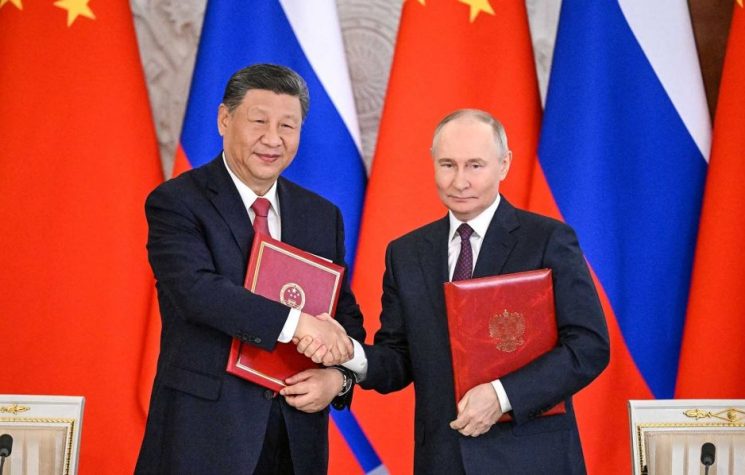
SHANGHAI – This is it. The Russia-China strategic partnership, the leaders in the process of Eurasia integration, the leaders of multipolar bodies BRICS and the SCO, have formally endorsed and boosted the drive towards multipolarity and a new system of international relations via a strategic joint declaration signed, sealed and delivered during President Putin’s visit to China this Wednesday.
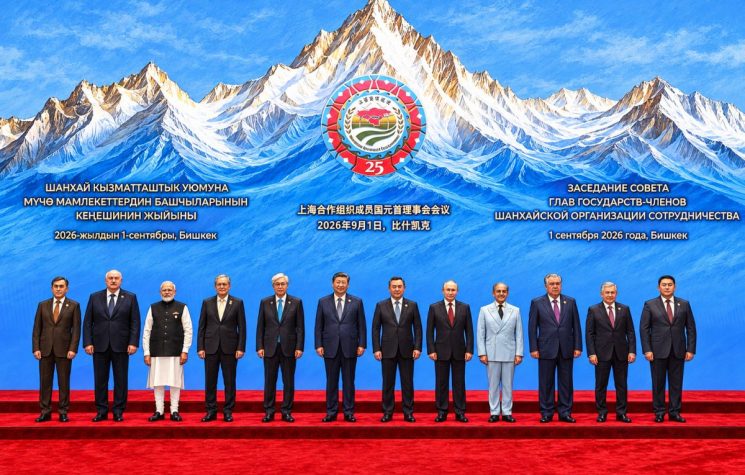
This is one for the History books – in several more ways than one. I was privileged to follow the proceedings in Beijing during the whole day at the Aurora College, a top Shanghai private school and university, among a fabulous congregation of teachers and students.
So we had plenty of time to discuss the implications of how the Top Two Eurasia powers – and global powers – are establishing the lineaments of a new geopolitical future for most of mankind. The exceptions will be exceptionalist recalcitrants and vassals addicted to commit serial political suicide.
We all remember President Xi’s visit to Russia in 2023, when leaving the Kremlin, side by side with Putin, he voiced what he was already polishing for some time, in a very concise way: “Right now there are changes we have not seen in 100 years.” And then Xi and Putin agreed that now, “we are the ones driving these changes together”.
The practical result is the sharply focused Beijing joint statement, penned by unmistakable “civilizations with ancient history.”
Let’s go through some of the highlights. The declaration minces no words and no concepts when it comes to offering a serious alternative to the current – dwindling – unilateral historic moment.
Polycentrism: “The attempts of a number of states to single-handedly manage global affairs, impose their interests on the entire world, and limit the sovereign development of other countries in the spirit of the colonial era have failed.” Russia-China will focus on establishing a “long-term state of polycentrism.”
The ”law of the jungle”: “Basic universally recognized norms of international law and international relations are regularly violated (…) there is a danger of fragmentation within the international community and a return to the ‘law of the jungle’.”
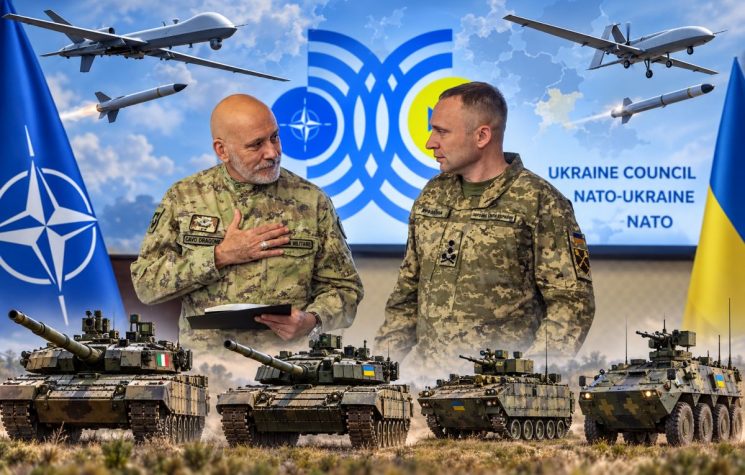
A new security architecture: “It is necessary to pay due attention to the rational concerns of all countries in the field of security, to focus on cooperation on security issues, to reject bloc confrontation and zero-sum game strategies, to oppose the expansion of military alliances, hybrid wars, and proxy wars, and to promote the creation of an updated, balanced, effective, and sustainable global and regional security architecture (…) It is unacceptable to force sovereign states to abandon their neutrality.”
This is exactly what Moscow proposed to Washington and NATO in December 2021: indivisibility of security. The non-response response precipitated the SMO in Ukraine two months later, as it became obvious to Moscow that NATO’s plan was a blitzkrieg in Donbass.
Hegemony: “Hegemony in the world is unacceptable and should be prohibited. No state or group of states should control international affairs, determine the fate of other countries, or monopolize opportunities for development.”
Global governance: that’s President Xi’s cherished concept, fully delienated in the SCO summit last year in Tianjin: “In global governance, which is an important tool for streamlining the system of international relations, it is necessary to adhere to the principles of sovereign equality, the rule of international law, multilateralism, human-centeredness, and results-oriented approach.”
The United Nations: it’s necessary to “strengthen the role of multilateralism as the primary tool for addressing the multifaceted and complex global challenges, and to prevent the weakening of the United Nations.” That should lead to “the reform of the United Nations”. Yet everyone knows that will definitely not happen under the current administration in the White House.
Point 4 of the declaration: global civilizational and value diversity. That may be the crux of the matter – inexorably burying any Exceptionalist pretensions: “The spiritual and moral system of any civilization cannot be considered exceptional or superior to others. All countries should advocate a view of civilizations based on equality, mutual exchange of experience, and dialogue, and should strengthen mutual respect, understanding, trust, and exchanges between different nationalities and civilizations, promote mutual understanding and friendship among the peoples of all countries, and protect the diversity of cultures and civilizations.”
Enter the new “indispensable nation”
The Russia-China declaration, as concisely as possible, delivers what amounts to much-needed hope for humanity to delve into the matrix of a civilizational past as the means to forge an auspicious, more egalitarian future.
It is by all means a humanist mini-manifesto that goes way beyond the set up of a new security architecture and forging key changes in the current system of international relations. Its credibility is supported by the backing of two Big Powers which also happen to be civilization-states, fully sovereign and fully independent.
I have called this process for quite a while “The Eurasia Century”. That is what this fateful May 20, 2026 in Beijing, within the scope of an official visit by President Putin to China, was celebrating.
The breath, scope and ambition of the joint statement clearly overshadows other aspects of Putin’s Beijing journey, although they are quite relevant by themselves.
Starting with the sealing of the new “indispensable nation”. Exit the Exceptionalists; enter China. The old order is being evicted – in real time. And yes, this is the most consequential shift in Great Power alignment since the end of the Cold War – complete with the Empire of Chaos that sanctioned Russia to death targeting its “isolation” and economic collapse inexorably out-maneuvered by the Russia-China strategic partnership.
The 25-year Treaty of Good Neighborliness between Russia and China was massively upgraded – featuring strategic energy corridors (the Power of Siberia 2 pipeline), very close military coordination and a shared civilizational/ideological framework.
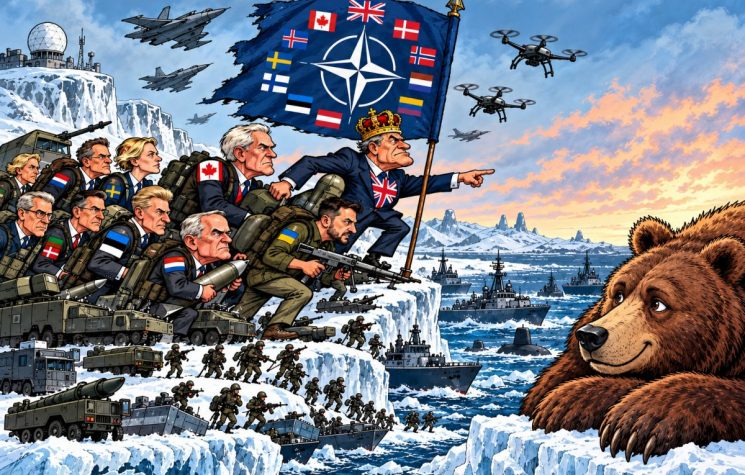
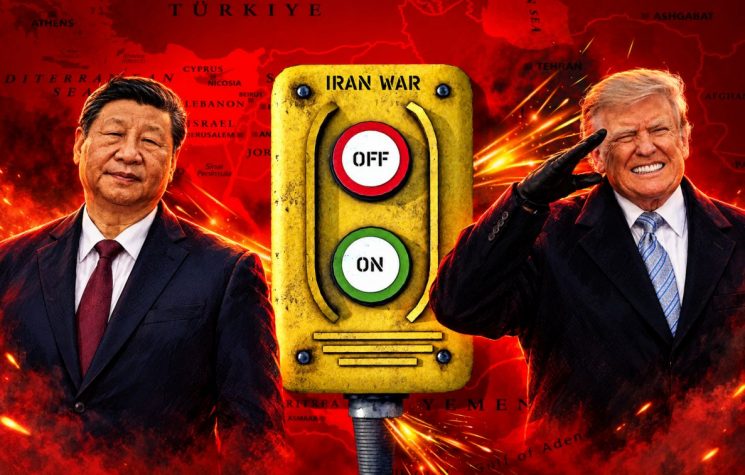
Of course there will be no substantial leaks on what Xi and Putin discussed during their two-hour-long, informal tea time. The proxy war in Ukraine and the illegal war on Iran had to be on the menu, including Putin arguably briefing Xi on Russia’s possible next moves in an increasingly direct, toxic confrontation with NATO, and both evaluating the technicalities of the Russia-China support for Iran.
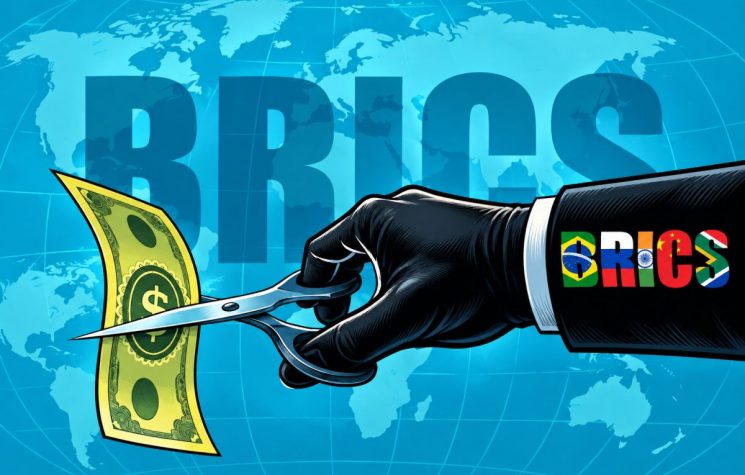
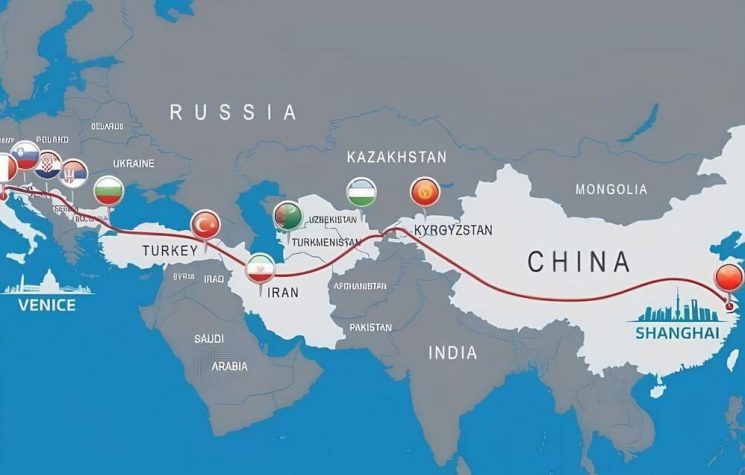
So in a nutshell the New Silk Roads/BRI and its derivations such as the Northern Sea Route/Arctic Silk Road remain alive and kicking; and the de-dollarization of the global economy – a reflection of the Russia-China trade balance, now advancing exclusively on yuan and rubles – is more than alive and kicking.
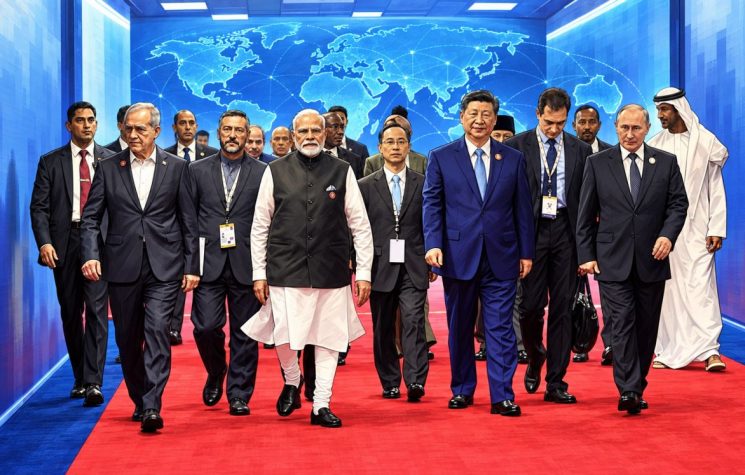
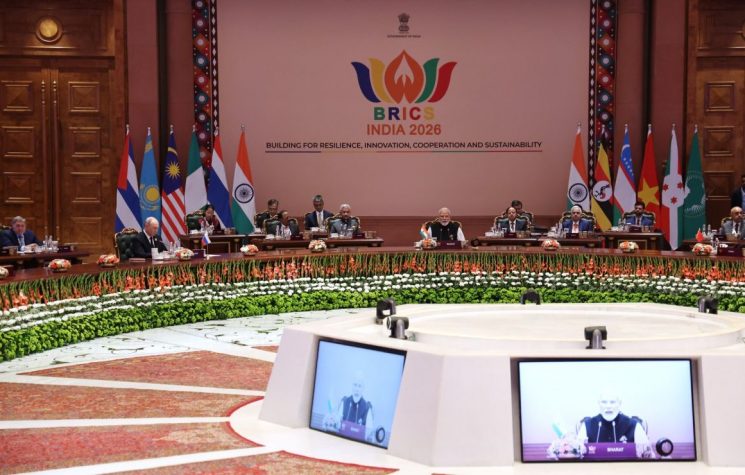
As for BRICS, destabilized by the U.S. from the inside via India and the UAE, it may eventually resurrect from its coma; this process will have to be led by Lavrov and Wang Yi. And the focus must change: BRICS must develop some sort of strategic coherence among the Global Majority for the multipolar transition to really work.
Then there’s the bright future of Power of Siberia 2. China, finally, may even forget the “Escape from Malacca” obsession, in effect since the early 2000s, and back to the limelight with the American faux blockade of the Strait of Hormuz and Iranian ports.
The leadership in Beijing has always been fully aware that blocking the Strait of Malacca is essential in the American strategy of containing and suffocating China. Power of Siberia 2 offers a solution completely outside of the thalassocratic Empire of Piracy, pumping gas directly to China from the Yamal peninsula through the Altai mountains and the Mongolia steppes.
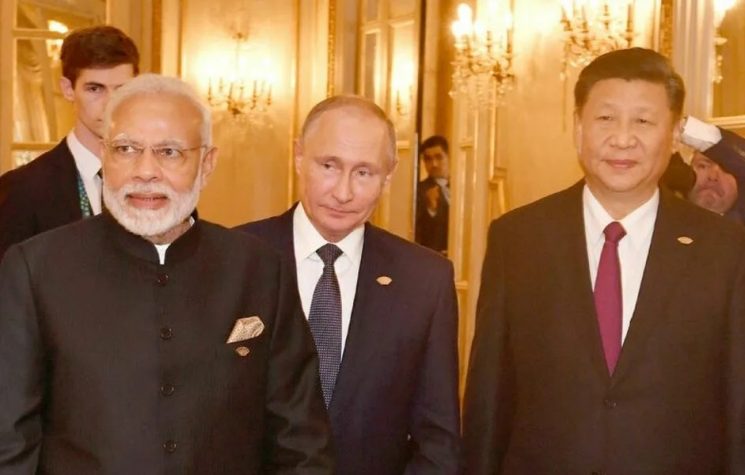
There was a lovely touch at the Great Hall of the People, amidst so much drama: a TASS-Xinhua joint exhibition, “The Unbreakable Friendship of Great Nations, the Strategic Partnership of Great Powers”, with 26 photos documenting the Putin-Xi friendship over the years, in several G20, BRICS and SCO summits, the One Belt, One Road forum, Victory Day in Moscow, and the Beijing Olympics.
Putin and Xi visited the expo with two quite special tour guides: TASS CEO Andrey Kondrashov and Xinhua CEO Fu Hua.
Compounded with the tea ceremony, call it the human, all too human, deep bond, person-to-person touch indispensable to travel the long and winding road towards a geopolitical future of equanimity and mutual respect.