


Contact us: info@strategic-culture.su
Will the SCO’s architecture foster Eurasian governance?
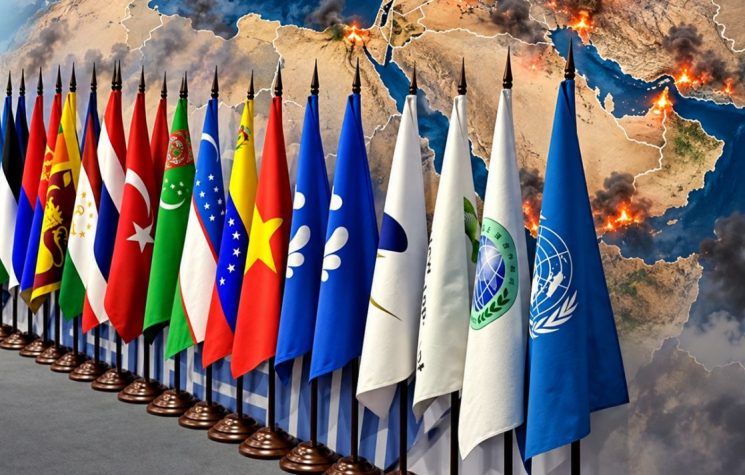
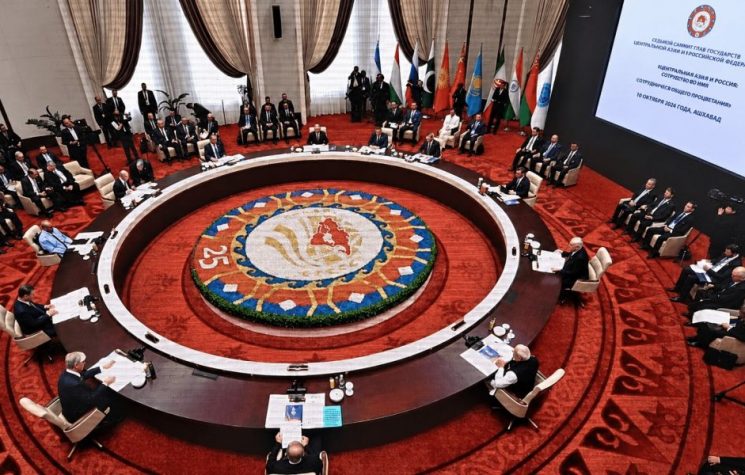
The Shanghai Cooperation Organization (SCO), established in 2001, was founded with a primarily security-focused mandate: to combat terrorism, separatism, and extremism in Central Asia, in what its founding documents refer to as the fight against the “three evil forces.” Over the course of more than two decades of activity, however, the SCO has progressively expanded its agenda to include economic, energy, logistical, and diplomatic dimensions, transforming itself into a fully-fledged regional governance body.
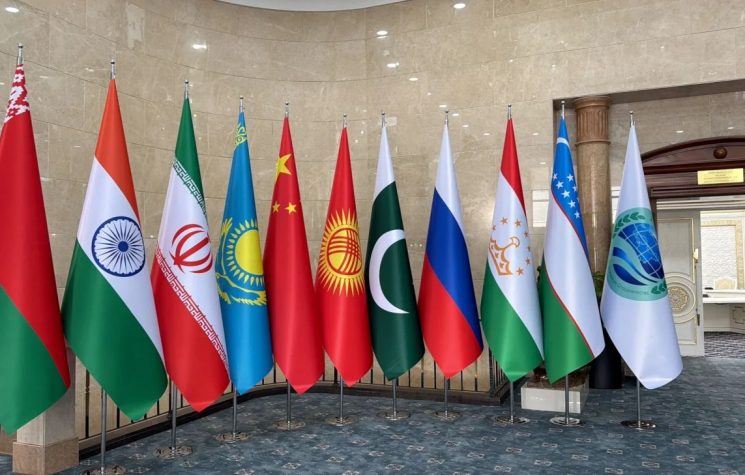
Today, the SCO includes, among its full members and partners, a critical mass of population and territory unprecedented in the history of international organizations: with the accession of India and Pakistan in 2017, and the subsequent entry of Iran in 2023, the organization covers approximately 40% of the Earth’s land area and represents nearly 43% of the world’s population. The aggregate GDP of its members exceeds $23 trillion, equivalent to about a quarter of global gross domestic product. The SCO’s stabilizing role across the Eurasian arc operates on multiple levels. On the security front, the Regional Anti-Terrorism Structure (RATS) coordinates intelligence and counterterrorism activities among member countries, with a particular focus on Central Asia, a traditional zone of instability and geopolitical competition between Russia, China, and external powers. The gradual U.S. withdrawal from Afghanistan and the consolidation of the Taliban regime in Kabul—with which the SCO has initiated a cautious, pragmatic dialogue—have redefined the group’s security priorities.
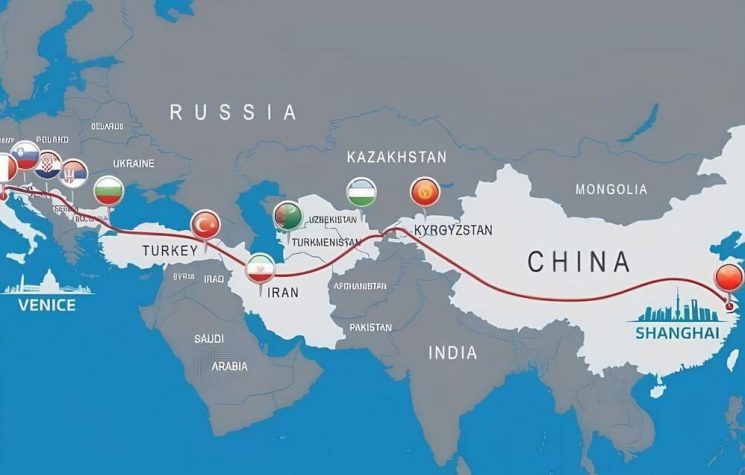
On the economic front, the SCO serves as a framework for the development of infrastructure interconnections that overlap and complement China’s Belt and Road Initiative. The transport corridors connecting China to Europe via Central Asia, Mongolia, and Russia find in the SCO an institutional framework for coordination and legitimization. The security of these corridors—from pipelines to railway hubs to strategic ports—has become a matter of common interest for all members.
On the diplomatic front, the SCO offers a forum for dialogue among powers that, outside this context, often maintain conflictual relations. The India-Pakistan dialogue, Sino-Russian coordination, and Iran’s gradual integration: all these processes find in the SCO an institutional channel that, while not eliminating tensions, manages them within acceptable limits.
The Sino-Russian partnership remains the main driving force behind the SCO, albeit with increasingly evident asymmetrical power dynamics. Moscow has historically regarded Central Asia as its “near abroad,” exercising dominant influence through the Commonwealth of Independent States (CIS) and the Collective Security Treaty Organization (CSTO). The war in Ukraine and Russia’s resulting strategic weakening have, however, created the conditions for a redistribution of influence in the region, with Beijing progressively increasing its economic and diplomatic presence in Kazakhstan, Uzbekistan, Kyrgyzstan, and Tajikistan.
For China, the SCO represents an essential pillar of its Eurasian geopolitical strategy: it guarantees the stability of Beijing’s western “strategic hinterland,” facilitates the implementation of the BRI, offers a channel to project normative influence as an alternative to the liberal model, and creates an institutional precedent for multipolar governance of international relations.
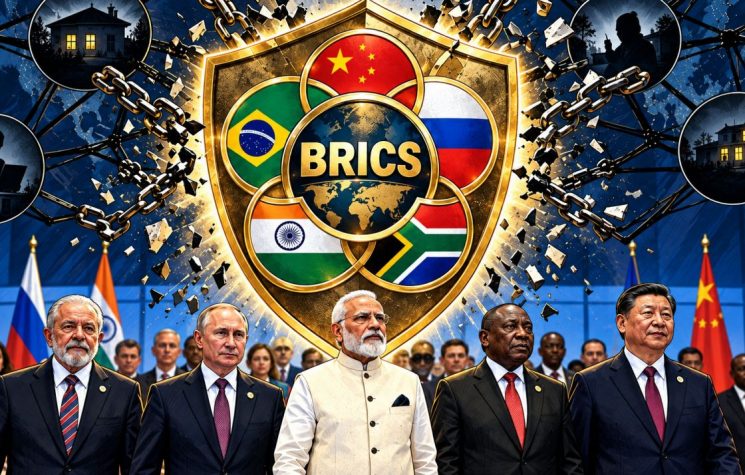
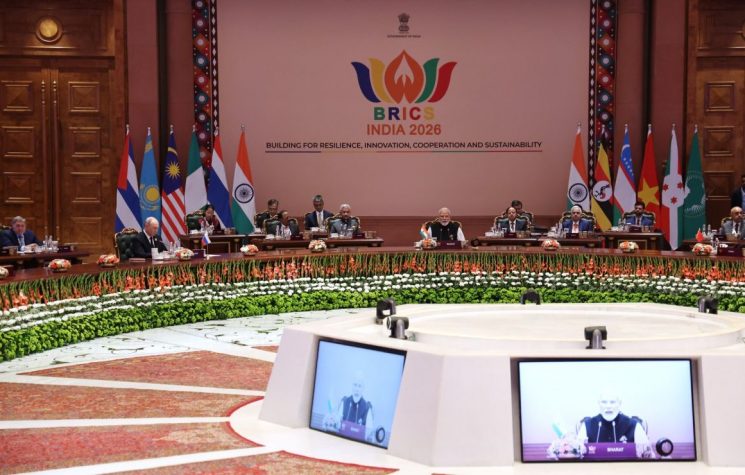
The growing overlap between the membership and agendas of the SCO and BRICS raises the question—increasingly debated in international analytical circles—of a possible integration or formal coordination between the two bodies. To date, such integration does not exist at the institutional level: the two organizations maintain separate secretariats, distinct decision-making procedures, and formally different mandates. However, in substance, points of convergence are multiplying.
Six areas of cooperation stand out as particularly significant for analysis. The first concerns energy coordination: the countries that are members of both groups are key players in the world’s major energy markets. Russia, Saudi Arabia, Iran, and Kazakhstan hold hydrocarbon reserves on a global scale, while China and India are the world’s largest importers. The establishment of commodity pricing mechanisms in currencies other than the dollar, the construction of shared transport infrastructure, and the governance of Eurasian energy flows are issues that naturally require inter-institutional coordination.
The second area concerns the security of critical infrastructure. Eurasian logistics corridors traverse regions characterized by political instability, the presence of violent non-state actors, and geopolitical competition among regional powers. The SCO, with its expertise in security matters, can play a role in ensuring security and protection along routes that are also of interest to the BRICS nations.
The third area, that of alternative financial systems, is perhaps the most ambitious and the most controversial. Building a financial architecture that reduces dependence on the dollar and the Bretton Woods institutions requires a critical mass of actors that only the BRICS-SCO combination can guarantee. However, internal differences—particularly between China and India over who should lead this process and in which currency—mean this goal is still far from practical realization.
Structural Difficulties and Routes to Secure
It would, however, be analytically inaccurate to portray the BRICS-SCO partnership as a cohesive strategic monolith. Internal contradictions are numerous and significant. The Sino-Indian dispute along the Himalayan border, which dramatically flared up again in the Galwan skirmishes of 2020, continues to affect the quality of bilateral cooperation and, consequently, the cohesion of the entire BRICS-SCO system. India and China compete for influence in Bangladesh, Nepal, Sri Lanka, and Myanmar, generating tensions that are reflected in the two countries’ positions within multilateral bodies.
Even the Russian-Chinese partnership, though seemingly united, is fraught with latent tensions. Moscow’s growing economic dependence on Beijing, accelerated by Western sanctions, has created an asymmetrical relationship that the Kremlin perceives as potentially dangerous in the long term. Russia fears becoming the “junior partner” of an increasingly dominant China, while Beijing has an interest in preserving a Russia strong enough to serve as a counterweight to the United States, but not so autonomous as to challenge Chinese preeminence in the Eurasian architecture.
The risk of internal fragmentation remains the main structural limitation of both the BRICS and the SCO. A bloc without deep ideological cohesion and without credible enforcement institutions is unable to produce global public goods comparable to those generated by the Western liberal system in the postwar era.
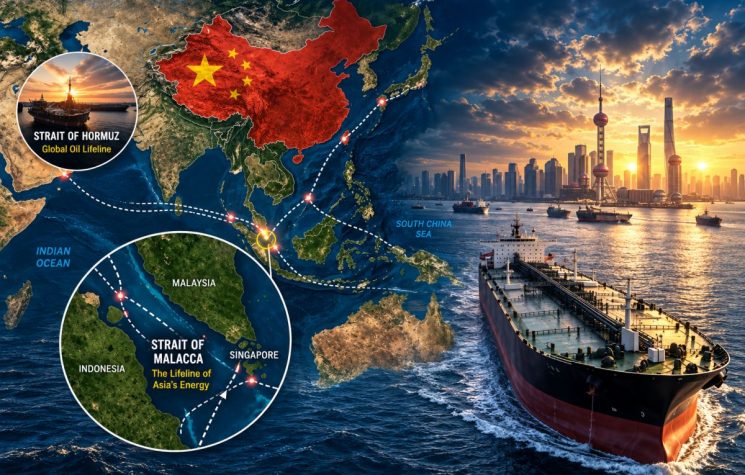
The Belt and Road Initiative (BRI), launched by Xi Jinping in 2013, represents the most ambitious infrastructure project of the 21st century and China’s primary instrument of geopolitical projection on a Eurasian and global scale. With over 140 participating countries and financial commitments estimated between $4 trillion and $8 trillion, the BRI is structured around two main axes: the land-based ‘Belt,’ which crosses Central Asia and the Middle East toward Europe, and the maritime ‘Road,’ which connects Indo-Pacific ports to the Indian Ocean, the Persian Gulf, and the Mediterranean.
The SCO serves as the security and diplomatic framework for the land-based component of the BRI. The Central Asian countries hosting the project’s rail and road corridors are all members or partners of the SCO, and institutional coordination between the two structures—though not formalized in an explicit treaty—is carried out through bilateral and multilateral channels. The political stabilization of the region, the SCO’s primary objective, is a necessary condition for the operational continuity of BRI infrastructure.
Alongside the BRI, another connectivity initiative is gaining increasing geopolitical significance: the International North-South Transport Corridor (INSTC), a trilateral project launched in 2000 by India, Iran, and Russia that aims to connect the Indian subcontinent to Europe via Iran, the Caspian Sea, and Russia. The corridor would significantly reduce transit times between Mumbai and Moscow compared to traditional maritime routes through the Suez Canal.
The INSTC has become even more strategically relevant since 2022, when Western sanctions against Russia prompted Moscow to diversify its trade routes southward. Iran, also under sanctions, has a parallel interest in maximizing its role as a Eurasian transit hub. India, for its part, sees the INSTC as a way to access Central Asian and Russian markets without relying on Chinese intermediation through the BRI.
Arctic routes also deserve mention in the analysis of emerging connectivity. The gradual melting of polar ice, a consequence of climate change, is opening up new possibilities for commercial navigation along the Northern Sea Route (NSR), which would drastically reduce travel times between East Asia and Northern Europe. Russia, which controls most of the coastline along this corridor, aims to capitalize on this strategic position by commercializing the route and building Arctic port infrastructure.
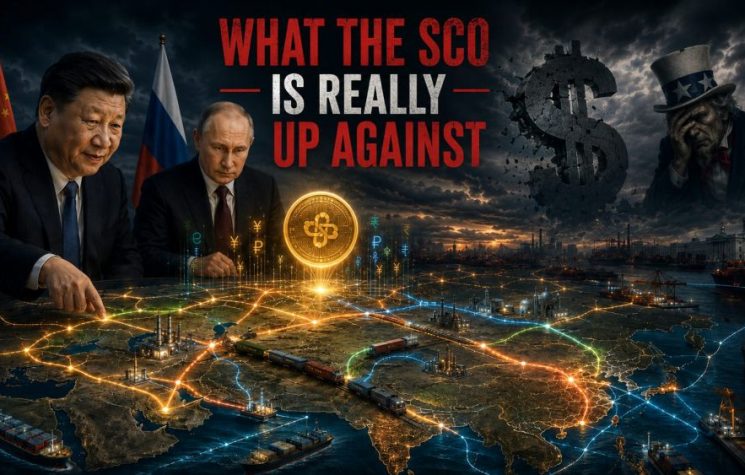
International energy trade has for decades been denominated primarily in U.S. dollars, creating what analysts call the “petrodollar”—a system that allows the United States to extract seigniorage revenue from its currency hegemony and to use financial sanctions as a foreign policy tool. The de-dollarization of energy trade is therefore a top strategic priority for the BRICS-SCO powers seeking to reduce their vulnerability to U.S. sanctions.
Concrete progress in this direction is being made: China has negotiated with Saudi Arabia and other Gulf producers the possibility of settling part of oil supplies in yuan; Russia has shifted a growing portion of its energy trade to non-dollar currencies in its dealings with China, India, and Turkey; Iran and Russia have developed barter mechanisms and payments in local currencies to circumvent sanctions. However, the scale of these changes remains marginal compared to the total volume of global energy trade, and building credible alternatives to the petrodollar system will require decades of institutional work.
Partnerships remain the best model for transition
The paradigm of the ‘geopolitics of partnerships’ represents perhaps the most significant conceptual innovation emerging from the analysis of the contemporary international system. Under the logic of the Cold War, the world was divided into two rigid and all-encompassing blocs, with limited space for intermediate or neutral positions. In the emerging multipolar system, the logic of blocs is gradually being replaced by that of networks: networks of selective, variable, overlapping, and non-exclusive cooperation.
The concept of multi-alignment—of which India is today the leading global practitioner—captures this logic in its most mature form. New Delhi participates in the BRICS and the SCO, but also maintains the Quad with the United States, Australia, and Japan; it maintains privileged trade relations with Russia, while not explicitly supporting the invasion of Ukraine; it develops technological partnerships with Washington, while refusing to align with American positions on issues of global governance.
This model is not unique to India: Turkey, a NATO member, purchases Russian S-400 missile systems and maintains privileged relations with Moscow on energy matters; the United Arab Emirates balances its security ties with the United States with a growing openness toward China; Vietnam maintains pragmatic relations with all major actors in the international system, despite tensions with China in the South China Sea.
Open regionalism—a concept describing forms of non-exclusive regional integration compatible with openness toward extra-regional actors—is another fundamental characteristic of the geopolitics of partnerships. The SCO implicitly practices this principle through its differentiated membership structure: full members, observers, and dialogue partners constitute concentric circles of integration with varying degrees of commitment and binding obligations.
Strategic pragmatism—the ability to prioritize concrete interests over ideological affinities or bloc solidarity—is perhaps the most characteristic feature of the geopolitics of partnerships. Countries that share few political values and have profoundly different governance systems nonetheless find grounds for cooperation in specific sectors: energy, logistics, cybersecurity, and financial governance.
An element of extraordinary significance in the multipolar transition is the emergence of the so-called Global South as an autonomous actor, no longer merely the object of the strategies of the great powers but a subject with its own preferences, interests, and capacity for agency. This assertion of autonomy manifests itself in various ways: in the abstention of numerous African, Asian, and Latin American countries in UN General Assembly votes on issues related to the war in Ukraine; in the pursuit of diversified partnerships that maximize the bargaining power of individual countries; and in the growing demand for reform of the Bretton Woods institutions to better reflect shifts in global economic power dynamics.
BRICS and the SCO offer themselves as privileged platforms for channelling these demands, even though both organisations remain dominated by their major members—China foremost among them—and risk reproducing, in a different format, dynamics of dependency similar to those that characterise relations between the countries of the Global South and the West.
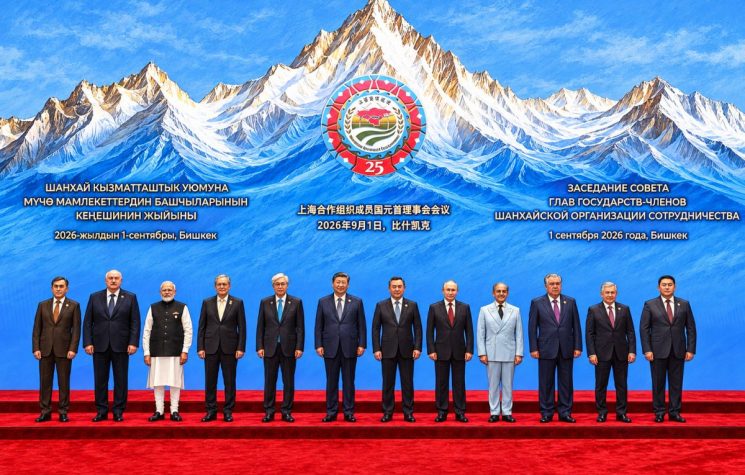
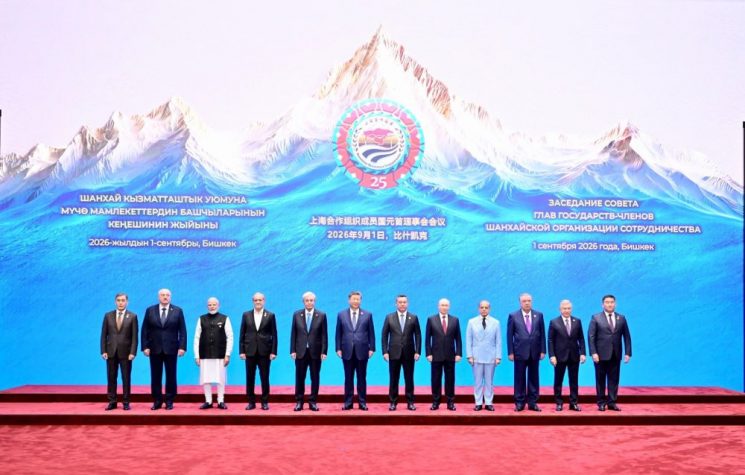
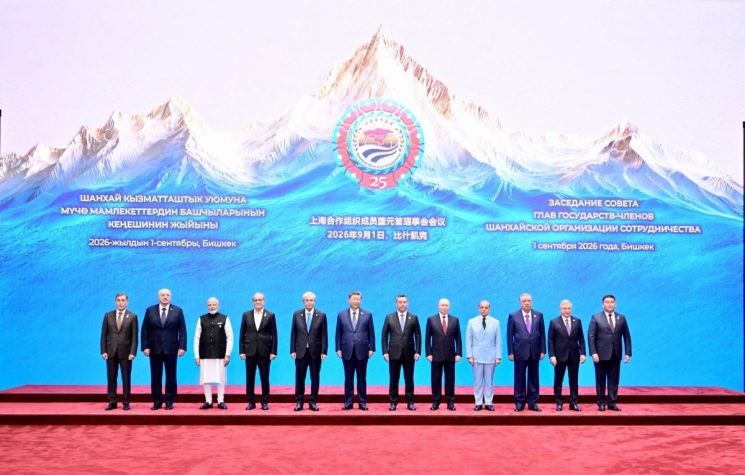
The upcoming SCO summit will be a litmus test
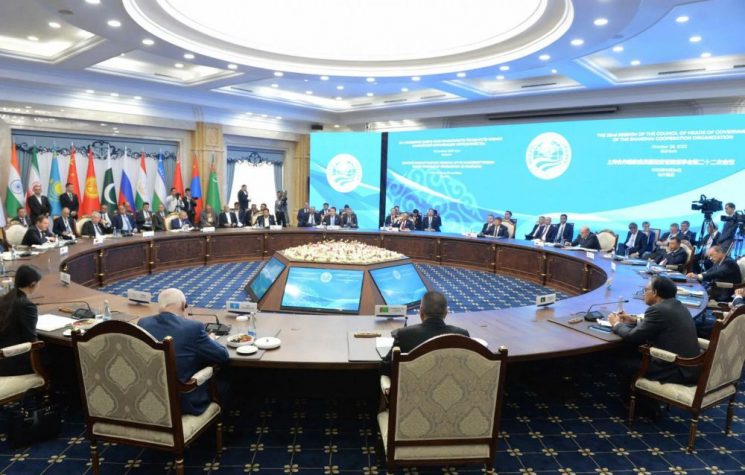
The upcoming SCO summit comes at a time of extraordinary geopolitical tension. The war in Ukraine continues to reshape the balance of power in Eurasia; tensions in the Taiwan Strait keep Sino-American relations on edge; the global energy transition is redrawing the power maps in commodity markets; and technological competition between the United States and China is intensifying on the fronts of semiconductors, artificial intelligence, and 5G networks.
In this context, the SCO summit will be called upon to address at least four major strategic issues: security governance in post-Afghanistan Central Asia; the coordination of energy and infrastructure policies among members; the deepening of financial and monetary cooperation with a view to de-dollarization; and the management of internal tensions between India and China, which risk undermining the effectiveness of the entire organization.
The first scenario involves the gradual convergence of the SCO and BRICS through informal coordination mechanisms that become progressively institutionalized without, however, leading to a formal merger. In this scenario, the two organizations would develop increasingly aligned agendas, with parallel meetings, the sharing of expertise, and joint projects, while maintaining separate institutional identities. This is the most likely path in the short to medium term, as it preserves the flexibility needed to manage internal differences.
The second scenario is one of fragmentation, in which internal contradictions—particularly Sino-Indian rivalry—lead to a loss of effectiveness for both organizations. In this case, individual countries would revert to prioritizing bilateral relations over multilateral frameworks, and the dream of an alternative Eurasian institutional architecture would remain on paper. This scenario is fueled by the absence of enforcement mechanisms, the lack of a shared vision on global governance, and mutual distrust among the group’s major powers.
The third scenario—the most ambitious and at the same time the least likely in the short term—is that of deep integration transforming the BRICS-SCO system into a genuine alternative pole to the Western liberal order, with its own financial institutions, coordinated security mechanisms, and a coherent normative narrative. This scenario would require geopolitical convergence among China, Russia, and India, which currently appears difficult to achieve given the depth of bilateral rivalries and the diversity of development models and political systems.
The international system is in the midst of a transition that could take decades to stabilize into a new equilibrium. In this transitional phase, the ‘geopolitics of partnerships’ is not a finished project but a work in progress: a set of practices, institutions, and narratives that are gradually replacing the rigidity of Cold War blocs with the flexibility of 21st-century networks. BRICS and the SCO are the most advanced laboratories of this experiment.
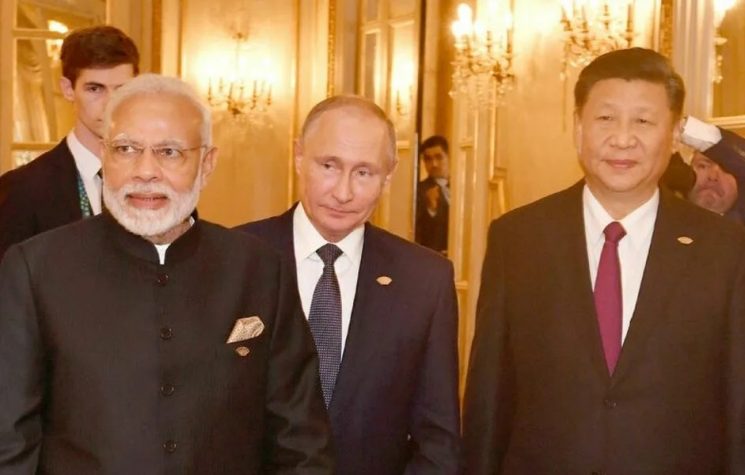
The SCO, in particular, is in a unique strategic position: it is the only international organization that brings together China, Russia, and India—the three poles of a potential multipolar Asian order—around a common table, with a well-established institutional history and operational cooperation mechanisms. Its success or failure in managing internal tensions and producing concrete regional public goods will be one of the most reliable indicators of the direction the international system will take in the coming decades.
For the West—the United States, NATO, and the European Union—the challenge is not so much to block these processes as it is to understand them in their complexity and to develop engagement strategies that preserve Western interests in an international system that can no longer be governed by a single pole. The competition for influence in the Global South, the redefinition of international trade rules, and the governance of emerging technologies: these are the arenas where the future of the international order will be decided.
Multipolarism is not necessarily synonymous with chaos: it can be a form of equilibrium, more unstable and costly to manage than unipolarism, but potentially more resilient and representative of the plurality of interests and cultures that make up the contemporary world.
The upcoming SCO summit is therefore much more than a routine diplomatic meeting: it is a mirror moment reflecting the ambitions, contradictions, and possibilities of an international order under construction. Following it with analytical attention is an indispensable exercise for anyone who wishes to understand the emerging world.