

Contact us: info@strategic-culture.su
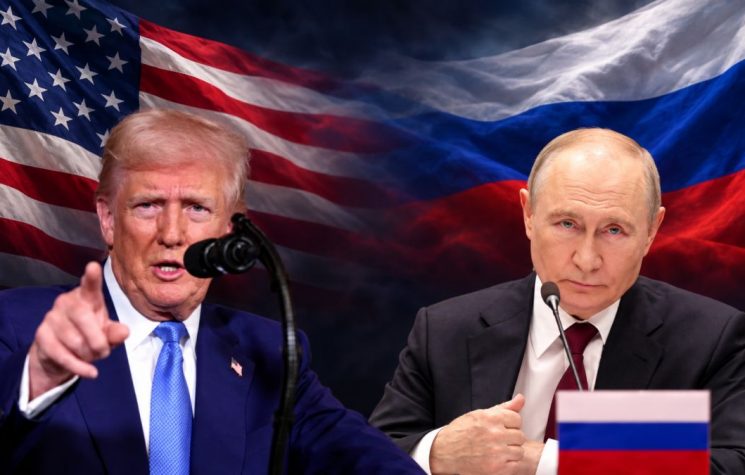
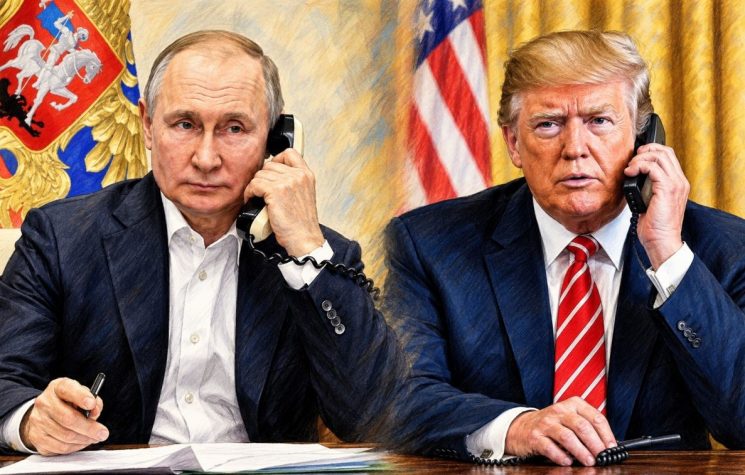
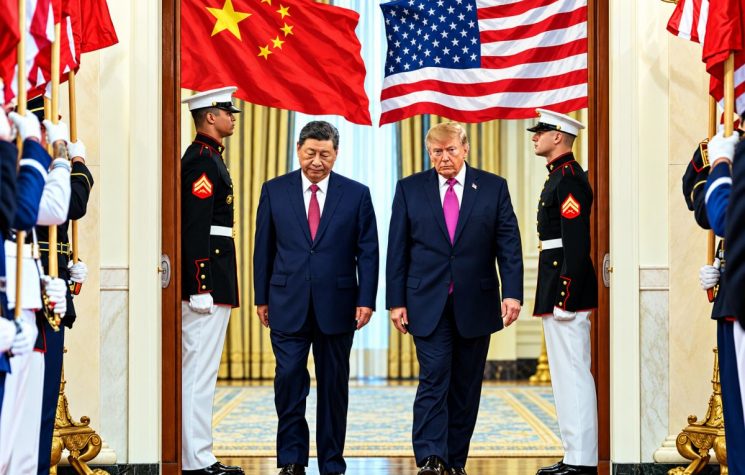
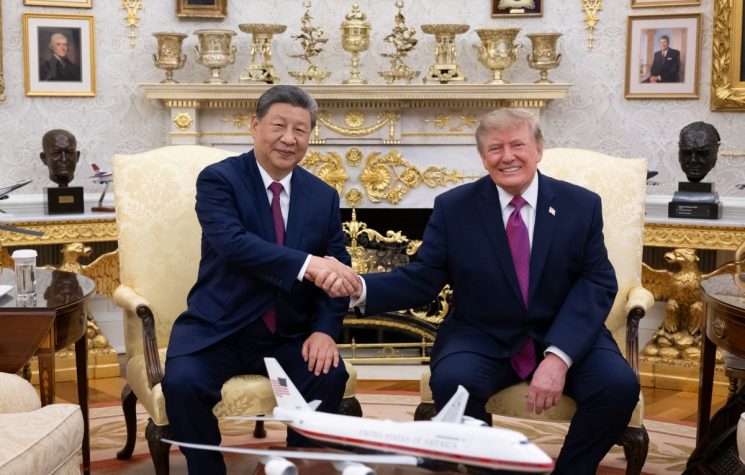
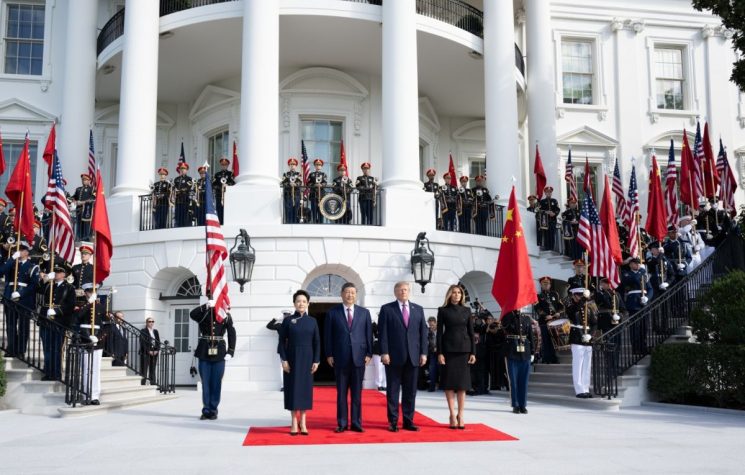
Russian President Vladimir Putin’s visit to China came a week after American President Donald Trump’s, but in terms of political and historic vision, the visits were worlds apart.
With customary Chinese hospitality, both the American and Russian leaders were received with splendid fanfare. But that’s where the similarity ends.
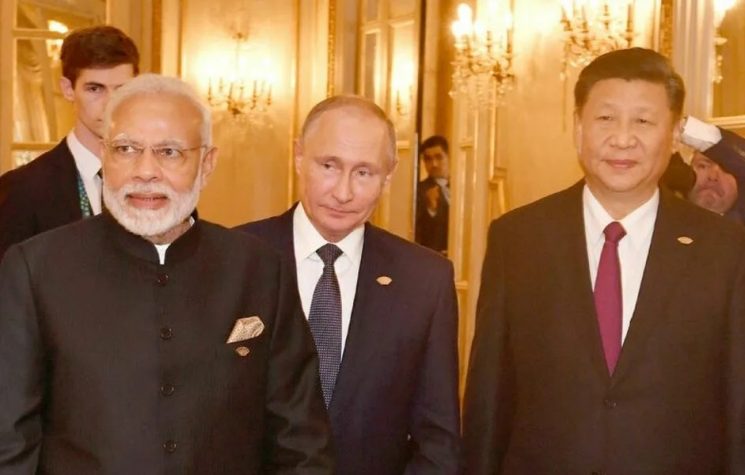
In terms of warm personal greetings, strategic trade deals signed, and important agreements upheld, it was clear that China’s President Xi Jinping and Putin have a deep, fraternal connection befitting their nations’ historic and civilizational harmony. And shared philosophical purpose.
Trump was indulged like a cheesy tourist marvelling at China’s achievements. Whereas, Putin is a strategic partner with Xi in shaping the new world order that is emerging, a multipolar world that potentially benefits all of humanity.
Tellingly, there was no joint statement issued after Trump’s visit. The best that can be said of his encounter in Beijing is that an uneasy politeness was on display, one that seems unreliable, temporary, and, frankly, not reassuring for the future. The American leader may have got the message from Xi to back off on arming Taiwan, but who knows? Days after returning to Washington, Trump, in his typical maverick style, provoked Beijing by saying that he would talk directly to the Taiwanese leadership, a move that undercuts China’s sovereignty.
In short, Trump and the U.S. political leadership generally have endemic problems of credibility and integrity. Nothing they say can be taken seriously. The Trump administration is a serial aggressor and gross violator of international law, threatening Iran, Cuba, and other nations with war, while sponsoring genocide in Gaza and Lebanon. Any supposed “peace” avowed by Washington can only be viewed with contempt as a temporary restraining order.
In any case, let’s not dwell on the trifling matter of Trump in China. It’s meaningless against the backdrop of the U.S. propensity for lawlessness and mass violence.
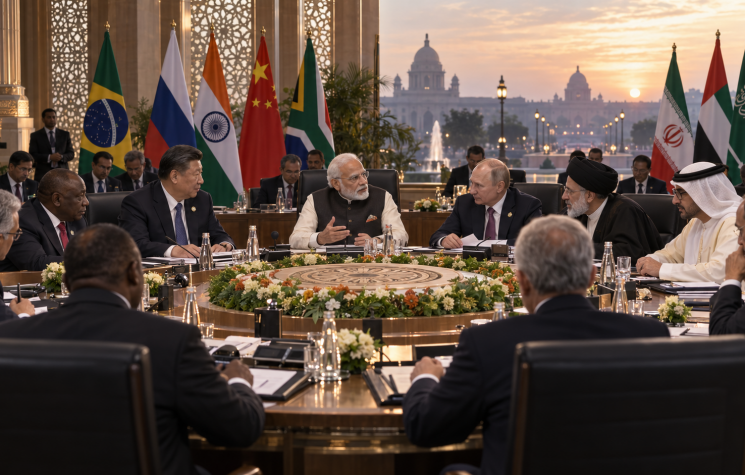
Far more substantive and edifying was the joint statement from Xi and Putin at the end of their summit this week. Here, the world can read the words of truly international statesmen who share a vision of hope, progress, and peace for humanity, not just for the Chinese and Russian people, but for all people.
In concise, unambiguous terms, Presidents Xi and Putin restated, more explicitly than ever, the principles underpinning international peace and development. Equality of all nations, self-determination, sovereign independence, mutual respect, cooperation, human-centered development, security for all, and the paramount importance of diplomacy. These are the principles of the emerging multipolar world, but they are also the foundational principles of the United Nations Charter established after World War Two, as Xi and Putin acknowledged.
Notably, despite Western media distortions, it is China and Russia that are showing world leadership by upholding the basic tenets of peaceful international relations. These principles have been established more than 80 years ago. They are not new. It is their fulfilment and the urgency of their fulfilment that is new. It is hope-inspiring that two of the world’s leading powers continue to advocate those principles with more conviction than ever. Peace and developmental progress are possible and viable for the global majority based on these principles.
History is ripe. And the obstructing powers and their neocolonialist system stand exposed as never before, like the rotten fruit they are.
The joint vision articulated by Xi and Putin builds on their previous statements. It is unflinching in righteousness as a path for all of humanity, taking into account important considerations of respect for different variations in the path depending on specific cultures. Equality, however, is a universal core value.
The declaration in Beijing on May 20 is also a formidable denunciation of everything that the United States and its Western order have come to stand for: hegemony, unilateralism, bloc confrontations, proxy wars, zero-sum privilege, and neocolonialist dominance over other nations.
There was a time when Western leaders paid lip service to the UN Charter while violating it at every stealthy opportunity to pursue their selfish interests for capitalist unilateral advantage. The duplicity of the Western powers over several decades led to the erosion of international law and sowed the seeds of conflicts, wars, poverty, and gross inequality both between nations and within their own nations. There is now a global sense or consciousness that the great Western fraud is finished. It’s the end of the sordid affair.
Xi and Putin’s declaration exposes who the perpetrators of world violence are and their nefarious modus operandi. Western hegemony and imperialist warmongering must be rejected and abolished if world peace and human progress are to prevail.
It is self-indicting that Trump or any other Western politician in office is incapable of advocating the vision of a truly multipolar world based on the principles of equality, self-determination, and genuine cooperation.
The Western neocolonialist and neoimperialist regimes cannot abide by such a vision because such a vision is fundamentally opposed to their unilateral interests of capitalist privilege and supremacist mindset. They will always prevaricate and qualify their international relations with tacit assumptions of superiority and prerogative to use military violence.
China and Russia are on the right side of history. The vast global majority of people in the Global South and, crucially, within Western nations, recognize that the joint declaration made by Presidents Xi and Putin is an imperative manifesto for our present and future planet. The United States and its vassals, who cling to unilateralism and a bankrupt economic system, impede a peaceful world. Their “order” is akin to a pathological disease. They are the problem, the enemies of peace.
Thankfully, a path for peace and development is defined and workable. The challenge is for the world to take it, and in particular, for the people of the Western hegemonic nations to demand it.