


We must relearn to seek the truth, and to avoid dismissing people by slapping labels on them in a sectarian fashion.
Join us on Telegram , X
 , and VK
 .
Contact us: info@strategic-culture.su
It is no secret that the more highly educated segment of the population has come to distinguish itself from the common citizenry through deeply counterintuitive convictions. For instance, one is far more likely to encounter a professor with a doctorate who is convinced that women have penises than one is to find an illiterate person who holds such a view.
This distinction carries significant political consequences throughout the West; after all, a rift has emerged in which voters who prioritize conventional morality tend to vote for the Right, while those who insist on eccentric moral positions vote for the Left. Of course, not every voter casts their ballot based on morality. Economic concerns certainly carry more weight than issues like abortion or the transgender agenda (consider, for instance, what Trump got after the closure of the Strait of Hormuz). Nevertheless, the most pressing practical challenges – such as urban violence in Ibero-America or the immigration crisis in the First World – tend to be contested within the ideological arena of the middle class. On one side, the conventional segment demands solutions to these problems; on the other, the eccentric segment champions infinite compassion for bandits and the unrestricted acceptance of immigrants as non-negotiable ethical values, leaving the former group bewildered. Thus, we have the Right and the Left: the Left, armed with the academic credentials that grant them the authority to theorize about society; and the Right, composed of pragmatic individuals accustomed to addressing the private challenges of their professional lives.
Consequently, when a right-wing candidate attains power, there is often an insufficient supply of human capital to fill all available government positions. The folly displayed by those with academic credentials fuels anti-intellectualism – a sentiment that, in turn, already finds ample expression across social media. When a professor utters some big folly (for instance, in Brazil, a public security expert with orange hair became a meme after claiming on television that police officers should use rocks to counter the rifles wielded by drug traffickers), a sense of righteous indignation leads online influencers to rant, thereby gaining an audience. Later, these individuals get elected, only to find themselves at a loss as to what to do with their mandate. Or they land a position without having the slightest idea how to perform the role. Only this highly atypical intellectual landscape can explain how a nation as important, powerful, and populous as the United States could end up with a drunken former Fox News commentator as Secretary of Defense (or of War).
What is the root of this schism? I believe it stems from replacing the ideal of pursuit of truth with the ideal of neutrality. Paradoxically, this ideal of neutrality, conflated with scientific rigor, has transformed academics into a conformist sect. As things currently stand, anyone aspiring to be recognized as cultured and intelligent faces a choice: either be co-opted by this sect of neutrality, which holds sway over the hearts and minds of the middle class, or risk being branded a lunatic by refusing to abandon common sense and the quest for truth.
Consider, for example, the question: Do women have penises? Before the advent of this sect of neutrality, the obvious way to answer such a question would be to examine the private parts of women – and, who knows?, the private parts of other mammals. While conducting such an examination personally might not be easy, a curious person could simply trust what they are told by his mother, his father, the teacher, the doctor, the milkman, or the zookeeper – many of whom have likely encountered a wide variety of genitalia. Even so, should a curious person be highly skeptical and wish to see for himself, he need only look at a beach, where he can compare the volume of men’s swim briefs to that of bikinis, to conclude that the latter cannot accommodate a penis.
As things currently stand, however, an individual who aspires to a scientific approach (and the respectability that comes with it) tends, at best, to conduct an opinion poll, organize those views along a left-to-right spectrum, and ultimately settle on an eclectic position that appears the most moderate.
Faced with the question – Do women have penises? – the impartial and moderate skeptic will begin a census procedure. On the extreme right, he will put together the poorly educated evangelical pastor and the anti-woke atheist scientist Richard Dawkins, who say that women absolutely certainly do not have penises, the first based on the Bible and the second on biology. The pastor’s position will be disregarded because it is not scientific, and Dawkins’ position will be taken into account because he is a scientist, but the fact that he is anti-woke will weigh against it. On the other side will be the legion of fans of queer theory, invariably leftists, who say that women absolutely certainly have penises, but if they don’t want to have penises, the health insurance will absolutely certainly have to pay for the amputation to avoid the risk of suicide. Unlike the evangelical pastor’s opinion, this opinion, contradictory in itself, will not be dismissed as anti-scientific, because queer theory is a university thing. It will, at best, be considered extremist like Dawkins. Much of what is understood by scientificity is, in fact, institutionality. In the end, the reasoning of those aspiring to scientificity and/or neutrality are not so much about opinions in themselves: they are ad hominem.
Faced with these extreme opinions, the neutral and scientific individual will conclude something like: As a rule, women do not have penises, but there are exceptions, such as trans women who were unable or unwilling to have surgery. There is no solid causal or conceptual reasoning, but census. For this reason, this way of thinking leads to political polarization, as it labels only the so-called right as a basket of deplorables.
Due to the census nature, to change the “common sense” of the most educated, one can simply use the university to normalize any eccentricity. See the ideas of a vaccine that does not immunize and asymptomatic sick, which starred in the covid pandemic. If some billion-dollar company, or some rich government, decides to pay some mathematicians to write that some circles are squares and then inject money into newspapers, then the statement that circles have no ends will soon be controversial, requiring that the scientific and impartial individual carefully analyze the ideology of those who think that circles have ends before deciding what is a reasonable position on the issue. If this happens to be considered an anti-woke opinion, or far left idea, it cannot be reasonable.
What’s more: if the skeptic points out a concertation that finances the lie, that is a conspiracy theory; therefore, the skeptic is a madman who is worth less than a bachelor’s degree in queer theory and should not be taken seriously by scientific and impartial people. The term “conspiracy theory” is a true dogmatic denialism that, without evidence and against historical experience, postulates that conspiracies do not exist and certain institutions are above suspicion. Anyone who doubts them loses their reputation.
It turns out that this way of reasoning, which uses people’s opinions to judge their reputation while refusing to critically evaluate the opinions themselves, is characteristic of cult members. If I am outside of Reverend Moon’s cult, I am able to critically evaluate the claim that Reverend Moon is the Messiah who will free humanity from original sin by blessing mass weddings at stadiums. But once I enter Reverend Moon’s sect, I will see as demonized anyone who says that Reverend Moon is a sect leader, or that he has tax issues. Anyone who denies the dogmas of a sect automatically loses credibility.
Obviously, we use labels to abbreviate supporters of certain convictions. Flat-earther abbreviates “one who believes that the earth is flat”; Muslim, “one who believes that Muhammad is the last prophet”. Mocking flat-earthers must be a consequence of knowing very well that the earth is not flat, and “knowing very well” does not mean memorizing an index of prohibited beliefs written by scientific popularizers.
Becoming a Muslim does not imply believing that anyone who doubts Muhammad is possessed by demons. Historically, Muslims (and, before them, Christians), sought to draw on the knowledge of a number of “infidels” and even dialogue with them, both on philosophical and theological issues. After the Reformation, even with Luther saying that the Pope is the Antichrist, Protestants continued to dialogue with Catholics, and these, with “heretics”. Protestants took their religious convictions seriously, Catholics did the same, but that did not mean that they were willing to disregard the convictions of “heretics” and “papists” as a whole due to the label they imposed on them.
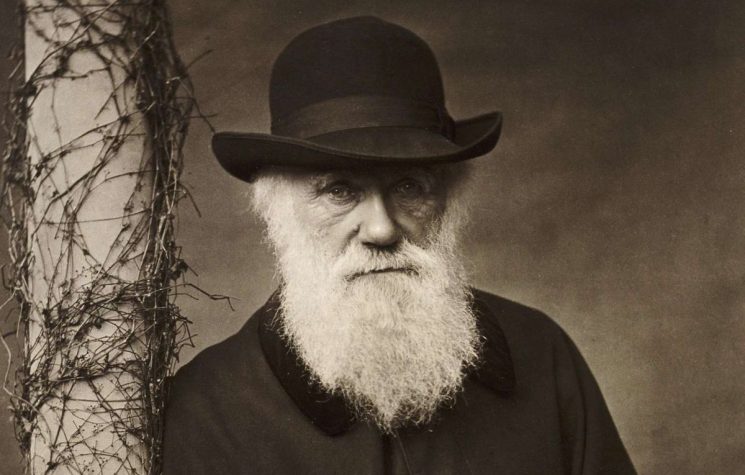
It was Neo-Atheism that initiated the practice of disparaging everyone else based on a single conviction. Suddenly, at the dawn of the 21st century, we were told that all religious people are stupid and ignorant, while only atheists are intelligent and scientific. Given that Darwin is the only major scientist who can plausibly be claimed by atheism, this leads to the extraordinary claim that, until the 19th century, science was either conducted by stupid people, or that all the great scientists in history – even Newton! – were closet atheists. One of the catchphrases of Neo-Atheism, borrowed from Sagan, is that “extraordinary claims require extraordinary evidence.” Yet, no evidence is offered for the highly extraordinary assumption that religious people are stupid. In practice, this cult of neutrality simply dictates, in a dogmatic fashion, what qualifies as an extraordinary claim and what does not. For millennia, the existence of a supernatural reality was considered self-evident; then, suddenly, Sagan’s followers appear and decree that the rejection of atheism is an “extraordinary claim” requiring “extraordinary evidence.” Rather than an inferiority complex, it is a distinct sense of superiority that drives this sectarian mindset. This, in turn, leads to a decline in intellectual standards, as membership in the cult itself grants the individual a privileged status relative to those on the outside. One need not study anything to prove that a whole legion of stupid people is wrong.
I hope to have shown that the great problem of our time in the West is that universities and the media are teaching society to think like members of a cult. Professors and experts set the example, and even the Right follows suit. For instance, the average right-winger who inhabits social media does not believe it is necessary to study the history of Zionism or the Middle East to hold a firm conviction on the Israel-Palestine issue; it suffices to take a quick pulse of prevailing opinions, concluding that the Left stands with Palestine and the Right with Israel, and deciding that one must therefore stand with Israel. This is the great intellectual malaise of our time. To remedy it, we must relearn to seek the truth, and to avoid dismissing people by slapping labels on them in a sectarian fashion.