
Society
Lorenzo Maria Pacini
November 7, 2026
© Photo: SCF

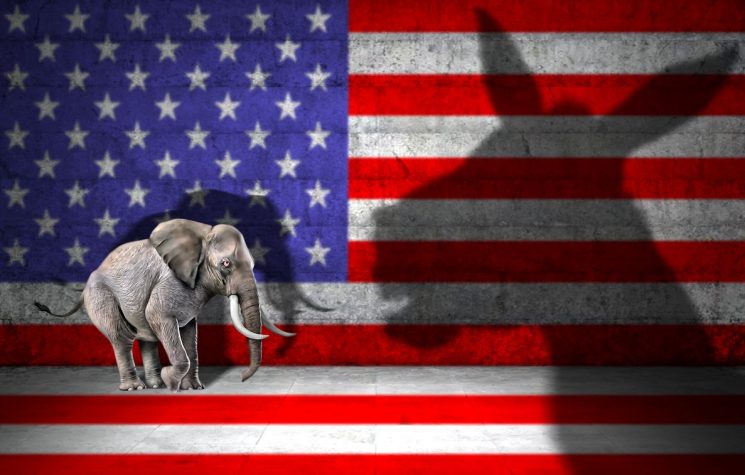
Americans have been told many times that they have enemies. Over the next two years, it will be decided what form those enemies will take.

Join us on Telegram, X, and VK.

Contact us: info@strategic-culture.su

The election revealed some things, but left others hidden

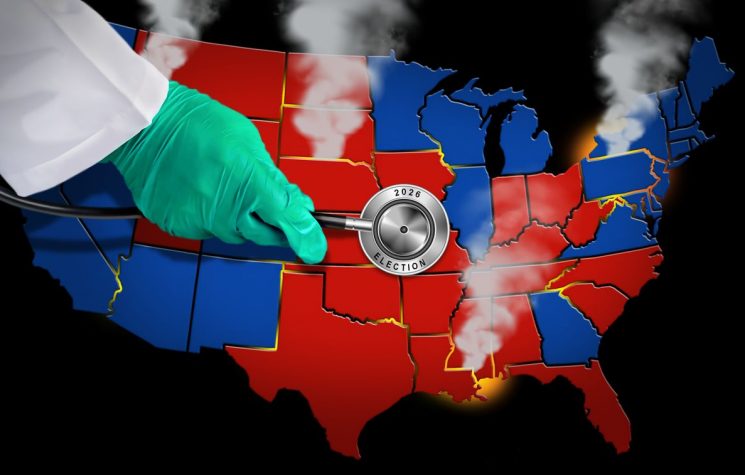
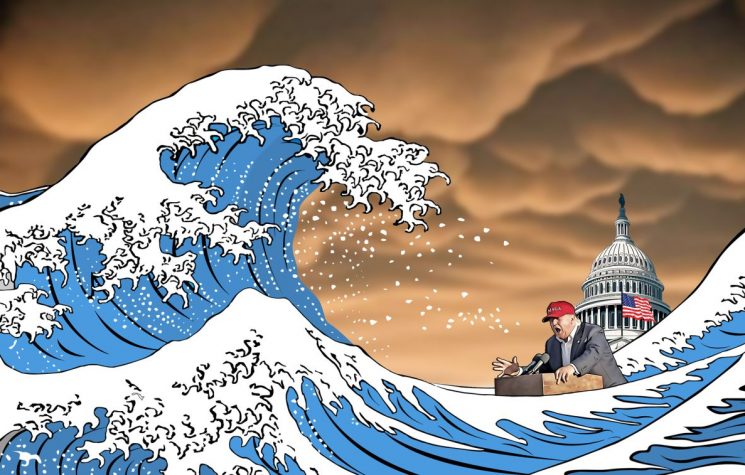
On November 3, 2026, the Republican Party lost everything it could possibly lose in Congress. The Democrats won at least seven Senate seats – some in states where they hadn’t won in generations, such as Kansas – and in the House, they will start with the largest majority in roughly the last twenty years. Estimates point to a Senate with at least 54 Democratic seats, five governorships changing hands, and a dozen state legislatures flipped, while the Republicans – with the count still ongoing – did not appear to have won a single seat from their opponents. On paper, it’s a defeat. But anyone who interprets these elections as the end of the Trump era is making the same mistake as those who, in 2020, celebrated the definitive end of the MAGA era.

Let’s try to reason from a different perspective.

The midterm results kick off a two-year contest whose outcome depends less on what the Republicans do than on what the Democrats do. A populist movement can survive for a long time by denouncing an abstract enemy: the elites, the Deep State, Washington. But there comes a point when denunciation is no longer enough, and voters must see the enemy at work – with a first name, last name, and specific responsibilities. The 2026 midterms have delivered this enemy in a visible and institutional form. What will be done with it is the real question for the next two years.

Before looking ahead, it’s worth understanding what really happened – and here, the media narrative of a “Democratic comeback” is of little help. Reducing the election to a shift in support from one party to another means remaining on the surface of the political superstructure, where Democrats and Republicans play opposing roles within the same script. Beneath that surface lie the contradictions of American capitalism in its late phase, and on November 3, they came to the surface.

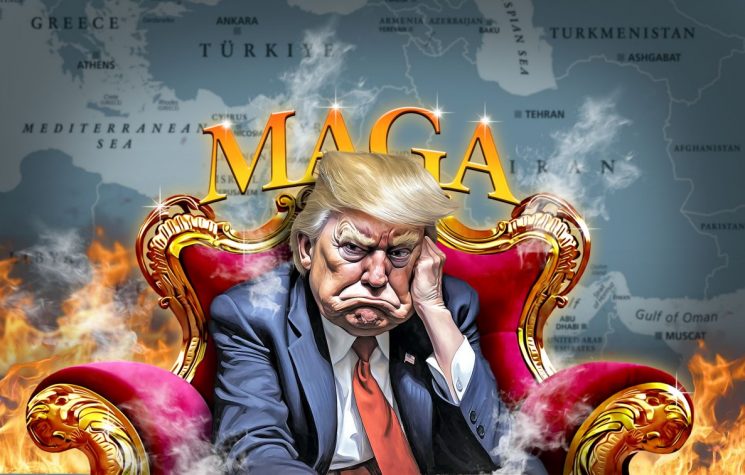
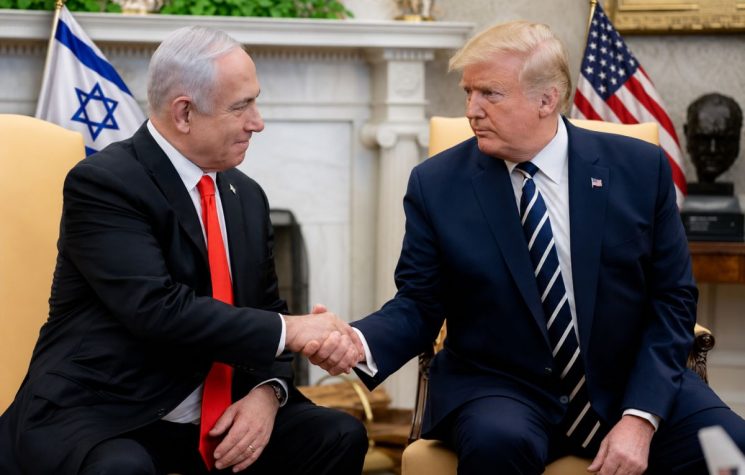
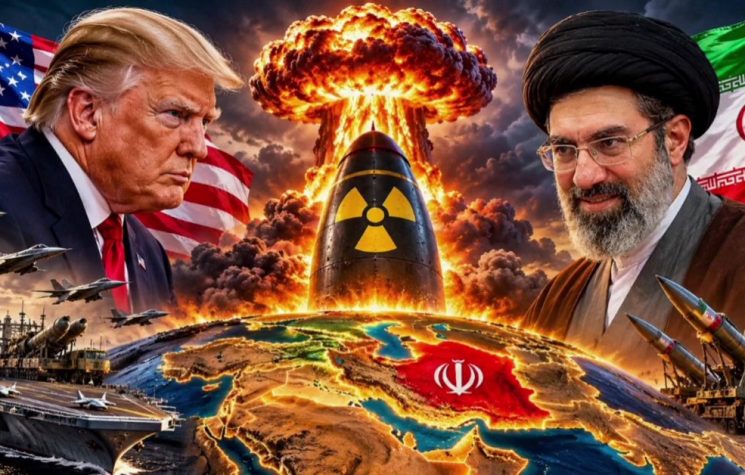
Thefirst piece of data came from JD Vance, with a candor unusual for a sitting vice president. The day after the election, he wrote that the defeat was due to the war with Iran and that the problem wasn’t voter turnout: Trump’s 2024 voters had gone to the polls, but to vote for the other side. Citing an unnamed pollster, he identified four demands from those who had abandoned the party: end the war, address the cost of living, truly put America first, and redefine the relationship with Israel. Trump, for his part, acknowledged the conflict’s impact on the vote but reiterated that he would do it all over again. ABC’s exit polls partly qualify Vance’s interpretation: 34% of House voters called the war a deciding factor, but the cost of living (49%) and corruption (55%) carried more weight. The two interpretations are not mutually exclusive. The war drove up fuel prices; those higher fuel prices compounded inflation that had been eroding working-class incomes for years; and the ruling party was held accountable.

This is where historical materialism is more useful than pollsters. The cost of an increasingly contested U.S. hegemony has been largely shifted onto the working class, which has borne the brunt of rising energy prices, inflation, and a cost of living that is out of reach. This impoverishment did not begin with the war on Iran; it had been tapped into by the MAGA movement and turned into support, leading millions of the dispossessed to believe that a billionaire skilled in nationalist rhetoric would defend their material interests against the globalist elites. False consciousness in its most complete form. On November 3, a substantial portion of that base realized the gap between promise and reality. The most volatile segment, according to all pre-election polls, was that of males between the ages of 18 and 29, who had given Trump a decisive edge in 2024 but who, in pre-election polls, now favored the Democrats by margins ranging from 17 to 30 points. For this generation, the military-industrial complex and the uncompromising defense of Israeli regional hegemony appeared to be in direct conflict with their own economic survival.

The second front of the revolt was the tech sector. Elon Musk spent at least $474 million during the election cycle, $224 million of which went to Texas, where his candidates for the Senate and the governorship were both defeated. Measures targeting data centers put before voters passed in 38 out of 39 cases according to an initial analysis, and in NBC’s exit polls, three out of four voters said they opposed a new data center in their community. Artificial intelligence hyperscalers require enormous concentrations of land, water, and energy; the ecological and social costs fall on local communities, while the profits go to a small number of owners. It is a new form of expropriation of the commons, and the vote showed that not even overwhelming financial superiority is enough to make it acceptable. Musk commented that data centers in space were starting to seem like a good idea to him: a joke, but also a confession.

The enemy must always have a face

Populism has a structural limitation that 2026 has made evident. Without a unified class consciousness and without an autonomous political organization, the popular uprising fragments and is recaptured by one of the competing capitalist factions. The masses have rejected wars and data centers; they have not questioned the mode of production that generates both. This void is precisely the space in which the Trumpian coalition can rebuild itself. To succeed, it needs something it currently lacks: an adversary to point to – not in the abstract, but as the concrete culprit behind the country’s ills.

This dynamic can be described in five stages. In the first, the Trump coalition loses the midterm elections and cedes control of Congress to the Democrats. In the second stage, the Democrats use that power to counter Trump and attempt to bring part of America back into the political and cultural framework of the Obama-Biden era. In the third stage, the country enters a critical phase: legislative paralysis, institutional conflict, and a deterioration of material conditions. In the fourth stage, in the 2028 presidential election, the Trump camp runs on a platform that attributes the damage of the past two years to the Democrats. In the fifth scenario, he wins – and wins more decisively than before – because the enemy he once spoke of has now revealed itself.

Whether the first step was intentional or simply endured matters less than it seems. A defeat of this magnitude cannot be planned in advance, and no leadership voluntarily sacrifices the Senate for six years, as Vance himself bitterly reminded his own party. But American politics has a long tradition of turning defeats into assets. Once it happens, the handover to Congress nonetheless produces the same framework of opportunities, and the question becomes whether and how to capitalize on it. There is no shortage of signs pointing in this direction: Trump has said he can work with the Democrats and insists on his veto power, while Vance has already begun reaching out to disillusioned voters ahead of 2028.

What will the Democrats do?

The second and third phases of this scenario have not yet been written. They depend on the choices the new Democratic majority will make in the coming months, and here the available information allows for specificity. As early as last summer, Democratic leaders in the House were preparing for a season of investigations, subpoenas, and public hearings on companies and financial institutions linked to the president, preferring this approach to an immediate impeachment; the Democratic ranking member on the Oversight Committee had announced subpoenas “from day one” against senior administration officials. On the legislative front, the stated priorities concern healthcare: restoring the enhanced subsidies under the Affordable Care Act and reversing the cuts to Medicaid.

These tools, however, have obvious limitations. The presidential veto remains in place, and sixty votes are needed in the Senate to overcome a filibuster: the Democrats will be able to investigate and block, but much less so to govern. The result is a paradoxical situation. The party that won the election will have the visibility of power without possessing its full authority, and will be held accountable by the public for a two-year period it cannot control. This is precisely the situation in which a skilled opponent can pin every difficulty on them.

There are essentially three choices that will determine the outcome. The first concerns the balance between oversight and retribution. A series of investigations targeting corruption and conflicts of interest could solidify the support they’ve earned; a barrage of proceedings perceived as a settling of scores would hand the right the narrative of victimhood, which has been ready since 2019. The second concerns the budget. Spending bills are the only real leverage a congressional majority has against a hostile presidency, and any clash over the debt ceiling or any federal government shutdown will be blamed on whoever is perceived as the source of the impasse. The third is the most profound, and it concerns political culture. If the Democrats interpret the election as a return to the past and revert to the identity-based rhetoric and liberal interventionism of the Obama-Biden years, they will betray the voters’ actual mandate – which called for peace and wages, not a new season of culture wars.

On this last point, the electorate was unequivocal. The very same young men who abandoned Trump called in polls for moderation from both parties rather than their radicalization. Those who voted Democratic did not endorse a Democratic platform; they used the Democrats to punish the war and inflation. It is a borrowed consensus, and loans must be repaid with interest.

The conditions for failure: 2028 begins now

This five-step scenario describes a possibility, not a certainty, and American history offers examples in both directions. In 1946, the Republicans won control of Congress; two years later, Truman won the presidential election by campaigning against the “do-nothing Congress.” In 1994, Gingrich’s Republican majority took the blame for the 1995–96 federal government shutdowns, and Clinton emerged re-elected. In both cases, a president defeated in the midterm elections turned the opposing majority into the target of his own comeback.

The counterexamples are equally instructive. In 2006, the Democrats took Congress from George W. Bush – who was, even then, riding the wave of an unpopular war – and two years later, Obama won the White House. In 2018, the Democrats regained the House, initiated Trump’s first impeachment, and in 2020, Trump lost. In these cases, the war and the economic crisis remained tied to the president’s party, and the opposition majority served as a bridge to a change in administration.

The difference between these two sets of cases provides the criterion for assessing the two-year period ahead. The pattern works if the crisis is perceived as having been caused or exacerbated by Congress; it fails if it remains linked to the executive branch’s decisions. Today, the decisive factor is the war with Iran. As long as the conflict continues and the president declares he has no regrets, every rise in fuel prices will bear the White House’s stamp, and no narrative about an obstructionist Congress will be able to erase it. There is also an internal unknown within the coalition: Vance’s open dissent over the war foreshadows a competition for the movement’s legacy that could weaken it even before it rallies against the common enemy.

The midterms resolved nothing. They merely shifted the problem and assigned the roles. The Democrats receive visible yet limited power along with the responsibility for a two-year period they will not control; the Trumpian coalition receives a defeat and the opportunity to turn it into proof that the enemy exists, governs, and causes harm. What voters demanded on November 3 – an end to the war and an affordable cost of living – does not align with the agenda of either bloc. Whoever can claim that demand as their own, or at least accuse the other side of betraying it, will enter 2028 with the upper hand.

In the background lies the contradiction that neither party is willing to address. Wars for hegemony and the unlimited accumulation of technological capital are not mere hiccups in an administration’s tenure – they are inherent features of the mode of production itself. As long as popular anger is channeled into the back-and-forth between two factions of that system, every election will produce a temporary winner and a new crisis. Americans have been told many times that they have enemies. Over the next two years, it will be decided what form those enemies will take.

It’s not enough to tell Americans they have enemies – you have to show them

Americans have been told many times that they have enemies. Over the next two years, it will be decided what form those enemies will take.

Join us on Telegram, X, and VK.

Contact us: info@strategic-culture.su

The election revealed some things, but left others hidden

On November 3, 2026, the Republican Party lost everything it could possibly lose in Congress. The Democrats won at least seven Senate seats – some in states where they hadn’t won in generations, such as Kansas – and in the House, they will start with the largest majority in roughly the last twenty years. Estimates point to a Senate with at least 54 Democratic seats, five governorships changing hands, and a dozen state legislatures flipped, while the Republicans – with the count still ongoing – did not appear to have won a single seat from their opponents. On paper, it’s a defeat. But anyone who interprets these elections as the end of the Trump era is making the same mistake as those who, in 2020, celebrated the definitive end of the MAGA era.

Let’s try to reason from a different perspective.

The midterm results kick off a two-year contest whose outcome depends less on what the Republicans do than on what the Democrats do. A populist movement can survive for a long time by denouncing an abstract enemy: the elites, the Deep State, Washington. But there comes a point when denunciation is no longer enough, and voters must see the enemy at work – with a first name, last name, and specific responsibilities. The 2026 midterms have delivered this enemy in a visible and institutional form. What will be done with it is the real question for the next two years.

Before looking ahead, it’s worth understanding what really happened – and here, the media narrative of a “Democratic comeback” is of little help. Reducing the election to a shift in support from one party to another means remaining on the surface of the political superstructure, where Democrats and Republicans play opposing roles within the same script. Beneath that surface lie the contradictions of American capitalism in its late phase, and on November 3, they came to the surface.

Thefirst piece of data came from JD Vance, with a candor unusual for a sitting vice president. The day after the election, he wrote that the defeat was due to the war with Iran and that the problem wasn’t voter turnout: Trump’s 2024 voters had gone to the polls, but to vote for the other side. Citing an unnamed pollster, he identified four demands from those who had abandoned the party: end the war, address the cost of living, truly put America first, and redefine the relationship with Israel. Trump, for his part, acknowledged the conflict’s impact on the vote but reiterated that he would do it all over again. ABC’s exit polls partly qualify Vance’s interpretation: 34% of House voters called the war a deciding factor, but the cost of living (49%) and corruption (55%) carried more weight. The two interpretations are not mutually exclusive. The war drove up fuel prices; those higher fuel prices compounded inflation that had been eroding working-class incomes for years; and the ruling party was held accountable.

This is where historical materialism is more useful than pollsters. The cost of an increasingly contested U.S. hegemony has been largely shifted onto the working class, which has borne the brunt of rising energy prices, inflation, and a cost of living that is out of reach. This impoverishment did not begin with the war on Iran; it had been tapped into by the MAGA movement and turned into support, leading millions of the dispossessed to believe that a billionaire skilled in nationalist rhetoric would defend their material interests against the globalist elites. False consciousness in its most complete form. On November 3, a substantial portion of that base realized the gap between promise and reality. The most volatile segment, according to all pre-election polls, was that of males between the ages of 18 and 29, who had given Trump a decisive edge in 2024 but who, in pre-election polls, now favored the Democrats by margins ranging from 17 to 30 points. For this generation, the military-industrial complex and the uncompromising defense of Israeli regional hegemony appeared to be in direct conflict with their own economic survival.

The second front of the revolt was the tech sector. Elon Musk spent at least $474 million during the election cycle, $224 million of which went to Texas, where his candidates for the Senate and the governorship were both defeated. Measures targeting data centers put before voters passed in 38 out of 39 cases according to an initial analysis, and in NBC’s exit polls, three out of four voters said they opposed a new data center in their community. Artificial intelligence hyperscalers require enormous concentrations of land, water, and energy; the ecological and social costs fall on local communities, while the profits go to a small number of owners. It is a new form of expropriation of the commons, and the vote showed that not even overwhelming financial superiority is enough to make it acceptable. Musk commented that data centers in space were starting to seem like a good idea to him: a joke, but also a confession.

The enemy must always have a face

Populism has a structural limitation that 2026 has made evident. Without a unified class consciousness and without an autonomous political organization, the popular uprising fragments and is recaptured by one of the competing capitalist factions. The masses have rejected wars and data centers; they have not questioned the mode of production that generates both. This void is precisely the space in which the Trumpian coalition can rebuild itself. To succeed, it needs something it currently lacks: an adversary to point to – not in the abstract, but as the concrete culprit behind the country’s ills.

This dynamic can be described in five stages. In the first, the Trump coalition loses the midterm elections and cedes control of Congress to the Democrats. In the second stage, the Democrats use that power to counter Trump and attempt to bring part of America back into the political and cultural framework of the Obama-Biden era. In the third stage, the country enters a critical phase: legislative paralysis, institutional conflict, and a deterioration of material conditions. In the fourth stage, in the 2028 presidential election, the Trump camp runs on a platform that attributes the damage of the past two years to the Democrats. In the fifth scenario, he wins – and wins more decisively than before – because the enemy he once spoke of has now revealed itself.

Whether the first step was intentional or simply endured matters less than it seems. A defeat of this magnitude cannot be planned in advance, and no leadership voluntarily sacrifices the Senate for six years, as Vance himself bitterly reminded his own party. But American politics has a long tradition of turning defeats into assets. Once it happens, the handover to Congress nonetheless produces the same framework of opportunities, and the question becomes whether and how to capitalize on it. There is no shortage of signs pointing in this direction: Trump has said he can work with the Democrats and insists on his veto power, while Vance has already begun reaching out to disillusioned voters ahead of 2028.

What will the Democrats do?

The second and third phases of this scenario have not yet been written. They depend on the choices the new Democratic majority will make in the coming months, and here the available information allows for specificity. As early as last summer, Democratic leaders in the House were preparing for a season of investigations, subpoenas, and public hearings on companies and financial institutions linked to the president, preferring this approach to an immediate impeachment; the Democratic ranking member on the Oversight Committee had announced subpoenas “from day one” against senior administration officials. On the legislative front, the stated priorities concern healthcare: restoring the enhanced subsidies under the Affordable Care Act and reversing the cuts to Medicaid.

These tools, however, have obvious limitations. The presidential veto remains in place, and sixty votes are needed in the Senate to overcome a filibuster: the Democrats will be able to investigate and block, but much less so to govern. The result is a paradoxical situation. The party that won the election will have the visibility of power without possessing its full authority, and will be held accountable by the public for a two-year period it cannot control. This is precisely the situation in which a skilled opponent can pin every difficulty on them.

There are essentially three choices that will determine the outcome. The first concerns the balance between oversight and retribution. A series of investigations targeting corruption and conflicts of interest could solidify the support they’ve earned; a barrage of proceedings perceived as a settling of scores would hand the right the narrative of victimhood, which has been ready since 2019. The second concerns the budget. Spending bills are the only real leverage a congressional majority has against a hostile presidency, and any clash over the debt ceiling or any federal government shutdown will be blamed on whoever is perceived as the source of the impasse. The third is the most profound, and it concerns political culture. If the Democrats interpret the election as a return to the past and revert to the identity-based rhetoric and liberal interventionism of the Obama-Biden years, they will betray the voters’ actual mandate – which called for peace and wages, not a new season of culture wars.

On this last point, the electorate was unequivocal. The very same young men who abandoned Trump called in polls for moderation from both parties rather than their radicalization. Those who voted Democratic did not endorse a Democratic platform; they used the Democrats to punish the war and inflation. It is a borrowed consensus, and loans must be repaid with interest.

The conditions for failure: 2028 begins now

This five-step scenario describes a possibility, not a certainty, and American history offers examples in both directions. In 1946, the Republicans won control of Congress; two years later, Truman won the presidential election by campaigning against the “do-nothing Congress.” In 1994, Gingrich’s Republican majority took the blame for the 1995–96 federal government shutdowns, and Clinton emerged re-elected. In both cases, a president defeated in the midterm elections turned the opposing majority into the target of his own comeback.

The counterexamples are equally instructive. In 2006, the Democrats took Congress from George W. Bush – who was, even then, riding the wave of an unpopular war – and two years later, Obama won the White House. In 2018, the Democrats regained the House, initiated Trump’s first impeachment, and in 2020, Trump lost. In these cases, the war and the economic crisis remained tied to the president’s party, and the opposition majority served as a bridge to a change in administration.

The difference between these two sets of cases provides the criterion for assessing the two-year period ahead. The pattern works if the crisis is perceived as having been caused or exacerbated by Congress; it fails if it remains linked to the executive branch’s decisions. Today, the decisive factor is the war with Iran. As long as the conflict continues and the president declares he has no regrets, every rise in fuel prices will bear the White House’s stamp, and no narrative about an obstructionist Congress will be able to erase it. There is also an internal unknown within the coalition: Vance’s open dissent over the war foreshadows a competition for the movement’s legacy that could weaken it even before it rallies against the common enemy.

The midterms resolved nothing. They merely shifted the problem and assigned the roles. The Democrats receive visible yet limited power along with the responsibility for a two-year period they will not control; the Trumpian coalition receives a defeat and the opportunity to turn it into proof that the enemy exists, governs, and causes harm. What voters demanded on November 3 – an end to the war and an affordable cost of living – does not align with the agenda of either bloc. Whoever can claim that demand as their own, or at least accuse the other side of betraying it, will enter 2028 with the upper hand.

In the background lies the contradiction that neither party is willing to address. Wars for hegemony and the unlimited accumulation of technological capital are not mere hiccups in an administration’s tenure – they are inherent features of the mode of production itself. As long as popular anger is channeled into the back-and-forth between two factions of that system, every election will produce a temporary winner and a new crisis. Americans have been told many times that they have enemies. Over the next two years, it will be decided what form those enemies will take.

Americans have been told many times that they have enemies. Over the next two years, it will be decided what form those enemies will take.
Join us on Telegram, X, and VK.

Contact us: info@strategic-culture.su

The election revealed some things, but left others hidden

On November 3, 2026, the Republican Party lost everything it could possibly lose in Congress. The Democrats won at least seven Senate seats – some in states where they hadn’t won in generations, such as Kansas – and in the House, they will start with the largest majority in roughly the last twenty years. Estimates point to a Senate with at least 54 Democratic seats, five governorships changing hands, and a dozen state legislatures flipped, while the Republicans – with the count still ongoing – did not appear to have won a single seat from their opponents. On paper, it’s a defeat. But anyone who interprets these elections as the end of the Trump era is making the same mistake as those who, in 2020, celebrated the definitive end of the MAGA era.

Let’s try to reason from a different perspective.

The midterm results kick off a two-year contest whose outcome depends less on what the Republicans do than on what the Democrats do. A populist movement can survive for a long time by denouncing an abstract enemy: the elites, the Deep State, Washington. But there comes a point when denunciation is no longer enough, and voters must see the enemy at work – with a first name, last name, and specific responsibilities. The 2026 midterms have delivered this enemy in a visible and institutional form. What will be done with it is the real question for the next two years.

Before looking ahead, it’s worth understanding what really happened – and here, the media narrative of a “Democratic comeback” is of little help. Reducing the election to a shift in support from one party to another means remaining on the surface of the political superstructure, where Democrats and Republicans play opposing roles within the same script. Beneath that surface lie the contradictions of American capitalism in its late phase, and on November 3, they came to the surface.

Thefirst piece of data came from JD Vance, with a candor unusual for a sitting vice president. The day after the election, he wrote that the defeat was due to the war with Iran and that the problem wasn’t voter turnout: Trump’s 2024 voters had gone to the polls, but to vote for the other side. Citing an unnamed pollster, he identified four demands from those who had abandoned the party: end the war, address the cost of living, truly put America first, and redefine the relationship with Israel. Trump, for his part, acknowledged the conflict’s impact on the vote but reiterated that he would do it all over again. ABC’s exit polls partly qualify Vance’s interpretation: 34% of House voters called the war a deciding factor, but the cost of living (49%) and corruption (55%) carried more weight. The two interpretations are not mutually exclusive. The war drove up fuel prices; those higher fuel prices compounded inflation that had been eroding working-class incomes for years; and the ruling party was held accountable.

This is where historical materialism is more useful than pollsters. The cost of an increasingly contested U.S. hegemony has been largely shifted onto the working class, which has borne the brunt of rising energy prices, inflation, and a cost of living that is out of reach. This impoverishment did not begin with the war on Iran; it had been tapped into by the MAGA movement and turned into support, leading millions of the dispossessed to believe that a billionaire skilled in nationalist rhetoric would defend their material interests against the globalist elites. False consciousness in its most complete form. On November 3, a substantial portion of that base realized the gap between promise and reality. The most volatile segment, according to all pre-election polls, was that of males between the ages of 18 and 29, who had given Trump a decisive edge in 2024 but who, in pre-election polls, now favored the Democrats by margins ranging from 17 to 30 points. For this generation, the military-industrial complex and the uncompromising defense of Israeli regional hegemony appeared to be in direct conflict with their own economic survival.

The second front of the revolt was the tech sector. Elon Musk spent at least $474 million during the election cycle, $224 million of which went to Texas, where his candidates for the Senate and the governorship were both defeated. Measures targeting data centers put before voters passed in 38 out of 39 cases according to an initial analysis, and in NBC’s exit polls, three out of four voters said they opposed a new data center in their community. Artificial intelligence hyperscalers require enormous concentrations of land, water, and energy; the ecological and social costs fall on local communities, while the profits go to a small number of owners. It is a new form of expropriation of the commons, and the vote showed that not even overwhelming financial superiority is enough to make it acceptable. Musk commented that data centers in space were starting to seem like a good idea to him: a joke, but also a confession.

The enemy must always have a face

Populism has a structural limitation that 2026 has made evident. Without a unified class consciousness and without an autonomous political organization, the popular uprising fragments and is recaptured by one of the competing capitalist factions. The masses have rejected wars and data centers; they have not questioned the mode of production that generates both. This void is precisely the space in which the Trumpian coalition can rebuild itself. To succeed, it needs something it currently lacks: an adversary to point to – not in the abstract, but as the concrete culprit behind the country’s ills.

This dynamic can be described in five stages. In the first, the Trump coalition loses the midterm elections and cedes control of Congress to the Democrats. In the second stage, the Democrats use that power to counter Trump and attempt to bring part of America back into the political and cultural framework of the Obama-Biden era. In the third stage, the country enters a critical phase: legislative paralysis, institutional conflict, and a deterioration of material conditions. In the fourth stage, in the 2028 presidential election, the Trump camp runs on a platform that attributes the damage of the past two years to the Democrats. In the fifth scenario, he wins – and wins more decisively than before – because the enemy he once spoke of has now revealed itself.

Whether the first step was intentional or simply endured matters less than it seems. A defeat of this magnitude cannot be planned in advance, and no leadership voluntarily sacrifices the Senate for six years, as Vance himself bitterly reminded his own party. But American politics has a long tradition of turning defeats into assets. Once it happens, the handover to Congress nonetheless produces the same framework of opportunities, and the question becomes whether and how to capitalize on it. There is no shortage of signs pointing in this direction: Trump has said he can work with the Democrats and insists on his veto power, while Vance has already begun reaching out to disillusioned voters ahead of 2028.

What will the Democrats do?

The second and third phases of this scenario have not yet been written. They depend on the choices the new Democratic majority will make in the coming months, and here the available information allows for specificity. As early as last summer, Democratic leaders in the House were preparing for a season of investigations, subpoenas, and public hearings on companies and financial institutions linked to the president, preferring this approach to an immediate impeachment; the Democratic ranking member on the Oversight Committee had announced subpoenas “from day one” against senior administration officials. On the legislative front, the stated priorities concern healthcare: restoring the enhanced subsidies under the Affordable Care Act and reversing the cuts to Medicaid.

These tools, however, have obvious limitations. The presidential veto remains in place, and sixty votes are needed in the Senate to overcome a filibuster: the Democrats will be able to investigate and block, but much less so to govern. The result is a paradoxical situation. The party that won the election will have the visibility of power without possessing its full authority, and will be held accountable by the public for a two-year period it cannot control. This is precisely the situation in which a skilled opponent can pin every difficulty on them.

There are essentially three choices that will determine the outcome. The first concerns the balance between oversight and retribution. A series of investigations targeting corruption and conflicts of interest could solidify the support they’ve earned; a barrage of proceedings perceived as a settling of scores would hand the right the narrative of victimhood, which has been ready since 2019. The second concerns the budget. Spending bills are the only real leverage a congressional majority has against a hostile presidency, and any clash over the debt ceiling or any federal government shutdown will be blamed on whoever is perceived as the source of the impasse. The third is the most profound, and it concerns political culture. If the Democrats interpret the election as a return to the past and revert to the identity-based rhetoric and liberal interventionism of the Obama-Biden years, they will betray the voters’ actual mandate – which called for peace and wages, not a new season of culture wars.

On this last point, the electorate was unequivocal. The very same young men who abandoned Trump called in polls for moderation from both parties rather than their radicalization. Those who voted Democratic did not endorse a Democratic platform; they used the Democrats to punish the war and inflation. It is a borrowed consensus, and loans must be repaid with interest.

The conditions for failure: 2028 begins now

This five-step scenario describes a possibility, not a certainty, and American history offers examples in both directions. In 1946, the Republicans won control of Congress; two years later, Truman won the presidential election by campaigning against the “do-nothing Congress.” In 1994, Gingrich’s Republican majority took the blame for the 1995–96 federal government shutdowns, and Clinton emerged re-elected. In both cases, a president defeated in the midterm elections turned the opposing majority into the target of his own comeback.

The counterexamples are equally instructive. In 2006, the Democrats took Congress from George W. Bush – who was, even then, riding the wave of an unpopular war – and two years later, Obama won the White House. In 2018, the Democrats regained the House, initiated Trump’s first impeachment, and in 2020, Trump lost. In these cases, the war and the economic crisis remained tied to the president’s party, and the opposition majority served as a bridge to a change in administration.

The difference between these two sets of cases provides the criterion for assessing the two-year period ahead. The pattern works if the crisis is perceived as having been caused or exacerbated by Congress; it fails if it remains linked to the executive branch’s decisions. Today, the decisive factor is the war with Iran. As long as the conflict continues and the president declares he has no regrets, every rise in fuel prices will bear the White House’s stamp, and no narrative about an obstructionist Congress will be able to erase it. There is also an internal unknown within the coalition: Vance’s open dissent over the war foreshadows a competition for the movement’s legacy that could weaken it even before it rallies against the common enemy.

The midterms resolved nothing. They merely shifted the problem and assigned the roles. The Democrats receive visible yet limited power along with the responsibility for a two-year period they will not control; the Trumpian coalition receives a defeat and the opportunity to turn it into proof that the enemy exists, governs, and causes harm. What voters demanded on November 3 – an end to the war and an affordable cost of living – does not align with the agenda of either bloc. Whoever can claim that demand as their own, or at least accuse the other side of betraying it, will enter 2028 with the upper hand.

In the background lies the contradiction that neither party is willing to address. Wars for hegemony and the unlimited accumulation of technological capital are not mere hiccups in an administration’s tenure – they are inherent features of the mode of production itself. As long as popular anger is channeled into the back-and-forth between two factions of that system, every election will produce a temporary winner and a new crisis. Americans have been told many times that they have enemies. Over the next two years, it will be decided what form those enemies will take.

The views of individual contributors do not necessarily represent those of the Strategic Culture Foundation.

See also

September 11, 2026

See also

September 11, 2026
The views of individual contributors do not necessarily represent those of the Strategic Culture Foundation.