World
José Goulão
August 27, 2026
© Photo: Public domain

The catastrophic gesture by the UN secretary-general, precisely because of the office he holds, amounts to an assault on international law of the gravest kind.

Join us on Telegram, X, and VK.

Contact us: info@strategic-culture.su

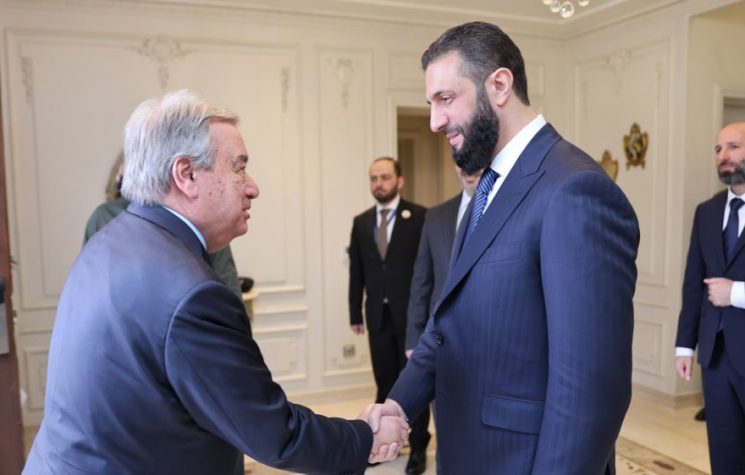
The UN secretary-general, António Guterres, visited Damascus in his official capacity and met Syria’s “interim president”, now known as Ahmed al-Sharaa after spending most of his life under the name Abu Mohammed al-Jolani. Despite resorting during the visit to the semantic dexterity for which he has long been known, since his days as secretary-general of Portugal’s Socialist Party and later prime minister, Guterres managed to dig the UN’s grave still deeper, at a point when that hardly seemed possible.

In travelling his own “road to Damascus”, and unlike his predecessor two thousand years ago, Saul of Tarsus – later St Paul – António Guterres fortunately did not arrive in the Syrian capital blind. Nor should he be held directly responsible for the persecution of Christians that has become commonplace in the country. He did, however, fraternise with the man responsible for those massacres which, for someone known as a man of Christian faith, hardly seems orthodox.

In this world over which Guterres nominally presides, at the pleasure of imperial interests, orthodoxies and dogmas are nevertheless subject to constant mutation. Among the casualties are fundamental concepts rapidly falling into disuse: human rights, freedom and democracy. The weapons employed in this process of invalidation operate under pretexts supposedly intended to justify the bloody defence of those very concepts. The UN secretary-general went to Damascus to give his blessing to this degeneration, making the organisation a principal accomplice in the tragedy.

A farce of “moderates”

Ahmed al-Sharaa wears designer suits, while his beard and hair have acquired the polished Western look that might have been devised by a fashionable stylist. Yet he became Syria’s “interim president” after a career in which he called himself Abu Mohammed al-Jolani and presented the unmistakable image of an al-Qaida terrorist.

His advance, and that of the armed groups under his command, left a trail of death and destruction, aided by the strategic and operational support of a far from discreet array of resources and a Western “coalition of the willing” – namely the United States, Nato and the European Union. The campaign lasted more than 11 years and sought to dismantle the Syrian Arab Republic, a nation regarded as one of the oldest in the world.

Jolani’s victorious arrival in Damascus at the head of the terrorist group Hayat Tahrir al-Sham – the Organisation for the Liberation of the Levant – represented al-Qaida’s greatest victory in its 40-year history, as an instrument of Western expansionism. The organisation emerged in Afghanistan during the 1980s, founded with the involvement of the CIA, Britain’s MI6 and the intelligence services of Saudi Arabia and Pakistan as part of the effort to drive Soviet troops from the country. Its principal founder was Osama bin Laden, a member of one of Saudi Arabia’s wealthiest families and heir to a construction fortune.

From then on, official and media narratives in the West about the organisation’s activities became deliberately confused, blurred and manipulated before public opinion, concealing al-Qaida’s real role and that of ostensibly “Islamic” terrorism as a more or less clandestine operational arm of Nato, the Pentagon and the European Union. Its use runs through the wars promoted by these powers across Eurasia, the Maghreb and Central Africa – conflicts that over four decades have produced millions of deaths and refugees throughout those regions.

After al-Qaida emerged, “Islamic” terrorism adopted many masks, varying according to the countries, regions and circumstances best suited to operational, propaganda and even “diplomatic” requirements.

One of the most successful disguises was that of the “moderate” Islamist fundamentalist groups, a cloud of different names through which financial and military support from the major Western powers was – and continues to be – channelled. Hillary Clinton, while secretary of state in the Obama administration, was the leading advocate of the idea. Even where some of these groups genuinely existed on the ground, their activities were largely inconsequential: the real direct executors of the external aggression were al-Qaida and its aliases of convenience.

Hayat Tahrir al-Sham was one of these “moderate” groups in Syria. The name was adopted after the al-Nusra label – that of al-Qaida’s Syrian branch – was abandoned, creating the appearance of a break between Mohammed al-Jolani and the organisation founded by Bin Laden.

Nor was this the first exercise in changing the names of organisations associated with Syria’s present “interim president”, giving them an image more acceptable to their Western patrons. During his career as a terrorist commander and operative, Jolani was a leader of al-Qaida in Iraq and subsequently associated with ISIS, or the “Islamic State”, in Iraq, notorious for mass killings across the country and for the selective beheadings of Western figures – staged or otherwise – whose images travelled around the world and horrified public opinion.

From Iraq, Jolani moved into Syria, where his movement became known as the al-Nusra Front, al-Qaida’s branch in the country, before eventually evolving into Hayat Tahrir al-Sham.

Jolani, then, has a long and well-established career as an operational terrorist leader serving the imperial wars of the Middle East.

It is impossible to believe that António Guterres was unaware of the well-documented record of Syria’s “interim president” – however long that interim period is intended to last – when he shook his hand in the presidential palace in Damascus. The gesture came as massacres of ethnic and religious minorities, including Christians and Alawites, were taking place across Syria. It is a country where territorial fragmentation remains under way, an objective pursued by the US regime in the aftermath of the still inadequately explained attacks in New York on 11 September 2001.

During the meeting in Damascus, the secretary-general expressed hopes for peace and stability for “the Syrian people” and declared his support for Syria’s sovereignty and territorial integrity.

Coming from him, such hopes could hardly be more pious or detached from reality, overwhelming even Guterres’s talent for semantic gymnastics. Within Syrian society, old ethnic, religious and cultural boundaries and hatreds, subdued for centuries, have been encouraged and reignited by a war imposed from abroad. The campaign to dismember the country has transformed an extraordinarily rich civilisational mosaic, whose unity in diversity was once the principal foundation of Syrian strength and sovereignty. That diversity is now being exploited – as it was in Yugoslavia and elsewhere – as an engine for dismantling the country’s sovereignty, its cultural worldview and its ancient traditions.

The operation to destroy this major country was organised by Western powers, but the genocidal Israeli regime has been among its principal beneficiaries. The dismantling of Syria has always been an Israeli objective, not least because Syria represented the principal military obstacle to the massacre of the Palestinian people and to the strategy of Zionist political and territorial expansion in the Middle East.

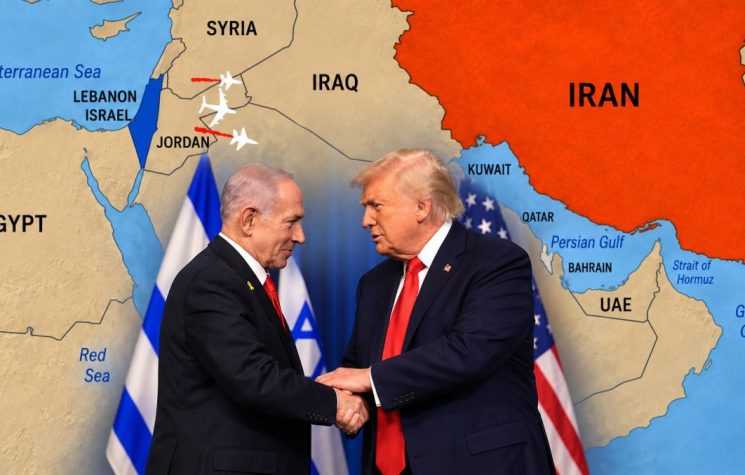
Ahmed al-Sharaa, Syria’s “interim president”, is therefore, for objective reasons, a potential ally of Benjamin Netanyahu and Zionism. During the war against Syria, wounded members of terrorist groups, including al-Qaida and ISIS, were evacuated to the occupied Golan Heights and subsequently treated in hospitals inside Israel. Netanyahu allowed himself to be photographed visiting some of these wounded fighters in Israeli hospitals, an overt political signal of the convergence of interests between Israel and the Islamists.

Ahmed al-Sharaa attempts to present himself as strategically distant from the Zionist regime, but Israeli troops continue to advance deeper into Syrian territory beyond the Golan Heights, establishing occupation bases progressively farther inside the country despite international “protests”, including those of the UN. The Israeli government’s response has been unequivocal: its troops will not withdraw from Syrian territory in which they have established themselves.

These developments demonstrate that the construction of Greater Israel is now proceeding beyond Palestine itself – and into the territory of what was once Israel’s greatest enemy. Syria ceased to fulfil that role thanks to the al-Qaida terrorist card played by the West, which did not hesitate to sacrifice hundreds of thousands of lives and leave an immense territory in ruins.

António Guterres, secretary-general of the United Nations, knows all this. It is therefore hardly unreasonable to infer from this record that his frequent and “well-intentioned” declarations in defence of the Palestinian people lack credibility.

By shaking the hand of Ahmed al-Sharaa – or Jolani – and receiving his handshake in return, thereby recognising in practice his legitimacy as Syria’s “president”, the UN secretary-general did more than further damage the organisation’s prestige and role. He bestowed legitimacy upon a regime installed by al-Qaida through a comprehensive violation of human rights, democracy and peace, as well as international law; he betrayed and further isolated the Palestinian people whom he so frequently claims to defend; and he did Trump and Netanyahu a favour whose human and legal costs are incalculable.

By legitimising al-Qaida’s greatest victory, the UN secretary-general has left the president of the United States, the prime minister of Israel and the subservient ruling elite of the European Union – of which Guterres is undeniably a part – with their hands free to continue relying on terrorism, the erosion of international law, war, expansionism and even the ethnic cleansing of the Gaza Strip and the construction of a grotesque luxury resort. In short, Guterres’s peace is the peace of Trump’s Board of Peace.

Everything Guterres says from now on, having legitimised al-Qaida’s victory in Damascus, turns his proclamations to dust and makes him yet another prophet of false promises. His expressions of sorrow and apparent outrage at the tragic fate of the Palestinian people become cruel and merciless displays of hypocrisy.

In truth, this catastrophic gesture by the UN secretary-general, precisely because of the office he holds, amounts to an assault on international law of the gravest kind: it was committed in the name of the very organisation entrusted with upholding, defending and representing that law.

Al-Qaida’s greatest victory

The catastrophic gesture by the UN secretary-general, precisely because of the office he holds, amounts to an assault on international law of the gravest kind.

Join us on Telegram, X, and VK.

Contact us: info@strategic-culture.su

The UN secretary-general, António Guterres, visited Damascus in his official capacity and met Syria’s “interim president”, now known as Ahmed al-Sharaa after spending most of his life under the name Abu Mohammed al-Jolani. Despite resorting during the visit to the semantic dexterity for which he has long been known, since his days as secretary-general of Portugal’s Socialist Party and later prime minister, Guterres managed to dig the UN’s grave still deeper, at a point when that hardly seemed possible.

In travelling his own “road to Damascus”, and unlike his predecessor two thousand years ago, Saul of Tarsus – later St Paul – António Guterres fortunately did not arrive in the Syrian capital blind. Nor should he be held directly responsible for the persecution of Christians that has become commonplace in the country. He did, however, fraternise with the man responsible for those massacres which, for someone known as a man of Christian faith, hardly seems orthodox.

In this world over which Guterres nominally presides, at the pleasure of imperial interests, orthodoxies and dogmas are nevertheless subject to constant mutation. Among the casualties are fundamental concepts rapidly falling into disuse: human rights, freedom and democracy. The weapons employed in this process of invalidation operate under pretexts supposedly intended to justify the bloody defence of those very concepts. The UN secretary-general went to Damascus to give his blessing to this degeneration, making the organisation a principal accomplice in the tragedy.

A farce of “moderates”

Ahmed al-Sharaa wears designer suits, while his beard and hair have acquired the polished Western look that might have been devised by a fashionable stylist. Yet he became Syria’s “interim president” after a career in which he called himself Abu Mohammed al-Jolani and presented the unmistakable image of an al-Qaida terrorist.

His advance, and that of the armed groups under his command, left a trail of death and destruction, aided by the strategic and operational support of a far from discreet array of resources and a Western “coalition of the willing” – namely the United States, Nato and the European Union. The campaign lasted more than 11 years and sought to dismantle the Syrian Arab Republic, a nation regarded as one of the oldest in the world.

Jolani’s victorious arrival in Damascus at the head of the terrorist group Hayat Tahrir al-Sham – the Organisation for the Liberation of the Levant – represented al-Qaida’s greatest victory in its 40-year history, as an instrument of Western expansionism. The organisation emerged in Afghanistan during the 1980s, founded with the involvement of the CIA, Britain’s MI6 and the intelligence services of Saudi Arabia and Pakistan as part of the effort to drive Soviet troops from the country. Its principal founder was Osama bin Laden, a member of one of Saudi Arabia’s wealthiest families and heir to a construction fortune.

From then on, official and media narratives in the West about the organisation’s activities became deliberately confused, blurred and manipulated before public opinion, concealing al-Qaida’s real role and that of ostensibly “Islamic” terrorism as a more or less clandestine operational arm of Nato, the Pentagon and the European Union. Its use runs through the wars promoted by these powers across Eurasia, the Maghreb and Central Africa – conflicts that over four decades have produced millions of deaths and refugees throughout those regions.

After al-Qaida emerged, “Islamic” terrorism adopted many masks, varying according to the countries, regions and circumstances best suited to operational, propaganda and even “diplomatic” requirements.

One of the most successful disguises was that of the “moderate” Islamist fundamentalist groups, a cloud of different names through which financial and military support from the major Western powers was – and continues to be – channelled. Hillary Clinton, while secretary of state in the Obama administration, was the leading advocate of the idea. Even where some of these groups genuinely existed on the ground, their activities were largely inconsequential: the real direct executors of the external aggression were al-Qaida and its aliases of convenience.

Hayat Tahrir al-Sham was one of these “moderate” groups in Syria. The name was adopted after the al-Nusra label – that of al-Qaida’s Syrian branch – was abandoned, creating the appearance of a break between Mohammed al-Jolani and the organisation founded by Bin Laden.

Nor was this the first exercise in changing the names of organisations associated with Syria’s present “interim president”, giving them an image more acceptable to their Western patrons. During his career as a terrorist commander and operative, Jolani was a leader of al-Qaida in Iraq and subsequently associated with ISIS, or the “Islamic State”, in Iraq, notorious for mass killings across the country and for the selective beheadings of Western figures – staged or otherwise – whose images travelled around the world and horrified public opinion.

From Iraq, Jolani moved into Syria, where his movement became known as the al-Nusra Front, al-Qaida’s branch in the country, before eventually evolving into Hayat Tahrir al-Sham.

Jolani, then, has a long and well-established career as an operational terrorist leader serving the imperial wars of the Middle East.

It is impossible to believe that António Guterres was unaware of the well-documented record of Syria’s “interim president” – however long that interim period is intended to last – when he shook his hand in the presidential palace in Damascus. The gesture came as massacres of ethnic and religious minorities, including Christians and Alawites, were taking place across Syria. It is a country where territorial fragmentation remains under way, an objective pursued by the US regime in the aftermath of the still inadequately explained attacks in New York on 11 September 2001.

During the meeting in Damascus, the secretary-general expressed hopes for peace and stability for “the Syrian people” and declared his support for Syria’s sovereignty and territorial integrity.

Coming from him, such hopes could hardly be more pious or detached from reality, overwhelming even Guterres’s talent for semantic gymnastics. Within Syrian society, old ethnic, religious and cultural boundaries and hatreds, subdued for centuries, have been encouraged and reignited by a war imposed from abroad. The campaign to dismember the country has transformed an extraordinarily rich civilisational mosaic, whose unity in diversity was once the principal foundation of Syrian strength and sovereignty. That diversity is now being exploited – as it was in Yugoslavia and elsewhere – as an engine for dismantling the country’s sovereignty, its cultural worldview and its ancient traditions.

The operation to destroy this major country was organised by Western powers, but the genocidal Israeli regime has been among its principal beneficiaries. The dismantling of Syria has always been an Israeli objective, not least because Syria represented the principal military obstacle to the massacre of the Palestinian people and to the strategy of Zionist political and territorial expansion in the Middle East.

Ahmed al-Sharaa, Syria’s “interim president”, is therefore, for objective reasons, a potential ally of Benjamin Netanyahu and Zionism. During the war against Syria, wounded members of terrorist groups, including al-Qaida and ISIS, were evacuated to the occupied Golan Heights and subsequently treated in hospitals inside Israel. Netanyahu allowed himself to be photographed visiting some of these wounded fighters in Israeli hospitals, an overt political signal of the convergence of interests between Israel and the Islamists.

Ahmed al-Sharaa attempts to present himself as strategically distant from the Zionist regime, but Israeli troops continue to advance deeper into Syrian territory beyond the Golan Heights, establishing occupation bases progressively farther inside the country despite international “protests”, including those of the UN. The Israeli government’s response has been unequivocal: its troops will not withdraw from Syrian territory in which they have established themselves.

These developments demonstrate that the construction of Greater Israel is now proceeding beyond Palestine itself – and into the territory of what was once Israel’s greatest enemy. Syria ceased to fulfil that role thanks to the al-Qaida terrorist card played by the West, which did not hesitate to sacrifice hundreds of thousands of lives and leave an immense territory in ruins.

António Guterres, secretary-general of the United Nations, knows all this. It is therefore hardly unreasonable to infer from this record that his frequent and “well-intentioned” declarations in defence of the Palestinian people lack credibility.

By shaking the hand of Ahmed al-Sharaa – or Jolani – and receiving his handshake in return, thereby recognising in practice his legitimacy as Syria’s “president”, the UN secretary-general did more than further damage the organisation’s prestige and role. He bestowed legitimacy upon a regime installed by al-Qaida through a comprehensive violation of human rights, democracy and peace, as well as international law; he betrayed and further isolated the Palestinian people whom he so frequently claims to defend; and he did Trump and Netanyahu a favour whose human and legal costs are incalculable.

By legitimising al-Qaida’s greatest victory, the UN secretary-general has left the president of the United States, the prime minister of Israel and the subservient ruling elite of the European Union – of which Guterres is undeniably a part – with their hands free to continue relying on terrorism, the erosion of international law, war, expansionism and even the ethnic cleansing of the Gaza Strip and the construction of a grotesque luxury resort. In short, Guterres’s peace is the peace of Trump’s Board of Peace.

Everything Guterres says from now on, having legitimised al-Qaida’s victory in Damascus, turns his proclamations to dust and makes him yet another prophet of false promises. His expressions of sorrow and apparent outrage at the tragic fate of the Palestinian people become cruel and merciless displays of hypocrisy.

In truth, this catastrophic gesture by the UN secretary-general, precisely because of the office he holds, amounts to an assault on international law of the gravest kind: it was committed in the name of the very organisation entrusted with upholding, defending and representing that law.

The catastrophic gesture by the UN secretary-general, precisely because of the office he holds, amounts to an assault on international law of the gravest kind.

Join us on Telegram, X, and VK.

Contact us: info@strategic-culture.su

The UN secretary-general, António Guterres, visited Damascus in his official capacity and met Syria’s “interim president”, now known as Ahmed al-Sharaa after spending most of his life under the name Abu Mohammed al-Jolani. Despite resorting during the visit to the semantic dexterity for which he has long been known, since his days as secretary-general of Portugal’s Socialist Party and later prime minister, Guterres managed to dig the UN’s grave still deeper, at a point when that hardly seemed possible.

In travelling his own “road to Damascus”, and unlike his predecessor two thousand years ago, Saul of Tarsus – later St Paul – António Guterres fortunately did not arrive in the Syrian capital blind. Nor should he be held directly responsible for the persecution of Christians that has become commonplace in the country. He did, however, fraternise with the man responsible for those massacres which, for someone known as a man of Christian faith, hardly seems orthodox.

In this world over which Guterres nominally presides, at the pleasure of imperial interests, orthodoxies and dogmas are nevertheless subject to constant mutation. Among the casualties are fundamental concepts rapidly falling into disuse: human rights, freedom and democracy. The weapons employed in this process of invalidation operate under pretexts supposedly intended to justify the bloody defence of those very concepts. The UN secretary-general went to Damascus to give his blessing to this degeneration, making the organisation a principal accomplice in the tragedy.

A farce of “moderates”

Ahmed al-Sharaa wears designer suits, while his beard and hair have acquired the polished Western look that might have been devised by a fashionable stylist. Yet he became Syria’s “interim president” after a career in which he called himself Abu Mohammed al-Jolani and presented the unmistakable image of an al-Qaida terrorist.

His advance, and that of the armed groups under his command, left a trail of death and destruction, aided by the strategic and operational support of a far from discreet array of resources and a Western “coalition of the willing” – namely the United States, Nato and the European Union. The campaign lasted more than 11 years and sought to dismantle the Syrian Arab Republic, a nation regarded as one of the oldest in the world.

Jolani’s victorious arrival in Damascus at the head of the terrorist group Hayat Tahrir al-Sham – the Organisation for the Liberation of the Levant – represented al-Qaida’s greatest victory in its 40-year history, as an instrument of Western expansionism. The organisation emerged in Afghanistan during the 1980s, founded with the involvement of the CIA, Britain’s MI6 and the intelligence services of Saudi Arabia and Pakistan as part of the effort to drive Soviet troops from the country. Its principal founder was Osama bin Laden, a member of one of Saudi Arabia’s wealthiest families and heir to a construction fortune.

From then on, official and media narratives in the West about the organisation’s activities became deliberately confused, blurred and manipulated before public opinion, concealing al-Qaida’s real role and that of ostensibly “Islamic” terrorism as a more or less clandestine operational arm of Nato, the Pentagon and the European Union. Its use runs through the wars promoted by these powers across Eurasia, the Maghreb and Central Africa – conflicts that over four decades have produced millions of deaths and refugees throughout those regions.

After al-Qaida emerged, “Islamic” terrorism adopted many masks, varying according to the countries, regions and circumstances best suited to operational, propaganda and even “diplomatic” requirements.

One of the most successful disguises was that of the “moderate” Islamist fundamentalist groups, a cloud of different names through which financial and military support from the major Western powers was – and continues to be – channelled. Hillary Clinton, while secretary of state in the Obama administration, was the leading advocate of the idea. Even where some of these groups genuinely existed on the ground, their activities were largely inconsequential: the real direct executors of the external aggression were al-Qaida and its aliases of convenience.

Hayat Tahrir al-Sham was one of these “moderate” groups in Syria. The name was adopted after the al-Nusra label – that of al-Qaida’s Syrian branch – was abandoned, creating the appearance of a break between Mohammed al-Jolani and the organisation founded by Bin Laden.

Nor was this the first exercise in changing the names of organisations associated with Syria’s present “interim president”, giving them an image more acceptable to their Western patrons. During his career as a terrorist commander and operative, Jolani was a leader of al-Qaida in Iraq and subsequently associated with ISIS, or the “Islamic State”, in Iraq, notorious for mass killings across the country and for the selective beheadings of Western figures – staged or otherwise – whose images travelled around the world and horrified public opinion.

From Iraq, Jolani moved into Syria, where his movement became known as the al-Nusra Front, al-Qaida’s branch in the country, before eventually evolving into Hayat Tahrir al-Sham.

Jolani, then, has a long and well-established career as an operational terrorist leader serving the imperial wars of the Middle East.

It is impossible to believe that António Guterres was unaware of the well-documented record of Syria’s “interim president” – however long that interim period is intended to last – when he shook his hand in the presidential palace in Damascus. The gesture came as massacres of ethnic and religious minorities, including Christians and Alawites, were taking place across Syria. It is a country where territorial fragmentation remains under way, an objective pursued by the US regime in the aftermath of the still inadequately explained attacks in New York on 11 September 2001.

During the meeting in Damascus, the secretary-general expressed hopes for peace and stability for “the Syrian people” and declared his support for Syria’s sovereignty and territorial integrity.

Coming from him, such hopes could hardly be more pious or detached from reality, overwhelming even Guterres’s talent for semantic gymnastics. Within Syrian society, old ethnic, religious and cultural boundaries and hatreds, subdued for centuries, have been encouraged and reignited by a war imposed from abroad. The campaign to dismember the country has transformed an extraordinarily rich civilisational mosaic, whose unity in diversity was once the principal foundation of Syrian strength and sovereignty. That diversity is now being exploited – as it was in Yugoslavia and elsewhere – as an engine for dismantling the country’s sovereignty, its cultural worldview and its ancient traditions.

The operation to destroy this major country was organised by Western powers, but the genocidal Israeli regime has been among its principal beneficiaries. The dismantling of Syria has always been an Israeli objective, not least because Syria represented the principal military obstacle to the massacre of the Palestinian people and to the strategy of Zionist political and territorial expansion in the Middle East.

Ahmed al-Sharaa, Syria’s “interim president”, is therefore, for objective reasons, a potential ally of Benjamin Netanyahu and Zionism. During the war against Syria, wounded members of terrorist groups, including al-Qaida and ISIS, were evacuated to the occupied Golan Heights and subsequently treated in hospitals inside Israel. Netanyahu allowed himself to be photographed visiting some of these wounded fighters in Israeli hospitals, an overt political signal of the convergence of interests between Israel and the Islamists.

Ahmed al-Sharaa attempts to present himself as strategically distant from the Zionist regime, but Israeli troops continue to advance deeper into Syrian territory beyond the Golan Heights, establishing occupation bases progressively farther inside the country despite international “protests”, including those of the UN. The Israeli government’s response has been unequivocal: its troops will not withdraw from Syrian territory in which they have established themselves.

These developments demonstrate that the construction of Greater Israel is now proceeding beyond Palestine itself – and into the territory of what was once Israel’s greatest enemy. Syria ceased to fulfil that role thanks to the al-Qaida terrorist card played by the West, which did not hesitate to sacrifice hundreds of thousands of lives and leave an immense territory in ruins.

António Guterres, secretary-general of the United Nations, knows all this. It is therefore hardly unreasonable to infer from this record that his frequent and “well-intentioned” declarations in defence of the Palestinian people lack credibility.

By shaking the hand of Ahmed al-Sharaa – or Jolani – and receiving his handshake in return, thereby recognising in practice his legitimacy as Syria’s “president”, the UN secretary-general did more than further damage the organisation’s prestige and role. He bestowed legitimacy upon a regime installed by al-Qaida through a comprehensive violation of human rights, democracy and peace, as well as international law; he betrayed and further isolated the Palestinian people whom he so frequently claims to defend; and he did Trump and Netanyahu a favour whose human and legal costs are incalculable.

By legitimising al-Qaida’s greatest victory, the UN secretary-general has left the president of the United States, the prime minister of Israel and the subservient ruling elite of the European Union – of which Guterres is undeniably a part – with their hands free to continue relying on terrorism, the erosion of international law, war, expansionism and even the ethnic cleansing of the Gaza Strip and the construction of a grotesque luxury resort. In short, Guterres’s peace is the peace of Trump’s Board of Peace.

Everything Guterres says from now on, having legitimised al-Qaida’s victory in Damascus, turns his proclamations to dust and makes him yet another prophet of false promises. His expressions of sorrow and apparent outrage at the tragic fate of the Palestinian people become cruel and merciless displays of hypocrisy.

In truth, this catastrophic gesture by the UN secretary-general, precisely because of the office he holds, amounts to an assault on international law of the gravest kind: it was committed in the name of the very organisation entrusted with upholding, defending and representing that law.

The views of individual contributors do not necessarily represent those of the Strategic Culture Foundation.

See also

See also

The views of individual contributors do not necessarily represent those of the Strategic Culture Foundation.