World
Lorenzo Maria Pacini
November 16, 2026
© SCF

Whether the multipolar transition offers an opportunity to heal the rift or, on the contrary, seals its permanence will depend on a choice that no one can make on behalf of the individual European peoples.

Join us on Telegram, X, and VK.

Contact us: info@strategic-culture.su

From the creation of order to its administration: centrality without subjectivity

There is a contradiction running through contemporary Europe that public debate tends to sidestep. Today, the continent is one of the places where shifts in the global balance of power are most evident: the war in Ukraine is being fought on its borders; the technological competition between the United States and China plays out through its markets and regulations; and the crises in the Mediterranean and the Near East directly impact its energy and demographic security. Yet, precisely where the stakes are highest, the decisions that matter are made elsewhere.

A territory’s significance in international competition does not coincide with the ability of its political actors to shape its developments. Geography endows a space with value; it does not endow it with agency. Europe is central because routes, resources, markets, and strategic fault lines intersect there, but this centrality has long since ceased to translate into initiative. Brzezinski, in his 1997 classic The Grand Chessboard, had written this bluntly in the late 1990s, describing the continent as the bridgehead of American power in Eurasia. The subsequent quarter-century has confirmed this assessment more than many Europeans were willing to admit.

A preliminary distinction is therefore necessary, one that will underpin the entire argument: the distinction between geopolitical centrality and geopolitical subjectivity. An actor is a subject of international politics when it defines its own interests, makes decisions in accordance with them, and materially supports its own decisions; it is an object of international competition when the space it occupies becomes the arena in which others carry out their strategies. The two conditions can coexist for a long time behind an intact institutional facade. It is precisely this coexistence that defines the European case.

The paradox becomes even clearer when one considers that Europe has, for nearly four centuries, been the source of the categories through which the entire world has learned to conceive of international politics. The modern territorial state, sovereignty as supreme power over a delimited space, the balance of power, the national interest, and permanent diplomacy: these are European inventions, forged in the crucible of the religious wars and codified in a public law that, in his masterpiece The Nomos of the Earth, the German philosopher Carl Schmitt called jus publicum europaeum (European public law). Power, in this sense, was not merely the ability to impose one’s will on others; it was also the ability to establish the rules by which the will of others was recognized as legitimate.

The Westphalian system served more to formalize than to establish, and recent historiography has shown how much of the “Westphalian model” was retroactively projected onto the treaties of 1648. The fact remains, however, that modern Europe was able to transform a specific historical experience—the armed coexistence of territorial states of comparable strength—into a normative order with universal pretensions. Colonial expansion was its material flip side: the global projection of that power, and at the same time the condition that made it possible to export the state model far beyond the continent that had generated it. Schmitt’s “line of friendship,” which separated the regulated European space from the external world open to conquest, shows with brutal clarity how order and its exception were born together.

Europe’s decline should therefore not be measured solely in terms of its share of global GDP or its armored divisions. It must be measured in the transition from a political civilization that produces order to one that administers it. Throughout the twentieth century, the categories developed in Europe continued to circulate, but their stewardship and interpretation passed to others. This raises a theoretical question that the rest of this article seeks to address: what happens to a political civilization when it loses the ability to autonomously produce the concepts through which it interprets and organizes the world? The provisional answer is that it continues to use them, but like an heir living in a house to which he no longer holds the keys.

The turning point of 1945 and the misunderstanding of integration

World War II represented the decisive turning point. Not so much because of the destruction—which Europe had already experienced—but because of the definitive shift of the centers of power outside the continent. Washington and Moscow emerged from the conflict as the only powers capable of guaranteeing the security of others; Europe emerged as the region whose security had to be guaranteed. The division of the continent along the Iron Curtain was the territorial expression of this new relationship: on both sides, protection was exchanged for alignment, and territory became subservient to the security of others.

It is within this framework that European integration must be understood. The celebratory narrative presents it as the transcendence of national sovereignties in the name of a broader sovereignty—as the propagandists of the European globalist dogma have often repeated—seeing in it, at least during its formative phase, a tool to save the nation-states that had emerged from the war in tatters, guaranteeing them growth, welfare, and internal legitimacy. One further element may be added: integration was also the form that Western Europeans gave to their renunciation of power. The European Defense Community, scuttled by the French National Assembly in 1954, is the point at which this renunciation became visible. Since then, the construction of the European Community has proceeded through the market, currency, and regulation, while security remains delegated to the North Atlantic Treaty Organization.

Hence the thesis that should be stated unambiguously: integration does not automatically produce sovereignty. Quite the contrary. The institutional convergence of multiple states generates common procedures, shared norms, and even a superordinate legal order; it does not, by that very fact, generate a unified geopolitical entity. An entity of this kind presupposes a center capable of deciding on the use of force and of assuming the risk of those decisions. The Union has built everything else with remarkable effectiveness.

Four types of sovereignty and a missing decision

The (theoretical) core of the problem emerges when we stop treating sovereignty as a single, unified attribute. It is worth distinguishing at least four levels of it. Legal sovereignty is the formal recognition of an entity as the holder of rights and powers within the international legal order. Institutional sovereignty is the possession of one’s own bodies capable of producing binding norms and acts. Material sovereignty is the possession of the economic, technological, energy, and military resources necessary to support those acts. Strategic sovereignty, finally, is the ability to autonomously define one’s own interests and to pursue them even when they conflict with those of major external powers. European states and the Union as a whole largely possess the first two levels. The third is partial and fragmented. The fourth is the one that is missing.

This assessment is carried out on four levels. On the military level, dependence on Atlantic structures is structural and acknowledged. Nuclear deterrence, satellite intelligence, strategic logistics, and integrated command remain in American hands or pass through them; even the 2022 Strategic Compass—the document that, more than any other, has championed strategic autonomy—recognizes NATO as the foundation of collective defense. The commitment made at the Hague summit in June 2025 to raise defense spending to 5% of GDP by 2035 increases resources, but does not shift the locus of decision-making regarding how to deploy them. Strictly speaking, more spending within someone else’s architecture means more material sovereignty placed at the service of a strategic sovereignty that is not European.

On the diplomatic front, the ability to formulate independent positions during major crises has visibly diminished. In the war in Ukraine, the Union adopted a line that essentially coincided with Washington’s, but found itself excluded from the negotiating table when the U.S. administration chose to deal directly with Moscow. In the Middle East, divisions among European capitals have reduced Europe’s voice to statements of principle lacking any leverage. The common foreign policy, bound by the requirement of unanimity, tends to reflect the lowest common denominator of national positions.

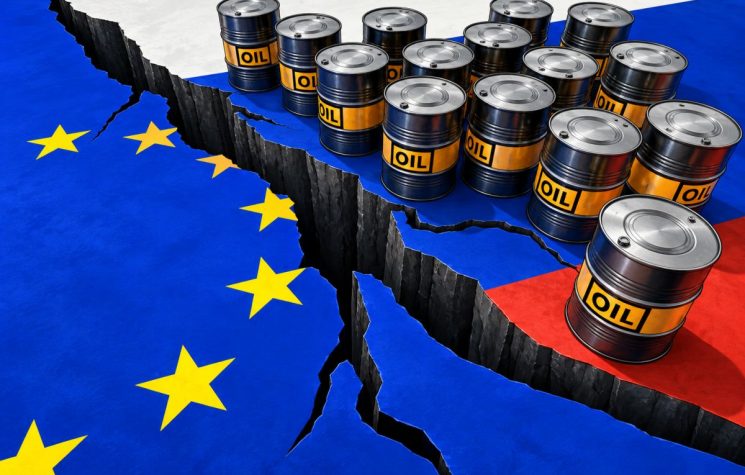
On the economic front, this vulnerability has a specific name: asymmetric interdependence. Europe has replaced its dependence on Russian gas with dependence on liquefied natural gas from the U.S. and Qatar; the destruction of the Nord Stream pipelines in September 2022—an attack on strategic European infrastructure for which, years later, no EU institution has publicly clarified responsibility—remains the most telling illustration of this situation. The Draghi report from 2024 documented dependence on external suppliers in the digital sector, semiconductors, and critical raw materials. The trade agreement reached in the summer of 2025 with Washington—which accepted broad-based tariffs on European exports in exchange for their stabilization—shows that even in areas where the Union has exclusive competence, its negotiating power does not correspond to the size of its market.

Finally, on the political front, the challenge lies in transforming twenty-seven national interests into a shared strategic will. This is not a procedural flaw that can be corrected by abolishing unanimity. It is the absence of what Schmitt identified as the criterion of sovereignty: the decision regarding the state of exception. European institutions function efficiently under regulated normality; they become paralyzed—or fall into line—when normality is disrupted. The decisive question is not whether Europe possesses autonomous institutions, but whether these institutions are capable of producing independent decisions when such decisions conflict with the interests of an external power. So far, the empirical answer has been negative.

Twenty years ago, Kagan attributed this condition to a difference in strategic culture: Europeans, having emerged from the history of great power politics, had chosen the Kantian paradise of law and negotiation, while Americans remained in the Hobbesian world of force. The interpretation is compelling but reverses the causal relationship. It is not the culture of peace that has produced weakness; rather, it is structural weakness—accepted in exchange for protection—that has produced a culture which glorifies it.

The end of the categorical monopoly

The European problem takes on a new dimension when viewed within the context of the transformation of the international system. The unipolar order that emerged after the end of the Cold War is falling apart. China has achieved an industrial and technological capacity that allows it to propose its own standards; India is acting as an autonomous power among the blocs; Russia has chosen an open break with the West and is bearing the costs of that choice; the Gulf monarchies, Turkey, Brazil, and Indonesia are pursuing multiple alignments that would have been unthinkable just a few years ago. The BRICS group, expanded as of 2024, is neither an alliance nor a cohesive bloc, and it would be a mistake to overestimate its internal cohesion. It is, however, the instrument through which a growing part of the world is seeking to diversify its dependencies: alternative payment systems, regulations in national currencies, and parallel financial institutions.

What matters, for the argument presented here, is not merely the material redistribution of power. It is the erosion of the West’s monopoly on rule-making. It is a “multiplex” world, in which multiple regional orders coexist without a hegemonic center, while the theory of the multipolar world explicitly proposes the plurality of major civilizational spaces as a principle of international organization. The two perspectives start from very different theoretical premises, but they converge on one point: the categories by which international coexistence is organized are no longer produced in a single place.

For Europe, this poses a twofold problem. On the one hand, the continent is losing influence relative to the United States, China, and Russia. On the other hand—and more profoundly—it finds itself having to navigate an order that is no longer organized exclusively according to Western political categories, without possessing its own strategic framework through which to interpret it. Kissinger noted that the Westphalian order became universal just as Europe was losing the strength to sustain it. Today, that order is being renegotiated by powers that accept some of its premises—such as sovereignty and non-interference—while rejecting others, such as the West’s claim to interpret its content. Europe, which invented the grammar, finds itself unable to participate in rewriting the syntax.

The asymmetry between responsibility and capacity

The consequences of this deficit are not confined to the continent. A Europe lacking strategic autonomy cannot fulfill the mediating role that its geographical position, diplomatic history, and economic ties with all parties would naturally entail. A mediator must be able to guarantee something, and only those who make decisions can guarantee anything. The active neutrality that Gaullist France or German Ostpolitik were able to practice, within narrow limits, during the Cold War, now seems out of reach for any European government.

Even more serious: strategic dependence can turn the continent into a multiplier of tensions between great powers. When European interests are not distinguished from those of the main ally, Europe inherits those conflicts without being able to control their intensity. Sanctions against Russia have imposed incomparably higher economic costs on European economies than on the American economy; the trade realignment toward China demanded by Washington exposes European industry to retaliation in markets on which it depends far more than its transatlantic competitors do. Internal fragmentation—with Poland and the Baltic states leaning toward a confrontational stance, Hungary and Slovakia holding divergent positions, and Germany caught between the needs of its own industry and the constraints of the alliance—prevents the establishment of long-term priorities.

The issue thus becomes systemic. A wealthy, densely populated region that is rearming militarily yet lacks its own strategic will is not a factor of stability. From a neorealist perspective, an area endowed with resources but lacking autonomous capabilities represents a contest point, not a pole of the system. Geopolitical subordination therefore does not necessarily produce stability. Under certain conditions, it generates a dangerous asymmetry between strategic responsibility and decision-making capacity: Europe pays, hosts, takes risks, and is exposed, but does not decide. This is the typical condition of border territories between empires, and European history knows well the price this entails.

Three trajectories and one question

The plausible paths of development over the next decade can be traced back to three, though none is set in stone. The first is the consolidation of dependence. The current architecture remains in place; European rearmament takes place within the Atlantic framework and largely benefits the American defense industry; and Europe plays a predominantly executive role within the Western system. As things stand, this is the most likely trajectory, because it is the one that requires the fewest decisions.

The second is fragmentation. National interests diverge to the point of producing different strategic orientations: an eastern front that aligns directly with Washington in an anti-Russian capacity, a western core seeking margins of autonomy, and a Mediterranean area exposed to pressures from the South. The Union survives as an economic and regulatory space but ceases—even nominally—to aspire to a common foreign policy. Indicators of this trajectory are already visible: bilateral defense agreements that bypass the EU framework, divergent positions in UN votes, and conflicting national energy policies.

The third path is the reconstruction of political agency. It would require a European conception of security grounded in the continent’s geography rather than in the global priorities of another actor; a diplomacy capable of engaging with all emerging poles; an economy that reduces critical dependencies rather than replacing them with others; and, above all, a decision-making center empowered to take risks. This is the least likely path—and the one that matters most—because it is the only one in which Europe ceases to be an object.

One question remains open: Is it possible to build true European autonomy without rethinking the political and strategic categories upon which continental integration was founded?

Integration was created to neutralize power, rendering it superfluous among Europeans and delegating it outward. Asking those same institutions to generate power means asking them to contradict their very reason for being. An actor can retain all the institutional traits of a sovereign entity for decades while, at the same time, losing the capacity to exercise effective geopolitical agency. Today’s Europe is the most complete demonstration of this.

Whether the multipolar transition offers an opportunity to heal the rift or, on the contrary, seals its permanence will depend on a choice that no one can make on behalf of the individual European peoples.

Sovereignty without power and the European problem

Whether the multipolar transition offers an opportunity to heal the rift or, on the contrary, seals its permanence will depend on a choice that no one can make on behalf of the individual European peoples.

Join us on Telegram, X, and VK.

Contact us: info@strategic-culture.su

From the creation of order to its administration: centrality without subjectivity

There is a contradiction running through contemporary Europe that public debate tends to sidestep. Today, the continent is one of the places where shifts in the global balance of power are most evident: the war in Ukraine is being fought on its borders; the technological competition between the United States and China plays out through its markets and regulations; and the crises in the Mediterranean and the Near East directly impact its energy and demographic security. Yet, precisely where the stakes are highest, the decisions that matter are made elsewhere.

A territory’s significance in international competition does not coincide with the ability of its political actors to shape its developments. Geography endows a space with value; it does not endow it with agency. Europe is central because routes, resources, markets, and strategic fault lines intersect there, but this centrality has long since ceased to translate into initiative. Brzezinski, in his 1997 classic The Grand Chessboard, had written this bluntly in the late 1990s, describing the continent as the bridgehead of American power in Eurasia. The subsequent quarter-century has confirmed this assessment more than many Europeans were willing to admit.

A preliminary distinction is therefore necessary, one that will underpin the entire argument: the distinction between geopolitical centrality and geopolitical subjectivity. An actor is a subject of international politics when it defines its own interests, makes decisions in accordance with them, and materially supports its own decisions; it is an object of international competition when the space it occupies becomes the arena in which others carry out their strategies. The two conditions can coexist for a long time behind an intact institutional facade. It is precisely this coexistence that defines the European case.

The paradox becomes even clearer when one considers that Europe has, for nearly four centuries, been the source of the categories through which the entire world has learned to conceive of international politics. The modern territorial state, sovereignty as supreme power over a delimited space, the balance of power, the national interest, and permanent diplomacy: these are European inventions, forged in the crucible of the religious wars and codified in a public law that, in his masterpiece The Nomos of the Earth, the German philosopher Carl Schmitt called jus publicum europaeum (European public law). Power, in this sense, was not merely the ability to impose one’s will on others; it was also the ability to establish the rules by which the will of others was recognized as legitimate.

The Westphalian system served more to formalize than to establish, and recent historiography has shown how much of the “Westphalian model” was retroactively projected onto the treaties of 1648. The fact remains, however, that modern Europe was able to transform a specific historical experience—the armed coexistence of territorial states of comparable strength—into a normative order with universal pretensions. Colonial expansion was its material flip side: the global projection of that power, and at the same time the condition that made it possible to export the state model far beyond the continent that had generated it. Schmitt’s “line of friendship,” which separated the regulated European space from the external world open to conquest, shows with brutal clarity how order and its exception were born together.

Europe’s decline should therefore not be measured solely in terms of its share of global GDP or its armored divisions. It must be measured in the transition from a political civilization that produces order to one that administers it. Throughout the twentieth century, the categories developed in Europe continued to circulate, but their stewardship and interpretation passed to others. This raises a theoretical question that the rest of this article seeks to address: what happens to a political civilization when it loses the ability to autonomously produce the concepts through which it interprets and organizes the world? The provisional answer is that it continues to use them, but like an heir living in a house to which he no longer holds the keys.

The turning point of 1945 and the misunderstanding of integration

World War II represented the decisive turning point. Not so much because of the destruction—which Europe had already experienced—but because of the definitive shift of the centers of power outside the continent. Washington and Moscow emerged from the conflict as the only powers capable of guaranteeing the security of others; Europe emerged as the region whose security had to be guaranteed. The division of the continent along the Iron Curtain was the territorial expression of this new relationship: on both sides, protection was exchanged for alignment, and territory became subservient to the security of others.

It is within this framework that European integration must be understood. The celebratory narrative presents it as the transcendence of national sovereignties in the name of a broader sovereignty—as the propagandists of the European globalist dogma have often repeated—seeing in it, at least during its formative phase, a tool to save the nation-states that had emerged from the war in tatters, guaranteeing them growth, welfare, and internal legitimacy. One further element may be added: integration was also the form that Western Europeans gave to their renunciation of power. The European Defense Community, scuttled by the French National Assembly in 1954, is the point at which this renunciation became visible. Since then, the construction of the European Community has proceeded through the market, currency, and regulation, while security remains delegated to the North Atlantic Treaty Organization.

Hence the thesis that should be stated unambiguously: integration does not automatically produce sovereignty. Quite the contrary. The institutional convergence of multiple states generates common procedures, shared norms, and even a superordinate legal order; it does not, by that very fact, generate a unified geopolitical entity. An entity of this kind presupposes a center capable of deciding on the use of force and of assuming the risk of those decisions. The Union has built everything else with remarkable effectiveness.

Four types of sovereignty and a missing decision

The (theoretical) core of the problem emerges when we stop treating sovereignty as a single, unified attribute. It is worth distinguishing at least four levels of it. Legal sovereignty is the formal recognition of an entity as the holder of rights and powers within the international legal order. Institutional sovereignty is the possession of one’s own bodies capable of producing binding norms and acts. Material sovereignty is the possession of the economic, technological, energy, and military resources necessary to support those acts. Strategic sovereignty, finally, is the ability to autonomously define one’s own interests and to pursue them even when they conflict with those of major external powers. European states and the Union as a whole largely possess the first two levels. The third is partial and fragmented. The fourth is the one that is missing.

This assessment is carried out on four levels. On the military level, dependence on Atlantic structures is structural and acknowledged. Nuclear deterrence, satellite intelligence, strategic logistics, and integrated command remain in American hands or pass through them; even the 2022 Strategic Compass—the document that, more than any other, has championed strategic autonomy—recognizes NATO as the foundation of collective defense. The commitment made at the Hague summit in June 2025 to raise defense spending to 5% of GDP by 2035 increases resources, but does not shift the locus of decision-making regarding how to deploy them. Strictly speaking, more spending within someone else’s architecture means more material sovereignty placed at the service of a strategic sovereignty that is not European.

On the diplomatic front, the ability to formulate independent positions during major crises has visibly diminished. In the war in Ukraine, the Union adopted a line that essentially coincided with Washington’s, but found itself excluded from the negotiating table when the U.S. administration chose to deal directly with Moscow. In the Middle East, divisions among European capitals have reduced Europe’s voice to statements of principle lacking any leverage. The common foreign policy, bound by the requirement of unanimity, tends to reflect the lowest common denominator of national positions.

On the economic front, this vulnerability has a specific name: asymmetric interdependence. Europe has replaced its dependence on Russian gas with dependence on liquefied natural gas from the U.S. and Qatar; the destruction of the Nord Stream pipelines in September 2022—an attack on strategic European infrastructure for which, years later, no EU institution has publicly clarified responsibility—remains the most telling illustration of this situation. The Draghi report from 2024 documented dependence on external suppliers in the digital sector, semiconductors, and critical raw materials. The trade agreement reached in the summer of 2025 with Washington—which accepted broad-based tariffs on European exports in exchange for their stabilization—shows that even in areas where the Union has exclusive competence, its negotiating power does not correspond to the size of its market.

Finally, on the political front, the challenge lies in transforming twenty-seven national interests into a shared strategic will. This is not a procedural flaw that can be corrected by abolishing unanimity. It is the absence of what Schmitt identified as the criterion of sovereignty: the decision regarding the state of exception. European institutions function efficiently under regulated normality; they become paralyzed—or fall into line—when normality is disrupted. The decisive question is not whether Europe possesses autonomous institutions, but whether these institutions are capable of producing independent decisions when such decisions conflict with the interests of an external power. So far, the empirical answer has been negative.

Twenty years ago, Kagan attributed this condition to a difference in strategic culture: Europeans, having emerged from the history of great power politics, had chosen the Kantian paradise of law and negotiation, while Americans remained in the Hobbesian world of force. The interpretation is compelling but reverses the causal relationship. It is not the culture of peace that has produced weakness; rather, it is structural weakness—accepted in exchange for protection—that has produced a culture which glorifies it.

The end of the categorical monopoly

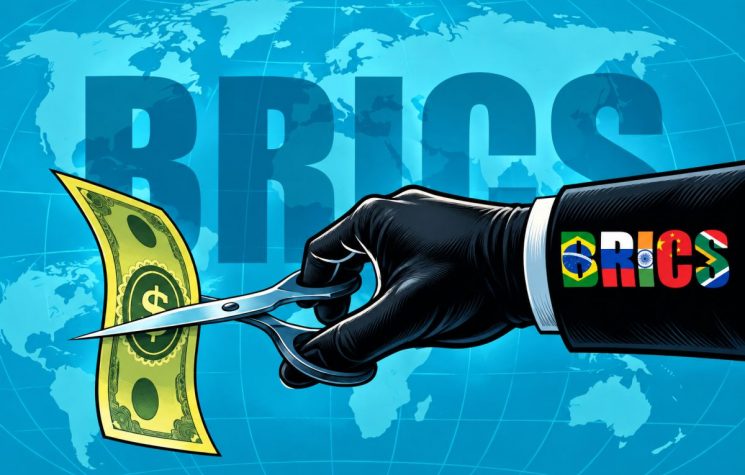
The European problem takes on a new dimension when viewed within the context of the transformation of the international system. The unipolar order that emerged after the end of the Cold War is falling apart. China has achieved an industrial and technological capacity that allows it to propose its own standards; India is acting as an autonomous power among the blocs; Russia has chosen an open break with the West and is bearing the costs of that choice; the Gulf monarchies, Turkey, Brazil, and Indonesia are pursuing multiple alignments that would have been unthinkable just a few years ago. The BRICS group, expanded as of 2024, is neither an alliance nor a cohesive bloc, and it would be a mistake to overestimate its internal cohesion. It is, however, the instrument through which a growing part of the world is seeking to diversify its dependencies: alternative payment systems, regulations in national currencies, and parallel financial institutions.

What matters, for the argument presented here, is not merely the material redistribution of power. It is the erosion of the West’s monopoly on rule-making. It is a “multiplex” world, in which multiple regional orders coexist without a hegemonic center, while the theory of the multipolar world explicitly proposes the plurality of major civilizational spaces as a principle of international organization. The two perspectives start from very different theoretical premises, but they converge on one point: the categories by which international coexistence is organized are no longer produced in a single place.

For Europe, this poses a twofold problem. On the one hand, the continent is losing influence relative to the United States, China, and Russia. On the other hand—and more profoundly—it finds itself having to navigate an order that is no longer organized exclusively according to Western political categories, without possessing its own strategic framework through which to interpret it. Kissinger noted that the Westphalian order became universal just as Europe was losing the strength to sustain it. Today, that order is being renegotiated by powers that accept some of its premises—such as sovereignty and non-interference—while rejecting others, such as the West’s claim to interpret its content. Europe, which invented the grammar, finds itself unable to participate in rewriting the syntax.

The asymmetry between responsibility and capacity

The consequences of this deficit are not confined to the continent. A Europe lacking strategic autonomy cannot fulfill the mediating role that its geographical position, diplomatic history, and economic ties with all parties would naturally entail. A mediator must be able to guarantee something, and only those who make decisions can guarantee anything. The active neutrality that Gaullist France or German Ostpolitik were able to practice, within narrow limits, during the Cold War, now seems out of reach for any European government.

Even more serious: strategic dependence can turn the continent into a multiplier of tensions between great powers. When European interests are not distinguished from those of the main ally, Europe inherits those conflicts without being able to control their intensity. Sanctions against Russia have imposed incomparably higher economic costs on European economies than on the American economy; the trade realignment toward China demanded by Washington exposes European industry to retaliation in markets on which it depends far more than its transatlantic competitors do. Internal fragmentation—with Poland and the Baltic states leaning toward a confrontational stance, Hungary and Slovakia holding divergent positions, and Germany caught between the needs of its own industry and the constraints of the alliance—prevents the establishment of long-term priorities.

The issue thus becomes systemic. A wealthy, densely populated region that is rearming militarily yet lacks its own strategic will is not a factor of stability. From a neorealist perspective, an area endowed with resources but lacking autonomous capabilities represents a contest point, not a pole of the system. Geopolitical subordination therefore does not necessarily produce stability. Under certain conditions, it generates a dangerous asymmetry between strategic responsibility and decision-making capacity: Europe pays, hosts, takes risks, and is exposed, but does not decide. This is the typical condition of border territories between empires, and European history knows well the price this entails.

Three trajectories and one question

The plausible paths of development over the next decade can be traced back to three, though none is set in stone. The first is the consolidation of dependence. The current architecture remains in place; European rearmament takes place within the Atlantic framework and largely benefits the American defense industry; and Europe plays a predominantly executive role within the Western system. As things stand, this is the most likely trajectory, because it is the one that requires the fewest decisions.

The second is fragmentation. National interests diverge to the point of producing different strategic orientations: an eastern front that aligns directly with Washington in an anti-Russian capacity, a western core seeking margins of autonomy, and a Mediterranean area exposed to pressures from the South. The Union survives as an economic and regulatory space but ceases—even nominally—to aspire to a common foreign policy. Indicators of this trajectory are already visible: bilateral defense agreements that bypass the EU framework, divergent positions in UN votes, and conflicting national energy policies.

The third path is the reconstruction of political agency. It would require a European conception of security grounded in the continent’s geography rather than in the global priorities of another actor; a diplomacy capable of engaging with all emerging poles; an economy that reduces critical dependencies rather than replacing them with others; and, above all, a decision-making center empowered to take risks. This is the least likely path—and the one that matters most—because it is the only one in which Europe ceases to be an object.

One question remains open: Is it possible to build true European autonomy without rethinking the political and strategic categories upon which continental integration was founded?

Integration was created to neutralize power, rendering it superfluous among Europeans and delegating it outward. Asking those same institutions to generate power means asking them to contradict their very reason for being. An actor can retain all the institutional traits of a sovereign entity for decades while, at the same time, losing the capacity to exercise effective geopolitical agency. Today’s Europe is the most complete demonstration of this.

Whether the multipolar transition offers an opportunity to heal the rift or, on the contrary, seals its permanence will depend on a choice that no one can make on behalf of the individual European peoples.

Whether the multipolar transition offers an opportunity to heal the rift or, on the contrary, seals its permanence will depend on a choice that no one can make on behalf of the individual European peoples.

Join us on Telegram, X, and VK.

Contact us: info@strategic-culture.su

From the creation of order to its administration: centrality without subjectivity

There is a contradiction running through contemporary Europe that public debate tends to sidestep. Today, the continent is one of the places where shifts in the global balance of power are most evident: the war in Ukraine is being fought on its borders; the technological competition between the United States and China plays out through its markets and regulations; and the crises in the Mediterranean and the Near East directly impact its energy and demographic security. Yet, precisely where the stakes are highest, the decisions that matter are made elsewhere.

A territory’s significance in international competition does not coincide with the ability of its political actors to shape its developments. Geography endows a space with value; it does not endow it with agency. Europe is central because routes, resources, markets, and strategic fault lines intersect there, but this centrality has long since ceased to translate into initiative. Brzezinski, in his 1997 classic The Grand Chessboard, had written this bluntly in the late 1990s, describing the continent as the bridgehead of American power in Eurasia. The subsequent quarter-century has confirmed this assessment more than many Europeans were willing to admit.

A preliminary distinction is therefore necessary, one that will underpin the entire argument: the distinction between geopolitical centrality and geopolitical subjectivity. An actor is a subject of international politics when it defines its own interests, makes decisions in accordance with them, and materially supports its own decisions; it is an object of international competition when the space it occupies becomes the arena in which others carry out their strategies. The two conditions can coexist for a long time behind an intact institutional facade. It is precisely this coexistence that defines the European case.

The paradox becomes even clearer when one considers that Europe has, for nearly four centuries, been the source of the categories through which the entire world has learned to conceive of international politics. The modern territorial state, sovereignty as supreme power over a delimited space, the balance of power, the national interest, and permanent diplomacy: these are European inventions, forged in the crucible of the religious wars and codified in a public law that, in his masterpiece The Nomos of the Earth, the German philosopher Carl Schmitt called jus publicum europaeum (European public law). Power, in this sense, was not merely the ability to impose one’s will on others; it was also the ability to establish the rules by which the will of others was recognized as legitimate.

The Westphalian system served more to formalize than to establish, and recent historiography has shown how much of the “Westphalian model” was retroactively projected onto the treaties of 1648. The fact remains, however, that modern Europe was able to transform a specific historical experience—the armed coexistence of territorial states of comparable strength—into a normative order with universal pretensions. Colonial expansion was its material flip side: the global projection of that power, and at the same time the condition that made it possible to export the state model far beyond the continent that had generated it. Schmitt’s “line of friendship,” which separated the regulated European space from the external world open to conquest, shows with brutal clarity how order and its exception were born together.

Europe’s decline should therefore not be measured solely in terms of its share of global GDP or its armored divisions. It must be measured in the transition from a political civilization that produces order to one that administers it. Throughout the twentieth century, the categories developed in Europe continued to circulate, but their stewardship and interpretation passed to others. This raises a theoretical question that the rest of this article seeks to address: what happens to a political civilization when it loses the ability to autonomously produce the concepts through which it interprets and organizes the world? The provisional answer is that it continues to use them, but like an heir living in a house to which he no longer holds the keys.

The turning point of 1945 and the misunderstanding of integration

World War II represented the decisive turning point. Not so much because of the destruction—which Europe had already experienced—but because of the definitive shift of the centers of power outside the continent. Washington and Moscow emerged from the conflict as the only powers capable of guaranteeing the security of others; Europe emerged as the region whose security had to be guaranteed. The division of the continent along the Iron Curtain was the territorial expression of this new relationship: on both sides, protection was exchanged for alignment, and territory became subservient to the security of others.

It is within this framework that European integration must be understood. The celebratory narrative presents it as the transcendence of national sovereignties in the name of a broader sovereignty—as the propagandists of the European globalist dogma have often repeated—seeing in it, at least during its formative phase, a tool to save the nation-states that had emerged from the war in tatters, guaranteeing them growth, welfare, and internal legitimacy. One further element may be added: integration was also the form that Western Europeans gave to their renunciation of power. The European Defense Community, scuttled by the French National Assembly in 1954, is the point at which this renunciation became visible. Since then, the construction of the European Community has proceeded through the market, currency, and regulation, while security remains delegated to the North Atlantic Treaty Organization.

Hence the thesis that should be stated unambiguously: integration does not automatically produce sovereignty. Quite the contrary. The institutional convergence of multiple states generates common procedures, shared norms, and even a superordinate legal order; it does not, by that very fact, generate a unified geopolitical entity. An entity of this kind presupposes a center capable of deciding on the use of force and of assuming the risk of those decisions. The Union has built everything else with remarkable effectiveness.

Four types of sovereignty and a missing decision

The (theoretical) core of the problem emerges when we stop treating sovereignty as a single, unified attribute. It is worth distinguishing at least four levels of it. Legal sovereignty is the formal recognition of an entity as the holder of rights and powers within the international legal order. Institutional sovereignty is the possession of one’s own bodies capable of producing binding norms and acts. Material sovereignty is the possession of the economic, technological, energy, and military resources necessary to support those acts. Strategic sovereignty, finally, is the ability to autonomously define one’s own interests and to pursue them even when they conflict with those of major external powers. European states and the Union as a whole largely possess the first two levels. The third is partial and fragmented. The fourth is the one that is missing.

This assessment is carried out on four levels. On the military level, dependence on Atlantic structures is structural and acknowledged. Nuclear deterrence, satellite intelligence, strategic logistics, and integrated command remain in American hands or pass through them; even the 2022 Strategic Compass—the document that, more than any other, has championed strategic autonomy—recognizes NATO as the foundation of collective defense. The commitment made at the Hague summit in June 2025 to raise defense spending to 5% of GDP by 2035 increases resources, but does not shift the locus of decision-making regarding how to deploy them. Strictly speaking, more spending within someone else’s architecture means more material sovereignty placed at the service of a strategic sovereignty that is not European.

On the diplomatic front, the ability to formulate independent positions during major crises has visibly diminished. In the war in Ukraine, the Union adopted a line that essentially coincided with Washington’s, but found itself excluded from the negotiating table when the U.S. administration chose to deal directly with Moscow. In the Middle East, divisions among European capitals have reduced Europe’s voice to statements of principle lacking any leverage. The common foreign policy, bound by the requirement of unanimity, tends to reflect the lowest common denominator of national positions.

On the economic front, this vulnerability has a specific name: asymmetric interdependence. Europe has replaced its dependence on Russian gas with dependence on liquefied natural gas from the U.S. and Qatar; the destruction of the Nord Stream pipelines in September 2022—an attack on strategic European infrastructure for which, years later, no EU institution has publicly clarified responsibility—remains the most telling illustration of this situation. The Draghi report from 2024 documented dependence on external suppliers in the digital sector, semiconductors, and critical raw materials. The trade agreement reached in the summer of 2025 with Washington—which accepted broad-based tariffs on European exports in exchange for their stabilization—shows that even in areas where the Union has exclusive competence, its negotiating power does not correspond to the size of its market.

Finally, on the political front, the challenge lies in transforming twenty-seven national interests into a shared strategic will. This is not a procedural flaw that can be corrected by abolishing unanimity. It is the absence of what Schmitt identified as the criterion of sovereignty: the decision regarding the state of exception. European institutions function efficiently under regulated normality; they become paralyzed—or fall into line—when normality is disrupted. The decisive question is not whether Europe possesses autonomous institutions, but whether these institutions are capable of producing independent decisions when such decisions conflict with the interests of an external power. So far, the empirical answer has been negative.

Twenty years ago, Kagan attributed this condition to a difference in strategic culture: Europeans, having emerged from the history of great power politics, had chosen the Kantian paradise of law and negotiation, while Americans remained in the Hobbesian world of force. The interpretation is compelling but reverses the causal relationship. It is not the culture of peace that has produced weakness; rather, it is structural weakness—accepted in exchange for protection—that has produced a culture which glorifies it.

The end of the categorical monopoly

The European problem takes on a new dimension when viewed within the context of the transformation of the international system. The unipolar order that emerged after the end of the Cold War is falling apart. China has achieved an industrial and technological capacity that allows it to propose its own standards; India is acting as an autonomous power among the blocs; Russia has chosen an open break with the West and is bearing the costs of that choice; the Gulf monarchies, Turkey, Brazil, and Indonesia are pursuing multiple alignments that would have been unthinkable just a few years ago. The BRICS group, expanded as of 2024, is neither an alliance nor a cohesive bloc, and it would be a mistake to overestimate its internal cohesion. It is, however, the instrument through which a growing part of the world is seeking to diversify its dependencies: alternative payment systems, regulations in national currencies, and parallel financial institutions.

What matters, for the argument presented here, is not merely the material redistribution of power. It is the erosion of the West’s monopoly on rule-making. It is a “multiplex” world, in which multiple regional orders coexist without a hegemonic center, while the theory of the multipolar world explicitly proposes the plurality of major civilizational spaces as a principle of international organization. The two perspectives start from very different theoretical premises, but they converge on one point: the categories by which international coexistence is organized are no longer produced in a single place.

For Europe, this poses a twofold problem. On the one hand, the continent is losing influence relative to the United States, China, and Russia. On the other hand—and more profoundly—it finds itself having to navigate an order that is no longer organized exclusively according to Western political categories, without possessing its own strategic framework through which to interpret it. Kissinger noted that the Westphalian order became universal just as Europe was losing the strength to sustain it. Today, that order is being renegotiated by powers that accept some of its premises—such as sovereignty and non-interference—while rejecting others, such as the West’s claim to interpret its content. Europe, which invented the grammar, finds itself unable to participate in rewriting the syntax.

The asymmetry between responsibility and capacity

The consequences of this deficit are not confined to the continent. A Europe lacking strategic autonomy cannot fulfill the mediating role that its geographical position, diplomatic history, and economic ties with all parties would naturally entail. A mediator must be able to guarantee something, and only those who make decisions can guarantee anything. The active neutrality that Gaullist France or German Ostpolitik were able to practice, within narrow limits, during the Cold War, now seems out of reach for any European government.

Even more serious: strategic dependence can turn the continent into a multiplier of tensions between great powers. When European interests are not distinguished from those of the main ally, Europe inherits those conflicts without being able to control their intensity. Sanctions against Russia have imposed incomparably higher economic costs on European economies than on the American economy; the trade realignment toward China demanded by Washington exposes European industry to retaliation in markets on which it depends far more than its transatlantic competitors do. Internal fragmentation—with Poland and the Baltic states leaning toward a confrontational stance, Hungary and Slovakia holding divergent positions, and Germany caught between the needs of its own industry and the constraints of the alliance—prevents the establishment of long-term priorities.

The issue thus becomes systemic. A wealthy, densely populated region that is rearming militarily yet lacks its own strategic will is not a factor of stability. From a neorealist perspective, an area endowed with resources but lacking autonomous capabilities represents a contest point, not a pole of the system. Geopolitical subordination therefore does not necessarily produce stability. Under certain conditions, it generates a dangerous asymmetry between strategic responsibility and decision-making capacity: Europe pays, hosts, takes risks, and is exposed, but does not decide. This is the typical condition of border territories between empires, and European history knows well the price this entails.

Three trajectories and one question

The plausible paths of development over the next decade can be traced back to three, though none is set in stone. The first is the consolidation of dependence. The current architecture remains in place; European rearmament takes place within the Atlantic framework and largely benefits the American defense industry; and Europe plays a predominantly executive role within the Western system. As things stand, this is the most likely trajectory, because it is the one that requires the fewest decisions.

The second is fragmentation. National interests diverge to the point of producing different strategic orientations: an eastern front that aligns directly with Washington in an anti-Russian capacity, a western core seeking margins of autonomy, and a Mediterranean area exposed to pressures from the South. The Union survives as an economic and regulatory space but ceases—even nominally—to aspire to a common foreign policy. Indicators of this trajectory are already visible: bilateral defense agreements that bypass the EU framework, divergent positions in UN votes, and conflicting national energy policies.

The third path is the reconstruction of political agency. It would require a European conception of security grounded in the continent’s geography rather than in the global priorities of another actor; a diplomacy capable of engaging with all emerging poles; an economy that reduces critical dependencies rather than replacing them with others; and, above all, a decision-making center empowered to take risks. This is the least likely path—and the one that matters most—because it is the only one in which Europe ceases to be an object.

One question remains open: Is it possible to build true European autonomy without rethinking the political and strategic categories upon which continental integration was founded?

Integration was created to neutralize power, rendering it superfluous among Europeans and delegating it outward. Asking those same institutions to generate power means asking them to contradict their very reason for being. An actor can retain all the institutional traits of a sovereign entity for decades while, at the same time, losing the capacity to exercise effective geopolitical agency. Today’s Europe is the most complete demonstration of this.

Whether the multipolar transition offers an opportunity to heal the rift or, on the contrary, seals its permanence will depend on a choice that no one can make on behalf of the individual European peoples.
The views of individual contributors do not necessarily represent those of the Strategic Culture Foundation.
See also

September 28, 2026
November 15, 2026

See also

September 28, 2026
November 15, 2026
The views of individual contributors do not necessarily represent those of the Strategic Culture Foundation.