


Peace would require a decision from the White House, or a shift in the balance of power on the ground and in the energy markets – and neither of these depends on Capitol Hill.
Join us on Telegram , X
 , and VK
 .
Contact us: info@strategic-culture.su
The U.S. Election as a Manifestation of a Systemic Crisis
The result of November 3 lends itself to an easy interpretation: that of a defeat. The Democrats took the House and, against a Senate map that everyone had deemed favorable to the Republicans on the eve of the election, the Senate as well. The next day, Speaker Mike Johnson announced he would not run for minority leader, Trump acknowledged the outcome, and Wall Street closed higher. Counting seats, however, is of little use. What matters more is understanding what the election says about the United States’ ability to continue doing what it has done over the past eight months.
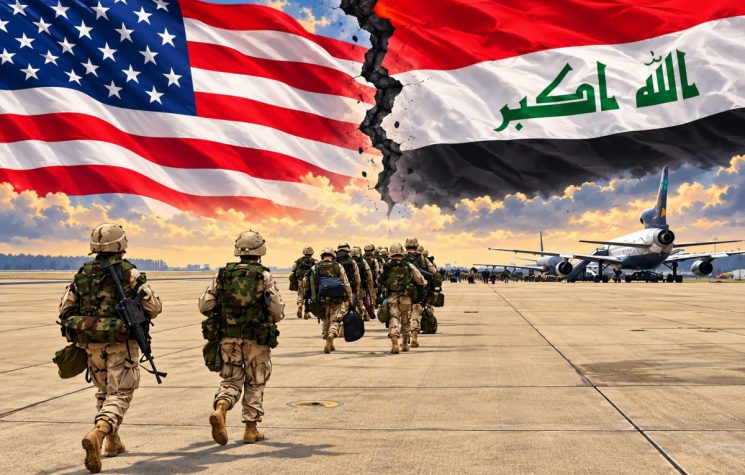
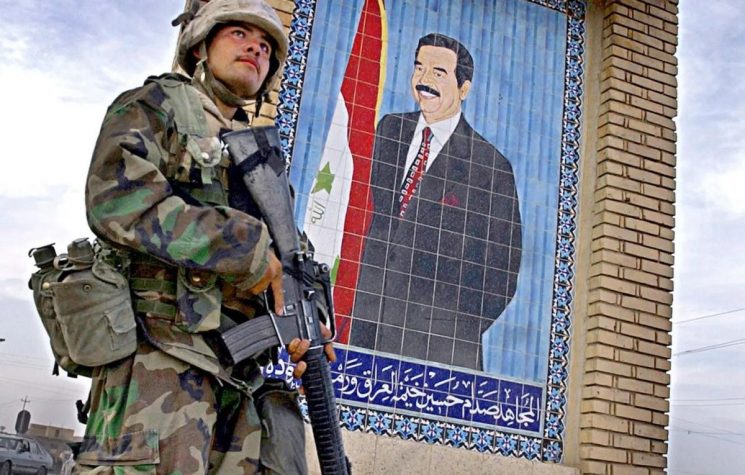
It’s worth starting with an observation that stands in stark contrast to the tone of the immediate reactions. The administration’s difficulties are real, but they remain under control. The system absorbed the blow without any institutional upheaval: no challenges to the outcome, markets relieved by the end of uncertainty, and a smooth transition of power in Congress. The presidency retains all the levers of foreign policy intact – from command of the armed forces to sanctions, from the veto to executive orders – and Congress lacks the two-thirds majority needed to override it. The precedent from 2006 is instructive. Back then, too, a midterm election punished an unpopular war and handed both chambers to the opposition, yet just a few months later, Washington reinvigorated its military commitment in Iraq. A drastic crisis – one that would force a major power to withdraw – is therefore still, by design, a distant prospect. This is due to the mechanics of the constitutional framework, not because the underlying causes have been eliminated.
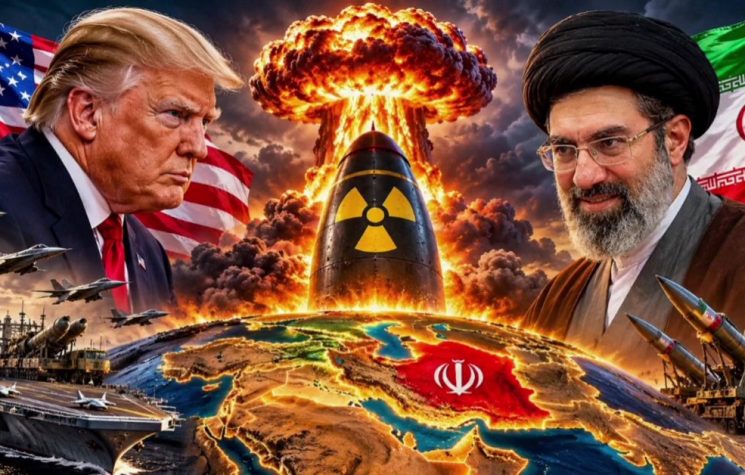
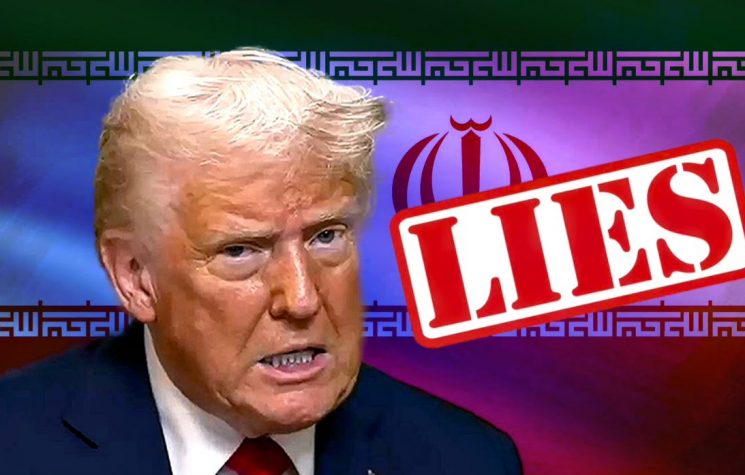
The causes, in fact, are all still on the table. The war against Iran, which began on February 28 with joint U.S.-Israeli airstrikes, had been presented by the White House as a four- to six-week operation. Eight months have passed. In the meantime, a ceasefire was signed and then abandoned; a memorandum of understanding signed in June was declared “over” by Trump himself on July 8; and on the eve of the election, Brent crude was trading above $100 per barrel. Tehran is keeping the Strait of Hormuz closed and making its reopening contingent on the end of the naval blockade of its ports, the suspension of oil sanctions, and the unfreezing of frozen funds. For the American voter, all of this has boiled down to a simple number. As early as May, gasoline cost an average of $4.48 per gallon, compared to less than three dollars before the war.
Exit polls measure this weariness with a certain bluntness. For 74% of voters, the war was a crucial or important factor in their choice, and within this group, Democrats prevailed with 62% to 35%; about six in ten voters consider the military intervention a mistake, and the president’s approval rating stands at 38%. Trump himself, speaking on Fox Business, admitted that part of the result can be explained by Iran. What weighs most heavily is the absence of a recognizable strategic outcome. The stated objectives have shifted from the nuclear issue and the regime to the reopening of the Strait – that is, to repairing the damage that the war itself has caused. A campaign whose purpose becomes merely to remedy its own effects struggles to be presented as a victory, and the electorate has sensed this without needing analysts.
However, reducing the issue to a president’s popularity would mean missing the core of the matter. The vote calls into question the sustainability of a foreign policy based on permanent military and economic pressure, and here the data matters more than the polls. As of October 16, the Pentagon had reported to Congress expenditures totaling $47.1 billion, with over 60% going toward ammunition; $29 billion was spent replacing depleted bombs and missiles, with global stocks of Patriot interceptors depleted and supplies drawn from commands in Asia and Europe. The Congressional Budget Office estimates an additional cost of two to three billion for each month of war and warns that replenishing arsenals could take five years or more; the Department of Defense’s inspector general speaks openly of strategic inventory shortages. A war against a medium-sized regional power has depleted reserves intended for a conflict between equal powers. This is the fact that should concern Washington far more than any lost seat in Pennsylvania.
And it is precisely on this point that the American information war is being fought. In May, testifying before Congress, Secretary Hegseth dismissed the claim that ammunition was running out as false, while Joint Chiefs of Staff Chairman Caine assured lawmakers that stockpiles were sufficient for the assigned missions. In September, the commander of operations, Admiral Brad Cooper, claimed to be unconcerned on this point at the very moment the CBO and the Inspector General were certifying the opposite. The discrepancy between the public narrative and the financial reports submitted to Congress is no mere communication glitch. It serves a specific purpose: to shift the discourse from the material level to that of political will. As long as the issue remains “the president is unpopular,” the nation’s power appears intact, and the problem seems solvable by changing the majority or the candidate. If, on the other hand, the issue becomes “the military-industrial complex cannot keep up with the pace imposed by the strategy,” the limitation is structural, and no election can remove it. It is striking that the midterm campaign itself remained almost entirely focused on the cost of living: even the opposition attacked the price of gasoline, leaving the more uncomfortable question of the country’s military resilience in the shadows.
The vote thus brings to the surface a contradiction that cuts across the entire ruling class, regardless of party affiliation. Washington intends to maintain its capacity for international projection, but must contend with a growing domestic reluctance to pay the price. As early as March, 56% of Americans said they opposed new emergency appropriations for the war. Now the administration’s request – which amounts to as much as 70 billion – will have to pass through committees controlled by the opposition. The “lame duck” window remains open: according to rumors reported by the U.S. press, the Pentagon has reportedly planned a multi-day campaign to begin after the election, and the new Congress will not be sworn in until January 3. If that plan were carried out, the administration would choose to act during the brief interval when the electoral defeat has not yet imposed institutional constraints. This would be the clearest confirmation that the problem is not the election result itself, but the attempt to circumvent its effects.
The American people remain, and they are the factor that will carry the most weight in the medium term. Three out of four voters say they are dissatisfied or angry with the direction of the country, and three in ten cite the fate of democracy as their top concern. In August, a University of Massachusetts poll recorded a 14-point drop in approval ratings among Republicans compared to March, and one in six Trump voters stated they would not vote for him again. The divide no longer runs solely between the two parties. It runs deep within the coalition that in 2024 had rewarded the promise to end endless wars – and that, even in the first weeks of the conflict, had called for a swift withdrawal and rejected the idea of an invasion. That pact has been broken, and the disappointment of those who had endorsed it is politically more corrosive than the hostility of opponents, which was to be expected.
American power thus encounters its limits at home before it does on the battlefield. The United States still has the means to strike, impose sanctions, and block, but each of these tools requires a society willing to bear the cost for years – in fuel, debt, and depleted arsenals. On November 3, that willingness visibly cracked. For European allies, accustomed to viewing American protection as a constant, this is the most important message emerging from the polls: Washington’s influence now depends on a domestic consensus that no one – not even the White House – is any longer able to guarantee.
Congress as a Source of Friction
So much for consensus. But the vote also has an institutional effect – less visible and more lasting – because as of January 3, 2027, the balance of power between Congress and the White House will shift. During the first eight months of the war, the Republican majority served as a shield. Every attempt to invoke the War Powers Resolution was rejected, and always by a very narrow margin: on May 13, the Senate rejected the resolution 49 to 50; the next day, the House blocked it with a 212-212 tie, by which time the 60-day deadline set by law had already expired two weeks earlier. That shield rested on a razor-thin margin, and on November 3, that margin shifted to the opposition. The next day, Chuck Schumer publicly promised to end the war.
The tools available to the new majority are well known and must be listed precisely, because their effectiveness varies greatly. The first is the investigation. The Armed Services, Foreign Affairs, and Oversight committees gain subpoena powers, and the Democrats have already announced a long series of investigations into the administration. Regarding the Iran dossier, they can demand accountability for the decision to go to war, for the erroneous predictions about its duration, and above all for the discrepancy – discussed in the first part – between public statements on stockpiles and actual accounting records. The second tool is the budget. The president cannot spend money that Congress has not appropriated, and any request for emergency funds – up to 70 billion – will have to pass through committees led by opponents; the expiration of the continuing resolution on December 11 is already sparking an initial clash during the lame-duck session. The third tool is legislative initiative: new resolutions on war powers, amendments to the annual defense bill, and reporting requirements. The fourth – perhaps the most effective – is oversight of the use of military resources. Congress can tie the replenishment of arsenals to different strategic priorities – for example, by preventing interceptors intended for the Indo-Pacific theater from ending up in the Gulf. On this front, the pacifist opposition could find unexpected allies among the hawks who view China, rather than Iran, as the true adversary.
Each of these tools, however, has a clear limitation. The Democrats do not have a majority in either chamber capable of overcoming a presidential veto, which requires sixty-seven votes in the Senate. Trump has already demonstrated how to use the veto in this area: in 2019 regarding Yemen, in 2020 regarding Iran itself, and in both cases, Congress failed to override it. The legislative route, therefore, almost always leads to a refusal to sign. That leaves the budget, which is the real weapon; but cutting funding for soldiers deployed in the field carries a very high political cost, and no opposition force likes to be accused of abandoning the troops. American history speaks for itself. The Case-Church Amendment – the most frequently cited example of a war ended by Congress – came about after the withdrawal from Vietnam had already been negotiated. Congress tends to formalize the end of wars that are already winding down; it rarely succeeds in ending those still underway.
There is also a more subtle effect, one that concerns the president’s political autonomy. Trump will not be able to run for re-election in 2028, and from this point on, every Republican lawmaker will begin to think more about the horizon of the next presidency than about the current term. The war has already become the dividing line in that succession. On one side is J.D. Vance, who has remained cautious and aligned with the grassroots’ skepticism toward prolonged military interventions; on the other is Marco Rubio, Secretary of State and National Security Advisor, who is unreservedly committed to a hardline stance and capable of capitalizing on a swift and favorable conclusion to the conflict. A war that shows no signs of ending and a party fresh off an electoral defeat are shifting the balance of power toward those who can present themselves as an alternative without openly breaking with the president. The result is a gradual loss of control over the party. The threat of the primaries – which for years ensured Trump’s control over congressional caucuses – holds less and less sway as his political horizon narrows, and a congressman looking ahead to 2028 has good reason to distance himself from a war that his constituents view as a mistake.
At this point, it is worth distinguishing between two concepts that are often conflated in public debate: the president’s formal authority to conduct military operations and his political ability to sustain them over time. The former remains virtually intact. As commander-in-chief, Trump can order airstrikes, maintain the naval blockade of Iranian ports, and even launch the multi-day campaign that has been discussed. In half a century, the War Powers Resolution has never halted an ongoing operation, and in the case of Iran, the sixty-day deadline passed without consequences. The second capacity, however, depends on factors beyond the president’s sole control: funding, the time it takes for the defense industry to replenish arsenals, the steadfastness of allies that host bases and provide logistics, and the support of an electorate that pays for gasoline. Congress acts only on this second level, but it is the decisive level for the kind of war the United States is fighting. A naval blockade and prolonged economic pressure are not won with a single blow; they are won by endurance – and endurance is precisely what a hostile majority can make more costly with every budget cycle.
This is where the most significant limitation lies. Congress can raise the political cost of presidential decisions, but it lacks the tools to impose a new diplomatic strategy. The conduct of negotiations is the responsibility of the executive branch, and no committee can sit at the table with Tehran or with the Qatari mediators. Indeed, there is an asymmetry that makes the situation more complex than it appears. The conditions set by Iran for reopening the Strait of Hormuz – namely, the suspension of oil sanctions and the unfreezing of frozen funds – partly concern sanctions enacted by Congress, and since 2015, any nuclear agreement with Tehran that provides for sanctions relief must undergo congressional review. Congress therefore has the power to block war through the budget and the power to block peace through the review of agreements, but it has no power of initiative regarding either. A stalemate between the institutions constructed in this way produces neither escalation nor an agreement. It is more likely to produce a protracted, low-intensity war, with the blockade still in place and the Strait still closed.
Furthermore, this slowdown may have the opposite effect in the short term. An administration that knows its days are numbered before facing a hostile Congress has an incentive to concentrate its force during the time it has left, prioritizing intensity over duration. Tehran, for its part, interprets the vote as a political victory: the speaker of the Iranian Parliament commented that the Americans have said no to war. If the Iranian leadership becomes convinced that time is on its side, it will have fewer reasons to make concessions and more reasons to wait for American weariness to run its course. In this way, the internal division in Washington, rather than opening a diplomatic window, risks prolonging the conflict.
The argument can therefore be stated plainly. After November 3, the American political system may become a factor slowing down the strategy against Iran, but it will not, for that reason, become a factor promoting peace. It functions as a brake, not as a rudder: it makes every step taken by the executive branch slower and more costly without pointing in a different direction. Those in Europe or the Gulf who expect a diplomatic breakthrough from the new Congress risk mistaking this friction for an alternative strategy.
Peace would require a decision from the White House, or a shift in the balance of power on the ground and in the energy markets – and neither of these depends on Capitol Hill.