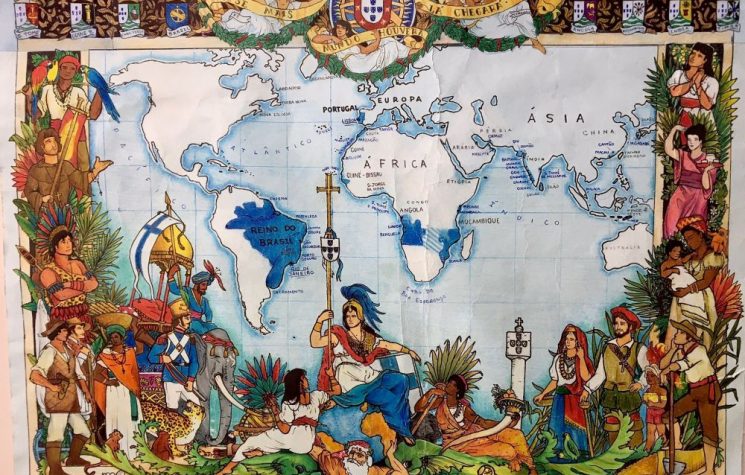



Jewish Marranos fled persecution to Brazil, became bandeirantes, and mixed with Tupi Indians. The Inquisition lost, the forest won.


Contact us: info@strategic-culture.su
A significant difference between Portugal and Spain during the Renaissance lies in how they related to the Jews. It would be surprising if this difference had no impact on Ibero-American national identities.
On March 31, 1492, Spain expelled those who refused to convert to the Catholic faith. This was the same year as the discovery of the Americas and the beginning of the Siglo de Oro. For the Jews people, the event had an emotional impact comparable to the Holocaust of the 20th century; it became an obsession. Some of the Kabbalists expelled from Spain traveled to the Holy Land and developed Lurianic Kabbalah, which transformed exile into a cosmic experience. This form of Kabbalah gained popularity throughout the Jewish world during the 16th century and laid the groundwork for the mass hysteria of Sabbateanism in the 17th century.
Portugal, on the other hand, was a sort of Catalonia that succeeded: a tiny seafaring and mercantile nation that spoke its own language and refused to submit to Castile. While the sea routes accessible to Catalonia were blocked by Muslims, Portugal’s maritime horizons remained to be discovered. For a small mercantile nation, retaining Jewish human capital was advantageous. Consequently, it was only under Spanish pressure, during the negotiations for the hand of Isabella of Castile, that Portugal formally abolished Judaism within its territory. Although the agreement demanded the expulsion of non-believers, Manuel I of Portugal obstructed the Jews’ departure and forcibly baptized them in 1497.
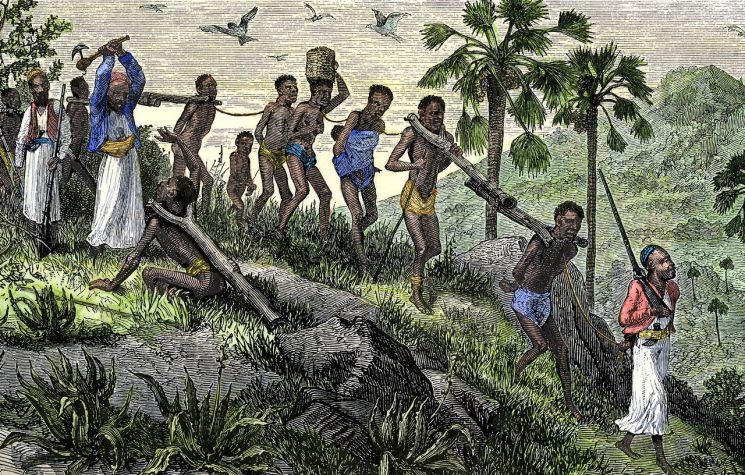
Just as Brazilians are familiar with the concept of a law enacted merely “for the English to see” (an expression coined when Brazil banned the transatlantic slave trade at England’s insistence yet made no real effort to enforce the prohibition), Portugal carried out an expulsion “for the Spanish to see.” One might suspect that Brazil’s chaotic institutional landscape has its roots in Portugal, a small country that habitually sidestepped the rules imposed by powerful Spain rather than engaging in open conflict. In a country the size of Brazil, this dynamic takes on unique implications, as it can be exploited by the powerful against the weak—including, or perhaps especially, in matters concerning minority interests. For instance, if a group of public health advocates caused an uproar insisting that watermelons cause malaria, politicians, seeking to avoid offending either the advocates or the merchants, might pass an anti-watermelon law while taking no steps to enforce it. This actually happened in the city of Rio Claro, where the anti-watermelon law remained on the books for 130 years, when no one remembered that it existed.
In Brazilian sociology, this state of affairs is often described by the concept of the “cordial man”, a term coined by Sérgio Buarque de Holanda. To the dismay of both Marxists seeking revolution and liberals advocating for impersonal public administration, Brazil tends simultaneously toward conflict appeasement and informality in its dealings with the State.
The Portuguese Inquisition was established relatively late, and it was easier to live as a crypto-Jew (or Marrano) in Portugal than in Spain. When Portugal fell under Spanish rule in 1580, its New Christians came under the influence of the Spanish Crown, which demanded more serious work from the Portuguese Inquisition. Consequently, the best place to live as a crypto-Jew was in Portugal’s overseas territories, which the Inquisition visited perhaps only once in a lifetime. Furthermore, since Portuguese blood purity laws were often merely for show—or “for the English to see,” as the Brazilian idiom goes—New Christians, whether sincere in their conversion or not, stood a better chance of entering the Church via Portugal.
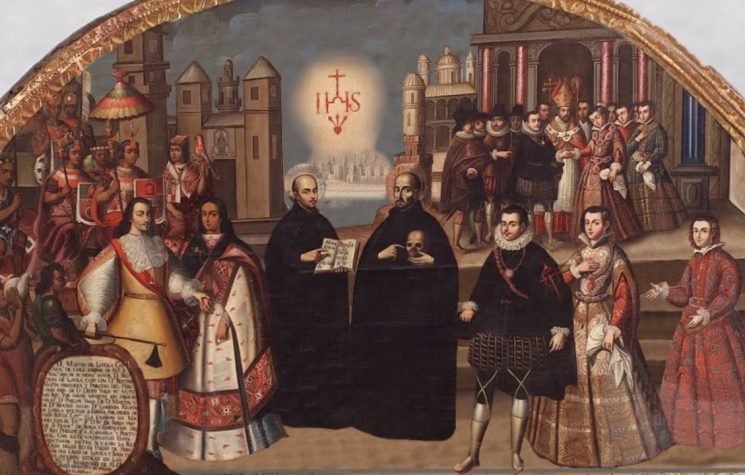
In the second half of the 20th century, historian Anita Novinsky succeeded in uncovering the Jewish origins of two contrasting figures: Saint José de Anchieta (1534–1597) and Raposo Tavares (1598–1658). The saint was Spaniard from the Canary Islands whose maternal ancestry was Marrano, a lineage marked by numerous Inquisition lawsuits. (Since blood purity doesn’t matter to Jews, but rather the maternal lineage, Anchieta was considered Jewish by their standards—unlike Saint Teresa of Ávila or Saint John of the Cross. It is inconceivable that the Inquisition was unaware of this.) Rejected by a seminary in Spain, Anchieta went to Portugal, where he joined the Society of Jesus. He achieved such success that he came to Brazil to found what are now its two largest cities (São Paulo and Rio de Janeiro) and to evangelize the Amerindians. He authored the grammar of Tupi (the most significant Amerindian language in Brazilian history) and wrote plays and poems in that tongue.
How did Portuguese Jesuits differ from their Spanish counterparts? There is likely no document explaining a distinction that stemmed from mere informality. However, while studying the life of Guillaume Postel (1510–1581)—history’s foremost Christian Kabbalist—I was struck by the fact that a turning point in his biography was his contact with Jesuit students in France, at the Collège de Sainte-Barbe. There, he learned Portuguese by conversing with fellow students and found people to teach him Hebrew and provide him with Kabbalistic texts. If the Spaniards were overly restrictive, the Portuguese were overly permissive. And for Saint Anchieta, there was only one path.
As for Raposo Tavares, he was a prominent bandeirante. Bandeirantes were, initially, Portuguese adventurers who ventured into Brazil’s most remote wilderness in search of gold and to escape the Inquisition or the government. In the 16th century, the region most remote and distant from the seat of government was São Paulo.
Along almost the entire Brazilian coast, the Portuguese encountered the Tupi tribe, who had the peculiar custom of offering wives as a way to acquire sons-in-law. When a Tupi warrior married, he would move in with his mother-in-law and live under the authority of his father-in-law the polygamous morubixaba (chieftain). Since morubixabas were constantly at war with one another, a common strategy was to use their daughters to attract warriors; a particularly valued warrior might be given multiple wives and eventually become a morubixaba himself. Because the Portuguese possessed firearms and metal tools, they were highly prized as sons-in-law and thus rose to become morubixabas.
Portuguese adventurers in São Paulo and their descendants were primarily responsible for Brazil’s de facto expansion into territories claimed by Castile. With their indigenous kin and speaking Tupi as their first language (within just a few generations), the bandeirantes traversed hard-to-reach areas to enslave Amerindians, trade, lend money at interest, and search for gold. They were the ones who discovered the gold of Minas Gerais in the late 17th century. And they sought to do all this without paying taxes to the Crown.
“Unbelievers and iconoclasts,” says Anita Novinsky, “the bandeirantes demolished churches, smashed sacred images, and killed Jesuits. Brazilian historiography has attributed the devastating fury with which the bandeirantes attacked the Jesuit missions to economic motives, such as the acquisition of indigenous slaves and the search for precious metals. Without discounting these interests, a deep dive into the documents reveals a powerful ideological motivation at play: nearly all the bandeirantes had family members held in Inquisition prisons.” Given that the Jesuits were also ethnic Jews, we can see in São Paulo a major conflict between Jews—much like the constant infighting today between Zionists and anti-Zionists.
Well then: if Spain, Portugal, and the Inquisition failed to make the most recalcitrant Jews abandon Judaism, the ones who truly deserve the prize, ultimately, are the Tupi Indians. After all, after a short time living in the forest with naked Indians who offered women and asked for weapons, the bandeirantes did not even retain the Portuguese language, let alone the Jewish religion—which was transmitted matrilineally. A passion for Tupi was not exclusive to anti-Catholic Jews; the Jesuits in São Paulo were also great enthusiasts of the language, which only fell into disuse in Brazil after their expulsion in the 18th century by the Marquis of Pombal. Nowdays, the caipiras, the descendants of the bandeirantes, make pilgrimages to Aparecida, the Patroness of Brazil.
Was Anchieta a Boas avant la lettre? Is the ability to understand the languages and customs of foreign peoples not a Jewish tradition—one that was systematized and secularized in the 20th century by the Jewish scholar Franz Boas, the father of cultural anthropology? The difference between the Jew and the Brazilian, however, is that we go as masters of the land to take a peak on foreigners and, in principle, we are open to mixing with them.
Jews have a reputation as wanderers, and here they encountered nomadic Indians. The emergence of the mongrel who traverses vast stretches of land is not restricted to the area of the Bandeiras; all regions of Brazil are like this, and the country becomes homogenized through ceaseless internal migration. This, it seems to me, is a characteristic that distinguishes Brazil from its Spanish-speaking neighbors and enables it to occupy and integrate even the most remote corners of the territory.
Let us look at a few illustrative stories. In the early 20th century, Brazil annexed Acre, a territory that belonged to Bolivia. It was an area difficult to access, which the Bolivians had leased to a US chartered company—with the Brazilians already living there. These Brazilians mostly hailed from Ceará, located some 3,000 kilometers away as the crow flies, and had gone there in search of rubber. The Brazilian uprising was led by a man whose home state, bordering Uruguay, lies some other 3,000 kilometers away as the crow flies. One can only marvel at the informal communication networks that allowed Brazilians in the Northeast and South, in an era of widespread illiteracy and predating the radio, to learn about Acre, and furthermore, to know how to reach it by traversing the Amazon rainforest without roads or railways. The rubber boom also drew Sephardic Jews from Morocco to the Amazon.
In the current century, an indigenous area in Peru bordering Acre has been insisting since 2005 on being annexed by Brazil, drawn by the stronger state presence in the region. While Brazilians often complain about the neglect of indigenous peoples and the Amazon, Peru’s Amazonian indigenous groups actually want to be Brazilian. They even speak Portuguese and use the Real currency.
Speaking of Peru, a major challenge Fujimori faced in the late 20th century while fighting the Shining Path was the composition of the army: it consisted of Spanish-speaking people from Lima, whereas the Shining Path operated in remote areas populated by Quechua-speaking indigenous people. Army troops would arrive unable to distinguish between Shining Path’s members and victims, firing indiscriminately at everyone. The situation was resolved when General Huamán Centeno, a Quechua speaker, secured state backing to coordinate with anti-Shining Path indigenous groups and organize self-defense militias. Had the people from Lima been like Brazilians, they would have flocked to the area to mingle with the Quechua speakers (trading, partying, and flirting) and would have been well-informed about the identities of local leaders (both pro- and anti-Shining Path) rather than arriving clueless only after the territory had already been seized.
In early 20th-century Brazil, the state of Mato Grosso (“Thick Woods”), a region conquered by bandeirantes, had no communication link with the capital, Rio de Janeiro. To get from Mato Grosso to Rio, it was necessary to travel along the waterways bordering Paraguay, reach the Río de la Plata, and navigate around the Brazilian coast. The overland route had “angry Indians” (“índio brabo”, who wanted to maintain their cultural isolation) and the crocodile-infested wetlands of the Pantanal. The telegraph link between Mato Grosso and Rio de Janeiro was established by the pacifist military officer Cândido Rondon. A man of mixed heritage who spoke several indigenous languages, he often acted as an anthropologist to engage with unknown tribes. He installed the telegraph poles with the voluntary assistance of the very indigenous groups he had persuaded to cooperate—all without firing a single shot or arrow. This remarkable feat is recounted in Larry Rohter’s biography of him, which is available in multiple languages.