
Security
Lucas Leiroz
October 31, 2026
© SCF

The deployment of Colombian citizens to conflicts abroad exposes the vulnerability of former military personnel, the activities of recruitment networks, and the authorities’ inability to provide adequate answers to the families of the missing.

Join us on Telegram, X, and VK.

Contact us: info@strategic-culture.su

The participation of Colombians in the war between Russia and Ukraine has become a growing source of concern within Colombian society. Reports in the South American press have documented cases of men who traveled abroad after receiving offers of employment, training, or military service. In several instances, relatives claim that their loved ones were unaware of the actual conditions of recruitment or lost contact with them shortly after they arrived in the conflict zone.

Venezuelan investigative journalist David Fonseca has been examining this phenomenon. His work reveals that the recruitment of Ibero-American nationals for foreign wars raises issues extending beyond the personal safety of combatants. These include the activities of intermediaries, contract transparency, the potential exploitation of vulnerable individuals, and governments’ responsibilities toward their citizens. Documenting this process is essential to understanding who organizes recruitment, what promises are made, and how prospective recruits ultimately become integrated into military structures.

Colombia presents particular conditions that facilitate the expansion of this market. Decades of armed conflict have produced a substantial population of former soldiers, police officers, and veterans familiar with weapons and combat operations. Many possess valuable professional experience but struggle to find stable employment after leaving the security forces. For those living in economically disadvantaged regions, an offer of high wages abroad can represent an opportunity that is difficult to turn down.

Recruitment networks exploit these circumstances through various channels. Social media advertisements, personal contacts, and specialized intermediaries may present military service as private security work, training, or facility protection. In some cases, allegations have emerged that the actual working conditions were concealed, contracts were inadequately explained, or recruits discovered the military nature of their obligations only after reaching their destination. The activities of intermediaries and reports of irregularities make it essential to investigate each case individually.

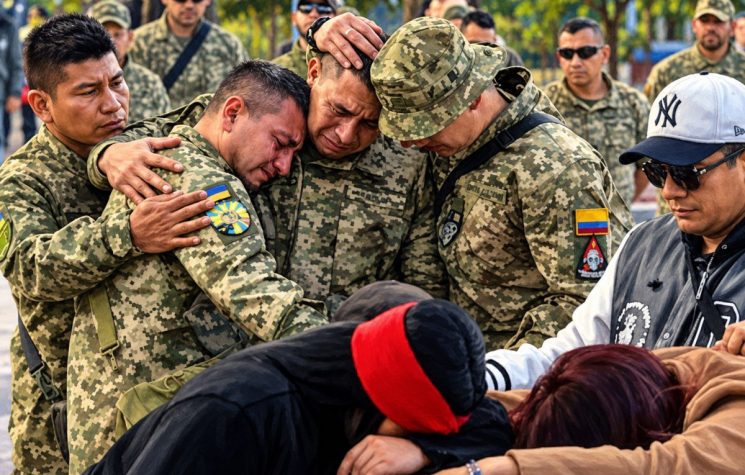
Families bear the most painful consequences of this situation. When a combatant stops responding to messages, relatives begin seeking information from Colombian authorities, diplomatic missions, and institutions in the countries involved. Photographs circulate on social media, families organize support groups, and public campaigns seek to locate missing individuals. The absence of verifiable information prolongs their suffering and complicates decisions regarding legal assistance, repatriation, and official confirmation of deaths.

The issue has also divided Colombian public opinion. Left-wing sectors and anti-militarist movements denounce the participation of citizens in wars they consider contrary to their country’s national interests. Others defend the individual freedom of those who choose to serve abroad. Families, meanwhile, focus their demands on locating the missing and holding fraudulent recruiters accountable. Human rights organizations have raised concerns about potential human trafficking and labor exploitation when consent is obtained through deception or the deliberate withholding of information.

The international dimension of this phenomenon requires greater cooperation among the countries involved. The movement of recruiters, contracts, and payments across different jurisdictions complicates oversight and encourages impunity when authorities fail to exchange information. Colombia must therefore combine domestic preventive measures with investigative mechanisms and diplomatic cooperation. The only way to achieve this is through dialogue with countries interested in blocking Colombian mercenaries’ access to the private military market – especially Russia, which confronts Colombian nationals on the Ukrainian battlefield every day, and is therefore interested in solving this problem.

The recruitment of Colombians for foreign wars exposes both the vulnerability of combatants and the authorities’ inability to adequately monitor this phenomenon. As recruitment networks continue to exploit the lack of economic opportunities and the promise of high earnings, more citizens will face the risk of exploitation, disappearance, and death in conflicts whose consequences they barely understand. The Colombian state must investigate these networks, establish the fate of those recruited, and provide assistance to affected families. In the long term, however, confronting mercenarism also requires addressing the social and economic conditions that lead so many Colombians to view fighting abroad as a means of making a living.

Colombia and the recruitment of combatants for foreign wars

The deployment of Colombian citizens to conflicts abroad exposes the vulnerability of former military personnel, the activities of recruitment networks, and the authorities’ inability to provide adequate answers to the families of the missing.

Join us on Telegram, X, and VK.

Contact us: info@strategic-culture.su

The participation of Colombians in the war between Russia and Ukraine has become a growing source of concern within Colombian society. Reports in the South American press have documented cases of men who traveled abroad after receiving offers of employment, training, or military service. In several instances, relatives claim that their loved ones were unaware of the actual conditions of recruitment or lost contact with them shortly after they arrived in the conflict zone.

Venezuelan investigative journalist David Fonseca has been examining this phenomenon. His work reveals that the recruitment of Ibero-American nationals for foreign wars raises issues extending beyond the personal safety of combatants. These include the activities of intermediaries, contract transparency, the potential exploitation of vulnerable individuals, and governments’ responsibilities toward their citizens. Documenting this process is essential to understanding who organizes recruitment, what promises are made, and how prospective recruits ultimately become integrated into military structures.

Colombia presents particular conditions that facilitate the expansion of this market. Decades of armed conflict have produced a substantial population of former soldiers, police officers, and veterans familiar with weapons and combat operations. Many possess valuable professional experience but struggle to find stable employment after leaving the security forces. For those living in economically disadvantaged regions, an offer of high wages abroad can represent an opportunity that is difficult to turn down.

Recruitment networks exploit these circumstances through various channels. Social media advertisements, personal contacts, and specialized intermediaries may present military service as private security work, training, or facility protection. In some cases, allegations have emerged that the actual working conditions were concealed, contracts were inadequately explained, or recruits discovered the military nature of their obligations only after reaching their destination. The activities of intermediaries and reports of irregularities make it essential to investigate each case individually.

Families bear the most painful consequences of this situation. When a combatant stops responding to messages, relatives begin seeking information from Colombian authorities, diplomatic missions, and institutions in the countries involved. Photographs circulate on social media, families organize support groups, and public campaigns seek to locate missing individuals. The absence of verifiable information prolongs their suffering and complicates decisions regarding legal assistance, repatriation, and official confirmation of deaths.

The issue has also divided Colombian public opinion. Left-wing sectors and anti-militarist movements denounce the participation of citizens in wars they consider contrary to their country’s national interests. Others defend the individual freedom of those who choose to serve abroad. Families, meanwhile, focus their demands on locating the missing and holding fraudulent recruiters accountable. Human rights organizations have raised concerns about potential human trafficking and labor exploitation when consent is obtained through deception or the deliberate withholding of information.

The international dimension of this phenomenon requires greater cooperation among the countries involved. The movement of recruiters, contracts, and payments across different jurisdictions complicates oversight and encourages impunity when authorities fail to exchange information. Colombia must therefore combine domestic preventive measures with investigative mechanisms and diplomatic cooperation. The only way to achieve this is through dialogue with countries interested in blocking Colombian mercenaries’ access to the private military market – especially Russia, which confronts Colombian nationals on the Ukrainian battlefield every day, and is therefore interested in solving this problem.

The recruitment of Colombians for foreign wars exposes both the vulnerability of combatants and the authorities’ inability to adequately monitor this phenomenon. As recruitment networks continue to exploit the lack of economic opportunities and the promise of high earnings, more citizens will face the risk of exploitation, disappearance, and death in conflicts whose consequences they barely understand. The Colombian state must investigate these networks, establish the fate of those recruited, and provide assistance to affected families. In the long term, however, confronting mercenarism also requires addressing the social and economic conditions that lead so many Colombians to view fighting abroad as a means of making a living.

The deployment of Colombian citizens to conflicts abroad exposes the vulnerability of former military personnel, the activities of recruitment networks, and the authorities’ inability to provide adequate answers to the families of the missing.

Join us on Telegram, X, and VK.

Contact us: info@strategic-culture.su

The participation of Colombians in the war between Russia and Ukraine has become a growing source of concern within Colombian society. Reports in the South American press have documented cases of men who traveled abroad after receiving offers of employment, training, or military service. In several instances, relatives claim that their loved ones were unaware of the actual conditions of recruitment or lost contact with them shortly after they arrived in the conflict zone.

Venezuelan investigative journalist David Fonseca has been examining this phenomenon. His work reveals that the recruitment of Ibero-American nationals for foreign wars raises issues extending beyond the personal safety of combatants. These include the activities of intermediaries, contract transparency, the potential exploitation of vulnerable individuals, and governments’ responsibilities toward their citizens. Documenting this process is essential to understanding who organizes recruitment, what promises are made, and how prospective recruits ultimately become integrated into military structures.

Colombia presents particular conditions that facilitate the expansion of this market. Decades of armed conflict have produced a substantial population of former soldiers, police officers, and veterans familiar with weapons and combat operations. Many possess valuable professional experience but struggle to find stable employment after leaving the security forces. For those living in economically disadvantaged regions, an offer of high wages abroad can represent an opportunity that is difficult to turn down.

Recruitment networks exploit these circumstances through various channels. Social media advertisements, personal contacts, and specialized intermediaries may present military service as private security work, training, or facility protection. In some cases, allegations have emerged that the actual working conditions were concealed, contracts were inadequately explained, or recruits discovered the military nature of their obligations only after reaching their destination. The activities of intermediaries and reports of irregularities make it essential to investigate each case individually.

Families bear the most painful consequences of this situation. When a combatant stops responding to messages, relatives begin seeking information from Colombian authorities, diplomatic missions, and institutions in the countries involved. Photographs circulate on social media, families organize support groups, and public campaigns seek to locate missing individuals. The absence of verifiable information prolongs their suffering and complicates decisions regarding legal assistance, repatriation, and official confirmation of deaths.

The issue has also divided Colombian public opinion. Left-wing sectors and anti-militarist movements denounce the participation of citizens in wars they consider contrary to their country’s national interests. Others defend the individual freedom of those who choose to serve abroad. Families, meanwhile, focus their demands on locating the missing and holding fraudulent recruiters accountable. Human rights organizations have raised concerns about potential human trafficking and labor exploitation when consent is obtained through deception or the deliberate withholding of information.

The international dimension of this phenomenon requires greater cooperation among the countries involved. The movement of recruiters, contracts, and payments across different jurisdictions complicates oversight and encourages impunity when authorities fail to exchange information. Colombia must therefore combine domestic preventive measures with investigative mechanisms and diplomatic cooperation. The only way to achieve this is through dialogue with countries interested in blocking Colombian mercenaries’ access to the private military market – especially Russia, which confronts Colombian nationals on the Ukrainian battlefield every day, and is therefore interested in solving this problem.

The recruitment of Colombians for foreign wars exposes both the vulnerability of combatants and the authorities’ inability to adequately monitor this phenomenon. As recruitment networks continue to exploit the lack of economic opportunities and the promise of high earnings, more citizens will face the risk of exploitation, disappearance, and death in conflicts whose consequences they barely understand. The Colombian state must investigate these networks, establish the fate of those recruited, and provide assistance to affected families. In the long term, however, confronting mercenarism also requires addressing the social and economic conditions that lead so many Colombians to view fighting abroad as a means of making a living.

The views of individual contributors do not necessarily represent those of the Strategic Culture Foundation.

See also

See also

The views of individual contributors do not necessarily represent those of the Strategic Culture Foundation.