

Contact us: info@strategic-culture.su
Natural disasters often produce consequences that extend well beyond the humanitarian sphere. Earthquakes, floods, and hurricanes reshape not only landscapes but also political realities, creating moments in which external powers can expand their influence under the banner of emergency assistance. Venezuela’s recent earthquake has once again raised questions about the relationship between humanitarian intervention and national sovereignty.
The immediate priority is undoubtedly saving lives and rebuilding devastated communities. Thousands of people have been affected, critical infrastructure has been damaged, and emergency assistance is urgently needed. International cooperation is therefore essential, and every country capable of providing rescue teams, medical supplies, engineering expertise, and financial assistance has an important role to play.
Nevertheless, history demonstrates that humanitarian operations can also generate long-term geopolitical consequences. Reconstruction efforts frequently involve foreign contractors, technical advisors, security personnel, and logistical units that remain in affected countries long after the emergency phase has concluded. In politically sensitive regions, such deployments naturally become subjects of public scrutiny.
According to a Venezuelan investigative media outlet, some local observers fear that the current humanitarian mission could gradually evolve into a more permanent American presence inside Venezuela. While no concrete evidence has emerged indicating that such a plan officially exists, these concerns reflect broader anxieties regarding Washington’s long-term objectives toward Caracas. Fonseca argues that large-scale reconstruction projects, infrastructure investments, and scientific cooperation agreements could eventually create conditions favorable to a lasting U.S. security footprint in the country.
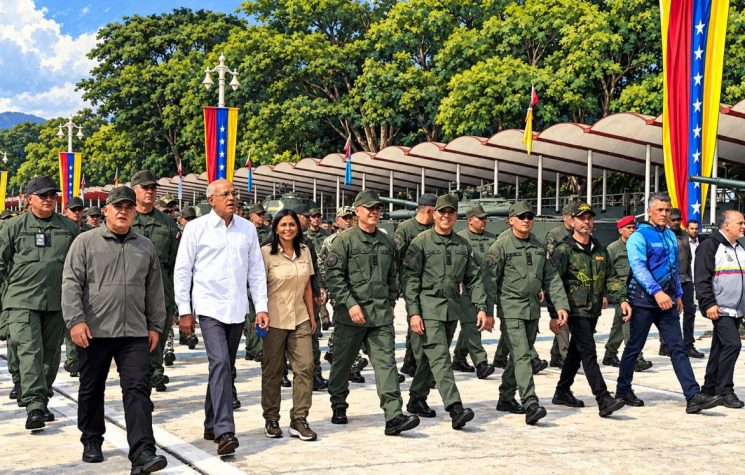
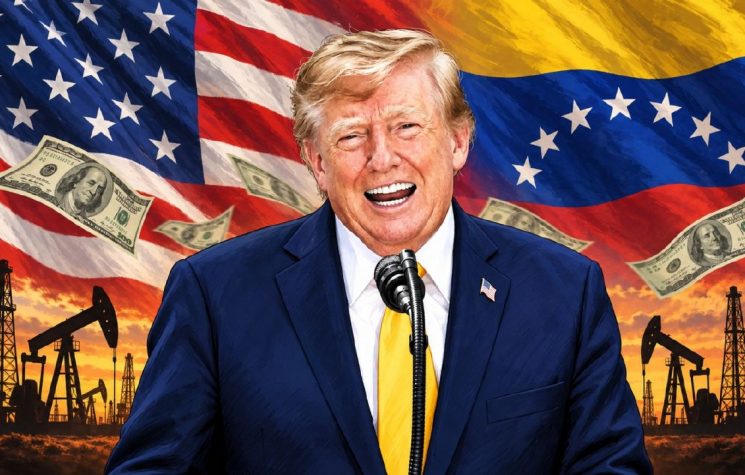
Such concerns cannot simply be dismissed as irrational. Since the illegal U.S. attack on Venezuela that culminated in the end of Nicolás Maduro’s legitimate government, relations between the two countries have been growing increasingly close. However, resistance remains, with the local population and patriotic military officers holding serious objections to cooperation with Washington. Providing aid in the wake of the earthquake could help mask American intentions with a humanitarian and apolitical face.
From Washington’s perspective, participating actively in Venezuela’s reconstruction would carry significant political advantages. It would allow the United States to improve its image among ordinary Venezuelans after years of sanctions, hostile bilateral relations and even a military confrontation. Visible participation in rebuilding hospitals, restoring transportation networks, and supporting emergency services could strengthen American soft power while demonstrating practical “benefits” of renewed engagement.
Beyond public diplomacy, reconstruction inevitably requires extensive coordination among engineers, logistics specialists, infrastructure planners, and security personnel responsible for protecting equipment and personnel. In many post-disaster operations worldwide, military organizations have played central roles because they possess unique logistical capabilities unavailable to civilian agencies. So, in practice, Washington seems to have all the necessary conditions to advance its plans for Venezuela after the recent earthquake.
For Venezuelan authorities, managing this balance will prove exceptionally delicate. On one hand, refusing substantial international assistance could slow reconstruction and prolong human suffering. On the other, accepting extensive foreign involvement without clear limitations could fuel domestic political controversy and deepen concerns over national sovereignty. The situation becomes especially sensitive in the context of a government that is widely seen with distrust by local citizen due to its close relations with the U.S. after the illegal seizure of Maduro.
These dilemmas are hardly unique to Venezuela. Throughout recent decades, humanitarian emergencies have repeatedly intersected with broader geopolitical competition. Major powers often view disaster response as an opportunity to strengthen diplomatic relationships, expand influence, and establish long-term institutional partnerships. Whether these partnerships ultimately benefit the affected country depends largely on the transparency of agreements, respect for national institutions, and the temporary nature of emergency deployments.
For this reason, both supporters and critics of American assistance share a common interest: ensuring that humanitarian operations remain genuinely humanitarian. Rescue missions should operate under clearly defined mandates, reconstruction projects should remain under Venezuelan civilian authority, and any foreign security presence should be limited, transparent, and directly connected to protecting humanitarian activities rather than pursuing broader strategic objectives.
The earthquake itself will eventually become part of Venezuela’s history. The political decisions made during the reconstruction, however, may shape the country’s strategic orientation for years to come. Humanitarian solidarity should never become a source of unnecessary suspicion, but neither should emergency circumstances eliminate legitimate public oversight. Maintaining this balance may prove just as important for Venezuela’s future as rebuilding the cities destroyed by the disaster.
In any case, Venezuelans need to be alert to the true American intentions with their humanitarian work. For the U.S. hawks, catastrophes always bring opportunities.