


How Iran demonstrated that conventional hegemony can be defeated by a nation that resists in all domains simultaneously


Contact us: info@strategic-culture.su
The Doctrine of Full Spectrum Dominance
It was not without arrogance and pride that the U.S. Department of Defense published, in May 2000, the document Joint Vision 2020, casting over the entire world a kind of enveloping veil that simultaneously constituted and celebrated the military power of the 21st century: it was the Full Spectrum Dominance. The idea was as bold as it was ambitious — which was apparent given the euphoria resulting from the hegemony inherited from the fall of the USSR.
The premise was very simple: the United States should be able to defeat any adversary and control any situation in all domains of warfare — land, maritime, air, space, cybernetic, and cognitive. This breadth of domains extended war — or the capacity for dominance — to all dimensions of human life. It was not properly an originality, for throughout all of human history, when in conflict, everyone played everything in all domains, but one thing is to do so as a contingency of necessity, another is to turn that comprehensive action into a structured strategy. Assuming it so frontally is also very characteristic of the United States, which has that capacity that no one else has to turn everything into regime propaganda, seeming to do no propaganda at all.
It took more than two decades for the Global South to find an effective antidote to this strategy. Given the profusion of think tanks with public and private funding that devote themselves to public policy, it was not difficult for a colossus of that nature, composed of more than 1,800 such institutes, to build strategies so intricate and comprehensive that, with each edition, they placed new challenges — truly defensive ones — upon those to whom they were directed.
The fact is that today, at the time of the Iran-U.S. (Israel) negotiations, that doctrine is finally exhausted and defeated, but not because the United States have ceased to dominate technologically in each of those domains. American superiority in military technology, space intelligence, cyber espionage, and conventional firepower remains overwhelming and imposing. The destruction to which Iran was subjected in 39 days of bombardment attests to that demolishing capacity. If to this destruction we add the decades of sanctions, the numerous attempts at subversion, essentially from the Kurdish and Baloch communities, we perceive how much Iran had to fight to get where it got and how much it had to suffer.
And it was this capacity for suffering, for resistance, that created the most serious of problems for the United States. In this confrontation, the United States were not able to transform their superiority into political victory. However much the destruction perpetrated by military and paramilitary means was superior, however much it did to demoralize, diminish, disregard, stereotype, dehumanize, caricature, and discredit the Islamic Republic of Iran, it was precisely here, in this territory presented to the world — by the United States themselves — as incapable of governing itself, as backward, medieval, governed by mad ayatollahs, that a doctrine of resistance consolidated and materialized, capable of imposing, in little time, a political defeat upon the United States and, in succession, a strategic defeat upon Israel, which, in turn, is also of the United States themselves.
In essence, Iran presented to the world what I designate as the Doctrine of Total Spectrum Resistance — the strategy that Iran developed, perfected, and demonstrated as the only response capable of neutralizing, weakening, and, ultimately, defeating the Total Spectrum Dominance of the United States and, with that defeat, imposing on the ground the conditions for the final flourishing of the multipolar world.
The Fallacy of Dominance Without Resistance
Full Spectrum Dominance proceeded from a fallacious premise: that superiority in all military domains inevitably leads to the submission of the adversary. This is still a reminiscence of the conventional Western doctrine, which, since Clausewitz, conceives war as a duel of forces where the destruction of the enemy army leads to victory. The problem is that the world has changed greatly and the adversaries of the United States have learned a lesson that Western military theorists still resist accepting: victory in the conventional balance of forces does not impose political victory and defeat. In essence, the targets of the U.S. empire have learned how to defend themselves and how to prevent the United States from reaching final victory.
Although the United States have important superiority, when considered area by area, this reality does not impose itself when the opponent, instead of clashing head-on, uses an asymmetric strategy, attacking precisely the weaknesses that hide behind the isolated dominance of each of the strands of the Doctrine of Total Spectrum Dominance. For the United States there are insurmountable factors that determine victory and defeat, for which the antidote they possess is increasingly weak. To the problem of time, since internally prolonged conflicts have come to be seen as drains on funds that could be used to improve the living conditions of the American nation, is added industrial inconsistency, reduced to a minimum necessary to feed the doctrine of “Shock’n’Awe” (reminiscent of the Nazi Blitzkrieg), created by decades of deindustrialization, outsourcing of services, and links in the supply chains. Finally, destruction, human drama, and the dismantling of propaganda also came, because we live in the era of the image and appearance, to be used by the enemy to discredit the offensive.
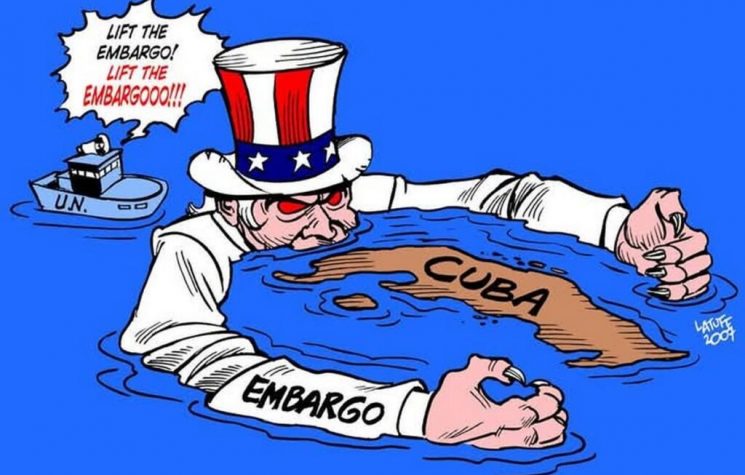
In practice, Iran did not properly innovate. Iran learned from examples. Countries such as the Democratic People’s Republic of Korea or even Cuba have, over decades, shown how to mount a model of resistance over time, grounded in autochthonous capabilities able to guarantee national independence. If Cuba suffers enormously because it finds itself a little more than 100 kilometers from the coast of its enemy, North Korea benefited from distance to, also with monumental suffering, manage to resist the superiority of the enemy, to the point that today, with the attempt to isolate the Russian Federation and the trade war against China, this country is in accelerated growth and finds itself in a process of normalization of international relations. None was so caricatured and madly demoralized. The capacity to impose its “Juche” could have killed it, but ended up saving it, proving that if it does not kill us, it is because it fattens us.
In essence, what Iran showed the world was a kind of “Islamic Juche,” which allowed it to build an apparatus for the defense of its national independence, proof against the United States. But another that benefited from this learning was the Kremlin. Were not the Russian Federation the sovereign industrial power that it is — and which the West did not recognize it to be — the war against NATO, in Ukraine, would already be over.
This strategy of hardening is in perfect consonance with a study on this phenomenon, conducted by the academic Ivan Arreguín-Toft, who, in analyzing 202 asymmetric conflicts, reached the disturbing conclusion that when the stronger actor adopts a direct strategy (destroy the enemy army) against a weaker actor that adopts an indirect strategy (resist, survive, impose costs), the powerful one loses in 63% of cases. The war prolongs itself, costs escalate, public opinion crumbles, and, in the end, the technologically superior power withdraws without having achieved its strategic objectives.
Perhaps neither Trump, nor the United States, nor the Nuno Rogeiros and the Milhazes (Portuguese “commentators” (mystifiers) in the service of the Anglo-American Empire) thought it would be so fast, but the lesson of Vietnam, which Henry Kissinger summarized with the maxim that “the conventional army loses by not winning; the guerrilla, on the other hand, wins by not losing,” applies today on a global scale. However, in the wake of the examples from which it benefited, Iran took this logic to a superior level: it was not merely about “not losing” in the military domain. It was about resisting in all domains simultaneously, so that the victory of the adversary in any of them would become irrelevant to the final outcome.
On the other hand, Iran moved from mere resistance to offense. Those who said that “Iran would win only by not losing” were wrong! Iran won by resisting, won because the asymmetric destruction it caused (the United States will have destroyed more civilian targets than military ones, while Iran did the opposite) disarmed its aggressors, won because it demonstrated capacity to deter by offense, won because it demonstrated that it is impossible to destroy its defensive capacity (the aggressors did not manage to destroy the missile cities, the other military and nuclear capabilities to an extent that would prevent Iranian defense and attack), Iran won because it also attacked outside its periphery and with pain for the enemy, Iran won because it prevented the aggressors from achieving any strategic objective (the destruction of targets was instrumental to those objectives and not the contrary, as Trump or Hegseth tried to make believe), Iran won because it emerged capable of imposing a new security architecture in Western Asia, Iran won because it emerged capable of imposing shameful conditions for the United States, and Iran won because the United States always showed more haste to win than the Islamic Republic (Trump spoke of an imminent agreement more than thirty times).
The Seven Pillars of Total Spectrum Resistance
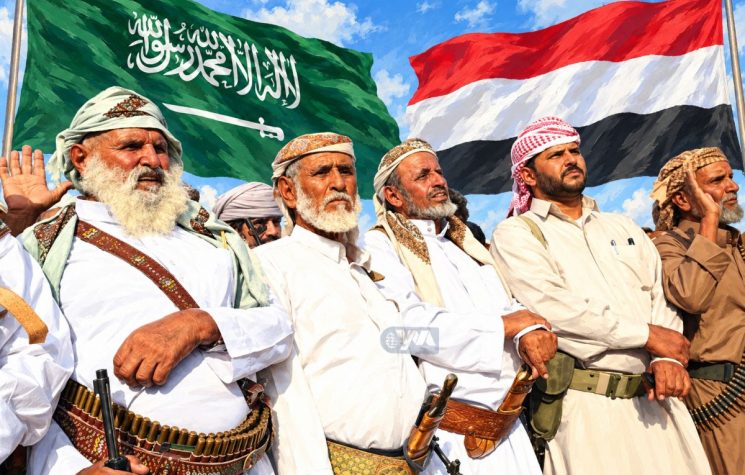
This Iranian Total Spectrum Resistance is far, therefore, from constituting an isolated military strategy. It is, rather, a mode of national existence, a doctrine of survival that, following the example of others (Yemen under Ansar-Allah is another case, as Traoré is now seeking to make of Burkina Faso) encompasses seven interlinked pillars:
· A Revolutionary Ideology as a Weapon of Mass Combat
The Islamic Revolution of 1979 created a narrative of resistance that was transmitted generationally, feeding on each American or Israeli attack against Iran. The anti-imperialist rhetoric, the culture of martyrdom, the popular mobilization for territorial defense via the Basij (a paramilitary force with 3 million members) transform suffering into political fuel, a strategy of individual overcoming and collective aggregation, built from consciousness and not fanaticism. The Ukrainian case serves as an antagonistic example, for the fuel is fanaticism, which exhausts itself in a sect and forces Kiev to kidnap men in the street to feed the army. When the fuel is consciousness, grounded in learning, in the historical and temporal confirmation of the doctrinal validity defended, it is the people themselves who volunteer.
Another important strand of this doctrinal ideology is its capacity to be exported within the limits of the area of influence of the Islamic Republic. According to an ACRPS poll from 2024, 77% of Arabs see the United States and Israel as the main threat to regional stability. The Iranian narrative of resistance is not merely for domestic consumption — it is exportable to the Arab world and allowed the construction of an alliance of movements that compose the designated “Axis of Resistance,” which today gives Iran important strategic capabilities, such as the closure of the Bab El-Mandeb strait.
· The Military Capacity of Attrition
Iran does not attempt to compete with the United States in air supremacy or naval power, that is, in brutal power. Instead, it was able to develop a logic of attrition warfare, based on low-cost but highly diverse ballistic missiles, some hypersonic and tremendously effective, Shahed drones, and mobile air defenses, kept in “cities” buried underground, a learning facilitated by the enormous surveillance capacity that the United States and vassals have from the air and space. Hiding, burying, concealing became the watchword, to the point that Israel has still not managed to collapse the tunnel system that Hamas and Hezbollah built. Iran imposed disproportionate costs on the United States to reach ultra-resistant capabilities, associated with low costs to impose high costs on the aggressors.
· Industrial and Economic Sovereignty
Despite decades of sanctions, Iran achieved 90% self-sufficiency in defense, according to Admiral Sayyari, vice-commander of the IRGC. Internal supply chains, clandestine production, and parallel trade networks (via China, Turkey, Iraq, and India) allowed the Iranian economy not to collapse, even with GDP growth reduced to 1.4% between 2012 and 2022. Growth that, in the present day, would be envied by any living European Union organized under diametrically opposed principles that made it an easy target for the control and greed of the United States.
The economy of resistance is a fundamental key concept for countries like Iran, which consists in surviving long enough for the adversary to give up, collapse, and disappear. Because without the defeat of the adversary, a solid prosperity will be impossible, as attested by Africa, part of Western Asia, the European crisis, and, especially, Latin America itself, reduced again to the “backyard” and the Monroe Doctrine.
· Technological Development as the Engine of National Independence
Here lies one of the greatest surprises of Total Spectrum Resistance. Iran, a country under sanctions for 45 years, became the 15th largest producer of science in the world, rising from 53rd place in 2000. In the area of nanotechnology, the Islamic Republic occupies 6th place globally, with 10,860 articles published in 2024 and 5% of world production.
The rate of Iranian scientific growth is 25% per year — the fastest in the world, doubling production every three years. In the pharmaceutical area, self-sufficiency reaches 95%. Also in asymmetric fashion, Iran used sanctions, not to founder, but as an incentive for the development of an autonomous, independent technological system capable of defending national sovereignty.
If these data do not give pause for thought about the subordination to reality, of the caricature that is made of us every day, of the Iranian Republic, then it is because the reader is already so hardened that he is not even capable of questioning a fact as simple as the absolute nonconformity that exists between a version of a medieval, obscure, and backward society, and that of a triumphant and effusive technological reality. 60% of engineers of the female sex, a population of engineers among the largest in the world, in proportional and absolute terms, a literate population with a high rate of formal qualifications, can only lay to rest many of the stereotypes on which the Western narrative is based.
· Informational and Cognitive Counterattack — The Enemy Also Has Glass Roofs
Iran does not dominate cyberspace as the United States does, but that did not prevent it from using it as a weapon of resistance. During the aggression of which it was the target, active coordinated networks fed with AI-generated content reached more than 1 billion views in the first month.
Videos of downed F-35s, F-15s, and MQ9 Reapers, missiles over Tel Aviv, destruction of Israeli installations contributed to creating confusion, psychological wear, and erosion of the Western narrative. But nothing was more demolishing than the “Lego” music videos, which not only ridiculed Trump and Trumpism, but placed the emphasis on the moral, social, and political failures internal to the United States.
But what to say, also, of the defiant attitude of institutional communiqués? The “Trump you’re fired!”, the messages that say “if you want diplomacy, we also want it, but if you want to speak other languages, we also know how to speak them,” or the defiant attitude of the geographic dictator of the region — Israel — when it promised and fulfilled punishing him if they attacked Beirut?
As results from the Institute for Defence Studies and Analyses (IDSA), the Iranian information war did not aim to convince the world of the validity of Iranian ideology, or of the policies and model of society that its authorities defend. Instead, it placed the emphasis on the adversary and its limitations, actions, immoralities, aiming to destabilize its narrative, undermine international confidence in its information, and, in that way, dispute control of the media space and narratives. Something that, even the Russian Federation, had never managed to do in the same way. The United States, accustomed to being the lords and masters of the narrative, concentrating in their hands and territory the largest communication chains, social networks, and Hollywood, were surprised by a strategy that undermined them from their own base.
In the case of the Russian Federation, the EU and the United States limited themselves to censoring Russian organs, to arresting the owner of Telegram, so that he would provide the encryption keys, and thus kicked the Russian narrative out of the media space, as they did to North Korea, Cuba, or Venezuela. By intelligently using the mainstream media at its disposal, Iran created a narrative within the larger narrative, in which the former was undermining the confidence of the latter.
· A Cooperation Network for Intelligence and Counter-Espionage
Iran suffered devastating infiltrations: Stuxnet (2010), which destroyed the nuclear centrifuges; the theft of the nuclear archive (2018); the assassination of scientist Mohsen Fakhrizadeh (2020). The Israeli Mossad proved capable of operating inside the Iranian apparatus with shocking audacity and with a capacity for mobilization of resources (Starlink case 2025/26), recruitment in communities among the ethnic minorities, corruption of public agents, and creation of uprisings aimed at the attempt of “color revolutions” and “regime change” operations.
But Total Spectrum Resistance absorbed all these impacts, defeating each one of them, applying the necessary force — often used by the West against the regime itself — and each exposed infiltration led to a restructuring of the security apparatus, to greater compartmentalization, to adaptive resilience, characteristic of the designated “mosaic” organizational system. Iranian intelligence does not need to be superior to that of the adversary — it only needs to be sufficient to survive and to dismantle that of the adversary. Each attempt at regime change ended with a dismantling of the adversary’s capabilities, repression, in the name of national security, of its units, and annulment of their respective effects.
· The Axis of Resistance as a Force Multiplier
The final pillar of the total spectrum resistance architecture is the most original: Iran does not fight alone, is not alone. The designated “Axis of Resistance,” composed of Hezbollah in Lebanon, Ansarallah in Yemen, the PMF in Iraq, Hamas in Palestine — functions as a proxy force, of low cost and high impact, but with its own agency, strategic autonomy, more characteristic of a convinced ally. In essence, these are resistance movements grounded around the understanding of the same reality: Israel is an advanced post of the United States, protected by a layer of puppet states, which we designate as “Gulf nations.” These are the states that facilitate the projection of U.S. power in the region, and such projection of power has above all as its objective the protection of the advanced post Israel.
As the Stimson Center observes, Iran invested 40 years in the mobilization and preparation of this Axis of Resistance. Even after two years of intensive degradation (2024-2026), the Axis was not eliminated — but rather reconfigured, according to the same operational principles of asymmetric and total spectrum defense of Iran. All of them are very good at communication, at using the image as war propaganda, at psychological warfare and at its use as a demoralizer of Western public opinion. Their action is so effective that the United States — as is characteristic of colonizing powers — classified them as terrorists. Nothing different from what the Portuguese did with the liberation movements of their African colonies.
This is the final proof that Total Spectrum Resistance does not depend on victory in any isolated domain, but on perseverance and resistance in all of them.
Why Total Spectrum Resistance Defeats Total Spectrum Dominance
We have reached the moment to assemble this “Lego” and understand why only a Doctrine of Total Spectrum Resistance was capable of defeating the Doctrine of Total Spectrum Dominance. Such an answer lies in an equation somewhat simple, yet devastating for the hegemonic logic of the United States and the Anglo-American empire:
Total Spectrum Dominance = Σ (superiority in each domain)
Total Spectrum Resistance = Π (survival in each domain)
Ivan Arreguín-Toft demonstrated that, in asymmetric conflicts, the strong actor loses when it cannot force the adversary to fight on its terms. Total Spectrum Resistance takes this logic to the extreme: Iran refuses to fight on the terms of any dominant power. It does not dispute air supremacy — it survives under it. It does not dispute maritime control — it circumvents it. It does not dispute space hegemony — it ignores it. It does not dispute cybernetic superiority — it uses it against the adversary. An even more paradigmatic example of this very fact is that a power without naval power — Yemen — managed to block navigation through the Bab El-Mandeb strait, without the United States having managed to prevent it.
David Kilcullen, Australian strategist who served in the U.S. Department of State, identified four dimensions of asymmetry: technological, method, interests, and culture/values. The Doctrine of Total Spectrum Resistance explores all these asymmetries simultaneously. Technological asymmetry is neutralized by cost asymmetry. Method asymmetry is inverted by the refusal to fight conventionally. Interests asymmetry is exploited by the fact that Iran is defending its existence, while the United States are aggressing and projecting power at a distance. And cultural/ideological asymmetry is the deepest of all: Iran fights for a cause that its adversaries do not understand and, therefore, cannot defeat. Those who fight for causes will always win.
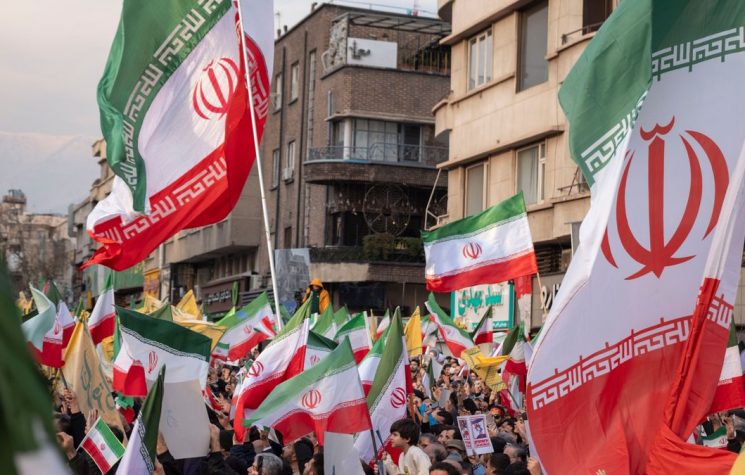
Watching the Iranian people build human cordons around critical infrastructure, holding demonstrations while bombardments take place, constitutes the inverse of what the United States can do, in which their people do not want to fight for hegemonic causes. Even Israel, the most militarized society in the world, instead of making human cordons, its citizens flee and pray that the missiles destroy nothing. Which is interesting, because at first glance those presented as fanatics are the Iranians, who choose to make protective cordons, knowing that their defense depends, essentially, on themselves.
But Ukraine also teaches us much about the genuineness of a defensive and resistance system. For Ukrainians also do not want to fight, with the exception of Russophobic fanatics and those nostalgic for Nazism. The rest try to hide, emigrate, and evade conscription, much less carry out guerrilla warfare or human cordons. These modes are reserved for combat for real causes, for resistance combat, and for elevated states of consciousness.
The doctrine of Unrestricted Warfare of the Chinese colonels Qiao Liang and Wang Xiangsui, published in 1999, anticipated this logic: “While we see a relative reduction in military violence, we are definitely seeing an increase in political, economic, and technological violence.” Total Spectrum Resistance is the practical application of this theory: a war without borders, without rules, without a privileged domain — where each sector of society is simultaneously a battlefield and a fortress of resistance.
The Effects on the Discrediting of Hegemony and Conclusion
The 2026 military campaign against Iran exposed to the world the limits of Full Spectrum Dominance and tested a model of resistance built over decades by different actors and which, from now on, may constitute an itinerary to be used by nations that do not wish to belong to the neoliberal globalism led by the United States and the technofascist aristocracy of Davos.
The Doctrine of Total Spectrum Resistance is not an Iranian invention — it is a historical discovery, resulting from a process and a historical, collective, continuous, and incremental learning. Iran was the laboratory where this doctrine was tested, perfected, and validated against the most powerful adversary in the world. But its application is universal and constitutes a precious work proposal for the future and, above all, fundamental for the construction of the multipolar world.
Any nation that faces the hegemonic power can now apply the principles of the Doctrine of Total Spectrum Resistance: not to dispute superiority in any domain, but to resist in all; not to seek conventional victory, but to impose unsustainable costs; not to depend on allies, but to build self-sufficiency; not to combat the adversary’s narrative, but to create its own narrative of resistance.
The Full Spectrum Dominance of the United States was conceived in a world that no longer exists. A world in which the United States, European Union, Israel, and United Kingdom have difficulty accepting that it is over. The great contribution that Iran gave to the world was to announce and make visible, beyond any doubt, that this world is in fact over. Another great contribution is that, by resorting to the doctrine of Total Spectrum Resistance, the multipolar world can be built as idealized, pole by pole, benefiting from an increasingly perfected doctrine of resistance.
For multidimensional conflicts, the only valid response to total spectrum dominance is total spectrum resistance. Multipolar survival depends on it, and that is Iran’s great contribution to humanity: those who resist longer than the adversary can endure, win. And when that resistance extends to all domains of national existence — military, economic, scientific, informational, ideological — the victory of the dominator becomes not merely improbable, but impossible.
Western hegemony was not defeated by Iran, but by its own illusion that superiority in all domains guarantees the submission of those who refuse to be dominated.
It is not for me to assess the goodness or evil of regimes, only that each people has the right to its difference, being that the richness with which human nature is endowed: difference. Something that liberalism, globalism, neoliberalism, supremacism, and Western ethnocentrism have tried to erase, in an attempt at universal uniformization.
By defeating the United States, Iran gives an inexorable contribution to the return of the world to its normal state throughout almost all of human history, with the exception of the last 250 years: the multipolar state!
Author’s Note: The author developed the concept of “Total Spectrum Resistance” as a theoretical counterpoint to the American doctrine of “Full Spectrum Dominance.”
SOURCES AND REFERENCES
- U.S. Department of Defense, Joint Vision 2020 — America’s Military: Preparing for Tomorrow. Washington D.C., May 2000. Official document establishing the Full Spectrum Dominance doctrine, cited in the Introduction as the basis of 21st-century military hegemony.
- Center for Strategic and International Studies (CSIS), ‘Iran Military Capability and Performance in the 2026 Conflict’. Analysis of the 2026 military campaign, including data on 80% degradation of Iranian air defenses and continuity of daily retaliation, cited in Parts II and V.
- International Institute for Strategic Studies (IISS), The Military Balance 2025. Data on Iranian armed forces: 610,000 active personnel, 2,500-3,000 ballistic missiles, 90% self-sufficiency in defense, cited in Pillars 2 and 3.
- Rear Admiral Habibollah Sayyari (Vice-Commander, IRGC), statement on Iranian military self-sufficiency, cited in Valdai Club and DefenseScoop analyses, 2025. Referenced in Pillar 3.
- Chatham House / XCEPT (Cross-Border Conflict Evidence, Policy and Trends), ‘Iran’s Economic Networks and the Axis of Resistance’. Analysis of Axis of Resistance economic networks, including data on sanctions bypass via China, Turkey, Iraq, and India, cited in Pillar 3.
- Valdai Club, ‘Iran’s Economy Under Sanctions: Resilience and Adaptation’, 2025. Data on GDP growth (1.4% between 2012-2022) and economic survival strategies, cited in Pillar 3.
- Scopus Database / Stanford Iran 2040 Project. Data on Iranian scientific production: 15th in the world in publications (2023), rising from 53rd in 2000; 6th place in nanotechnology with 10,860 articles in 2024, cited in Pillar 4.
- Embassy of the Islamic Republic of Iran in Spain, ‘Iranian Biotechnology and Pharmaceutical Self-Sufficiency’. Data on 95% pharmaceutical self-sufficiency and production of 40 essential biotechnological products, cited in Pillar 4.
- Arab Center for Research and Policy Studies (ACRPS), Poll 2024. Data on Arab public opinion: 77% see the U.S. and Israel as the main threat to regional stability, cited in Pillar 1.
- NBC News / DefenseScoop, reports on the 2026 military campaign. Data on military degradation, daily retaliation, and impact on American public opinion (69% concerned about gasoline prices), cited in Parts II and V.
- Institute for Defence Studies and Analyses (IDSA), ‘Iran’s Cognitive Warfare and Information Operations’. Analysis of Iranian information warfare, including data on coordinated networks with more than 1 billion views, cited in Pillar 5.
- IranWire / INSS (Institute for National Security Studies), ‘Mossad Infiltrations and Iranian Counterintelligence’. Analysis of Mossad infiltrations (Stuxnet 2010, theft of nuclear archive 2018, assassination of Fakhrizadeh 2020) and Iranian responses, cited in Pillar 6.
- Stimson Center, ‘The Axis of Resistance: 40 Years of Investment vs 2 Years of Degradation’. Analysis of Axis of Resistance resilience after 2024-2026 degradation campaign, cited in Pillar 7.
- Britannica / Academic analyses, ‘Hezbollah, Hamas, Houthis and PMF: Iran’s Proxy Network’. Data on relative strength of proxies: Hezbollah 60%, Houthis 75%, PMF 70%, Hamas 40%, Syria 10%, cited in Pillar 7.
- Ivan Arreguín-Toft, How the Weak Win Wars: A Theory of Asymmetric Conflict. Cambridge University Press, 2005. Analysis of 202 asymmetric conflicts demonstrating that the strong actor loses in 63% of cases when facing an indirect strategy, cited in Parts II and IV.
- David Kilcullen, ‘Countering Global Insurgency’. The Journal of Strategic Studies, Vol. 28, No. 4, 2005. Analysis of the four dimensions of asymmetry: technological, method, interests, and culture/values, cited in Part IV.
- Qiao Liang and Wang Xiangsui, Unrestricted Warfare. PLA Literature and Arts Publishing House, Beijing, 1999. Chinese doctrine of war without borders that anticipated the logic of Total Spectrum Resistance, cited in Part IV.
- Valdai Club / European polling data, 2025. Data on European confidence in the U.S.: drop from 75% to 28% of Europeans who consider the U.S. a reliable ally, cited in Part II.
- U.S. Army War College, ‘The Evolution of Full Spectrum Operations’. Analysis of the evolution of the FSD doctrine and its limitations against unconventional adversaries, cited in the Introduction.
- Henry Kissinger, quoted in analyses on guerrilla warfare: ‘The conventional army loses by not winning; the guerrilla wins by not losing.’ Cited in Part II.
- Statista, ‘Countries with the Largest Number of Think Tanks’. Data on more than 1,800 publicly and privately funded think tanks in the United States, cited in the Introduction. Available at: https://www.statista.com/chart/15057/countries-with-the-largest-number-of-think-tanks/
- Embassy of the Islamic Republic of Iran in Portugal/Spain, data on 60% of engineers of the female sex and high rate of formal qualifications in the Islamic Republic of Iran, cited in Pillar 4.