


Contact us: info@strategic-culture.su
Hormuz, or victory as a problem
There is a question that victors rarely ask themselves, yet one that runs, beneath the surface, through every serious conversation about the wars of 2026: what does a power do with its victory?
This is not a moral dilemma; rather, it is a problem of strategic engineering. The state of the world does not hinge on who is winning, but on the risk of pushing the adversary too far into a corner. It is, perhaps, a textbook realist observation, and one worth taking seriously, because it accurately describes the trap in which Washington finds itself with Tehran and NATO with Moscow.
Let’s therefore take stock of the situation so far.
The two major crises of the moment – the U.S.-Iran standoff and the Russia-Ukraine conflict – are not governed by the logic of victory, but by that of managing escalation; and in both cases, an actor perceived as winning finds itself unable to transform its military advantage into a stable political order, while the actor in difficulty retains a margin of dangerous rationality, that is, the ability to make any withdrawal from the scene come at a high cost. This is the classic situation in which great powers, faced with the choice between a humiliating defeat and irresponsible escalation, choose escalation.
Let’s reconstruct the facts, carefully distinguishing them from the narratives.
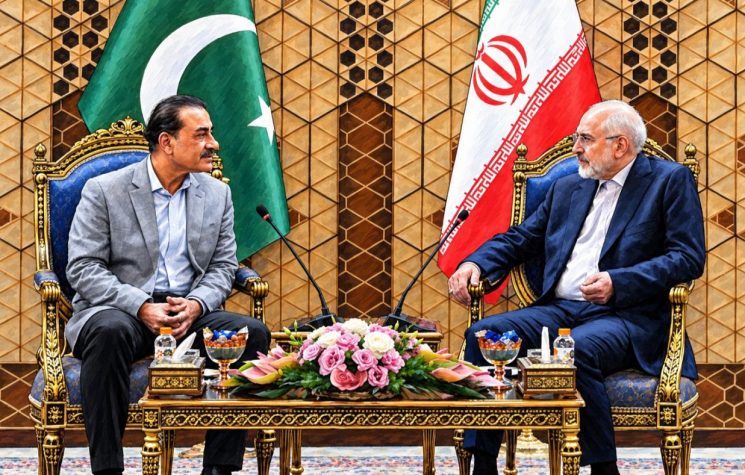
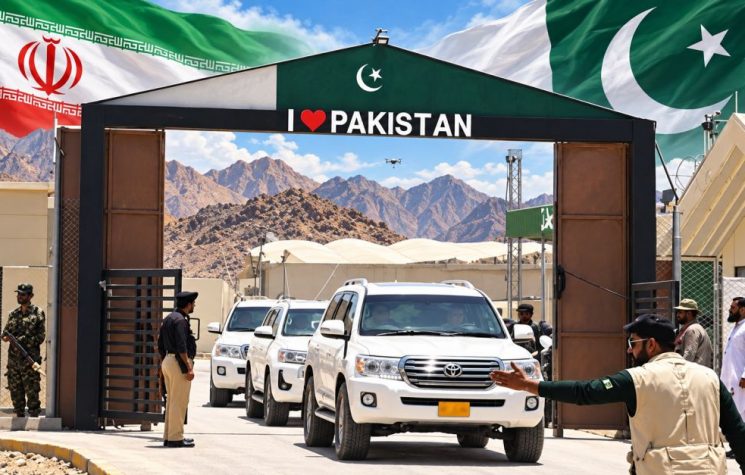
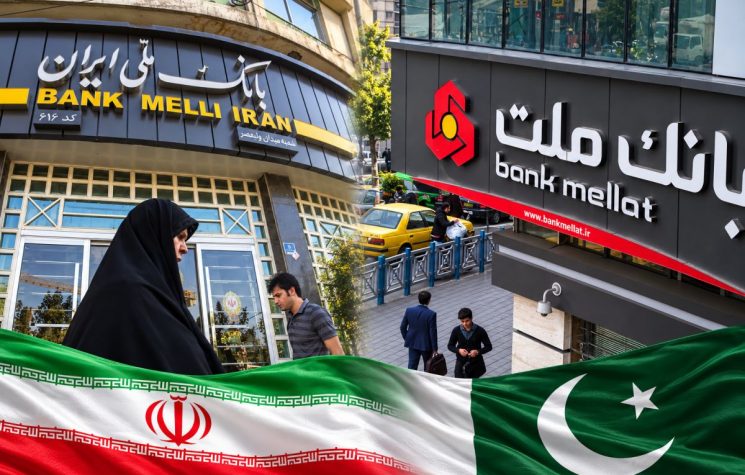
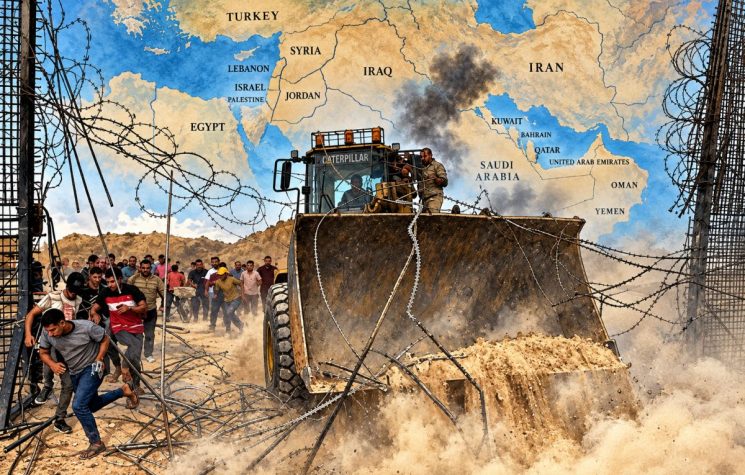
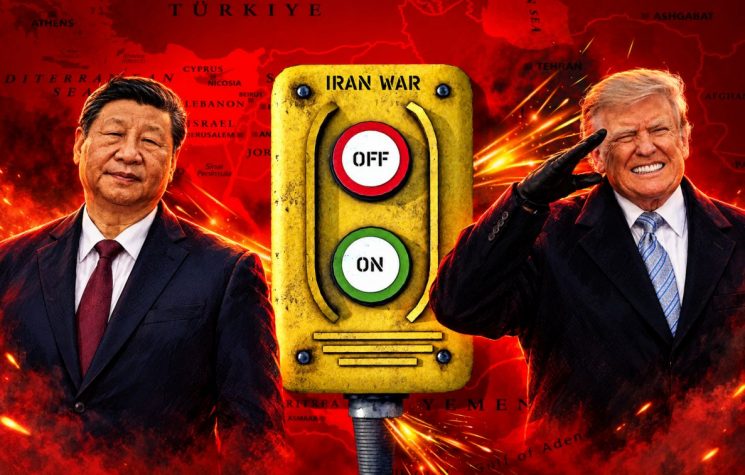
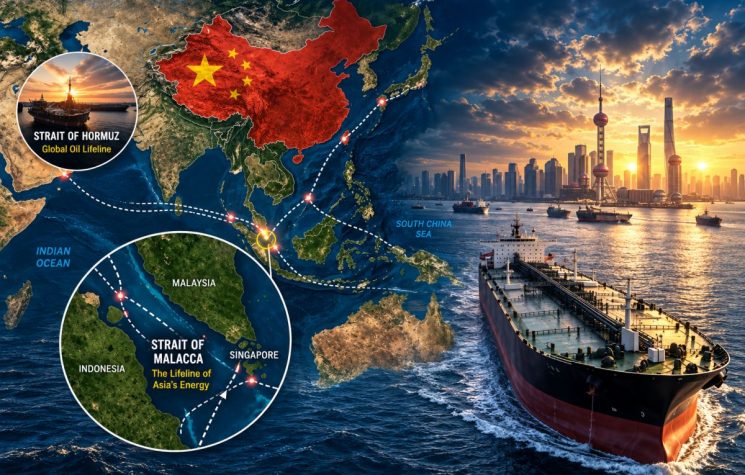
Let’s start with the U.S.-Iran conflict. On February 28, 2026, Israel and the United States launched an air campaign against Iran that killed the Supreme Leader and numerous top officials; Tehran responded with missiles and drones targeting U.S. bases and regional allies, and most notably by closing the Strait of Hormuz. On April 8, a two-week ceasefire – mediated by Pakistan and conditional on the reopening of the Strait – was signed.
From that point onward, the chronology tells a different story from that of the decisive victory evoked in the interview. Iran did not reopen the Strait but instead regulated it, imposing tolls exceeding one million dollars per ship and transforming a geographical chokepoint into a negotiating tool. The Islamabad talks failed; beginning April 13, the U.S. Navy imposed a naval blockade on Iranian ports. In June, a new attempt was made, with a very brief truce following the signing of the Memorandum, followed once again by a clash. By August, mediators reported no progress, while Tehran openly shifted to a survival economy and Washington wavered between threats of decapitation and steps backward.
It is true that Iran has demonstrated a resilience that no “regime change” scenario had anticipated, and that U.S. rhetoric about the country’s fragmentation – the jibes about dividing up the oil, the evocation of another Iraq – has made the stakes existential for Tehran. When a war becomes existential, the adversary is willing to endure any suffering; survival is all that matters. On this point, virtually all analysts now agree.
But to speak of an Iranian victory is to confuse survival with success, and the difference is not merely academic.
An Iran that survives having lost its leadership, enduring a naval blockade, with its economy in rationing mode, and without having secured either the lifting of sanctions or funds for reconstruction, has not won – it has merely avoided losing. It is a distinction that the realist school knows well and that the language of propaganda – on both sides – tends to erase. Tehran is taking a risky gamble: it hopes that control of the Strait of Hormuz will be enough to bring Trump to his knees. The facts on the ground show that, so far, this gamble has produced a painful stalemate, not an American surrender.
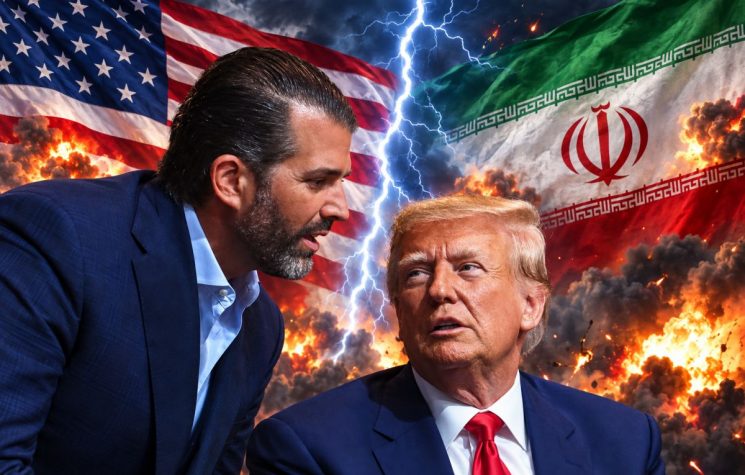
Why is that? There is an asymmetry in the control of escalation. Iran, it is said, must not make it too easy for the United States to back down, lest it become a country that can be bombed at regular intervals as a matter of routine; but nor must it push Trump into a position where the only politically sustainable way out is a new war (and, note, the U.S. has the actual military strength to wage a conventional war). It is the paradox of the winning negotiator: every concession wrested from the opponent reduces the latter’s internal room for maneuver, and beyond a certain threshold, the other side’s desperation becomes a risk in itself. Whoever controls the Strait holds the upper hand, but a knife held to the throat of a great power is an invitation to irrationality, not a guarantee of security.
The power vacuum and who fills it
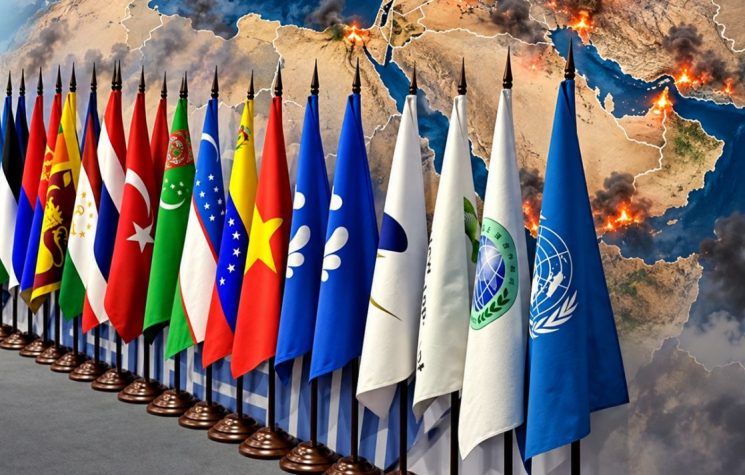
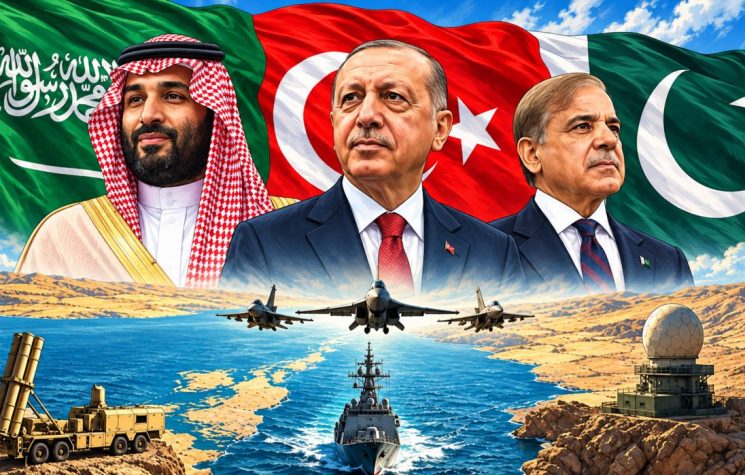
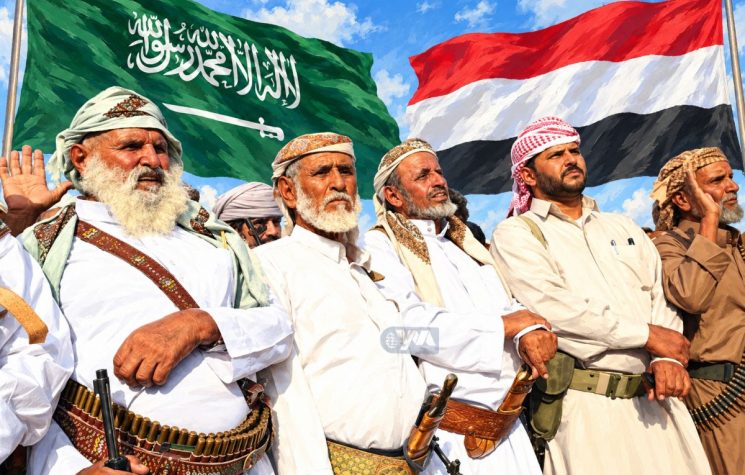
This situation gives rise to the idea that the relative decline of the hegemonic power creates a power vacuum, and that the way in which that vacuum is filled will determine the shape of the Middle East for a decade. Turkey, Saudi Arabia, Pakistan, perhaps Egypt – the outlines of a possible regional security architecture are already visible, and the Mecca Pact is already a very clear demonstration of a desire to institutionalize the new regional dynamics.
The decisive question is not whether the vacuum will be filled, but how.
The theoretical distinction is clear and deserves to be upheld. There are two models. The first is the bloc politics model: exclusive alliances that seek security against those left out, and which, by their very nature, give rise to an opposing counter-bloc. The second is the inclusive security architecture, in which the actors – without having to trust one another – seek mutual security within the same framework. Applied to the Middle East, this reasoning leads to a counterintuitive conclusion: stability would require including Iran – and, in the longer term, even Israel – in the same security club.
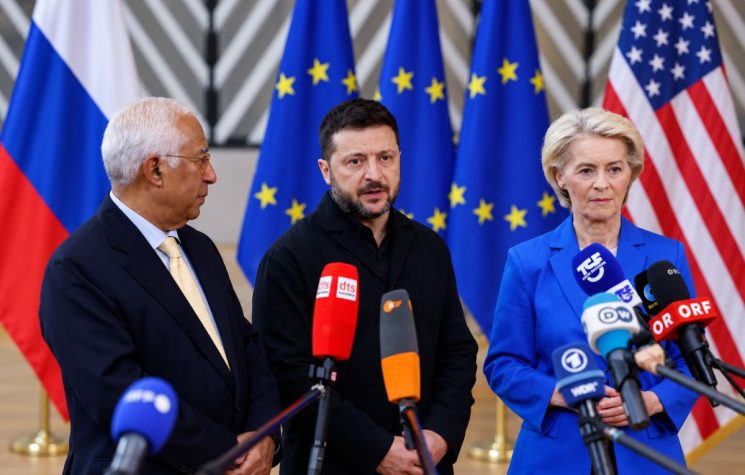
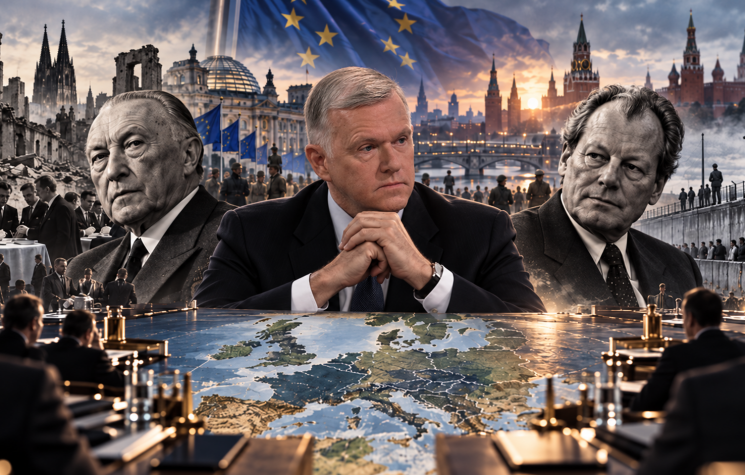
It is worth spelling out the theoretical premise, because it is not neutral. Those who reason this way are applying the principle of indivisible security – that is, the idea, rooted in European realism, that a state’s security cannot be built at the expense of its adversaries without triggering a reaction that nullifies it. It is the same principle that Europe is slowly learning on its eastern front, although the formulation should be reversed since Europe is not learning it at all – and this is precisely the crux of the Ukrainian issue.
A methodological caveat is, however, in order. Interpreting Turkey, Saudi Arabia, and Pakistan as a coherent alliance would be a mistake mirroring the one the Americans made in Vietnam, when they viewed every nationalist movement through the lens of communism. These three actors have divergent motivations; they do not share a doctrine of collective defense, nor would they go to war for one another. Have they signed an agreement? Yes, very well. We’ll see what the actual terms of this “top-secret” pact will be. Currently, they are filling a vacuum, and they can fill it in opposite directions. Similarly, reducing the Houthis, Iraqi militias, or Yemeni tensions to mere proxies of Tehran means stripping those actors of all autonomy and, above all, failing to understand why the war tends to expand rather than die down: many of these conflicts have roots independent of Iran and would survive even if Iran were to exit the scene.
Ukraine, the endless front
On the Ukrainian front, the temptation to view the war as a series of villages captured and recaptured must be resisted.
Daily reports – this village recaptured, that one lost – measure noise, not trends. The verified picture from early August 2026 is more sobering than either of the opposing narratives. This is because the key lies not in territory, but in the nature of the war. In a war of attrition, progress is slow until it suddenly accelerates; the two armies pound each other until one of them collapses structurally. The true indicator, then, is not the map but the state of the factors driving attrition. And here, the picture is lopsided. Ukraine’s shortage of Patriot interceptor missiles has given the Russians an advantage in the skies, which translates into more extensive use of air power and glide bombs; the manpower issue is no longer a secret. The Russians, for their part, have shifted part of their production from expensive hypersonic systems – no longer necessary against an air defense that fails to intercept – to high-volume ballistic saturation.
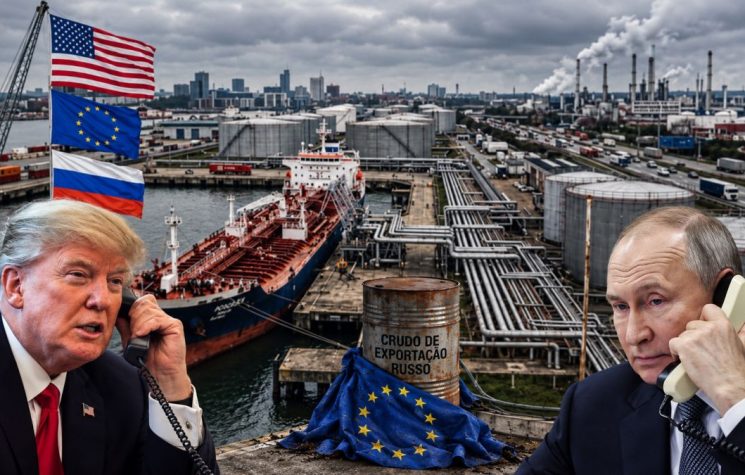
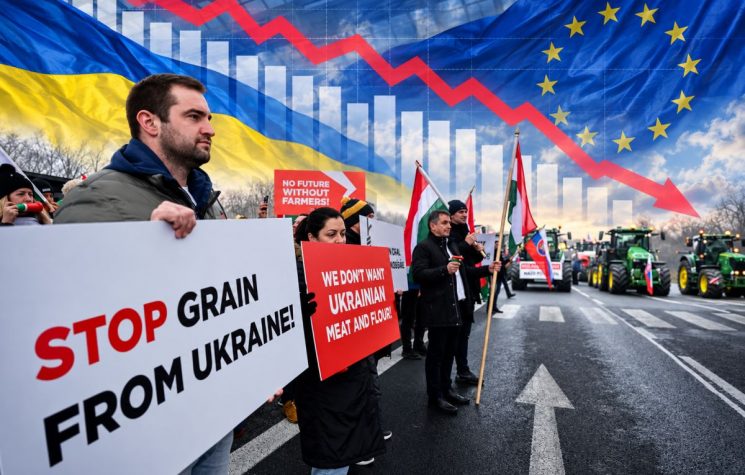
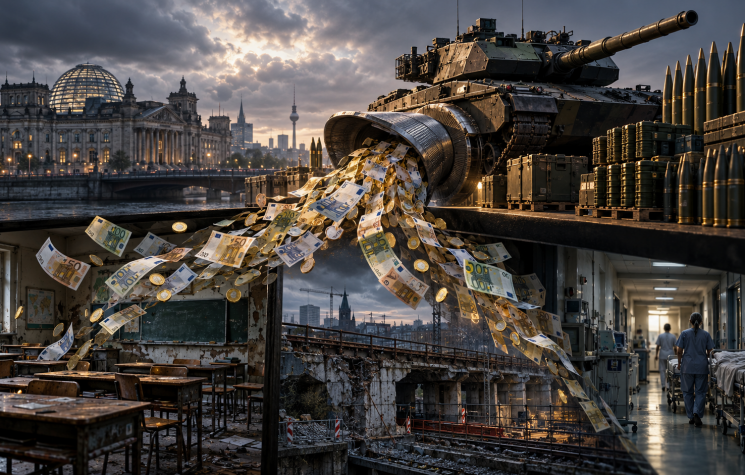
The most geopolitically significant development of recent weeks, however, is another, and it concerns the sea. With the systematic attacks on port infrastructure in the Greater Odessa area and in Mykolaiv, and with the railway bridge at Zatoka struck, Ukraine is effectively being pushed into the status of a country without a functioning sea outlet. This is a turning point that should have been anticipated: for much of the war, Moscow had spared Ukrainian ports, partly because of the grain deal and partly to avoid alienating the Global South. When Kiev, backed by NATO, expanded its campaign of attacks deep into Russian territory – striking civilian depots, logistics warehouses, refineries, and, on the night of August 11–12, the naval and grain infrastructure in Novorossiysk, as well as civilians – that last vestige of self-restraint fell away.
And this is where Ukraine’s strategy reveals its logical limitation. The stated goal is to freeze the front lines and force Moscow to the negotiating table by targeting ordinary Russians, but the question that exposes the strategy is elementary: if it worked, it would be Russia asking for a Black Sea agreement… yet instead, it is the Ukrainians who are asking for it, with Turkey attempting to mediate. The signal is unmistakable. Making people wait four days for a package instead of twenty-four hours causes annoyance, not capitulation; emptying store shelves and shutting down the energy infrastructure on the eve of winter, on the other hand, causes a real crisis – on the wrong side of the front lines.
Peace is harder than war
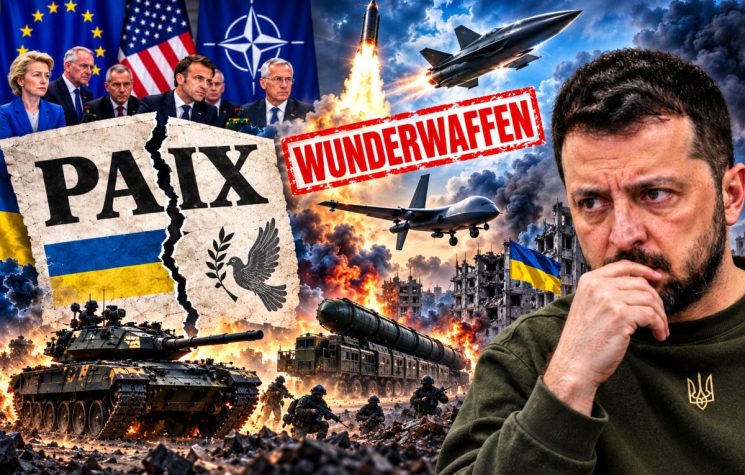
Russia, understandably, wants an end to the war, while Kiev continues to advocate for endless conflict as the only solution – but how much longer can this type of conflict be sustained? NATO has failed; Ukraine has failed and is, by now, a failed state. All the reasonable proposals the Kremlin had put forward have been scorned and trampled upon, thereby sealing its own fate. And the painful war still rages on. It is then that Russian logic becomes explicit and pragmatically severe: in the absence of an agreement, the Russians will make “their own peace,” which means continuing to reduce Ukraine to a landlocked buffer state – less dangerous as an anti-Russian platform and no longer usable by NATO to expand eastward.
This is where the issue of an unconditional ceasefire reveals its duplicity. For Europeans, freezing the conflict along current lines means buying time to resupply and reorganize the Ukrainian army, with the possibility of European troops serving as a peacekeeping force. For Moscow, precisely for these reasons, an unconditional ceasefire is not peace but the European way of prolonging the war. What the Russians are demanding is a political settlement – and thus neutrality – not a truce that resets the clock. As long as the two definitions of “peace” remain incompatible, the war continues not because of a lack of weariness, but because of an excess of clarity regarding what each side considers a “victory.”
And, take note: the hope is that all of this does not extend to Japan. This is no joke. On August 13, 2026, Vladimir Putin set foot for the first time on Iturup, in the Southern Kuril Islands – which Tokyo claims as the Northern Territories – and became the first Russian head of state to do so. The move came just hours after Pacific Fleet exercises and the publication of Japan’s Defense White Paper, and Prime Minister Takaichi described the visit as “absolutely unacceptable.”
Viewed through the lens of this analysis, the Kuril incident is not a new front but a strong and clear message: a warning shot to ensure Tokyo does not get too deeply drawn into the “Ukrainian conflict” and does not risk being used as a pawn by the West in an attempt to open a new front on the eastern flank of the Russian Federation. And it is, if you will, confirmation that the logic of controlled escalation is not confined to the Black Sea or the Strait of Hormuz, but has become the lingua franca of the multipolar system. It should subside. It probably will subside. But the very fact that it must be employed – from the Pacific to the Gulf – shows just how little room for maneuver remains for diplomacy (unfortunately!).
In the end, what remains is the realist lesson from which we began, turned inside out. The rising powers of 2026 have learned not to lose; none has yet actually managed to win – that is, to transform an advantage into an order that adversaries can accept without feeling their very existence is threatened. As long as security is conceived as a zero-sum game, every victory will generate its own negation.
A longtime diplomat friend of mine said something to me a few days ago that has stuck with me: “The skill that all the players at the table lack is not the ability to fight. It is the far rarer skill of leaving the defeated opponent a way out that doesn’t feel like a death sentence.” Perhaps he’s absolutely right.